
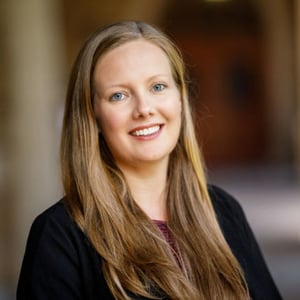
Professor of Law, University of Notre Dame Law School
Emily Bremer teaches and writes in the areas of administrative law, regulatory process, and civil procedure. Her scholarship focuses primarily on matters of procedural design, with a recent focus on the history and interpretation of the Administrative Procedure Act (APA). She is a recipient of the AALS’s award for the year’s best administrative law scholarship by a junior scholar and the AALL’s Joseph L. Andrew’s Legal Literature Award for her contribution to the Bremer-Kovacs Collection of Historical Documents Related to the APA (HeinOnline). Bremer’s articles include a defense forthcoming in the Virginia Law Review of the constitutionality of the APA’s regime for ensuring the competence and impartiality of Administrative Law Judges; a plea in the Yale Journal on Regulation for administrative law to take greater account of the on-the-ground reality of administration; twin articles uncovering the intellectual foundation and meaning of the APA’s adjudication and rulemaking provisions; and three separate studies that served as the basis of recommendations of the Administrative Conference of the United States (ACUS) on the subjects of agency declaratory orders, incorporation by reference, and statutory limitations on the jurisdiction of the Court of Federal Claims. Bremer serves as a Senior Fellow of ACUS, a co-editor of the administrative law section of Jotwell, and a regular contributor to the Yale Journal on Regulation’s Notice & Comment blog.
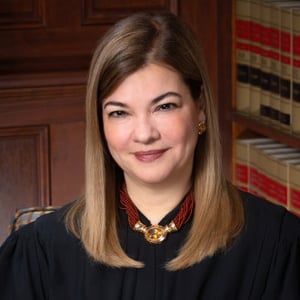
Judge, United States Court of Appeals, Eleventh Circuit
Judge Barbara Lagoa was born in Miami, Florida. She received her Bachelor of Arts cum laude in 1989 from Florida International University where she majored in English and was a member of the Phi Kappa Phi honor society. Judge Lagoa received her Juris Doctor from Columbia University School of Law in 1992, where she served as an Associate Editor of the Columbia Law Review. She is fluent in English and Spanish. On December 6, 2019, she received her commission as a judge on the U.S. Eleventh Circuit Court of Appeals from President Donald Trump.
On January 9, 2019, she became the first Hispanic woman and the first Cuban American woman appointed to serve on the Florida Supreme Court. Prior to her appointment by Governor Ron DeSantis to the Florida Supreme Court, Governor Jeb Bush appointed her in June of 2006 to serve on the Third District Court of Appeal. At that court, she became the first Hispanic woman and the first Cuban American woman appointed to serve on the Third District Court of Appeal. On January 1, 2019, she became the first Hispanic female Chief Judge of the Third District Court of Appeal.
Prior to joining the bench, Judge Lagoa practiced in both the civil and criminal arenas. Her civil practice at Greenberg Traurig focused on general and complex commercial litigation, particularly the areas of employment discrimination, business torts, securities litigation, construction litigation, and insurance coverage disputes. In 2003, she joined the United States Attorney’s Office for the Southern District of Florida as an Assistant United States Attorney, where she worked in the Civil, Major Crimes and Appellate Sections. As an Assistant United States Attorney, she tried numerous criminal jury trials, including drug conspiracies and Hobbs Act violations. She also handled a significant number of appeals.
While a practicing lawyer, Judge Lagoa was admitted to The Florida Bar, the United States District Courts for the Middle and Southern Districts of Florida, and the United States Court of Appeals for the Eleventh Circuit. She was also a member of many local, state, and national professional groups including the Dade County Bar Association, and the Florida Association for Women Lawyers.
Judge Lagoa’s civic and community activities include service on the Board of Directors for the YWCA of Greater Miami and Dade County, the Film Society of Miami, Kristi House, and the FIU Alumni Association. She was also a member of the Federal Judicial Nominating Commission. She is currently a member of the Eugene P. Spellman and William Hoeveler Chapter of the American Inns of Court.
Judge Lagoa is married to Paul C. Huck, Jr., an attorney. They have three daughters.
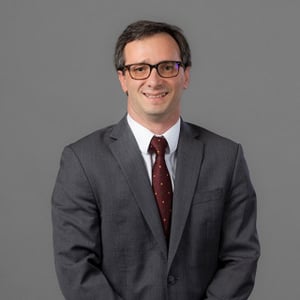
Assistant Professor of Law, George Mason University, Antonin Scalia Law School
Robert Leider is an Assistant Professor of Law at Antonin Scalia Law School, George Mason University. His scholarly interests are in criminal law, criminal procedure, and constitutional law, especially concerning questions about the use of force and the rule of law. He has written on the law of self-defense, the constitutional allocation of military power, and gun control. Among other places, he has published in the Florida Law Review (forthcoming), the Indiana Law Journal, and the Wall Street Journal.
Before joining Antonin Scalia Law School, Professor Leider was at Arnold & Porter in Washington, DC. He was previously with Mayer Brown LLP and was an Olin-Searle-Smith Fellow at the University of Pennsylvania Law School. He has clerked for Judge Diane S. Sykes, of the U.S. Court of Appeals for the Seventh Circuit, and Justice Clarence Thomas. Professor Leider earned a BA, summa cum laude, from The George Washington University, a JD from Yale Law School, and a PhD in Philosophy (dissertation defended with distinction) from Georgetown University. While at Yale, he served as an articles editor for the Yale Law Journal.
Professor Leider teaches criminal law and torts.
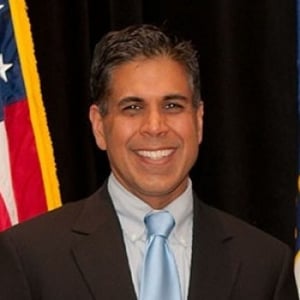
Judge, United States Court of Appeals, Sixth Circuit
Amul R. Thapar serves as a judge on the United States Court of Appeals for the Sixth Circuit. His judicial career began in 2007 when President George W. Bush nominated him to serve on the Eastern District of Kentucky, making him the first South Asian Article III judge in American history. In 2017, he became President Donald J. Trump’s first appellate court nominee.
Before joining the bench, Judge Thapar served as the United States Attorney for the Eastern District of Kentucky. While United States Attorney, Judge Thapar worked on the Attorney General’s Advisory Committee (“AGAC”) and chaired the AGAC’s Controlled Substances and Asset Forfeiture subcommittee. He also served on the Terrorism and National Security subcommittee, the Violent Crime subcommittee, and the Child Exploitation working group.
Judge Thapar has worked in private practice, at Williams & Connolly in Washington, D.C., and Squire, Sanders & Dempsey in Cincinnati, Ohio. He also served as an Assistant United States Attorney in both the Southern District of Ohio and the District of Columbia.
Judge Thapar received his undergraduate degree from Boston College and his law degree from the University of California, Berkeley. After graduating, Judge Thapar worked as a law clerk to the Honorable S. Arthur Spiegel of the United States District Court for the Southern District of Ohio, and the Honorable Nathaniel R. Jones of the United States Court of Appeals for the Sixth Circuit.
Judge Thapar has also published in the Yale Law Journal, Michigan Law Review, and Catholic University Law Review. He teaches courses on originalism, the Federalists and Anti-Federalists, and legal writing at Notre Dame Law School, the University of Virginia School of Law, and Vanderbilt Law School.
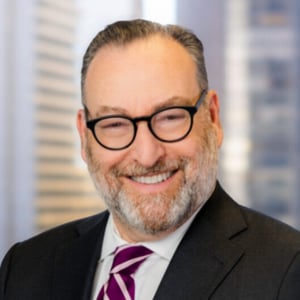
Founder, Chairman, and CEO, Louis D. Brandeis Center for Human Rights Under Law
Hon. Kenneth L. Marcus is an internationally recognized expert in civil and human rights, as well as a leader in the fight against anti-Semitism on and off university campuses. He is the Founder, Chairman, and CEO of The Louis D. Brandeis Center for Human Rights Under Law, the leading civil rights legal organization fighting against anti-Semitism. The New York Times has called him “The Man Who Helped Redefine Campus Anti-Semitism.” He been described, in that paper, as “the single most effective and respected force” to combat anti-Semitism.
During his public service career, Marcus served as Assistant U.S. Secretary of Education for Civil Rights; Staff Director at the U.S. Commission on Civil Rights; and General Deputy Assistant U.S. Secretary of Housing and Urban Development for Fair Housing and Equal Opportunity.
In academia, he serves as Professorial Lecturer in Law at George Washington University. He formerly held the Lillie and Nathan Ackerman Chair in Equality and Justice in America at the City University of New York’s Bernard M. Baruch College, served as Visiting Research Professor of Political Science at Yeshiva University, and was a Board of Visitors member George Mason University and Distinguished Senior Fellow at that university’s law school. He is a member of the editorial board of the Journal of Contemporary Antisemitism and previously served as Associate Editor of the Journal for the Study of Anti-Semitism.
Marcus is also author of The Definition of Anti-Semitism (Oxford University Press) and Jewish Identity and Civil Rights in America (Cambridge University Press). He has published widely in academic journals as well as in more popular venues such as The Wall Street Journal, Washington Post, Newsweek, USA Today, and Politico. He is a graduate of Williams College and the University of California at Berkeley School of Law.
Earlier in his career, he was a litigation partner in two major law firms, where he conducted complex commercial and constitutional litigation. He also serves as Chairman emeritus of the Executive Committee of the Federalist Society for Law & Public Policy Civil Rights Practice Group.
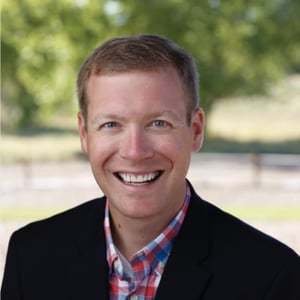
President, Center for American Rights
Daniel Suhr serves as president of the Center for American Rights, where he spends every day on the front lines of the fight to preserve our rights and liberties. The Center's mission is to advance free speech, free enterprise, and parental freedom in education through strategic, precedent-setting litigation.
Daniel formerly worked as policy director for Wisconsin Governor Scott Walker, as chief of staff for Wisconsin Lieutenant Governor Rebecca Kleefisch, and as a law clerk for Judge Diane Sykes of the U.S. Court of Appeals for the Seventh Circuit. He holds a B.A. and J.D. from Marquette University, and master’s degrees from Georgetown and the University of Missouri.

Associate Professor of Law, Columbia Law School
Lina Khan teaches and writes about antitrust law, infrastructure industries law, the antimonopoly tradition, and law and political economy. Several of her writings have focused on the ways that dominant digital platforms freshly reveal the shortcomings of the current approach to antitrust. In June 2021, Khan began serving a seven-year term as chair of the Federal Trade Commission.
Khan’s work has been published by the Columbia Law Review, Harvard Law Review, The University of Chicago Law Review, and The Yale Law Journal. The New York Times has described Khan’s scholarship as having “reframed decades of monopoly law,” and Politico has called her “a leader of a new school of antitrust thought.” Her article “Amazon’s Antitrust Paradox” was awarded the 2018 Antitrust Writing Award for Best Academic Unilateral Conduct Article, her article “The Separation of Platforms and Commerce” won the 2019 Jerry S. Cohen Memorial Fund’s Best Antitrust Article on Remedies, and her co-authored article “The Case for ‘Unfair Methods of Competition’ Rulemaking” received the 2020 Antitrust Writing Award for Best General Antitrust Academic Article.
Khan’s scholarship has also been profiled or discussed by The Atlantic, Bloomberg, The Economist, Financial Times, The New Yorker, The Wall Street Journal, and The Washington Post. She has been named to the Politico 50, Foreign Policy magazine’s Global Thinkers, Prospect magazine’s Top 50 Thinkers, WIRED25, National Journal 50, and Time magazine’s Next Generation Leaders.
Prior to joining Columbia Law in 2020, Khan served as counsel to the U.S. House Judiciary Committee’s Subcommittee on Antitrust, Commercial, and Administrative Law, where she helped lead the Committee’s investigation into digital markets and the publication of its landmark report. She has also served as legal adviser to Commissioner Rohit Chopra at the Federal Trade Commission and legal director at the Open Markets Institute.
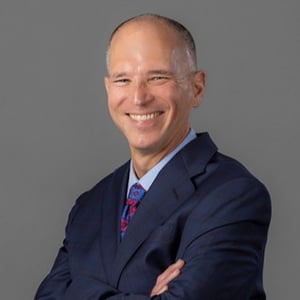
George Mason University Foundation Professor of Law, Antonin Scalia Law School, George Mason University
TODD J. ZYWICKI is George Mason University Foundation Professor of Law at Antonin Scalia Law School at George Mason University and Research Fellow of the George Mason Law and Economics Center. During the Fall 2023 semester he served as the Visiting Scholar in Conservative Thought and Policy for the Bruce Benson Center for the Study of Western Civilization at the University of Colorado-Boulder. From 2020-2021 he was Chair of the Consumer Financial Protection Bureau Taskforce on Federal Consumer Financial Law. In 2021 he was inducted to the American College of Consumer Financial Services Lawyers. He is also a Senior Fellow of the F.A. Hayek Program for the Advanced Study of Politics, Philosophy, and Economics at George Mason University and a former Senior Fellow of the Cato Institute. From 2015-2017 he was Executive Director of the George Mason Law and Economics Center. He served as Co-Editor of the Supreme Court Economic Review from 2006-2017. From 2003-2004, Professor Zywicki served as the Director of the Office of Policy Planning at the Federal Trade Commission. He has also taught at Vanderbilt University Law School, Georgetown University Law Center, Boston College Law School, Mississippi College School of Law, and China University of Political Science and Law.
Professor Zywicki clerked for Judge Jerry E. Smith of the U.S. Court of Appeals for the Fifth Circuit and worked as an associate at Alston & Bird in Atlanta, Georgia, where he practiced bankruptcy and commercial law. He received his J.D. from the University of Virginia, where he was executive editor of the Virginia Tax Review and John M. Olin Scholar in Law and Economics. Professor Zywicki also received an M.A. in Economics from Clemson University and an A.B. cum Laude with high honors in his major from Dartmouth College.
Professor Zywicki is also a Lone Mountain Fellow of the Property and Environment Research Center, a Fellow of the International Centre for Economic Research in Turin, Italy, and a former Senior Fellow of the Goldwater Institute. During the Fall 2008 Semester Professor Zywicki was the Searle Fellow of the George Mason University School of Law and was a 2008-09 W. Glenn Campbell and Rita Ricardo-Campbell National Fellow and the Arch W. Shaw National Fellow at the Hoover Institution on War, Revolution and Peace. He has lectured and consulted with government officials around the world, including Iceland, Italy, Japan, and Guatemala. In 2006 Professor Zywicki served as a Member of the United States Department of Justice Study Group on “Identifying Fraud, Abuse and Errors in the United States Bankruptcy System.”
Professor Zywicki is the author of more than 130 articles in leading law reviews and peer-reviewed economics journals. He is one of the Top 10 most-cited law professors in the field of Commercial Law and one of the Top 25 law professors on Twitter as measured by engagement levels. He is one of the Top 50 Most Downloaded Law Authors at the Social Science Research Network. He has testified multiple times before Congress on issues of consumer bankruptcy law and consumer credit and is a frequent commentator on legal issues in the print and broadcast media, including the Wall Street Journal, New York Times, The Washington Post, The Washington Times, Nightline, The Newshour with Jim Lehrer, Neil Cavuto Show, Fox & Friends, Smerconish, Fox News @ Night with Shannon Bream, Fox Business, CNN, CNBC, Bloomberg News, BBC, The Diane Rehm Show, Lou Dobbs Show, Jerry Doyle Show, and The Laura Ingraham Show.
Professor Zywicki is former Chairman and a current member of the Board of Directors of the Competitive Enterprise Institute, and is a member of the Board of Directors of the Institute for Humane Studies, Bill of Rights Institute, the Executive Committee for the Federalist Society's Financial Institutions and E-Commerce Practice Group, the Board of Trustees of the Foundation for Research on Economics and the Environment. He formerly served on the Governing Board and the Advisory Council for the Financial Services Research Program at George Washington University School of Business. He is currently the Chair of the Academic Advisory Council for the following organizations: The Bill of Rights Institute, the film “We the People in IMAX,” and the McCormick-Tribune Foundation “Freedom Museum” in Chicago, Illinois. He is a member of the Board of Visitors of Ralston College and was a member of the Board of Trustees of Yorktown University. From 2005-2009 he served as an elected Alumni Trustee of the Dartmouth College Board of Trustees.
Associate Professor of Law, Columbia Law School
Lina Khan teaches and writes about antitrust law, infrastructure industries law, the antimonopoly tradition, and law and political economy. Several of her writings have focused on the ways that dominant digital platforms freshly reveal the shortcomings of the current approach to antitrust. In June 2021, Khan began serving a seven-year term as chair of the Federal Trade Commission.
Khan’s work has been published by the Columbia Law Review, Harvard Law Review, The University of Chicago Law Review, and The Yale Law Journal. The New York Times has described Khan’s scholarship as having “reframed decades of monopoly law,” and Politico has called her “a leader of a new school of antitrust thought.” Her article “Amazon’s Antitrust Paradox” was awarded the 2018 Antitrust Writing Award for Best Academic Unilateral Conduct Article, her article “The Separation of Platforms and Commerce” won the 2019 Jerry S. Cohen Memorial Fund’s Best Antitrust Article on Remedies, and her co-authored article “The Case for ‘Unfair Methods of Competition’ Rulemaking” received the 2020 Antitrust Writing Award for Best General Antitrust Academic Article.
Khan’s scholarship has also been profiled or discussed by The Atlantic, Bloomberg, The Economist, Financial Times, The New Yorker, The Wall Street Journal, and The Washington Post. She has been named to the Politico 50, Foreign Policy magazine’s Global Thinkers, Prospect magazine’s Top 50 Thinkers, WIRED25, National Journal 50, and Time magazine’s Next Generation Leaders.
Prior to joining Columbia Law in 2020, Khan served as counsel to the U.S. House Judiciary Committee’s Subcommittee on Antitrust, Commercial, and Administrative Law, where she helped lead the Committee’s investigation into digital markets and the publication of its landmark report. She has also served as legal adviser to Commissioner Rohit Chopra at the Federal Trade Commission and legal director at the Open Markets Institute.
George Mason University Foundation Professor of Law, Antonin Scalia Law School, George Mason University
TODD J. ZYWICKI is George Mason University Foundation Professor of Law at Antonin Scalia Law School at George Mason University and Research Fellow of the George Mason Law and Economics Center. During the Fall 2023 semester he served as the Visiting Scholar in Conservative Thought and Policy for the Bruce Benson Center for the Study of Western Civilization at the University of Colorado-Boulder. From 2020-2021 he was Chair of the Consumer Financial Protection Bureau Taskforce on Federal Consumer Financial Law. In 2021 he was inducted to the American College of Consumer Financial Services Lawyers. He is also a Senior Fellow of the F.A. Hayek Program for the Advanced Study of Politics, Philosophy, and Economics at George Mason University and a former Senior Fellow of the Cato Institute. From 2015-2017 he was Executive Director of the George Mason Law and Economics Center. He served as Co-Editor of the Supreme Court Economic Review from 2006-2017. From 2003-2004, Professor Zywicki served as the Director of the Office of Policy Planning at the Federal Trade Commission. He has also taught at Vanderbilt University Law School, Georgetown University Law Center, Boston College Law School, Mississippi College School of Law, and China University of Political Science and Law.
Professor Zywicki clerked for Judge Jerry E. Smith of the U.S. Court of Appeals for the Fifth Circuit and worked as an associate at Alston & Bird in Atlanta, Georgia, where he practiced bankruptcy and commercial law. He received his J.D. from the University of Virginia, where he was executive editor of the Virginia Tax Review and John M. Olin Scholar in Law and Economics. Professor Zywicki also received an M.A. in Economics from Clemson University and an A.B. cum Laude with high honors in his major from Dartmouth College.
Professor Zywicki is also a Lone Mountain Fellow of the Property and Environment Research Center, a Fellow of the International Centre for Economic Research in Turin, Italy, and a former Senior Fellow of the Goldwater Institute. During the Fall 2008 Semester Professor Zywicki was the Searle Fellow of the George Mason University School of Law and was a 2008-09 W. Glenn Campbell and Rita Ricardo-Campbell National Fellow and the Arch W. Shaw National Fellow at the Hoover Institution on War, Revolution and Peace. He has lectured and consulted with government officials around the world, including Iceland, Italy, Japan, and Guatemala. In 2006 Professor Zywicki served as a Member of the United States Department of Justice Study Group on “Identifying Fraud, Abuse and Errors in the United States Bankruptcy System.”
Professor Zywicki is the author of more than 130 articles in leading law reviews and peer-reviewed economics journals. He is one of the Top 10 most-cited law professors in the field of Commercial Law and one of the Top 25 law professors on Twitter as measured by engagement levels. He is one of the Top 50 Most Downloaded Law Authors at the Social Science Research Network. He has testified multiple times before Congress on issues of consumer bankruptcy law and consumer credit and is a frequent commentator on legal issues in the print and broadcast media, including the Wall Street Journal, New York Times, The Washington Post, The Washington Times, Nightline, The Newshour with Jim Lehrer, Neil Cavuto Show, Fox & Friends, Smerconish, Fox News @ Night with Shannon Bream, Fox Business, CNN, CNBC, Bloomberg News, BBC, The Diane Rehm Show, Lou Dobbs Show, Jerry Doyle Show, and The Laura Ingraham Show.
Professor Zywicki is former Chairman and a current member of the Board of Directors of the Competitive Enterprise Institute, and is a member of the Board of Directors of the Institute for Humane Studies, Bill of Rights Institute, the Executive Committee for the Federalist Society's Financial Institutions and E-Commerce Practice Group, the Board of Trustees of the Foundation for Research on Economics and the Environment. He formerly served on the Governing Board and the Advisory Council for the Financial Services Research Program at George Washington University School of Business. He is currently the Chair of the Academic Advisory Council for the following organizations: The Bill of Rights Institute, the film “We the People in IMAX,” and the McCormick-Tribune Foundation “Freedom Museum” in Chicago, Illinois. He is a member of the Board of Visitors of Ralston College and was a member of the Board of Trustees of Yorktown University. From 2005-2009 he served as an elected Alumni Trustee of the Dartmouth College Board of Trustees.
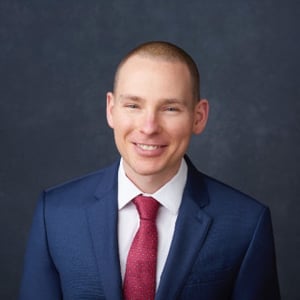
Shareholder & Co-Chair of the Workplace Policy Institute, Littler Mendelson P.C.
Alexander T. MacDonald advises employers on all aspects of the employment and labor landscape, focusing on emerging legislation and regulation. He has extensive experience advising businesses on worker classification, arbitration, the administrative and regulatory process, and the future of work. He frequently writes, publishes, and speaks on these subjects. His work has been cited by scholars and appellate courts. He is a recognized voice for the management perspective.
Alexander is a co-chair of the Workplace Policy Institute (WPI) team. With WPI, he advises employers on legislative, administrative, and regulatory developments at the state and federal level. He advocates for employers in the regulatory and administrative process. He also helps employers protect their businesses by understanding and anticipating cutting-edge legal developments.
Alexander also has extensive experience in traditional labor law. He represents management in all aspects of labor-management relations, including unfair labor practice charges, grievance arbitrations, representation elections, contract negotiations, and related litigation, including litigation in the U.S. courts of appeals.
Before joining Littler, Alexander served as the director, future of work, for a major technology company. He also worked in a national labor and employment law firm and a major public-sector general counsel’s office. He was a law clerk to the senior judges in the District of Columbia Court of Appeals.
He is also a veteran of the U.S. Air Force. He served in Operations Enduring Freedom and Iraqi Freedom. In law school, he graduated first in his class
Professor, School of Civic Leadership, University of Texas, Austin
Yonatan Green, an Israeli-American attorney, is a Professor at the School of Civic Leadership at the University of Texas, Austin, where he also serves as Director of The Ackerman Program on Jewish and Western Civilization. He is the author of the acclaimed book Rogue Justice: The Rise of Judicial Supremacy in Israel (Academica Press, 2025). He was previously a Fellow at the Georgetown University Center for the Constitution. Yonatan is co-founder and former Executive Director of the Jerusalem-based Israel Law & Liberty Forum, a project of the Tikvah Fund inspired by the Federalist Society. He holds a degree in Law and Communications from the Hebrew University of Jerusalem.
Professor of Law, University of Notre Dame Law School
Emily Bremer teaches and writes in the areas of administrative law, regulatory process, and civil procedure. Her scholarship focuses primarily on matters of procedural design, with a recent focus on the history and interpretation of the Administrative Procedure Act (APA). She is a recipient of the AALS’s award for the year’s best administrative law scholarship by a junior scholar and the AALL’s Joseph L. Andrew’s Legal Literature Award for her contribution to the Bremer-Kovacs Collection of Historical Documents Related to the APA (HeinOnline). Bremer’s articles include a defense forthcoming in the Virginia Law Review of the constitutionality of the APA’s regime for ensuring the competence and impartiality of Administrative Law Judges; a plea in the Yale Journal on Regulation for administrative law to take greater account of the on-the-ground reality of administration; twin articles uncovering the intellectual foundation and meaning of the APA’s adjudication and rulemaking provisions; and three separate studies that served as the basis of recommendations of the Administrative Conference of the United States (ACUS) on the subjects of agency declaratory orders, incorporation by reference, and statutory limitations on the jurisdiction of the Court of Federal Claims. Bremer serves as a Senior Fellow of ACUS, a co-editor of the administrative law section of Jotwell, and a regular contributor to the Yale Journal on Regulation’s Notice & Comment blog.
Judge, United States Court of Appeals, Eleventh Circuit
Judge Barbara Lagoa was born in Miami, Florida. She received her Bachelor of Arts cum laude in 1989 from Florida International University where she majored in English and was a member of the Phi Kappa Phi honor society. Judge Lagoa received her Juris Doctor from Columbia University School of Law in 1992, where she served as an Associate Editor of the Columbia Law Review. She is fluent in English and Spanish. On December 6, 2019, she received her commission as a judge on the U.S. Eleventh Circuit Court of Appeals from President Donald Trump.
On January 9, 2019, she became the first Hispanic woman and the first Cuban American woman appointed to serve on the Florida Supreme Court. Prior to her appointment by Governor Ron DeSantis to the Florida Supreme Court, Governor Jeb Bush appointed her in June of 2006 to serve on the Third District Court of Appeal. At that court, she became the first Hispanic woman and the first Cuban American woman appointed to serve on the Third District Court of Appeal. On January 1, 2019, she became the first Hispanic female Chief Judge of the Third District Court of Appeal.
Prior to joining the bench, Judge Lagoa practiced in both the civil and criminal arenas. Her civil practice at Greenberg Traurig focused on general and complex commercial litigation, particularly the areas of employment discrimination, business torts, securities litigation, construction litigation, and insurance coverage disputes. In 2003, she joined the United States Attorney’s Office for the Southern District of Florida as an Assistant United States Attorney, where she worked in the Civil, Major Crimes and Appellate Sections. As an Assistant United States Attorney, she tried numerous criminal jury trials, including drug conspiracies and Hobbs Act violations. She also handled a significant number of appeals.
While a practicing lawyer, Judge Lagoa was admitted to The Florida Bar, the United States District Courts for the Middle and Southern Districts of Florida, and the United States Court of Appeals for the Eleventh Circuit. She was also a member of many local, state, and national professional groups including the Dade County Bar Association, and the Florida Association for Women Lawyers.
Judge Lagoa’s civic and community activities include service on the Board of Directors for the YWCA of Greater Miami and Dade County, the Film Society of Miami, Kristi House, and the FIU Alumni Association. She was also a member of the Federal Judicial Nominating Commission. She is currently a member of the Eugene P. Spellman and William Hoeveler Chapter of the American Inns of Court.
Judge Lagoa is married to Paul C. Huck, Jr., an attorney. They have three daughters.
Assistant Professor of Law, George Mason University, Antonin Scalia Law School
Robert Leider is an Assistant Professor of Law at Antonin Scalia Law School, George Mason University. His scholarly interests are in criminal law, criminal procedure, and constitutional law, especially concerning questions about the use of force and the rule of law. He has written on the law of self-defense, the constitutional allocation of military power, and gun control. Among other places, he has published in the Florida Law Review (forthcoming), the Indiana Law Journal, and the Wall Street Journal.
Before joining Antonin Scalia Law School, Professor Leider was at Arnold & Porter in Washington, DC. He was previously with Mayer Brown LLP and was an Olin-Searle-Smith Fellow at the University of Pennsylvania Law School. He has clerked for Judge Diane S. Sykes, of the U.S. Court of Appeals for the Seventh Circuit, and Justice Clarence Thomas. Professor Leider earned a BA, summa cum laude, from The George Washington University, a JD from Yale Law School, and a PhD in Philosophy (dissertation defended with distinction) from Georgetown University. While at Yale, he served as an articles editor for the Yale Law Journal.
Professor Leider teaches criminal law and torts.
Judge, United States Court of Appeals, Sixth Circuit
Amul R. Thapar serves as a judge on the United States Court of Appeals for the Sixth Circuit. His judicial career began in 2007 when President George W. Bush nominated him to serve on the Eastern District of Kentucky, making him the first South Asian Article III judge in American history. In 2017, he became President Donald J. Trump’s first appellate court nominee.
Before joining the bench, Judge Thapar served as the United States Attorney for the Eastern District of Kentucky. While United States Attorney, Judge Thapar worked on the Attorney General’s Advisory Committee (“AGAC”) and chaired the AGAC’s Controlled Substances and Asset Forfeiture subcommittee. He also served on the Terrorism and National Security subcommittee, the Violent Crime subcommittee, and the Child Exploitation working group.
Judge Thapar has worked in private practice, at Williams & Connolly in Washington, D.C., and Squire, Sanders & Dempsey in Cincinnati, Ohio. He also served as an Assistant United States Attorney in both the Southern District of Ohio and the District of Columbia.
Judge Thapar received his undergraduate degree from Boston College and his law degree from the University of California, Berkeley. After graduating, Judge Thapar worked as a law clerk to the Honorable S. Arthur Spiegel of the United States District Court for the Southern District of Ohio, and the Honorable Nathaniel R. Jones of the United States Court of Appeals for the Sixth Circuit.
Judge Thapar has also published in the Yale Law Journal, Michigan Law Review, and Catholic University Law Review. He teaches courses on originalism, the Federalists and Anti-Federalists, and legal writing at Notre Dame Law School, the University of Virginia School of Law, and Vanderbilt Law School.
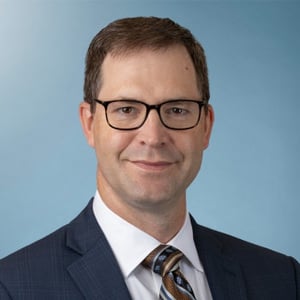
Partner, Faegre Drinker Biddle & Reath LLC
Aaron Van Oort is a legal strategist and appellate lawyer who co-chairs Faegre Drinker’s appellate advocacy group. A former law clerk for Justice Antonin Scalia, a Fellow of the American Academy of Appellate Lawyers and an editor of the Eighth Circuit Appellate Practice Manual (11th ed. 2024), Aaron is a distinguished voice for clients in trial and appellate courts throughout the country. Chambers USA describes him as having “notable prominence and presence in this field.”
Associate Professor of Law, Columbia Law School
Lina Khan teaches and writes about antitrust law, infrastructure industries law, the antimonopoly tradition, and law and political economy. Several of her writings have focused on the ways that dominant digital platforms freshly reveal the shortcomings of the current approach to antitrust. In June 2021, Khan began serving a seven-year term as chair of the Federal Trade Commission.
Khan’s work has been published by the Columbia Law Review, Harvard Law Review, The University of Chicago Law Review, and The Yale Law Journal. The New York Times has described Khan’s scholarship as having “reframed decades of monopoly law,” and Politico has called her “a leader of a new school of antitrust thought.” Her article “Amazon’s Antitrust Paradox” was awarded the 2018 Antitrust Writing Award for Best Academic Unilateral Conduct Article, her article “The Separation of Platforms and Commerce” won the 2019 Jerry S. Cohen Memorial Fund’s Best Antitrust Article on Remedies, and her co-authored article “The Case for ‘Unfair Methods of Competition’ Rulemaking” received the 2020 Antitrust Writing Award for Best General Antitrust Academic Article.
Khan’s scholarship has also been profiled or discussed by The Atlantic, Bloomberg, The Economist, Financial Times, The New Yorker, The Wall Street Journal, and The Washington Post. She has been named to the Politico 50, Foreign Policy magazine’s Global Thinkers, Prospect magazine’s Top 50 Thinkers, WIRED25, National Journal 50, and Time magazine’s Next Generation Leaders.
Prior to joining Columbia Law in 2020, Khan served as counsel to the U.S. House Judiciary Committee’s Subcommittee on Antitrust, Commercial, and Administrative Law, where she helped lead the Committee’s investigation into digital markets and the publication of its landmark report. She has also served as legal adviser to Commissioner Rohit Chopra at the Federal Trade Commission and legal director at the Open Markets Institute.
George Mason University Foundation Professor of Law, Antonin Scalia Law School, George Mason University
TODD J. ZYWICKI is George Mason University Foundation Professor of Law at Antonin Scalia Law School at George Mason University and Research Fellow of the George Mason Law and Economics Center. During the Fall 2023 semester he served as the Visiting Scholar in Conservative Thought and Policy for the Bruce Benson Center for the Study of Western Civilization at the University of Colorado-Boulder. From 2020-2021 he was Chair of the Consumer Financial Protection Bureau Taskforce on Federal Consumer Financial Law. In 2021 he was inducted to the American College of Consumer Financial Services Lawyers. He is also a Senior Fellow of the F.A. Hayek Program for the Advanced Study of Politics, Philosophy, and Economics at George Mason University and a former Senior Fellow of the Cato Institute. From 2015-2017 he was Executive Director of the George Mason Law and Economics Center. He served as Co-Editor of the Supreme Court Economic Review from 2006-2017. From 2003-2004, Professor Zywicki served as the Director of the Office of Policy Planning at the Federal Trade Commission. He has also taught at Vanderbilt University Law School, Georgetown University Law Center, Boston College Law School, Mississippi College School of Law, and China University of Political Science and Law.
Professor Zywicki clerked for Judge Jerry E. Smith of the U.S. Court of Appeals for the Fifth Circuit and worked as an associate at Alston & Bird in Atlanta, Georgia, where he practiced bankruptcy and commercial law. He received his J.D. from the University of Virginia, where he was executive editor of the Virginia Tax Review and John M. Olin Scholar in Law and Economics. Professor Zywicki also received an M.A. in Economics from Clemson University and an A.B. cum Laude with high honors in his major from Dartmouth College.
Professor Zywicki is also a Lone Mountain Fellow of the Property and Environment Research Center, a Fellow of the International Centre for Economic Research in Turin, Italy, and a former Senior Fellow of the Goldwater Institute. During the Fall 2008 Semester Professor Zywicki was the Searle Fellow of the George Mason University School of Law and was a 2008-09 W. Glenn Campbell and Rita Ricardo-Campbell National Fellow and the Arch W. Shaw National Fellow at the Hoover Institution on War, Revolution and Peace. He has lectured and consulted with government officials around the world, including Iceland, Italy, Japan, and Guatemala. In 2006 Professor Zywicki served as a Member of the United States Department of Justice Study Group on “Identifying Fraud, Abuse and Errors in the United States Bankruptcy System.”
Professor Zywicki is the author of more than 130 articles in leading law reviews and peer-reviewed economics journals. He is one of the Top 10 most-cited law professors in the field of Commercial Law and one of the Top 25 law professors on Twitter as measured by engagement levels. He is one of the Top 50 Most Downloaded Law Authors at the Social Science Research Network. He has testified multiple times before Congress on issues of consumer bankruptcy law and consumer credit and is a frequent commentator on legal issues in the print and broadcast media, including the Wall Street Journal, New York Times, The Washington Post, The Washington Times, Nightline, The Newshour with Jim Lehrer, Neil Cavuto Show, Fox & Friends, Smerconish, Fox News @ Night with Shannon Bream, Fox Business, CNN, CNBC, Bloomberg News, BBC, The Diane Rehm Show, Lou Dobbs Show, Jerry Doyle Show, and The Laura Ingraham Show.
Professor Zywicki is former Chairman and a current member of the Board of Directors of the Competitive Enterprise Institute, and is a member of the Board of Directors of the Institute for Humane Studies, Bill of Rights Institute, the Executive Committee for the Federalist Society's Financial Institutions and E-Commerce Practice Group, the Board of Trustees of the Foundation for Research on Economics and the Environment. He formerly served on the Governing Board and the Advisory Council for the Financial Services Research Program at George Washington University School of Business. He is currently the Chair of the Academic Advisory Council for the following organizations: The Bill of Rights Institute, the film “We the People in IMAX,” and the McCormick-Tribune Foundation “Freedom Museum” in Chicago, Illinois. He is a member of the Board of Visitors of Ralston College and was a member of the Board of Trustees of Yorktown University. From 2005-2009 he served as an elected Alumni Trustee of the Dartmouth College Board of Trustees.

Panel I: What is General Common Law and How do Originalist/Textualist Judges Use It?
Emily Bremer, Barbara Lagoa, Robert Leider, Amul R. Thapar
Justice Antonin Scalia succeeded in making textualism the predominant method of legal interpretation. But now...
Panel I: What is General Common Law and How do Originalist/Textualist Judges Use It?
2024 Florida Chapters Conference
Kissimmee, FLThe Landmark Case Of Shaare Tefila v. Cobb
Kenneth L. Marcus
A review of Annalise E. Glauz-Todrank, Judging Jewish Identity in the United States (Lexington Books 2023)...
Wisconsin Supreme Court Finds Local "User Fees" To Be Unlawful Property Taxes
Daniel Suhr
The difference between a tax and a user fee may seem obvious at first glance:...
Fireside Chat with FTC Chair Lina Khan
Lina M. Khan, Todd J. Zywicki
Featuring: Hon. Lina M. Khan, Chair, Federal Trade Commission Prof. Todd J. Zywicki, George Mason University Foundation...
Fireside Chat with FTC Chair Lina Khan
Lina M. Khan, Todd J. Zywicki
Featuring: Hon. Lina M. Khan, Chair, Federal Trade Commission Prof. Todd J. Zywicki, George Mason University Foundation...
SCOTUS Review and Luncheon feat. Aaron Van Oort
Minnesota Lawyers Chapter
Minneapolis, MNFireside Chat with FTC Chair Lina Khan
2023 National Lawyers Convention
Washington, DCThe Labor Law Enigma: Article III, Judicial Power, and the National Labor Relations Board
Alexander T. MacDonald
Axon Enterprises v. FTC[1] wasn’t supposed to be about labor law. In fact, it wasn’t...
The Peculiar Case of the Israeli Legal System
Yonatan Green
The Israeli legal system often draws a great deal of confused and excited attention from...