
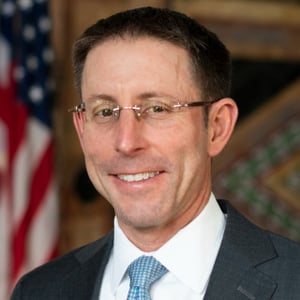
Judge, United States Court of Appeals, Ninth Circuit
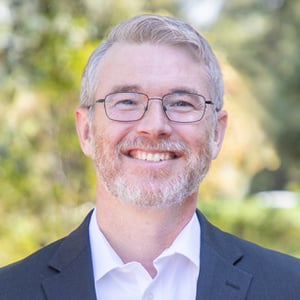
Professor of Law, UC Davis School of Law; Senior Fellow, California Environmental Law and Policy Center; and Director, UC Davis Center for Watershed Sciences
Professor Börk graduated with Distinction and Pro Bono Distinction from Stanford Law School in 2009, and completed his PhD dissertation in Ecology at UC Davis in September 2011. He received the Shapiro Family Award in 2011 as the Outstanding PhD Graduate in Ecology at UC Davis. He clerked for Tenth Circuit Chief Judge Mary Beck Briscoe, U.S. District Court Judge Julie Robinson, and Judge Janice Karlin on the U.S. Bankruptcy Court for the District of Kansas.
Professor Börk graduated Phi Beta Kappa from the University of Kansas in 2002, and was named a Truman Scholar in 2001 and a Switzer Fellow in 2010. Professor Börk's publications run the gamut from the definitive text on the history and application of California Fish and Game Code Section 5937 to a hatchery and genetic management plan for spring-run Chinook salmon. Professor Börk is currently examining legal and ethical issues in ecological restoration. His past work has focused on the management of guest species, those invasive species that managers invite in and make comfortable, and on the evolution of law via administrative actions. He is currently working on local governance issues in ecosystem management.
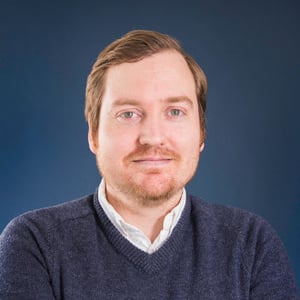
Vice President of Law & Policy, Property and Environment Research Center
Jonathan Wood is vice president of law and policy at the Property and Environment Research Center (PERC). An attorney, Jonathan has litigated environmental and property-rights cases in the Supreme Court of the United States, federal and state appellate courts, and trial courts across the country. His writing has appeared in the Wall Street Journal, Washington Post, National Review, Reason, and other outlets. And his research has been published in journals such as Environmental Law Reporter, Yale Journal on Regulation Notice & Comment, Pace Environmental Law Review, and California Western Law Review.
Prior to coming to PERC, Jonathan was a senior attorney at Pacific Legal Foundation, where he litigated cases concerning the Endangered Species Act, Clean Water Act, and other federal environmental laws. He was co-counsel for forest landowners in Weyerhaeuser Co. v. U.S. Fish and Wildlife Service, in which the Supreme Court ruled unanimously that private land could not be arbitrarily regulated as critical habitat under the ESA. He also led a successful effort to reform regulation of threatened species to better align the incentives of private landowners with the interests of rare species.
Jonathan has testified before several congressional committees on wildlife conservation and endangered species topics. He has also appeared on national television and radio, including NPR’s All Things Considered, C-Span’s Washington Journal, Stossel, Fox News, and Hill.TV.
Jonathan has a law degree from the New York University School of Law, a masters degree in economic policy from the London School of Economics, and a bachelor’s degree in economics from the University of Texas. He is on the executive committee for the Federalist Society’s Environmental Law and Property Rights Practice Group and a steering committee member for the Environmental Law Institute’s Emerging Leaders Initiative.
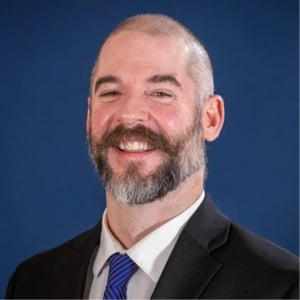
Deputy Director, Regulatory Studies Center, George Washington University
Will Yeatman is deputy director of the GW Regulatory Studies Center. A lawyer, he has spent almost two decades working on federal regulatory policy, with an emphasis on administrative law.
Yeatman has testified many times before Congress and state legislatures, and his scholarly work has appeared in such academic journals as Georgetown Law Journal, Administrative Law Review, and the (forthcoming) Catholic University Law Review. His popular writing has appeared in The Wall Street Journal, Foreign Policy, and Bloomberg.
Yeatman came to the RSC from the Pacific Legal Foundation. Previously, he had been at the Cato Institute’s Center for Constitutional Studies and the Competitive Enterprise Institute. From 2004 to 2006, he served as a Peace Corps volunteer in the Kyrgyz Republic.
Yeatman holds a BA in environmental sciences from the University of Virginia, an MA in international studies from the Denver University Graduate School of International Studies, and a JD from the Georgetown University Law Center. He is a member of the Washington, DC Bar.

Associate Professor of Law, Antonin Scalia Law School at George Mason University
Robert Luther III was appointed Associate Professor of Law in 2025 after serving as Distinguished Professor of Law from 2024-2025 and Adjunct Professor of Law from 2019-2024. He teaches and writes on the federal courts, legal and judicial ethics, political law, Congress, and professional sports. He has served at high levels in all three branches of the federal government and recently founded Constitutional Solutions PLLC—a law firm that navigates judicial candidates, judges, elected officials, professional athletes, and executives through high-stakes hearings, investigations, and reputational attacks.
Immediately before joining the Scalia Law faculty, Professor Luther spent over five years in the Washington, D.C. office of Jones Day, where his practice focused on strategic counseling, crisis management, and litigation. Prior to joining Jones Day, he served as Associate Counsel to the President of the United States in the White House Counsel’s Office. In the White House, he co-managed the judicial selection process and supervised the preparation of over 150 federal judicial nominees for their successful U.S. Senate confirmation hearings. The New York Times Magazine referred to his work on judicial selection during this period as “unique in White House history.” Before joining the White House, Professor Luther served as Counsel to then–U.S. Senator Jeff Sessions (R-Ala.) on the U.S. Senate Judiciary Committee, where he served as a core member of the team that prepared the Senator for confirmation as United States Attorney General. Professor Luther was also a law clerk to Judge Daniel A. Manion of the U.S. Court of Appeals for the Seventh Circuit. Earlier in his career, Professor Luther practiced civil and appellate litigation at a boutique firm in Williamsburg, Va. and taught at William & Mary Law School.
Professor Luther frequently speaks on the legal profession, political law, and federal judicial selection. His public work has been covered by or appeared in The New York Times, The Washington Post, The Wall Street Journal, Bloomberg, Fox News, The Hill, Politico, the Washington Examiner, National Law Journal, Law360, The Washington Reporter, and elsewhere, while his scholarship is published in the law journals of nearly twenty universities including three journals of Harvard University. He holds active law licenses in Virginia, the District of Columbia, the U.S. Supreme Court, and half of the U.S. Courts of Appeals.
In 2025, Virginia Governor Glenn Youngkin appointed Professor Luther to the Board of Visitors to Mount Vernon. He is an elected member of the American Law Institute (ALI) and serves on the Advisory Board of the Wilson Center for Leadership at Hampden-Sydney College. Since 2019, he has helped over 200 of his students secure clerkships with federal judges.
Professor of Law, UC Davis School of Law; Senior Fellow, California Environmental Law and Policy Center; and Director, UC Davis Center for Watershed Sciences
Professor Börk graduated with Distinction and Pro Bono Distinction from Stanford Law School in 2009, and completed his PhD dissertation in Ecology at UC Davis in September 2011. He received the Shapiro Family Award in 2011 as the Outstanding PhD Graduate in Ecology at UC Davis. He clerked for Tenth Circuit Chief Judge Mary Beck Briscoe, U.S. District Court Judge Julie Robinson, and Judge Janice Karlin on the U.S. Bankruptcy Court for the District of Kansas.
Professor Börk graduated Phi Beta Kappa from the University of Kansas in 2002, and was named a Truman Scholar in 2001 and a Switzer Fellow in 2010. Professor Börk's publications run the gamut from the definitive text on the history and application of California Fish and Game Code Section 5937 to a hatchery and genetic management plan for spring-run Chinook salmon. Professor Börk is currently examining legal and ethical issues in ecological restoration. His past work has focused on the management of guest species, those invasive species that managers invite in and make comfortable, and on the evolution of law via administrative actions. He is currently working on local governance issues in ecosystem management.
Vice President of Law & Policy, Property and Environment Research Center
Jonathan Wood is vice president of law and policy at the Property and Environment Research Center (PERC). An attorney, Jonathan has litigated environmental and property-rights cases in the Supreme Court of the United States, federal and state appellate courts, and trial courts across the country. His writing has appeared in the Wall Street Journal, Washington Post, National Review, Reason, and other outlets. And his research has been published in journals such as Environmental Law Reporter, Yale Journal on Regulation Notice & Comment, Pace Environmental Law Review, and California Western Law Review.
Prior to coming to PERC, Jonathan was a senior attorney at Pacific Legal Foundation, where he litigated cases concerning the Endangered Species Act, Clean Water Act, and other federal environmental laws. He was co-counsel for forest landowners in Weyerhaeuser Co. v. U.S. Fish and Wildlife Service, in which the Supreme Court ruled unanimously that private land could not be arbitrarily regulated as critical habitat under the ESA. He also led a successful effort to reform regulation of threatened species to better align the incentives of private landowners with the interests of rare species.
Jonathan has testified before several congressional committees on wildlife conservation and endangered species topics. He has also appeared on national television and radio, including NPR’s All Things Considered, C-Span’s Washington Journal, Stossel, Fox News, and Hill.TV.
Jonathan has a law degree from the New York University School of Law, a masters degree in economic policy from the London School of Economics, and a bachelor’s degree in economics from the University of Texas. He is on the executive committee for the Federalist Society’s Environmental Law and Property Rights Practice Group and a steering committee member for the Environmental Law Institute’s Emerging Leaders Initiative.
Deputy Director, Regulatory Studies Center, George Washington University
Will Yeatman is deputy director of the GW Regulatory Studies Center. A lawyer, he has spent almost two decades working on federal regulatory policy, with an emphasis on administrative law.
Yeatman has testified many times before Congress and state legislatures, and his scholarly work has appeared in such academic journals as Georgetown Law Journal, Administrative Law Review, and the (forthcoming) Catholic University Law Review. His popular writing has appeared in The Wall Street Journal, Foreign Policy, and Bloomberg.
Yeatman came to the RSC from the Pacific Legal Foundation. Previously, he had been at the Cato Institute’s Center for Constitutional Studies and the Competitive Enterprise Institute. From 2004 to 2006, he served as a Peace Corps volunteer in the Kyrgyz Republic.
Yeatman holds a BA in environmental sciences from the University of Virginia, an MA in international studies from the Denver University Graduate School of International Studies, and a JD from the Georgetown University Law Center. He is a member of the Washington, DC Bar.
Professor of Law, UC Davis School of Law; Senior Fellow, California Environmental Law and Policy Center; and Director, UC Davis Center for Watershed Sciences
Professor Börk graduated with Distinction and Pro Bono Distinction from Stanford Law School in 2009, and completed his PhD dissertation in Ecology at UC Davis in September 2011. He received the Shapiro Family Award in 2011 as the Outstanding PhD Graduate in Ecology at UC Davis. He clerked for Tenth Circuit Chief Judge Mary Beck Briscoe, U.S. District Court Judge Julie Robinson, and Judge Janice Karlin on the U.S. Bankruptcy Court for the District of Kansas.
Professor Börk graduated Phi Beta Kappa from the University of Kansas in 2002, and was named a Truman Scholar in 2001 and a Switzer Fellow in 2010. Professor Börk's publications run the gamut from the definitive text on the history and application of California Fish and Game Code Section 5937 to a hatchery and genetic management plan for spring-run Chinook salmon. Professor Börk is currently examining legal and ethical issues in ecological restoration. His past work has focused on the management of guest species, those invasive species that managers invite in and make comfortable, and on the evolution of law via administrative actions. He is currently working on local governance issues in ecosystem management.
Vice President of Law & Policy, Property and Environment Research Center
Jonathan Wood is vice president of law and policy at the Property and Environment Research Center (PERC). An attorney, Jonathan has litigated environmental and property-rights cases in the Supreme Court of the United States, federal and state appellate courts, and trial courts across the country. His writing has appeared in the Wall Street Journal, Washington Post, National Review, Reason, and other outlets. And his research has been published in journals such as Environmental Law Reporter, Yale Journal on Regulation Notice & Comment, Pace Environmental Law Review, and California Western Law Review.
Prior to coming to PERC, Jonathan was a senior attorney at Pacific Legal Foundation, where he litigated cases concerning the Endangered Species Act, Clean Water Act, and other federal environmental laws. He was co-counsel for forest landowners in Weyerhaeuser Co. v. U.S. Fish and Wildlife Service, in which the Supreme Court ruled unanimously that private land could not be arbitrarily regulated as critical habitat under the ESA. He also led a successful effort to reform regulation of threatened species to better align the incentives of private landowners with the interests of rare species.
Jonathan has testified before several congressional committees on wildlife conservation and endangered species topics. He has also appeared on national television and radio, including NPR’s All Things Considered, C-Span’s Washington Journal, Stossel, Fox News, and Hill.TV.
Jonathan has a law degree from the New York University School of Law, a masters degree in economic policy from the London School of Economics, and a bachelor’s degree in economics from the University of Texas. He is on the executive committee for the Federalist Society’s Environmental Law and Property Rights Practice Group and a steering committee member for the Environmental Law Institute’s Emerging Leaders Initiative.
Deputy Director, Regulatory Studies Center, George Washington University
Will Yeatman is deputy director of the GW Regulatory Studies Center. A lawyer, he has spent almost two decades working on federal regulatory policy, with an emphasis on administrative law.
Yeatman has testified many times before Congress and state legislatures, and his scholarly work has appeared in such academic journals as Georgetown Law Journal, Administrative Law Review, and the (forthcoming) Catholic University Law Review. His popular writing has appeared in The Wall Street Journal, Foreign Policy, and Bloomberg.
Yeatman came to the RSC from the Pacific Legal Foundation. Previously, he had been at the Cato Institute’s Center for Constitutional Studies and the Competitive Enterprise Institute. From 2004 to 2006, he served as a Peace Corps volunteer in the Kyrgyz Republic.
Yeatman holds a BA in environmental sciences from the University of Virginia, an MA in international studies from the Denver University Graduate School of International Studies, and a JD from the Georgetown University Law Center. He is a member of the Washington, DC Bar.
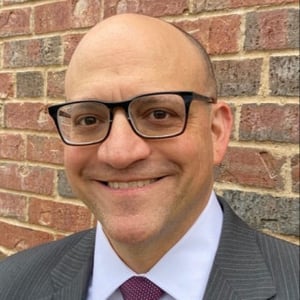
Executive Director & Secretary, American Civil Rights Project
Dan Morenoff is the executive director at the American Civil Rights Project and an adjunct fellow at the Manhattan Institute.
His work focuses on protecting and, where necessary, restoring the primacy of all Americans' shared civil rights against the identitarian alternative.
Before practicing law, Morenoff served on the legislative staff of Sen. Phil Gramm (R-TX). Morenoff holds a B.A. from Columbia College of Columbia University in the City of New York and a J.D. from the University of Chicago Law School. He has also served as an officer or director of several community organizations in Dallas, Texas.

A Matter of Interpretation Revisited
San Francisco, CAWhat’s The “Harm?" ESA Rulemaking after Loper Bright
Karrigan Börk, Jonathan Wood, Will Yeatman
In April, the Fish and Wildlife Service proposed to rescind a regulation defining the Endangered...
What’s The “Harm?" ESA Rulemaking after Loper Bright
Karrigan Börk, Jonathan Wood, Will Yeatman
In April, the Fish and Wildlife Service proposed to rescind a regulation defining the Endangered...
In Memoriam: Professor John S. Baker Jr. (1946–2025)
It is with deep sadness that we share the passing on September 6, 2025, of...
What’s The “Harm?" ESA Rulemaking after Loper Bright
Topics
Is Locke the Next Supreme Court Decision the Lower Courts Should Ignore?
I observed in a recent blog that the Supreme Court has begun to chide the...
Topics
Clean Water Act Clarity: Will the Supreme Court Grant Cert in Port of Tacoma v. Puget Soundkeeper Alliance?
On May 27, 2025, the United States filed an amicus brief in a case testing...
Federal Judicial Selection in the new Trump Administration and the Future of the U.S. Supreme Court
Sacramento Lawyers Chapter
Sacramento, CADisparate-Impact Liability: Unfounded, Unconstitutional, & Not Long For This World
Dan Morenoff
For more than fifty years—ever since the Supreme Court decided Griggs v. Duke Power Co.[1]—almost...
Topics
Confronting the Supreme Court’s Confusing Confrontation Clause Cases
With all of the hullabaloo surrounding federal district court judges blocking President Donald Trump’s executive...