
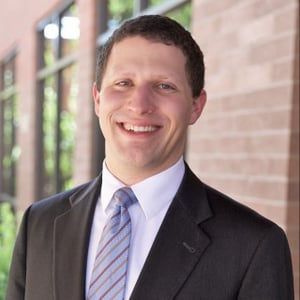
President & General Counsel, Reason for Life
Samuel D. Green serves as President & General Counsel at Reason for Life, a nonprofit ministry working to end abortion in America. In this role, Samuel focuses on educating, but he has also served as counsel of record on amicus briefs in multiple cases, including Dobbs v. Jackson Women’s Health Organization (abortion) and 303 Creative LLC v. Elenis (freedom of speech).
Before founding Reason for Life, Samuel spent five years at Alliance Defending Freedom (ADF), where he engaged in litigation to defend the sanctity of life, freedom of speech, and religious liberty. Samuel has also worked as a litigation associate at a large law firm (Jenner & Block), as a member of a presidential campaign’s legal team, and as a law clerk to the Honorable Raymond W. Gruender of the U.S. Court of Appeals for the Eighth Circuit.
Samuel finished first in his class at Pepperdine University School of Law, where he earned a Juris Doctor degree in 2011. He also studied political science at the University of California, Los Angeles (UCLA), where he graduated, summa cum laude, with a Bachelor of Arts degree in 2008.
Samuel has provided legislative testimony, preached sermons about the sanctity of life, and given presentations across the country to various groups or their chapters (including the Federalist Society, the Christian Legal Society, the St. Thomas More Society, Turning Point USA, Students for Life of America, Live Action, 40 Days for Life, Summit Ministries, and Teen Pact Leadership Schools). Samuel has also participated in media interviews and published articles with various outlets, including Newsweek, The Hill, The Seattle Times, WORLD, Washington Examiner, Arizona Capitol Times, The Federalist, and The Daily Signal.
Samuel is admitted to practice law in California, Arizona, Missouri, Montana, the U.S. Supreme Court, and multiple federal district and appellate courts.
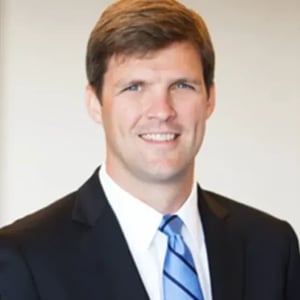
Judge, United States District Court for the Western District of Kentucky
Prior to joining the bench, Judge Beaton was a Partner at Squire Patton Boggs LLP, where he co-chaired the firm’s Appellate & Supreme Court practice group. Judge Beaton’s represented clients engaged in complex commercial litigation in Federal and State courts, and before administrative agencies. Judge Beaton also served as an adjunct professor at the University of Louisville Brandeis School of Law, where he taught constitutional interpretation. Before joining Squire Patton Boggs, Judge Beaton practiced in the Washington, D.C. office of Sidley Austin, LLP, and also served as a legal fellow with the International Justice Mission in Kampala, Uganda. Upon graduation from law school, Judge Beaton served as a law clerk to Justice Ruth Bader Ginsburg of the United States Supreme Court, and to Judge A. Raymond Randolph of the United States Court of Appeals for the D.C. Circuit. Judge Beaton earned his B.A., summa cum laude, from Centre College, and his J.D. from Columbia Law School, where he served as an Articles Editor on the Columbia Law Review.
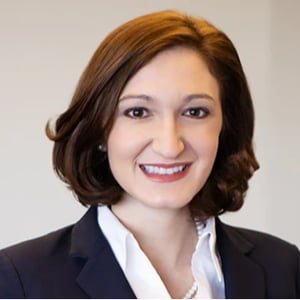
Partner, Squire Patton Boggs
Lauren Kuley is co-chair of the Appellate & Supreme Court Practice. She leads complex appeals and critical motions practice in courts nationwide. She simplifies complex issues and develops creative arguments to curtail legal disputes and overturn bad outcomes. Deploying this strategy, Lauren has argued and won reversals of significant verdicts on appeal, led the strategy and briefing for winning appeals nationwide and obtained dismissal of high stakes claims at the pleading stage in federal courts. She frequently collaborates with trial counsel to preserve and craft the strongest arguments for appeal. Lauren also serves as national appellate counsel for a major insurer in a large portfolio of cases arising from the pandemic.

Associate Professor of Law, Antonin Scalia Law School at George Mason University
Robert Luther III was appointed Associate Professor of Law in 2025 after serving as Distinguished Professor of Law from 2024-2025 and Adjunct Professor of Law from 2019-2024. He teaches and writes on the federal courts, legal and judicial ethics, political law, Congress, and professional sports. He has served at high levels in all three branches of the federal government and recently founded Constitutional Solutions PLLC—a law firm that navigates judicial candidates, judges, elected officials, professional athletes, and executives through high-stakes hearings, investigations, and reputational attacks.
Immediately before joining the Scalia Law faculty, Professor Luther spent over five years in the Washington, D.C. office of Jones Day, where his practice focused on strategic counseling, crisis management, and litigation. Prior to joining Jones Day, he served as Associate Counsel to the President of the United States in the White House Counsel’s Office. In the White House, he co-managed the judicial selection process and supervised the preparation of over 150 federal judicial nominees for their successful U.S. Senate confirmation hearings. The New York Times Magazine referred to his work on judicial selection during this period as “unique in White House history.” Before joining the White House, Professor Luther served as Counsel to then–U.S. Senator Jeff Sessions (R-Ala.) on the U.S. Senate Judiciary Committee, where he served as a core member of the team that prepared the Senator for confirmation as United States Attorney General. Professor Luther was also a law clerk to Judge Daniel A. Manion of the U.S. Court of Appeals for the Seventh Circuit. Earlier in his career, Professor Luther practiced civil and appellate litigation at a boutique firm in Williamsburg, Va. and taught at William & Mary Law School.
Professor Luther frequently speaks on the legal profession, political law, and federal judicial selection. His public work has been covered by or appeared in The New York Times, The Washington Post, The Wall Street Journal, Bloomberg, Fox News, The Hill, Politico, the Washington Examiner, National Law Journal, Law360, The Washington Reporter, and elsewhere, while his scholarship is published in the law journals of nearly twenty universities including three journals of Harvard University. He holds active law licenses in Virginia, the District of Columbia, the U.S. Supreme Court, and half of the U.S. Courts of Appeals.
In 2025, Virginia Governor Glenn Youngkin appointed Professor Luther to the Board of Visitors to Mount Vernon. He is an elected member of the American Law Institute (ALI) and serves on the Advisory Board of the Wilson Center for Leadership at Hampden-Sydney College. Since 2019, he has helped over 200 of his students secure clerkships with federal judges.
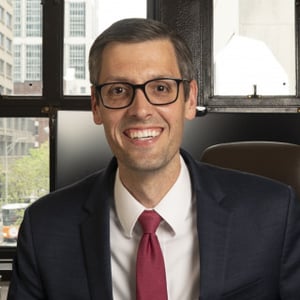
Solicitor General, Tennessee Attorney General's Office
Matt Rice serves as the Solicitor General of Tennessee. Before joining the State, Matt worked in private practice at Williams & Connolly LLP. He clerked for Justice Clarence Thomas on the United States Supreme Court as well as Judge Sandra Ikuta on the United States Court of Appeals for the Ninth Circuit. Before his legal career, Matt played professional baseball in the Tampa Bay Rays organization.
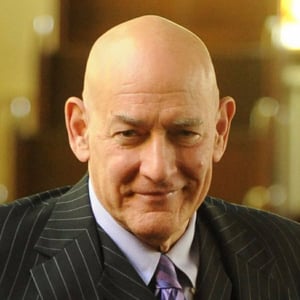
Raoul Berger Professor of Legal History at Northwestern University School of Law
Stephen Presser is a leading American legal historian and expert on shareholder liability for corporate debts. He is frequently an invited witness before committees of the U.S. Senate and House of Representatives on issues of constitutional law. He holds a joint appointment with the J. L. Kellogg Graduate School of Management and also teaches in Northwestern's history department.

Does the Fourteenth Amendment Actually Prohibit Abortion? Were Scalia and Kavanaugh wrong?
California Western Student Chapter
San Diego, CAThe Past Is Not a Foreign Country: How a Historical Critique of Originalism Misses That the Past Is Prologue
Stephen B. Presser
A review of Jonathan Gienapp, Against Constitutional Originalism: A Historical Critique (2024) This review is...
Topics
Article III and the Canal Zone District Court: What Does the Constitution Require of Territorial Courts?
With President Donald Trump’s pledge to take back the Panama Canal, it’s worth looking back...
Topics
Church Splits, Property Fights, and the Limits of Civil Jurisdiction
In 2024, the Alabama Supreme Court released two cases involving property disputes that were fueled...
Topics
Does a New Critique of Originalism by a Historian Neglect the Constitution?
Over at Law & Liberty, Professors John O. McGinnis and Mike Rappaport review a new...
Topics
How Should Historical Gloss Inform Our Interpretation of the Constitution?: A Review of Historical Gloss and Foreign Affairs: Constitutional Authority in Practice
“[It is] an inadmissibly narrow conception of American constitutional law to confine it to the...
Topics
Another One Bites the Dust: Texas Court Invalidates EAP Salary Regs
On November 15, 2024, in Plano Chamber of Commerce v. U.S. Department of Labor, a...
Topics
Free Speech Coalition v. Paxton: Regulating Access to Adult Content Doesn’t Justify Flouting the First Amendment and Long-Established Precedent
This term, the Supreme Court will review the Fifth Circuit’s decision in Free Speech Coalition...
Topics
Textualist-Originalist Opportunities in the Plaintiffs’ Bar
Last week, I spoke on a panel with other conservatives at the American Antitrust Institute,...
Panel One: Changes in the Federal Courts
2024 Kentucky Conference
Frankfort, KY