
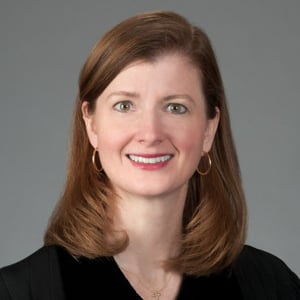
Judge, United States Court of Appeals, Eleventh Circuit
On March 20, 2018, Judge Elizabeth L. Branch (Lisa) was sworn in as a United States Circuit Judge for the Eleventh Circuit.
Judge Branch attended and graduated from Davidson College in North Carolina (B.A., cum laude, 1990), and Emory University School of Law (J.D., with distinction, 1994).
After graduating from law school, Judge Branch served as a federal law clerk to The Honorable J. Owen Forrester of the U.S. District Court for the Northern District of Georgia from 1994 to 1996. Following her clerkship, Judge Branch joined the litigation department of Smith, Gambrell & Russell, LLP in Atlanta as an associate and then a partner.
From 2004 to 2008, Judge Branch was a senior official in the Administration of President George W. Bush in Washington, D.C. She served first as the Associate General Counsel for Rules and Legislation at the U.S. Department of Homeland Security and then as the Counselor to the Administrator of the Office of Information and Regulatory Affairs at the U. S. Office of Management and Budget.
She returned to Smith Gambrell in 2008 as a litigation partner. Judge Branch then was appointed to the Court of Appeals of Georgia by Governor Nathan Deal, taking office on September 4, 2012, where she served until March 19, 2018.
Judge Branch is a member of the Board of Advisors of the Atlanta Lawyers Chapter for the Federalist Society for Law and Public Policy Studies.
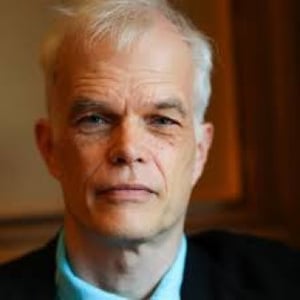
Senior Editor, National Review
Historian Richard Brookhiser is a senior editor of National Review, a senior fellow at the National Review Institute, and the author of several books, including Founders’ Son, Right Time, Right Place, George Washington on Leadership, What Would the Founders Do?, Gentleman Revolutionary, Rules of Civility, America’s First Dynasty, Alexander Hamilton, American, Founding Father: Rediscovering George Washington, Way of the WASP, and The Outside Story.

Clayton J. and Henry R. Barber Professor of Law, Northwestern University Pritzker School of Law and Co-Chairman, Board of Directors, The Federalist Society
STEVEN GOW CALABRESI is the Clayton J. & Henry R. Barber Professor at Northwestern Pritzker School of Law. He has also co-taught in the Fall semester at Yale Law School from 2013 to the present. Calabresi clerked for Justice Antonin Scalia and Judges Robert H. Bork and Ralph K. Winter. He was a Special Assistant to Attorney General Meese from 1985 to 1987 and worked with Ken Cribb as his deputy in 1987 on the second floor of the West Wing of the Reagan White House. Calabresi has written books on presidential power and comparative constitutional law and the origins of judicial review. He and Gary Lawson are the co-editors of a casebook on U.S. Constitutional Law, and Calabresi is also the co-editor of a casebook on comparative constitutional law. He has written over seventy law review articles since 1990.
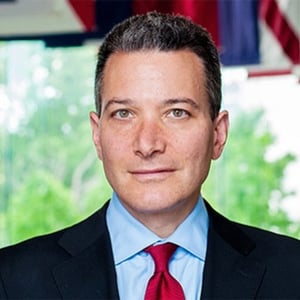
Senior Fellow, FIRE and CEO Emeritus, National Constitution Center
Jeffrey Rosen is a senior FIRE fellow as well as the host of “The Blessings of Liberty” podcast, presented by FIRE. He is also the CEO emeritus of the National Constitution Center, a professor of law at the George Washington University Law School, and a contributing editor of The Atlantic. He was previously the legal affairs editor of The New Republic and a staff writer for The New Yorker.
Rosen is the author of the New York Times bestsellers The Pursuit of Happiness and Conversations with RBG. His new book is The Pursuit of Liberty: How Hamilton vs. Jefferson Ignited the Lasting Battle Over Power in America.
Rosen is a graduate of Harvard College; Oxford University, where he was a Marshall Scholar; and Yale Law School. He is an elected member of the American Philosophical Society and the American Law Institute. In 2024, the French government recognized him as a Chevalier in the Ordre des Arts et des Lettres.
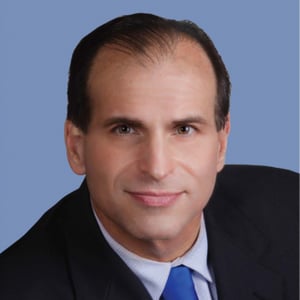
District Judge, United States District Court for the Southern District of Florida
Judge Ed Artau is a United States District Judge for the Southern District of
Florida. He was nominated by President Donald Trump for appointment to
the United States District Court in May of 2025, and confirmed by the United
States Senate in September of 2025. Prior to his confirmation, Judge Artau
was appointed by Governor Ron DeSantis to the Fourth District Court of
Appeal of Florida, where he served as an appellate judge from 2020 until
2025. Prior to being an appellate judge, Judge Artau was appointed by
Governor Rick Scott to the Fifteenth Judicial Circuit in Palm Beach County,
Florida, where he served as a trial judge from 2014 until 2020.
Judge Artau is also an Adjunct Professor at St. Thomas University College of
Law and has served as the Dean of the Advanced Judicial Studies College
and on the faculty of both the Florida Judicial College and the Advanced
Judicial Studies College.
Judge Artau has previously served as the Chair of the Fifteenth Circuit
Judicial Nominating Commission, Vice Chair of the Fourth District Court of
Appeal Judicial Nominating Commission, Parliamentarian of the Appellate
Court Rules Committee, Vice Chair of the Judicial Nominating Procedures
Committee, and as a representative on the Florida Court Education Council.
Before his appointment to the bench, Judge Artau served as General Counsel
to the South Florida Water Management District, where he commenced his
public service as a senior litigation attorney. Prior to this role, Judge Artau
managed his own law firm after having served in the litigation departments of
the law firms of Proskauer Rose, L.L.P. and Hodgson Russ, L.L.P.
Judge Artau is a graduate of the Georgetown University Law Center where he
served as a law review editor and Vice-President of the Georgetown Student
Chapter of the Federalist Society. Judge Artau completed his undergraduate
studies at Nova Southeastern University, where he graduated cum laude and
was later awarded a Doctor of Laws, honoris causa, for his commitment to
public service, academia, and the law.
Judge Artau is a founder of the first Lawyers Chapter of the Federalist
Society in Florida and is the 2025 recipient of the Good Shepherd Award,
presented by the Florida Chapters of the Federalist Society in recognition of his “Commitment to the Rule of Law and the Ideals of the Federalist Society.”
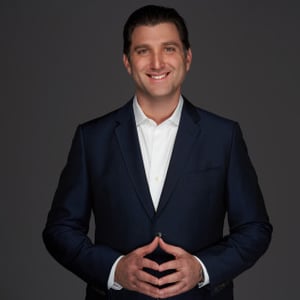
Founder, Groisman LLC
Gabriel Groisman is a nationally recognized attorney, policy strategist, public speaker, and advocate for the Jewish community. He is the Founder of Groisman, LLC, a boutique government affairs and consulting firm with offices in Miami and Washington, D.C., where he provides strategic advisory services, public affairs, and advocacy for select clients. He is also a practicing attorney and the principal of Groisman Law, where he handles select litigation and legal matters.
Gabe is a weekly columnist for JNS.org, where he writes on issues relating to antisemitism, U.S. and Israeli politics, and the future of the Jewish people. He is also the host of the political podcast Standpoint with Gabe Groisman, featuring high-level interviews with U.S. Senators, members of Congress, governors, mayors, and thought leaders from across the conservative and pro-Israel landscape.
Groisman is an internationally sought-after speaker and legal scholar on antisemitism and the BDS movement. He has addressed audiences at the United Nations, the Italian Parliament, and the Israeli Knesset, as well as conferences and institutions around the globe. He serves as a Senior Advisor to the Combat Antisemitism Movement and is a member of the Jewish National Fund’s Speakers Bureau.
Previously, Gabe served as Mayor of Bal Harbour, Florida, from 2016 to 2022, after first being elected to the Village Council. During his tenure, he authored and passed the nation’s first municipal ordinance banning BDS (December 2015) and became the first elected official in the U.S. to codify the IHRA definition of antisemitism (December 2017).
He currently serves as Chairman of the Board of the Children’s Tumor Foundation, and is a national board member of the Republican Jewish Coalition.
In recognition of his work, Gabe received the Pursuit of Justice Award from the American Association of Jewish Lawyers and Jurists in 2018 and the Voices of Iron Award from the Israeli Knesset in 2025 for his unwavering defense of Israel and the Jewish people.
Gabe earned his B.A. in Philosophy from the University of Michigan, Ann Arbor, and his J.D. from American University’s Washington College of Law. He lives in Bal Harbour with his wife Lisa and their five daughters.
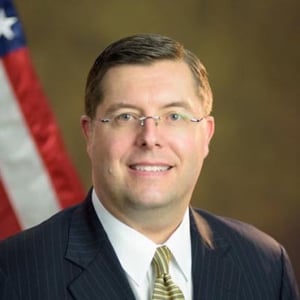
Chief Deputy Attorney General
Ryan Newman is currently Chief Deputy Attorney General for Florida Office of the Attorney General.
During the first Trump Administration, he served as Counselor to the United States Attorney General for national security and international affairs, Deputy General Counsel (Legal Counsel) for the Department of Defense, and Acting Assistant Attorney General for the Office of Legal Policy at the Department of Justice. Prior to serving in the Executive Branch, Ryan was Chief Counsel to United States Senator Ted Cruz during the 114th Congress.
Ryan served as a law clerk to the Honorable Samuel A. Alito, Jr. on the United States Supreme Court, the Honorable Richard J. Leon on the United States District Court for the District of Columbia, and the Honorable J.L. Edmondson on the United States Court of Appeals for the Eleventh Circuit.
Prior to law school, Ryan was an armor officer in the United States Army assigned to the 1st Squadron, 10th U.S. Cavalry Regiment (Buffalo Soldiers). He deployed to Iraq in 2003 for Operation Iraqi Freedom.
Ryan graduated from the United States Military Academy at West Point in 1998. He earned his law degree with high honors from The University of Texas School of Law in 2007.
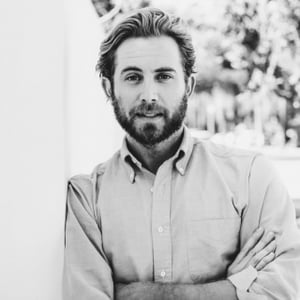
Director, Administrative State Project, The Claremont Institute Center for the American Way of Life
Washington Fellow
Theodore Wold was the Acting-Assistant Attorney General in the Office of Legal Policy at the Department of Justice and Deputy Assistant to the President for Domestic Policy during the Trump Administration. He previously served as Deputy Chief Counsel to United States Senator Mike Lee on the Senate Judiciary Committee. He holds a B.A. from Georgetown University, where he studied government and English; an M. Litt. from the University of St. Andrews, where he studied English literature; and a J.D. from the University of Notre Dame. Mr. Wold clerked at the United States Court of Appeals for the District of Columbia Circuit for Judge Janice Rogers Brown and the United States District Court for the District of Puerto Rico for Judge José Antonio Fusté. He has also lectured at the law school of the Universidad of Francisco Marroquín in Guatemala. Mr. Wold was a John Marshall Fellow at the Claremont Institute and a Madison Fellow at Hillsdale College’s Kirby Center.
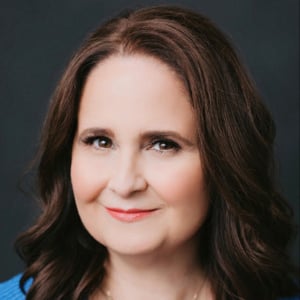
Chief Judge, United States Court of Appeals, Fifth Circuit
Jennifer Walker Elrod is the Chief Judge of the United States Court of Appeals for the Fifth Circuit. She was nominated to the Fifth Circuit in 2007, and she served as a Circuit Judge on the court until assuming the role of Chief Judge in October 2024. Prior to serving as a Circuit Judge, Chief Judge Elrod was appointed and then twice elected Judge of the 190th District Court of Harris County, Texas, where she spent over five years presiding over more than 200 jury and non-jury trials.
Chief Judge Elrod graduated cum laude from Harvard Law School, where she was an active member of the Harvard Federalist Society, an Ames Moot Court finalist, and a Senior Editor of the Harvard Journal of Law & Public Policy. She clerked for the Honorable Sim Lake in the Southern District of Texas. Before serving as a judge, Chief Judge Elrod worked in private practice, focusing on civil litigation, antitrust, and employment matters.
She has been repeatedly recognized for her work as a jurist, as well as for her pro bono work and contributions to the community. She has been named the 2022 Texas Review of Law & Politics’ Jurist of the Year, the 2018 Harvard Federalist Society’s Alumni of the Year, the 2016–17 Texas Association of Civil Trial and Appellate Specialists’ Appellate Judge of the Year, and the 2008 Mexican-American Bar Association of Texas’s Judge of the Year.
Chief Judge Elrod is actively engaged in the academic and legal communities. Chief Judge Elrod currently serves on the Board of Directors and as the Jurist-in-Residence at the South Texas College of Law, where she teaches civil procedure and First Amendment law. She is also a member of the American Law Institute and of the Board of Advisors for the Harvard Journal of Law & Public Policy, and she is a former member of the Board of Regents of her alma mater, Baylor University, and the Board of Visitors at Brigham Young University Law School. She previously served as the Chair of the Codes of Conduct Committee for the Judicial Conference of the United States. She has also served as the M.D. Anderson Visiting Public Service Professor at the Texas Tech University School of Law and as Jurist-in-Residence at Brigham Young University Law School, and she has taught legal writing at the University of Houston Law Center. She presented the Lewis F. Powell, Jr. Distinguished Lecture at the Washington and Lee University School of Law and is a frequent speaker on the topics of trial and appellate procedure, ethics, employment law, and constitutional law. Chief Judge Elrod also serves on the board of the Garland R. Walker Inn of Court, and co-produces an annual musical CLE, for which her pupilage group has won multiple national awards.
Chief Judge Elrod’s publications include: Trial by Siri: AI Comes to the Courtroom; Don’t Mess with Texas Judges: In Praise of the State Judiciary; For Good: Enriching Your Practice and Your Life Through Pro Bono and Community Service; Is the Jury Still Out?: A Case for the Continued Viability of the American Jury; and W(h)ither the Jury? The Diminishing Role of the Jury Trial in our Legal System.
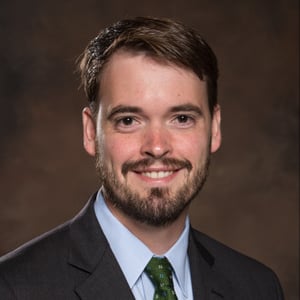
Senior Attorney, Institute for Justice
Rob Johnson is a senior attorney at the Institute for Justice, where he litigates to protect private property, free speech, and other individual rights. Rob is a nationally-recognized expert on civil forfeiture. He previously represented a series of small business owners who had their entire bank accounts seized by the IRS, and he launched an initiative that resulted in the IRS reopening hundreds of closed forfeiture cases and returning millions of dollars. He has also litigated cases challenging the constitutionality of civil forfeiture procedures, and he scored a victory striking down a forfeiture program as a violation of due process.
Beyond civil forfeiture, Rob has litigated cases defending a range of constitutional rights. He was part of teams that successfully challenged occupational licensing requirements for tour guides in Savannah and Charleston. He also developed a class action lawsuit fighting the NYPD’s use of a draconian “no-fault eviction” statute to coerce residents to waive their constitutional rights, which led New York City to reform the challenged law.
Rob’s writing has been published in the Wall Street Journal, Washington Post, Politico, and Reason, among other venues. Rob has testified about occupational licensing before the House and Senate Judiciary Committees and has twice testified about civil forfeiture before the House Ways & Means Oversight Subcommittee. He has also testified before state legislatures across the country.
From 2014-2017, Rob served as IJ’s first Elfie Gallun Fellow for Freedom and the Constitution. In that role, Rob wrote and spoke about the vital role the U.S. Constitution plays in protecting our most precious freedoms. He is currently at work on a book about the Fourteenth Amendment.
Rob studied literature and anthropology at Columbia University, and he studied law at Harvard Law School. Upon graduation, he clerked for Chief Judge Alex Kozinski on the Ninth Circuit and for Justice Anthony Kennedy on the Supreme Court.
Rob lives in Cleveland with his wife and two daughters—all named after characters in Shakespeare plays—and is an amateur large format photographer.
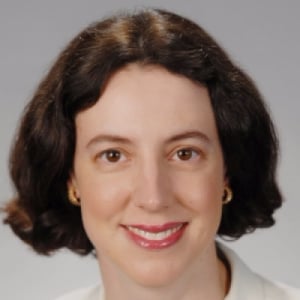
Donald Phillip Rothschild Research Professor, George Washington University Law School
Renée Lettow Lerner is Donald Phillip Rothschild Research Professor of Law at George Washington University Law School.
Professor Lerner works in the fields of U.S. and English legal history, civil and criminal procedure, and comparative law. She advises judges, lawyers, and government officials from the United States and countries in Europe, Latin America, and Asia about the differences between adversarial and nonadversarial legal systems.
She writes extensively about the history of American juries. Her work includes not only scholarly articles, but also online publications intended for a broader audience of legal professionals and the public. In many different settings, she has debated the role of juries with other academics and with lawyers. She has a book forthcoming with Oxford University Press in the Very Short Introduction Series entitled “The Jury.” She is also working on a book about the American civil jury, from the colonial period to the present.
She is the author, with John Langbein and Bruce Smith, of the book History of the Common Law: The Development of Anglo-American Legal Institutions (2009).
Her recent writings include a book review of Amalia D. Kessler’s Inventing American Exceptionalism: The Origins of American Adversarial Legal Culture, 1800-1877, 67 J. Legal Ed. 888 (2018); “How the Creation of Appellate Courts in England and the United States Limited Judicial Comment on Evidence to the Jury,” 40 Journal of the Legal Profession 215 (2016); “The Troublesome Inheritance of Americans in Magna Carta and Trial by Jury,” in Magna Carta and its Modern Legacy 77-98 (Robert Hazell and James Melton eds., Cambridge University Press 2015); and “The Failure of Originalism in Preserving Constitutional Rights to Civil Jury Trial,” 22 William & Mary Bill of Rights Journal 811 (2014).
Professor Lerner received an A.B. summa cum laude in history from Princeton University. She was a Rhodes Scholar at Oxford University, where she studied English legal history. At Yale Law School, she was Articles Editor of the Yale Law Journal. She served as a law clerk to Justice Anthony M. Kennedy of the U.S. Supreme Court and to Judge Stephen F. Williams of the U.S. Court of Appeals for the District of Columbia Circuit. From 2003 to 2005, she served as Deputy Assistant Attorney General in the Office of Legal Counsel at the U.S. Department of Justice.
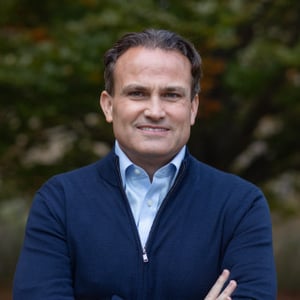
Professor of Law, University of Michigan Law School
Christopher J. Walker is a Professor of Law at the University of Michigan. Prior to joining Michigan law faculty in 2022, he spent a decade teaching at The Ohio State University Moritz College of Law. He previously clerked for Justice Anthony Kennedy of the U.S. Supreme Court, worked on the Civil Appellate Staff at the U.S. Department of Justice, and served on the Senate Judiciary Committee staff for the Gorsuch Supreme Court confirmation. Professor Walker’s research focuses on administrative law, regulation, and law and policy at the agency level. Outside the law school, he chaired the American Bar Association’s Section of Administrative Law and Regulatory Practice in 2020-21 and served as one of forty Public Members of the Administrative Conference of the United States from 2016-2022, and he continues to serve in both organizations in various capacities. He also works of counsel at the U.S. Chamber Litigation Center. In 2022, he received the Federalist Society’s Joseph Story Award.
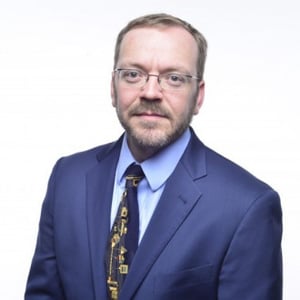
Vice President for Legal Affairs, Goldwater Institute

Judge, United States Court of Appeals, Ninth Circuit
Judge Carlos Bea serves as a judge on the United States Court of Appeals for the Ninth Circuit. He received his Bachelor's Degree from Stanford University in 1956 and his J.D. from Stanford Law School in 1958. Judge Bea was born in San Sebastian, Spain, and immigrated with his family to Cuba in 1939. In 1952, he represented Cuba on the Cuban National basketball team in the Helsinki Olympics. Judge Bea became a naturalized citizen of the United States in 1958. He engaged in private practice in San Francisco, principally in the area of civil trials (jury and non-jury), from 1959-75 at Dunne, Phelps & Mills and from 1975-90 at Carlos Bea, A Law Corporation. He taught courses in civil litigation advocacy at Hastings College of Law and Stanford Law School. From 1990 to 2003, Judge Bea served as a judge of the San Francisco Superior Court. He was nominated by President George W. Bush to the United States Court of Appeals for the Ninth Circuit and was confirmed in 2003.
Judge Bea and his wife Louise reside in San Francisco, where they raised their four sons, Sebastian, Alexander, Nicholas, and Dominic.
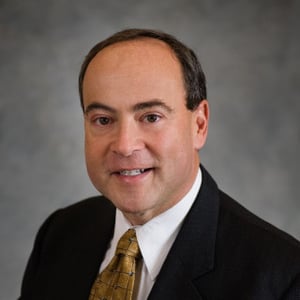
Justice, Supreme Court of Arizona
Clint Bolick was appointed by Governor Doug Ducey in January 2016 to serve on the Arizona Supreme Court and was retained by the voters in 2018 and 2024.
Prior to joining the Court, Justice Bolick litigated constitutional cases in state and federal courts from coast to coast, including the U.S. Supreme Court. Among other positions, he served as Vice President for Litigation at the Goldwater Institute and as Co-founder and Vice President for Litigation at the Institute for Justice. He has litigated in support of school choice, freedom of enterprise, private property rights, freedom of speech, and federalism, and against racial classifications and government subsidies.
Justice Bolick received his Juris Doctor degree from the University of California at Davis, where he has been recognized as a distinguished alumnus, and his Bachelor of Arts degree magna cum laude from Drew University. He serves as a research fellow with the Hoover Institution. Among other honors, he was named one of the 90 Greatest DC Lawyers in the Last 30 Years by Legal Times in 2008, received a Bradley Prize in 2006, and was recognized as one of the nation’s three lawyers of the year by American Lawyer in 2002 for his successful defense of school vouchers in Zelman v. Simmons-Harris.
Justice Bolick is a prolific author of a dozen books and hundreds of articles. Among his most recent books are Unshackled: Freeing America’s K-12 Education System: Immigration Wars: Forging an American Solution, co-authored with former Florida Governor Jeb Bush; and David’s Hammer: The Case for an Activist Judiciary. Bolick serves as an adjunct professor of constitutional law at Arizona State University’s Sandra Day O’Connor School of Law and has served as a lecturer at Harvard University’s John F. Kennedy School of Government.
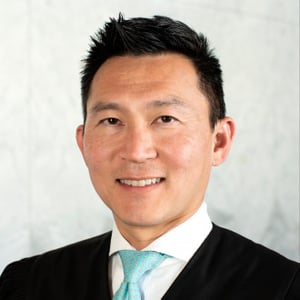
Judge, United States Court of Appeals, Ninth Circuit
Kenneth Kiyul Lee is a judge on the U.S. Court of Appeals for the Ninth Circuit. He was appointed in June 2019 and is based in San Diego, California.
Prior to his appointment, he was a partner at the law firm of Jenner & Block in Los Angeles. Judge Lee previously served as an Associate Counsel to President George W. Bush and as Special Counsel to Senator Arlen Specter, then-chair of the Senate Judiciary Committee. He started his legal career at Wachtell, Lipton, Rosen & Katz in New York.
Judge Lee received his J.D. from Harvard Law School, magna cum laude, and his A.B. from Cornell University, summa cum laude. He clerked for Judge Emilio M. Garza of the U.S. Court of Appeals for the Fifth Circuit.

Thomas M. Siebel Senior Fellow, The Hoover Institution, Stanford University; Gary T. Schwartz Distinguished Professor of Law Emeritus, UCLA School of Law
Eugene Volokh is the Thomas M. Siebel Senior Fellow at the Hoover Institution (Stanford), as well as the Gary T. Schwartz Distinguished Professor of Law Emeritus and Distinguished Research Professor at UCLA School of Law. He recently retired from teaching at UCLA, after 30 years there, and is now focusing on research.
Volokh is the author of the textbooks The First Amendment and Related Statutes (8th ed. 2023), and Academic Legal Writing (5th ed. 2016), as well as over 100 academic law journal articles, mostly on First Amendment law. He is a member of The American Law Institute; the editor-in-chief of the Journal of Free Speech Law; and the creator and coauthor of The Volokh Conspiracy, a leading legal blog founded in 2002 (hosted at the Washington Post from 2014 to 2017 and now at Reason Magazine).
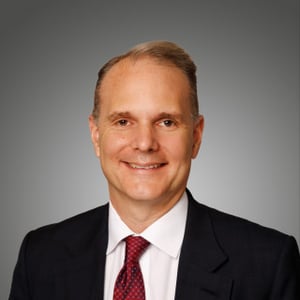
Assistant Professor of Law, Catholic University School of Law
Professor Derek A. Webb is an Assistant Professor of Law at the Catholic University of America Columbus School of Law. He writes and teaches in the fields of constitutional law, civil procedure, legal history, and American political thought. Professor Webb received his B.A. in philosophy from Yale University, a Ph.D. in political theory from the University of Notre Dame, and a J.D. from Georgetown University.
His articles have appeared or are forthcoming in the University of Notre Dame Law Review, the University of Pennsylvania Journal of Constitutional Law, the Journal of Supreme Court History, Law and History Review, the American Journal of Legal History, and the Encyclopedia of the Supreme Court, and has a book now under contract with Cambridge University Press. He served as a Supreme Court Fellow in the Office of the Counselor to the Chief Justice and clerked for Chief Judge Jeffrey S. Sutton on the United States Court of Appeals for the Sixth Circuit. Before entering academia, he was a senior managing associate at Sidley Austin in their Supreme Court and Appellate Practice Group and was a fellow at Yale Law School. Professor Webb is the recipient of both the Warren Burger Prize and the Sandra Day O’Connor Award for Professional Service from the American Inns of Court. And in 2025 he was voted the most outstanding professor for 1L classes by his students.
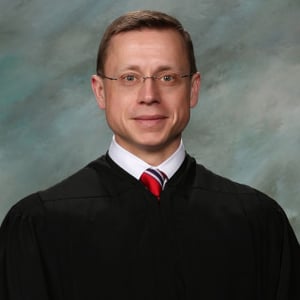
Judge, United States Court of Appeals, Fifth Circuit
Andrew Oldham is a Circuit Judge on the United States Court of Appeals for the Fifth Circuit. Before ascending to the bench, Judge Oldham served as General Counsel to Texas Governor Greg Abbott, where he advised the Governor on a range of issues under federal and state law and managed litigation in which the Governor was an interested party. Before that he served as Deputy Solicitor General for the State of Texas, where he represented Texas in federal courts across the country, including twice before the United States Supreme Court. Before moving to Texas, Judge Oldham was an attorney at Kellogg Hansen Todd Figel & Frederick in Washington, D.C. His practice focused on appellate litigation in federal courts of appeals throughout the country. Before entering private practice, Judge Oldham served as a law clerk to Justice Samuel A. Alito, Jr., at the Supreme Court of the United States and to Judge David B. Sentelle of the U.S. Court of Appeals for the District of Columbia Circuit. He also worked as an attorney-adviser in the Office of Legal Counsel at the U.S. Department of Justice from 2006 to 2008. Judge Oldham earned a B.A. from the University of Virginia with highest honors, a Truman Scholarship for graduate school, an M. Phil., first class (with distinction), from Cambridge University, and a J.D., magna cum laude, from Harvard Law School.
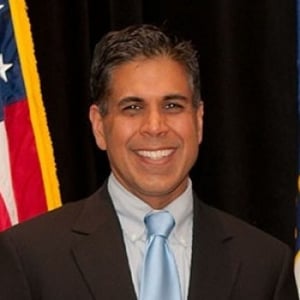
Judge, United States Court of Appeals, Sixth Circuit
Amul R. Thapar serves as a judge on the United States Court of Appeals for the Sixth Circuit. His judicial career began in 2007 when President George W. Bush nominated him to serve on the Eastern District of Kentucky, making him the first South Asian Article III judge in American history. In 2017, he became President Donald J. Trump’s first appellate court nominee.
Before joining the bench, Judge Thapar served as the United States Attorney for the Eastern District of Kentucky. While United States Attorney, Judge Thapar worked on the Attorney General’s Advisory Committee (“AGAC”) and chaired the AGAC’s Controlled Substances and Asset Forfeiture subcommittee. He also served on the Terrorism and National Security subcommittee, the Violent Crime subcommittee, and the Child Exploitation working group.
Judge Thapar has worked in private practice, at Williams & Connolly in Washington, D.C., and Squire, Sanders & Dempsey in Cincinnati, Ohio. He also served as an Assistant United States Attorney in both the Southern District of Ohio and the District of Columbia.
Judge Thapar received his undergraduate degree from Boston College and his law degree from the University of California, Berkeley. After graduating, Judge Thapar worked as a law clerk to the Honorable S. Arthur Spiegel of the United States District Court for the Southern District of Ohio, and the Honorable Nathaniel R. Jones of the United States Court of Appeals for the Sixth Circuit.
Judge Thapar has also published in the Yale Law Journal, Michigan Law Review, and Catholic University Law Review. He teaches courses on originalism, the Federalists and Anti-Federalists, and legal writing at Notre Dame Law School, the University of Virginia School of Law, and Vanderbilt Law School.
Chief Judge, United States Court of Appeals, Fifth Circuit
Jennifer Walker Elrod is the Chief Judge of the United States Court of Appeals for the Fifth Circuit. She was nominated to the Fifth Circuit in 2007, and she served as a Circuit Judge on the court until assuming the role of Chief Judge in October 2024. Prior to serving as a Circuit Judge, Chief Judge Elrod was appointed and then twice elected Judge of the 190th District Court of Harris County, Texas, where she spent over five years presiding over more than 200 jury and non-jury trials.
Chief Judge Elrod graduated cum laude from Harvard Law School, where she was an active member of the Harvard Federalist Society, an Ames Moot Court finalist, and a Senior Editor of the Harvard Journal of Law & Public Policy. She clerked for the Honorable Sim Lake in the Southern District of Texas. Before serving as a judge, Chief Judge Elrod worked in private practice, focusing on civil litigation, antitrust, and employment matters.
She has been repeatedly recognized for her work as a jurist, as well as for her pro bono work and contributions to the community. She has been named the 2022 Texas Review of Law & Politics’ Jurist of the Year, the 2018 Harvard Federalist Society’s Alumni of the Year, the 2016–17 Texas Association of Civil Trial and Appellate Specialists’ Appellate Judge of the Year, and the 2008 Mexican-American Bar Association of Texas’s Judge of the Year.
Chief Judge Elrod is actively engaged in the academic and legal communities. Chief Judge Elrod currently serves on the Board of Directors and as the Jurist-in-Residence at the South Texas College of Law, where she teaches civil procedure and First Amendment law. She is also a member of the American Law Institute and of the Board of Advisors for the Harvard Journal of Law & Public Policy, and she is a former member of the Board of Regents of her alma mater, Baylor University, and the Board of Visitors at Brigham Young University Law School. She previously served as the Chair of the Codes of Conduct Committee for the Judicial Conference of the United States. She has also served as the M.D. Anderson Visiting Public Service Professor at the Texas Tech University School of Law and as Jurist-in-Residence at Brigham Young University Law School, and she has taught legal writing at the University of Houston Law Center. She presented the Lewis F. Powell, Jr. Distinguished Lecture at the Washington and Lee University School of Law and is a frequent speaker on the topics of trial and appellate procedure, ethics, employment law, and constitutional law. Chief Judge Elrod also serves on the board of the Garland R. Walker Inn of Court, and co-produces an annual musical CLE, for which her pupilage group has won multiple national awards.
Chief Judge Elrod’s publications include: Trial by Siri: AI Comes to the Courtroom; Don’t Mess with Texas Judges: In Praise of the State Judiciary; For Good: Enriching Your Practice and Your Life Through Pro Bono and Community Service; Is the Jury Still Out?: A Case for the Continued Viability of the American Jury; and W(h)ither the Jury? The Diminishing Role of the Jury Trial in our Legal System.
Senior Attorney, Institute for Justice
Rob Johnson is a senior attorney at the Institute for Justice, where he litigates to protect private property, free speech, and other individual rights. Rob is a nationally-recognized expert on civil forfeiture. He previously represented a series of small business owners who had their entire bank accounts seized by the IRS, and he launched an initiative that resulted in the IRS reopening hundreds of closed forfeiture cases and returning millions of dollars. He has also litigated cases challenging the constitutionality of civil forfeiture procedures, and he scored a victory striking down a forfeiture program as a violation of due process.
Beyond civil forfeiture, Rob has litigated cases defending a range of constitutional rights. He was part of teams that successfully challenged occupational licensing requirements for tour guides in Savannah and Charleston. He also developed a class action lawsuit fighting the NYPD’s use of a draconian “no-fault eviction” statute to coerce residents to waive their constitutional rights, which led New York City to reform the challenged law.
Rob’s writing has been published in the Wall Street Journal, Washington Post, Politico, and Reason, among other venues. Rob has testified about occupational licensing before the House and Senate Judiciary Committees and has twice testified about civil forfeiture before the House Ways & Means Oversight Subcommittee. He has also testified before state legislatures across the country.
From 2014-2017, Rob served as IJ’s first Elfie Gallun Fellow for Freedom and the Constitution. In that role, Rob wrote and spoke about the vital role the U.S. Constitution plays in protecting our most precious freedoms. He is currently at work on a book about the Fourteenth Amendment.
Rob studied literature and anthropology at Columbia University, and he studied law at Harvard Law School. Upon graduation, he clerked for Chief Judge Alex Kozinski on the Ninth Circuit and for Justice Anthony Kennedy on the Supreme Court.
Rob lives in Cleveland with his wife and two daughters—all named after characters in Shakespeare plays—and is an amateur large format photographer.
Donald Phillip Rothschild Research Professor, George Washington University Law School
Renée Lettow Lerner is Donald Phillip Rothschild Research Professor of Law at George Washington University Law School.
Professor Lerner works in the fields of U.S. and English legal history, civil and criminal procedure, and comparative law. She advises judges, lawyers, and government officials from the United States and countries in Europe, Latin America, and Asia about the differences between adversarial and nonadversarial legal systems.
She writes extensively about the history of American juries. Her work includes not only scholarly articles, but also online publications intended for a broader audience of legal professionals and the public. In many different settings, she has debated the role of juries with other academics and with lawyers. She has a book forthcoming with Oxford University Press in the Very Short Introduction Series entitled “The Jury.” She is also working on a book about the American civil jury, from the colonial period to the present.
She is the author, with John Langbein and Bruce Smith, of the book History of the Common Law: The Development of Anglo-American Legal Institutions (2009).
Her recent writings include a book review of Amalia D. Kessler’s Inventing American Exceptionalism: The Origins of American Adversarial Legal Culture, 1800-1877, 67 J. Legal Ed. 888 (2018); “How the Creation of Appellate Courts in England and the United States Limited Judicial Comment on Evidence to the Jury,” 40 Journal of the Legal Profession 215 (2016); “The Troublesome Inheritance of Americans in Magna Carta and Trial by Jury,” in Magna Carta and its Modern Legacy 77-98 (Robert Hazell and James Melton eds., Cambridge University Press 2015); and “The Failure of Originalism in Preserving Constitutional Rights to Civil Jury Trial,” 22 William & Mary Bill of Rights Journal 811 (2014).
Professor Lerner received an A.B. summa cum laude in history from Princeton University. She was a Rhodes Scholar at Oxford University, where she studied English legal history. At Yale Law School, she was Articles Editor of the Yale Law Journal. She served as a law clerk to Justice Anthony M. Kennedy of the U.S. Supreme Court and to Judge Stephen F. Williams of the U.S. Court of Appeals for the District of Columbia Circuit. From 2003 to 2005, she served as Deputy Assistant Attorney General in the Office of Legal Counsel at the U.S. Department of Justice.
Professor of Law, University of Michigan Law School
Christopher J. Walker is a Professor of Law at the University of Michigan. Prior to joining Michigan law faculty in 2022, he spent a decade teaching at The Ohio State University Moritz College of Law. He previously clerked for Justice Anthony Kennedy of the U.S. Supreme Court, worked on the Civil Appellate Staff at the U.S. Department of Justice, and served on the Senate Judiciary Committee staff for the Gorsuch Supreme Court confirmation. Professor Walker’s research focuses on administrative law, regulation, and law and policy at the agency level. Outside the law school, he chaired the American Bar Association’s Section of Administrative Law and Regulatory Practice in 2020-21 and served as one of forty Public Members of the Administrative Conference of the United States from 2016-2022, and he continues to serve in both organizations in various capacities. He also works of counsel at the U.S. Chamber Litigation Center. In 2022, he received the Federalist Society’s Joseph Story Award.
Chief Judge, United States Court of Appeals, Fifth Circuit
Jennifer Walker Elrod is the Chief Judge of the United States Court of Appeals for the Fifth Circuit. She was nominated to the Fifth Circuit in 2007, and she served as a Circuit Judge on the court until assuming the role of Chief Judge in October 2024. Prior to serving as a Circuit Judge, Chief Judge Elrod was appointed and then twice elected Judge of the 190th District Court of Harris County, Texas, where she spent over five years presiding over more than 200 jury and non-jury trials.
Chief Judge Elrod graduated cum laude from Harvard Law School, where she was an active member of the Harvard Federalist Society, an Ames Moot Court finalist, and a Senior Editor of the Harvard Journal of Law & Public Policy. She clerked for the Honorable Sim Lake in the Southern District of Texas. Before serving as a judge, Chief Judge Elrod worked in private practice, focusing on civil litigation, antitrust, and employment matters.
She has been repeatedly recognized for her work as a jurist, as well as for her pro bono work and contributions to the community. She has been named the 2022 Texas Review of Law & Politics’ Jurist of the Year, the 2018 Harvard Federalist Society’s Alumni of the Year, the 2016–17 Texas Association of Civil Trial and Appellate Specialists’ Appellate Judge of the Year, and the 2008 Mexican-American Bar Association of Texas’s Judge of the Year.
Chief Judge Elrod is actively engaged in the academic and legal communities. Chief Judge Elrod currently serves on the Board of Directors and as the Jurist-in-Residence at the South Texas College of Law, where she teaches civil procedure and First Amendment law. She is also a member of the American Law Institute and of the Board of Advisors for the Harvard Journal of Law & Public Policy, and she is a former member of the Board of Regents of her alma mater, Baylor University, and the Board of Visitors at Brigham Young University Law School. She previously served as the Chair of the Codes of Conduct Committee for the Judicial Conference of the United States. She has also served as the M.D. Anderson Visiting Public Service Professor at the Texas Tech University School of Law and as Jurist-in-Residence at Brigham Young University Law School, and she has taught legal writing at the University of Houston Law Center. She presented the Lewis F. Powell, Jr. Distinguished Lecture at the Washington and Lee University School of Law and is a frequent speaker on the topics of trial and appellate procedure, ethics, employment law, and constitutional law. Chief Judge Elrod also serves on the board of the Garland R. Walker Inn of Court, and co-produces an annual musical CLE, for which her pupilage group has won multiple national awards.
Chief Judge Elrod’s publications include: Trial by Siri: AI Comes to the Courtroom; Don’t Mess with Texas Judges: In Praise of the State Judiciary; For Good: Enriching Your Practice and Your Life Through Pro Bono and Community Service; Is the Jury Still Out?: A Case for the Continued Viability of the American Jury; and W(h)ither the Jury? The Diminishing Role of the Jury Trial in our Legal System.
Senior Attorney, Institute for Justice
Rob Johnson is a senior attorney at the Institute for Justice, where he litigates to protect private property, free speech, and other individual rights. Rob is a nationally-recognized expert on civil forfeiture. He previously represented a series of small business owners who had their entire bank accounts seized by the IRS, and he launched an initiative that resulted in the IRS reopening hundreds of closed forfeiture cases and returning millions of dollars. He has also litigated cases challenging the constitutionality of civil forfeiture procedures, and he scored a victory striking down a forfeiture program as a violation of due process.
Beyond civil forfeiture, Rob has litigated cases defending a range of constitutional rights. He was part of teams that successfully challenged occupational licensing requirements for tour guides in Savannah and Charleston. He also developed a class action lawsuit fighting the NYPD’s use of a draconian “no-fault eviction” statute to coerce residents to waive their constitutional rights, which led New York City to reform the challenged law.
Rob’s writing has been published in the Wall Street Journal, Washington Post, Politico, and Reason, among other venues. Rob has testified about occupational licensing before the House and Senate Judiciary Committees and has twice testified about civil forfeiture before the House Ways & Means Oversight Subcommittee. He has also testified before state legislatures across the country.
From 2014-2017, Rob served as IJ’s first Elfie Gallun Fellow for Freedom and the Constitution. In that role, Rob wrote and spoke about the vital role the U.S. Constitution plays in protecting our most precious freedoms. He is currently at work on a book about the Fourteenth Amendment.
Rob studied literature and anthropology at Columbia University, and he studied law at Harvard Law School. Upon graduation, he clerked for Chief Judge Alex Kozinski on the Ninth Circuit and for Justice Anthony Kennedy on the Supreme Court.
Rob lives in Cleveland with his wife and two daughters—all named after characters in Shakespeare plays—and is an amateur large format photographer.
Donald Phillip Rothschild Research Professor, George Washington University Law School
Renée Lettow Lerner is Donald Phillip Rothschild Research Professor of Law at George Washington University Law School.
Professor Lerner works in the fields of U.S. and English legal history, civil and criminal procedure, and comparative law. She advises judges, lawyers, and government officials from the United States and countries in Europe, Latin America, and Asia about the differences between adversarial and nonadversarial legal systems.
She writes extensively about the history of American juries. Her work includes not only scholarly articles, but also online publications intended for a broader audience of legal professionals and the public. In many different settings, she has debated the role of juries with other academics and with lawyers. She has a book forthcoming with Oxford University Press in the Very Short Introduction Series entitled “The Jury.” She is also working on a book about the American civil jury, from the colonial period to the present.
She is the author, with John Langbein and Bruce Smith, of the book History of the Common Law: The Development of Anglo-American Legal Institutions (2009).
Her recent writings include a book review of Amalia D. Kessler’s Inventing American Exceptionalism: The Origins of American Adversarial Legal Culture, 1800-1877, 67 J. Legal Ed. 888 (2018); “How the Creation of Appellate Courts in England and the United States Limited Judicial Comment on Evidence to the Jury,” 40 Journal of the Legal Profession 215 (2016); “The Troublesome Inheritance of Americans in Magna Carta and Trial by Jury,” in Magna Carta and its Modern Legacy 77-98 (Robert Hazell and James Melton eds., Cambridge University Press 2015); and “The Failure of Originalism in Preserving Constitutional Rights to Civil Jury Trial,” 22 William & Mary Bill of Rights Journal 811 (2014).
Professor Lerner received an A.B. summa cum laude in history from Princeton University. She was a Rhodes Scholar at Oxford University, where she studied English legal history. At Yale Law School, she was Articles Editor of the Yale Law Journal. She served as a law clerk to Justice Anthony M. Kennedy of the U.S. Supreme Court and to Judge Stephen F. Williams of the U.S. Court of Appeals for the District of Columbia Circuit. From 2003 to 2005, she served as Deputy Assistant Attorney General in the Office of Legal Counsel at the U.S. Department of Justice.
Professor of Law, University of Michigan Law School
Christopher J. Walker is a Professor of Law at the University of Michigan. Prior to joining Michigan law faculty in 2022, he spent a decade teaching at The Ohio State University Moritz College of Law. He previously clerked for Justice Anthony Kennedy of the U.S. Supreme Court, worked on the Civil Appellate Staff at the U.S. Department of Justice, and served on the Senate Judiciary Committee staff for the Gorsuch Supreme Court confirmation. Professor Walker’s research focuses on administrative law, regulation, and law and policy at the agency level. Outside the law school, he chaired the American Bar Association’s Section of Administrative Law and Regulatory Practice in 2020-21 and served as one of forty Public Members of the Administrative Conference of the United States from 2016-2022, and he continues to serve in both organizations in various capacities. He also works of counsel at the U.S. Chamber Litigation Center. In 2022, he received the Federalist Society’s Joseph Story Award.
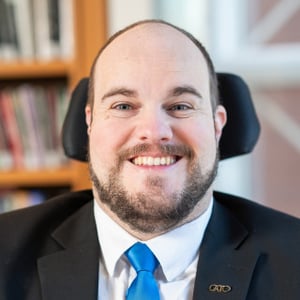
Director, Project on Criminal Justice, Cato Institute
Matthew Cavedon is the Director of the Cato Institute’s Project on Criminal Justice. He focuses on reforming plea-driven mass adjudication, ensuring police accountability, and defending constitutional criminal originalism. Cavedon’s scholarship has been published (or is forthcoming in) publications including the Arizona State Law Journal, Cato Supreme Court Review, Seattle University Law Review, and Georgetown Journal of Law and Public Policy. Formerly a Georgia public defender and fellow at the Institute for Justice, Cavedon has taught law school courses on criminal law and procedure, as well as the First Amendment. Cavedon clerked for a U.S. district court and the Supreme Court of Georgia. He came to Cato following a fellowship at the Emory University Center for the Study of Law and Religion.
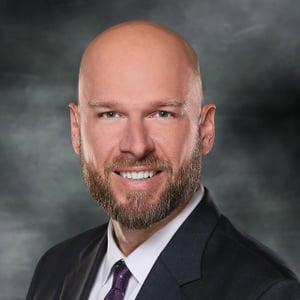
Senior Counsel, Chair, Religious Institutions and Education Practice Groups, First Liberty Institute
Jeremy Dys, Esq., is Senior Counsel for First Liberty.
Dys earned his law degree from West Virginia University College of Law in 2005. After law school, Dys clerked for the Hon. Russell M. Clawges, Jr., chief judge of the Circuit Court of Monongalia County in Morgantown, West Virginia. For six years prior to joining First Liberty Institute, Dys led a public policy organization where he led research and advocacy efforts on matters of life, marriage, and religious freedom.
Dys graduated from Taylor University in 2001 with a Bachelor of Arts, cum laude, degree in Communication Studies, with minors in U.S. History and Philosophy. During his undergraduate career, Dys studied at the American Studies Program in Washington, D.C., where he interned with the late David Orgon Coolidge as part of the Marriage Law Project of the Ethics and Public Policy Center.
In support of his clients, Dys has made numerous appearances in local, state, and national television, print, and radio outlets. His written commentaries have been featured at the Wall Street Journal, FoxNews.com, New York Daily News, TheHill.com, Des Moines Register, Dallas Morning News, DailySignal.com, Washington Examiner, Indianapolis Star, Charleston Gazette-Mail, Outcomes Magazine, TheFederalist.com, and others.
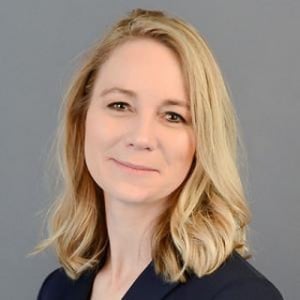
Supreme Court & Appellate Litigation Chair, Lex Politica; Of Counsel, Alliance Defending Freedom
Erin Morrow Hawley serves as Chair of Lex Politica's Supreme Court and Appellate Practice overseeing the firm’s strategic appellate litigation and critical motions practice in the trial courts. Erin is an experienced litigator who represents clients in constitutional, regulatory, and appellate matters in federal and state courts throughout the country.
Erin has represented dozens of clients before the Supreme Court of the United States, served as lead counsel in high-profile cases raising novel constitutional and statutory issues, and authored numerous successful petitions for certiorari and briefs in opposition. She has argued in state and federal appellate and trial courts throughout the country, including the Supreme Court of the United States. Erin represents diverse clients in high-stakes litigation from state governments to faith-based nonprofits to Fortune 100 companies. She possesses expertise on a wide range of subject matters including administrative law, the First Amendment, religious liberty, federal jurisdiction, federal preemption, equitable jurisdiction, tax law, the Affordable Care Act, and Title IX.
Erin represents clients in cases where public communications strategy is paramount. She is a sought-after speaker and writer, has testified multiple times before Congress, and is a frequent presenter on constitutional and administrative law issues, including at the Oxford Union, the National Federalist Society Convention, and university campuses across the country. She is a frequent commentator to media outlets, including Fox News, MSNBC, the Wall Street Journal, WORLD, USA Today, the Federalist, and the Hill.
Erin previously oversaw Alliance Defending Freedom’s--where she still serves as Of Counsel--litigation strategies to empower women and protect the dignity of life, defend pregnancy centers’ First Amendment rights from government overreach, and safeguard Americans’ freedoms from the ever-encroaching administrative state.
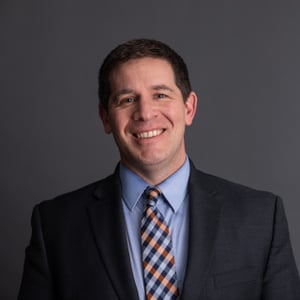
Vice President for Legal Strategy, Stand Together
Casey Mattox is Vice President for Legal Strategy at Stand Together and Senior Advisor at
Americans for Prosperity. In these roles he advocates for and creates strategies and
partnerships to ensure a constitutionally limited government that protects the civil liberties of all
Americans. Prior to joining Stand Together and AFP Casey’s legal career focused on defending
the First Amendment rights of students, faculty, healthcare workers and religious organizations.
Casey has a J.D. from Boston College School of Law and an undergraduate degree from the
University of Virginia. You can find him on Twitter at @CaseyMattox_ and on LinkedIn at
@Casey-Mattox-ST.

Remembering Gordon Wood: The Revolution, the Constitution, and the Work of History
Trial by Jury or Administrative Adjudication: What Would the Founders Say?
Jennifer Walker Elrod, Robert E. Johnson, Renée Lettow Lerner, Christopher J. Walker
In this Federalist Society America 250 series, experts analyze modern legal and policy debates through...
Trial by Jury or Administrative Adjudication: What Would the Founders Say?
Jennifer Walker Elrod, Robert E. Johnson, Renée Lettow Lerner, Christopher J. Walker
In this Federalist Society America 250 series, experts analyze modern legal and policy debates through...
America's 250th Anniversary: What Does It Mean to Be an American?
Miami Lawyer Chapter
Coral Gables, FLTrial by Jury or Administrative Adjudication: What Would the Founders Say?
The Founders Gave Us the Tools Series
Proclaiming Liberty with Timothy Sandefur - NM
New Mexico Lawyer Chapter
Albuquerque, NMIn Memoriam: Gordon Wood
The Federalist Society mourns the loss of Gordon S. Wood, one of the great historians...
Panel 1 – America 250: What is the American Tradition of Civility in Legal Discourse?
2026 Western Chapters Conference
Simi Valley, CAResolved: Certification to State Courts is Broken
Austin Lawyer Chapter
Austin, TXFACE Act
Matthew P. Cavedon, Jeremy Dys, Erin M. Hawley, Casey Mattox
Is the FACE Act being enforced as Congress originally intended or has its selected application...