
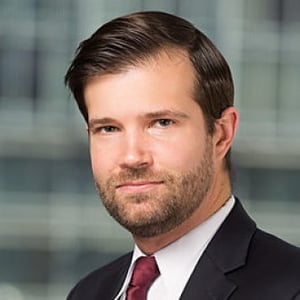
Research Fellow, CATO Institute
Jay Schweikert is a research fellow with the Cato Institute’s Project on Criminal Justice. His research and advocacy focuses on accountability for prosecutors and law enforcement, plea bargaining, Sixth Amendment trial rights, and the provision and structuring of indigent defense.
Before joining Cato, Schweikert spent four years doing civil and criminal litigation at Williams & Connolly LLP. He holds a JD from Harvard Law School, where he was an articles editor for the Harvard Law Review, and chaired the Harvard Federalist Society’s student colloquium program. Following law school, Schweikert clerked for Judge Diane Sykes of the U.S. Court of Appeals for the Seventh Circuit and Judge Laurence Silberman of the U.S. Court of Appeals for the DC Circuit.
He holds a BA in political science and economics from Yale University.
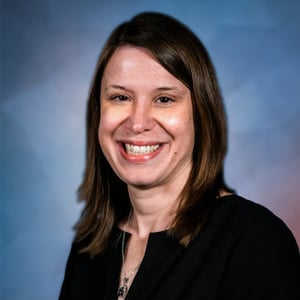
Senior Director of Strategic Partnerships, First Liberty Institute
Lisa Budzynski Ezell is the former Vice President and Director of the Federalist Society’s Lawyers Chapters. In this role, she managed a growing network of over 90 lawyers chapters nationwide, including oversight of leadership recruitment, chapter programming, state conferences, civics education outreach, and young lawyers activities. She holds a Bachelor of Arts degree from Saint Mary’s College in Political Science and History and a Master of Public Policy from George Mason University.
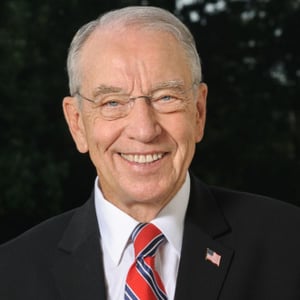
United States Senator from Iowa
Senator Grassley has served as one of Iowa’s U.S. Senators since 1981.
He places a high priority on constituent services, helping Iowans to cut red tape and navigate federal services, from Social Security to veterans’ benefits. He holds the record for the longest consecutive voting streak of any senator in the history of the country. He has not missed a vote since 1993 when he returned home to survey historic flood damage. Senator Grassley has conducted at least one meeting in each of Iowa’s 99 counties every year since his public service began in the U.S. Senate. He says “dialogue is the essence of representative government” and that’s why he keeps his commitment to keep in touch with Iowans by every means available. He responds to every phone call, letter, and email from Iowans, and communicates extensively via social media (Facebook, Instagram, Twitter, website) to connect directly with constituents. Senator Grassley also prioritizes accessibility with journalists as another vital means to communicate and hold himself and government accountable to Iowans.
Countless congressional hearings, policy debates and constituent feedback shape Senator Grassley’s expansive legislative expertise for Iowa’s benefit. For policies impacting health care, taxes, trade, transportation, agriculture, renewable energy, criminal justice, elder justice, foster care, illegal drugs, human trafficking, the federal budget, patent reform, education, national security and the federal judiciary, Chuck Grassley works to make a difference for Iowans.
As chairman of the Senate Judiciary Committee, Senator Grassley understands the critical role Congress serves in our system of checks and balances. No matter which political party controls Congress or the White House, Senator Grassley conducts robust oversight of the federal bureaucracy and expects answers from the executive branch.
Using his key committee assignments to benefit Iowans, Senator Grassley works to lessen excessive regulatory and tax burdens that make it harder for families to get ahead and stay ahead. Our nation’s founders established a constitutional framework for economic freedom, innovation and opportunity to limit government’s role in society. His work on the Senate Budget and Finance committees is driven by an acute understanding that Washington can’t spend, tax and borrow America’s way to prosperity.

Co-Chairman, The Federalist Society for Law and Public Policy Studies
Leonard is Co-Chairman and former Executive Vice President of the Federalist Society, joining the organization over 25 years ago. Since that time he has been instrumental in helping the organization top 70,000, focusing on the growth of lawyers membership, operations and activities advancing limited, constitutional government. In addition to his work at the Society, Leonard has advised President Trump on judicial selection, assisted with the Gorsuch and Kavanaugh Supreme Court selection and confirmation process, and served as a member of the transition team. He also organized the outside coalition efforts in support of the Roberts and Alito U.S. Supreme Court confirmations. Leonard was appointed by President George W. Bush to three terms to the U.S. Commission on International Religious Freedom as chairman. He was also a U.S. Delegate to the UN Council and UN Commission on Human Rights during the Bush Administration. Leonard was the recipient of the 2009 Bradley Prize, along with the other founders and directors of the Federalist Society, for his work in advancing freedom and the rule of law. He is the coeditor of Presidential Leadership: Rating the Best and the Worst in the White House, as well as the author of opinion editorials in the New York Times,The Wall Street Journal, and Washington Post. Leonard holds degrees from Cornell University and Cornell Law School. He presently resides in Northern Virginia, where he and his wife Sally have raised their seven children.
Senior Director of Strategic Partnerships, First Liberty Institute
Lisa Budzynski Ezell is the former Vice President and Director of the Federalist Society’s Lawyers Chapters. In this role, she managed a growing network of over 90 lawyers chapters nationwide, including oversight of leadership recruitment, chapter programming, state conferences, civics education outreach, and young lawyers activities. She holds a Bachelor of Arts degree from Saint Mary’s College in Political Science and History and a Master of Public Policy from George Mason University.
United States Senator from Iowa
Senator Grassley has served as one of Iowa’s U.S. Senators since 1981.
He places a high priority on constituent services, helping Iowans to cut red tape and navigate federal services, from Social Security to veterans’ benefits. He holds the record for the longest consecutive voting streak of any senator in the history of the country. He has not missed a vote since 1993 when he returned home to survey historic flood damage. Senator Grassley has conducted at least one meeting in each of Iowa’s 99 counties every year since his public service began in the U.S. Senate. He says “dialogue is the essence of representative government” and that’s why he keeps his commitment to keep in touch with Iowans by every means available. He responds to every phone call, letter, and email from Iowans, and communicates extensively via social media (Facebook, Instagram, Twitter, website) to connect directly with constituents. Senator Grassley also prioritizes accessibility with journalists as another vital means to communicate and hold himself and government accountable to Iowans.
Countless congressional hearings, policy debates and constituent feedback shape Senator Grassley’s expansive legislative expertise for Iowa’s benefit. For policies impacting health care, taxes, trade, transportation, agriculture, renewable energy, criminal justice, elder justice, foster care, illegal drugs, human trafficking, the federal budget, patent reform, education, national security and the federal judiciary, Chuck Grassley works to make a difference for Iowans.
As chairman of the Senate Judiciary Committee, Senator Grassley understands the critical role Congress serves in our system of checks and balances. No matter which political party controls Congress or the White House, Senator Grassley conducts robust oversight of the federal bureaucracy and expects answers from the executive branch.
Using his key committee assignments to benefit Iowans, Senator Grassley works to lessen excessive regulatory and tax burdens that make it harder for families to get ahead and stay ahead. Our nation’s founders established a constitutional framework for economic freedom, innovation and opportunity to limit government’s role in society. His work on the Senate Budget and Finance committees is driven by an acute understanding that Washington can’t spend, tax and borrow America’s way to prosperity.
Co-Chairman, The Federalist Society for Law and Public Policy Studies
Leonard is Co-Chairman and former Executive Vice President of the Federalist Society, joining the organization over 25 years ago. Since that time he has been instrumental in helping the organization top 70,000, focusing on the growth of lawyers membership, operations and activities advancing limited, constitutional government. In addition to his work at the Society, Leonard has advised President Trump on judicial selection, assisted with the Gorsuch and Kavanaugh Supreme Court selection and confirmation process, and served as a member of the transition team. He also organized the outside coalition efforts in support of the Roberts and Alito U.S. Supreme Court confirmations. Leonard was appointed by President George W. Bush to three terms to the U.S. Commission on International Religious Freedom as chairman. He was also a U.S. Delegate to the UN Council and UN Commission on Human Rights during the Bush Administration. Leonard was the recipient of the 2009 Bradley Prize, along with the other founders and directors of the Federalist Society, for his work in advancing freedom and the rule of law. He is the coeditor of Presidential Leadership: Rating the Best and the Worst in the White House, as well as the author of opinion editorials in the New York Times,The Wall Street Journal, and Washington Post. Leonard holds degrees from Cornell University and Cornell Law School. He presently resides in Northern Virginia, where he and his wife Sally have raised their seven children.
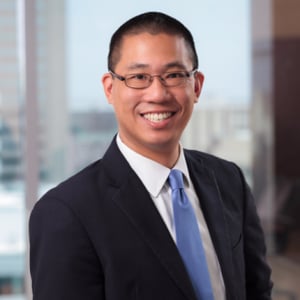
Chair, Issues & Appeals, Hunton Andrews Kurth LLP
The former Solicitor General of West Virginia, Mr. Lin has been on the front lines of many precedent-setting cases in appellate courts across the country, including in a US Supreme Court victory that George Will called “the court’s most severe rebuke of a president” since the Truman administration. Having argued more than 60 appeals, he brings to clients a well-honed ability to identify the most persuasive issues for appeal and a practiced understanding of how best to frame complex legal questions in appellate courts.
With experience in the private sector and multiple branches of government, Mr. Lin’s practice has spanned a wide range of issues, including major questions of constitutional and administrative law at the federal and state levels. On behalf of more than two dozen states, he won a stay from the US Supreme Court of the EPA’s Clean Power Plan. Described by the New York Times as an “unprecedented” order, the stay was the first time the Supreme Court had ever put a regulation on hold before review by a federal appeals court. In that same case, Elbert argued before the en banc DC Circuit in an historic proceeding that one commenter quoted in E&E News compared to “the NBA All-Star Game.” At the state level, Elbert led the effort that persuaded the West Virginia Supreme Court of Appeals to overturn an injunction of the state’s right-to-work law.
In 2013, Mr. Lin was appointed the Solicitor General of West Virginia. During his four-and-a-half year tenure, he served as a member of the Attorney General’s senior management team, oversaw all civil and criminal appeals, and argued nearly two dozen cases in federal and state appellate courts. He authored more than twenty-five briefs in the US Supreme Court and more than forty-five formal Opinions of the Attorney General.
Earlier in his career, Mr. Lin served as a trial attorney in the Federal Programs Branch of the US Department of Justice’s Civil Division, where he received a Special Service Award. He has also been a law clerk at all three levels of the federal judiciary: for Justice Clarence Thomas on the US Supreme Court; for Judge William H. Pryor Jr. on the US Court of Appeals for the Eleventh Circuit; and for Senior Judge Robert E. Keeton on the US District Court for the District of Massachusetts.
Mr. Lin speaks regularly on a wide variety of topics, including constitutional law, administrative law, environmental law, state and federal relations, the US Supreme Court, and appellate practice. He has testified before Congress, and has spoken at the national conventions of the American Bar Association, the Association of Corporate Counsel, the National Asian Pacific American Bar Association, the Federalist Society, Americans for Prosperity, and the American Legislative Exchange Council. He is an elected member of the American Law Institute, a public member of the Administrative Conference of the United States, and a fellow of the American Academy of Appellate Lawyers.
Mr. Lin is admitted to practice in the following federal courts: the Supreme Court of the United States; the First, Second, Third, Fourth, Fifth, Sixth, Seventh, Eighth, Ninth, Eleventh, D.C., and Federal Circuits; the District of Massachusetts; the Northern and Southern Districts of West Virginia; and the Eastern and Western Districts of Virginia.
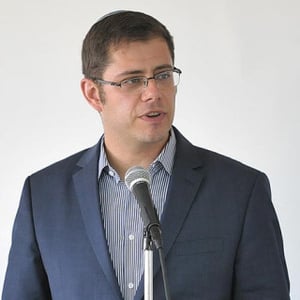
Professor of Law and Director, Center for the Middle East and International Law, George Mason University Antonin Scalia Law School
Professor of Law Eugene Kontorovich is one of the world’s preeminent experts on universal jurisdiction and maritime piracy, as well as international law and the Israel-Arab conflict. He is also the Director of Scalia Law School's Center for the Middle East and International Law. Professor Kontorovich joined the Scalia Law School from Northwestern University Pritzker School of Law where he was a Professor of Law from 2011 to 2018 and an Associate Professor from 2007 to 2011. Previously, he was a Visiting Professor at the University of Chicago from 2005 to 2007 and an Assistant Professor at George Mason School of Law from 2003 to 2007.
Professor Kontorovich has published over thirty major scholarly articles and book chapters in leading law reviews and peer-reviewed journals in the United States and Europe, including the American Journal of International Law, International Review of Law & Economics, Stanford Law Review, California Law Review, University of Pennsylvania Law Review, and Virginia Law Review. His scholarship has been cited in leading foreign relations and international law
His expertise is often sought out and quoted by major news organizations such the New York Times, Wall Street Journal, NPR News, The New Yorker, Los Angeles Times, and numerous television and radio programs. Prof. Kontorovich’s popular writings have appeared in the New York Times, Wall Street Journal, Los Angeles Times, POLITICO, Commentary, Haaretz, and numerous other leading publications. He is also a regular contributor to the Washington Post’s Volokh Conspiracy legal blog.
He attended the University of Chicago for college and law school. After law school, he clerked for Judge Richard Posner on the United States Court of Appeals for the Seventh Circuit. He has been honored with a fellowship at the Institute for Advanced Study in Princeton, in 2011-12, and with the Federalist Society’s prestigious Bator Award, given annually to a young scholar (under 40), for outstanding scholarship and teaching.
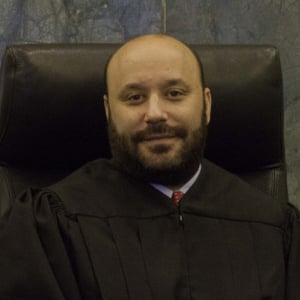
Judge, United States District Court, Eastern District of Arkansas
Lee Philip Rudofsky is a judge on the United States District Court for the Eastern District of Arkansas. Prior to his 2019 appointment by President Trump, Judge Rudofsky served as the Solicitor General of Arkansas, an Assistant General Counsel at Walmart, a Senior Litigation Associate at Kirkland & Ellis, and counsel to several Republican political campaigns. Today, in addition to his judicial service, Judge Rudofsky teaches law school classes on founding-era constitutional history and, separately, speaks to students across the country about the October 7th Massacre and the subsequent Israeli response. In 2024, Judge Rudofsky helped establish an annual judicial education mission to Israel that offers American judges the opportunity to learn first-hand about the Israeli legal system, Israeli society, and legal issues related to the Israel-Hamas war.
Joel A. Katz Distinguished Professor of Law, University of Tennessee College of Law
Professor Plank joined the UT faculty in 1994 and became the Joel A. Katz Distinguished Professor of Law in 2004. His scholarly interests include the nature of property, the relationship between bankruptcy and non-bankruptcy law, and the historical development and comparison of commercial law and property law systems. He is a nationally recognized expert on mortgage backed and asset backed securities. Before joining the UT faculty, he was a partner with Kutak Rock LLP specializing in real estate finance, commercial finance, bankruptcy, and securities, in particular serving as issuer’s counsel and bankruptcy counsel in securitization transactions. Since joining the UT faculty he has served as an expert witness on securitization and other bankruptcy and commercial law matters, and as a consultant for securitization law firms, providing advice on bankruptcy, commercial law, and real estate issues in connection with securitizations and other transactions. During the 2002-2003 academic year, Professor Plank was a visiting Professor of Law at the Notre Dame Law School.
Professor Plank graduated with honors from Princeton University with a degree in history and a Certificate of Proficiency in Russian Area Studies and then served three years in the United States Marine Corps, including eight months in Vietnam as an infantry platoon commander. He graduated 5th in his class from the University of Maryland School of Law, where he was Editor-in-Chief of the Maryland Law Review. He was a law clerk for the Chief Judge of the Maryland Court of Appeals, an associate with Piper & Marbury in Baltimore, MD, and an assistant attorney general for the State of Maryland. Initially, his practice included a wide variety of transactions and litigation, including a four month trial on the constitutionality of the Maryland public school finance system and oral arguments in the United States Supreme Court and federal and state appellate courts. He then concentrated his practice in real estate, commercial finance, public finance and securities transactions.

McCoy v. Louisiana - Post-Decision SCOTUScast
Jay R. Schweikert
SCOTUScast featuring Jay Schweikert
On May 14, 2018, the Supreme Court decided McCoy v. Louisiana, a case considering whether...
Reception with Senator Chuck Grassley
Lisa Ezell, Charles Grassley, Leonard A. Leo
DC Young Lawyers Chapter
On June 11, 2018, the Federalist Society's DC Young Lawyers Chapter and the Article I...
Reception with Senator Chuck Grassley
Lisa Ezell, Charles Grassley, Leonard A. Leo
DC Young Lawyers Chapter
On June 11, 2018, the Federalist Society's DC Young Lawyers Chapter and the Article I...
Murphy v. National Collegiate Athletic Association - Post-Decision SCOTUScast
Elbert Lin
SCOTUScast featuring Elbert Lin
On May 14, 2018, the Supreme Court decided Murphy v. NCAA, a case involving a...
Jesner v. Arab Bank, PLC - Post-Decision SCOTUScast
Eugene Kontorovich
SCOTUScast featuring Eugene Kontorovich
On April 24, 2018, the Supreme Court decided Jesner v. Arab Bank, PLC, a case...
Topics
Bullet-Point Summary of Masterpiece Cakeshop, Ltd. v. Colorado Civil Rights Comm’n.
SCOTUS decided Masterpiece Cakeshop this morning. The opinion may be found here: https://www.supremecourt.gov/opinions/17pdf/16-111_j4el.pdf (1) The vote...
Topics
Qualified Immunity Lurks in the Background of the Fourth Amendment Question in Collins v. Virginia
On May 30th, the Supreme Court issued its decision in Collins v. Virginia, which held...
Wilson v. Sellers - Post-Decision SCOTUScast
Lee Rudofsky
SCOTUScast featuring Lee Rudofsky
On April 17, 2018, the Supreme Court decided Wilson v. Sellers, a case involving the...
Topics
Sports Gambling Decision is a Major Victory for Federalism
This post has been contributed from The Volokh Conspiracy with permission by the author. Click...
U.S. Bank National Association v. Village at Lakeridge
Thomas Eldridge Plank
SCOTUScast featuring Tom Plank
On March 5, 2018, the Supreme Court decided U.S. Bank National Association v. Village at...