


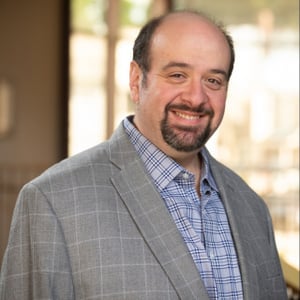





Brad Watts, senior vice president at the U.S. Chamber of Commerce’s Global Innovation Policy Center (GIPC), oversees the center’s day-to-day operations. He also leads the development and implementation of the Chamber’s U.S. and global intellectual property (IP) agenda to foster a political, legal, and economic environment where innovators and creators can invest in the next big thing for the benefit of Americans and the world.
Watts previously served as the Republican chief counsel on the Senate Judiciary Committee Subcommittee on Intellectual Property. There he was responsible for planning and implementing Senator Thom Tillis’ (R-NC) and the Republican party’s legislative portfolio on all aspects of IP law.
In the 116th Congress, when Senator Tillis was chairman of the subcommittee, Watts served as majority chief counsel and staff director for the Senate Judiciary Committee Subcommittee on Intellectual Property. He was responsible for implementing the senator’s legislative and oversight agenda on all aspects of America’s innovation economy.
During Watts’ tenure as majority chief counsel, the subcommittee held 17 legislative and oversight hearings and multiple staff briefings on IP issues, ranging from the state of patent eligibility law in America to reforming the Digital Millennium Copyright Act of 1998. Under his leadership, the subcommittee passed the CASE Act, the Trademark Modernization Act, and the Protecting Lawful Streaming Act, three landmark bills that collectively represent the largest changes to IP law since the Leahy-Smith America Invents Act.
Earlier, Watts was chief immigration counsel to then-Senate Judiciary Committee Chairman Chuck Grassley (R-IA). He began his career with former Senator Jeff Sessions (R-AL) as a legislative counsel on the Subcommittee on Immigration and the National Interest, handling civil rights and civil liberties law, general tort law, bankruptcy, telecommunications, and IP issues for the senator.





AI Training vs. Copyright Law: Updates from the Copyright Office and the Courts
Meredith Filak Rose, Zvi Rosen, Regan Smith
Whether AI training and generation is a fair use under copyright law puts two important...
AI Training vs. Copyright Law: Updates from the Copyright Office and the Courts
Meredith Filak Rose, Zvi Rosen, Regan Smith
Whether AI training and generation is a fair use under copyright law puts two important...
Topics
What Will the New Lockean Revolution of Limiting the Power of the Regulatory State Mean for Businesses?
A new Lockean revolution is going on in the Supreme Court. In recent years, the...
Medicare's New Drug Price Mandate: Healthcare & Innovation Implications
Lisa Larrimore Ouellette, Adam Mossoff, Dan Troy, Brad Watts
A Regulatory Transparency Project Webinar
On January 17, the Biden-Harris Administration added 15 new drugs, including Ozempic, to the list of...
Medicare's New Drug Price Mandate: Healthcare & Innovation Implications
Lisa Larrimore Ouellette, Adam Mossoff, Dan Troy, Brad Watts
A Regulatory Transparency Project Webinar
On January 17, the Biden-Harris Administration added 15 new drugs, including Ozempic, to the list of...
Topics
The Copyright Office’s Report on AI Training Material and Fair Use: Will It Stymie the U.S. AI Industry?
On May 9, the U.S. Copyright Office (USCO) finally released its report analyzing whether training...
Topics
What Risk Does Your Business Face for Creating Social Media Posts in the Studio Ghibli Style?
Have you noticed the internet meme fad of AI-produced images in the Studio Ghibli style?...
Litigation Transparency Act of 2025: Patents, Policy, and Legal Ethics
Kacie Donovan, Kristen Osenga, Courtney Quish, Jonathan Stroud, Paul Brian Taylor
Prompted by the reintroduction of federal Litigation Transparency Act legislation, this panel will address a...
Litigation Transparency Act of 2025: Patents, Policy, and Legal Ethics
Kacie Donovan, Kristen Osenga, Courtney Quish, Jonathan Stroud, Paul Brian Taylor
Prompted by the reintroduction of federal Litigation Transparency Act legislation, this panel will address a...
Topics
Federal Circuit Failure to Apply Daubert Results in Unfairly Inflated Patent Damages
When someone doesn’t work but misleads authorities about their income to claim government benefits, it’s...