
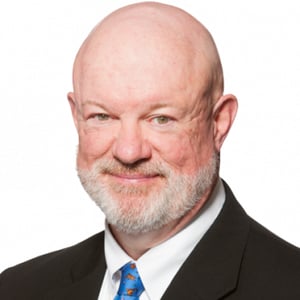
Senior Legal Fellow, the Meese Institute for the Rule of Law, Advancing American Freedom
Paul J. Larkin is a Senior Legal Fellow in the Meese Institute for the Rule of Law at Advancing American Freedom. Paul has held various positions in the federal and state governments throughout his career, such as being an attorney in the Organized Crime and Racketeering Section of the Criminal Division at the U.S. Department of Justice, an Assistant to the Solicitor General in the Office of the Solicitor General at the U.S. Department of Justice, Special Agent-in-Charge and Acting Director of the Criminal Investigation Division at the Environmental Protection Agency, and a member of the Parole Abolition and Sentencing Reform Commission and of the Juvenile Justice Reform Commission in the Office of Virginia Governor George Allen.
He has also worked at Verizon Communications and two law firms in Washington, D.C. His current research is principally in the fields of drug policy, criminal justice policy, and administrative law and policy. He has published numerous articles in law and public policy journals, both in print and online.
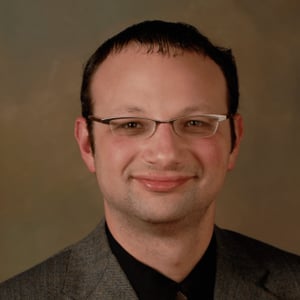
Chief Policy Counsel, Council on Criminal Justice and Senior Advisor, Right on Crime
Marc A. Levin is the Chief Policy Counsel for the Council on Criminal Justice (counciloncj.org) and Senior Advisor for Right on Crime.
An attorney and accomplished author on legal and public policy issues, Marc began the Foundation’s criminal justice program in 2005. This work contributed to nationally praised policy changes that have been followed by dramatic declines in crime and incarceration in Texas. Building on this success, in 2010, Levin developed the concept for the Right on Crime initiative, a TPPF project in partnership with Prison Fellowship and the American Conservative Union Foundation. Right on Crime has become the national clearinghouse for conservative criminal justice reforms and has contributed to the adoption of policies in dozens of states that fight crime, support victims, and protect taxpayers.
In 2014, Levin was named one of the “Politico 50” in the magazine’s annual “list of thinkers, doers, and dreamers who really matter in this age of gridlock and dysfunction.”
Marc has testified on criminal justice policy on four occasions before Congress and has testified before legislatures in states including Texas, Nevada, Kansas, Wisconsin, and California. He also has met personally with leaders such as U.S. Presidents, Speakers of the House, and the Justice Commtitee of the United Kingdom Parliament to share his ideas on criminal justice reform. In 2007, he was honored in a resolution unanimously passed by the Texas House of Representatives that stated, “Mr. Levin’s intellect is unparalleled and his research is impeccable.”
Since 2005, Marc has published dozens of policy papers on topics such as sentencing, probation, parole, reentry, and overcriminalization which are available on the TPPF website. Levin’s articles on law and public policy have been featured in publications such as the Wall Street Journal, USA Today, Texas Review of Law & Politics, National Law Journal, New York Daily News, Jerusalem Post, Toronto Star, Atlanta Journal-Constitution, Philadelphia Inquirer, San Francisco Chronicle, Washington Times, Los Angeles Daily Journal, Charlotte Observer, Dallas Morning News, Houston Chronicle, Austin American-Statesman, San Antonio Express-News and Reason Magazine.
In 1999, Marc graduated with honors from the University of Texas with a B.A. in Plan II Honors and Government. In 2002, Marc received his J.D. with honors from the University of Texas School of Law. Marc was a Charles G. Koch Summer Fellow in 1996. He served as a law clerk to Judge Will Garwood on the U.S. Court of Appeals for the Fifth Circuit and Staff Attorney at the Texas Supreme Court.

Senior Fellow and Director of Constitutional Studies, Manhattan Institute
Ilya Shapiro is a senior fellow and director of constitutional studies at the Manhattan Institute and a contributing editor of City Journal. Previously he was executive director and senior lecturer at the Georgetown Center for the Constitution, and before that a vice president of the Cato Institute.
Shapiro is the author of Lawless: The Miseducation of America’s Elites (2025) and Supreme Disorder: Judicial Nominations and the Politics of America’s Highest Court (2020), coauthor of Religious Liberties for Corporations? (2014), and editor of 11 volumes of the Cato Supreme Court Review (2008-18). He has contributed to a variety of academic, popular, and professional publications, including the Wall Street Journal, Harvard Journal of Law & Public Policy, Washington Post, Los Angeles Times, USA Today, National Review, and Newsweek. He also regularly provides commentary for various media outlets, writes the Shapiro’s Gavel newsletter on Substack, and once appeared on the Colbert Report.
Shapiro has testified many times before Congress and state legislatures and has filed more than 500 amicus curiae “friend of the court” briefs in the Supreme Court. He lectures regularly on behalf of the Federalist Society, is a member of the board of fellows of the Jewish Policy Center, was an inaugural Washington Fellow at the National Review Institute, and has been an adjunct law professor at the George Washington University and University of Mississippi. He is also the chairman of the board of advisers of the Mississippi Justice Institute, a barrister in the Edward Coke Appellate Inn of Court, and a former member of the Virginia Advisory Committee to the U.S. Commission on Civil Rights.
Earlier in his career, Shapiro was a special assistant/adviser to the Multi-National Force in Iraq on rule-of-law issues and practiced at Patton Boggs and Cleary Gottlieb. Before entering private practice, he clerked for Judge E. Grady Jolly of the U.S. Court of Appeals for the Fifth Circuit. He holds an AB from Princeton University, an MSc from the London School of Economics, and a JD from the University of Chicago Law School.
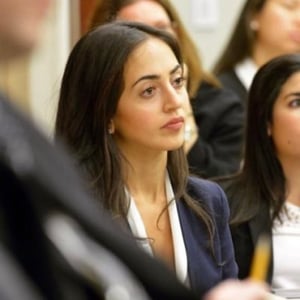
Judicial Law Clerk, United States Court of Appeals
Natasha Babazadeh is a judicial law clerk for the United States Court of Appeals. She was the 2017 EPIC Law Fellow in Appellate Advocacy at the Electronic Privacy Information Center. She is a graduate from UCLA School of Law's David J. Epstein Program in Public Interest Law and Policy. Natasha has worked on First and Fourth Amendment issues related to national security, privacy, technology and criminal justice as an intern for the ACLU's Speech Privacy and Technology Project, the Brennan Center for Justice at NYU School of Law, and Amnesty International USA. At UCLA, she served as the Editor-in-Chief for the Journal of International Law and Foreign Affairs. She also co-Founded and served as co-President of the Digital Governance and Technology Association of Law, where she organized events surrounding Russia's involvement in the U.S. election and ICANN's transition out of U.S. government oversight. Natasha is a 2014 summa cum laude graduate of New York University, where she studied international politics and human rights and received the NYU President's Service Award.
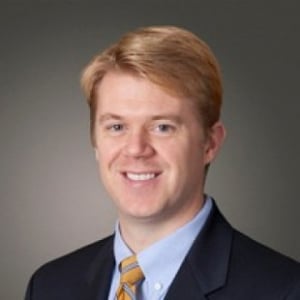
Partner, McGuireWoods LLP
Matt is a co-chair of the firm’s Appeals and Issues group. His practice focuses on appellate matters, constitutional issues, and major motions. Matt previously served as a law clerk to Justice Clarence Thomas of the Supreme Court of the United States and Chief Judge Edward E. Carnes of the U.S. Court of Appeals for the Eleventh Circuit in Montgomery, Alabama.
In January 2018, Matt presented argument in the U.S. Supreme Court on behalf of the petitioner in Collins v. Virginia, No. 16-1027. The case has been widely noted as an important Fourth Amendment case in which the Court will address the scope of the automobile exception to the warrant requirement. Over the past several years, Matt has also argued complex cases in the Second, Fourth, Sixth, Eighth, Ninth, Eleventh, and D.C. Circuits as well as the Supreme Court of Virginia and the Georgia Supreme Court (pro hac vice).
His practice also focuses on sharp and efficient legal writing. Matt has written dozens of appellate briefs, white papers, and important strategic motions such as those opposing class certification and attempting to quash subpoenas. On the topic of effective written advocacy in particular, Matt devotes time to mentoring associates, including presenting a writing CLE that has received excellent reviews.
Matt graduated magna cum laude from the University of Virginia School of Law. At Virginia, he served as a Dillard Fellow and worked on the editorial and managing boards of the Virginia Law Review.

Vice President, Edwin Meese III Institute for the Rule of Law, Advancing American Freedom
John G. Malcolm oversees Advancing American Freedom’s work to increase understanding of the Constitution and the rule of law as Vice President of the organization’s Edwin Meese III Institute for the Rule of Law. Malcolm brings to the challenge a wealth of legal expertise and experience in both the public and private sectors.
Prior to joining Advancing American Freedom in 2025, Malcolm was the Vice President of the Institute for Constitutional Government and the Director of the Meese Center for Legal and Judicial Studies at the Heritage Foundation. Prior to joining Heritage in 2012, Malcolm was general counsel at the U.S. Commission on International Religious Freedom, as well as a distinguished practitioner in residence at Pepperdine Law School. From 2004 to 2009, Malcolm was executive vice president and director of worldwide anti-piracy operations for the Motion Picture Association.
Malcolm served as a deputy assistant attorney general in the Department of Justice’s Criminal Division from 2001 to 2004, where he oversaw sections on computer crime and intellectual property, domestic security, child exploitation and obscenity, and special investigations. Immediately prior to that, he was a founding partner in the Atlanta law firm of Malcolm & Schroeder, LLP.
From 1990 to 1997, Malcolm was an assistant U.S. attorney in Atlanta, assigned to the fraud and public corruption section, and also an associate independent counsel, investigating fraud and abuse in the Department of Housing and Urban Development. He was honored with the Director’s Award for Superior Performance for his work in connection with the successful prosecution of Walter Leroy Moody Jr., who assassinated an 11th Circuit judge and the head of the Savannah chapter of the NAACP.
A graduate of Harvard Law School and Columbia College, Malcolm began his career as a law clerk to a federal district court judge and a federal appellate court judge, and as an associate at the Atlanta-based law firm of Sutherland, Asbill & Brennan (new Eversheds Sutherland).
Malcolm, who resides in Washington, D.C., serves on the Board of Trustees of the Washington National Opera and is a Senate-confirmed member of the Board of Directors of the Legal Services Corporation, the largest funder of civil legal aid in the United States.
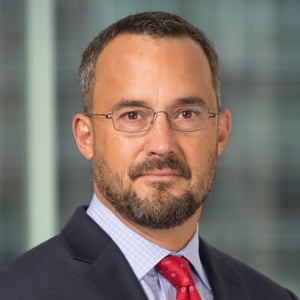
Senior Vice President for Legal Studies, Cato Institute
Clark Neily is senior vice president for legal studies at the Cato Institute. His areas of interest include constitutional law, overcriminalization, civil forfeiture, police accountability, and gun rights. Neily is the author of Terms of Engagement: How Our Courts Should Enforce the Constitution’s Promise of Limited Government. His writing has appeared in the Wall Street Journal, Forbes, and National Review Online, as well as various law reviews, including the Harvard Journal of Law and Public Policy, George Mason Law Review, Georgetown Journal of Law and Public Policy, NYU Journal of Law and Liberty, and Texas Review of Law and Politics. Neily is a frequent guest speaker and lecturer for the Federalist Society, Institute for Humane Studies, and American Constitution Society.
Before joining Cato in 2017, Neily was a senior attorney and constitutional litigator at the Institute for Justice and director of the Institute’s Center for Judicial Engagement. He is also an adjunct professor at the University of Texas School of Law, where he teaches constitutional litigation and public-interest law.
Neily served as co-counsel in District of Columbia v. Heller, the historic case in which the Supreme Court held for the first time that the Second Amendment protects an individual right to own a gun for self-defense.
Neily began his legal career as a law clerk to Judge Royce Lamberth on the U.S. District Court for the District of Columbia. After that he spent four years in the trial department of the Dallas-based firm Thompson & Knight. Neily received his undergraduate and law degrees from the University of Texas, where he was Chief Articles Editor of the Texas Law Review.
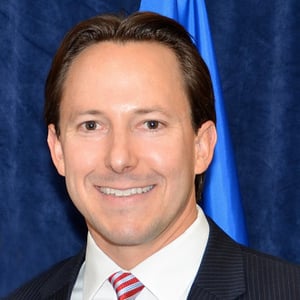
Deputy Chief Counsel of General Civil Section, United States Attorney's Office, Central District of California
Geoff Wilson is currently a Deputy Chief in the General Civil Section of the United States Attorney’s Office for the Central District of California. He is also a member of the Board of Directors for the National Association of Assistant United States Attorneys. Since joining the USAO in 2007, he has prosecuted and defended law enforcement in the tort and civil rights contexts and currently supervises and litigates cases in several areas including the Federal Tort Claims Act, employment, and constitutional torts. Geoff has received the Inspector General’s Award from the Department of Housing and Urban Development, the Executive Office for United States Attorneys Director’s Award for Superior Performance as an AUSA for the successful prosecution of a complex mortgage fraud scheme, and the Council of the Inspectors General Award for Excellence for combating mortgage fraud. Prior to becoming an AUSA he worked at Universal Pictures in Feature Film Business Affairs. He graduated in 2005 from Loyola Law School, where he was the Editor-in-Chief of the Loyola of Los Angeles Entertainment Law Review. He currently lives in Los Angeles with his wife and daughters.
Founder, Americans in Support of Law Enforcement
Scott G. Erickson is a conservative writer, policy analyst, and law enforcement professional with over 18 years of experience in police work. He holds a Master of Science degree in Criminal Justice Studies from the University of Cincinnati.
In 2015, Scott founded Americans in Support of Law Enforcement, a pro-law enforcement nonprofit organization dedicated to addressing the issues most relevant to the broader law enforcement community. He currently serves as the organization's President and Executive Director.
In addition to his law enforcement duties, Scott has collaborated extensively with the nation’s foremost conservative think tank, The Heritage Foundation. Frequently contributing to Heritage’s blog, The Daily Signal, Scott has focused on myriad issues of national security including foreign terrorist organizations, law enforcement, and missile defense.
He has co-authored several reports at Heritage: A Comprehensive Suspicious Activity Reporting (SAR) System Requires Action; Changing Today’s Law Enforcement Culture to Face 21st-Century Threats; and Lessons from Benghazi: Investigation Leaves Important Questions Unanswered.
Additionally, Scott’s writing has been featured in The Washington Times, FoxNews.com, The Orange County Register, and other publications. He has also been quoted in major media outlets, including theNew York Times, on national security and law enforcement issues.
A frequent guest on various television and radio programs, Scott has appeared on Fox News, One America News Network, the Dana Loesch Show, and others.
In 2013, Scott was named as one of the Republican National Committee'sRising Stars and his profile was recently featured in USA Today.
Scott continues to work toward advancing conservative solutions to the issues facing our nation while maintaining fidelity to America’s founding documents.
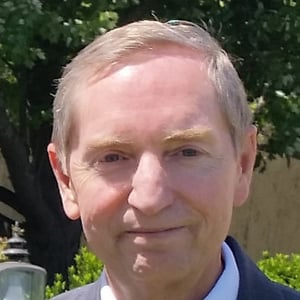
Legal Director & General Counsel, Criminal Justice Legal Foundation
Kent S. Scheidegger has been the Legal Director of the Criminal Justice Legal Foundation since December 1986. He also served as Chairman of the Criminal Law Practice Group of the Federalist Society 2003 to 2005. His articles on criminal and constitutional law have been published in law reviews, national legal publications, and congressional reports. Legal arguments authored by Mr. Scheidegger have been cited and incorporated in several precedent-setting United States Supreme Court decisions.
After receiving a degree in physics with honors from New Mexico State University in 1976, Mr. Scheidegger served for six years in the United States Air Force as a Nuclear Research Officer. He took his law degree with distinction from the University of the Pacific, McGeorge School of Law in 1982 and practiced civil law in Northern California. He was general counsel of California Cooler, Inc. from 1984 until 1986, when he joined the Foundation.
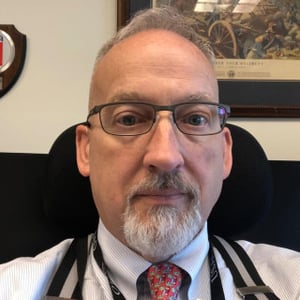
Appellate Counsel, Theodore Cooperstein PLLC
Theodore Cooperstein currently is an appellate attorney in the boutique law firm of Theodore Cooperstein PLLC, available for criminal and civil appeals in both state and federal courts. A former career prosecutor with twenty five years of service in the US Department of Justice, he was an Assistant United States Attorney for the Southern District of Florida and the Southern District of Mississippi, and has served as a Military Intelligence Officer in the Army Reserves from 1989 to 2011, retiring with the rank of Lieutenant Colonel. During the Trump Administration, he was appointed and served as the General Counsel of the U.S. Office of Personnel Management. Prior to joining the Southern District of Florida, Mr. Cooperstein served as a Special Assistant U.S. Attorney in the U.S. Attorney's Office for the District of Maryland. He previously had served as Counsel to the Deputy Attorney General at the Department of Justice, and as Assistant General Counsel in the FBI Office of the General Counsel.
A.B., Dartmouth College; J.D., Stanford University; LL.M., Comparative and International Law, Georgetown University Law Center; Masters of Strategic Studies, U.S. Army War College

General Counsel, Strive Asset Management
When she was unanimously confirmed by the United States
Senate to serve as United States Attorney for the District of
Minnesota in 2006, Rachel Kunjummen Paulose became
the first Indian American woman in American history to be
nominated by the President and confirmed by the Senate
for any federal appointment.
Under Paulose’s leadership, the U.S. Attorney’s Office for
the District of Minnesota recorded the highest number of prosecutions in its history, reflecting the collaborative hard work of law enforcement partners, attorneys, staff, and civic leaders. Paulose also oversaw landmark prosecutions of white collar
crime (including securities, health care, and public corruption cases), narcotics and firearms trafficking cartels, and civil commitment of sexual predators. Paulose tripled child pornography prosecutions, doubled gun prosecutions, and initiated the
first ever prosecutions of human trafficking and aggravated identity theft. Paulose has first chaired jury and bench trials in federal court, briefed and argued cases before the federal appellate courts, and investigated multinational companies in complex parallel criminal and civil international proceedings.
Among other positions in public service, Paulose served as a law clerk to Eighth Circuit Court of Appeals Judge James B. Loken; Trial Attorney for the Voting Section, Civil Rights Division of the U.S. Department of Justice through the Attorney General’s Honors Program; Assistant U.S. Attorney; Senior Counsel to the Deputy
Attorney General; Special Counsel for Health Care Fraud to the Deputy Attorney General; and Special Assistant to the Attorney General of the United States. Paulose also served as Senior Trial Counsel at the U.S. Securities & Exchange Commission. Paulose previously worked as a partner at DLA Piper LLP, then the
largest law firm in the world, and an associate at Williams & Connolly LLP in Washington, D.C.
Paulose has been active in community leadership by serving as a Director of the Yale Law School Fund, Scholarship Judge for the Harry S. Truman Scholarship Foundation, Eighth Circuit Vice President of the Federal Bar Association, Co-Founder of the Federal Bar Association’s Diversity Committee, Director of the National Asian Pacific American Bar Association, American Bar Association
Standing Committee on Public Education, American Bar Association Standing Committee Member on Silver Gavel Awards, Girls State Governor Advisor (after election as the 1990 Ohio Girls State Governor of the largest such program in the nation), Director of the League of Women Voters, Chair of the Committee regarding
the reappointment of the Federal Public Defender of the District of Minnesota (by appointment of the judges of the U.S. Court of Appeals for the Eighth Circuit),
Director of the YMCA Board, guest columnist for the Asian American Press, and frequent contributing author to the American Bar Association Preview of Supreme
Court Cases.
Paulose is a frequently sought commentator. She has provided legal analysis for the BBC, The Wall Street Journal, The Washington Post, USA Today, MSNBC, The Spectator, LBC, Sky News, FOX MN, ABC MN, CBS MN, NBC MN, MPR, and the St. Paul Pioneer Press, among other media representatives. Her live commentary on the Jacob Wetterling plea deal helped KSTP-TV win an Emmy for the day’s
breaking coverage. She has given the keynote addresses at the North American South Asian Bar Association Annual Convention, the North American South Asian Law Students Association Annual Conference, and the National Asian Pacific American Bar Association Annual Meeting (Minnesota). She also presented at the
Nobel Peace Prize Forum, American Bar Association Annual Convention, International Business Law Institute, Jewish Community Relations Council, Yale Law School, and Harvard Law School, among other institutions.
In February 2015, Paulose was honored as one of the thirty leading Minnesota women history makers by the Chief Judge of the District and the Federal Bar Association in what is now a traveling court exhibit. In April 2016, Paulose’s biography was added to the Smithsonian Institution’s collection and featured in the
Smithsonian’s collection, “Beyond Bollywood: Indian Americans Shape the Nation” to honor the stories of groundbreaking Indian Americans.
Paulose taught criminal law, criminal procedure, investigations, and human exploitation (human trafficking and child pornography) at the University of St. Thomas School of Law. She served as the faculty advisor to the Black Law Students Association (BLSA) and the Federalist Society. She also served as a faculty mentor
to graduates and current students, particularly women and students of color.
Paulose received her J.D. from the Yale Law School, where she was a Coker Fellow, Editor of the Yale Journal of Law and Feminism, and Commencement Standard Bearer. She graduated summa cum laude with a B.A. from the University of Minnesota, which she attended on full merit scholarships and where she was the Commencement Speaker, Chair of the Student Representatives to the Board of
Regents, and Phi Beta Kappa. Paulose is a 1991 Harry S. Truman Scholar.
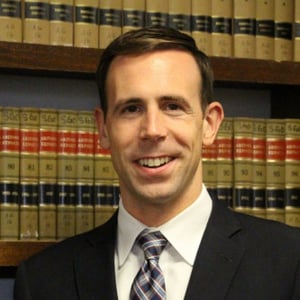
Shareholder, Greenberg Traurig, LLP
Dominic E. Draye has litigated at every level of the state and federal judiciary—from state trial court to the Supreme Court of the United States. His practice focuses on constitutional, regulatory, and environmental matters, and he has represented clients in both the public and private sectors. In the federal appellate courts, Mr. Draye has represented clients in the Second, Fifth, Seventh, Ninth, and D.C. Circuits.
Before joining Greenberg, Mr. Draye served as the Solicitor General of Arizona, where he briefed and argued the State’s highest-profile civil and criminal appeals and served as lead counsel for several multi-state coalitions litigating over agency rulemaking in the D.C. Circuit. Prior to government service, Mr. Draye was a litigator in the Washington, D.C., office of Kirkland & Ellis LLP, where his practice focused on legal issues and appeals.
Mr. Draye is a sought-after speaker on topics of administrative and constitutional law. He clerked for Hon. Edith H. Jones on the United States Court of Appeals for the Fifth Circuit and attended the University of Pennsylvania Law School.

Justice Department and Marijuana Enforcement
Paul James Larkin, Marc Levin, Ilya Shapiro
Criminal Law & Procedure Practice Group, Federalism & Separation of Powers Practice Group, and Regulatory Transparency Project Teleforum
On Thursday, January 4th, Attorney General Jeff Sessions withdrew a Justice Department memo issued in...
Byrd v. United States [SCOTUSbrief]
Natasha Babazadeh
Short video featuring Natasha Babazadeh
What is the expectation of privacy when you’re driving someone else’s rental car? Natasha Babazadeh...
Collins v. Virginia [SCOTUSbrief]
Matthew A. Fitzgerald
Short video featuring Matt Fitzgerald
Matt Fitzgerald, a partner at McGuireWoods, discusses the tension between the Fourth Amendment and the...
Prosecutorial Immunity
John G. Malcolm, Clark Neily, Geoffrey D. Wilson
Criminal Law Procedure Practice Group Teleforum
Prosecutors cannot be sued for injuries caused by their own misconduct. For example, even if...
Do Citizens Have a Right to Film Police Officers? [POLICYbrief]
Scott Erickson
Short video featuring Scott Erickson
Can you be arrested for taking videos of the police? Scott Erickson, president and executive...
Kernan v. Cuero and Dunn v. Madison - Post-Decision SCOTUScast
Kent Scheidegger
SCOTUScast featuring Kent Scheidegger
On November 6, 2017, the Supreme Court issued per curiam decisions in Kernan v. Cuero...
Topics
The Misunderstood Relationship Between Racial Differences in Conduct and Racial Differences in School Discipline and Criminal Justice Outcomes
A September 13, 2017 Mother Jones article (“Black Kids Are 5 Times Likelier Than White Kids to...
Courthouse Steps: Marinello v. United States: Destruction Equals Obstruction?
Theodore Cooperstein
Criminal Law & Procedure Practice Group Teleforum
The petitioner in this case was convicted on nine counts of tax-related offenses stemming from...
Marinello v. United States [SCOTUSbrief]
Rachel K. Paulose
Short video featuring Rachel Paulose and John Vecchione
Is it possible to obstruct an IRS investigation with no knowledge that the investigation is...
Ayestas v. Davis - Post-Argument SCOTUScast
Dominic Draye
SCOTUScast featuring Dominic Draye
On November 7, 2017, the Supreme Court heard argument in Ayestas v. Davis, a case...