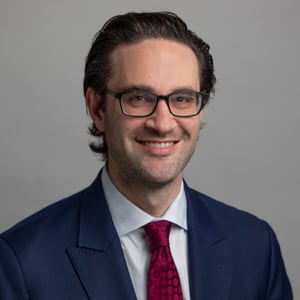
President and Chairman of the Board, Judicial Education Institute
Biography
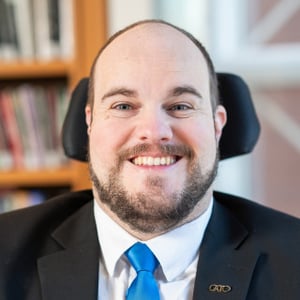
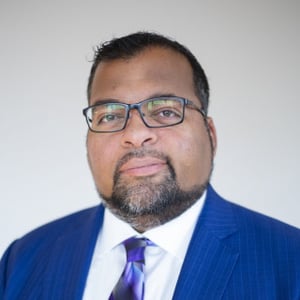
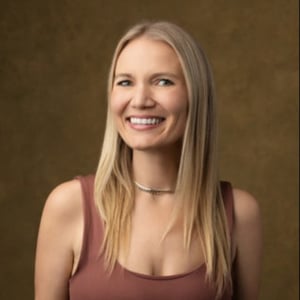
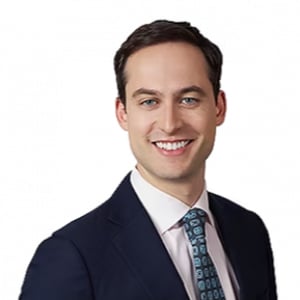
James Heilpern is President and Chairman of the Board of the Judicial Education Institute, a 501(c)(3) organization that provides high quality judicial education seminars to judges nationwide. He specializes in helping judges harness new technology to improve the interpretive process. In the last three years alone, he has trained approximately 250 judges from at least 50 different jurisdictions, as well as hundreds of practicing attorneys, on topics related artificial intelligence, corpus linguistics, and statutory interpretation. He also serves as counsel at the law firm Schaerr-Jaffe, where he regularly represents clients at all three levels of the federal judiciary, as well as before state supreme courts. He was part of the team the represented the state of Georgia in Texas v. Pennsylvania, et. al., successfully persuading the Supreme Court to dismiss Texas’ last-ditch effort to overturn the results of the 2020 presidential election. Heilpern’s scholarship has been cited by the Second Circuit, the DDC, and the Virginia Supreme Court, as well as dozens of times in the merits and amicus briefs of Trump v. Anderson. He is a Research Fellow at the Georgetown Center for the Constitution, and previously served as a Senior Fellow at the BYU Law School; as General Counsel of an ed-tech start up; and as a strategic advisor to an artificial intelligence company. He graduated magna cum laude from the BYU Law School and with highest honors and with distinction from the University of North Carolina at Chapel Hill. He previously clerked from Judge Edith Clement on the U.S. Court of Appeals for the Fifth Circuit and Judge Robert H. Cleland on the U.S. District Court for the Eastern District of Michigan.
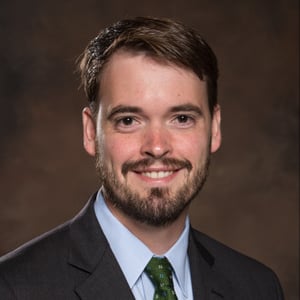
Vice President and Senior Counsel, Judicial Crisis Network
Biography
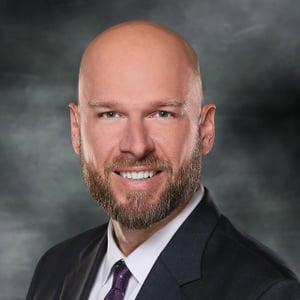
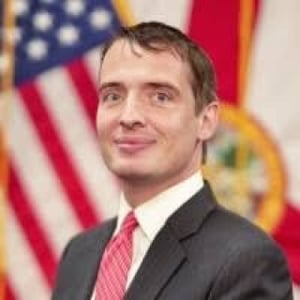
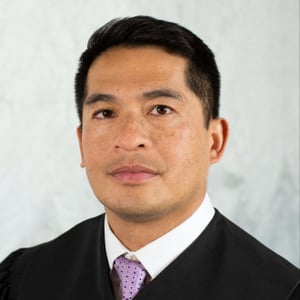
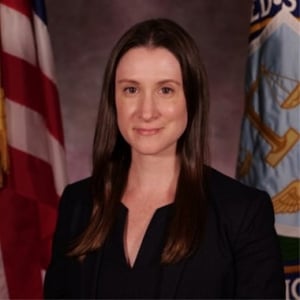
Frank Scaturro is an attorney and writer. A graduate of Columbia University and Penn Law School, he served as Counsel for the Constitution for the Senate Judiciary Committee from 2005 to 2009, where he advised Republican senators on constitutional law issues and nominations. Afterwards, he taught courses as a visiting professor at Hofstra Law School on constitutional law and the legislative process. The founder and president of the Grant Monument Association, Frank fought a failed government bureaucracy and pushed for a $2+ million restoration of Grant’s Tomb. Frank has published a number of books and articles in the area of history and law, including President Grant Reconsidered (1998), a reassessment of Grant’s presidency; The Supreme Court’s Retreat from Reconstruction (2000), an exploration of a key chapter in the history of the Supreme Court and the original meaning of the Reconstruction amendments; Public Companies (2002), a book he co-authored on how to be a responsible public company in the wake of the corporate scandals of the 2000s; and Grant at 200 (2023), a collection of essays about Grant that he co-edited. He has served as an associate at Cadwalader, Wickersham, and Taft and a partner at FisherBroyles LLP. During the 114th Congress (2015–2017), he served as special counsel to the House Select Investigative Panel on Infant Lives. He currently serves as vice-president and senior counsel of JCN.
Professor of Political Science, Ohio State University
Biography
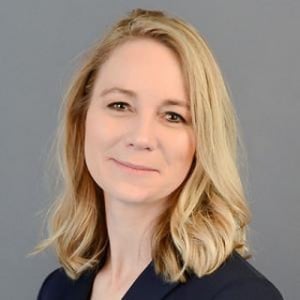
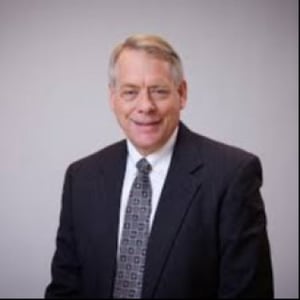
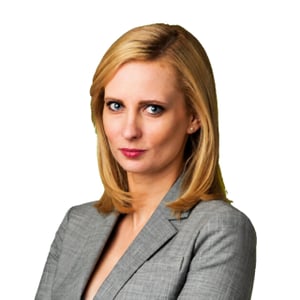
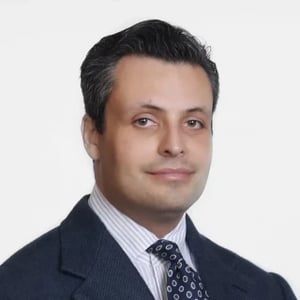
Professor Kogan is a Professor of Political Science at The Ohio State University, where his research focuses on American politics, public policy, and the intersection of political institutions and electoral behavior. He is widely recognized for his empirical work on political accountability, voter behavior, and institutional design, with research published in leading academic journals and cited in major policy discussions. Professor Kogan frequently provides policy analysis to state and national audiences, and his insights offer a data-driven perspective on the political and institutional dynamics.
Chairman and Founder, Institute for Free Speech; Josiah H. Blackmore II/Shirley M. Nault Designated Professor of Law, Capital University Law School
Biography
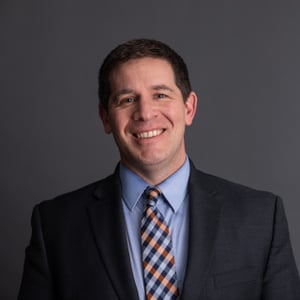
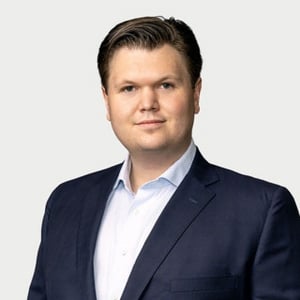
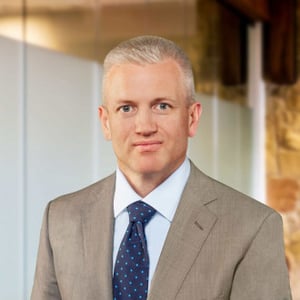
Bradley Smith is one of the nation’s foremost experts on campaign finance and election law, having served as a Commissioner on the Federal Election Commission from 2000 to 2005, including as Vice Chairman of the Commission in 2003 and Chairman in 2004. While serving as FEC Commissioner, the Wall Street Journal dubbed him, “the only honorable man in this bordello.”
His articles on election law have appeared in the Yale Law Journal, the Georgetown Law Journal, the University of Pennsylvania Law Review, and other top journals, and he contributes regularly to popular publications such as The Wall Street Journal and National Review.
In her book on the history of campaign finance reform, "Big Money Unleashed" (Univ. Of Chicago Press 2024), legal historian Ann Southworth writes, "Smith has done more than any other scholar since the 1970s to advance the legal theories that ultimately prevailed in the Roberts Court."
Smith has been the Josiah H. Blackmore II/Shirley M. Nault Professor of Law at Capital University Law School, and has also held appointments at West Virginia University and Princeton University. He is a cum laude graduate of Harvard Law School and Kalamazoo College.
Dr. John Eastman is the former Henry Salvatori Professor of Law & Community Service and former Dean at Chapman University's Dale E. Fowler School of Law, where he had been a member of the faculty since 1999, specializing in Constitutional Law, Legal History, and Property. He is a founding director of the Center for Constitutional Jurisprudence, a public interest law firm affiliated with the Claremont Institute that he founded in 1999. He has a Ph.D. in Government from the Claremont Graduate School and a J.D. from the University of Chicago Law School, and a B.A. in Politics and Economics from the University of Dallas. He serves as the Chairman of the Board of the National Organization for Marriage.
Prior to joining the Chapman law faculty, Dr. Eastman served as a law clerk to the Honorable Clarence Thomas, Associate Justice, Supreme Court of the United States, and to the Honorable J. Michael Luttig, Judge, United States Court of Appeals for the Fourth Circuit and practiced law with the national law firm of Kirkland & Ellis. Dr. Eastman has also represented numerous clients in important constitutional law matters and has argued before the Supreme Court. On behalf of the Claremont Institute Center for Constitutional Jurisprudence, he has participated as amicus curiae before the Supreme Court of the United States, U.S. Courts of Appeals, and State Supreme Courts in more than one hundred cases of constitutional significance, including Boy Scouts of America v. Dale, Zelman v. Simmons-Harris (the school vouchers case), Kelo v. New London, Ct. (eminent domain), and Van Orden v. Perry (the 10 Commandments case). He has also appeared as an expert legal commentator on numerous television and radio programs, including C-SPAN, Fox News, PBS, NewsHour, and The O'Reilly Factor.
Brett Nolan is a Senior Attorney at the Institute for Free Speech, a public interest law firm that defends the First Amendment rights of those engaged in political speech and advocacy around the country.
Before joining the Institute, Brett served as the Principal Deputy Solicitor General of Kentucky, where he represented the Commonwealth in a wide variety of high-stakes litigation at every level of state and federal court. In that role, Brett led a successful challenge against the Department of Treasury over the constitutionality of a federal law limiting the ability of states to modify their tax codes, and he helped secure a U.S. Supreme Court victory that upheld a state’s constitutional right to defend its interests in federal court.
Prior to that, Brett served as the Deputy General Counsel to the former Governor of Kentucky, where he advised the governor and other executive branch officials on legal and policy issues and represented them in litigation. Brett clerked for Judge John Nalbandian of the U.S. Court of Appeals for the Sixth Circuit and Judge Karen K. Caldwell of the U.S. District Court for the Eastern District of Kentucky. Between clerkships, he worked in private practice. Brett received his law degree from the University of Chicago Law School, where he graduated with High Honors and was an editor of The University of Chicago Law Review.
Founder, President, and General Counsel, Wisconsin Institute for Law & Liberty
Biography
Rick Esenberg is the founder and current President and General Counsel of the Wisconsin Institute for Law & Liberty, a rapidly expanding law and policy organization headquartered in Milwaukee. Under Rick’s leadership, WILL has grown into one of the more active state-based think tanks and litigation centers in the country. Rick is a frequent litigator in state and federal courts and nationally recognized scholar and commentator on constitutional law, particularly the First Amendment’s guarantees of freedom of speech and religion. He is one of the leading experts on the Wisconsin Constitution and a frequent advocate before the Wisconsin Supreme Court. Rick’s work seeks to advance the rule of law and individual liberty, formed by a robust civil society that forms individual and community character, preserving the wisdom of the past and an openness to the future.
Rick’s commentary has been featured in such outlets as the Wall Street Journal, National Review, Weekly Standard, Real Clear Politics, Milwaukee Journal Sentinel and Washington Examiner. Formerly on the faculty of Marquette University Law School, his scholarship has appeared in such publications as the Harvard Law Review, Harvard Journal of Law & Public Policy, Wake Forest Law Review and William & Mary Bill of Rights Journal. Back when they were a thing, he operated a blog called Shark and Shepherd where he tried to suggest something about the duality of man – “the Jungian thing.”
Rick holds a J.D., magna cum laude, from Harvard Law School, where he was an editor of the Harvard Law Review, and a B.A., summa cum laude, in political science from the University of Wisconsin-Milwaukee. In addition to service on the Marquette Faculty, he was formerly a litigation partner at Foley & Lardner and General Counsel of an international manufacturing firm headquartered in Wisconsin. He lives in Mequon Wisconsin with his wife Karen, golden retrievers Cooper and Riley and more books than he can find places for.
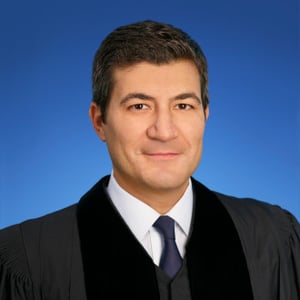
Kevin Brobson is a Justice on the Pennsylvania Supreme Court. He was elected on November 4, 2021, effective January 2022. His current term will expire in January 2032.