The Current State of College Athletics After House v. NCAA
Memphis Lawyer Chapter
Owen Brennan’s, The Royal Canal6150 Poplar Ave., #150
Memphis, TN 38119

Here are the latest events.



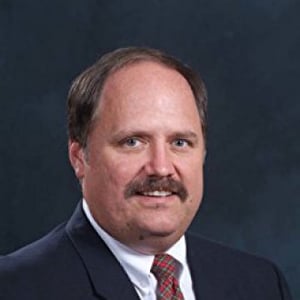
Distinguished Professor of Law, Jamie L. Whitten Chair of Law and Government, University of Mississippi School of Law
Professor Ronald J. Rychlak is the Jamie L. Whitten Chair of Law and Government and Distinguished Professor of Law at the University of Mississippi. He is a legal advisor to the Holy See’s delegation to the United Nations and chair of the Mississippi Advisory Committee to the U.S. Civil Rights Commission. He serves as the university’s Faculty Athletic Representative and is on the executive committee of the Southeastern Conference (SEC). In 2019 he received the university’s highest research and publication recognition, the “Distinguished Research and Creative Achievement Award” based upon his reputation for scholarly activity and leadership roles in professional societies. In 2023, he received the Algernon Sydney Sullivan Award, the University’s highest award in honor of service, for “placing service to others and the community before oneself, while embodying the qualities of honesty, morality, ethics, integrity, responsibility, determination, courage, and compassion.” In 2024, he was voted “Outstanding Law Professor” by the law school student body.
Ron is the author, co-author, or editor of twelve books and over 100 articles. The Congregation for the Causes of Saints at the Vatican called his book, Hitler, the War, and the Pope “definitive” in its response to charges made against the leader of the Catholic Church during World War II. He has been published in Notre Dame Law Review, UCLA Law Review, The Washington Post, The Wall Street Journal, and numerous other periodicals and journals. Media appearances include CNN, ABC, Fox News, The National Geographic TV Network, The Military Channel, C-SPAN, and more.
Ron and his wife Claire are proud of their six children, two sons-in-law, one daughter-in-law, and three granddaughters. They live in Oxford, Mississippi.
Fellow, Georgetown University Center for the Constitution
Yonatan Green is a Fellow at the Georgetown University Center for the Constitution. He is co-founder and former Executive Director of the Jerusalem-based Israel Law & Liberty Forum, a project of the Tikvah Fund. He holds a degree in Law and Communications from the Hebrew University of Jerusalem and is a licensed attorney in Israel and New York.
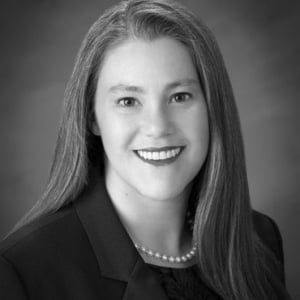
Judge, Arizona Court of Appeals, Division One
The Honorable Jennifer M. Perkins began service on the Arizona Court of Appeals, Division One, on October 30, 2017. At the time of her appointment by Governor Douglas Ducey, Judge Perkins was Assistant Solicitor General for the State of Arizona.
Judge Perkins was born in Portales, New Mexico, and primarily raised in Albuquerque. She attended the prestigious Albuquerque Academy from 1988-1995, before moving to Washington D.C. to attend the Elliott School of International Affairs at the George Washington University as a National Merit Scholar. Therafter, she relocated again to Dallas, Texas, and earned her juris doctor from the SMU Dedman School of Law, graduating cum laude in 2002.
Judge Perkins started her career at the law firm of Browning & Peifer (now Peifer, Hanson, Mullins, and Baker) in Albuquerque, New Mexico. While there, she litigated complex commercial matters including class action plaintiff and defense work, and assisted with employment and contract litigation. In 2003, the judge accompanied the Honorable James O. Browning in transitioning to the federal district court bench, serving as his first law clerk.
After her clerkship, Judge Perkins moved to Arizona to work for the Institute for Justice, Arizona Chapter, a public interest law firm. She spent five years with IJ-AZ litigating civil rights cases in Arizona and across the country. In 2009, the judge became Disciplinary Counsel for the Arizona Commission on Judicial Conduct, where she reviewed and prosecuted ethics complaints against state court judges throughout Arizona. After five years serving the state in this capacity, Judge Perkins entered private practice by joining an appellate law firm in Phoenix. While there, she worked on state and federal appeals involving a wide range of legal subjects, including complex business disputes, property rights, judicial ethics, and personal injury matters.
In January 2015, Judge Perkins joined the Office of the Arizona Attorney General to serve as the first Assistant Solicitor General; in that capacity, she was responsible for oversight of Attorney General Opinions and served as ethics counsel to the entire office. In addition to these two primary roles, the judge assisted on a variety of matters including trial and appellate litigation of election-related matters; federal appellate litigation with the Federalism Unit; state criminal appeals; and drafting amicus briefs on behalf of Arizona in state and federal courts.
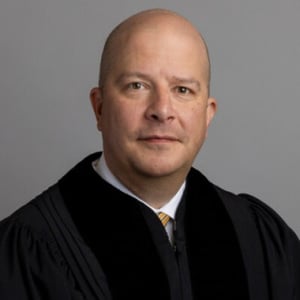
Chief Justice, Supreme Court of Georgia
Chief Justice Nels Peterson was appointed to the Georgia Supreme Court in 2016, and was elected to full six-year terms in 2018 and 2024. He previously served in a variety of other roles in Georgia state government, including as judge on the Georgia Court of Appeals, general counsel for the University System of Georgia, Georgia’s first solicitor general in the Attorney General’s Office, and executive counsel to the Governor.
Before entering state government, Nels practiced at King & Spalding LLP in Atlanta and clerked for Chief Judge William H. Pryor Jr. of the United States Court of Appeals for the Eleventh Circuit. He is a graduate of Kennesaw State University and Harvard Law School. Nels and his wife Jennifer have two children and live in Cobb County, where they teach adult Sunday school at Johnson Ferry Baptist Church.
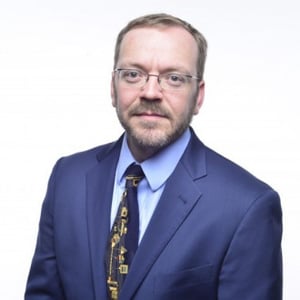
Vice President for Legal Affairs, Goldwater Institute
Chief Judge, United States Court of Appeals, Sixth Circuit
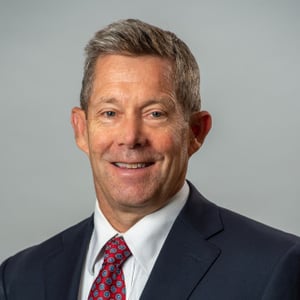
JEFFREY S. SUTTON is the Chief Judge of the United States Court of Appeals for the Sixth Circuit. He has served as Chair of the Federal Judicial Conference Committee on Rules of Practice and Procedure, Chair of the Advisory Committee on Appellate Rules, and Chair of the Supreme Court Fellows Commission. He currently serves as Chair of the Executive Committee of the Judicial Conference of the United States. Since 1993, Chief Judge Sutton has been an adjunct professor at The Ohio State University College of Law, where he teaches seminars on State Constitutional Law, the United States Supreme Court, and Appellate Advocacy. He also teaches a class on State Constitutional Law at Harvard Law School. Among other publications, he is the author of Who Decides? States as Laboratories of Constitutional Experimentation and 51 Imperfect Solutions: States and the Making of American Constitutional Law. He is the co-author of a casebook, State Constitutional Law: The Modern Experience, as well as The Law of Judicial Precedent. He is also the co-editor of The Essential Scalia: On the Constitution, the Courts, and the Rule of Law. In 2006, Chief Judge Sutton was elected to the American Law Institute, and in 2017 he was elected to its Council.
Attorney, Institute for Justice
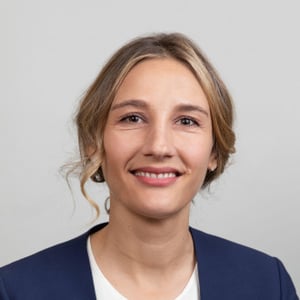
Anya Bidwell (née Cherkasova) leads IJ’s Project on Immunity and Accountability (“PIA”). Through this project, Anya works to promote judicial engagement and ensure that government officials are held to account when they violate individuals’ constitutional rights. Anya also serves as an adviser on the American Law Institute’s Restatement of the Law, Constitutional Torts project.
One of Anya’s PIA cases—Gonzalez v. Trevino—was heard by the United States Supreme Court on March 20, 2024. She argued the case for the petitioner, with the goal of convincing the Justices that retaliatory arrests not involving on-the-spot decisions by police officers should be actionable under the First Amendment regardless of probable cause. The decision is expected in June.
This was Anya’s third appearance before the U.S. Supreme Court. She second-chaired Brownback v. King (an excessive force case) and Tennessee Wine & Spirits Retailers Association v. Thomas (a commerce clause case) in November 2020 and January 2019 respectfully.
Before joining IJ, Anya worked for a top national law firm, handling cases in trial and appellate courts. She earned her J.D. with honors from the University of Texas. Two years prior to entering law school, Anya received a master’s degree in Global Policy Studies, also from the University of Texas, and wrote a thesis on asymmetric warfare.
Anya spent her childhood in Ukraine and Kyrgyzstan. At 16, she left her family behind and came to America on a university scholarship. Her upbringing motivated her to study law and become an advocate for a strong, independent judiciary.
Anya’s work has been featured in numerous publications, including the Washington Post, the Wall Street Journal, the New York Times, USA Today, and the Guardian. She is also the host of live recordings of our Short Circuit podcast and a co-producer of our documentary-style podcast Bound by Oath.
Attorney General of Utah
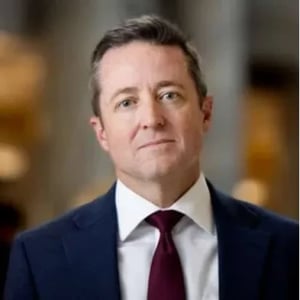
Attorney General Derek Brown discovered his passion for public service early in his career. He earned a Bachelor of Arts in English from Brigham Young University, complemented by minors in business administration and music. Afterward, he accepted an offer to attend law school. However, he and his wife, Emilie, embarked on a transformative journey by deferring for a year to travel. Upon their return, Derek embraced opportunities as an intern at the Utah Legislature and at the Office of the Utah Attorney General under Jan Graham. Importantly this laid the groundwork for a meaningful career dedicated to serving others.
Attorney General Brown’s journey embodies determination and excellence. As editor-in-chief of the Pepperdine Law Review at Pepperdine Law School, he laid the foundation for a remarkable career. Then, graduating in 2000, he honed his skills by clerking for Ruggero Aldisert, the esteemed former chief judge of the U.S. Third Circuit Court of Appeals. His passion for justice continued while he practiced litigation and appellate law with Mayer Brown. Meanwhile, he continued to forge a path dedicated to making a difference.
In 2002, Mike Lee, who would later become a senator from Utah, recognized Attorney General Brown’s potential. Sen. Lee then recruited him to practice constitutional and appellate law at Sidley Austin, where he flourished until 2004. After this pivotal period, Attorney General Brown served as legal counsel to Senator Bob Bennett from 2004 to 2006. And then he served as counsel to Senator Orrin Hatch from 2006 to 2007, contributing his expertise to the nation’s governance.
Transitioning back to the private sector, Attorney General Brown embraced the opportunity to teach communications law as an adjunct professor at Brigham Young University, shaping the minds of future leaders. In 2010, he took on the honor of representing House District 49 in the Utah House of Representatives, making a difference in his community.

Legal Director, ACLU of Utah
Jason M. Groth joined the ACLU of Utah in October 2024 as the Legal Director.
Jason received his bachelor’s degrees from the University of Dubuque, his master’s degree in creative writing at the University of Wisconsin-Milwaukee, and his law degree from the University of Iowa College of Law where he was awarded the Willard L. Boyd Public Service Distinction with Highest Honors.
Jason began his legal career as a public defender in Colorado, where he represented juveniles and adults in misdemeanor and felony cases. He moved to Utah in 2018 to lead the ACLU’s Campaign for Smart Justice to advocate for statewide criminal legal reform. His advocacy role expanded to litigating civil rights cases as the ACLU of Utah's Deputy Legal Director.
Jason briefly left the ACLU to return to public defense at the Salt Lake Legal Defender Association where he represented indigent clients in serious felony cases while regularly volunteering his time with the S.J. Quinney College of Law Pro Bono Initiative. He then joined the Indigent Appellate Defense Division representing clients in post-conviction relief cases before returning to the ACLU in his current role.
In his spare time, you can find Jason going on hikes with his spouse and dog, playing Magic: the Gathering at a local game store, or smoking a brisket in his backyard.
Associate Professor of Law, J. Reuben Clark Law School at Brigham Young University
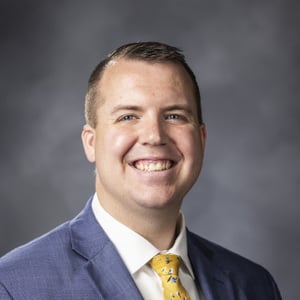
Tyler Lindley joined BYU Law School in 2024 as an Associate Professor of Law. His research centers on the judicial role and the historical evolution of the judiciary in America. He has extensively examined and published on judicial remedies, federal courts, constitutional law, and administrative law. His scholarly contributions have been or will be featured in the Alabama Law Review, BYU Law Review, Georgia Law Review, Virginia Law Review, and Wake Forest Law Review.
Professor Lindley holds a bachelor's degree in economics from Brigham Young University (2018) and a Juris Doctor from The University of Chicago Law School (2021). During his legal studies, he served as a judicial extern for Judge Ryan Nelson on the US Court of Appeals for the Ninth Circuit. Prior to joining the faculty at BYU Law, he clerked for Chief Judge William Pryor on the US Court of Appeals for the Eleventh Circuit and Judge Gregory Katsas on the US Court of Appeals for the D.C. Circuit. He also served as a Research Fellow at BYU Law between his clerkships.
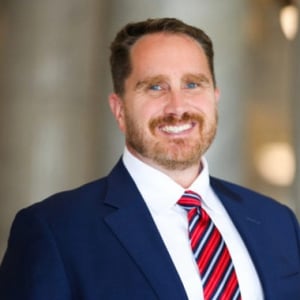
Criminal Deputy Attorney General, Utah Attorney General's Office
While in the U.S. Attorney’s Office in Utah, Stewart Young served as Senior Litigation Counsel and Training Officer. He also worked in the Financial Fraud Section, the Violent Crime Section, and the Narcotics Section. He has been lead or co-counsel on twenty felony jury trials and 22 appellate briefs. Young recently returned from Amman, Jordan, where he served as a counterterrorism prosecutor with the U.S. Department of Justice.
Young has investigated and prosecuted public corruption, bribery, mail/wire fraud, Ponzi schemes, criminal tax violations, narcotics trafficking, and continuing criminal enterprise. He has also trained federal prosecutors at the National Advocacy Center and been responsible for large-scale investigations involving multiple defendants relating to complex white-collar and securities violations, narcotics trafficking, and violent street gang-affiliated conspiracies.
Young, a Stanford Law School and Princeton University graduate, started his prosecutorial career as an Assistant U.S. Attorney in the Southern District of California. He spent several years as a tenure-track law professor at the University of Wyoming College of Law, teaching classes on criminal procedure, criminal adjudication, and border crimes. He also clerked at the U.S. Court of Appeals for the Ninth Circuit and for Judge Paul Cassell at the United States District Court for the District of Utah.
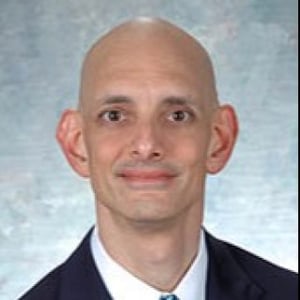
Distinguished Professor and Lawrence A. Jegen III Professor, Indiana University Robert H. McKinney School of Law
Gerard N. Magliocca is a Distinguished Professor and the Lawrence A. Jegen III Professor at the Indiana University Robert H. McKinney School of Law. Professor Magliocca is the author of five books on constitutional law. His next book will be about Justice Robert Jackson’s landmark concurring opinion in Youngstown Sheet and Tube Company v. Sawyer. His biography of Justice Bushrod Washington won the Erwin N. Griswold Prize from the Supreme Court Historical Society.
Professor Magliocca received his undergraduate degree from Stanford and his law degree from Yale. He joined the faculty in 2001 after two years as an attorney and one year as a law clerk for Judge Guido Calabresi on the United States Court of Appeals for the Second Circuit. In 2008, Professor Magliocca held the Fulbright-Dow Distinguished Research Chair of the Roosevelt Study Center in Middelburg, The Netherlands. He was a Fellow at the Washington Library at Mount Vernon from 2019-2021.
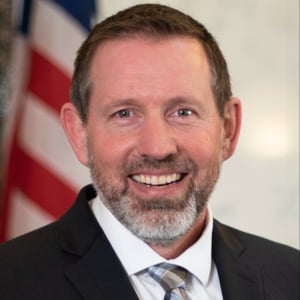
Judge, United States Court of Appeals, Ninth Circuit
Lawrence VanDyke serves as a circuit judge on the U.S. Court of Appeals for the Ninth Circuit. Prior to that appointment in January 2020, he served as a Deputy Assistant Attorney General in the Environment and Natural Resources Division of the United States Department of Justice. Before that, he served consecutively as the Solicitor General of two western states – Nevada and Montana. At the beginning of his legal career, he worked as an attorney in the Appellate and Constitutional Issues practice group at Gibson Dunn & Crutcher, LLP.
Judge VanDyke received his law degree magna cum laude from Harvard Law School, where he was an editor on the Harvard Law Review. He has engineering and theology undergraduate degrees and a masters degree in engineering management. He served as a law clerk to the Honorable Janice Rogers Brown of the United States Court of Appeals for the District of Columbia Circuit. Judge VanDyke and his wife Cheryl live in Reno, Nevada, and they have three children.
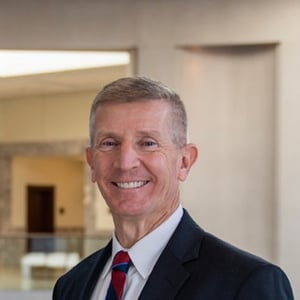
Judge, United States Court of Appeals, 8th Circuit
Leonard Steven Grasz is an American attorney and jurist serving as a United States circuit judge of the United States Court of Appeals for the Eighth Circuit.
A graduate of the University of Nebraska–Lincoln and the University of Nebraska College of Law, Grasz spent eleven years as the state of Nebraska's Chief Deputy Attorney General. He was a senior partner at the law firm of Husch Blackwell prior to his appointment to the federal judiciary.

Judge, United States Court of Appeals, Eighth Circuit
David Stras became a judge on the United States Court of Appeals for the Eighth Circuit on January 31, 2018. Before serving on the Eighth Circuit, Judge Stras was an Associate Justice of the Minnesota Supreme Court, a position he occupied from July 1, 2010 until his appointment to the Eighth Circuit.
Prior to becoming a judge, Stras was a member of the faculty of the University of Minnesota Law School from 2004 through 2010. He taught and wrote in the areas of federal courts and jurisdiction, constitutional law, criminal law, and law and politics.
Judge Stras received his Bachelor of Arts degree, with highest distinction, in 1995 and his Master of Business Administration in 1999, both from the University of Kansas. He also received his law degree from the University of Kansas School of Law in 1999, where he served as Editor-in-Chief of the Criminal Procedure Edition of the Kansas Law Review.
Following law school, Stras clerked for The Honorable Melvin Brunetti of the United States Court of Appeals for the Ninth Circuit and then for The Honorable J. Michael Luttig of the United States Court of Appeals for the Fourth Circuit.
From 2001 to 2002, he practiced white-collar criminal and appellate litigation with the Washington, D.C., office of Sidley Austin Brown & Wood. Following his year in practice, he clerked for The Honorable Clarence Thomas of the Supreme Court of the United States.
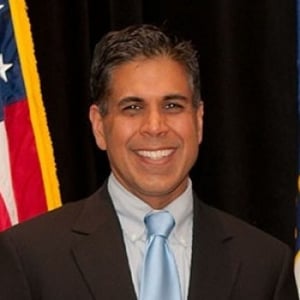
Judge, United States Court of Appeals, Sixth Circuit
Amul R. Thapar serves as a judge on the United States Court of Appeals for the Sixth Circuit. His judicial career began in 2007 when President George W. Bush nominated him to serve on the Eastern District of Kentucky, making him the first South Asian Article III judge in American history. In 2017, he became President Donald J. Trump’s first appellate court nominee.
Before joining the bench, Judge Thapar served as the United States Attorney for the Eastern District of Kentucky. While United States Attorney, Judge Thapar worked on the Attorney General’s Advisory Committee (“AGAC”) and chaired the AGAC’s Controlled Substances and Asset Forfeiture subcommittee. He also served on the Terrorism and National Security subcommittee, the Violent Crime subcommittee, and the Child Exploitation working group.
Judge Thapar has worked in private practice, at Williams & Connolly in Washington, D.C., and Squire, Sanders & Dempsey in Cincinnati, Ohio. He also served as an Assistant United States Attorney in both the Southern District of Ohio and the District of Columbia.
Judge Thapar received his undergraduate degree from Boston College and his law degree from the University of California, Berkeley. After graduating, Judge Thapar worked as a law clerk to the Honorable S. Arthur Spiegel of the United States District Court for the Southern District of Ohio, and the Honorable Nathaniel R. Jones of the United States Court of Appeals for the Sixth Circuit.
Judge Thapar has also published in the Yale Law Journal, Michigan Law Review, and Catholic University Law Review. He teaches courses on originalism, the Federalists and Anti-Federalists, and legal writing at Notre Dame Law School, the University of Virginia School of Law, and Vanderbilt Law School.
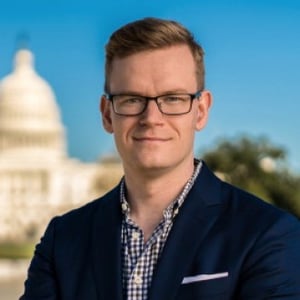
Senior Counsel, Internet Accountability Project
Will Chamberlain serves as Senior Counsel to the Internet Accountability Project. He is also the owner and editor-in-chief of Human Events.
Prior to relaunching Human Events, Will worked as an attorney at the Competitive Enterprise Institute in Washington, DC, focusing on class action litigation. Before that, he was an associate at Quinn, Emanuel, Urquhart & Sullivan LLP in Los Angeles, where he practiced complex commercial litigation. Will graduated from University of the Pacific in 2010 with a B.A. in Economics, and received his J.D., magna cum laude, from Georgetown University Law Center in 2015. Will is an active member of the State Bar of California and the District of Columbia Bar.

Professor of Law, Antonin Scalia Law School, George Mason University
ILYA SOMIN is Professor of Law at George Mason University and the B. Kenneth Simon Chair in Constitutional Studies at the Cato Institute. His research focuses on constitutional law, property law, democratic theory, federalism, and migration rights. He is the author of Free to Move: Foot Voting, Migration, and Political Freedom (Oxford University Press, revised and expanded edition, 2022), Democracy and Political Ignorance: Why Smaller Government is Smarter (Stanford University Press, revised and expanded second edition, 2016), and The Grasping Hand: Kelo v. City of New London and the Limits of Eminent Domain (University of Chicago Press, 2015, rev. paperback ed., 2016), coauthor of A Conspiracy Against Obamacare: The Volokh Conspiracy and the Health Care Case (Palgrave Macmillan, 2013), and co-editor of Eminent Domain: A Comparative Perspective (Cambridge University Press, 2017). Democracy and Political Ignorance has been translated into Italian and Japanese.
Somin’s work has appeared in numerous scholarly journals, including the Yale Law Journal, Stanford Law Review, Northwestern University Law Review, Georgetown Law Journal, Critical Review, and others. Somin has also published articles in a variety of popular press outlets, including the New York Times, Washington Post, Wall Street Journal, Los Angeles Times, CNN, NBC, The Atlantic, USA Today, Boston Globe, US News and World Report, South China Morning Post, National Law Journal and Reason. He has been quoted or interviewed by the New York Times, Washington Post, Wall Street Journal, Time, Newsweek, The Economist, the Christian Science Monitor, the Financial Times, The Guardian, the Associated Press, CBS, MSNBC, NPR, BBC, Reuters, the Canadian Broadcasting Corporation, the Australian Broadcasting Corporation, Radio Free Europe/Radio Liberty, Al Jazeera, and the Voice of America, among other media.
Somin’s writings have been cited in decisions by the United States Supreme Court, multiple state supreme courts and lower federal courts, and the Supreme Court of Israel. He is co-counsel for the plaintiffs in VOS Selections, Inc. v. Trump, a case challenging the constitutionality of President Trump’s “Liberation Day” tariffs. Somin has testified on the use of drones for targeted killing in the War on Terror before the US Senate Judiciary Subcommittee on the Constitution, Civil Rights, and Human Rights. In 2009, he testified on property rights issues at the United States Senate Judiciary Committee confirmation hearings for Supreme Court Justice Sonia Sotomayor. Somin writes regularly for the popular Volokh Conspiracy law and politics blog, now affiliated with Reason magazine (previously affiliated with the Washington Post from 2014 to 2017). From 2006 to 2013, he served as Co-Editor of the Supreme Court Economic Review, one of the country’s top-rated law and economics journals.
Somin has served as a visiting professor at the University of Pennsylvania Law School. He has also been a visiting professor or scholar at the Georgetown University Law Center, the University of Hamburg, Germany, the University of Torcuato Di Tella in Buenos Aires, Argentina, Uriel Reichman University in Israel, and Zhengzhou University in China. He is a University Affiliate of the Schar School of Policy and Government at George Mason University, and an affiliated faculty member of the George Mason University Institute for Immigration Research. Before joining the faculty at George Mason, Somin was the John M. Olin Fellow in Law at Northwestern University Law School in 2002-2003. In 2001-2002, he clerked for the Hon. Judge Jerry E. Smith of the U.S. Court of Appeals for the Fifth Circuit. Professor Somin earned his B.A., Summa Cum Laude, at Amherst College, M.A. in Political Science from Harvard University, and J.D. from Yale Law School.
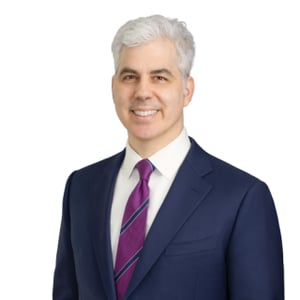
Shareholder, Carlton Fields

Senior Editor, The Dispatch
When it comes to explaining the most important events in law and politics, Isgur’s experience on three presidential campaigns and all three branches of the federal government brings a unique perspective on the news of the day and an unparalleled knowledge of how decisions in Washington really get made. Isgur most recently served in the Department of Justice as the Director of the Office of Public Affairs and Senior Counsel to the Deputy Attorney General during the Russia investigation. She was backstage for more than a half dozen presidential debates as the Deputy Campaign Manager for Carly Fiorina’s presidential campaign. She is a graduate of Harvard Law School and Northwestern University and clerked for Judge Edith H. Jones of the United States Court of Appeals for the Fifth Circuit. Isgur is a senior editor at The Dispatch.