
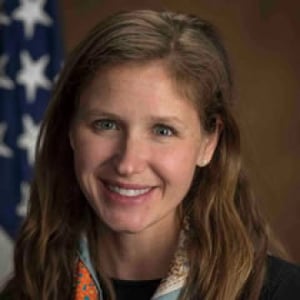
Vice President & Compliance Counsel, Capital One
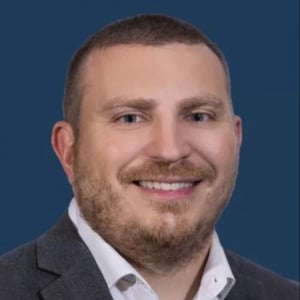
Legal Policy Director, Pacific Legal Foundation
Daniel Dew directs Pacific Legal Foundation’s legal policy efforts. The legal policy team fights for individual liberty in the other two branches of government by finding principled solutions to complex problems.
Daniel has led numerous successful public policy campaigns, including home equity theft reform, judicial bias reform, emergency powers reform, and prior to his time at PLF, civil asset forfeiture reform, sentencing reform, and removing government-imposed barriers to employment.
Before joining PLF, Daniel was a legal fellow at The Buckeye Institute in Columbus, Ohio, and a visiting legal fellow at The Heritage Foundation’s Meese Center for Legal and Judicial Studies.
Daniel served on the Ohio Supreme Court’s Task Force to Examine Ohio’s Bail System, and Ohio’s Justice Reinvestment 2.0 Ad Hoc Committee. He has also served as president of the Columbus, Ohio lawyers chapter of the Federalist Society, and chaired the Ohio State Bar Association’s Criminal Justice Committee.
He earned his law degree from Cleveland Marshall College of Law and his undergraduate degree from Utah State University.
When he’s not battling bureaucrats, Daniel coaches baseball, trains for marathons (very slowly), is constantly disappointed by Cleveland sports teams, and keeps busy with his wife, Amanda, and their four children.
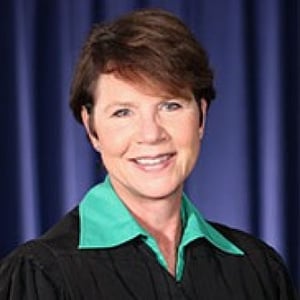
Justice, Ohio Supreme Court
On November 4, 2014, Justice Sharon L. Kennedy was re-elected to a full term on the Supreme Court of Ohio in a decisive victory winning all 88 counties and garnering 73 percent of the vote. Justice Kennedy first joined the court in 2012, having been elected to fill an unexpired term.
Prior to her term on the Ohio Supreme Court, Justice Kennedy served at the Butler County Court of Common Pleas, Domestic Relations Division beginning in 1999. From 2005 until December of 2012, Justice Kennedy served as the administrative judge of that division. During her time as administrative judge, she improved the case management system to ensure the timely resolution of cases for families and children. Working with state legislators she championed a "common sense" family law initiative to reduce multiple-forum litigation for Butler County families.
When Butler County faced tough economic times, Justice Kennedy organized concerned elected officials in a county-wide Budget Work Group. Seeing the need to bring private sector financial know-how to the government, she worked to create the Advisory Committee to the Budget Work Group. Justice Kennedy served as the facilitator and led discussions between county officials and private sector leaders to analyze county finances, study and implement cost saving measures, and present business driven fiscal policy to the county commissioners.
In 1991, after obtaining her law degree from the University of Cincinnati College of Law, Justice Kennedy ran a small business of her own as a solo practitioner. While in private practice she served the legal needs of families, juveniles, and the less fortunate. As special counsel for Attorney General Betty D. Montgomery, Justice Kennedy fought on behalf of Ohio’s taxpayers to collect monies due the State of Ohio. As a part-time magistrate in the Butler County Area Courts, Justice Kennedy presided over a wide array of civil litigation and assisted law enforcement officers and private citizens seeking the issuance of criminal warrants for arrest.
Justice Kennedy began her career in the justice system as a police officer at the Hamilton Police Department. She was assigned to a rotating shift, single-officer road patrol unit working to protect and serve the citizens of the City of Hamilton. From the routine, to the heart-pounding, to the heart-breaking, she has seen it all. During her time as an officer, Justice Kennedy also worked undercover operations, implemented crime prevention programs, and later, as a civil assistant, assisted in drafting police policy and procedure for the Accreditation Program.
Throughout her career Justice Kennedy has served on numerous boards, developed and facilitated programs to address the needs of young people, and worked with judges across the state. As a dedicated jurist she has received multiple awards of recognition including: Leadership Ohio Community Leadership Award, 2016; The University of Cincinnati College of Law Nicholas Longworth, III Alumni Achievement Award, May 17, 2014; Northwest High School Distinguished Alumnus Award, April 25, 2014; named one of 13 professional women to watch by The Cincinnati Enquirer, March 17, 2013; Excellence in Public Service, June 2009; Judge of the Year, 2006; Above the Fold Award, 2002; and the Furtherance of Justice Award, 2001. Justice Kennedy was also featured in Trends in the Judiciary: Interviews with Judges Across the Globe, Volume II, published by CRC Press in February 2015.

Attorney General, State of Ohio
Dave Yost was re-elected as Ohio’s 51st attorney general on Nov. 8, 2022, receiving more votes than any other attorney general in the state’s history.
During his first term as the state’s chief legal officer, he quickly gained a national reputation as a fearless advocate for the rule of law — or, as he puts it, “the same rules for everybody.”
Yost’s goal is to “do big good” for the people of Ohio by protecting consumers, rooting out corruption, defending the environment, ensuring an open and competitive marketplace, and fulfilling the many other duties of the Ohio Attorney General’s Office.
Yost began his public-service career as Delaware County auditor, later winning election as that county’s prosecutor. From 2011 through 2018, he served as Ohio’s auditor of state and, in January 2019, began his first term as attorney general.
Yost earned his bachelor’s degree from The Ohio State University and law degree from Capital University. He and his wife, Darlene, live in Franklin County; they have three grown children and five grandchildren.
Vice President & Compliance Counsel, Capital One
Legal Policy Director, Pacific Legal Foundation
Daniel Dew directs Pacific Legal Foundation’s legal policy efforts. The legal policy team fights for individual liberty in the other two branches of government by finding principled solutions to complex problems.
Daniel has led numerous successful public policy campaigns, including home equity theft reform, judicial bias reform, emergency powers reform, and prior to his time at PLF, civil asset forfeiture reform, sentencing reform, and removing government-imposed barriers to employment.
Before joining PLF, Daniel was a legal fellow at The Buckeye Institute in Columbus, Ohio, and a visiting legal fellow at The Heritage Foundation’s Meese Center for Legal and Judicial Studies.
Daniel served on the Ohio Supreme Court’s Task Force to Examine Ohio’s Bail System, and Ohio’s Justice Reinvestment 2.0 Ad Hoc Committee. He has also served as president of the Columbus, Ohio lawyers chapter of the Federalist Society, and chaired the Ohio State Bar Association’s Criminal Justice Committee.
He earned his law degree from Cleveland Marshall College of Law and his undergraduate degree from Utah State University.
When he’s not battling bureaucrats, Daniel coaches baseball, trains for marathons (very slowly), is constantly disappointed by Cleveland sports teams, and keeps busy with his wife, Amanda, and their four children.
Justice, Ohio Supreme Court
On November 4, 2014, Justice Sharon L. Kennedy was re-elected to a full term on the Supreme Court of Ohio in a decisive victory winning all 88 counties and garnering 73 percent of the vote. Justice Kennedy first joined the court in 2012, having been elected to fill an unexpired term.
Prior to her term on the Ohio Supreme Court, Justice Kennedy served at the Butler County Court of Common Pleas, Domestic Relations Division beginning in 1999. From 2005 until December of 2012, Justice Kennedy served as the administrative judge of that division. During her time as administrative judge, she improved the case management system to ensure the timely resolution of cases for families and children. Working with state legislators she championed a "common sense" family law initiative to reduce multiple-forum litigation for Butler County families.
When Butler County faced tough economic times, Justice Kennedy organized concerned elected officials in a county-wide Budget Work Group. Seeing the need to bring private sector financial know-how to the government, she worked to create the Advisory Committee to the Budget Work Group. Justice Kennedy served as the facilitator and led discussions between county officials and private sector leaders to analyze county finances, study and implement cost saving measures, and present business driven fiscal policy to the county commissioners.
In 1991, after obtaining her law degree from the University of Cincinnati College of Law, Justice Kennedy ran a small business of her own as a solo practitioner. While in private practice she served the legal needs of families, juveniles, and the less fortunate. As special counsel for Attorney General Betty D. Montgomery, Justice Kennedy fought on behalf of Ohio’s taxpayers to collect monies due the State of Ohio. As a part-time magistrate in the Butler County Area Courts, Justice Kennedy presided over a wide array of civil litigation and assisted law enforcement officers and private citizens seeking the issuance of criminal warrants for arrest.
Justice Kennedy began her career in the justice system as a police officer at the Hamilton Police Department. She was assigned to a rotating shift, single-officer road patrol unit working to protect and serve the citizens of the City of Hamilton. From the routine, to the heart-pounding, to the heart-breaking, she has seen it all. During her time as an officer, Justice Kennedy also worked undercover operations, implemented crime prevention programs, and later, as a civil assistant, assisted in drafting police policy and procedure for the Accreditation Program.
Throughout her career Justice Kennedy has served on numerous boards, developed and facilitated programs to address the needs of young people, and worked with judges across the state. As a dedicated jurist she has received multiple awards of recognition including: Leadership Ohio Community Leadership Award, 2016; The University of Cincinnati College of Law Nicholas Longworth, III Alumni Achievement Award, May 17, 2014; Northwest High School Distinguished Alumnus Award, April 25, 2014; named one of 13 professional women to watch by The Cincinnati Enquirer, March 17, 2013; Excellence in Public Service, June 2009; Judge of the Year, 2006; Above the Fold Award, 2002; and the Furtherance of Justice Award, 2001. Justice Kennedy was also featured in Trends in the Judiciary: Interviews with Judges Across the Globe, Volume II, published by CRC Press in February 2015.
Attorney General, State of Ohio
Dave Yost was re-elected as Ohio’s 51st attorney general on Nov. 8, 2022, receiving more votes than any other attorney general in the state’s history.
During his first term as the state’s chief legal officer, he quickly gained a national reputation as a fearless advocate for the rule of law — or, as he puts it, “the same rules for everybody.”
Yost’s goal is to “do big good” for the people of Ohio by protecting consumers, rooting out corruption, defending the environment, ensuring an open and competitive marketplace, and fulfilling the many other duties of the Ohio Attorney General’s Office.
Yost began his public-service career as Delaware County auditor, later winning election as that county’s prosecutor. From 2011 through 2018, he served as Ohio’s auditor of state and, in January 2019, began his first term as attorney general.
Yost earned his bachelor’s degree from The Ohio State University and law degree from Capital University. He and his wife, Darlene, live in Franklin County; they have three grown children and five grandchildren.
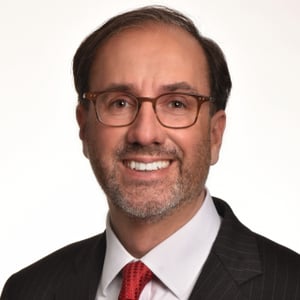
President and CEO, The Buckeye Institute
Robert Alt is the President and Chief Executive Officer of The Buckeye Institute where he has catalyzed exponential growth since he took the organization’s helm in 2012. He has since founded Buckeye’s renowned Economic Research Center and established its impactful Legal Center.
Alt is a distinguished scholar and attorney with particular expertise in legal policy, criminal justice, national security, and constitutional law. He previously worked for former U.S. Attorney General Edwin Meese III, regularly provides commentary on television and radio programs, and his writings have appeared in countless outlets.
In 2004, Alt spent five months in Iraq as an embedded war correspondent.
Alt has testified before Congress multiple times—including at the confirmation hearings for U.S. Supreme Court Justice Elena Kagan—the Federal Election Commission regarding matters of constitutional and administrative law, and numerous state legislatures.
Alt serves as an officer on the boards of The Philadelphia Society and the Federalist Society’s Columbus Lawyers Chapter. He taught national security law, criminal law, and legislation at Case Western Reserve University School of Law, as well as constitutional law and political parties and interest groups at Ashland University.
Alt earned his Doctor of Law degree from The University of Chicago Law School, where he was Symposium Editor and the winner of the Mulroy Prize for Excellence in Appellate Advocacy as well as research assistant to Professor Richard Epstein. Following law school, he clerked for Judge Alice Batchelder on the U.S. Court of Appeals for the Sixth Circuit. Alt graduated with his Bachelor of Arts in philosophy and political science magna cum laude from Azusa Pacific University where he also won the Outstanding Senior Award in Political Science.
Alt is an accomplished high-altitude alpinist and endurance athlete who has successfully climbed 6.75 of the famed Seven Summits of the World including Mount Everest. He is the creator of PROFOUND CLIMBING™ and a frequent speaker across the country and around the world on legal and public policy topics as well as effective leadership, management, decision-making, and teamwork in contexts ranging from extraordinary life/death situations to ordinary professional/business settings.
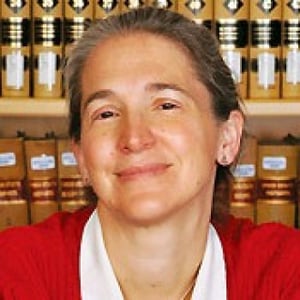
Carter C. Kissell Professor of Law, The Ohio State University Michael E. Moritz College of Law
In law school, Professor Hébert served as editor-in-chief of the Kansas Law Review and was elected to Order of the Coif. Following graduation from law school, she clerked for Judge James K. Logan of the U.S. Court of Appeals for the Tenth Circuit and practiced labor and employment law, representing management, for five years with Spencer, Fane, Britt, and Browne in Kansas City, Mo.
Professor Hébert has published a number of law review articles on employment discrimination, sexual harassment, employee privacy, and alternative dispute resolution (ADR). Her treatise Employee Privacy Lawwas published in 1993 and is supplemented annually.
Professor Hébert makes frequent presentations to academic and professional audiences on issues of sexual harassment and employee privacy, including genetic testing and electronic surveillance. Professor Hébert served as Chair of the Employment Discrimination Section of the Association of American Law Schools in 1998. She currently serves as a member of the Workplace Mediation Advisory Committee of the State of Ohio Commission on Dispute Resolution and Conflict Management.
From 1997 to 2000, Professor Hébert served as associate dean for academic affairs at the Moritz College of Law. Professor Hébert is a member of the Associated Graduate Faculty of the Department of Womens Studies at Ohio State. Professor Hébert’s courses include Employment Discrimination Law, Employment Law, Employee Benefits,Alternative Dispute Resolution in the Workplace, Legal Writing and Analysis, and a Sexual Harassment seminar. She taught Comparative Employment Discrimination and Comparative Dispute Resolution during the Oxford semester program in 2010.
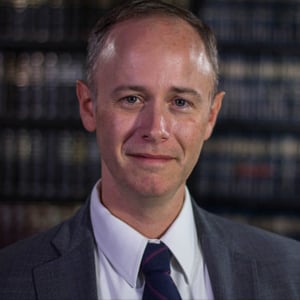
Vice President and Legal Director, National Right to Work Legal Defense and Education Foundation, Inc.
William Messenger is Foundation Vice President and Legal Director. He was a staff attorney for over twenty years and, during that time, represented individuals in numerous cases that sought to expand worker freedom of choice. This includes acting as lead counsel in three cases before the United States Supreme Court. In 2018, Messenger argued Janus v. AFSCME Council 31, where the Supreme Court held it violates the First Amendment for governments and unions to compel individuals to financially support unions and their speech. Originally from Youngstown Ohio, Messenger attended Ohio University as an undergraduate and then the George Washington University School of Law.
President and CEO, The Buckeye Institute
Robert Alt is the President and Chief Executive Officer of The Buckeye Institute where he has catalyzed exponential growth since he took the organization’s helm in 2012. He has since founded Buckeye’s renowned Economic Research Center and established its impactful Legal Center.
Alt is a distinguished scholar and attorney with particular expertise in legal policy, criminal justice, national security, and constitutional law. He previously worked for former U.S. Attorney General Edwin Meese III, regularly provides commentary on television and radio programs, and his writings have appeared in countless outlets.
In 2004, Alt spent five months in Iraq as an embedded war correspondent.
Alt has testified before Congress multiple times—including at the confirmation hearings for U.S. Supreme Court Justice Elena Kagan—the Federal Election Commission regarding matters of constitutional and administrative law, and numerous state legislatures.
Alt serves as an officer on the boards of The Philadelphia Society and the Federalist Society’s Columbus Lawyers Chapter. He taught national security law, criminal law, and legislation at Case Western Reserve University School of Law, as well as constitutional law and political parties and interest groups at Ashland University.
Alt earned his Doctor of Law degree from The University of Chicago Law School, where he was Symposium Editor and the winner of the Mulroy Prize for Excellence in Appellate Advocacy as well as research assistant to Professor Richard Epstein. Following law school, he clerked for Judge Alice Batchelder on the U.S. Court of Appeals for the Sixth Circuit. Alt graduated with his Bachelor of Arts in philosophy and political science magna cum laude from Azusa Pacific University where he also won the Outstanding Senior Award in Political Science.
Alt is an accomplished high-altitude alpinist and endurance athlete who has successfully climbed 6.75 of the famed Seven Summits of the World including Mount Everest. He is the creator of PROFOUND CLIMBING™ and a frequent speaker across the country and around the world on legal and public policy topics as well as effective leadership, management, decision-making, and teamwork in contexts ranging from extraordinary life/death situations to ordinary professional/business settings.
Carter C. Kissell Professor of Law, The Ohio State University Michael E. Moritz College of Law
In law school, Professor Hébert served as editor-in-chief of the Kansas Law Review and was elected to Order of the Coif. Following graduation from law school, she clerked for Judge James K. Logan of the U.S. Court of Appeals for the Tenth Circuit and practiced labor and employment law, representing management, for five years with Spencer, Fane, Britt, and Browne in Kansas City, Mo.
Professor Hébert has published a number of law review articles on employment discrimination, sexual harassment, employee privacy, and alternative dispute resolution (ADR). Her treatise Employee Privacy Lawwas published in 1993 and is supplemented annually.
Professor Hébert makes frequent presentations to academic and professional audiences on issues of sexual harassment and employee privacy, including genetic testing and electronic surveillance. Professor Hébert served as Chair of the Employment Discrimination Section of the Association of American Law Schools in 1998. She currently serves as a member of the Workplace Mediation Advisory Committee of the State of Ohio Commission on Dispute Resolution and Conflict Management.
From 1997 to 2000, Professor Hébert served as associate dean for academic affairs at the Moritz College of Law. Professor Hébert is a member of the Associated Graduate Faculty of the Department of Womens Studies at Ohio State. Professor Hébert’s courses include Employment Discrimination Law, Employment Law, Employee Benefits,Alternative Dispute Resolution in the Workplace, Legal Writing and Analysis, and a Sexual Harassment seminar. She taught Comparative Employment Discrimination and Comparative Dispute Resolution during the Oxford semester program in 2010.
Vice President and Legal Director, National Right to Work Legal Defense and Education Foundation, Inc.
William Messenger is Foundation Vice President and Legal Director. He was a staff attorney for over twenty years and, during that time, represented individuals in numerous cases that sought to expand worker freedom of choice. This includes acting as lead counsel in three cases before the United States Supreme Court. In 2018, Messenger argued Janus v. AFSCME Council 31, where the Supreme Court held it violates the First Amendment for governments and unions to compel individuals to financially support unions and their speech. Originally from Youngstown Ohio, Messenger attended Ohio University as an undergraduate and then the George Washington University School of Law.

Tazewell Taylor Professor of Law and William H. Cabell Research Professor, William & Mary Law School
Jonathan H. Adler joined the William & Mary law faculty as the Tazwell Taylor Professor of Law and William H. Cabell Research Professor in 2025. Prior to joining the faculty, he was the inaugural Johan Verheij Memorial Professor of Law and the founding Director of the Coleman P. Burke Center for Environmental Law at the Case Western Reserve University School of Law.
Professor Adler is the author or editor of seven books, including Climate Liberalism: Perspectives on Liberty, Property and Pollution (Palgrave, 2023), Marijuana Federalism: Uncle Sam and Mary Jane (Brookings Institution Press, 2020), Business and the Roberts Court (Oxford University Press, 2016) and Rebuilding the Ark: New Perspectives on Endangered Species Act Reform (AEI Press, 2011).
His articles have appeared in publications ranging from the Harvard Environmental Law Review and Yale Journal on Regulation to the Wall Street Journal, New York Times, and Washington Post. He has testified before Congress a dozen times, and his work has been cited in the U.S. Supreme Court. A 2024 study identified Professor Adler as the seventh most cited legal academic in administrative and environmental law from 2019 to 2023.
Professor Adler is a contributing editor to Civitas Outlook and a regular contributor to the popular legal blog, The Volokh Conspiracy. A regular commentator on constitutional and regulatory issues, he has appeared on numerous radio and television programs, ranging from the PBS Newshour and National Public Radio to the Fox News Channel and Entertainment Tonight.
Professor Adler is a senior fellow at the Property & Environment Research Center in Bozeman, Montana. In 2018, Professor Adler was elected to membership in the American Law Institute and helped co-found the organization Checks and Balances. In 2024, Professor Adler was appointed a public member of the Administrative Conference of the United States.
Professor Adler clerked for the Honorable David B. Sentelle on the U.S. Court of Appeals for the District of Columbia Circuit.

Judge, United States Court of Appeals, District of Columbia Circuit
Judge Katsas was appointed to the D.C. Circuit in December 2017. He graduated from Princeton University and Harvard Law School, where he was an executive editor on the Harvard Law Review. Between 1989 and 1992, he served as a law clerk to Judge Edward Becker on the Third Circuit, to then-Judge Clarence Thomas on the D.C. Circuit, and to Justice Thomas on the Supreme Court. Between 1992 and 2001, he was an associate and then partner in the Washington office of Jones Day, where he specialized in appellate and complex civil litigation. Between 2001 and 2009, he served in many senior positions in the Department of Justice, including as Assistant Attorney General for the Civil Division and as Acting Associate Attorney General. In 2009, he returned to Jones Day. From January to December 2017, he served as Deputy Assistant to the President and Deputy Counsel to the President.
Before joining the bench, Judge Katsas argued more than 75 appeals, including three cases in the Supreme Court, 13 cases in the D.C. Circuit, and cases in every other federal court of appeals. By appointment of the Chief Justice, he served on the Advisory Committee on Appellate Rules from 2013 to 2017. In 2016, he was elected to membership in the American Academy of Appellate Lawyers.
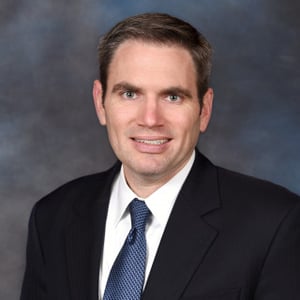
Judge, United States Court of Appeals, Sixth Circuit
Eric Murphy has been a Judge on the United States Court of Appeals for the Sixth Circuit since March 2019. He previously served as the ninth State Solicitor of Ohio. In that role, Eric briefed and argued appellate cases on behalf of Ohio and its state agencies and officers in the U.S. Supreme Court, the U.S. Court of Appeals for the Sixth Circuit, and the Ohio Supreme Court. Before his appointment as State Solicitor, Eric practiced appellate litigation at Jones Day. After graduation from law school, he served as a law clerk for Justice Anthony M. Kennedy of the Supreme Court of the United States, and Judge J. Harvie Wilkinson III of the United States Court of Appeals for the Fourth Circuit. He received his law degree from the University of Chicago and his undergraduate degree from Miami University.
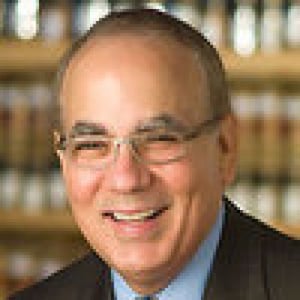
Jacob E. Davis and Jacob E. Davis II Chair in Law, Moritz Colleg, The Ohio State University
Professor Shane came to Ohio State in 2003 from Carnegie Mellon University's H. John Heinz III School of Public Policy and Management. He is an internationally recognized scholar in administrative law, with a specialty in separation of powers law, and has co-authored leading casebooks on each subject. He has served on the faculty at the University of Iowa College of Law and was dean at the University of Pittsburgh School of Law.
In addition to his outstanding law teaching and scholarship, Professor Shane has received a National Science Foundation grant for interdisciplinary study related to cyberspace and democracy. At Ohio State, he provides strong leadership in interdisciplinary scholarship and teaching.
Tazewell Taylor Professor of Law and William H. Cabell Research Professor, William & Mary Law School
Jonathan H. Adler joined the William & Mary law faculty as the Tazwell Taylor Professor of Law and William H. Cabell Research Professor in 2025. Prior to joining the faculty, he was the inaugural Johan Verheij Memorial Professor of Law and the founding Director of the Coleman P. Burke Center for Environmental Law at the Case Western Reserve University School of Law.
Professor Adler is the author or editor of seven books, including Climate Liberalism: Perspectives on Liberty, Property and Pollution (Palgrave, 2023), Marijuana Federalism: Uncle Sam and Mary Jane (Brookings Institution Press, 2020), Business and the Roberts Court (Oxford University Press, 2016) and Rebuilding the Ark: New Perspectives on Endangered Species Act Reform (AEI Press, 2011).
His articles have appeared in publications ranging from the Harvard Environmental Law Review and Yale Journal on Regulation to the Wall Street Journal, New York Times, and Washington Post. He has testified before Congress a dozen times, and his work has been cited in the U.S. Supreme Court. A 2024 study identified Professor Adler as the seventh most cited legal academic in administrative and environmental law from 2019 to 2023.
Professor Adler is a contributing editor to Civitas Outlook and a regular contributor to the popular legal blog, The Volokh Conspiracy. A regular commentator on constitutional and regulatory issues, he has appeared on numerous radio and television programs, ranging from the PBS Newshour and National Public Radio to the Fox News Channel and Entertainment Tonight.
Professor Adler is a senior fellow at the Property & Environment Research Center in Bozeman, Montana. In 2018, Professor Adler was elected to membership in the American Law Institute and helped co-found the organization Checks and Balances. In 2024, Professor Adler was appointed a public member of the Administrative Conference of the United States.
Professor Adler clerked for the Honorable David B. Sentelle on the U.S. Court of Appeals for the District of Columbia Circuit.
Judge, United States Court of Appeals, District of Columbia Circuit
Judge Katsas was appointed to the D.C. Circuit in December 2017. He graduated from Princeton University and Harvard Law School, where he was an executive editor on the Harvard Law Review. Between 1989 and 1992, he served as a law clerk to Judge Edward Becker on the Third Circuit, to then-Judge Clarence Thomas on the D.C. Circuit, and to Justice Thomas on the Supreme Court. Between 1992 and 2001, he was an associate and then partner in the Washington office of Jones Day, where he specialized in appellate and complex civil litigation. Between 2001 and 2009, he served in many senior positions in the Department of Justice, including as Assistant Attorney General for the Civil Division and as Acting Associate Attorney General. In 2009, he returned to Jones Day. From January to December 2017, he served as Deputy Assistant to the President and Deputy Counsel to the President.
Before joining the bench, Judge Katsas argued more than 75 appeals, including three cases in the Supreme Court, 13 cases in the D.C. Circuit, and cases in every other federal court of appeals. By appointment of the Chief Justice, he served on the Advisory Committee on Appellate Rules from 2013 to 2017. In 2016, he was elected to membership in the American Academy of Appellate Lawyers.
Judge, United States Court of Appeals, Sixth Circuit
Eric Murphy has been a Judge on the United States Court of Appeals for the Sixth Circuit since March 2019. He previously served as the ninth State Solicitor of Ohio. In that role, Eric briefed and argued appellate cases on behalf of Ohio and its state agencies and officers in the U.S. Supreme Court, the U.S. Court of Appeals for the Sixth Circuit, and the Ohio Supreme Court. Before his appointment as State Solicitor, Eric practiced appellate litigation at Jones Day. After graduation from law school, he served as a law clerk for Justice Anthony M. Kennedy of the Supreme Court of the United States, and Judge J. Harvie Wilkinson III of the United States Court of Appeals for the Fourth Circuit. He received his law degree from the University of Chicago and his undergraduate degree from Miami University.
Jacob E. Davis and Jacob E. Davis II Chair in Law, Moritz Colleg, The Ohio State University
Professor Shane came to Ohio State in 2003 from Carnegie Mellon University's H. John Heinz III School of Public Policy and Management. He is an internationally recognized scholar in administrative law, with a specialty in separation of powers law, and has co-authored leading casebooks on each subject. He has served on the faculty at the University of Iowa College of Law and was dean at the University of Pittsburgh School of Law.
In addition to his outstanding law teaching and scholarship, Professor Shane has received a National Science Foundation grant for interdisciplinary study related to cyberspace and democracy. At Ohio State, he provides strong leadership in interdisciplinary scholarship and teaching.

Judge, United States Court of Appeals, Sixth Circuit
Judge Readler earned his undergraduate and law degrees from the University of Michigan. After graduating, he served as a law clerk to Judge Alan Norris of the United States Court of Appeals for the Sixth Circuit. Judge Readler then began practicing law in the Columbus office of the international law firm Jones Day, eventually spending ten years as a partner in the firm’s Issues and Appeals Practice Group. While at Jones Day, Judge Readler appeared in state and federal trial and appellate courts around the country, most frequently the Supreme Court of Ohio and the Sixth Circuit. Judge Readler also successfully argued before the United States Supreme Court in McQuiggin v. Perkins on behalf of an inmate claiming actual innocence. His other pro bono representations include representing capital defendants before the Tenth Circuit and the Supreme Court of Ohio, as well as representing defendants sentenced to life in prison before the Sixth Circuit. While at Jones Day, Judge Readler traveled to Nairobi with Lawyers Without Borders to train Kenyan lawyers in prosecuting domestic violence cases, and he was also a recipient of the American Marshall Memorial Fellowship awarded by the German Marshall Fund of the United States. Following his career in private practice, Judge Readler served as Acting Assistant Attorney General for the Civil Division of the United States Department of Justice from 2017 to 2019. In that role, Judge Readler led and supervised over 1,000 lawyers in the Department’s largest litigating division, briefing and arguing several cases on behalf of the United States in federal courts across the country, including high-profile cases significant to the Administration and the Department. In March 2019, Judge Readler was confirmed to serve as a Circuit Judge on the Sixth Circuit. He resides in Columbus.

Criminal Justice Reform: A Necessary Correction or a Dangerous Experiment?
Heather Childs, Daniel J. Dew, Sharon L. Kennedy, Dave Yost
2018 Ohio Lawyers Chapters Conference
Demand for criminal justice reform appears to be growing across the political spectrum. Bipartisan coalitions...
Criminal Justice Reform: A Necessary Correction or a Dangerous Experiment?
Heather Childs, Daniel J. Dew, Sharon L. Kennedy, Dave Yost
2018 Ohio Lawyers Chapters Conference
Demand for criminal justice reform appears to be growing across the political spectrum. Bipartisan coalitions...
Lunch Discussion: Janus v. AFSCME
Robert Alt, L. Camille Hébert, William L. Messenger
2018 Ohio Lawyers Chapters Conference
Earlier this year the U.S. Supreme Court heard oral arguments in Janus v. American Federation...
Lunch Discussion: Janus v. AFSCME
Robert Alt, L. Camille Hébert, William L. Messenger
2018 Ohio Lawyers Chapters Conference
Earlier this year the U.S. Supreme Court heard oral arguments in Janus v. American Federation...
Introduction to Originalism and Federalism: Where Are the Courts Heading?
Jonathan H. Adler, Gregory G. Katsas, Eric E. Murphy, Peter M. Shane
2018 Ohio Lawyers Chapters Conference
Since the 1980s, the originalist approach to constitutional interpretation has gained greater and greater acceptance...
Opening Remarks by Chad A. Readler
Chad A. Readler
2018 Ohio Lawyers Chapters Conference
Introduction to the 2018 Ohio Chapters Conference made by Chad A. Readler, Acting Assistant Attorney...
Opening Remarks by Chad A. Readler
Chad A. Readler
2018 Ohio Lawyers Chapters Conference
Introduction to the 2018 Ohio Chapters Conference made by Chad A. Readler, Acting Assistant Attorney...
Topics
Restoring the Constitutional Congress
The Federalist Society's Article I Initiative Writing Contest recently sought submissions from across the country...
Topics
Faulty Union “Math” Doesn’t Add Up to a Public-Sector Right to Strike
An April 5, 2018, post on Onlabor.org [https://onlabor.org/will-masterpiece-cakeshop-and-janus-create-a-first-amendment-right-to-strike-for-teachers/] argues that, if the U.S. Supreme Court rules for...