
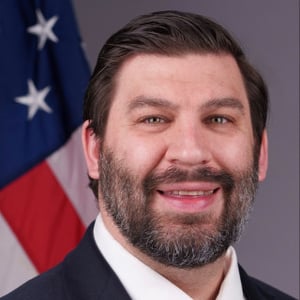
Deputy Counsel, the President
Gary currently is the Deputy Counsel to the President. He was previously a partner at the Dhillon Law Group and worked at the Department of the Interior and Federal Election Commission. He is a native of Virginia, and earned his B.A. and J.D. from the University of Virginia.

Director, Office of Government Information Services, United States National Archives and Records Administration
In December 2016, Alina M. Semo became the Director of the Office of Government Information Services (OGIS), the Federal Freedom of Information Act (FOIA) ombudsman’s office, which is part of the National Archives and Records Administration (NARA).
Prior to joining OGIS, Ms. Semo served as the Director of Litigation in NARA's Office of General Counsel for two and a half years. Before coming to NARA, Ms. Semo led the FOIA Litigation Unit in the Office of the General Counsel at the Federal Bureau of Investigation (FBI) for over ten years, and also served as an Assistant General Counsel in the Litigation Branch for nearly five years. Ms. Semo began her federal government career as a Department of Justice trial attorney and later senior counsel in the Federal Programs Branch, Civil Division, from 1991 to 1999, and from 1988 to 1991 worked as an associate at Hopkins & Sutter in Washington, D.C.
Ms. Semo holds a Bachelor of Arts degree in Government and Politics from the University of Maryland, College Park, and a Juris Doctor degree from Georgetown University Law School; she is licensed in the District of Columbia and Maryland.

Deputy Executive Director and Legal Director, Reporters Committee for Freedom of the Press
Katie Townsend (@katie_rcfp) is Deputy Executive Director and Legal Director at the Reporters Committee for Freedom of the Press (www.rcfp.org), a nonprofit organization based in Washington, D.C. She oversees the litigation, amicus, and other legal work of Reporters Committee attorneys, and represents the Reporters Committee, news organizations, and individual journalists, including documentary filmmakers, in court access, freedom of information, and other First Amendment and press freedom matters.
Prior to joining the Reporters Committee as its first Litigation Director in 2014, Ms. Townsend was an associate in the Los Angeles office of Gibson Dunn & Crutcher LLP, where her practice focused on media and entertainment litigation. She was recognized in 2015 as a Washington, D.C. “Rising Star” by The National Law Journal and, in 2015, was named one of the “Next Gen – Hollywood’s Up-and-Coming Execs 35 and Under” by the Hollywood Reporter. She is a Fellow of the American Bar Foundation and serves on the International Documentary Association’s Enterprise Documentary Fund Advisory Committee.
Ms. Townsend is a 2007 graduate of the University of Virginia School of Law, where she was a member of the editorial board of the Virginia Law Review. She graduated summa cum laude from the University of Florida in 2004 with a B.A. in English and a B.S. in broadcast journalism.
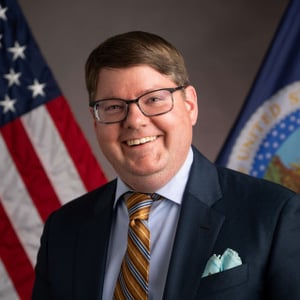
Deputy Secretary of Agriculture, U.S. Department of Agriculture
Judge Stephen Alexander Vaden was appointed as the Deputy Secretary of the U.S. Department of Agriculture on July 7, 2025. Alongside Secretary Brooke L. Rollins, Deputy Secretary Vaden leads the Department’s operations and implements policies that support America’s food and farm systems. A native of Union City, Tennessee, Deputy Secretary Vaden brings expertise in agricultural policy, law, and rural development. Previously, he served as a judge on the U.S. Court of International Trade and as General Counsel of USDA. Throughout Deputy Secretary Vaden’s time as General Counsel, he led successful Supreme Court litigation, advanced regulatory reform, and supported the implementation of the 2018 Farm Bill. He is a graduate of Yale Law School and Vanderbilt University. A public servant with strong agricultural roots, Deputy Secretary Vaden is committed to revitalizing rural America and ensuring an abundant, affordable, and safe U.S. food supply.

Counsel, Cause of Action Institute
Ryan P. Mulvey has worked as policy counsel at Americans for Prosperity Foundation since December 2019. He previously worked as Counsel as Cause of Action Institute (2013-2019) and continues to volunteer in that position. Ryan’s practice touches on various aspects of government oversight, civic engagement, and administrative and constitutional law. He regularly lectures on government transparency matters and litigates cases under the Freedom of Information Act and Administrative Procedure Act. Ryan has helped to prosecute state public records requests, too, and provided amicus support at various levels of state and federal courts, including the Supreme Court, on various matters. As a policy expert, he regularly advises congressional staff about FOIA reform and cutting-edge transparency issues.
Ryan was graduated from the University of San Diego (2010) summa cum laude with an honors degree in history and political science. He earned his JD and MA in philosophy from Boston University (2013). While a law student, Ryan completed internships at the Cato Institute’s Center for Constitutional Studies, as well as the Office of the General Counsel of the Roman Catholic Archdiocese of Boston. He served as Executive Editor for Notes and Comments at the Review of Banking & Financial Law and worked as a research assistant for the second revised edition of the Heritage Foundation’s Guide to the Constitution (2014).
Ryan is admitted to the practice of law in New York State, the District of Columbia, and the Commonwealth of Virginia. In addition to his work at AFPF, Ryan is the president of the American Society of Access Professionals and a contributor at FOIA Advisor.
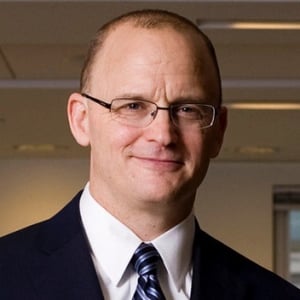
Partner, Latham & Watkins LLP
Gregory Garre is a partner in the Washington, D.C. office of Latham & Watkins and Global Chair of the firm's Supreme Court and Appellate Practice Group. He recently served as the 44th Solicitor General of the United States. As Solicitor General, he was the federal government's top lawyer before the Supreme Court and was responsible for overseeing the government's litigation in the federal appellate courts. Prior to his nomination by the President and unanimous confirmation as Solicitor General by the Senate, he served as Principal Deputy Solicitor General from 2005 to 2008, and then as Acting Solicitor General. In addition, he served as an Assistant to the Solicitor General from 2000 to 2004. He is the only person to have held all of those positions within the Office of the Solicitor General.
Mr. Garre has argued 29 cases before the Supreme Court, including two cases during the current term, and has served as counsel of record in hundreds of cases before the Court. During the past term, he won each of the cases he argued as Solicitor General, including the landmark case of Ashcroft v. Iqbal, which clarified the gateway requirements for civil litigation in the federal courts, as well as FCC v. Fox Television Stations, and Winter v. NRDC. He has also argued and briefed cases involving a wide array of other nationally important matters, including in the areas of administrative law, alien tort statute, antitrust, business and employment law, education, environmental law, First Amendment, intellectual property, international law, media and telecommunications, separation of powers and voting rights.
Mr. Garre has also successfully argued numerous cases before the federal courts of appeals, including some of the most significant cases heard by the appellate courts in recent years. And, as Acting Solicitor General, he successfully argued on behalf of the government in the first adversarial appeal heard by the Foreign Intelligence Surveillance Court of Review in its 30-year history.
Mr. Garre has received numerous awards for his public service, including the Attorney General's Medallion for his service as Solicitor General and the Navy's Distinguished Public Service Award-the Navy's highest civilian honor-for his successful argument in Winter v. NRDC, which secured a path-marking Supreme Court ruling overturning an order that restrained critically important naval exercises. He has also received the Attorney General's Distinguished Service Award, the Attorney General's Award for Excellence in Furthering Interests of US National Security, and additional honors from the Department of Justice for his work on nationally important litigation matters.
In November 2009, Mr. Garre was named to Washingtonian Magazine's list of top Supreme Court lawyers. In 2006, he was named to The American Lawyer's "Fab 50" list of top litigators under the age of 45 expected to be "leading the field for years to come." And in 2005, he was named to Chambers USA's list of leading appellate litigators in Washington, D.C.
Mr. Garre received his JD degree with high honors from the George Washington University Law School, where he served as editor-in-chief of the law review and was selected to Order of the Coif, and his BA degree cum laude from Dartmouth College, where he was a Rufus Choate Scholar. Following his graduation from law school, he served as a law clerk to Chief Justice William H. Rehnquist, and to Judge Anthony J. Scirica of the United States Court of Appeals for the Third Circuit.
Mr. Garre is a member of the advisory board of the Georgetown University Law School Supreme Court Institute and of the Edward Coke Appellate Inn of Court. He has taught constitutional law and Supreme Court practice for many years at the George Washington University Law School. He has testified before Congress and speaks frequently on issues related to the Supreme Court and appellate practice.
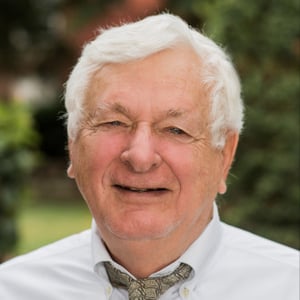
Lyle T. Alverson Professor of Law, George Washington University Law School
Professor Pierce is author of over twenty books and 130 articles on administrative law, government regulation, and the effects of various forms of government intervention on the performance of markets. His books and articles have been cited in hundreds of judicial opinions, including over a dozen opinions of the U.S. Supreme Court.
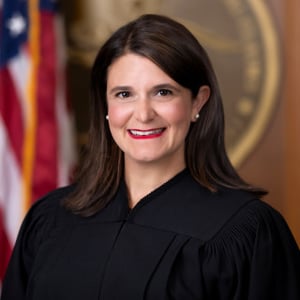
Judge, United States Court of Federal Claims
Judge Roumel was appointed to the United States Court of Federal Claims in 2020 and served as Chief Judge from 2020-2021. She serves as Chair of the court’s Advisory Council for Intellectual Property, is the Chair of the court’s Attorney Discipline Panel, serves on the court’s Pro Bono Policy Committee, and is the court’s Liaison Representative on the Administrative Conference of the United States. Judge Roumel previously served as the Deputy Counsel to Vice President Pence. Prior to her tenure at the White House, she served as Assistant General Counsel in the U.S. House of Representatives Office of General Counsel, where she advised and represented the U.S. House of Representatives, Members of Congress, and congressional staff in federal trial and appellate courts across the country.
Judge Roumel previously was a partner with Nelson Mullins Riley & Scarborough, LLP, in Charleston, South Carolina, and before that practiced at Wilmer Cutler Pickering Hale and Dorr, LLP and Skadden Arps Slate Meagher & Flom, LLP in New York City. She also was an adjunct professor at the Charleston School of Law, where she taught intellectual property law. Judge Roumel served as a law clerk to the Honorable William H. Pauley III, United States District Judge for the Southern District of New York.
She received her J.D., magna cum laude, from Tulane Law School, where she graduated Order of the Coif and was an editor of the Tulane Law Review. Judge Roumel also received her M.B.A. from Tulane University's A.B. Freeman School of Business. She earned her B.A., cum laude, from Wake Forest University.
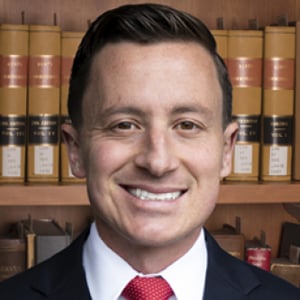
Assistant Professor of Law, Columbus School of Law, Catholic University of America
Chad Squitieri is an Assistant Professor of Law at Catholic University of America’s Columbus School of Law. There he serves as the Director of the Separation of Powers Institute, and as a Managing Director of the Center for the Constitution and the Catholic Intellectual Tradition. Professor Squitieri’s scholarship addresses administrative law and constitutional law topics, including separation-of-powers principles. His scholarship has appeared in the Administrative Law Review, the Harvard Journal of Law and Public Policy, and the Baylor Law Review, among other publications.
Prior to joining the faculty at the Catholic University of America, Prof. Squitieri practiced law at Gibson, Dunn & Crutcher LLP as a member of the Appellate and Constitutional Law and Administrative Law and Regulatory practice groups. He also served as a Special Assistant to former United States Secretary of Labor Eugene Scalia, and as a law clerk to then-Chief Judge D. Brooks Smith of the United States Court of Appeals for the Third Circuit.
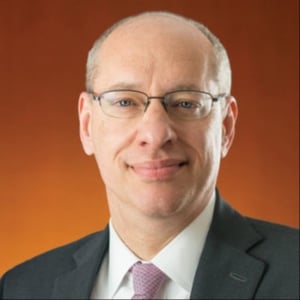
Former Chairman, Federal Trade Commission; Former Partner, Davis Polk & Wardwell
Mr. Leibowitz is a former partner in Davis Polk’s Washington DC and New York offices. His practice focuses on the complex antitrust aspects of mergers and acquisitions, as well as government and private antitrust investigations and litigation. He also provides counsel in the developing area of privacy law and with respect to advocacy involving Congress.
Mr. Leibowitz was Chairman of the Federal Trade Commission from 2009 through 2013, and was noted for his bipartisanship. He served as a Commissioner from 2004 to 2009. While at the FTC, his priorities included health care and high-tech competition.
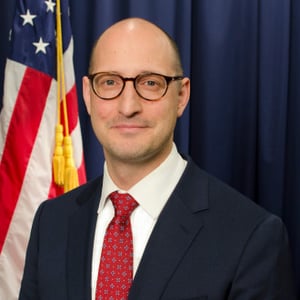
Partner, Cravath, Swaine & Moore LLP
Noah Joshua Phillips is Co-Chair of the Antitrust Practice and previously served as a Commissioner of the Federal Trade Commission. He advises clients on a range of antitrust issues, including mergers and acquisitions, business conduct and compliance, litigation and investigations, and data security and privacy.
On the FTC, Mr. Phillips played an integral role in precedent setting enforcement actions and regulatory efforts concerning antitrust, consumer protection and privacy. He decided dozens of merger and other antitrust enforcement matters across the economy, including in the consumer product, defense, energy, entertainment, healthcare, technology, pharmaceutical and retail industries. Mr. Phillips’ written antitrust opinions were consistently upheld by federal appellate courts.
As Commissioner, Mr. Phillips frequently testified before Congress and represented the FTC before international bodies, including the G7, the Competition Committee of the Organisation for Economic Co-operation and Development, and the International Conference of Data Protection and Privacy Commissioners. He speaks and writes frequently on a range of antitrust, consumer protection and privacy issues.
Prior to the FTC, Mr. Phillips served as Chief Counsel to U.S. Senator John Cornyn, of Texas, on the Senate Judiciary Committee. He advised Senator Cornyn on a variety of legal and policy issues, as well as judicial nominations.
Mr. Phillips received an A.B. magna cum laude from Dartmouth College in 2000 and a J.D. from Stanford Law School in 2005. He began his career at a New York-based investment bank. After law school, Mr. Phillips clerked for Hon. Edward C. Prado of the U.S. Court of Appeals for the Fifth Circuit and joined Cravath’s Litigation Department in 2006. He left the Firm in 2010, and he rejoined Cravath as a partner in December 2022.
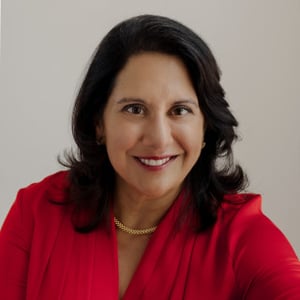
Judge, United States Court of Appeals, District of Columbia Circuit
Judge Rao was appointed to the United States Court of Appeals for the District of Columbia Circuit in March 2019. She graduated from Yale College in 1995 and the University of Chicago Law School in 1999. Following graduation, she served as a law clerk to Judge J. Harvie Wilkinson III of the U.S. Court of Appeals for the Fourth Circuit and, in the 2001 October Term, as law clerk to Justice Clarence Thomas of the U.S. Supreme Court. Between her clerkships, Judge Rao served as counsel for nominations and constitutional law to the U.S. Senate Committee on the Judiciary. In 2002, she joined the international arbitration group of Clifford Chance LLP in London, England. From 2005-2006, she served as Special Assistant and Associate White House Counsel to President George W. Bush. From 2006 to 2017, Judge Rao was a professor at the Antonin Scalia Law School at George Mason University, where she taught constitutional law, legislation and statutory interpretation, and the history and foundations of the administrative state. In 2014, she founded the Center for the Study of the Administrative State, a non-profit Center that promotes academic scholarship and public policy debates about administrative law. In July 2017, she was appointed to serve as the Administrator of the Office of Information and Regulatory Affairs in the Office of Management Budget. She served in this position until her appointment to the D.C. Circuit.
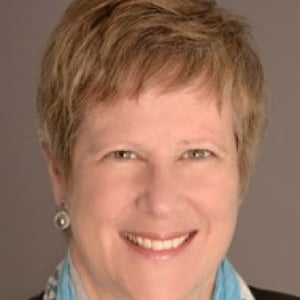
Director, Washington Ofice, Levin Center for Oversight and Democracy
Elise Bean became counsel to U.S. Sen. Carl Levin, D-Mich., on the U.S. Senate Homeland Security and Governmental Affairs Committee in 1985. She worked for him on three subcommittees, under the leadership of Linda Gustitus. In 2003, Levin appointed Bean as staff director and chief counsel of the committee's Permanent Subcommittee on Investigations, which he chaired. Bean retired from the Senate with Levin at the end of 2014.
During her tenure, Bean handled a variety of investigations, hearings and legislation, including matters involving offshore tax abuses, money laundering, foreign corruption, unfair credit card practices, health care fraud, abuses involving derivatives and structured finance, and shell companies with hidden owners. Investigations headed by her included inquiries into the 2008 financial crisis, HSBC money laundering problems, London whale trades at JPMorgan Chase, collapse of Enron, and offshore tax avoidance by Apple, Microsoft and Caterpillar.
In 2016 and 2015, she was included in the Global Tax 50, a list compiled by International Tax Review of the year's top 50 individuals and organizations influencing tax policy and practice. In 2013 and 2011, the Washingtonian magazine named her one of Washington's 100 most powerful women. In 2010, she was selected by the National Law Journal as one of Washington's most influential women lawyers.
Bean graduated Phi Beta Kappa from Wesleyan University in 1978 and earned her law degree, cum laude, from the University of Michigan Law School in 1982. She served as a law clerk to former Chief Judge of the U.S. Claims Court Alex Kozinski, who later served as the chief judge of the Ninth Circuit Court of Appeals. She worked for two years as a trial attorney with the U.S. Department of Justice Civil Frauds Section. Earlier in her career, she worked for U.S. Rep. John Joseph Moakley, D-Mass.
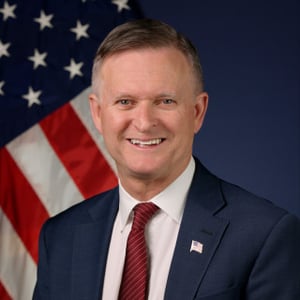
Deputy Secretary of Transportation, US Department of Transportation
Steven G. Bradbury was sworn in as the Deputy Secretary of Transportation on March 13, 2025, following his confirmation by the U.S. Senate on March 11, 2025. In this role, he oversees the Department’s operating administrations and spearheads initiatives to ensure a safe, efficient, and modern transportation system that strengthens economic productivity and global competitiveness. Deputy Secretary Bradbury also assists Secretary Duffy in managing the Department’s activities, including its workforce of over 58,000 employees and an annual budget exceeding $109 billion.
Bradbury previously served as the 23rd General Counsel of the Department of Transportation from 2017 to 2021, as the Acting Deputy Secretary from 2019, and as Acting Secretary of Transportation in 2021. As General Counsel, he was the chief legal officer, advising on all legal matters and ensuring the integrity and compliance of the Department’s policies and programs.
Before rejoining DOT, Bradbury was a Distinguished Fellow at The Heritage Foundation from December 2022 to March 2025. He has extensive experience in the public and private sector, having served as Principal Deputy and Acting Assistant Attorney General at the U.S. Department of Justice and as a partner at Kirkland & Ellis LLP and Dechert LLP. Earlier in his career, he clerked for Justice Clarence Thomas and Judge James L. Buckley.
Bradbury holds a J.D., magna cum laude, from the University of Michigan Law School and a B.A. in English from Stanford University.
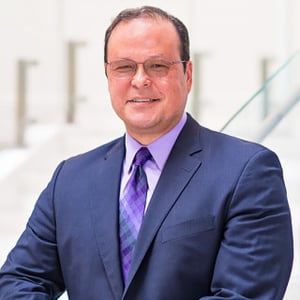
Senior Project Director and In Residence Adjunct, American University Washington College of Law
Alex Joel is a Scholar-in-Residence and Adjunct Professor at the Washington College of Law. He is conducting research, developing programming, and teaching courses focused on the intersections between the law, national security, technology, and privacy. Previously, he was a senior officer with the Office of the Director of National Intelligence (ODNI), where until June 2019 he served as the Chief of the Office of Civil Liberties, Privacy and Transparency (CLPT). CLPT works to ensure that the Intelligence Community carries out its national security mission in a manner that protects privacy and civil liberties, and provides appropriate public transparency. As Chief of CLPT, Mr. Joel was the ODNI’s Civil Liberties Protection Officer, a position established by the Intelligence Reform and Terrorism Protection Act of 2004. Mr. Joel served in that position since the ODNI stood up in 2005.
Since 2015, he also served as the ODNI’s Chief Transparency Officer, appointed to the position by Director of National Intelligence James Clapper. Mr. Joel formerly served on the Board of Directors of the International Association of Privacy Professionals, the world’s largest association of privacy professionals. Previously, Mr. Joel worked as an attorney at the Central Intelligence Agency's Office of General Counsel. Before that, he worked in private practice, as a technology attorney at the law firm of Shaw, Pittman, Potts & Trowbridge in Washington, D.C. (now Pillsbury Winthrop), and as the privacy, technology, and e-commerce attorney for Marriott International, Inc. Mr. Joel began his legal career as an officer in the U.S. Army Judge Advocate General’s Corps.
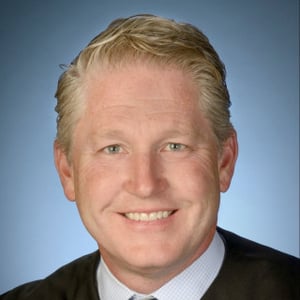
Judge, United States District Court, District of Columbia
Judge Carl J. Nichols was appointed to the District Court in June 2019. He received a B.A., cum laude and with high honors in Philosophy, from Dartmouth College in 1992, and a J.D., with high honors and Order of the Coif, from The University of Chicago Law School in 1996.
Immediately after law school, Judge Nichols served as a law clerk to Judge Laurence H. Silberman of the U.S. Court of Appeals for the District of Columbia and to Justice Clarence Thomas of the Supreme Court of the United States. Following his clerkships, Judge Nichols was an associate and then partner at Boies, Schiller & Flexner LLP. From 2005-2009, he served in the U.S. Department of Justice, first as a Deputy Assistant Attorney General in the Civil Division, and then as Principal Deputy Associate Attorney General. Judge Nichols was a partner at Wilmer Cutler Pickering Hale & Dorr LLP from 2010 until his appointment to the bench in 2019.

Partner, Earth & Water Law
Susan Bodine is a partner at Earth & Water Law.
Susan Bodine is a former Assistant Administrator for EPA’s Office of Enforcement and Compliance Assurance (OECA). Prior to this position, Susan served as Chief Counsel for the Senate Committee on Environment and Public Works and previously worked for the House Committee on Transportation and Infrastructure.
This is Susan’s second position at EPA, having served as Assistant Administrator for the Office of Solid Waste and Emergency Response (now the Office of Land and Emergency Management) from 2006 to 2009.
Susan has also practiced environmental law at Covington and Burling LLP and at Barnes and Thornburg LLP.
Susan is a graduate of Princeton University and the University of Pennsylvania School of Law.
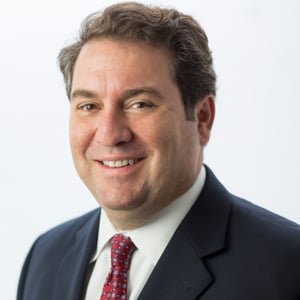
Former Attorney General, State of Arizona
Mark Brnovich served as Arizona's 26th Attorney General from 2015 to 2023. He was first inaugurated in 2015, and again in 2019 after winning re-election. Mark has spent most of his professional life serving as a prosecutor at the local, state, and federal levels. Mark met his wife Susan while they both worked as prosecutors for the Maricopa County Attorney's office. Mark worked in the Gang/Repeat Offender Unit and prosecuted many difficult and high profile cases from 1992 to 1998. He then went on to work as an Assistant Attorney General with the Arizona Attorney General's Office from 1998 to 2003, where he developed an expertise in gambling law. Brnovich later went on to serve as an Assistant United States Attorney for the District of Arizona where he prosecuted public integrity crimes, as well as crimes occurring in Indian Country.
Brnovich has also been a Judge Pro Tem of Maricopa County Superior Court, a Command Staff Judge Advocate in the U.S. Army National Guard, the Director for Constitutional Government at the Goldwater Institute, and the Director of the Arizona Department of Gaming, a law enforcement agency that investigates illegal gambling activity, as well as working with tribal regulators to ensure the integrity of tribal gaming.
Brnovich is known for restoring public confidence in the office of "Arizona's Top Cop" and for assembling some of the nation's most talented public servants for his administration. Mark argued at the United States Supreme Court in defense of the "one-person, one-vote" principle, was featured on 60 Minutes in defense of capital punishment, and has initiated national public education efforts to combat human sex trafficking.
Brnovich has been recognized by the National Federation of Independent Business as a "Champion of Small Business." and was elected by his bi-partisan colleagues to serve as the Chairman of the Conference of Western Attorneys General.
Mark's wife Susan was recently appointed by the United States Senate to serve as a U.S. District Judge for the District of Arizona. He has two teenage daughters and lives in Phoenix.
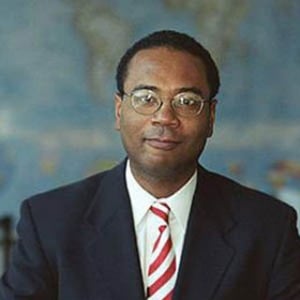
Chairman, Project 21 National Advisory Board, National Center for Public Policy Research
Horace Cooper is a senior fellow with the National Center for Public Policy Research, chairman of the Project 21 National Advisory Board and a legal commentator.
Horace averages over 400 talk radio appearances per year representing the National Center and Project 21, in addition to regular television appearances and interviews by the print media.
Horace taught constitutional law at George Mason University in Virginia and was a senior counsel to U.S. House Majority Leader Dick Armey.
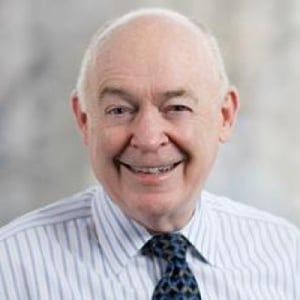
Principal, Beveridge & Diamond, PC
John offers clients the benefit of decades of experience as a top environmental lawyer, a leader of major bar and environmental organizations, and a distinguished military career.
John provides strategic counsel on high-stakes environmental and natural resources litigation, civil and criminal enforcement, and compliance. Working with clients makes the practice of law worthy and valuable to him as they advance strategic needs while protecting human health and the environment.
For more than two decades, John served as a senior leader on environment and natural resource matters at the United States Department of Justice (DOJ), where he supervised some of the department’s most significant litigation, including the Exxon Valdez oil spill, Love Canal, and Bunker Hill litigation. As the Senate-confirmed, Assistant Attorney General, ENRD, John worked on the most high-profile environment cases, and personally negotiated the multi-billion dollar resolutions of the Deepwater Horizon oil spill and the Volkswagen emissions scandal. These cases required a great deal of coordination, expert assistance, and sophisticated management of numerous players to reach successful outcomes. This experience has given John insight into the workings of large corporations, as well as into the challenges that major companies face in lawsuits.
As the former President of the Environmental Law Institute, the former Chair of the American Bar Association (ABA) Section on Environment, Energy, and Natural Resources, and the immediate past President of the American College of Environmental Lawyers, John has led each of the premier environmental organizations in the United States. In addition, he was the first government attorney to be elected and serve as the President of the District of Columbia Bar, now the largest bar in the nation.
Professional Background
John’s leadership is a defining characteristic of his long and distinguished legal career. Before joining the DOJ, John was the Chief Legislative Counsel of the U.S. Army. After graduating from the United States Military Academy at West Point, John served in Airborne, Ranger, and Special Forces units in Germany and Vietnam. His subsequent military assignments include as a criminal prosecutor in Germany and civil trial lawyer in the Pentagon; Chief of Litigation Branch, Europe; General Counsel, Defense Nuclear Agency; Staff Judge Advocate in Germany; and Director of Administrative and Civil Law, Judge Advocate General’s School, Charlottesville, Virginia. His military education includes being a Fellow, Army War College, and the Command and General Staff College. He is a graduate of the University of Santa Clara Law school (summa cum laude) and the University of Virginia (MA with honors).
John’s awards for government and military service include the President Rank Award from three different Presidents, the Bronze Star, Legion of Merit, Defense Meritorious Service Medal, Air Medal with Oak Leaf Clusters, and the Vietnamese Cross of Gallantry with Silver Star.
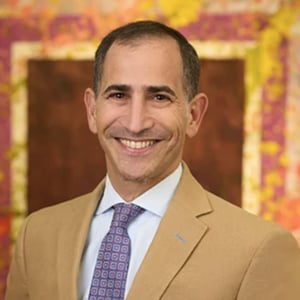
Partner, Arnold & Porter
Brian Israel is Chair Arnold & Porter's Environmental Practice Group, as well as co-lead of the firm’s Environmental, Social and Corporate Governance (ESG) working group. Mr. Israel's practice focuses broadly on environmental litigation and counseling—including climate-related issues—and he is one of the nation's leading lawyers for Natural Resource Damages (NRD) claims. Over the course of his career, Mr. Israel has successfully resolved or litigated over one hundred environmental matters. Among other areas, Mr. Israel specializes in cases brought under federal and state environmental laws related to contaminated sites, including toxic tort lawsuits. Since 2010, Mr. Israel has been lead counsel to BP in relation to Deepwater Horizon NRD claims, and was also one of the trial attorneys at the Deepwater Horizon Clean Water Act (CWA) penalty trial. Mr. Israel represents multiple Fortune 500 companies in some of the largest and most complex environmental matters across the country.
Prior to joining the firm, Mr. Israel was an Honors Trial Attorney in the Environmental Enforcement Section of the US Department of Justice (DOJ). While at the DOJ, he handled several high-profile cases, including the largest NRD trial at the time. Additionally, Mr. Israel was awarded the Distinguished Service Award for his accomplishments in a Clean Air Act jury trial during his time at the DOJ. He also litigated claims on behalf of the US Environmental Protection Agency pursuant to the Clean Water Act; the Resource Conservation and Recovery Act (RCRA); and the Comprehensive Environmental Response, Compensation, and Liability Act (CERCLA).
Mr. Israel has spoken and written extensively about environmental law issues. He is a principal author of "Natural Resource Damages: A Guide to Litigating and Resolving NRD Cases," (ABA, 2019). For the last 15 years, Mr. Israel has maintained and regularly updated the State-by-State Guide to NRD Programs in All 50 States and Puerto Rico. Mr. Israel hosts and chairs the annual Advanced Conference on Litigating Natural Resource Damages (sponsored by Law Seminars International). He is the author of the "Natural Resource Damages" chapter in the Environmental Law Practice Guide (Gerrard, ed.). Mr. Israel has published on many other environmental law topics including environmental enforcement, corporate liability, regulatory reform, trial strategy, and Superfund. Mr. Israel's student note, "An Environmental Justice Critique of Risk Assessment," is published in the NYU Environmental Law Journal.
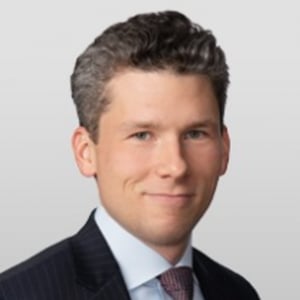
Principal, Clark Hill Public Strategies & Attorney, Clark Hill PLC
Anthony P. Campau is Principal at Clark Hill Public Strategies and an Attorney at Clark Hill PLC, two related Clark Hill firm entities. Mr. Campau previously served as chief of staff and counselor at the Office of Information and Regulatory Affairs (OIRA) within the U.S. Office of Management and Budget (OMB), which oversees the development of most new federal regulations and guidance, sets and enforces federal privacy and statistical policy, and plays a leading role in new initiatives like the regulation of artificial intelligence and the development of bilateral regulatory cooperation agreements. He clerked for the Hon. Neomi Rao, Circuit Judge, U.S. Court of Appeals for the D.C. Circuit, was in-house counsel and assistant secretary of the board for a large university, and served as a regulatory fellow at a major think tank in Washington, D.C.
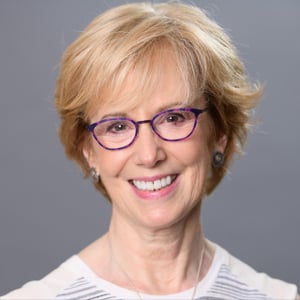
Director, GW Regulatory Studies Center & Distinguished Professor of Practice, Trachtenberg School of Public Policy & Public Administration, The George Washington University
Susan Dudley is the Founder and Director of the George Washington University Regulatory Studies Center, established in 2009 to raise awareness of regulations’ effects and improve regulatory policy through research, education, and outreach. She is also a distinguished professor of practice in the Trachtenberg School of Public Policy and Public Administration. She is past-president of the Society for Benefit Cost Analysis, a senior fellow of the Administrative Conference of the United States, and on the Regulatory Transparency Project Regulatory Practice Working Group. Her book, Regulation: A Primer, with Jerry Brito, is available on Amazon.com.
From April 2007 through January 2009, Professor Dudley served as the Presidentially-appointed Administrator of the Office of Information and Regulatory Affairs in the U.S. Office of Management and Budget and was responsible for the review of draft executive branch regulations under Executive Order 12866, the collection of federal-government-wide information under the Paperwork Reduction Act, the development and implementation of government-wide policies in the areas of information policy, privacy, and statistical policy, and international regulatory cooperation efforts.
Prior to OIRA, she directed the Regulatory Studies Program at the Mercatus Center at George Mason University, and taught courses on regulation at the George Mason University School of Law. Earlier in her career, Professor Dudley served as an economist at OIRA, as well as the Environmental Protection Agency and the Commodity Futures Trading Commission. She was also a consultant to government and private clients at Economists Incorporated. She holds a Master of Science degree from the Sloan School of Management at MIT and a Bachelor of Science degree (summa cum laude) in Resource Economics from the University of Massachusetts, Amherst.
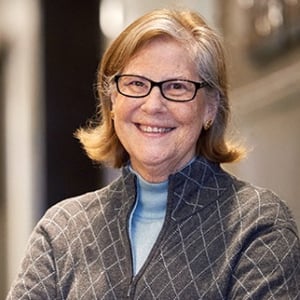
Professor of Practice and Distinguished Scholar in Residence; Co-Director of the Legislative and Regulatory Process Clinic, New York University School of Law
Sally Katzen served in the Clinton administration as administrator of the Office of Information and Regulatory Affairs in the Office of Management and Budget (OMB), as deputy assistant to the president for economic policy and deputy director of the National Economic Council in the White House, and then as the deputy director for management at OMB. She served as the head of the Agency Review Group for the Obama/Biden transition with responsibility for the Executive Office of the President and all government-wide agencies. She has taught both undergraduates and at various law schools. She is a member of the American Law Institute and the National Academy of Public Administration, has served on multiple panels for the National Academy of Sciences, testified frequently before Congress, and is on the board of several non-profit organizations. Before joining the Clinton administration, Katzen was a partner in the Washington, DC, law firm of Wilmer, Cutler & Pickering, specializing in regulatory and legislative matters, while serving in leadership roles in the American Bar Association (including chair of the Section on Administrative Law and Regulatory Practice and as DC delegate to the ABA’s House of Delegates), as president of the Federal Communications Bar Association and as president of the Women’s Legal Defense Fund. She graduated from Smith College and the University of Michigan Law School, where she was the first woman editor-in-chief of the Law Review. She clerked for Judge J. Skelly Wright of the United States Court of Appeals for the District of Columbia Circuit and served in the Carter administration as the general counsel of the Council on Wage and Price Stability in the Executive Office of the President.
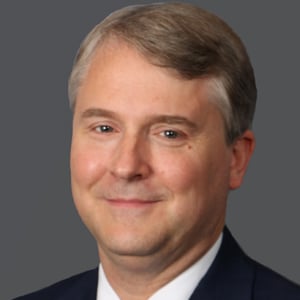
Partner, Mayer Brown
Andrew Olmem is a partner in Mayer Brown’s Washington DC office and a member of its Public Policy, Regulatory & Government Affairs, and Financial Services Regulatory & Enforcement practices. His practice focuses on complex financial services regulatory and public policy matters.
Andrew previously served as the Deputy Assistant to the President for Economic Policy and Deputy Director of the National Economic Council (NEC), where he oversaw the development and coordination of the administrations’ domestic economic policies, including for financial services, technology, telecom, energy, and infrastructure.
Earlier, he also served as the Republican Chief Counsel and Deputy Staff Director at the U.S. Senate Committee on Banking, Housing and Urban Affairs. Andrew began his legal career practicing corporate and securities law at Mayer Brown in New York City. Prior to attending law school, he served as an Assistant Economist at the Federal Reserve Bank of Richmond.
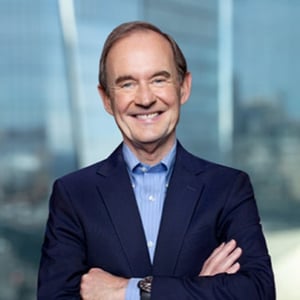
Chairman and Managing Partner, Boies Schiller Flexner
David Boies has been the Chairman and a Managing Partner of Boies Schiller Flexner since its founding in 1997.
David has been selected as one of the 100 Most Influential People in the World by Time Magazine (2010). He has been named Global International Litigator of the Year by Who’s Who Legal an unprecedented seven times. David has been named the Litigator of the Year by The American Lawyer; the Lawyer of the Year by The National Law Journal (twice); the Antitrust Lawyer of the Year by the New York Bar Association; Best Lawyers in America from 1987-2021; Lawdragon 500 Leading Lawyers; and an Eminent Practitioner by Chambers USA. He was named one of the Top 50 Big Law Innovators of the Last 50 Years by The American Lawyer in 2013.
David is the recipient of Honorary Doctor of Laws from the University of Redlands (2000), New York Law School (2007), University of New Hampshire School of Law (2013), and New York University (2013) and an Honorary Doctor of Letters from the Chicago Theological Seminary (2011). His awards include the Award of Merit from the Yale Law School, the ABA Medal from the American Bar Association, the Vanderbilt Medal from New York University Law School, the Pinnacle Award from the International Dyslexia Association, the William Brennan Award from the University of Virginia, the Role Model Award from Equality Forum, the Lead by Example Award from the National Association of Women Lawyers, the Torch of Learning Award from the American Friends of Hebrew University, the Eisendrath Bearer of Light Award from the Union for Reform Judaism, and a Lifetime Achievement Award from the Mississippi Center for Justice.
David served as Chief Counsel and Staff Director of the United States Senate Antitrust Subcommittee in 1978 and Chief Counsel and Staff Director of the United States Senate Judiciary Committee in 1979.
In 1991-1993, he was counsel to the Federal Deposit Insurance Corporation, recovering $1.2 billion from companies who sold junk bonds to failed savings and loan associations.
In 1998-2000, he served as Special Trial Counsel for the United States Department of Justice in its antitrust suit against Microsoft. David also served as the lead counsel for former Vice-President Al Gore in connection with litigation relating to the 2000 election Florida vote count. As co-lead counsel for the plaintiffs in Perry v. Brown, he won the first judgment establishing the right to marry for gay and lesbian citizens under the U.S. Constitution.
David was born in Sycamore, Illinois on March 11, 1941. He attended the University of Redlands (1960-62), and received a B.S. from Northwestern University (1964), an LL.B., magna cum laude from Yale University (1966), and an LL.M. from New York University (1967).
He is a member of Phi Beta Kappa, a Fellow of the American College of Trial Lawyers and the International Academy of Trial Lawyers; and a Trustee of the National Constitution Center, Cold Spring Harbor Laboratory, New York University Law School Foundation and St. Luke’s-Roosevelt Hospital Center. He is the author of numerous publications including Courting Justice (2004), Redeeming the Dream (with Ted Olson), and Public Control of Business (with Paul Verkuil), published by Little Brown in 1977. He has taught courses at New York University Law School and Cardozo Law School.
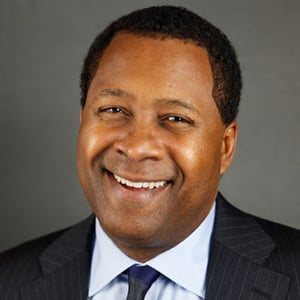
Partner, Kirkland & Ellis LLP
Reginald “Reg” Brown is a partner in the Washington, D.C., office of Kirkland & Ellis LLP. He has a vibrant and diverse crisis and governmental investigations practice, and regularly counsels financial institutions and other industry-leading clients facing complex and significant regulatory, enforcement and reputational matters.
Reg provides investigations-related guidance, strategic counsel and crisis management assistance to a broad range of companies and senior executives confronting challenges and opportunities at the intersection of government, law, media and public policy. He has assisted leading institutions and high-profile individual clients with more than a hundred congressional inquiries, as well as numerous federal, state and global government investigations and crisis avoidance and mitigation matters.
Reg leads teams of lawyers responding to some of the most challenging Department of Justice (DOJ), Consumer Financial Protection Bureau (CFPB), State Attorneys General and other regulatory or enforcement matters for financial institutions. Many of his clients are among the world's most prominent banks, hedge funds, private equity and venture firms, energy companies, government contractors, healthcare institutions and technology firms, as well as CEOs and high-ranking public officials. Reg has also assisted prospective and incumbent high-level public officials in connection with complex ethics agreements and governmental controversies.
Prior to joining Kirkland, Reg was a partner at WilmerHale, where he served as chairman of the firm's Financial Institutions Group and led the firm's congressional investigations practice as vice chair of the Crisis Management and Strategic Response Group. He previously served in the White House Counsel's office, where he was the White House's principal legal liaison to the Departments of Treasury and Housing and Urban Development, as well as many independent financial services agencies. In this role, he provided counsel on a wide variety of issues. Among other things, Reg served as a counselor for the White House Office of Political Affairs, Presidential Personnel Office and the National Economic Council.
Prior to his government service, Reg served as assistant to the CEO and vice president of corporate strategy at Nationwide Mutual Insurance Company, and as the deputy general counsel to former Florida Governor Jeb Bush. He served as a Peace Corps volunteer in the Federated States of Micronesia early in his professional career.
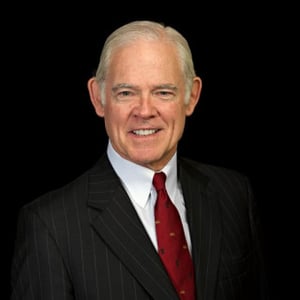
Founding Partner, Cooper & Kirk PLLC
Charles J. Cooper is a founding member and the chairman of Cooper & Kirk, PLLC, “one of the Nation’s leading litigation boutiques” (Above The Law 2017). The National Law Journal recently wrote that Mr. Cooper’s “brilliant legal career has so far spanned five decades and thrust Cooper into the spotlight in some of the most historic moments of the country’s modern history.” He has argued nine cases before the United States Supreme Court and scores of appeals before each of the 13 federal courts of appeals and several state supreme courts. He has been lead trial counsel in numerous complex, weeks-long trials in federal courts throughout the country. Named by the National Law Journal as one of the 10 best litigators in Washington D.C., Mr. Cooper’s work has been reported in numerous press accounts, and he has been called a “powerhouse attorney” (Fortune 2015), “a hard-nosed litigator” (Washington Post 2017), and “one of the country’s most in-demand civil litigators and a Washington legal institution unto himself” (The American Spectator 2014).
After graduating from the University of Alabama School of Law in 1977, where he ranked first in his class and served as Editor-in-Chief of the Alabama Law Review, Mr. Cooper began his career as a law clerk to Judge Paul Roney on the Fifth Circuit Court of Appeals and to Justice William H. Rehnquist in 1978–79. He then practiced law in Atlanta for two years before joining the Civil Rights Division of the U.S. Department of Justice, where he served as the Deputy Assistant Attorney General in charge of, among other things, appellate matters. In 1985 President Reagan appointed him to the position of Assistant Attorney General for the Office of Legal Counsel, which is the office responsible for providing legal opinions and advice to the White House, the Attorney General, and Executive Branch departments and agencies on issues covering the full spectrum of federal constitutional, statutory, and regulatory law.
In 1988 he returned to private practice as a litigation partner in the Washington, D.C. office of McGuireWoods. From 1990 until the founding of Cooper & Kirk in 1996, he was a partner at Shaw Pittman (now Pillsbury Winthrop Shaw Pittman), where he headed the firm’s Constitutional and Government Litigation Group.
Mr. Cooper has represented a wide range of public and private clients in highly complex constitutional, civil rights, antitrust, healthcare, banking, intellectual property, elections, campaign finance, administrative, commercial, and government contract cases. He has led trial teams in cases that have won judgments and settlements valued in the billions of dollars and that have established ground-breaking constitutional precedents.
Much of Mr. Cooper’s practice has involved representing high-profile clients in nationally prominent matters, including: the State of Florida in a First Amendment suit brought by the Disney Company concerning its autonomous regulatory authority over its Disney World property; the Commonwealth of Virginia in a suit seeking to enjoin the removal of noncitizens from its voter rolls; 38 members of the Duke Lacrosse team falsely accused of rape by officials of Duke University and the City of Durham; Harper Lee in a copyright dispute with the heirs of Gregory Peck; high-ranking former government officials such as former Attorneys General John Ashcroft, Jeff Sessions, and William Barr, and Ambassador John Bolton; several Governors and United States Senators; over 100 Members of Congress; and many state, territorial, and local government bodies and officials. He has also represented and advised government officials and public figures in connection with sensitive private issues that needed to be, and were, resolved discreetly without becoming matters of public record.
In 1998 Chief Justice Rehnquist appointed Mr. Cooper to the Standing Committee on Rules of Practice and Procedure of the Judicial Conference of the United States, where he served for three terms. He also served as a Public Member, appointed by President George H.W. Bush, of the National Commission on Judicial Discipline and Removal. He is a member of numerous professional associations, including the American Law Institute (since 1993) and the American Academy of Appellate Lawyers (since 1996). He is also an active member of the Federalist Society and the Republican National Lawyers Association, which in 2010 named him Republican Lawyer of the Year and in 2016 honored him with its Edwin Meese III Award.
Mr. Cooper has published scores of articles and spoken extensively on constitutional and legal policy topics. He has appeared before congressional committees on 26 occasions, testifying as an expert on a wide variety of legal issues, including the Chevron doctrine of judicial deference to administrative agencies, the diversity of citizenship jurisdiction of federal courts, statehood bills for Puerto Rico and the District of Columbia, and the impeachment of President Clinton.
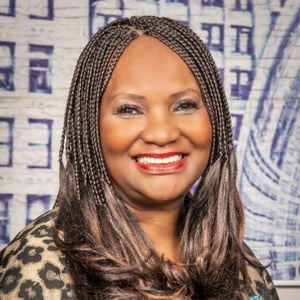
President, American Bar Association
Deborah Enix-Ross, a senior adviser to the International Dispute Resolution Group of Debevoise & Plimpton in New York City, is president of the American Bar Association, the world’s largest voluntary association of lawyers, judges, and other legal professionals.
Enix-Ross served as chair of the ABA’s policymaking House of Delegates and as chair of the ABA Center for Human Rights. As chair of the ABA International Law Section, she co-founded the Women’s Interest Network and worked with the International Bar Association to create its Women’s Interest Group. She also led an international legal exchange delegation to Liberia, Sierra Leone, and Ghana, where she delivered an address commemorating the country’s 50th anniversary of independence.
Enix-Ross is a fellow of the American Bar Foundation and has served as vice president of the World Justice Project, chair of the ABA Section Officers Conference, vice chair of the International Bar Association’s Bar Issues Commission, and ABA representative to the IBA. She is a member of the American Law Institute.
Enix-Ross joined Debevoise & Plimpton in 2002. Previously, she served as senior legal officer with the World Intellectual Property Organization Arbitration and Mediation Center in Geneva, Switzerland. She also was a director of international litigation with Price Waterhouse and the American representative to the International Chamber of Commerce International Court of Arbitration. She started her legal career with MFY Legal Services in New York City.
Enix-Ross was appointed by the U.S. Departments of Commerce and State as one of the original eight U.S. members of the trilateral NAFTA Advisory Committee on Private Commercial Disputes. She is a member of the Advisory Committee of the New York Law School Alternative Dispute Resolution Skills Program. She is also a former member of the advisory board of the Institute for Transnational Arbitration, the ADR Advisory Board of the International Law Institute, and the Board of Directors of the American Arbitration Association.
Enix-Ross earned a B.A. in broadcast journalism from the University of Miami and J.D. from the University of Miami School of Law. She also received a diploma in comparative law from the Parker School of Foreign and Comparative Law of Columbia University and a certificate in international law from the London School of Economics.
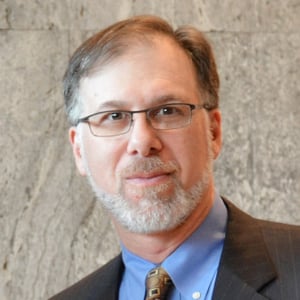
Partner, Schaerr | Jaffe LLP
Erik Jaffe has been involved in appeals on a broad range of legal issues, including First Amendment challenges to campaign finance reform, Commerce Clause challenges to Health Care Reform and other federal legislation, Equal Protection Clause challenges to affirmative action in education, First Amendment challenges to school vouchers, Fifth Amendment challenges to takings of property, Second Amendment challenges to restrictions on gun ownership, and a wide variety of cases involving patents, copyrights, ERISA, securities fraud, federal preemption, environmental regulation, and other state and federal constitutional and statutory matters. He has represented businesses and non-profit groups, Judges, Senators, former government officials, Nobel Prize winners, and a broad cross-section of private individuals. Mr. Jaffe has been involved in over 120 Supreme Court matters, including filing over 30 cert. petitions, representing half-a-dozen parties on the merits, and filing over 70 amicus briefs at both the cert. and merits stages.
A 1990 graduate of the Columbia University School of Law, Mr. Jaffe was a law clerk to Judge Douglas H. Ginsburg of the United States Court of Appeals for the District of Columbia Circuit from 1990 to 1991. Following that clerkship he spent five years in litigation practice with the Washington, D.C. law firm of Williams & Connolly. In the summer of 1996 he left Williams & Connolly to clerk for Supreme Court Justice Clarence Thomas. At the end of that clerkship he started his own practice, and he was a sole practitioner from 1997 to 2018. He joined the firm of Schaerr | Jaffe LLP in 2018.
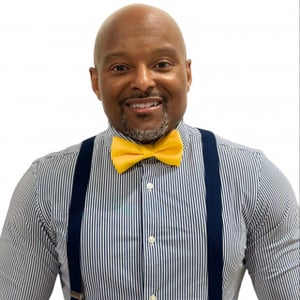
Dean, Delaware Law School
Dean Todd Clark is Dean of Delaware Law School. He joins Delaware Law School after serving as Associate Dean of Academic Affairs & Professor of Law at St. Thomas University Benjamin L. Crump College of Law. Before St. Thomas, Dean Clark was Professor of Law at North Carolina Central University School of Law where he taught Business Associations, Contracts, Corporate Justice, Employment Discrimination, and Hip Hop, Law & Justice. At NCCU, he also served on the ABA Compliance team and was the Director of the Justice in the Practice of Law Certificate Program and the Director of New Initiatives. Before that, Dean Clark was a Lecturer in Law at West Virginia University College of Law, where he taught Legal Writing and Appellate Advocacy.
Dean Clark earned his B.A. in Political Science from Wittenberg University, his M.B.A. from West Virginia University College of Business and Economics, and his J.D. from University of Pittsburgh School of Law. Following his graduation from law school, he practiced law at the law firm of Steptoe & Johnson.
His scholarship includes a book, CORPORATE JUSTICE (Carolina Academic Press), as well as numerous law review articles and other scholarship on social justice, corporate discretion, and sexual harassment. He is currently working on a casebook on Sports Law.

Senior Fellow and Director of Constitutional Studies, Manhattan Institute
Ilya Shapiro is a senior fellow and director of constitutional studies at the Manhattan Institute and a contributing editor of City Journal. Previously he was executive director and senior lecturer at the Georgetown Center for the Constitution, and before that a vice president of the Cato Institute.
Shapiro is the author of Lawless: The Miseducation of America’s Elites (2025) and Supreme Disorder: Judicial Nominations and the Politics of America’s Highest Court (2020), coauthor of Religious Liberties for Corporations? (2014), and editor of 11 volumes of the Cato Supreme Court Review (2008-18). He has contributed to a variety of academic, popular, and professional publications, including the Wall Street Journal, Harvard Journal of Law & Public Policy, Washington Post, Los Angeles Times, USA Today, National Review, and Newsweek. He also regularly provides commentary for various media outlets, writes the Shapiro’s Gavel newsletter on Substack, and once appeared on the Colbert Report.
Shapiro has testified many times before Congress and state legislatures and has filed more than 500 amicus curiae “friend of the court” briefs in the Supreme Court. He lectures regularly on behalf of the Federalist Society, is a member of the board of fellows of the Jewish Policy Center, was an inaugural Washington Fellow at the National Review Institute, and has been an adjunct law professor at the George Washington University and University of Mississippi. He is also the chairman of the board of advisers of the Mississippi Justice Institute, a barrister in the Edward Coke Appellate Inn of Court, and a former member of the Virginia Advisory Committee to the U.S. Commission on Civil Rights.
Earlier in his career, Shapiro was a special assistant/adviser to the Multi-National Force in Iraq on rule-of-law issues and practiced at Patton Boggs and Cleary Gottlieb. Before entering private practice, he clerked for Judge E. Grady Jolly of the U.S. Court of Appeals for the Fifth Circuit. He holds an AB from Princeton University, an MSc from the London School of Economics, and a JD from the University of Chicago Law School.
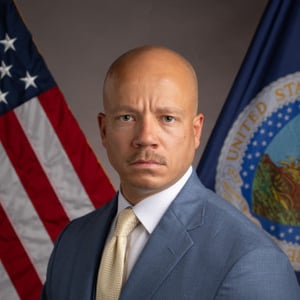
Assistant Secretary for Civil Rights, U.S. Department of Agriculture
Devon Westhill is the Assistant Secretary for Civil Rights at the U.S. Department of Agriculture. The U.S. Senate confirmed President Donald Trump’s nomination of Westhill on October 7, 2025.
Westhill returns to the USDA where he previously headed the civil rights office as Deputy Assistant Secretary in President Trump’s first term. His previous government appointments also include service at the U.S. Department of Labor, liaison to the Administrative Conference of the U.S., and liaison to the White House Initiative on Historically Black Colleges and Universities. Prior to returning to government service, Westhill was President and General Counsel of a nonprofit civil rights organization.
Westhill has testified on civil rights matters before Congress, federal agencies, and as an expert witness in federal court. He has spoken hundreds of times at college campuses, conferences, and on radio and TV programs, and he is frequently quoted in print publications, and his writing has appeared in numerous national outlets. A U.S. Navy veteran, Westhill earned his BA from the University of North Carolina at Chapel Hill and his JD from the University of Florida.
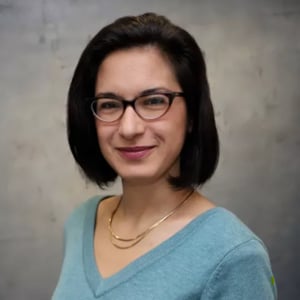
Co-Director of Research, The Sentencing Project
Nazgol Ghandnoosh, Ph.D., is the Co-Director of Research at The Sentencing Project, where she conducts and synthesizes research on criminal justice policies. She has written about racial disparities, lengthy sentences, and the scope of reform efforts.
She regularly presents to academic, practitioner, and general audiences and her work has been featured in outlets including The Washington Post, The New York Times, and WNYC’s On the Media. She also edits The Sentencing Project’s Race and Justice Newsletter.
Dr. Ghandnoosh earned an undergraduate degree from the University of Pennsylvania and a doctorate in sociology from the University of California, Los Angeles. Her dissertation, “Challenging Mass Incarceration: A California Group’s Advocacy for the Parole Release of Term-to-Life Prisoners,” was an in-depth study of a South Los Angeles-based group challenging extreme sentences.
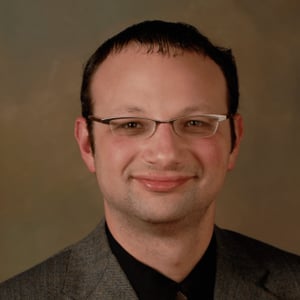
Chief Policy Counsel, Council on Criminal Justice and Senior Advisor, Right on Crime
Marc A. Levin is the Chief Policy Counsel for the Council on Criminal Justice (counciloncj.org) and Senior Advisor for Right on Crime.
An attorney and accomplished author on legal and public policy issues, Marc began the Foundation’s criminal justice program in 2005. This work contributed to nationally praised policy changes that have been followed by dramatic declines in crime and incarceration in Texas. Building on this success, in 2010, Levin developed the concept for the Right on Crime initiative, a TPPF project in partnership with Prison Fellowship and the American Conservative Union Foundation. Right on Crime has become the national clearinghouse for conservative criminal justice reforms and has contributed to the adoption of policies in dozens of states that fight crime, support victims, and protect taxpayers.
In 2014, Levin was named one of the “Politico 50” in the magazine’s annual “list of thinkers, doers, and dreamers who really matter in this age of gridlock and dysfunction.”
Marc has testified on criminal justice policy on four occasions before Congress and has testified before legislatures in states including Texas, Nevada, Kansas, Wisconsin, and California. He also has met personally with leaders such as U.S. Presidents, Speakers of the House, and the Justice Commtitee of the United Kingdom Parliament to share his ideas on criminal justice reform. In 2007, he was honored in a resolution unanimously passed by the Texas House of Representatives that stated, “Mr. Levin’s intellect is unparalleled and his research is impeccable.”
Since 2005, Marc has published dozens of policy papers on topics such as sentencing, probation, parole, reentry, and overcriminalization which are available on the TPPF website. Levin’s articles on law and public policy have been featured in publications such as the Wall Street Journal, USA Today, Texas Review of Law & Politics, National Law Journal, New York Daily News, Jerusalem Post, Toronto Star, Atlanta Journal-Constitution, Philadelphia Inquirer, San Francisco Chronicle, Washington Times, Los Angeles Daily Journal, Charlotte Observer, Dallas Morning News, Houston Chronicle, Austin American-Statesman, San Antonio Express-News and Reason Magazine.
In 1999, Marc graduated with honors from the University of Texas with a B.A. in Plan II Honors and Government. In 2002, Marc received his J.D. with honors from the University of Texas School of Law. Marc was a Charles G. Koch Summer Fellow in 1996. He served as a law clerk to Judge Will Garwood on the U.S. Court of Appeals for the Fifth Circuit and Staff Attorney at the Texas Supreme Court.
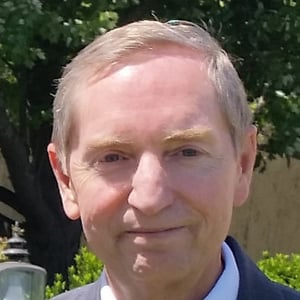
Legal Director & General Counsel, Criminal Justice Legal Foundation
Kent S. Scheidegger has been the Legal Director of the Criminal Justice Legal Foundation since December 1986. He also served as Chairman of the Criminal Law Practice Group of the Federalist Society 2003 to 2005. His articles on criminal and constitutional law have been published in law reviews, national legal publications, and congressional reports. Legal arguments authored by Mr. Scheidegger have been cited and incorporated in several precedent-setting United States Supreme Court decisions.
After receiving a degree in physics with honors from New Mexico State University in 1976, Mr. Scheidegger served for six years in the United States Air Force as a Nuclear Research Officer. He took his law degree with distinction from the University of the Pacific, McGeorge School of Law in 1982 and practiced civil law in Northern California. He was general counsel of California Cooler, Inc. from 1984 until 1986, when he joined the Foundation.

$64,000 Questions — Obtaining Information from the Executive Branch
Gary Lawkowski, Alina M. Semo, Katie Townsend, Stephen Alexander Vaden, Ryan Patrick Mulvey
EBRXI
We’ve grown accustomed to learning about government actions only because an enterprising person or group...
The Administrative State on Trial?
Gregory G. Garre, Richard J. Pierce, Eleni M. Roumel, Chad C. Squitieri
EBRXI
The Supreme Court continues to accept for review cases that challenge agency authority on separation...
Luncheon Panel: Fireside Chat on the State of Antitrust
Jon Leibowitz, Noah Joshua Phillips, Neomi Rao
EBRXI
Antitrust law has made recent headlines for a host of reasons, ranging from Chairwoman Lina...
The Role of Executive Branch Lawyers and The Presidential Records Act Compliance
Elise Bean, Steven Gill Bradbury, Alex Joel, Carl J. Nichols
EBRXI
At the end of an administration, the President and Vice President are required to relinquish...
Environmental Justice, Civil Rights, and the Rule of Law
Susan P. Bodine, Mark Brnovich, Horace Cooper, John C. Cruden, Brian D. Israel
EBRXI
This panel will evaluate efforts in the Biden administration, building upon executive actions dating back...
Welcome & Plenary Session: Regulatory Review Reset?
Anthony Philip Campau, Susan E. Dudley, Sally Katzen, Andrew Olmem
EBRXI
Earlier this month, the White House released much-anticipated changes to federal regulatory practices, including a...
"Civility in the Law" DC Lunch
David Boies, Reginald J. Brown, Charles J. Cooper, Deborah Enix-Ross
Featuring a discussion on civility in the law with David Boies, Hon. Charles J. Cooper, and ABA President Deborah Enix-Ross
Join us on Wednesday, May 24th, at 12:00 PM ETfor a special edition of our Washington, DC, Lawyers...
Courthouse Steps Decision: Gonzalez v. Google & Twitter, Inc. v. Taamneh
Erik S. Jaffe
On Thursday, May 18, 2023, the Supreme Court issued opinions in Gonzalez v. Google and...
Higher Ed & DEI
Todd Clark, Ilya Shapiro, Devon Westhill
In recent years, American organizations of all kinds have dedicated resources towards diversity, equity, and...
Debating State Sentences for Violent Crime: How Tough is Tough Enough?
Nazgol Ghandnoosh, Marc Levin, Kent Scheidegger
Following a surge in many types of violent crime in 2020 and 2021 that has...