
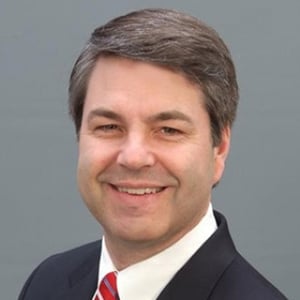
Partner and Co-Chair, Public Policy Group, Shook Hardy & Bacon LLP
Mark Behrens co-chairs Shook's Washington, DC-based Public Policy Practice Group and is a leading national expert on civil justice issues with over thirty years of experience. A substantial part of his practice is working to improve the civil litigation environment through state and federal legislation; in the courts through amicus curiae briefs; through legal scholarship and judicial education; and in the court of public opinion.
Mark is actively involved in civil justice reform efforts at the federal and state levels. He has testified before the U.S. Congress and most state legislatures on behalf of business and civil justice organizations. Mark also has an active amicus brief practice specializing in tort liability and civil justice issues. He has authored or co-authored over 150 amicus briefs in cases before the United States Supreme Court and federal and state appellate courts on behalf of business, civil justice, and defense lawyer organizations. In addition, Mark routinely files comments on behalf of business, civil justice, and defense lawyer organizations regarding potential changes to federal and state court rules. He chairs the International Association of Defense Counsel’s (IADC) Civil Justice Response Committee and serves on the Board of Directors of Lawyers for Civil Justice (LCJ).
Mark is a member of the American Law Institute (ALI). He received his J.D. in 1990 from Vanderbilt University Law School, where he was a member of the Vanderbilt Law Review. He received his B.A. in economics from the University of Wisconsin in 1987.
Robert S. Stevens Professor of Law, Emeritus, Cornell Law School
Partner, Proskauer Rose LLP
Steven Krane joined Proskauer upon his graduation from New York University School of Law in 1981, taking a year off in 1984-85 to serve as law clerk to Judge Judith S. Kaye of the New York Court of Appeals. He became a partner in the Litigation and Dispute Resolution Department in 1989, and is the chair of the firm’s Law Firm Advisory Practice Group, concentrating in the field of legal ethics and professional responsibility, while continuing to represent commercial clients in a broad range of civil litigation matters.
Steven represents law firms and individual lawyers in a variety of professional matters, including rendering opinions and counseling them on a daily basis on a broad range of professional matters including conflicts of interest, client confidentiality, cross-border legal practice issues, partnership disputes, and internal investigations. In addition, he defends law firms in litigated proceedings involving legal malpractice and other civil claims; represents individual lawyers before grievance and disciplinary committees; and assists lawyers in disputes concerning admission to the Bar. He has served as a litigation consultant and expert witness testifying on a variety of issues such as conflicts of interest, litigation conduct, legal malpractice, billing disputes, and solicitation of clients by lawyers leaving a law firm.
Steven is among the nation’s leaders in developing and interpreting the rules governing the professional conduct of lawyers. He is chair of the American Bar Association’s Standing Committee on Ethics and Professional Responsibility, and has served on that committee since 2004. He has led the New York State Bar Association's Committee on Standards of Attorney Conduct, and its predecessor, since 1995. That committee is responsible for formulating the ethical rules governing New York lawyers. He served as a member of the NYSBA Committee on Professional Ethics for four years (1990-94), and spent nine of the 11 years from 1985 to 1996 associated in various capacities with the Committee on Professional and Judicial Ethics of the New York City Bar, including three years as the chair (1993-96). He was recently appointed by Chief Judge Kaye as co-chair of the New York Judicial Institute on Professionalism in the Law. He served as vice-chair of the NYSBA Special Committee on the Law Governing Firm Structure and peration (the “MacCrate Committee”), and chaired the successor to that committee, the Special Committee on Multidisciplinary Practice.
Steven has had a distinguished career as a bar leader outside of the field of legal ethics as well, most notably serving as President of the NYSBA in 2001-02; the youngest person to hold that post. He coordinated the efforts of the organized bar in responding to the terrorist attacks of September 11, 2001; initiated the NYSBA’s successful lawsuit against the Federal Trade Commission challenging the application of the Gramm-Leach-Bliley Act’s privacy provisions to the legal profession (serving as counsel to the NYSBA in the District of Columbia Circuit and as a member of the ABA’s Gramm-Leach-Bliley Task Force); and created and now chairs the Student Loan Assistance for the Public Interest program, which provides grants to lawyers in public interest jobs to help them defray their educational debts. Active in the community, he is a member of the Board of Directors of the Friends of the John Jay Homestead (Katonah, NY) and a Trustee of the New York Bar Foundation.
Steven is active in the development of law and policy relating to cross-border legal practice, and serves as one of the principal negotiators for the ABA and NYSBA in their efforts to achieve agreements with foreign governments to liberalize restrictions on lawyers engaged in international practice. In that regard, he chairs the NYSBA Special Committee on Crossborder Legal Practice; is a vice-chair of the NYSBA Section on International Law and Practice; and Liaison to International Bar Associations; and is an Advisor to the ABA Task Force on International Trade in Legal Services.
Steven served as a Hearing Panel Chair for both the Departmental Disciplinary Committee for the First Judicial Department (1996-99) and the Committee on Grievances of the United States District Court for the Southern District of New York (1995-2000). He currently serves as a Special Referee for the Grievance Committee for the Ninth Judicial District (Second Department) in New York.
For several years, Steven taught legal ethics at Columbia University School of Law as a member of its adjunct faculty. He continues to be a frequent lecturer on ethics, and has written extensively on issues of professional responsibility.

Associate Professor of Law and Director, Religious Liberty Clini, Stanford Law School
Jim Sonne is a professor at law at Stanford Law School, and is the founding director of the law school’s Religious Liberty Clinic, the only full-time program in the country where students learn the practice of law through supervised litigation in that field. He is an experienced and award-winning teacher, practitioner, and scholar, with expertise in law and religion issues.
Professor Sonne received his BA with honors from Duke University and his JD with honors from Harvard Law School. He is a former law clerk to Judge Edith Brown Clement of the U.S. Court of Appeals for the Fifth Circuit. Before joining the law school in 2012, Sonne was an appellate lawyer at Horvitz & Levy in Los Angeles.
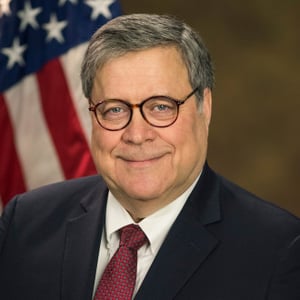
Former United States Attorney General
William P. Barr was born on May 23, 1950 in New York City. Mr. Barr received his A.B. in government from Columbia University in 1971 and his M.A. in government and Chinese studies in 1973. From 1973 to 1977, he served in the Central Intelligence Agency before receiving his J.D. with highest honors from George Washington University Law School in 1977.
In 1978, Mr. Barr served as a law clerk under Judge Malcolm Wilkey of the U.S. Court of Appeals for the District of Columbia Circuit. Following his clerkship, Mr. Barr joined the Washington, D.C. office of the law firm of Shaw, Pittman, Potts & Trowbridge as an associate. He left the firm to work in the White House under President Ronald Reagan from 1982 to 1983 on the domestic policy staff, then returned to the law firm and became a partner in 1985.
Under President George H.W. Bush, Mr. Barr served as the Deputy Attorney General from 1990 to 1991; the Assistant Attorney General of the Office of Legal Counsel from 1989 to 1990; and the 77th Attorney General of the United States from 1991 to 1993. While serving at the Department, Mr. Barr helped create programs and strategies to reduce violent crime and was responsible for establishing new enforcement policies in a number of areas including financial institutions, civil rights, and antitrust merger guidelines. Mr. Barr also led the Department’s response to the Savings & Loan crisis; oversaw the investigation of the Pan Am 103 bombing; directed the successful response to the Talladega prison uprising and hostage taking; and coordinated counter-terrorism activities during the First Gulf War.
From 1994 to 2000, Mr. Barr served as Executive Vice President and General Counsel for GTE Corporation. Mr. Barr then served as Executive Vice President and General Counsel of Verizon from 2000 to 2008. At both GTE and Verizon, Mr. Barr led the legal, regulatory, and government affairs activities of the companies.
After retiring from Verizon in 2008, Mr. Barr advised major corporations on government enforcement matters, as well as regulatory litigation. Mr. Barr served as Of Counsel at Kirkland & Ellis LLP in 2009 and rejoined the firm in 2017.
President Donald Trump announced his intention to nominate Mr. Barr on December 7, 2018, and he was confirmed as the 85th Attorney General of the United States by the U.S. Senate on February 14, 2019. U.S. Supreme Court Chief Justice John Roberts administered the oath of office. Mr. Barr joins John Crittenden (1841 and 1850-1853) as one of only two people in U.S. history to serve twice as Attorney General.

Preserving the Right to a Representative Jury
Mark A. Behrens
For over two centuries, the jury system has played an important and revered role in...
"Fast Food": The Next Tobacco?
Dwight J. Davis, Jamie Schwartz, Ann Driscoll
In the Summer of 2002, three lawsuits were filed against Quick Service Restaurants (“QSRs”) alleging...
Engage Volume 4, Issue 1, May 2003
ADMINISTRATIVE LAW & REGULATION The Presidential Appointment Process at the Beginning of the 21st Century...
Why Central Bank Should be Overruled
Roger C. Cramton
The lawyer’s primary function is to counsel and assist clients in conduct that is “within...
It's Not Our Job
Steven C. Krane
Lawyers have traditionally been able to provide their clients with dispassionate legal advice based on...
The ABA's Attack on "Unauthorized" Practice of Law and Consumer Choice
George W.C McCarter
Judge Posner is not alone in observing that the legal profession is “a cartel of...
Faith, Funds, and Freedom: Restoring Religious Liberties for Care Act Employers
James A. Sonne
It is no secret that President Bush has made it a priority of his administration...
Are Class Actions Lawyers Systematically Targeting Regulated Industries?
William P. Barr, Barbara Hart
MR. WILLIAM BARR: On June 20 of this year, the Second Circuit decided a case...
The Convention on the Elimination of All Forms of Discrimination Against Women: A Leading Example of What’s Wrong with International Law
Melana Vickers
Much political hay is made of the fact that the United States has not become...
Convention on the Prohibition of the Use, Stockpiling, Production and Transfer of Anti-Personnel Mines and on their Destruction (Ottawa Convention)
Burrus M. Carnahan
The modern anti-personnel land mine was invented by the Confederate Torpedo Bureau during the American...