
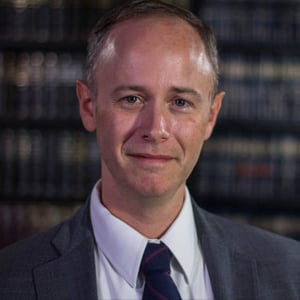
Vice President and Legal Director, National Right to Work Legal Defense and Education Foundation, Inc.
William Messenger is Foundation Vice President and Legal Director. He was a staff attorney for over twenty years and, during that time, represented individuals in numerous cases that sought to expand worker freedom of choice. This includes acting as lead counsel in three cases before the United States Supreme Court. In 2018, Messenger argued Janus v. AFSCME Council 31, where the Supreme Court held it violates the First Amendment for governments and unions to compel individuals to financially support unions and their speech. Originally from Youngstown Ohio, Messenger attended Ohio University as an undergraduate and then the George Washington University School of Law.
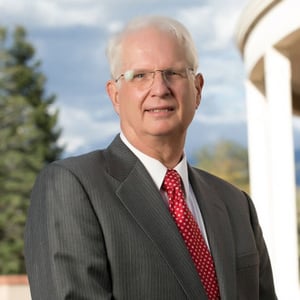
Shareholder, Brownstein Hyatt Farber Schreck, LLP
From Capitol Hill to Albuquerque, Hal Stratton is a familiar figure in the halls of government. He has spent over three decades navigating government—as the head of a federal agency, as a state attorney general, as a small business owner and as a successful litigator and government relations advisor.
Hal advises and counsels clients in the areas of mining, oil and gas, natural resources product safety regulation, products liability litigation, state and federal government relations, and multistate and class action litigation with an emphasis on product safety and liability as well as areas affected by state attorneys general. Hal also counsels clients concerning international trade, regulation and product health and safety.
In 1978, Hal was elected to the New Mexico House of Representatives at the age of 27 by defeating the House Majority Whip. During his four terms in the New Mexico House he served on a number of committees, including the Judiciary Committee, where he served as chairman; the Energy & Natural Resources Committee, where he served as vice chairman; and the Transportation and Rules Committees. In 1986, he was elected New Mexico’s attorney general—the only Republican to serve in that position since 1930.
While in the private practice of law, Hal has handled and litigated numerous matters involving oil and gas, federal and state grazing lease and condemnation rights, oil and gas tax and royalty valuation, asbestos landfill siting and matters with the Office of Aircraft Safety (now the National Business Center Aviation Management), among others. He has also handled a number of matters involving American Indian tribes.
Hal has served as an adjunct professor of law at George Mason University School of Law where he created a course on state attorneys general and multistate litigation and regulation. He is a Distinguished Military Graduate, served on active duty in the U.S. Army, and is the recipient of a number of awards including the American Legislative Exchange Council’s Legislator of the Year award and recognition as the National Right to Work Committee’s Statesman of the Year.
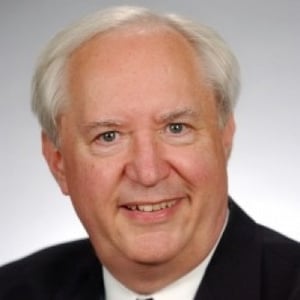
Oppenheim Professor Emeritus of Antitrust and Trade Regulation Law, George Washington University Law School
Thomas D. Morgan is Oppenheim Professor of Antitrust and Trade Regulation Law Emeritus at George Washington University. He was Dean of the Emory University School of Law and on the faculties of the University of Illinois and Brigham Young University. He is co-author of Problems and Materials on Professional Responsibility (14th Ed. 2022), with Professors Mitt Regan and John Dzienkowski. Professor Morgan served as an Associate Reporter for both the American Law Institute’s Restatement of the Law (Third): The Law Governing Lawyers and the American Bar Association’s Ethics 2000 Commission. He is an Executive Committee member of the Federalist Society’s Professional Responsibility and Legal Education Practice Group and a member of the ABA Business Law Section’s Professional Responsibility committee. His book, “The Vanishing American Lawyer” (2010), was published by Oxford University Press.
Partner, Mayer Brown LLP
Howard Waltzman focuses his practice on communications and Internet law and commercial transactions in the United States and other key international markets. He represents some of the nation's leading communications service providers, manufacturers, and trade associations in commercial transactions, as well as in regulatory and legislative matters, including with respect to Internet services, spectrum policy, privacy, video programming, wireline competition, and communications-related homeland security. He also represents investors on these and other communications-related matters.
Howard's experience includes drafting regulatory pleadings, comments and license applications; legislation, Congressional testimony, and legislative history; and commercial agreements. He appears personally before Members of Congress, Cabinet department officials, FCC Commissioners, and key Congressional and FCC staff. Howard also advises clients and assists them in presenting their positions during major FCC rulemakings, throughout the legislative process, and in the context of commercial transactions. He represents clients on matters involving the International Telecommunication Union's rules and procedures.
Prior to joining Mayer Brown in 2007, Howard served as Chief Counsel, Telecommunications and the Internet, for the U.S. House Energy and Commerce Committee (2003-2006) and as Telecommunications Counsel (2001-2003). Prior to working for the House Energy and Commerce Committee, he served as General Counsel for Senator Sam Brownback (1996-2001).
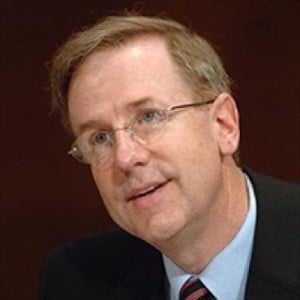
Board Member, Center for Equal Opportunity
Roger Clegg is a Board Member at and former President and General Counsel of the Center for Equal Opportunity. He focuses on legal issues arising from civil rights laws--including the regulatory impact on business and the problems in higher education created by affirmative action. A former Deputy Assistant Attorney General in the Reagan and Bush administrations, Clegg held the second highest positions in both the Civil Rights Division (1987-91) and in the Environment and Natural Resources Division (1991-93). He has held several other positions at the U.S. Justice Department, including Assistant to the Solicitor General (1985-87), Associate Deputy Attorney General (1984-85), and Acting Assistant Attorney General in the Office of Legal Policy (1984). Clegg is a graduate of Yale University Law School (1981).
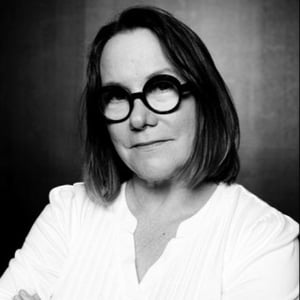
Independent Analyst, None
Allison Hayward most recently served as the Head of Case Selection at the Oversight Board. Previously, she was a Commissioner at the California Fair Political Practices Commission, a Board Member at the Office of Congressional Ethics, and an Assistant Professor of Law at George Mason University School of Law. She also previously worked as Chief of Staff and Counsel in the office of Federal Election Commission Commissioner Bradley A. Smith and practiced election law in California and in Washington DC.
In 1994-1995, Professor Hayward was a judicial clerk for the Honorable Danny J. Boggs, United States Court of Appeal for the Sixth Circuit.
She is a member of the State Bar of California and the District of Columbia Bar.

Obama's War Law
Robert J. Delahunty
Engage, Volume 11, Issue 2
Among the critics of the Bush Administration’s legal policies in the “war on terror,” few...
Does the First Amendment Allow States to Compel Recipients of Government Monies to Support State-Designated Representatives?
William L. Messenger
Engage, Volume 11, Issue 2
A basic precept of democracy is that citizens choose their representatives in government. A growing...
Amending the Federal Rules (Again): Finding the Best Path to an Effective Duty to Preserve
Thomas Y. Allman
Engage, Volume 11, Issue 2
Implementing a “duty to preserve” can be a complicated and expensive task in a world...
Vermont Attorney General Uses State Consumer Fraud Statute to Implement Consumer Product Penalties
Harold "Hal" Stratton
Engage, Volume 11, Issue 2
The provisions of Section 218 of the Consumer Product Safety Improvement Act of 2008 (“CPSIA”)...
State "Anti-SLAPP" Statutes Codify First Amendment Doctrine Protecting a Corporation's Right to Petition
Engage, Volume 11, Issue 2
On January 21, 2010, the Supreme Court found in Citizens United v. Federal Election Commission that...
Shady Grove v. Allstate: A Case Study in Formalism Versus Pragmatism
Aaron Oort, Eileen M. Hunter
Engage, Volume 11, Issue 2
Our favorite Supreme Court opinions are 5-4 splits with unusual lineups and Justices apparently voting...
Should the Public Be Able to Buy Stock in Law Firms?
Thomas D. Morgan
Engage, Volume 11, Issue 2
The current economic downturn has been a wake-up call for lawyers. A profession that thrived...
National Broadband Plan
Howard Waltzman
Engage, Volume 11, Issue 2
In February 2009, as part of the American Recovery and Reinvestment Act (the “Recovery Act”),...
Voting Rights—and Wrongs: The Elusive Quest for Racially Fair Elections by Abigail Thernstrom
Roger B. Clegg
Engage, Volume 11, Issue 2
No one has written more or better about the Voting Rights Act than Abigail Thernstrom....
We're Not Dead Yet. Book Review: The Vanishing American Lawyer by Thomas D. Morgan
Allison R. Hayward
Engage, Volume 11, Issue 2
Is the practice of law a profession? For most practicing lawyers, the last time they...