Senior Fellow, The Manhattan Institute
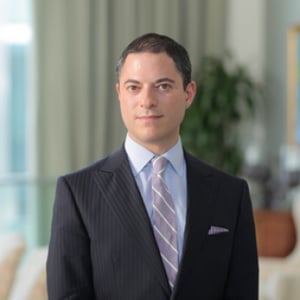
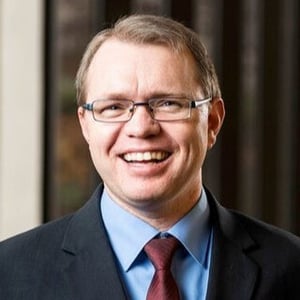
Kay S. Hymowitz is the William E. Simon Fellow at the Manhattan Institute and a contributing editor of City Journal. She writes extensively on childhood, family issues, poverty, and cultural change in America. Hymowitz is the author of Manning Up: How the Rise of Women Has Turned Men into Boys (2011), Marriage and Caste in America: Separate and Unequal Families in a Post-Marital Age (2006), andLiberation’s Children: Parents and Kids in a Postmodern Age (2004), among others. She has written for the New York Times, Washington Post, Wall Street Journal, The New Republic, New York Newsday, Public Interest, The Wilson Quarterly, and Commentary.
Hymowitz has presented her work at many conferences, sits on the board of the journals National Affairs and The Future of Children, and has been interviewed on numerous radio and TV programs. Hymowitz holds a B.A. in English literature from Brandeis University and an M.A. in English literature from Columbia University.
President, University of Virginia School of Law Student Chapter
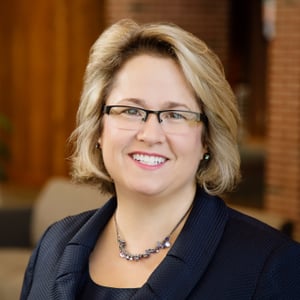
Dan graduated summa cum laude from the University of Ottawa in 2013 with a Specialization in Economics and Minor in History. At UVA, he is a Hardy Cross Dillard Scholar and serves on the Editorial Board of the Journal of Law and Politics. Dan spent his 2L summer at Abrams & Bayliss LLP, a litigation boutique in Wilmington, Delaware.
Judge, United States Court of Appeals, D.C. Circuit
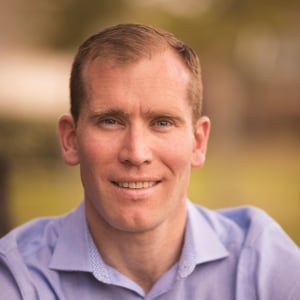
Judge Randolph was confirmed by the Senate and appointed to the United States Court of Appeals for the District of Columbia Circuit by President George H. W. Bush in July 1990.
Judge Randolph received his B.S. degree in 1966 from Drexel University, majoring in economics and basic engineering. At Drexel, he was president of the debate society, vice president of the Student Senate, and a member of the varsity wrestling squad. In 1969, he received his J.D. from the University of Pennsylvania, summa cum laude. Judge Randolph ranked first in his law school class all three years and was managing editor of the Law Review.
After graduation, Judge Randolph served as a law clerk to Judge Henry J. Friendly of the United States Court of Appeals for the Second Circuit in New York.
Admitted to the California Bar in 1970 (and to the District of Columbia bar in 1973), Judge Randolph worked as Assistant to the Solicitor General, U.S. Department of Justice, in Washington, D.C., 1970-1973.
After two years in private practice, Judge Randolph was named Deputy Solicitor General of the United States, a position he held from 1975-1977.
In 1979, Judge Randolph was appointed Special Counsel to the Committee on Standards of Official Conduct (the Ethics Committee) of the United States House of Representatives, remaining in this position until 1980.
In the 1980s, Judge Randolph held a number of positions while in private practice, including Special Assistant Attorney General for the states of New Mexico (1985 90), Utah (1986-1990) and Montana (1983-1990). He also served as a Member of the Advisory Panel of the Federal Courts Study Committee.
From 1971-1990, Judge Randolph argued 23 times in the United States Supreme Court, winning 20 of his cases.
As an Adjunct Professor of Law at Georgetown University Law Center from 1974-1978 he taught courses in civil procedure and injunctions. In 1992 he taught a course in constitutional law. He is a Distinguished Adjunct Professor of Law at George Mason School of Law and for the past ten years has been teaching First Amendment law. He also serves on the Judicial Advisory Board of the George Mason University Law and Economics Center.
From 1993 through 1995 Judge Randolph was a member of the Committee on Codes of Conduct of the Judicial Conference of the United States, and from 1995 to 1998 served as the Committee's chairman. He also served as the judicial liaison to the American Bar Association’s Administrative Law Section.
Judge Randolph is a member of the Board of Visitors at Drexel University Law School and was named to the “Drexel One Hundred” as a leading alumnus. In 2002 he was presented the James Wilson Award by the University of Pennsylvania Law School. In November 2005 he delivered the Fifth Annual Barbara K. Olson Memorial Lecture at the Annual Lawyers Convention of the Federalist Society. He has published numerous articles, the most recent of which is in the June 2006 issue of the Harvard Journal of Law and Public Policy.
Judge Randolph is married to the Honorable Eileen J. O’Connor, formerly Assistant Attorney General, Tax Division, U.S. Department of Justice. His son John Trevor Randolph is an investment banker in New York. His daughter Cynthia Lee Randolph is an artist living in San Francisco.
President, University of Virginia School of Law Student Chapter
Founder and President, Center for Neighborhood Enterprise
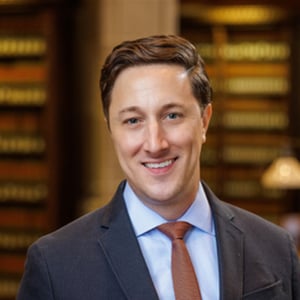
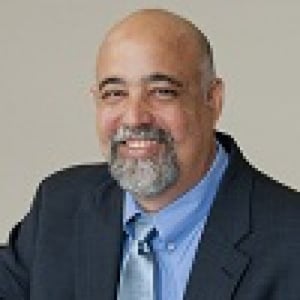
Robert (Bob) Woodson is Founder and President of the Center for Neighborhood Enterprise and one of America’s most influential leaders on issues of poverty and upward mobility. He chose the word “enterprise” in naming the organization because he believes strongly that market-based principles should also operate in the social economy.
Woodson was instrumental in paving the way for resident management and ownership of public housing, brought together task forces of grassroots groups to advise the 104th Congress, the Pennsylvania Legislature, and the Wisconsin Assembly on welfare reform, and helped create Violence-Free Zones that operate in many of the nation’s most troubled schools and communities.
More recently, he has taken Wisconsin Congressman Paul Ryan on a “listening and learning” tour of some of America’s most impoverished neighborhoods in an effort to move beyond the traditional conservative and liberal understanding of how to address the needs of the poor.
Woodson is frequently featured as a social commentator in print and on-air media, including The News Hour with Jim Lehrer, The O’Reilly Factor, the Garrison Show and other national and local broadcasts. He is the only person ever to receive both the liberal and conservative world’s most prestigious awards – the John D. and Catherine T. MacArthur “Genius” Fellowship and the Lynde and Harry Bradley Foundation Prize, as well as the Presidential Citizens Medal.
He has written several books, including The Triumphs of Joseph: How Today’s Community Healers are Reviving Our Streets and Neighborhood.
Arnold I. Shure Professor of Law, University of Chicago Law School
Senior Fellow, The Manhattan Institute
Kay S. Hymowitz is the William E. Simon Fellow at the Manhattan Institute and a contributing editor of City Journal. She writes extensively on childhood, family issues, poverty, and cultural change in America. Hymowitz is the author of Manning Up: How the Rise of Women Has Turned Men into Boys (2011), Marriage and Caste in America: Separate and Unequal Families in a Post-Marital Age (2006), andLiberation’s Children: Parents and Kids in a Postmodern Age (2004), among others. She has written for the New York Times, Washington Post, Wall Street Journal, The New Republic, New York Newsday, Public Interest, The Wilson Quarterly, and Commentary.
Hymowitz has presented her work at many conferences, sits on the board of the journals National Affairs and The Future of Children, and has been interviewed on numerous radio and TV programs. Hymowitz holds a B.A. in English literature from Brandeis University and an M.A. in English literature from Columbia University.
President, University of Virginia School of Law Student Chapter
Dan graduated summa cum laude from the University of Ottawa in 2013 with a Specialization in Economics and Minor in History. At UVA, he is a Hardy Cross Dillard Scholar and serves on the Editorial Board of the Journal of Law and Politics. Dan spent his 2L summer at Abrams & Bayliss LLP, a litigation boutique in Wilmington, Delaware.
Judge, United States Court of Appeals, D.C. Circuit
Judge Randolph was confirmed by the Senate and appointed to the United States Court of Appeals for the District of Columbia Circuit by President George H. W. Bush in July 1990.
Judge Randolph received his B.S. degree in 1966 from Drexel University, majoring in economics and basic engineering. At Drexel, he was president of the debate society, vice president of the Student Senate, and a member of the varsity wrestling squad. In 1969, he received his J.D. from the University of Pennsylvania, summa cum laude. Judge Randolph ranked first in his law school class all three years and was managing editor of the Law Review.
After graduation, Judge Randolph served as a law clerk to Judge Henry J. Friendly of the United States Court of Appeals for the Second Circuit in New York.
Admitted to the California Bar in 1970 (and to the District of Columbia bar in 1973), Judge Randolph worked as Assistant to the Solicitor General, U.S. Department of Justice, in Washington, D.C., 1970-1973.
After two years in private practice, Judge Randolph was named Deputy Solicitor General of the United States, a position he held from 1975-1977.
In 1979, Judge Randolph was appointed Special Counsel to the Committee on Standards of Official Conduct (the Ethics Committee) of the United States House of Representatives, remaining in this position until 1980.
In the 1980s, Judge Randolph held a number of positions while in private practice, including Special Assistant Attorney General for the states of New Mexico (1985 90), Utah (1986-1990) and Montana (1983-1990). He also served as a Member of the Advisory Panel of the Federal Courts Study Committee.
From 1971-1990, Judge Randolph argued 23 times in the United States Supreme Court, winning 20 of his cases.
As an Adjunct Professor of Law at Georgetown University Law Center from 1974-1978 he taught courses in civil procedure and injunctions. In 1992 he taught a course in constitutional law. He is a Distinguished Adjunct Professor of Law at George Mason School of Law and for the past ten years has been teaching First Amendment law. He also serves on the Judicial Advisory Board of the George Mason University Law and Economics Center.
From 1993 through 1995 Judge Randolph was a member of the Committee on Codes of Conduct of the Judicial Conference of the United States, and from 1995 to 1998 served as the Committee's chairman. He also served as the judicial liaison to the American Bar Association’s Administrative Law Section.
Judge Randolph is a member of the Board of Visitors at Drexel University Law School and was named to the “Drexel One Hundred” as a leading alumnus. In 2002 he was presented the James Wilson Award by the University of Pennsylvania Law School. In November 2005 he delivered the Fifth Annual Barbara K. Olson Memorial Lecture at the Annual Lawyers Convention of the Federalist Society. He has published numerous articles, the most recent of which is in the June 2006 issue of the Harvard Journal of Law and Public Policy.
Judge Randolph is married to the Honorable Eileen J. O’Connor, formerly Assistant Attorney General, Tax Division, U.S. Department of Justice. His son John Trevor Randolph is an investment banker in New York. His daughter Cynthia Lee Randolph is an artist living in San Francisco.
President, University of Virginia School of Law Student Chapter
Founder and President, Center for Neighborhood Enterprise
Robert (Bob) Woodson is Founder and President of the Center for Neighborhood Enterprise and one of America’s most influential leaders on issues of poverty and upward mobility. He chose the word “enterprise” in naming the organization because he believes strongly that market-based principles should also operate in the social economy.
Woodson was instrumental in paving the way for resident management and ownership of public housing, brought together task forces of grassroots groups to advise the 104th Congress, the Pennsylvania Legislature, and the Wisconsin Assembly on welfare reform, and helped create Violence-Free Zones that operate in many of the nation’s most troubled schools and communities.
More recently, he has taken Wisconsin Congressman Paul Ryan on a “listening and learning” tour of some of America’s most impoverished neighborhoods in an effort to move beyond the traditional conservative and liberal understanding of how to address the needs of the poor.
Woodson is frequently featured as a social commentator in print and on-air media, including The News Hour with Jim Lehrer, The O’Reilly Factor, the Garrison Show and other national and local broadcasts. He is the only person ever to receive both the liberal and conservative world’s most prestigious awards – the John D. and Catherine T. MacArthur “Genius” Fellowship and the Lynde and Harry Bradley Foundation Prize, as well as the Presidential Citizens Medal.
He has written several books, including The Triumphs of Joseph: How Today’s Community Healers are Reviving Our Streets and Neighborhood.
Arnold I. Shure Professor of Law, University of Chicago Law School
Vice President of Domestic and Economic Policy, The Heritage Foundation
Roger Severino is Vice President of Economic and Domestic Policy, and the Joseph C. and Elizabeth A. Anderlik Fellow at The Heritage Foundation.
Severino is a national authority on civil rights, conscience and religious freedom, the administrative state, and information privacy, particularly as applied to health care law and policy. Find his tweets at @RogerSeverino_.
Severino spearheaded the HHS Accountability Project while a Senior Fellow at EPPC from 2021 to 2023. Previously, Severino was Director of HHS’ Office for Civil Rights, where he led a team of over 250 staff enforcing our nation’s civil rights, conscience and religious freedom, and health information privacy laws. He served from 2017 to 2021 and was the longest-serving OCR director of the past three decades.
Prior to joining HHS, Severino served for two years as Director of the DeVos Center for Religion and Civil Society at Heritage, advocating for life, family, and religious-freedom policies. Before that, he was a trial attorney for seven years at the U.S. Department of Justice’s Civil Rights Division where he enforced the Fair Housing Act and the Civil Rights Act of 1964. Severino started his legal career at the Becket Fund for Religious Liberty, where he was Legal Counsel and Chief Operations Officer and defended the rights of people of all faiths under federal and international law.
Severino has been profiled in The New York Times, The Atlantic, The Wall Street Journal, and The Hill and has appeared on Fox News, CNN, MSNBC, NPR, and PBS, among others. In 2020, The New York Times dubbed him and his wife Carrie, “a conservative power couple” to be reckoned with.
Severino holds a JD from Harvard Law School, a master’s degree in public policy, with highest distinction, from Carnegie Mellon University, and a bachelor’s degree in business from the University of Southern California. He was appointed by President Trump to the Administrative Conference of the United States and is a member of the District of Columbia and the Commonwealth of Virginia bars.
As OCR director, Severino founded the federal government’s first division dedicated exclusively to conscience and religious freedom compliance and enforcement. He enforced the Weldon Amendment for the first time against a state (California) after it coerced families and religious organizations into paying for abortion insurance coverage, leading to a $200 million federal funding disallowance. He also enforced laws protecting pro-life pregnancy resource centers from discrimination by states hostile to their message and enforced laws prohibiting forced participation in abortions by medical professionals.
With respect to civil rights, Severino protected older persons and people with disabilities from being denied life-saving care due to discriminatory “quality of life” judgments, especially during the COVID-19 pandemic. He also achieved a landmark sexual harassment resolution with Michigan State University in the wake of the Larry Nassar sexual assault scandal and protected the rights of non-English speakers to have equal access to health and human services.
In the area of health privacy, he secured the largest HIPAA monetary settlement in history and achieved the largest number of enforcement resolutions both in a single year and across four years. He also facilitated the transformational use of Skype, Zoom, and Facetime for delivery of telehealth during the COVID-19 pandemic and beyond.
His regulatory reform activities resulted in a comprehensive conscience protection regulation and proposed a life-affirming disability rights regulation. He achieved regulatory savings of $3.6 billion in health care industry costs over five years and identified and proposed an additional $3.2 billion in cost savings from the repeal of ineffective and unnecessary regulatory burdens.
Severino is a Spanish speaker who teaches salsa and west coast swing in his spare time.
Chief Counsel, Constitutional Accountability Center
Brianne is Constitutional Accountability Center’s Chief Counsel. Brianne joined CAC from private practice at O'Melveny & Myers (OMM), where she was Counsel in the firm’s Supreme Court and appellate practice. From 2009-11, prior to joining OMM, Brianne was an Attorney-Adviser in the Office of Legal Counsel at the U.S. Department of Justice. She also served as a law clerk for Justice Stephen Breyer on the U.S. Supreme Court, a law clerk for Judge Robert A. Katzmann on the U.S. Court of Appeals for the Second Circuit, and a law clerk for Judge Jed S. Rakoff on the U.S. District Court for the Southern District of New York. Brianne’s academic writings have appeared in the Yale Law Journal, the Duke Law Journal, the Northwestern University Law Review, the Washington Law Review, the American University Law Review, and the Yale Law & Policy Review. Brianne received her J.D. from Yale Law School and her M.A./B.S. from Emory University. Her master's thesis in political science examined judicial behavior on the U.S. Supreme Court.
Judge, United States District Court, Eastern District of Arkansas
Lee Philip Rudofsky is a judge on the United States District Court for the Eastern District of Arkansas. Prior to his 2019 appointment by President Trump, Judge Rudofsky served as the Solicitor General of Arkansas, an Assistant General Counsel at Walmart, a Senior Litigation Associate at Kirkland & Ellis, and counsel to several Republican political campaigns. Today, in addition to his judicial service, Judge Rudofsky teaches law school classes on founding-era constitutional history and, separately, speaks to students across the country about the October 7th Massacre and the subsequent Israeli response. In 2024, Judge Rudofsky helped establish an annual judicial education mission to Israel that offers American judges the opportunity to learn first-hand about the Israeli legal system, Israeli society, and legal issues related to the Israel-Hamas war.
Chief Trust & Security Officer, Uber Technologies, Inc.
Mr. Matthew G. Olsen, also known as Matt, serves as the Chief Trust & Security Officer at Uber Technologies, Inc.
Matt Olsen has served as a leading government official on a range of national security, intelligence and law enforcement issues. He teaches the National Security Law and Practice Seminar at the Law School.
Most recently, Olsen served for three years as the director of the National Counterterrorism Center under President Barack Obama. Created by Congress in response to the attacks of Sept. 11, NCTC is responsible for the integration and analysis of terrorism information and strategic operational planning of counterterrorism activities. Prior to joining NCTC, Olsen was the general counsel for the National Security Agency, serving as NSA’s chief legal officer and focusing on surveillance law and cyber operations.
Olsen worked at the Department of Justice in a number of leadership positions. He served as an associate deputy attorney general, responsible for national security and criminal cases. He also was special counselor to the attorney general and executive director of the Guantanamo Review Task Force, where he led the review of individuals detained at Guantanamo. Olsen served as acting assistant attorney general for National Security and helped establish the National Security Division.
From 1994 to 2006, Olsen was a federal prosecutor in the U.S. Attorney’s Office for the District of Columbia, prosecuting terrorists, violent gang members and white-collar criminals. Olsen served as special counsel to the director of the FBI from 2004 to 2005. He began his public service career as a trial attorney in the Civil Rights Division of the Department of Justice.
Olsen is a lecturer on law at Harvard Law School, a national security analyst for ABC News, and an adjunct senior fellow at the Center for a New American Security. He also is affiliated with the Berkman Klein Center at Harvard, where he helps lead a project on cybersecurity. Olsen is a co-founder of IronNet Cybersecurity, a technology firm based in Washington, D.C., where he leads business development and strategy.
Olsen graduated from Harvard Law School and the University of Virginia and clerked in the U.S. District Court for the District of Columbia.
Advisory Board Member, Beacon Global Strategies LLC
Mr. Shedd was named Acting Director of the Defense Intelligence Agency in August 2014 following four years service as Deputy Director. Until January 2015 he led the Defense Intelligence Enterprise workforce comprised of more than 16,500 military and civilian employees worldwide. This workforce spans the Defense Intelligence Enterprise within the Department of Defense with an intelligence mission and/or function, plus all their stakeholders involved in creating, sustaining and enhancing mission capacity.
Mr. Shedd served from May 2007 to August 2010 as the Director of National Intelligence (DNI) Deputy Director for Policy, Plans, and Requirements, where he was responsible for overseeing the formulation and implementation of major Intelligence Community (IC) policies across the full spectrum of issues, from information sharing and IC authorities to analytic standards, among others. In particular, he led the review of Executive Order 12333, the foundational U.S. intelligence policy, which was revised by President George W. Bush in July 2008. Additionally, Mr. Shedd developed and implemented a National Intelligence Strategy, published in August 2009 for the IC and led all strategic planning efforts to determine future intelligence priorities for the Community and the Nation.
From May 2005 to April 2007, Mr. Shedd served as Chief of Staff and, later, Acting Director of the Intelligence Staff to the Director of National Intelligence. Prior to the creation of the Office of the Director of National Intelligence, Mr. Shedd held intelligence policy positions at the National Security Council (NSC) from February 2001 to May 2005. He served as the NSC’s Special Assistant to the President and Senior Director for Intelligence Programs and Reform. Mr. Shedd has been directly involved in the implementation of intelligence reform stemming from the 9/11 Commission report in July 2004, the Intelligence Reform and Terrorism Prevention Act of 2004, and the Weapons of Mass Destruction (WMD) Commission’s report to the President in March 2005.
Between 1984 and 1993, Mr. Shedd served overseas in the U.S. Embassies in Costa Rica and Mexico. Mr. Shedd has also held a variety of senior management assignments at the Central Intelligence Agency, including Chief of Congressional Liaison.
Mr. Shedd is also on the Government Advisory Board of Dataminr, a social media “big data” company that broadly services the Federal Government.
Mr. Shedd holds a B.A. from Geneva College in Beaver Falls, Pennsylvania and a M.A. from Georgetown University’s School of Foreign Service in Latin American Studies. Mr. Shedd was born in Bolivia and grew up in Latin America.
Chief Legal + Administrative Officer, Waystar Health
Matthew R. A. Heiman leads all legal and corporate governance matters for Waystar. Over the last two decades, he has worked in corporate and government sectors, gaining deep experience in the areas of corporate governance, litigation, risk management, security, and compliance.
Most recently, Matthew was Vice President, Corporate Secretary & Associate General Counsel at Johnson Controls where he helped establish a new corporate secretary department and led the integration of legal departments following the company’s merger with Tyco International. Prior to its merger with Johnson Controls, Matthew held a number of positions with Tyco International including Vice President, Chief Compliance & Audit Officer. Before Tyco, Matthew was a lawyer with the National Security Division at the U.S Department of Justice. He was a legal advisor to the Coalition Provisional Authority in Baghdad, Iraq and practiced as a trial lawyer with the law firm of McGuireWoods.
Matthew holds a BA and JD from Indiana University and is a member of the International Institute for Strategic Studies. He is a Senior Fellow at George Mason University’s National Security Institute.
President, Society for the Rule of Law
George T. Conway III has been a partner in the Litigation Department of Wachtell, Lipton, Rosen & Katz since January 1994. He joined the firm in September 1988. His litigation experience has included a variety of high-profile matters spanning many areas of law in federal and state courts throughout the country. He has extensive experience in securities litigation, mergers and acquisitions litigation, contract litigation, antitrust litigation, and other litigation, both at the trial and appellate levels.
In the area of securities litigation, he recently briefed and argued the case for respondents in Morrison v. National Australia Bank, in which the Supreme Court of the United States held that Section 10(b) of the Securities Exchange Act of 1934 does not apply extraterritorially to claims of so-called "foreign-cubed" plaintiffs -- foreign investors who purchased securities of foreign issuers on foreign exchanges. He also recently argued and won a precedent-setting motion to dismiss so-called "foreign-squared" claims against European Aeronautic Defence & Space Co. brought by American plaintiffs who purchased that foreign company's shares on foreign exchanges.
Mr. Conway also recently argued and won an important appeal under the Visual Artists Rights Act of 1990 on behalf of the Swiss installation artist Christoph Büchel in the artist’s highly publicized dispute with the Massachusetts Museum of Contemporary Art. He also successfully represented the Chief Judge of the State of New York and the New York Unified Court System in historic constitutional litigation over the State of New York’s extended failure to adjust judicial salaries. Mr. Conway also played a substantial role in the successful defense of Kenneth Langone’s Invemed Associates in a disciplinary proceeding before the NASD (now FINRA) that resulted in what the New York Times called a "withering," "high-profile defeat" for the regulators.
Mr. Conway’s work in mergers and acquisitions litigation includes the representation of Rohm and Haas Co. and ADVO, Inc., in, respectively, Rohm and Haas v. Dow Chemical Co., and Valassis Communications v. ADVO, two Delaware Chancery Court cases involving claims to enforce merger agreements, as well as two historic cases in the development of Delaware corporate law governing mergers and acquisitions, QVC v. Paramount Communications and Paramount Communications v. Time Inc. and Warner Communications, in addition to many other cases involving contests for corporate control in the Delaware courts and elsewhere over the past two decades.
In addition, Mr. Conway played a substantial role in prosecuting one of the most prominent defamation cases in recent memory (Philip Morris v. American Broadcasting Cos.). He has extensive experience in merger-related private antitrust litigation and government antitrust investigations, including the defense of Cardinal Health in the preliminary injunction proceedings before the United States District Court for the District of Columbia in FTC v. Cardinal Health. He also represented the National Football League in trademark and antitrust litigation against the Dallas Cowboys in NFL Properties v. Dallas Cowboys Football Club. His pro bono work includes his successful representation in the Second Circuit of crime victims and public-interest groups as amici curiae in opposing claims that federal law requires the State of New York to allow felons to vote while still incarcerated.
Mr. Conway is a graduate of Harvard College, where in 1984 he received an A.B. magna cum laude in biochemical sciences. He received his J.D. in 1987 from Yale Law School, where he was an editor of the Yale Law Journal. In 1987 and 1988, he served as a law clerk to Circuit Judge Ralph K. Winter, Jr. of the United States Court of Appeals for the Second Circuit.
Former Chief Judge, United States Court of Appeals for the Federal Circuit
Judge Michel served for more than 22 years on the Federal Circuit, retiring on May 31, 2010. From December 25, 2004 until his retirement, he also discharged the duties of Chief Judge of this national court, serving simultaneously on the U.S. Judicial Conference -- the Judiciary's governing body -- and by appointment of the Chief Justice on its seven-judge Executive Committee.
He judged several thousand appeals and authored more than 800 opinions, one third concerning intellectual property law. Intellectual Asset Management magazine inducted him into its Hall of Fame and he was designated one of the 50 most influential leaders in intellectual property law in the world. His contributions were also recognized by lifetime achievement and similar awards by the American Intellectual Property Law Association (AIPLA); Intellectual Property Owners Education Foundation (IPO); the American Bar Association's Intellectual Property Section; Managing Intellectual Property magazine; the Sedona Conference; the Patent and Trademark Office Society (PTOS); the New York, Chicago, Philadelphia, and Los Angeles Intellectual Property Law Associations; and the William C. Connor, the Giles S. Rich, and the Richard Linn Intellectual Property American Inns of Court. In 2010 the Los Angeles IP Inn was renamed in his honor as the Paul R. Michel IP Inn.
Judge Michel received the Jefferson Medal, the Eli Whitney Award, and the Katz-Kiley Prize as well as Honorary Doctor of Law degrees from the Catholic University of America and the John Marshall Law School. He is a lifetime Member of Honore of FICPI, the international association of private practitioners of intellectual property law. Williams College granted him the Kellogg Award for "outstanding leadership in law and public service."
Judge Michel has written numerous articles on patent law and advocacy, taught related courses and master classes at George Washington University, the University of Akron, and John Marshall law schools, serving as well on their IP advisory boards and on counterpart boards at the universities of California (Berkley), Washington, and Maryland. He co-authored a casebook, Patent Litigation and Strategy (West, 1999) and an August 2010 editorial in the New York Times on strengthening the patent system to promote prosperity and create new jobs.
A frequent speaker at conferences and law schools during his judicial tenure and since, he retired from a lifetime appointment to be free to speak out on the national need for better patent policy and protection of intellectual property and the vital, unmet resource needs of the courts, the PTO, the International Trade Commission, and other IP-related agencies. He was appointed Distinguished Scholar in Residence by IPO, following his retirement. Judge Michel also consults for law firms and their clients in intellectual property litigations, conducting moot courts, mock trials, case evaluations, editing briefs, advising on strategy and providing mediation and arbitration services.
Partner, Covington & Burling LLP
Robert Haslam is a partner in Covington & Burling's Silicon Valley office. His practice has emphasized trial work involving patent and trade secret litigation and other related high technology disputes. He has represented clients in litigation involving a range of arts and practices, including semiconductor products and processes, cryptography, GPS and cellular technology, electronic circuits, microprocessors and software products, and medical devices and other life science products. He has tried cases in both federal and state court. In addition, Mr. Haslam advises clients on strategies relating to intellectual property matters.
Mr. Haslam is a Fellow of the American College of Trial Lawyers, which is composed of the best of the trial bar and is widely considered to be the premier professional trial organization in America. Membership in the College can never be more than 1% of the total lawyer population of any state or province, and fellowship in the College is extended by invitation only to those experienced trial lawyers who have mastered the art of advocacy and whose professional careers have been marked by the highest standards of ethical conduct, professionalism, civility and collegiality.
He has also been recognized as a leading intellectual property lawyer by a number of publications, including Chambers USA; The Recorder, where they named him as one of the top two “go to” patent litigators in Northern California; and the Daily Journal who has named him not only as one of the “brain trust of 25 lawyers who comprise the state’s best and brightest” intellectual property lawyers in California, but as one of the “Top IP Litigators in California” for each year the list has been in existence.
Mr. Haslam has also twice served on, once as chair of, the Northern District of California Patent Rules Committee, which issued revisions to the local rules for the management of patent litigation. These rules have served as a model and have been adopted in whole or in part by other judicial districts.
Professor of Law, Antonin Scalia Law School, George Mason University
Adam Mossoff is Professor of Law at Antonin Scalia Law School, George Mason University. He has published extensively on why patents, copyrights, and other intellectual property rights have been—and should be—legally secured to innovators and creators as property rights. His scholarship has been relied on by the United States Supreme Court, by lower federal courts, and by U.S. federal agencies. He has been invited to testify numerous times before the U.S. Senate and the House of Representatives on intellectual property legislation. His writings on intellectual property policy have also appeared in the Wall Street Journal, New York Times, Forbes, Investors Business Daily, and in other media outlets. His journal articles can be downloaded here.
Professor Mossoff is a longstanding member of the Executive Committee of the Intellectual Property Practice Group of the Federalist Society, on which he served as Chairperson from 2016-2018, and he is Chair of the Intellectual Property Working Group of the Regulatory Transparency Project of the Federalist Society. He is a Senior Fellow and Chair of the Forum for Intellectual Property at the Hudson Institute, a Visiting Intellectual Property Fellow at the Heritage Foundation, and a member of the Board of Directors of the Center for Intellectual Property Understanding. He is a member of the Intellectual Property Rights Policy Committee of ANSI and he has served as Chair and Vice-Chair of the Intellectual Property Committee of the IEEE-USA, on which he remains a member in good standing.
Assistant Professor of Law, Campbell University School of Law
Zachary C. Bolitho joined the Campbell Law School faculty after developing a reputation as a skilled trial and appellate lawyer. He teaches courses in Criminal Procedure, Criminal Law, Evidence, Federal Courts, and Trial Advocacy. Bolitho is an accomplished teacher, having been named “Professor of the Year” in both 2014-15 and 2015-16 following a vote of the third-year class.
He took a leave of absence during the 2017-18 academic year to work on the staff of Deputy Attorney General Rod Rosenstein at the U.S. Department of Justice in Washington, D.C. Bolitho was ultimately promoted to Chief of Staff and Associate Deputy Attorney General, serving as one of the Deputy Attorney General’s principal legal and policy advisors. Additionally, the Attorney General appointed Bolitho to serve as the Department of Justice’s ex officio member of the U.S. Sentencing Commission.
Prior to Campbell Law, Bolitho served as a federal prosecutor with the U.S. Attorney’s Office for the Eastern District of Tennessee. During his time as a federal prosecutor, Bolitho handled a wide variety of cases including several high profile matters. In addition to prosecuting cases in U.S. District Court, he briefed and argued cases before the U.S. Court of Appeals for the Sixth Circuit.
Before becoming a federal prosecutor, Bolitho was a litigation associate with the law firm Jones Day. He also completed a judicial clerkship with Judge David W. McKeague of the U.S. Court of Appeals for the Sixth Circuit.
Bolitho received his J.D. from The Ohio State University, Moritz College of Law. He graduated summa cum laude, was elected to the Order of the Coif, served as a law review editor, and won a national moot court championship. Before attending law school, Bolitho graduated from Mount Union College where he was the top student in his graduating class.
Professor of Law, Ave Maria School of Law
Professor Bonner began his legal career at the U.S. Department of Justice and served in a variety of capacities there for more than 25 years, including Assistant U.S. Attorney in Los Angeles and the U.S. Virgin Islands, and Resident Legal Advisor in Moscow. For 10 years, he directed the investigation and prosecution of high-profile federal cases involving international and domestic terrorism. He subsequently joined the U.S. Department of Treasury, where he held the position of Senior Advisor and Chief of Staff to the Undersecretary of the Treasury for Enforcement. Prior to coming to Ave Maria, Professor Bonner served as a Senior Advisor in the United States Department of Homeland Security’s Office of International Affairs, where he oversaw the Department’s activities within the Group of 8 (G8) countries. He also taught as an adjunct professor of law at Georgetown University Law Center for 13 years.
Professor of Law, University of Minnesota Law School
Professor James W. Coleman is a scholar of energy law. He specializes in North American energy infrastructure, transport, and trade. He is also a nonresident senior fellow at the American Enterprise Institute focused on energy policy.
Professor Coleman has testified before Congress on steps to speed up energy infrastructure permits. He also worked with a team of experts as part of Alberta's Royalty Review to revise the Canadian province's management of its vast oil and gas resources.
Before joining Minnesota, Professor Coleman taught at Southern Methodist University's Dedman School of Law, the University of Calgary’s law and business schools, and Harvard Law School. Earlier, he practiced environmental and appellate law at Sidley Austin in Washington, D.C., and clerked for the Honorable Steven M. Colloton of the U.S. Court of Appeals for the Eighth Circuit.
Professor Coleman received two degrees from Harvard University—a J.D. (cum laude) and B.A. in biology (magna cum laude with highest honors in the field). As a result of his undergraduate thesis on butterfly genetics, which required fieldwork in Central Asia, a species of lycaenid butterfly was named after him—Agrodiaetus ripartii colemani.
Panel II: The Family
Kay S. Hymowitz, Dan McBride, A. Raymond Randolph, Robert M. Smith, W Wilcox, Robert L. Woodson, Mary Anne Case
2016 National Student Symposium
It is oddly controversial to identify the breakdown of the family unit as a central...
Panel II: The Family
Kay S. Hymowitz, Dan McBride, A. Raymond Randolph, Robert M. Smith, W Wilcox, Robert L. Woodson, Mary Anne Case
2016 National Student Symposium
It is oddly controversial to identify the breakdown of the family unit as a central...
Whole Woman's Health v. Hellerstedt: Will the Court Ban the Texas Abortion Statute? - Podcast
Roger Severino
Litigation and Religious Liberties Practice Groups Podcast
This week the Supreme Court will hear arguments in Whole Woman’s Health v. Hellerstedt, also...
The Texas Abortion Case in the Supreme Court: Whole Woman’s Health v. Hellerstedt Oral Argument Preview - Podcast
Brianne Gorod, Lee Rudofsky
Litigation and Religious Liberties Practice Groups Podcast
On March 2, 2016 the Supreme Court will hear arguments in Whole Woman’s Health v....
Executive Order 12333 and Foreign Intelligence Collection - Podcast
Matthew G. Olsen, David Shedd, Matthew R. A. Heiman
International & National Security Law Practice Group Podcast
In 1981, President Reagan signed Executive Order 12333. It assigned foreign intelligence collection responsibilities to...
Amgen Inc. v. Harris - Post-Decision SCOTUScast
George T. Conway, George ConwayI
SCOTUScast 2-24-16 featuring George Conway
On January 25, 2016, the Supreme Court decided Amgen Inc v. Harris without oral argument....
Patent Litigation and Federal Rules - Podcast
Paul Redmond Michel, Robert T. Haslam, Adam Mossoff
Intellectual Property Practice Group Podcast
A former Director of the United States Patent and Trademark Office and former Chief Judge...
Montgomery v. Louisiana - Post-Decision SCOTUScast
Zachary Bolitho
SCOTUScast 2-22-16 featuring Zachary Bolitho
On January 25, 2016, the Supreme Court decided Montgomery v. Louisiana. Petitioner Montgomery was 17...
Musacchio v. United States - Post-Decision SCOTUScast
Mark Bonner
SCOTUScast 2-17-16 featuring Mark Bonner
On January 25, 2016, the Supreme Court decided Musacchio v. United States. Petitioner Musacchio was convicted...
Federal Energy Regulatory Commission v. Electric Power Supply Association - Post-Decision SCOTUScast
James W. Coleman
SCOTUScast 2-17-16 featuring James Coleman
On January 25, 2016, the Supreme Court decided several energy cases consolidated under the heading...