

Senior Litigation Counsel, New Civil Liberties Alliance
Throughout his 40-year career in private law practice in Washington, D.C., Richard Samp has specialized in appellate litigation with a focus on constitutional law. He served as Chief Counsel of the Washington Legal Foundation for more than 30 years. He has participated directly in more than 200 cases before the U.S. Supreme Court. Mr. Samp is a graduate of Harvard College and the University of Michigan Law School and clerked for a federal judge in Detroit.
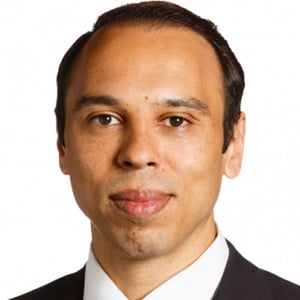
Vice President of Domestic and Economic Policy, The Heritage Foundation
Roger Severino is Vice President of Economic and Domestic Policy, and the Joseph C. and Elizabeth A. Anderlik Fellow at The Heritage Foundation.
Severino is a national authority on civil rights, conscience and religious freedom, the administrative state, and information privacy, particularly as applied to health care law and policy. Find his tweets at @RogerSeverino_.
Severino spearheaded the HHS Accountability Project while a Senior Fellow at EPPC from 2021 to 2023. Previously, Severino was Director of HHS’ Office for Civil Rights, where he led a team of over 250 staff enforcing our nation’s civil rights, conscience and religious freedom, and health information privacy laws. He served from 2017 to 2021 and was the longest-serving OCR director of the past three decades.
Prior to joining HHS, Severino served for two years as Director of the DeVos Center for Religion and Civil Society at Heritage, advocating for life, family, and religious-freedom policies. Before that, he was a trial attorney for seven years at the U.S. Department of Justice’s Civil Rights Division where he enforced the Fair Housing Act and the Civil Rights Act of 1964. Severino started his legal career at the Becket Fund for Religious Liberty, where he was Legal Counsel and Chief Operations Officer and defended the rights of people of all faiths under federal and international law.
Severino has been profiled in The New York Times, The Atlantic, The Wall Street Journal, and The Hill and has appeared on Fox News, CNN, MSNBC, NPR, and PBS, among others. In 2020, The New York Times dubbed him and his wife Carrie, “a conservative power couple” to be reckoned with.
Severino holds a JD from Harvard Law School, a master’s degree in public policy, with highest distinction, from Carnegie Mellon University, and a bachelor’s degree in business from the University of Southern California. He was appointed by President Trump to the Administrative Conference of the United States and is a member of the District of Columbia and the Commonwealth of Virginia bars.
As OCR director, Severino founded the federal government’s first division dedicated exclusively to conscience and religious freedom compliance and enforcement. He enforced the Weldon Amendment for the first time against a state (California) after it coerced families and religious organizations into paying for abortion insurance coverage, leading to a $200 million federal funding disallowance. He also enforced laws protecting pro-life pregnancy resource centers from discrimination by states hostile to their message and enforced laws prohibiting forced participation in abortions by medical professionals.
With respect to civil rights, Severino protected older persons and people with disabilities from being denied life-saving care due to discriminatory “quality of life” judgments, especially during the COVID-19 pandemic. He also achieved a landmark sexual harassment resolution with Michigan State University in the wake of the Larry Nassar sexual assault scandal and protected the rights of non-English speakers to have equal access to health and human services.
In the area of health privacy, he secured the largest HIPAA monetary settlement in history and achieved the largest number of enforcement resolutions both in a single year and across four years. He also facilitated the transformational use of Skype, Zoom, and Facetime for delivery of telehealth during the COVID-19 pandemic and beyond.
His regulatory reform activities resulted in a comprehensive conscience protection regulation and proposed a life-affirming disability rights regulation. He achieved regulatory savings of $3.6 billion in health care industry costs over five years and identified and proposed an additional $3.2 billion in cost savings from the repeal of ineffective and unnecessary regulatory burdens.
Severino is a Spanish speaker who teaches salsa and west coast swing in his spare time.
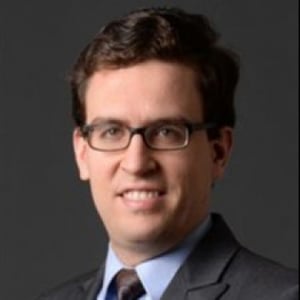
Shareholder, Webber & Thies PC
Mr. Thies has litigated complex commercial disputes and defended class actions throughout the state of Illinois, and in federal courts across the country, including the First, Second, Seventh, and Tenth Circuits. He has represented clients in numerous trials and arbitrations, including serving as part of a trial team winning a $64 million judgment after a jury verdict in the Northern District of New York.
Prior to joining Webber & Thies, Mr. Thies was an associate at Sidley Austin LLP (2013-2018) and clerked for Chief Judge James F. Holderman of the United States District Court for the Northern District of Illinois (2011-2013) and for Judge Jerry Smith of the United States Court of Appeals for the Fifth Circuit (2010-2011).
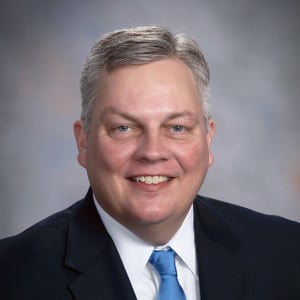
University Professor of Law and Religion and Director of the Eleanor H. McCullen Center for Law, Religion and Public Policy, Villanova University Charles Widger School of Law
Michael P. Moreland was appointed University Professor of Law and Religion and Director of the Eleanor H. McCullen Center for Law, Religion and Public Policy at Villanova University in 2017. Professor Moreland joined the Villanova faculty in 2006 and served as Vice Dean from 2012 to 2015. His research is primarily in the areas of torts, law and religion, constitutional law, and Catholic social thought, and he regularly teaches Torts, First Amendment, seminars in law and religion, and undergraduate courses in ethics.
Professor Moreland is the co-editor of Christianity and Private Law (Routledge, 2021), and his most recent publications include: “The Authority of Tradition: John Henry Newman and Legal Theory” in Christianity and the Making of Irish Law (Routledge, 2025); “Christianity and Torts” in The Oxford Handbook on Christianity and Law, (Oxford University Press, 2023); “Germaneness and Religious Liberty” in the Notre Dame Law Review (2023); “Contingency and Contestation in Christianity and Liberalism” in the Notre Dame Law Review (2023); “Friendship as the Primary Purpose of Law” in The American Journal of Jurisprudence 279 (2022); and “The Moral of Torts” (with Jeffrey Pojanowski) in Christianity and Private Law (Routledge, 2021).
Professor Moreland was a Visiting Professor of Law at the University of Notre Dame and the Mary Ann Remick Senior Visiting Fellow at the Notre Dame Center for Ethics and Culture from 2015 to 2017. He was the Forbes Visiting Fellow at Princeton University in the James Madison Program during academic year 2010-11. He has served as the project leader for grants from the John Templeton Foundation and the Charles Koch Foundation. He serves as the Chair of the Federalist Society’s Religious Liberties Practice Group Executive Committee and the Chair of the Board of Trustees of the Institute for Advanced Catholic Studies at the University of Southern California.
Professor Moreland received his BA in philosophy from the University of Notre Dame, his MA and PhD in theological ethics from Boston College, and his JD from the University of Michigan Law School. Following law school, Professor Moreland clerked for the Honorable Paul J. Kelly Jr., of the United States Court of Appeals for the Tenth Circuit and was an associate at Williams & Connolly LLP in Washington, DC, where he represented clients in First Amendment, professional liability, and products liability matters. Before coming to Villanova, he served as Associate Director for Domestic Policy at the White House under President George W. Bush, where he worked on a range of legal policy issues, including criminal justice, immigration, civil rights, and liability reform.
Denver Managing Partner, Wilkinson Barker Knauer LLP
Raymond L. Gifford counsels communications, electric and gas utilities, and information technology companies on state and federal aspects of regulation, administrative law, and competition policy. He is an expert in public utilities law, and the law and economics of regulation of network industries. Mr. Gifford’s law and policy work focuses on the convergence of broadband communications and energy, as well as environmental policy as it applies to the electric industry. He represents clients in state and federal courts and agencies, and serves as an expert witness on utility regulation and its history. He is also a Senior Adjunct Fellow at the Silicon Flatirons Center for Law, Technology and Entrepreneurship, and Co-Directs the Institute for Regulatory Law & Economics at University of Colorado Law School.
Mr. Gifford served as Chairman of the Colorado Public Utilities Commission from 1999-2003. Following that, he served as President of The Progress & Freedom Foundation, a Washington DC-based think-tank that studied the digital revolution as it relates to regulation of network industries. He entered the regulatory law world as First Assistant Attorney General in the Colorado Attorney General’s Office. He clerked for the Honorable Richard P. Matsch of the United States District Court for the District of Colorado. Mr. Gifford has authored a number of articles on communications law, public utility regulation and competition policy in network industries. He is a graduate of University of Chicago Law School and St. John’s College in Annapolis, Maryland. He is an elected member of the American Law Institute
Partner, The Gardner Law Firm
David F. Barton has extensive experience in environmental, government and government contract, and corporate law. He joined The Gardner Law Firm in 1996 after serving as a United States Air Force JAG officer as well as having six years of private practice with firms in Texas. Mr. Barton counsels clients in environmental matters, government contracts, regulatory compliance, commercial law, and litigation related to those areas. He represents industries, businesses and government units on matters involving water, air, solid and hazardous waste, toxins, wetlands, endangered species, historic preservation, NEPA, Superfund, and federal and state court litigation in those areas. He has taught courses in criminal law, litigation, administration of justice and environmental crimes at several universities throughout the United States, and he has been a guest speaker at environmental law and government contract seminars. Mr. Barton has been licensed to practice in Texas since 1991, and is also licensed in Arkansas. He is admitted to practice before the United States Supreme Court, the United States Court of Federal Claims, the United States Court of Military Appeals, and several United States Circuit Courts of Appeals and United States District Courts. He is a member of the State Bar of Texas (Environmental & Natural Resources Section, among others); College of the State Bar of Texas, the Arkansas Bar Association, the Arkansas Bar Foundation (Fellow), the Association of Trial Lawyers of America, and the San Antonio Bar Association (Environmental Section). He is also an active participant in the San Antonio Manufacturers Association, the Alamo Area Chapter - Air & Waste Management Association, and Citizens Advisory Panel of the San Antonio Water System.
University of Arkansas, J.D., 1975; Central Methodist College; University of Missouri at Columbia, B.A., 1967
Professor of Law, University of Baltimore School of Law (on leave); Senior Counsel, U.S. Department of Justice
Professor Dolin’s scholarship centers on patent law with a specific focus on how the patent regime affects innovation, especially in bio-pharmaceutical areas. His work in these areas includes a number of scholarly articles, presentations, amicus briefs, and congressional testimony.
Dr. Dolin is currently on leave from his academic duties while he serves as Senior Counsel in the Civil Rights Division of the United States Department of Justice.
From January 2020 to January 2022, Professor Dolin served as a resident Associate Justice of the Supreme Court of the Republic of Palau. In this role, he (together with other members of the Court) heard appeals in civil, criminal, administrative, and constitutional law matters.
Prior to joining the University of Baltimore School of Law, Professor Dolin held visiting appointments in other law schools. He also served as a law clerk to the Hon. Pauline Newman, of the U.S. Court of Appeals for the Federal Circuit and the late Hon. H. Emory Widener Jr., of the U.S. Court of Appeals for the Fourth Circuit.
Rumors that he has a real Russian bear in his office are entirely true.
Attorney, Robinson, Bradshaw & Hinson, PA
Erik Zimmerman is a commercial and appellate litigator. He previously clerked for Chief Justice John G. Roberts Jr. of the U.S. Supreme Court and the Honorable J. Harvie Wilkinson III of the U.S. Court of Appeals for the Fourth Circuit. Aided by his experience in the judicial system, Erik represents clients at all levels of the federal and state courts, including the U.S. Supreme Court, federal and state appellate and trial courts, and federal administrative agencies.
Erik has experience in a broad range of subject areas, including contract disputes, employment and labor law, ERISA, and health care and health insurance law. He also represents clients in cases involving constitutional law, communications law, fraud, the False Claims Act, product liability, punitive damages and federal preemption of state law.
Erik's representative matters include helping to secure dismissal of a multibillion dollar breach of contract action in federal district court. He also successfully represented a client in appealing a judgment of nearly $100 million to the U.S. Court of Appeals for the Fourth Circuit in another contract dispute.
Erik also maintains an active pro bono practice. He has represented clients in federal and state appeals involving issues of criminal law, the Fourth Amendment and landlord-tenant law. Erik is admitted only in the District of Columbia.
President and General Counsel, New Civil Liberties Alliance
NCLA’s President and General Counsel, Mark Chenoweth, has observed the administrative state up close and personal from perches in all four branches of the federal government. Mark served as the first chief of staff to Congressman Mike Pompeo, as legal counsel to Commissioner Anne Northup at the U.S. Consumer Product Safety Commission, as an attorney advisor in the Office of Legal Policy at the U.S. Department of Justice, and as a law clerk to the Hon. Danny J. Boggs on the U.S. Court of Appeals for the Sixth Circuit.
Mark has worked in several different roles in the private sector as well. He began his legal career in D.C. as a regulatory associate at Wilmer, Cutler & Pickering. He then returned to his home state of Kansas to serve as in-house counsel for Koch Industries. Most recently he spent over four years as general counsel of the Washington Legal Foundation.
Mark is a graduate of Yale College and the University of Chicago Law School, where he co-founded the Institute for Justice Clinic on Entrepreneurship and became a Tony Patiño Fellow. Mark has been widely quoted and/or published in newspapers and websites including the New York Times, San Francisco Chronicle, New Hampshire Union Leader, and Metropolitan Corporate Counsel. He has also had recurring op-eds in the Los Angeles Daily Journal, and at Forbes.com.
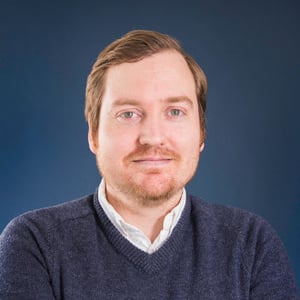
Vice President of Law & Policy, Property and Environment Research Center
Jonathan Wood is vice president of law and policy at the Property and Environment Research Center (PERC). An attorney, Jonathan has litigated environmental and property-rights cases in the Supreme Court of the United States, federal and state appellate courts, and trial courts across the country. His writing has appeared in the Wall Street Journal, Washington Post, National Review, Reason, and other outlets. And his research has been published in journals such as Environmental Law Reporter, Yale Journal on Regulation Notice & Comment, Pace Environmental Law Review, and California Western Law Review.
Prior to coming to PERC, Jonathan was a senior attorney at Pacific Legal Foundation, where he litigated cases concerning the Endangered Species Act, Clean Water Act, and other federal environmental laws. He was co-counsel for forest landowners in Weyerhaeuser Co. v. U.S. Fish and Wildlife Service, in which the Supreme Court ruled unanimously that private land could not be arbitrarily regulated as critical habitat under the ESA. He also led a successful effort to reform regulation of threatened species to better align the incentives of private landowners with the interests of rare species.
Jonathan has testified before several congressional committees on wildlife conservation and endangered species topics. He has also appeared on national television and radio, including NPR’s All Things Considered, C-Span’s Washington Journal, Stossel, Fox News, and Hill.TV.
Jonathan has a law degree from the New York University School of Law, a masters degree in economic policy from the London School of Economics, and a bachelor’s degree in economics from the University of Texas. He is on the executive committee for the Federalist Society’s Environmental Law and Property Rights Practice Group and a steering committee member for the Environmental Law Institute’s Emerging Leaders Initiative.

RICO's Reach: Arguments Heard in RJR Nabisco, Inc. v. The European Community - Podcast
Richard A. Samp
Litigation Practice Groups Podcast
On Monday, March 21, the Court heard RJR Nabisco, Inc. v. The European Community. The...
Little Sisters Go to Court: Arguments Heard in Little Sisters of the Poor Home for the Aged v. Burwell - Podcast
Roger Severino
Religious Liberties Practice Group Podcast
Our expert gave our listeners background information on the Little Sisters of the Poor Home...
Montanile v. Board of Trustees of the National Elevator Industry Health Benefit Plan - Post-Decision SCOTUScast
Daniel R. Thies
SCOTUScast 3-22-16 featuring Daniel R. Thies
On January 20, 2016, the Supreme Court decided Montanile v. Board of Trustees of the...
Little Sisters Go to Court: Little Sisters of the Poor Home for the Aged v. Burwell Oral Argument Preview - Podcast
Michael P. Moreland
Religious Liberties Practice Group Podcast
In the much-discussed Little Sisters of the Poor Home for the Aged v. Burwell case, the...
Federalism and Municipal Broadband - Podcast
Raymond L. Gifford
Telecommunications & Electronic Media Practice Group Podcast
On March 17th the United States Court of Appeals for the Sixth Circuit heard oral...
Racial Preferences in Federal Government Contracting – Rothe Development Corporation v. Department of Defense - Podcast
David F. Barton
Civil Rights Practice Group Podcast
On March 10, 2016, the D.C. Circuit Court of Appeals heard oral arguments in Rothe...
Halo Electronics v. Pulse Electronics - Post-Argument SCOTUScast
Gregory Dolin
SCOTUScast 3-14-16 featuring Gregory Dolin
On February 23, 2016, the Supreme Court heard oral argument in Halo Electronics v. Pulse...
Americold Realty Trust v. ConAgra Foods - Post-Decision SCOTUScast
Erik R. Zimmerman
SCOTUScast 3-11-16 featuring Erik Zimmerman
On March 7, 2016, the Supreme Court decided Americold Realty Trust v. ConAgra Foods, a...
Campbell-Ewald Company v. Gomez - Post-Decision SCOTUScast
Mark Chenoweth
SCOTUScast 3-11-16 featuring Mark Chenoweth
On January 20, 2016, the Supreme Court decided Campbell-Ewald Company v. Gomez. This case concerns...
New Jersey Doubles Down on Sports Betting - Podcast
Jonathan Wood
Litigation Practice Group Podcast
The Professional and Amateur Sports Protection Act (PASPA) forbids any state (other than Nevada) from...