
Attorney General of Tennessee
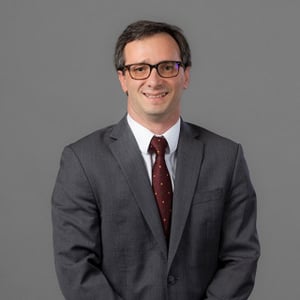
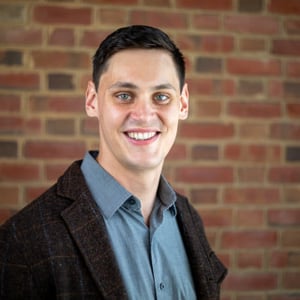
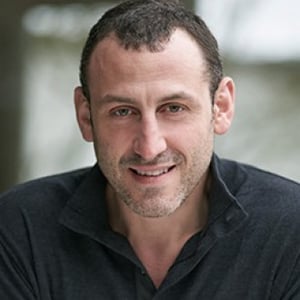
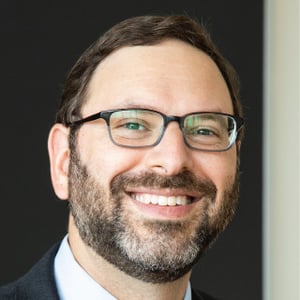
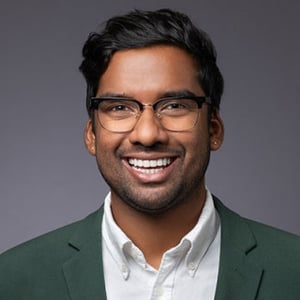
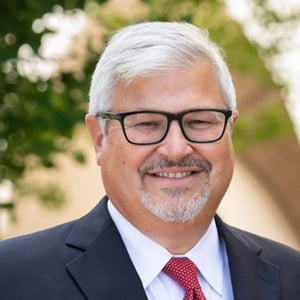
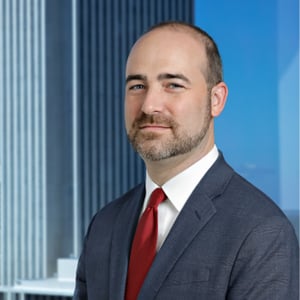
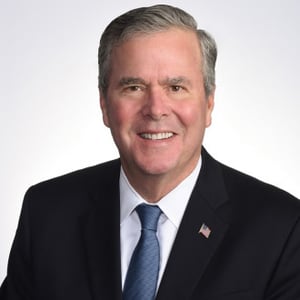
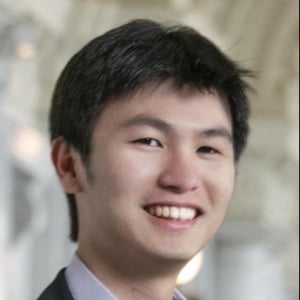
Jonathan Skrmetti was sworn in to an eight-year term as Tennessee’s Attorney General and Reporter on September 1, 2022.
Prior to his current role, General Skrmetti served as Chief Counsel to Governor Bill Lee and as Chief Deputy Attorney General to his predecessor, Tennessee Attorney General Herbert Slatery.
Before working for the State of Tennessee, General Skrmetti was a partner at Butler Snow LLP in Memphis. His legal career began with nearly a decade as a federal prosecutor. He worked at the Civil Rights Division at Main Justice and then at the Memphis U.S. Attorney’s Office and prosecuted sex traffickers, corrupt government officials, and violent white supremacists. In addition, General Skrmetti taught cyberlaw as an adjunct professor at the University of Memphis.
General Skrmetti earned honors degrees from George Washington University, the University of Oxford, and Harvard Law School, where he was editor-in-chief of the Harvard Journal of Law & Public Policy. Following law school, Jonathan clerked for Judge Steven Colloton on the U.S. Court of Appeals for the Eighth Circuit. He lives in Franklin, Tennessee, with his wife and four children.
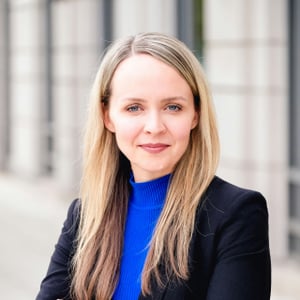
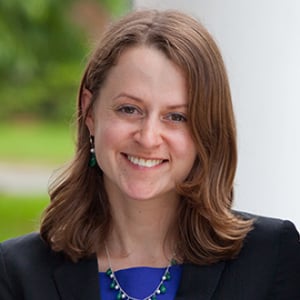
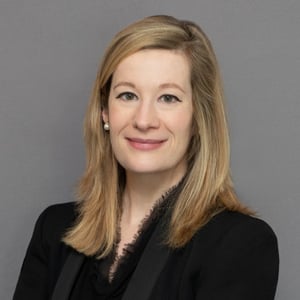
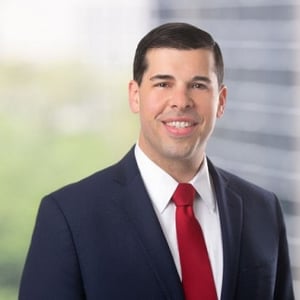
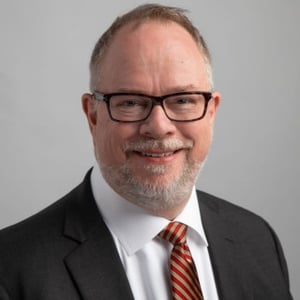
General Counsel, xAI and X
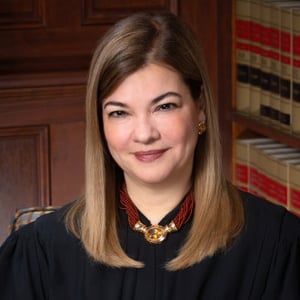
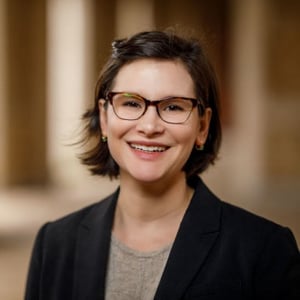
Trial Attorney, Civil Rights Division, United States Department of Justice (incoming)
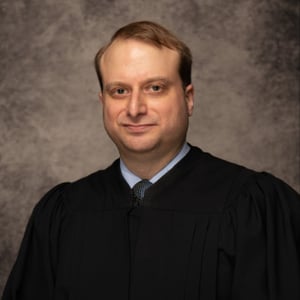
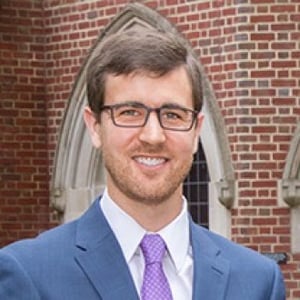
Adam Griffin is a graduate of the University of North Carolina School of Law. During law school, he served as a research assistant to Professor Stephen E. Sachs and UNC Law Dean Martin Brinkley. After law school, he spent two years litigating for liberty at the Institute for Justice as an inaugural Law and Liberty Fellow. He served as a law clerk to Chief Judge Richard E. Myers in the United States District Court for the Eastern District of North Carolina, and is now a separation-of-powers attorney at Pacific Legal Foundation.
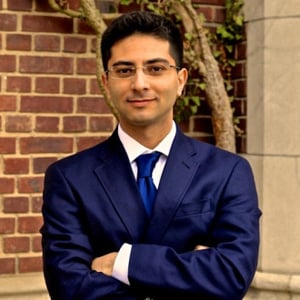
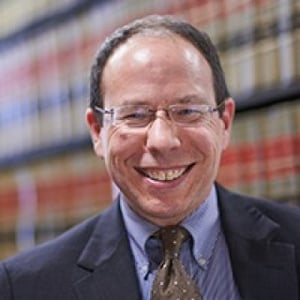
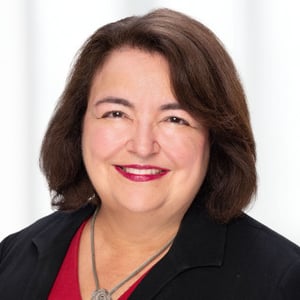
Partner, Harris, Wiltshire & Grannis LLP
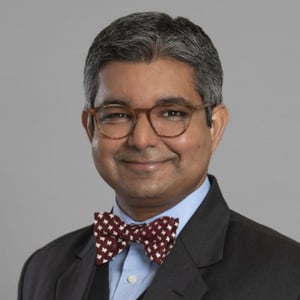
Sean Lev, a former General Counsel of the FCC and acting General Counsel of the Department of Energy, advises and advocates in both courts and agencies for clients with complex regulatory problems in technology, energy, and other fields.
He serves as chair of HWG’s Energy Practice and co-chair of the Issues and Appeals Practice.
Sean has more than 30 years of experience helping clients in the public, private, and non-profit sector solve problems involving critical issues of administrative law. He has argued scores of cases in federal and state appellate and trial courts both supporting and challenging agency decisions and has advised Cabinet Secretaries, three FCC Chairs, sophisticated regulated companies, and numerous non-profits and individuals.
As General Counsel of the Federal Communications Commission, Sean was responsible for all legal advice provided to the FCC Chair and Commissioners and oversaw all FCC litigation. Sean was also heavily involved in the Commission’s review of major transactions and enforcement activity. Prior to being named General Counsel, Sean served as Deputy General Counsel and Senior Advisor to the Chairman.
Before joining the FCC, Sean was designated by President Obama to serve as the Acting General Counsel of the United States Department of Energy (DOE). In that role, he was the chief legal officer for the Department, and provided advice on the full range of issues relevant to its mission, including those involving energy efficiency standards, nuclear energy, oil and gas, environmental remediation, and national security. Sean also served as the Deputy General Counsel for Environment and Nuclear Programs at DOE. In that role, he led the agency’s litigation before the Nuclear Regulatory Commission and served as the lead agency lawyer in resolving major environmental and other disputes.
Sean most recently served as Legal Director of Democracy Forward, a public interest nonprofit dedicated to furthering the rule of law and fighting unlawful agency decision making. In this role, he oversaw a team of more than a dozen litigators and supervised numerous successful legal challenges against federal agencies and state and local governments.
Sean has significant experience advising clients in private practice, having spent more than fifteen years as a partner of a major Washington, DC based law firm. During that time, Sean had leading roles in numerous key cases involving technology law and policy and in advocating on regulatory and litigation issues raised by major industry transactions.
He started his legal career as an Honors Program attorney on the Civil Division, Appellate Staff at the United States Department of Justice and as a clerk to the Honorable Patricia M. Wald of the U.S. Court of Appeals for the District of Columbia Circuit.
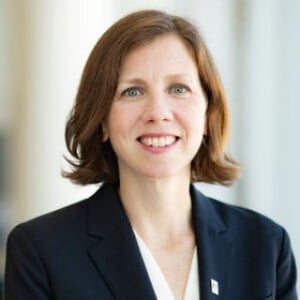
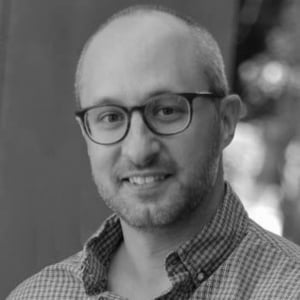
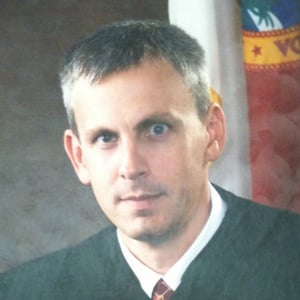
Partner, Boyden Gray PLLC
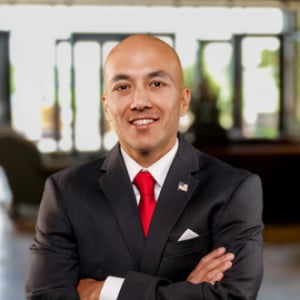
Trent McCotter is a partner with Boyden Gray PLLC. He previously served as Deputy Associate Attorney General of the United States and as an Assistant U.S. Attorney.
Mr. McCotter maintains an extensive appellate practice. He has considerable experience identifying and briefing cases that draw the Supreme Court’s attention, having persuaded the Court to grant certiorari in numerous cases raising issues of sovereignty, constitutional rights, due process, and criminal law. He has authored and submitted over 60 briefs at the Court.
He has also personally argued more than fifteen federal appeals across the Second, Fourth, Fifth, Sixth, Ninth, Eleventh, Federal, and D.C. Circuits—including once arguing three separate appeals in just four days. He has also twice argued before the 17-judge en banc Fifth Circuit. He has been counsel in over 50 other appeals raising matters from FOIA and the APA to constitutional rights and statutory construction.
As Deputy Associate Attorney General, Mr. McCotter oversaw DOJ’s Civil Appellate and Federal Programs branches, which are responsible for defending nearly all major litigation against the federal government. During his three years as a federal trial attorney in the Eastern District of Virginia’s “Rocket Docket,” Mr. McCotter won the Attorney General’s Award for Distinguished Service.
During his DOJ tenures, Mr. McCotter also assisted with the confirmations of two Supreme Court justices and over a dozen lower-court judges.
Mr. McCotter served as an inaugural clerk to the Hon. Steven J. Menashi on the U.S. Court of Appeals for the Second Circuit and also clerked for the Hon. R. Lanier Anderson III on the U.S. Court of Appeals for the Eleventh Circuit.
William K. Townsend Professor of Law, Yale Law School
Nicholas R. Parrillo is Townsend Professor of Law at Yale, with a secondary appointment as Professor of History. His research and teaching focus on administrative law and government bureaucracy and extend to legal history, remedies, and legislation. He has received the ABA’s award for the year’s best scholarship in administrative law and the Law and Society Association’s Hurst Prize for the year’s best book in legal history.
Parrillo’s Yale Law Journal article finding new originalist evidence of broad congressional delegations to agencies was discussed in the Solicitor General’s winning brief in the Supreme Court’s latest nondelegation case and in the en banc 5th Circuit opinion in that case. His Harvard Law Review article on how the judiciary handles the federal government’s disobedience to court orders has been discussed in The Washington Post, The Wall Street Journal, and The New York Times. Parrillo also authored a study that provided the empirical basis for best practices adopted by the Administrative Conference of the United States (ACUS) on the federal government’s ubiquitous but controversial use of guidance documents. Peer scholars at Jotwell, in selecting the “best new scholarship” in law, selected each of these three publications (one of them twice). Parrillo’s most recent article, invited for GW’s annual administrative law issue, reveals and analyzes dramatic variation among industries in their willingness to sue their federal health-and-safety regulators.
Parrillo has testified before Congress, been quoted by the Supreme Court, is a senior fellow of ACUS, and has been an instructor at the New York Historical Society’s graduate institute and an invited speaker before the 2nd Circuit Judicial Conference, the U.S. Department of Justice (in 2019 and again in 2024), the ACLU’s national legal staff, and the Federalist Society’s national convention (two times). He is a recipient of the Law School’s annual teaching award.
Assistant Professor of Law, Emory University School of Law
Alexander "Sasha" Volokh is an assistant professor of law, joining the Emory Law faculty in Fall 2009.
Professor Volokh earned his B.S. from UCLA and his J.D. and Ph.D. in economics from Harvard University. He clerked for Judge Alex Kozinski of the Ninth Circuit and for Supreme Court Justices Sandra Day O'Connor and Samuel Alito. Before coming to Emory, he was a visiting associate professor at Georgetown University Law Center and a visiting assistant professor at University of Houston Law Center.
His interests include law and economics, administrative law and the regulatory process, environmental law and policy, and legal history. His current research topics include the private management of government services, medieval law, judicial decisionmaking and statutory interpretation.
Professor, University of Minnesota Law School
Ilan Wurman is the Julius E. Davis Professor of Law at the University of Minnesota, where he teaches administrative law and constitutional law. He previously taught at Arizona State University. He writes primarily on the Fourteenth Amendment, administrative law, separation of powers, and constitutionalism. His academic writing has appeared in the Yale Law Journal, the Stanford Law Review, the University of Chicago Law Review, the University of Pennsylvania Law Review, the Virginia Law Review, the Duke Law Journal, the Minnesota Law Review, the Notre Dame Law Review, and the Texas Law Review among other journals.
Professor Wurman is the author of a casebook, Administrative Law Theory and Fundamentals: An Integrated Approach (Foundation Press 2d ed. 2024). He is also the author of A Debt Against the Living: An Introduction to Originalism (Cambridge 2017), and The Second Founding: An Introduction to the Fourteenth Amendment (Cambridge 2020). His next book, The Constitution of 1789: A New Introduction, is also forthcoming with Cambridge University Press.
Professor Wurman practices law with the firm Tully Bailey. He has litigated a variety of administrative law and constitutional law cases, including cases involving COVID-19 restrictions, transmission lines, and Appointments Clause challenges. He also devised winning public nuisance theories to force city governments to address the increasingly challenging public camping crises throughout the country.
Patrick Hotung Professor of Constitutional Law, Georgetown University Law Center
Randy Barnett is the Patrick Hotung Professor of Constitutional Law at Georgetown University Law Center. He has argued before the United States Supreme Court, tried murder cases to juries as a prosecutor in Chicago, and appeared as a prosecutor in the feature film Inalienable. He is the author of numerous books, including Restoring the Lost Constitution, The Structure of Liberty, Our Republican Constitution, and The Original Meaning of the Fourteenth Amendment. He has published two memoirs, A Life for Liberty: The Making of an American Originalist, and Felony Review: Tales of True Crime and Corruption in Chicago. He is currently working on a new book, Freedom and Flourishing: Libertarianism for the Real World.
Professor of Law, Northwestern University Pritzker School of Law
Joshua Kleinfeld teaches and writes about political, legal, and moral philosophy, criminal law, and criminal procedure. He also practices law in Northwestern's Juvenile Criminal Defense Clinic. He is a full professor with tenure at the Northwestern Pritzker School of the Law and (by courtesy) in Northwestern’s philosophy department. In 2017-18, he was a visiting professor at Harvard and Stanford Law Schools. He is the recipient of the Bator Award, given annually to one American law professor under the age of 40 who has demonstrated "excellence in legal scholarship, a commitment to teaching, a concern for students, and who has made a significant public impact."
In philosophy, Kleinfeld's research focuses on the idea of "embodied ethical life," as developed in the socio-theoretic tradition of Hegel, Weber, and Durkheim. This tradition aims to understand and critique social life by bringing to light the normative ideas implicit in social practices and institutions. In law, this means that the most interesting philosophical concepts are often those reflected or actualized in legal practice – in the law as judges and lawyers think of it and wield it.
In criminal law and procedure, Kleinfeld has developed a theory known as "reconstructivism," which holds that the chief office of criminal law is not to dole out retributive justice, nor to optimize crime and cost control, but to reconstruct a violated normative order in the wake of a crime. This work, which draws on the thought of Hegel, Durkheim, Jean Hampton, and Antony Duff, develops an alternative to retributive and utilitarian theories of criminal law by focusing on the distinctive social function and sense of justice at work in the criminal system.
Kleinfeld is also involved in practical criminal justice reform. In this vein, he defends children accused of homicide in the Northwestern Juvenile Criminal Defense clinic and assists in litigation efforts meant to reform American criminal law through the courts. He has also developed a view of criminal justice reform known as "democratization," which holds that the root of the American criminal justice crisis is a set of bureaucratic attitudes, structures, and incentives divorced from the American public’s concerns and sense of justice, and that the primary solution is to make criminal justice more community-focused and responsive to lay influences. Working with others, he has developed a number of policy proposals meant to reform American criminal justice in a democratic direction.
Kleinfeld holds a JD from Yale Law School, a PhD in philosophy from the Goethe University of Frankfurt (supervised by Axel Honneth, Klaus Günther, and Rainer Forst), and a BA in philosophy from Yale College. He clerked for Judge J. Harvie Wilkinson on the United States Court of Appeals for the Fourth Circuit; Judge Janice Rogers Brown on the United States Court of Appeals for the D.C. Circuit; and President (chief justice) Aharon Barak of the Supreme Court of Israel. He worked as an Associate at Debevoise & Plimpton LLP in Frankfurt, Germany, in the area of corporate criminal law. Before law school, he worked as a Senior Research Analyst at the White House’s Council on Bioethics.
Vice President of Legal Affairs, Landmark Legal Foundation
Director, Project on Criminal Justice, Cato Institute
Matthew Cavedon is the Director of the Cato Institute’s Project on Criminal Justice. He focuses on reforming plea-driven mass adjudication, ensuring police accountability, and defending constitutional criminal originalism. Cavedon’s scholarship has been published (or is forthcoming in) publications including the Arizona State Law Journal, Cato Supreme Court Review, Seattle University Law Review, and Georgetown Journal of Law and Public Policy. Formerly a Georgia public defender and fellow at the Institute for Justice, Cavedon has taught law school courses on criminal law and procedure, as well as the First Amendment. Cavedon clerked for a U.S. district court and the Supreme Court of Georgia. He came to Cato following a fellowship at the Emory University Center for the Study of Law and Religion.
Leitner Family Professor of International Law and Co-Founder & Co-Director of the Center on Asian Americans & the Law, Fordham University School of Law
Thomas H. Lee is the Leitner Family Professor of International Law at Fordham, where he teaches civil procedure, constitutional law, federal courts, international law, and the U.S. law of civil-military relations. His meticulously researched and historically-grounded scholarship has argued that the Eleventh Amendment reflected the classical international law principle that only a sovereign state—not its citizens or subjects— has rights against other sovereign states; that the Alien Tort Statute was a national-security peacekeeping statute, not an international human-rights statute, enacted in 1789 when the United States was a militarily weak state; and that the Natural Born Citizen Clause regarding presidential eligibility reflected natural-law principles of membership by descent as well as domestic birthplace. His current research examines the nature of Article III judicial power and the role of the federal courts in American society.
He is Co-Director of the Center on Asian Americans and the Law, Special Counsel at Hughes Hubbard & Reed, and a Member of the American Law Institute. He was Special Counsel to the General Counsel of the U.S. Department of Defense, a Member of the ICSID Panel of Conciliators, Adviser to the Constitutional Court of Korea, and Visiting Professor at Columbia, Harvard, and the University of Virginia law schools, as well as Faculty Director of International and Graduate Studies at Fordham from 2006 to 2019. Before his academic career, Lee clerked for Judge Michael Boudin of the First Circuit and Justice David Souter of the Supreme Court and served as an active-duty U.S. naval cryptology officer, afloat on submarines and surface combatants and ashore in Korea, Japan, and with the National Security Agency. He holds A.B. (summa cum laude), A.M. (Regional Studies—East Asia), and J.D. degrees from Harvard, where he was Articles Chair of the Harvard Law Review and a Ph.D. candidate (ABD) in Government.
Director, Project on Criminal Justice, Cato Institute
Matthew Cavedon is the Director of the Cato Institute’s Project on Criminal Justice. He focuses on reforming plea-driven mass adjudication, ensuring police accountability, and defending constitutional criminal originalism. Cavedon’s scholarship has been published (or is forthcoming in) publications including the Arizona State Law Journal, Cato Supreme Court Review, Seattle University Law Review, and Georgetown Journal of Law and Public Policy. Formerly a Georgia public defender and fellow at the Institute for Justice, Cavedon has taught law school courses on criminal law and procedure, as well as the First Amendment. Cavedon clerked for a U.S. district court and the Supreme Court of Georgia. He came to Cato following a fellowship at the Emory University Center for the Study of Law and Religion.
Partner, Hilgers Graben PLLC
Alice LaCour is a litigation partner at Hilgers Graben PLLC and the co-host of two legal true crime podcasts: The Prosecutors Podcast and Legal Briefs, which have been downloaded over ten million times and featured on Apple Podcast's top 100 podcasts. Recently, she served as First Assistant and Criminal Chief at the U.S. Attorney's Office in the Middle District of Alabama, where she prosecuted cases spanning from guns and drugs to complex white collar crimes. Alice also served as Counselor to the Attorney General and Senior Advisor and Counselor to Assistant Attorney General of the Civil Division. During these stints at the Justice Department, Alice also served on the confirmation teams to elevate Neil Gorsuch and Brett Kavanaugh to the U.S. Supreme Court. Alice clerked for the Hon. Keith P. Ellison of the Southern District of Texas and the Hon. Jennifer Walker Elrod of the U.S. Court of Appeals for the Fifth Circuit. Alice received her J.D. from Yale Law School, and she graduated summa cum laude from Washington and Lee University with a degree in Economics and a concentration in Poverty and Human Capabilities.
Criminal Trial and Appellate Lawyer, Markus/ Moss
David Oscar Markus is a magna cum laude graduate of Harvard Law School. David is known for his creative and unrelenting approach to cases, which leads to wins in trials and appeals. David focuses on high-stakes criminal litigation for both white collar and traditional criminal matters.
Best Lawyers named David “Lawyer of the Year” for White Collar Criminal Law in 2020 and for General Criminal Defense in 2017. And the Dade County Bar Association awarded him the “Legal Luminary” award for criminal defense, an honor voted on by members of the legal community. In 2015, the National Law Journal selected him as one of the Trailblazers for White Collar Criminal Defense in the entire country. Back when he was 29 years old (in 2002), the National Law Journal selected him as one of the top 40 litigators in the country under 40 years old, and it has recognized one of his federal trial victories as one of the top ten defense verdicts in the country that year.
In one trial victory, David not only beat all 141 counts in federal court for a doctor, but then won attorneys’ fees and costs of over $600,000 for his client in a first-of-its-kind victory. Based on that case, he was awarded the highest honor — the Rodney Thaxton “against all odds” award — by the Florida Association of Criminal Defense Lawyers. Although the 11th Circuit reversed the fee award in a number of controversial opinions, the court referred to Markus as an “elite” and “superb” attorney. In another case, David challenged the way the federal court system in Miami selected jurors (alphabetically by last name) and won, which changed the jury selection process in the District. After obtaining a fair jury, Markus’ client was found not guilty. He never stops fighting for his clients.
Based on this type of creative and unique lawyering, in 2010, David was one of eight finalists in the country for best white-collar criminal lawyer in the country by Chambers & Partners, which quoted market sources saying that David is “the whole package,” and “a creative, courageous and tenacious courtroom advocate.” And he was named to that very prestigious short list of 8 best white-collar criminal defense lawyers again in 2011 (he was the only lawyer listed who was not from a large firm). The 2012 Chambers said this: “David Markus received strong praise from peers and clients alike, who describe him as ‘a legal genius and brilliant strategist with a great demeanor.'” A recent Chambers & Partners described David as a “wickedly smart and a terrific trial lawyer. … Clients say that he is ‘thrilling’ to watch in court and that ‘his passion appreciation and enjoyment for his work are contagious.” And in 2014, that publication identified David as “one of the best trial lawyers around: very smart, highly respected and thoroughly prepared.” In 2016, Chambers said: “David Markus is one of the most talented criminal defense lawyers in Florida. He has a wealth of litigation experience and is regularly sought after for his counsel in high-stakes tax and criminal antitrust cases. Sources also describe him as an ‘extremely creative thinker and a great oral advocate’ who gets ‘tremendous results.'” Chambers has also explained: “David Markus is amazing, not only because of the strength and genius of his arguments and motions, but also because of his brilliant and astonishing performances during the hearings. Additionally, he radiates so much confidence, and that in itself soothes the usual anguish and anxiety that you endure during these types of situations. Last but not least, he is such a great human being.” In 2020, that publication said that David “is an exceptional trial lawyer,” “an incredible oral advocate” and that “he’s pretty fearless in terms of dealing with the government.”
Since 2010, David has been listed as one of the top 100 lawyers in Miami and in all of Florida by SuperLawyers. He is one of the few criminal defense lawyers to received such an honor. He is frequently named as one of the top lawyers in the Best Lawyers in America, South Florida Legal Guide, Florida Trend Magazine, Chambers & Partners, and the South Florida Business Journal. He was one of 20 lawyers named a key partner by the South Florida Business Journal in 2011 and again in 2012. The Daily Business Review named him a finalist for Most Effective Lawyer in Criminal Justice (one of three lawyers in Miami) in 2006, 2009, 2011, 2012, and 2015. He won the award in 2018. The district judges in the Southern District of Florida presented him with the Eugene Spellman Criminal Justice Act Award in 2013.
While at Harvard, David argued in front of Supreme Court Justice Anthony Kennedy who named him best oralist. David was mentored by Alan Dershowitz while in law school. After graduating from Harvard, David served as law clerk to the Honorable Edward B. Davis, then-Chief United States District Judge, Southern District of Florida. Following his clerkship, David worked as an associate at the leading criminal defense firm in the country, Williams & Connolly in Washington, D.C., and then practiced as an Assistant Federal Public Defender in Miami.
David is a past-president of the Florida Association of Criminal Defense Lawyers – Miami Chapter and past-president of the Federal Bar Association, South Florida Chapter, 2007-08. He served for ten years as the Southern District of Florida’s national representative for the Criminal Justice Act Panel, and is the vice-chair of the National Association of Criminal Defense Lawyer’s amicus committee. David also has co-authored the Fourth Amendment Forum, published in NACDL’s The Champion. He is frequently asked to serve on committees for the Southern District of Florida.
David frequently lectures on different aspects of the criminal trial and appeal. He currently teaches a White Collar Law seminar the the University of Miami School of Law and previously taught legal writing there. David also has taught Advanced Criminal Procedure and White Collar Law at Florida International University College of Law. He often speaks to other criminal defense lawyers on ethics and zealously representing criminal defendants charged with serious crimes. His lengthy list of lectures can be found on his resume.
David is often quoted in publications around the country, including The Miami Herald, The Sun-Sentinel, The Palm Beach Post, the Daily Business Review, USA Today, The New York Times, The Wall Street Journal, The Boston Globe, Law.com, and CNN.com. He has written opinion pieces for numerous publications, and is the author of the popular Southern District of Florida blog, which has been described by the New Times as “the definitive source on South Florida’s federal court system.” He recently wrote a chapter in a book for lawyers; his chapter was titled “Battling Goliath, Trying to Win in the Court of Appeals.” David is also a frequent opinion contributor, arguing for criminal justice reform and for individual rights. He has written pieces in the Washington Post, USA Today, Miami Herald, law.com Newsmax, and others.
General Counsel, Center for Individual Rights
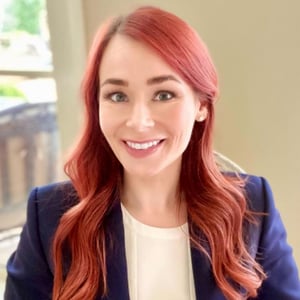
Darpana Sheth joined CIR as General Counsel in May 2025. She is a nationally recognized constitutional litigator with over two decades of experience serving in in leadership roles at other nonprofit organizations.
Before joining CIR, Darpana served for four years as Vice President of Litigation for the Foundation for Individual Rights and Expression. Prior to that, Darpana was a Senior Attorney with the Institute for Justice, where she also served as Director of the Institute’s National Initiative to End Forfeiture Abuse.
Before finding her calling as a public-interest attorney, Darpana served as an Assistant Attorney General for the State of New York and worked in private practice as a litigation associate at the Manhattan law firm of Chadbourne & Parke, LLP. She also served as law clerk to the Honorable Jerome A. Holmes of the U.S. Court of Appeals for the Tenth Circuit.
A native of Philadelphia, Darpana graduated from the University of Pennsylvania with a Bachelor of Arts in Political Science and History. She earned her law degree from Georgetown University Law Center.
Laurence A. Tisch Professor of Law and Director, Classical Liberal Institute, New York University School of Law; Director, Classical Liberal Institute, Civitas Institute University of Texas at Austin
Richard A. Epstein is the Laurence A. Tisch Professor of Law, at New York University, a senior research fellow at the Civitas Institute at the University of Texas Austin, and a senior Lecturer, the University of Chicago. He received an LL.D., h.c . from the University of Ghent, 2003 , and an LLD h.c . from the University of Siegen in 2018 and the Bradley Prize in 2011. He has been a member of the American Academy of Arts and Sciences since 1985. He has edited both the Journal of Legal Studies (1981-1991) and the Journal of Law and Economics (1991-2001). He is also a founder and director of the Classical Liberal Institute at NYU Law School. His most recent book is The Classical Liberal Constitution: The Uncertain Quest for Limited Government (2014). His other books include Takings: Private Property and the Power of Eminent Domain ( 1985); Bargaining with the State (1993); Simple Rules for a Complex World (1995); Principles for a Free Society: Reconciling Individual Liberty and the Common Good (1998); Skepticism and Freedom: A Modern Theory of Classical Liberalism (2003); Design for Liberty: Private Property, Public Administration and the Rule of Law (2011), and most recently, The Myth of Birthright citizenship—and Beyond (2026). He has taught courses in , administrative law, antitrust, constitutional, contracts, environmental law, land use planning; real property, torts and water law. He has written and spoken extensively on a wide range of topics, and is writes a regular column for Defining Ideas.
George Mason University Foundation Professor of Law, Antonin Scalia Law School, George Mason University
TODD J. ZYWICKI is George Mason University Foundation Professor of Law at Antonin Scalia Law School at George Mason University and Research Fellow of the George Mason Law and Economics Center. During the Fall 2023 semester he served as the Visiting Scholar in Conservative Thought and Policy for the Bruce Benson Center for the Study of Western Civilization at the University of Colorado-Boulder. From 2020-2021 he was Chair of the Consumer Financial Protection Bureau Taskforce on Federal Consumer Financial Law. In 2021 he was inducted to the American College of Consumer Financial Services Lawyers. He is also a Senior Fellow of the F.A. Hayek Program for the Advanced Study of Politics, Philosophy, and Economics at George Mason University and a former Senior Fellow of the Cato Institute. From 2015-2017 he was Executive Director of the George Mason Law and Economics Center. He served as Co-Editor of the Supreme Court Economic Review from 2006-2017. From 2003-2004, Professor Zywicki served as the Director of the Office of Policy Planning at the Federal Trade Commission. He has also taught at Vanderbilt University Law School, Georgetown University Law Center, Boston College Law School, Mississippi College School of Law, and China University of Political Science and Law.
Professor Zywicki clerked for Judge Jerry E. Smith of the U.S. Court of Appeals for the Fifth Circuit and worked as an associate at Alston & Bird in Atlanta, Georgia, where he practiced bankruptcy and commercial law. He received his J.D. from the University of Virginia, where he was executive editor of the Virginia Tax Review and John M. Olin Scholar in Law and Economics. Professor Zywicki also received an M.A. in Economics from Clemson University and an A.B. cum Laude with high honors in his major from Dartmouth College.
Professor Zywicki is also a Lone Mountain Fellow of the Property and Environment Research Center, a Fellow of the International Centre for Economic Research in Turin, Italy, and a former Senior Fellow of the Goldwater Institute. During the Fall 2008 Semester Professor Zywicki was the Searle Fellow of the George Mason University School of Law and was a 2008-09 W. Glenn Campbell and Rita Ricardo-Campbell National Fellow and the Arch W. Shaw National Fellow at the Hoover Institution on War, Revolution and Peace. He has lectured and consulted with government officials around the world, including Iceland, Italy, Japan, and Guatemala. In 2006 Professor Zywicki served as a Member of the United States Department of Justice Study Group on “Identifying Fraud, Abuse and Errors in the United States Bankruptcy System.”
Professor Zywicki is the author of more than 130 articles in leading law reviews and peer-reviewed economics journals. He is one of the Top 10 most-cited law professors in the field of Commercial Law and one of the Top 25 law professors on Twitter as measured by engagement levels. He is one of the Top 50 Most Downloaded Law Authors at the Social Science Research Network. He has testified multiple times before Congress on issues of consumer bankruptcy law and consumer credit and is a frequent commentator on legal issues in the print and broadcast media, including the Wall Street Journal, New York Times, The Washington Post, The Washington Times, Nightline, The Newshour with Jim Lehrer, Neil Cavuto Show, Fox & Friends, Smerconish, Fox News @ Night with Shannon Bream, Fox Business, CNN, CNBC, Bloomberg News, BBC, The Diane Rehm Show, Lou Dobbs Show, Jerry Doyle Show, and The Laura Ingraham Show.
Professor Zywicki is former Chairman and a current member of the Board of Directors of the Competitive Enterprise Institute, and is a member of the Board of Directors of the Institute for Humane Studies, Bill of Rights Institute, the Executive Committee for the Federalist Society's Financial Institutions and E-Commerce Practice Group, the Board of Trustees of the Foundation for Research on Economics and the Environment. He formerly served on the Governing Board and the Advisory Council for the Financial Services Research Program at George Washington University School of Business. He is currently the Chair of the Academic Advisory Council for the following organizations: The Bill of Rights Institute, the film “We the People in IMAX,” and the McCormick-Tribune Foundation “Freedom Museum” in Chicago, Illinois. He is a member of the Board of Visitors of Ralston College and was a member of the Board of Trustees of Yorktown University. From 2005-2009 he served as an elected Alumni Trustee of the Dartmouth College Board of Trustees.
Laurence A. Tisch Professor of Law and Director, Classical Liberal Institute, New York University School of Law; Director, Classical Liberal Institute, Civitas Institute University of Texas at Austin
Richard A. Epstein is the Laurence A. Tisch Professor of Law, at New York University, a senior research fellow at the Civitas Institute at the University of Texas Austin, and a senior Lecturer, the University of Chicago. He received an LL.D., h.c . from the University of Ghent, 2003 , and an LLD h.c . from the University of Siegen in 2018 and the Bradley Prize in 2011. He has been a member of the American Academy of Arts and Sciences since 1985. He has edited both the Journal of Legal Studies (1981-1991) and the Journal of Law and Economics (1991-2001). He is also a founder and director of the Classical Liberal Institute at NYU Law School. His most recent book is The Classical Liberal Constitution: The Uncertain Quest for Limited Government (2014). His other books include Takings: Private Property and the Power of Eminent Domain ( 1985); Bargaining with the State (1993); Simple Rules for a Complex World (1995); Principles for a Free Society: Reconciling Individual Liberty and the Common Good (1998); Skepticism and Freedom: A Modern Theory of Classical Liberalism (2003); Design for Liberty: Private Property, Public Administration and the Rule of Law (2011), and most recently, The Myth of Birthright citizenship—and Beyond (2026). He has taught courses in , administrative law, antitrust, constitutional, contracts, environmental law, land use planning; real property, torts and water law. He has written and spoken extensively on a wide range of topics, and is writes a regular column for Defining Ideas.
George Mason University Foundation Professor of Law, Antonin Scalia Law School, George Mason University
TODD J. ZYWICKI is George Mason University Foundation Professor of Law at Antonin Scalia Law School at George Mason University and Research Fellow of the George Mason Law and Economics Center. During the Fall 2023 semester he served as the Visiting Scholar in Conservative Thought and Policy for the Bruce Benson Center for the Study of Western Civilization at the University of Colorado-Boulder. From 2020-2021 he was Chair of the Consumer Financial Protection Bureau Taskforce on Federal Consumer Financial Law. In 2021 he was inducted to the American College of Consumer Financial Services Lawyers. He is also a Senior Fellow of the F.A. Hayek Program for the Advanced Study of Politics, Philosophy, and Economics at George Mason University and a former Senior Fellow of the Cato Institute. From 2015-2017 he was Executive Director of the George Mason Law and Economics Center. He served as Co-Editor of the Supreme Court Economic Review from 2006-2017. From 2003-2004, Professor Zywicki served as the Director of the Office of Policy Planning at the Federal Trade Commission. He has also taught at Vanderbilt University Law School, Georgetown University Law Center, Boston College Law School, Mississippi College School of Law, and China University of Political Science and Law.
Professor Zywicki clerked for Judge Jerry E. Smith of the U.S. Court of Appeals for the Fifth Circuit and worked as an associate at Alston & Bird in Atlanta, Georgia, where he practiced bankruptcy and commercial law. He received his J.D. from the University of Virginia, where he was executive editor of the Virginia Tax Review and John M. Olin Scholar in Law and Economics. Professor Zywicki also received an M.A. in Economics from Clemson University and an A.B. cum Laude with high honors in his major from Dartmouth College.
Professor Zywicki is also a Lone Mountain Fellow of the Property and Environment Research Center, a Fellow of the International Centre for Economic Research in Turin, Italy, and a former Senior Fellow of the Goldwater Institute. During the Fall 2008 Semester Professor Zywicki was the Searle Fellow of the George Mason University School of Law and was a 2008-09 W. Glenn Campbell and Rita Ricardo-Campbell National Fellow and the Arch W. Shaw National Fellow at the Hoover Institution on War, Revolution and Peace. He has lectured and consulted with government officials around the world, including Iceland, Italy, Japan, and Guatemala. In 2006 Professor Zywicki served as a Member of the United States Department of Justice Study Group on “Identifying Fraud, Abuse and Errors in the United States Bankruptcy System.”
Professor Zywicki is the author of more than 130 articles in leading law reviews and peer-reviewed economics journals. He is one of the Top 10 most-cited law professors in the field of Commercial Law and one of the Top 25 law professors on Twitter as measured by engagement levels. He is one of the Top 50 Most Downloaded Law Authors at the Social Science Research Network. He has testified multiple times before Congress on issues of consumer bankruptcy law and consumer credit and is a frequent commentator on legal issues in the print and broadcast media, including the Wall Street Journal, New York Times, The Washington Post, The Washington Times, Nightline, The Newshour with Jim Lehrer, Neil Cavuto Show, Fox & Friends, Smerconish, Fox News @ Night with Shannon Bream, Fox Business, CNN, CNBC, Bloomberg News, BBC, The Diane Rehm Show, Lou Dobbs Show, Jerry Doyle Show, and The Laura Ingraham Show.
Professor Zywicki is former Chairman and a current member of the Board of Directors of the Competitive Enterprise Institute, and is a member of the Board of Directors of the Institute for Humane Studies, Bill of Rights Institute, the Executive Committee for the Federalist Society's Financial Institutions and E-Commerce Practice Group, the Board of Trustees of the Foundation for Research on Economics and the Environment. He formerly served on the Governing Board and the Advisory Council for the Financial Services Research Program at George Washington University School of Business. He is currently the Chair of the Academic Advisory Council for the following organizations: The Bill of Rights Institute, the film “We the People in IMAX,” and the McCormick-Tribune Foundation “Freedom Museum” in Chicago, Illinois. He is a member of the Board of Visitors of Ralston College and was a member of the Board of Trustees of Yorktown University. From 2005-2009 he served as an elected Alumni Trustee of the Dartmouth College Board of Trustees.
Open Minds with Hon. Jonathan Skrmetti & James Burnham
Jonathan Skrmetti, James M. Burnham
Jonathan Skrmetti, Attorney General of Tennessee, joins James Burnham to discuss the ways his educational...
The Nondelegation Doctrine’s Next Good Year?
Adam F. Griffin, Sean Lev, Trent McCotter, Nicholas R. Parrillo, Alexander Volokh, Ilan Wurman
SCOTUS Grants Certiorari in FCC v. Consumers’ Research
The Supreme Court is set to hear argument this term in a case raising both...
Open Minds: Prof. Randy Barnett & Prof. Joshua Kleinfeld Part II
Randy E. Barnett, Joshua Kleinfeld
In Part Two of Open Minds with Prof. Randy Barnett and Prof. Joshua Kleinfeld, Prof....
Courthouse Steps Decision: E.M.D. Sales, Inc. v. Carrera
Michael J. O'Neill
E.M.D. Sales, Inc. v. Carrera concerns what standard of evidence the court should apply in...
Courthouse Steps Oral Argument: Barnes v. Felix
Matthew P. Cavedon
In Barnes v. Felix the Supreme Court is set to address a circuit split concerning...
Litigation Update: The Future of the Corporate Transparency Act
Thomas Lee
The Corporate Transparency Act (CTA) is a sweeping federal statute requiring individuals with significant interests...
The Ethics and Impact of True Crime Podcasting
Matthew P. Cavedon, Alice Shih LaCour, David Oscar Markus
How should podcasters talk about crime in a way that informs the public while respecting...
Courthouse Steps Decision: TikTok, Inc. v. Garland
Darpana Sheth Nunziata
In TikTok, Inc. v. Garland, the Court was asked to consider whether the Protecting Americans...
Open Minds with Prof. Richard Epstein and Prof. Todd Zywicki Part II
Richard A. Epstein, Todd J. Zywicki
Prof. Todd Zywicki and Prof. Richard Epstein turn to his legal intellectual development in property...
Open Minds with Prof. Richard Epstein and Prof. Todd Zywicki Part I
Richard A. Epstein, Todd J. Zywicki
Prof. Richard Epstein joins Prof. Todd Zywicki to discuss his academic journey, where he learned...