Kansas v. Glover - Post-Decision SCOTUScast
featuring Brian Fish





On April 6, 2020, the Supreme Court held by a vote of 8-1 that when a law enforcement officer lacks information negating an inference that a vehicle’s driver is the registered owner, an investigative traffic stop made after running the vehicle’s license plate and learning that the registered owner’s driver’s license has been revoked is reasonable under the Fourth Amendment. In an opinion written by Justice Thomas, the Court invoked its 1981 decision in United States v. Cortez (1981), which indicates that an officer may initiate a brief investigative traffic stop if he or she has a “particularized and objective basis” to suspect legal wrongdoing. Here the officer’s inference that the vehicle’s registered owner--whose license was revoked--was also the current driver was a commonsense one; even if not invariably true the inference was reasonable, and the officer possessed no information sufficient to rebut it.
Justice Thomas’ majority opinion was joined by all other justices except Justice Sotomayor, who dissented. In addition, Justice Kagan filed a concurring opinion that was joined by Justice Breyer.
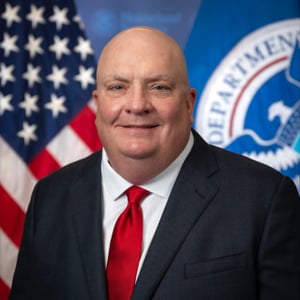
To discuss the case, we have Brian Fish, Special Assistant, United States Attorney, Baltimore, Maryland.
As always, the Federalist Society takes no particular legal or public policy positions. All opinions expressed are those of the speakers.