

Senior Counsel, Litigation, Defense of Freedom Institute
Don Daugherty is Senior Counsel, Litigation, at the Defense of Freedom Institute for Policy Studies. He previously served as a Senior Counsel at the Institute for Free Speech and the Wisconsin Institute for Law & Liberty. Before that, he was a partner at three of Wisconsin’s largest firms, with nearly 30 years of trial and appellate litigation experience. He has been consistently recognized as among the “Best Lawyers in America,” as well as Wisconsin’s “Super Lawyers.” He received his B.A. from the University of Virginia and his J.D. from Northwestern University Law School. After law school, he served as a clerk to the Honorable Roger J. Miner of the United States Court of Appeals for the Second Circuit.
Don is on the Board of Advisors for the Milwaukee Lawyers’ Chapter of the Federalist Society, and on the Executive Committee of the Federalist Society’s Litigation Practice Group.

David C. Tryon is the director of litigation at The Buckeye Institute. In this role, he supervises all litigation and outside litigation counsel and actively participates in Buckeye’s cases in both state and federal court.
Immediately prior to joining Buckeye, Tryon served as deputy solicitor general in the West Virginia Attorney General’s office, where he handled both trials and appellate matters, including preparing amicus curiae briefs. Many of the matters either challenged federal laws and regulations that infringed on state’s rights or defended the validity of West Virginia laws against constitutional challenges.
Tryon served as the deputy assistant secretary for policy and development in the Office for Civil Rights in the U.S. Department of Education from 2019-2020. While there, he assisted with developing and implementing new policies and guidance and was responsible for the Civil Rights Data Collection, which covers all primary and secondary schools receiving federal funds.
Nominated as the chief counsel for advocacy at the U.S. Small Business Administration, Tryon was favorably voted out of the Senate Committee on Small Business and Entrepreneurship. In connection with his nomination, he had numerous meetings with small business organizations to learn the concerns and needs of small businesses.
Tryon has had more than 30 years of commercial litigation experience in state and federal courts, including trials and appeals. Several of these cases involved the U.S. Constitution or the Ohio Constitution. In Arnold v. City of Cleveland, he was successful in having the Ohio Supreme Court declare the right to bear arms a fundamental right under the Ohio Constitution.
Tryon has dedicated much of his time to civic affairs. He served on the local school board for four years, two of those as school board president. During his nine years on the Executive Board for the Greater Cleveland Council of the Boy Scouts of America, he organized two major parades, created a personnel committee for leadership training of professional staff, and was involved in restructuring the Council. From 2015 to 2020, he served on the Ohio Advisory Committee to the United States Commission on Civil Rights. He was part of a select group to participate in Leadership Cleveland, Class of 2016. He also led the Cleveland Lawyers Chapter of the Federalist Society for nearly 20 years.
Tryon received a Bachelor of Science Degree (magna cum laude) from Brigham Young University and his Juris Doctorate (cum laude) from the University of Michigan.
Litigation Fellow, Institute for Justice
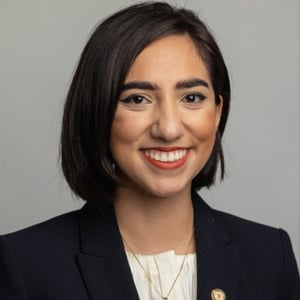
Tahmineh Dehbozorgi is a Litigation Fellow at the Institute for Justice. Prior to joining IJ, Tahmineh served as a summer associate at AT&T Global Public Policy, where she focused on cybersecurity and consumer privacy regulatory matters. She also gained valuable legal experience as a law clerk at the Federal Communications Commission, where she worked on communications law and regulatory processes. She also served as a law clerk for the New Civil Liberties Alliance, where she concentrated on administrative law and impact litigation.
Tahmineh earned her J.D. from The George Washington University Law School, with a concentration in National Security and Cybersecurity Law. While at GW Law, she served as a Research Assistant to Professor Robert J. Cottrol and contributed to the book “To Trust the People with Arms: The Supreme Court and the Second Amendment.” Tahmineh also earned the silver medal at the 30th Annual National Telecommunications and Technology Moot Court Competition in 2023. In 2024, she received the President’s Volunteer Service Award from President Joseph R. Biden for her exemplary pro bono work. Tahmineh received her Bachelor of Arts in political science with a concentration in international relations magna cum laude from the University of California, Los Angeles. In 2020, she was awarded UCLA Chancellor’s Service Award.
Tahmineh spent her childhood in Iran. On 4th of July 2015, she left everything behind and came to the United States to seek freedom. Her upbringing ignites an unyielding passion to defend civil liberties and separation of powers.
In addition to her legal career, Tahmineh is a multilingual author with a background in public relations and media. Her writings have appeared in prominent outlets such as Fox News, National Review, RealClear Defense, and the Orange County Register, etc. Outside of her professional endeavors, Tahmineh is a classical musician and has been a member of The George Washington University Chamber Ensemble and UCLA Chorale.

Director, Center for Judicial Engagement, Institute for Justice
Anthony Sanders is the Director of the Center for Judicial Engagement (CJE) at the Institute for Justice and a senior attorney. He joined IJ in 2010. As CJE’s director, he educates the public about the proper role of judges in enforcing constitutional limits on the size and scope of government. As a senior attorney he litigates cutting-edge constitutional cases protecting economic liberty, private property, freedom of speech and other individual liberties in both federal and state courts across the country.
One area of Anthony’s expertise is on using state constitutions to protect individual rights. He is the author of the book, published by University of Michigan Press, Baby Ninth Amendments: How Americans Embraced Unenumerated Rights and Why It Matters. He has also written several law review articles on state constitutional law, unenumerated rights, judicial review, economic liberty, property rights, international law, and other subjects. His work has appeared in publications such as the Iowa Law Review, Minnesota Law Review, American University Law Review, and Rutgers Law Review, and he has published opinion pieces in leading media outlets across the country. Further, he frequently speaks to various audiences on these matters and others, including judicial engagement, free speech, civil forfeiture, and the continuing importance of Magna Carta. Additionally, he hosts the weekly Short Circuit podcast, which often records live in front of law student audiences.
Anthony has litigated several cases in various state courts on state constitutional protections, as well as in federal courts on matters such as economic liberty, free speech, administrative law, and fines and fees abuse. Prior to joining IJ, Anthony served as a law clerk to Justice W. William Leaphart on the Montana Supreme Court. Anthony also worked for several years in private practice in Chicago where he was an active member of the Chicago Bar Association and chaired its Civil Rights Committee.
Anthony received his law degree cum laude from the University of Minnesota Law School in 2004, where he served as an articles submission editor for the Minnesota Law Review. He received his undergraduate degree from Hamline University in St. Paul, Minnesota, and his master’s degree from the University of Wisconsin-Madison. A dual U.S. and U.K. citizen, Anthony grew up on the islands of Vashon in Washington State, and Alderney in the British Channel Islands.

Solicitor General, Arkansas
Autumn Hamit Patterson is currently the Solicitor General of Arkansas.
Autumn’s previous experience includes serving as a Special Assistant Solicitor General for the Office of the Louisiana Attorney General, a Senior Attorney at the Texas Public Policy Foundation, an Issues and Appeals Associate at Jones Day, and a Solicitor General Fellow for the Office of the Texas Attorney General. Autumn also clerked for Justice Eva Guzman on the Supreme Court of Texas and Judge Andrew Oldham on the United States Court of Appeals for the Fifth Circuit. In 2021 and 2022, Autumn was named one of “Best Lawyers in America: Ones to Watch” for appellate practice.
Autumn earned her J.D. from Duke University School of Law, where she graduated magna cum laude. While in law school, she served as co-president of the Federalist Society. Autumn graduated summa cum laude from Furman University, where she received a B.A. in History and Political Science.
Assistant Solicitor General, Office of the Texas Attorney General
Shareholder & Co-Chair of the Workplace Policy Institute, Littler Mendelson P.C.
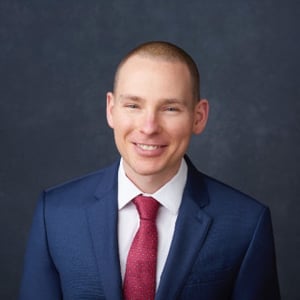
Alexander T. MacDonald advises employers on all aspects of the employment and labor landscape, focusing on emerging legislation and regulation. He has extensive experience advising businesses on worker classification, arbitration, the administrative and regulatory process, and the future of work. He frequently writes, publishes, and speaks on these subjects. His work has been cited by scholars and appellate courts. He is a recognized voice for the management perspective.
Alexander is a co-chair of the Workplace Policy Institute (WPI) team. With WPI, he advises employers on legislative, administrative, and regulatory developments at the state and federal level. He advocates for employers in the regulatory and administrative process. He also helps employers protect their businesses by understanding and anticipating cutting-edge legal developments.
Alexander also has extensive experience in traditional labor law. He represents management in all aspects of labor-management relations, including unfair labor practice charges, grievance arbitrations, representation elections, contract negotiations, and related litigation, including litigation in the U.S. courts of appeals.
Before joining Littler, Alexander served as the director, future of work, for a major technology company. He also worked in a national labor and employment law firm and a major public-sector general counsel’s office. He was a law clerk to the senior judges in the District of Columbia Court of Appeals.
He is also a veteran of the U.S. Air Force. He served in Operations Enduring Freedom and Iraqi Freedom. In law school, he graduated first in his class
Attorney, Institute for Justice
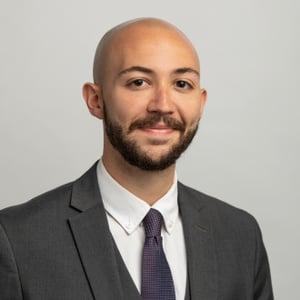
John Wrench is a Constitutional Law Fellow at the Institute for Justice.
John grew up outside of Ithaca, New York, and received his law degree from the Case Western Reserve University School of Law in 2019. During law school, he served as editor in chief of the Case Western Reserve Journal of International Law and was a member of the Federalist Society. John interned in his law school’s First Amendment Litigation Clinic and was a judicial extern to the Honorable Paul E. Davison in the Southern District of New York. John graduated from Pace University in 2015 with a Bachelor of Arts in Philosophy and Religious Studies.
Deputy Counsel, Wisconsin Institute for Law & Liberty (WILL)
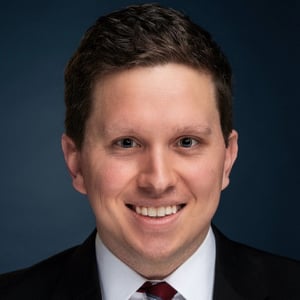
Anthony LoCoco is deputy counsel at the Wisconsin Institute for Law & Liberty, where he litigates in defense of individual liberties and the rule of law. Before joining WILL, Anthony served as law clerk to the Honorable Annette Kingsland Ziegler of the Wisconsin Supreme Court for two terms. He is an officer in the Milwaukee Chapter of The Federalist Society.
Anthony is a graduate of Harvard Law School and holds a B.A., summa cum laude, in economics from the University of Dallas. He resides outside Milwaukee with his wife and three children.

Director - Office of Litigation, NRA-ILA
Joseph Greenlee is the Director of the Office of Litigation Counsel at the National Rifle Association Institute for Legislative Action. He is also a Research Associate at the Independence Institute and a Policy Advisor for Legal Affairs at the Heartland Institute.
Greenlee has worked on more than 100 constitutional law cases (representing a party or amicus curiae) and has filed more than 30 briefs with the U.S. Supreme Court.
Greenlee has published 15 scholarly articles on firearms law. He has been cited in over 120 cases, including five United States Supreme Court cases, as well as decisions by five federal circuit courts of appeals, over thirty district courts, the highest courts of six states and Puerto Rico, and three state appellate courts.
Greenlee has also authored dozens of short articles on the right to keep and bear arms, which have appeared in The Hill, Washington Post, Washington Times, and SCOTUSblog, among others.

Structure Over Spectacle: The Supreme Court's 2024 Term
Donald A. Daugherty, David C. Tryon
After several years of headline-grabbing decisions that reshaped national political debate—from abortion and affirmative action...
Ohio Supreme Court Rules Police Can Extend Traffic Stops to Verify Driver’s License
Tahmineh Dehbozorgi
The Ohio Supreme Court’s decision in State v. Dunlap arose from a routine traffic stop...
Topics
Supreme Court to Review Fifth Circuit’s Deviation from Common Law Limits on Use of Force in Barnes v. Felix
The Supreme Court recently agreed to hear Barnes v. Felix. The case concerns how to...
Smell of Marijuana Alone Can Justify an Arrest, Even After Legalization of Hemp, Says Wisconsin Supreme Court
Anthony Sanders
In State v. Moore,[1] decided on June 20, 2023, the Wisconsin Supreme Court faced a...
Iowa Supreme Court Retains the Emergency Aid Doctrine as an Exception to the Warrant Requirement
Autumn Hamit Patterson
The Iowa Supreme Court has recognized a community-caretaking exception to the Fourth Amendment’s warrant requirement...
State Court Docket Watch: Washington v. Palla Sum
Daniel Ortner
In Washington v. Palla Sum, the Washington Supreme Court considered whether courts in Washington should...
Bargaining Rights Gone Wrong: How State Courts Invented a Constitutional Duty to Bargain and How It Harms Individual Workers
Alexander T. MacDonald
Constitutions often give you the right to do things. They give you the right to...
State Court Docket Watch: State of Iowa v. Wright
John Wrench
Note from the Editor: The Federalist Society takes no positions on particular legal and public...
State Court Docket Watch: State of Wisconsin v. Halverson
Anthony LoCoco
Note from the Editor: The Federalist Society takes no positions on particular legal and public...
State Court Docket Watch: State of Ohio v. Weber
Joseph Greenlee
At 4:00 a.m. on February 17, 2018, Frederick Weber’s wife called the police to report...