Facts of the Case
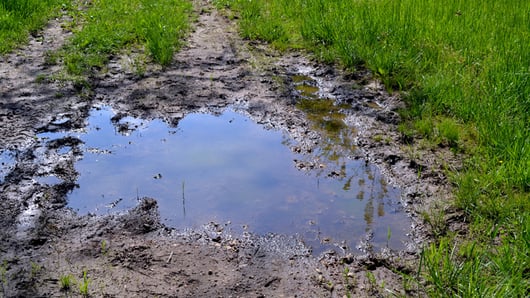
John Rapanos sought to fill in three wetland areas on his property in order to build a shopping center. Rapanos ignored warnings from the Michigan Department of Environmental Quality that the area was protected wetlands under the Clean Water Act (CWA). The CWA allows the government to regulate the discharge of any pollutant (including dirt or sand) into "navigable waters," which the Act defines as "the waters of the United States." Under regulations issued by the Army Corps of Engineers (Corps), wetlands are covered by the CWA as long as they are adjacent to traditionally navigable waters or tributaries of such waters. After Rapanos also ignored cease-and-desist orders from the U.S. Environmental Protection Agency, the government brought a civil suit against him. Rapanos argued before the District Court that the CWA gives the government jurisdiction to regulate only traditionally navigable waters. The government countered that Rapanos's lands were covered by the CWA as "adjacent wetlands" under the Corps's interpretation of the Act; the sites drained into man-made drains which eventually emptied into navigable rivers and lakes. The District Court rejected Rapanos's argument and upheld the Corps's regulations including the wetlands as "waters of the United States." The Sixth Circuit Court of Appeals affirmed, holding that the "hydrological connection" of the wetlands to the navigable waters qualifies them as "waters of the United States" under the Act.
The Carabells sought to fill in a wetland on their property in order to build a condominium, but were denied a permit because the wetland was protected under the Clean Water Act (CWA). The CWA allows the government to regulate the discharge of any pollutant (including dirt or sand) into "navigable waters," which the Act defines as "the waters of the United States." Under regulations issued by the Army Corps of Engineers (Corps), wetlands are covered by the CWA as long as they are adjacent to traditionally navigable waters or tributaries of such waters. Carabell's site is separated from a nearby ditch by a 4-foot-wide berm (earthen barrier), but the Corps's regulations specify that the wetland is nevertheless adjacent to the waterway. The ditch empties into another ditch, which in turn empties into a creek and ultimately into Lake St. Clair, a navigable water. After exhausting administrative appeals, Carabell sued in District Court. Carabell argued that the government lacked jurisdiction under the CWA to regulate the relatively isolated wetland as part of the "waters of the United States." The District Court disagreed, and upheld the Corps's expansive interpretation of the CWA. On appeal, the Sixth Circuit Court of Appeals also ruled for the Corps, holding that as long as wetlands are "adjacent" to tributaries of traditionally navigable waters and share a "significant nexus" with such waters, the wetlands qualify as "waters of the United States" for purposes of the CWA.
Questions
Does the phrase "waters of the United States" in the Clean Water Act include a wetland that at least occasionally empties into a tributary of a traditionally navigable water?
Conclusions
-
Unanswered. The closely-divided Court split 4-1-4, with Justice Anthony Kennedy providing the crucial fifth vote to reject the Sixth Circuit's decision.
Justice Antonin Scalia wrote the plurality opinion, which was joined by three other Justices. The plurality rejected the argument that only actually-navigable waters can be regulated by the Clean Water Act, but also held that the word "navigable" in the Act cannot be divested of all meaning. The plurality held that the definitional term "waters of the United States" can only refer to "relatively permanent, standing or flowing bodies of water," not "occasional," "intermittent," or "ephemeral" flows. Furthermore, A mere "hydrological connection" is not sufficient to qualify a wetland as covered by the CWA; it must have a "continuous surface connection" with a "water of the United States" that makes it "difficult to determine where the 'water' ends and the 'wetland' begins."
Justice Kennedy wrote a separate concurring opinion, which disagreed with much of the plurality's reasoning. In Justice Kennedy's view, wetlands need not have a continuous surface connection to a continuously flowing body of water to be covered under the CWA, but mere adjacency to a tributary of a navigable water is not sufficient. Instead, Wetlands that are not adjacent to a traditionally navigable water must have a "significant nexus" with a one. This requirement is satisfied if the wetland has a significant effect on the water quality of navigable waters. Justice Kennedy suggested that Rapanos's wetlands may be covered under the CWA if more evidence of a significant nexus were presented.
Justice Stevens wrote a dissent, which was joined by Justices Souter, Ginsburg, and Breyer. The dissent argued that the Corps's regulations should be upheld as a reasonable interpretation of the Act. The inclusion of all wetlands adjacent to tributaries of navigable waters was most consistent with the CWA's purpose of eliminating pollution in the nation's waters.
Though the Court failed to obtain a majority on most of the legal issues presented by the case, the plurality and Justice Kennedy agreed to send the case back to the Sixth Circuit for a new decision based on a different analysis.
Courthouse Steps Decision: Sackett v. Environmental Protection Agency
Join us for a special in-person event at Hunton Andrews Kurth on Sackett v. EPA.
Sponsors: Environmental Law & Property Rights Practice GroupDC Young Lawyers ChapterHunton Andrews Kurth LLP Where:Hunton...
Courthouse Steps Decision: Sackett v. Environmental Protection Agency
Join us for a special in-person event at Hunton Andrews Kurth on Sackett v. EPA.
Sponsors: Environmental Law & Property Rights Practice GroupDC Young Lawyers ChapterHunton Andrews Kurth LLP Where:Hunton...
Supreme Court Rules Against EPA’s Claims of Expansive Wetland Authority
On May 25, the Supreme Court of the United States decided Sackett v. EPA, a...
U.S. Environmental Protection Agency, Army Corps of Engineers revise Clean Water Act regulations defining “navigable waters” for the fourth time in seven years
On January 18, 2023, U.S. EPA and the Army Corps published new regulations in the...
Reflections on Sackett v. EPA II Oral Argument
On October 3rd, my colleague Damien Schiff argued Sackett v. EPA II, a critically important...
After Fifty Years of Clean Water Act Confusion, the Supreme Court Should, in Sackett v. EPA, Finally Apply a Reasonable Standard to Federal Government Regulation
The first case of the Supreme Court’s October 2022 term is Sackett v. EPA, No....

Negative Legislation
Federalist Society Review, Volume 22
Modern commentators have spilled much ink on the undemocratic nature of congressional delegations to executive...

Whistling in Chevronland: Why Department of Labor Interpretations of the Sarbanes-Oxley Act Whistleblower Provisions Do Not Deserve Judicial Deference
Federalist Society Review, Volume 20
Note from the Editor: The Federalist Society takes no positions on particular legal and public...
Defining the "Waters of the United States"
For decades, the Environmental Protection Agency (EPA) and the U.S. Army Corps of Engineers (Corps)...
Will We Soon Have Clarity on Navigable Waters?: How the Supreme Court’s October 2017 Term Set the Stage
Federalist Society Review, Volume 19
Note from the Editor: This article discusses the longstanding legal battle over the meaning of...
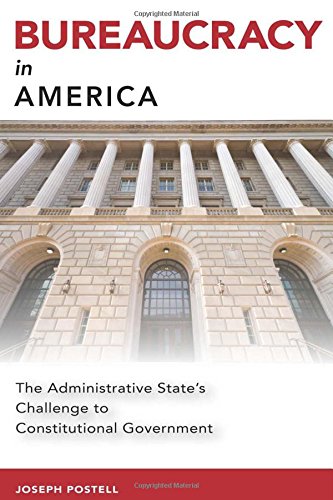
Can Americans Reconcile Our Constitutional System With an Expansive Administrative State?
Federalist Society Review, Volume 19
A review of: Bureaucracy in America: The Administrative State’s Challenge to Constitutional Government, by Joseph...
High Stakes in "Waters of the United States" Rulemaking
The Clean Water Act (“CWA”) gives the Environmental Protection Agency (“EPA”) and the U.S. Army...
Final Agency Actions and Judicial Review: United States Army Corps of Engineers v. Hawkes Co.
Federalist Society Review, Volume 17, Issue 3
Note from the Editor: This article discusses the Supreme Court’s recent decision in United States Army...

U.S. Army Corps of Engineers v. Hawkes Co.
Unreviewable Authority Breeds Extravagant Claims of Clean Water Act Jurisdiction
Background Imagine you own a plot of land. You may want to build a house...
U.S. Army Corps of Engineers v. Hawkes Co., Inc.: Wetlands Jurisdictional Determinations and the Right of Federal Judicial Review
Federalist Society Review, Volume 17, Issue 1
Note from the Editor: This article discusses U.S. Army Corps of Engineers v. Hawkes, a...

Supreme Court Preview: American Farm Bureau Federation v. EPA
At its February 19th conference, the Supreme Court will consider whether to hear American Farm...
States Get Wins Against Federal Overreach
Two Courts Issue Nationwide Stays of Major Federal Rules
States suing federal agencies have recently convinced two courts to put two major federal rules...
Sackett v. Environmental Protection Agency: Compliance Orders and the Right of Judicial Review
Engage Volume 13, Issue 2, July 2012
The United States Supreme Court’s decision in Sackett v. Environmental Protection Agency1 promises to be important...
EPA and U.S. Army Corps Seek to Expand Jurisdiction Under the Clean Water Act
Engage Volume 13, Issue 1, March 2012
The U.S. Army Corps of Engineers (“Corps”) and U.S. Environmental Protection Agency (“EPA”) (jointly, the...
Point-Counterpoint: Repairing the Clean Water Act
Currently, the Federal Water Pollution Control Act (hereinafter referred to as the “Clean Water Act”)...
Engage Volume 10, Issue 1, February 2009
*Online-Only Issue* CIVIL RIGHTS Lights, Camera, Legislation: Congress Set to Adopt Hate Crimes Bill that...
Enforcement of the Clean Water Act
In the 2006 plurality decision in Rapanos v. United States, the Supreme Court limited the...
The Rapanos Decision
The Supreme Court has ruled in consolidated cases that the assertion of jurisdiction under the...

Justice Kennedy's Analysis of Navigable Waters in Rapanos
Five years ago in Solid Waste Agency of Northern Cook County v. Army Corps of...
Rapanos V. United States
The Supreme Court has ruled in consolidated cases that the assertion of jurisdiction under the...
Courthouse Steps Decision: Sackett v. Environmental Protection Agency
Join us for a special in-person event at Hunton Andrews Kurth on Sackett v. EPA.
Hunton Andrews Kurth2200 Pennsylvania Avenue NW
Washington, DC 20037

The Clean Water Act: Where Should Federal Authority Dry Up?
Boston Lawyers Chapter & Environmental Law Practice Group
McCarter & English, LLP265 Franklin Street, 14th Floor
Boston, MA 02110

Enforcement of the Clean Water Act
Dirksen Senate Office Building Room 40650 Constitution Ave NE
Washington, DC 20002

The Future of Wetlands Regulation in a Post-Rapanos World
The Angelo Tsakapolous Library Galleria 8281 I StreetSacramento, California