

Facts of the Case
Cheryl Perich filed a lawsuit against the Hosanna-Tabor Evangelical Lutheran Church and School in Redford, Mich., for allegedly violating the Americans with Disabilities Act when they fired her after she became sick in 2004. After several months on disability, Perich was diagnosed and treated for narcolepsy and was able to return to work without restrictions. But she said the school at that point urged her to resign and, when she refused, fired her.
Perich filed a complaint with the Equal Employment Opportunity Commission, which ruled in her favor and authorized a lawsuit against the school. Attorneys representing Hosanna-Tabor Evangelical Lutheran Church and School argued that the "ministerial exception" under the First Amendment should apply in their client's case. The exception gives religious institutions certain rights to control employment matters without interference from the courts. The district court granted summary judgment in favor of the school, but the United States Court of Appeals for the Sixth Circuit overturned that ruling and remanded the case back to the lower court for a full trial on the merits. The court held that Perich's role at the school was not religious in nature, and therefore the ministerial exception did not apply.
Questions
Does the ministerial exception, which prohibits most employment-related lawsuits against religious organizations by employees performing religious functions, apply to a teacher at a religious elementary school who teaches the full secular curriculum, but also teaches daily religion classes, is a commissioned minister, and regularly leads students in prayer and worship?
Conclusions
-
Yes. In a unanimous decision written by Chief Justice John Roberts, the Court held that Perich was a minister for the purposes of the Civil Rights Act's ministerial exception, dismissing Perich's suit and her claims for damages. Chief Justice Roberts described the history of the "ministerial exception", established by courts to prevent state interference with the governance of churches, a violation of the First Amendment's establishment and free exercise clauses. He rejected the EEOC and Perich's argument that these clauses of the First Amendment are irrelevant to Hosanna-Tabor's right to choose its ministers.
Chief Justice Roberts concluded that Perich indeed functioned as a minister in her role at Hosanna-Tabor, in part because Hosanna-Tabor held her out as a minister with a role distinct from that of its lay teachers. He also noted that Perich held herself to be a minister by accepting the formal call to religious service required for her position. Chief Justice Roberts acknowledged that Perich performed secular duties in her position and that lay teachers performed the same religious duties as Perich, but reasoned that Perich's status as a commissioned minister outweighed these secular aspects of her job. He also rejected the EEOC and Perich's suggestion that Hosanna-Tabor's religious reason for firing Perich was pretextual, explaining that the purpose of the ministerial exception is not limited to hiring and firing decisions made for religious reasons.

The Ministerial Exception’s Unrealized Promise of Early and Straightforward Resolution of Church Autonomy Matters
The ministerial exception in employment cases is a subpart of the church autonomy doctrine. The...
The Roots, Applications, and Trajectory of the Church Autonomy Doctrine
The First Amendment’s Religion Clauses guarantee religious entities the freedom to make certain internal governance...
The Roots, Applications, and Trajectory of the Church Autonomy Doctrine
The First Amendment’s Religion Clauses guarantee religious entities the freedom to make certain internal governance...
Huntsman v. Church of Jesus Christ of Latter-Day Saints: Church Autonomy is “a Threshold Structural Bar that Must be Reckoned With”
In Huntsman v. Corporation of the President of the Church of Jesus Christ of Latter-day...

Markel v. Union of Orthodox Jewish Congregations of America: Welcome Developments in the Law of Church Autonomy
In its recent decision in Markel v. Union of Orthodox Jewish Congregations of America, the...

A Cord of Three Strands: How Kennedy v. Bremerton School District Changed Free Exercise, Establishment, and Free Speech Clause Doctrine
Federalist Society Review, Volume 24
In 2015, Bremerton High School football coach Joseph Kennedy lost his job for kneeling at...
DC Court of Appeals Holds That Judicial Intervention Is Inappropriate In a Religious Schism
The District of Columbia Court of Appeals recently declined to intervene in a religious dispute...
An Extended Essay on Church Autonomy
Federalist Society Review, Volume 22
The doctrine of church autonomy[1] is distinct from the two more familiar lines of cases...
State Court Docket Watch: DeWeese-Boyd v. Gordon College
Note from the Editor: Mr. Lorence's organization, Alliance Defending Freedom, was retained by Gordon College to...
En Banc Seventh Circuit Rules that Ministerial Exception Applies to Hostile Work Environment Claims
The en banc Seventh Circuit recently held that the First Amendment prohibits a minister from...
State Court Docket Watch: Woods v. Seattle Union Gospel Mission
Washington Supreme Court Issues Mixed Ruling on Religious Employer Exemption
Note from the Editor: The Federalist Society takes no positions on particular legal and public...

Religious Schools, Collective Bargaining, & the Constitutional Legacy of NLRB v. Catholic Bishop
Federalist Society Review, Volume 22
It would be difficult to find a corner of American labor law more anomalous than...
![Click to play: Hosanna-Tabor v. EEOC [SCOTUSbrief]](https://img.youtube.com/vi/wf_a9fMqWeA/mqdefault.jpg)
Hosanna-Tabor v. EEOC [SCOTUSbrief]
Short video featuring Douglas Laycock
When an elementary school teacher named Cheryl Perich collapsed during a school field trip, a...
We Are Free for a Reason
Federalist Society Review, Volume 22
A review of Free to Believe: The Battle Over Religious Liberty in America, by Luke...
Doctrine Briefing: The Ministerial Exception
In Our Lady of Guadalupe v. Morrissey-Berru (2020), the Supreme Court expanded on the ministerial exception doctrine it...

States have been violating religious schools’ First Amendment rights for decades. The Supreme Court may be about to stop them.
The Supreme Court rarely goes out of its way to make sweeping pronouncements. The Justices...
Does the Church Autonomy Doctrine Bar Courts from Hearing Tort Actions Arising from the Church-Minister Employment Relationship?
The U.S. Supreme Court’s most recent church autonomy cases have focused on the ministerial exception...
Does the Ministerial Exception Apply to Hostile Work Environment Claims?
There is no longer any doubt that the ministerial exception exists, and courts and litigants...
After Espinoza, What’s Left of the Establishment Clause?
Federalist Society Review, Volume 21
Note from the Editor: The Federalist Society takes no positions on particular legal and public...
Supreme Court Protects The Rights of Religious Schools
Yesterday, the Supreme Court in Our Lady of Guadalupe v. Morrissey-Berru made clear that the...
Courthouse Steps Oral Argument Teleforum: Our Lady of Guadalupe School v. Morrissey-Berru
In Hosanna-Tabor Evangelical Lutheran Church & Sch. v. EEOC, the Supreme Court, in 2012, unanimously...
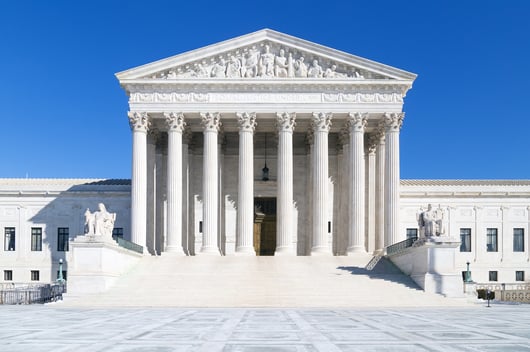
Religious Schools and the Ministerial Exception
On Monday, the Court heard oral argument in two important First Amendment cases—Our Lady of...
Religious Freedom and the CARES Act
The Coronavirus Aid, Relief, and Economic Security Act, or CARES Act[1] as it’s popularly called,...
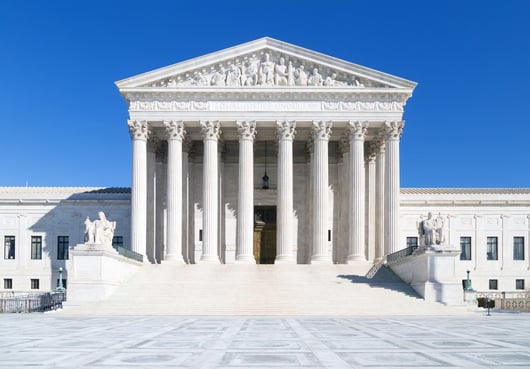
Credentials Not Required: Why an Employee’s Significant Religious Functions Should Suffice to Trigger the Ministerial Exception
Federalist Society Review, Volume 20
Note from the Editor: The Federalist Society takes no positions on particular legal and public...

Ninth Circuit Says Government Can Impose Unwanted Religion Teachers on Religious Schools
The ministerial exception is a legal doctrine protecting the critical First Amendment right of religious...

Litigation Update: Religious Schools Head to the Supreme Court
The Ninth Circuit recently split from seven other Circuits in deciding a First Amendment question...

Cert Seeking: Can Courts Allow Disgruntled Ministers to Punish Churches for Being Fired?
Pending before the U.S. Supreme Court is a little-noticed petition from Kentucky that raises a...
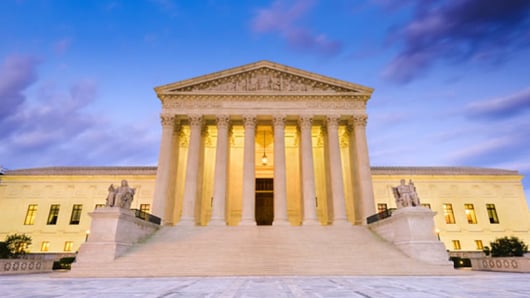
The Ministerial Exception After Hosanna-Tabor: Firmly Founded, Increasingly Refined
Federalist Society Review, Volume 20
Note from the Editor: The Federalist Society takes no positions on particular legal and public...
Can a New Establishment Clause Jurisprudence Succeed in Protecting Religious Minorities Where Lemon Has Failed?
Federalist Society Review, Volume 20
Note from the Editor: The Federalist Society takes no positions on particular legal and public...
When a Pastor’s House Is a Church Home: Why the Parsonage Allowance Is Desirable Under the Establishment Clause
Federalist Society Review, Volume 18
Note from the Editor: This article discusses the parsonage allowance, whereby the value of a...
Religious Exemptions and Third-Party Harms
Federalist Society Review, Volume 17, Issue 3
Note from the Editor: This article discusses the effect that third-party harms should have on religious...
Religious Liberty after Scalia
Some people opine that Antonin Scalia was not a friend of religious liberty, and that...
Sebelius v. Hobby Lobby Stores, Inc.
Engage Volume 15, Issue 1 February 2014
Note from the Editor: This article is a discussion about the Sebelius v. Hobby Lobby...
A Religious Organization's Autonomy in Matters of Self-Governance: Hosanna-Tabor and the First Amendment
Engage Volume 13, Issue 1, March 2012
In the second week of January, the U.S. Supreme Court handed down its unanimous decision...
Engage Volume 13, Issue 1, March 2012
The Journal of the Federalist Society Practice Groups
*Online-Only Issue* SPECIAL CONTRIBUTION The Philosopher in Action: A Tribute to the Honorable Edwin Meese...
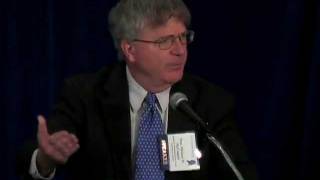
Religious Liberties: The Ministerial Exception Case: Hosanna-Tabor Evangelical Lutheran Church and School v. EEOC
2011 National Lawyers Convention
The Religious Liberties Practice Group hosted this panel on "The Ministerial Exception Case: Hosanna-Tabor Evangelical...
Religious Liberties: The Ministerial Exception Case: Hosanna-Tabor Evangelical Lutheran Church and School v. EEOC
2011 National Lawyers Convention
The Religious Liberties Practice Group hosted this panel on "The Ministerial Exception Case: Hosanna-Tabor Evangelical...



Debate: Obama's Record at the Supreme Court
The Hampton Inn 5650 Oakland Ave.St. Louis, 63110

























 Stephen R. McAllister is a native Kansan who grew up in Lucas, Kansas and graduated from Lucas-Luray High School. Growing up, he also lived in Hiawatha and Chanute, Kansas. He received both his B.A. and his J.D. degrees from the University of Kansas.