
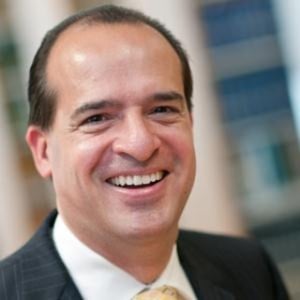
Professor of Law and Rouse Chairholder, Antonin Scalia Law School, George Mason University
Professor Miller holds an Allison and Dorothy Rouse Chair in Law at the Antonin Scalia Law School. An elected member of the American Law Institute and a research member of the European Corporate Governance Institute, Professor Miller is also a Fellow and the Co-Director of the Program on Organizations, Business and Markets at the Classical Liberal Institute at the New York University Law School, an Adjunct Fellow at the Manhattan Institute, and an Affiliated Scholar at the James Wilson Institute on Natural Rights and the American Founding. Prior to joining George Mason University in 2025, Professor Miller was the F. Arnold Daum Chair in Corporate Finance and Law and a Professor of Law at the University of Iowa College of Law, where he had also served as the Associate Dean for Faculty Development.
Professor Miller’s research concerns corporate and securities law, the economic analysis of law, and the philosophy of law. He is particularly interested in applying economic concepts and methods to understand provisions in contracts between sophisticated commercial parties. He has written on material adverse effect clauses under Delaware law, the fiduciary duties of corporate directors, director oversight liability, the history and development of Delaware corporate law, and much more. His articles and working papers are available on his SSRN page.
Professor Miller has been cited by federal and state courts in the United States, including the Delaware Supreme Court and the Delaware Court of Chancery, as well as by the Commercial Court of the United Kingdom and the Ontario Superior Court of Justice (Commercial List) in Canada. Additionally, he is a member of the Committee on Mergers, Acquisitions & Corporate Control Contests and a former chair of the Corporation Law Committee of the New York City Bar Association.
Earlier in his career, Professor Miller was a Professor of Law at the Villanova University School of Law and the Associate Director of the Matthew J. Ryan Center for the Study of Free Institutions and the Public Good at Villanova University. He has been a Visiting Professor of Law at the University of Pennsylvania Law School, a Visiting Assistant Professor of Law at the Cardozo Law School, and an Olin Fellow in Law and Economics at the Columbia Law School.
Before entering academia, Professor Miller was an associate with Wachtell, Lipton, Rosen & Katz. He earned his J.D. from the Yale Law School where he was a Senior Editor of the Yale Law Journal and an Olin Fellow in Law, Economics and Public Policy. He earned his M.A. and M.Phil. degrees in philosophy from Columbia University, where he held a Mellon Fellowship in the Humanities from the Woodrow Wilson National Fellowship Foundation and a Western Civilization Fellowship from the Intercollegiate Studies Institute. He earned his B.A. in philosophy and mathematics from Columbia College.
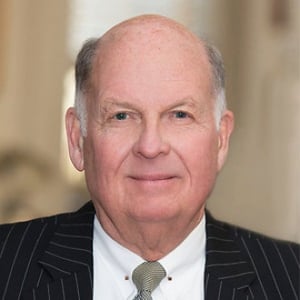
Former Chief Justice, Delaware Supreme Court; Of Counsel, Potter Anderson
Myron T. Steele is of counsel in the firm's Corporate Litigation Group. He is the former Chief Justice of the Supreme Court of Delaware.
Previously, he served as a Judge of the Superior Court and a Vice Chancellor of the Delaware Court of Chancery after eighteen years in private litigation practice. He has presided over major corporate litigation and LLC and limited partner governance disputes, and writes frequently on issues of corporate document interpretation and corporate governance.
Chief Justice Steele has published over 400 opinions resolving disputes among members of limited liability companies, and limited partnerships, and between shareholders and management of both publicly traded and close corporations. He speaks and writes frequently on issues of corporate document interpretation and corporate governance. His thesis for the LL.M. degree, Judicial Scrutiny of Fiduciary Duties in Delaware Limited Partnerships and Limited Liability Companies, focused on the application of common law fiduciary duties within the contractual framework of alternative business organizations. It was published in the Delaware Journal of Corporate Law (32 Del. J. Corp. L. 1 (2007)). The November 2005 issue of The Business Lawyer included an article he co-authored with Sean J. Griffith entitled On Corporate Law Federalism: Threatening the Thaumatrope (61 Bus. Law. 1 (2005)). He co-authored an article with J.W. Verret entitled Delaware’s Guidance: Ensuring Equity for the Modern Witenagemot published in the Fall 2007 issue of the Virginia Law & Business Review (2 Va. L. & Bus. Rev. 188 (2007)). That article formed the basis for a keynote speech to the Business Law Section at the 2007 ABA Annual Meeting.
For the last ten years he served as judicial advisor to the Mergers and Acquisitions Committee of the ABA Business Law Section. He also co-authored an article entitled “Freedom of Contract and Default Contractual Duties in Delaware Limited Partnerships and Limited Liability Companies” (46 Am. Bus. L.J. 221 (Summer 2009)) and an essay entitled “The Moral Underpinning of Delaware’s Modern Corporate Fiduciary Duties” (26 Notre Dame J.L. Ethics & Pub. Pol’y 3 (2012)).
Chief Justice Steele served as Adjunct Professor of Law at University of Pennsylvania Law School from 2009–2013; University of Virginia Law School 2010–2017; and Pepperdine University Law School 2010–2014.
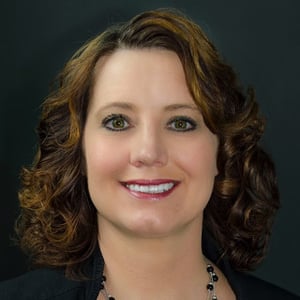
Director, International Center for Food Industry Excellence, Texas Tech University
Dr. Mindy Brashears is the former Under Secretary of Agriculture in Food Safety where she served the USDA as a political appointee from 2019-2021. She is currently the Associate Vice President of Research at Texas Tech University and a Professor of Food Safety and Public Health holding the Roth and Letch family Endowed Chair of Food Safety. She also serves as the Director of the International Center for Food Industry Excellence at Texas Tech University.
She is a fellow of the National Academy of Inventors and has 3 spinoff companies based on her work. She holds a B.S. in food technology from Texas Tech (magna cum laude) and M.S. and Ph.D. degrees in food science from Oklahoma State University. She is married to Dr. Todd Brashears, who is a professor of agricultural education, and has three daughters, Bailey, Reagan (Jimenez) and Presley and one son-in-law, Eli Jimenez. Her research focuses on mitigation strategies in pre-and post-harvest environments and on the emergence of antimicrobial drug resistance in agricultural ecosystems. Her interests are primarily in meat, poultry and vegetable products.
She also has a passion for food security and has led international research teams to numerous places across Latin America and the Caribbean to improve food safety and security in those sectors and to set up sustainable agriculture systems in developing areas. She teaches courses in food microbiology and food safety and offers industry training in food safety and security. She has received multiple awards including the IAFP Laboratorian Award, The AMSA Research and Industry/Extension Award and was named as a Future Icon in the Meat Industry by the National Provisioner Magazine.
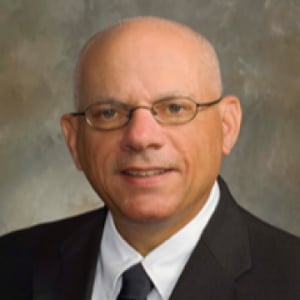
MD
Dr. Ostroff retired from the US Food and Drug Administration (FDA) in early 2019.
During his 7 years at FDA, he served as Deputy Commissioner for Foods and
Veterinary Medicine, where he oversaw the agency’s food and animal health
activities of FDA, including responsibilities in the areas of food safety and
nutrition, food labeling, food and color additives, cosmetics, dietary supplements,
animal drugs and animal feed, and research to support the food and veterinary
medicine mission of FDA. Dr. Ostroff also served as FDA’s Chief Scientist and as
the agency’s Acting Commissioner on two occasions in both the Obama and
Trump administrations.
Before joining the FDA, Dr. Ostroff worked at the Centers for Disease Control and
Prevention (CDC) in Atlanta for more than 20 years on infectious disease
surveillance and outbreak investigations, especially management and
coordination of complex emerging infectious disease threats such as anthrax,
Ebola, West Nile virus, SARS, and avian influenza. He was in the US Public Health
Service Commissioned Corps, attaining the rank of Assistant Surgeon General
(Rear Admiral). He also worked at the Pennsylvania Department of Health as
Director of the Bureau of Epidemiology and the Commonwealth’s Acting Physician
General.
Dr. Ostroff received his undergraduate and medical degrees from the University
of Pennsylvania. He currently holds adjunct professor appointments at Penn
State College of Medicine’s Department of Public Health Sciences and the
University of Pittsburgh School of Public Health’s Department of Epidemiology.

Deputy Secretary of Agriculture, U.S. Department of Agriculture
Judge Stephen Alexander Vaden was appointed as the Deputy Secretary of the U.S. Department of Agriculture on July 7, 2025. Alongside Secretary Brooke L. Rollins, Deputy Secretary Vaden leads the Department’s operations and implements policies that support America’s food and farm systems. A native of Union City, Tennessee, Deputy Secretary Vaden brings expertise in agricultural policy, law, and rural development. Previously, he served as a judge on the U.S. Court of International Trade and as General Counsel of USDA. Throughout Deputy Secretary Vaden’s time as General Counsel, he led successful Supreme Court litigation, advanced regulatory reform, and supported the implementation of the 2018 Farm Bill. He is a graduate of Yale Law School and Vanderbilt University. A public servant with strong agricultural roots, Deputy Secretary Vaden is committed to revitalizing rural America and ensuring an abundant, affordable, and safe U.S. food supply.
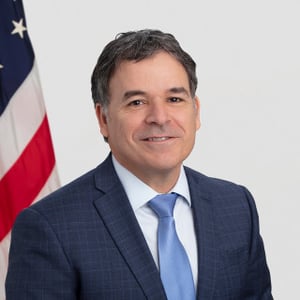
Former Deputy Commissioner for Food Policy and Response, FDA
Frank Yiannas is a former Deputy Commissioner for Food Policy and Response, a position he assumed in December of 2018. In that role he was the principal advisor to the FDA Commissioner in the development and execution of policies related to food safety, including implementation of the FDA Food Safety Modernization Act (FSMA). His leadership role within the Agency covered a broad spectrum of food safety priorities, such as outbreak response, traceback investigations, product recall activities, and supply chain innovation across the full spectrum of FDA-regulated products.
Prior to his time at FDA, Mr. Yiannas held leadership roles with two industry giants: Walmart and the Walt Disney Company. At Walmart, which he joined in 2008 and served for over a decade, Mr. Yiannas was the Vice President for Food Safety. In this role, he led the effort to make Walmart the first U.S. retailer to require suppliers to achieve certification against one of the Global Food Safety Initiative (GFSI) benchmarked food safety schemes.
At Disney, where he worked for 19 years, he was the Director of Safety and Health. During his tenure, Disney received the prestigious Black Pearl Award for corporate excellence in food safety from the International Association for Food Protection. The recipient of numerous awards, in 2007, he received the National Science Foundation’s International Lifetime Achievement Award for Leadership in Food Safety. He is also the recipient of the Collaboration Award by FDA in 2008 and he was named the 2015 Industry Professional Food Safety Hero Award by STOP Foodborne Illness, a consumer advocacy group.
Mr. Yiannas is a past president of the International Association for Food Protection and a past vice-chairman of the Global Food Safety Initiative. He was also an adjunct Professor in the Food Safety Program at Michigan State University, and in 2017 was awarded the MSU Outstanding Faculty Award.
A microbiologist, Mr. Yiannas received a B.S. in microbiology from the University of Central Florida and a Master of Public Health degree from the University of South Florida.
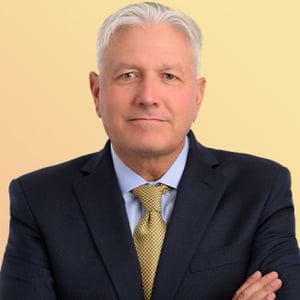
Partner, King & Spalding
A partner in the firm’s Government Advocacy and Public Policy group, J.C. helps companies and trade associations navigate legal, political and regulatory issues commonly associated with doing business in Europe and the United States. He is recognized by clients for his strong, bipartisan relationships with Members of Congress, State Attorneys General, congressional staff and senior government officials across key regulatory and executive branch agencies. He is trusted for his ability to rapidly synthesize complex information and communicate its strategic implications to policymakers and senior institutional stakeholders as well as his candid evaluation of options and potential for success.
As former counsel to the Senate Banking Committee, J.C has developed a deep expertise in financial services, fintech, and emerging technology policy. He has a proven track record of influencing federal legislation, regulatory frameworks, and agency rulemaking impacting digital assets, banking, payments, and technology platforms. J.C. regularly interfaces with financial regulators on a wide array of policy and institution-specific issues, and as co-chair of the firm’s State Attorneys General practice, delivers results on high-impact legal work at the intersection of law, policy and regulation.
J.C. is skilled in developing and executing comprehensive advocacy strategies, shaping legislative language, and positioning clients to successfully navigate complex and evolving policy environments at the federal, state and international levels. As President of the Parliamentary Intelligence-Security Forum, he has briefed policymakers throughout Europe, Africa, Latin America, and the Indo-Pacific. JC also advises international clients seeking to invest, expand, or operate in the United States.
President George W. Bush appointed J.C. to a six-year term as U.S. representative to the World Bank’s International Centre for Settlement of Investment Disputes (ICSID). Mayor Muriel Bowser also appointed J.C. to the District of Columbia; Board of Elections, in which capacity he also served on the U.S. Election Assistance Commission Standards Board. He is currently chairman of the Board of Visitors of The Catholic University Columbus School of Law and President of the Parliamentary Intelligence-Security Forum, where he is a regular speaker on cryptocurrency, artificial intelligence and critical minerals.
Earlier in his career, J.C. established the Boggs Scholarship for Public Service at the University of Delaware in honor of his grandfather and namesake, former U.S. Congressman, Senator and Governor of Delaware, J. Caleb Boggs. He has also served on numerous corporate and non-profit boards, including Jobs for Delaware Graduates (Chairman); The Reserve Trust Company (Vice Chairman), Global Center for Social Entrepreneurship Network (Secretary), Republican National Lawyers Association (President), Kimball Union Academy (Chairman of the Committee on Trustees), and AAA Mid-Atlantic.
J.C. enjoys open-water swimming and is member of U.S. Masters Swimming and the historic Serpentine Swimming Club situated in London's Hyde Park. He has competed in swimming events across all 50 states, ten Canadian provinces and around the world.
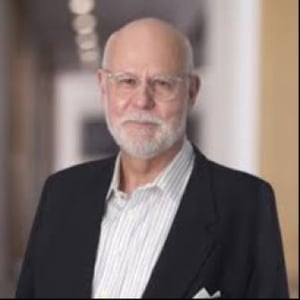
Partner, Foley & Lardner LLP
Patrick Daugherty is a senior corporate and securities law partner of Foley & Lardner LLP, based in Chicago. He also is an adjunct professor of Cornell Law School, where he teaches in residence each Fall Term.
Mr. Daugherty is a member of the Bar in New York, the District of Columbia, North Carolina, Michigan and Illinois. Credentialing organizations have named him “Lawyer of the Year” in both Michigan (2007) and Illinois (2022). A graduate of Northwestern University and of Cornell Law School (Class of 1981), he clerked for SDNY Chief Judge Lloyd F. MacMahon for a year before entering private practice. Mr. Daugherty also served as Counsel to SEC Commissioner Edward H. Fleischman in Washington, D.C., from 1986 to 1989. An Emeritus Member of the American Law Institute, he is the author, co-author or editor of several books and many articles on securities regulation and new financial products.
Mr. Daugherty believes that he was the first lawyer inside the SEC to join the Federalist Society when he became a member in the late 1980s. A mainstay of the Chicago Lawyers Chapter, at the national level of the Society he serves on the Executive Committee for the Financial Services & E-Commerce Practice Group.
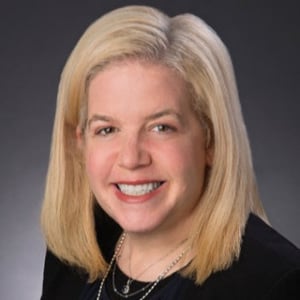
Counsel, Government Affairs and Strategy, Paul Hastings
Dina Ellis Rochkind is Of Counsel in the Paul Hastings Government Affairs practice and is based in the firm’s Washington, D.C. office. Her practice focuses on representing clients before Members of Congress on Capitol Hill and the Executive Branch. Ms. Rochkind represents clients in matters involving regulatory initiatives, policymaking and legislation, and enforcement actions. Ms. Rochkind's legislative experience allows her to advise her clients on the latest client initiatives, from starting a business to crowdsourcing; bitcoin ($bitcoin) and ICOs; and blockchain technologies.
Ms. Rochkind has over 20 years of experience on Capitol Hill, lobbying, and working for the Executive Branch. Prior to joining Paul Hastings, she served as Washington Director in the office of Rep. Mike Coffman (R-CO). Other Capitol Hill experience includes serving as senior staff for various Congressional Committees and for Senator Pat Toomey (R-PA). Ms. Rochkind also served in the George W. Bush Administration as Deputy Assistant Secretary at the Treasury Department. She has been involved in drafting major pieces of legislation over the last two decades, including: the 2005 bankruptcy reform legislation, the FACT Act, E-Sign, Check 21, Federal Deposit Insurance Reform Act, Gramm-Leach-Bliley Act, and, most recently, the comprehensive and bipartisan JOBS Act, for which she was the lead staffer in the Senate.
Ms. Rochkind has worked across party lines on both sides of the aisle to achieve key legislative successes and has a reputation for "getting things done" in Washington. She is also experienced in crisis management. During the auto industry crisis, Ms. Rochkind led the lobby to rescue Chrysler and handled the consequences and fallout from its bankruptcy. She has led legislative advocacy on behalf of major corporate entities and advised congressional leaders on issues such as banking, bankruptcy, insurance, other financial services, and economic development.
Prior to leading Rep. Coffman’s office, Ms. Rochkind served as Vice President of Federal Government Affairs for a leading mortgage lending company.
Ms. Rochkind is admitted to practice law in the District of Columbia and Pennsylvania.

General Counsel, Strive
Before joining Strive, Alexandra served as the Director of Regulatory Affairs at River Financial, where she handled all regulatory and government matters and served as product counsel. Prior to her time at River, Alexandra worked at the U.S. Department of Treasury, first in the General Counsel’s office and then as the youngest-ever Executive Secretary, where she worked directly with Secretary Mnuchin. Alexandra previously worked as an associate in the Washington, D.C. office of Akin Gump. She clerked for then-Justice Allison Eid on the Colorado Supreme Court and Judge Jennifer Elrod on the U.S. Court of Appeals for the Fifth Circuit. She holds a J.D. from the University of Texas and a B.A. from The King’s College.
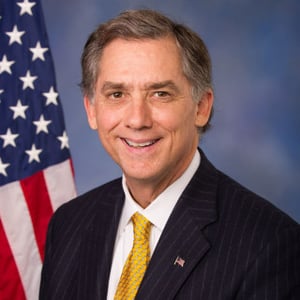
United States Representative, AR-02
A ninth-generation Arkansan, Congressman French Hill has represented Arkansas’s Second Congressional District since January 2015. He serves as the Vice Chairman of the House Financial Services Committee and as Chairman of the new subcommittee tasked with overseeing all areas related to digital assets and financial technology. Additionally, he is a member of the House Permanent Select Committee on Intelligence and the House Foreign Affairs Committee. He was also elected to the Republican Steering Committee for the 118th Congress, which determines committee assignments for Republican members of Congress.
Prior to his congressional service, Congressman Hill was founder, Chairman, and Chief Executive Officer of Delta Trust & Banking Corporation. From 1989 to 1991, he also served as Deputy Assistant Secretary of the Treasury for Corporate Finance, where one of his key assignments was representing the U.S. as a negotiator in the historic bilateral talks with Japan known as the Structural Impediments Initiative (SII).
After the fall of the Berlin Wall, Rep. Hill led the design of U.S. technical assistance to the emerging economies of eastern and central Europe in the areas of banking and securities. In 1991, at the age of 34, President Bush appointed Rep. Hill to be Executive Secretary to the President’s Economic Policy Council (EPC), where he coordinated all White House economic policy. For his leadership and service at the Treasury and the White House, Rep. Hill was awarded the Distinguished Service Award by U.S. Secretary of the Treasury Nicholas Brady in January 1993. Prior to his Executive Branch Service, from 1982 until 1984, Rep. Hill served on the staff of then-U.S. Senator John Tower (R-TX), as well as on the staff of the U.S. Senate Committee on Banking, Housing, & Urban Affairs.
Throughout his career, Rep. Hill has been active in civic affairs. He is a past president of the Rotary Club of Little Rock and served as the 2013 chairman of the Little Rock Regional Chamber of Commerce. He has received numerous awards and recognition for his long-time support of the Boy Scouts of America, the arts and humanities, tourism, and historic preservation in Arkansas. He is an avid outdoorsman.
Rep. Hill is a magna cum laude graduate in Economics from Vanderbilt University. He and his wife, Martha, have a daughter and a son. The Hill family resides in Little Rock.
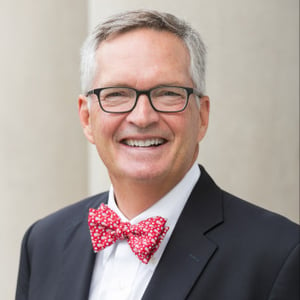
Founder/President, McCarty Financial
Mr. McCarty is an experienced lawyer with deep policy, legislative, and regulatory experience. Mr. McCarty is Of Counsel to the RuddyGregory PLLC in Washington, DC where he focuses on legislative and regulatory issues involving complex financial products such as swaps and digital assets. In addition, Mr. McCarty is the Founder of McCarty Financial, LLC, a boutique financial services consulting firm which provides bespoke legislative services focused on futures, swaps and digital asset issues. Mr. McCarty has held multiple senior financial services executive positions including: Managing Director, US Government Relations for ICAP North America (2011-2016); Senior Professional Staff, Senate Agriculture, Nutrition and Forestry Committee - primary draftsman of the Title VII Swaps provisions Dodd Frank Act (2010-11); Counsel - Chairman’s Office at the U.S. Securities and Exchange Commission (2009); General Counsel for the Commodity Futures Trading Commission (2002 to 2005); General Counsel of the Managed Funds Association (2000-2002); Professional Staff - House Banking Committee during passage of the Gramm-Leach-Bliley Act (1997- 2000); US Banking Regulator - Senior Counsel – FDIC, RTC, OTS and FHLBB (1988 – 2000).
Mr. McCarty teaches at both Georgetown University Law Center (Cryptocurrencies and ICO Seminar since 2018) and Catholic University of America Columbus School of Law (Derivatives Seminar since 2011 and Digital Assets Seminar since 2022). He holds a law degree from Catholic University of America Columbus School of Law (1986) and received a B.A. in economics from University of Virginia (1980).
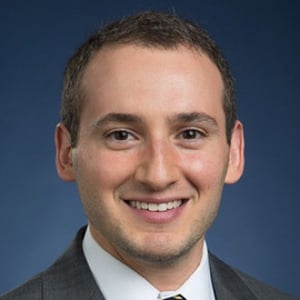
Assistant Professor of Business Law, Michigan Ross School of Law
Jeremy Kress is an Assistant Professor of Business Law at Michigan Ross and Co-Faculty Director of the University of Michigan’s Center on Finance, Law & Policy. His research focuses on bank regulation, systemic risk, and financial stability. Professor Kress' written work has appeared or is forthcoming in the Duke Law Journal, Northwestern University Law Review, Southern California Law Review, and Yale Journal on Regulation, among other journals.
Before entering academia, Professor Kress was an attorney in the banking regulation and policy group at the Federal Reserve Board of Governors in Washington, D.C. In that capacity, he drafted rules to implement the Dodd-Frank Act and Basel III, and he advised the Board on the legal permissibility of bank mergers and acquisitions.
Professor Kress has testified before Congress and serves as a member of the Federal Reserve Bank of New York’s Education and Industry Forum on Financial Services Culture. He frequently comments on financial regulatory matters in the press. Professor Kress has been featured in media outlets including the Wall Street Journal, New York Times, Financial Times, Washington Post, Bloomberg News, NPR's Marketplace, Politico, Yahoo Finance, and American Banker.
Professor Kress teaches Legal Issues in Finance & Banking at Michigan Ross, and he has taught Financial Regulation at Michigan Law School. He was named one of Poets & Quants’ “Top 50 Undergraduate Professors of 2020” and won Michigan Ross’ Neary Teaching Excellence Award in 2019.
Professor Kress graduated cum laude from Harvard Law School and from the Harvard Kennedy School, where he was a Presidential Scholar. He holds a BBA from Michigan Ross.

Resident Scholar, American Enterprise Institute
Paul H. Kupiec is a resident scholar at the American Enterprise Institute (AEI), where he studies systemic risk and the management and regulations of banks and financial markets. He also follows the work of financial regulators such as the Federal Reserve and examines the impact of financial regulations on the US economy.
Before joining AEI, Kupiec was an associate director of the Division of Insurance and Research within the Center for Financial Research at the Federal Deposit Insurance Corporation (FDIC), where he oversaw research on bank risk measurement and the development of regulatory policies such as Basel III. Kupiec was also director of the Center for Financial Research at the FDIC and chairman of the Research Task Force of the Basel Committee on Banking Supervision. He has previously worked at the International Monetary Fund (IMF), Freddie Mac, J.P. Morgan, and for the Division of Research and Statistics at the Board of Governors of the Federal Reserve System.
Kupiec has edited many professional journals, including the Journal of Financial Services Research, Journal of Risk, and Journal of Investment Management.
He has a bachelor of science degree in economics from George Washington University and a doctorate in economics — with a specialization in finance, theory, and econometrics — from the University of Pennsylvania.

Associate Professor of Legal Studies & Business Ethics; Co-Director, Wharton Initiative on Financial Policy and Regulation, The Wharton School, University of Pennsylvania
Christina Parajon Skinner is an expert on financial regulation. Her research focuses on central banking, the debt markets, separation of powers, corporate governance, and law and macroeconomics. Professor Skinner’s work is international and comparative in scope, drawing on her experience as an academic and central bank lawyer in the United Kingdom. Her research has been published or is forthcoming in the Columbia Law Review, the Duke Law Journal, the Vanderbilt Law Review, and the Georgetown Law Journal, among other leading academic journals. Professor Skinner has also contributed to financial regulatory policy working groups, including those convened by the Federal Reserve Bank of New York, the Financial Stability Board, and the U.K. Banking Standards Board.
Prior to joining the faculty at Wharton, Professor Skinner served as legal counsel at the Bank of England, in the Financial Stability Division of the Bank’s Legal Directorate. Her work there focused principally on matters of bank resolution, financial market infrastructure, and macroprudential policy. Previously, Professor Skinner was an Academic Visitor at the University of Oxford, Faculty of Law and a Visiting Fellow at the London School of Economics, Law Department. From 2014-2016, she was a post-doctoral fellow and lecturer in Law at Columbia Law School.
Professor Skinner received her J.D. from Yale Law School, and an A.B. from the School of Public and International Affairs at Princeton University, with a concentration in international economics. She received certificates of proficiency in European Politics and Society, and Spanish Language and Culture.
She is married with five children.
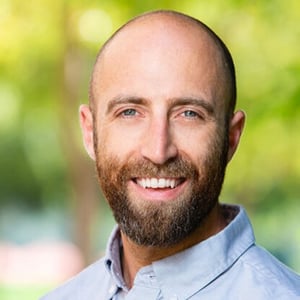
Director, Stanford Graduate School of Business
Graham Steele is the director of the Corporations and Society Initiative at Stanford Graduate School of Business. Prior to joining Stanford GSB, Graham was a member of the staff of the Federal Reserve Bank of San Francisco.
From 2015 to 2017, Graham was the Minority Chief Counsel for the Senate Committee on Banking, Housing & Urban Affairs. From 2010 to 2015 he was a Legislative Assistant for United States Senator Sherrod Brown (D-OH), handling the Senator’s work as a member of the Senate Banking Committee. He also spent four years as the staff director of the Subcommittee on Financial Institutions & Consumer Protection. Prior to joining Senator Brown’s staff, Graham was a policy counsel at Public Citizen’s Congress Watch in Washington, D.C.
Graham received his bachelors degree in political science from the University of Rochester and his law degree from The George Washington University Law School. He is a member of the Massachusetts State Bar. He is originally from Brookline, Massachusetts.
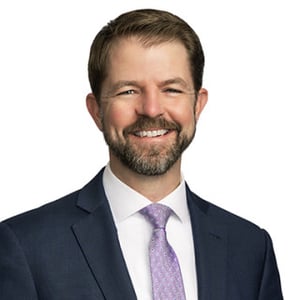
Partner, Baker Botts LLP
Drawing from two decades of experience in senior government, in-house corporate, and private law firm roles, Jeff Wood helps clients with federal enforcement, compliance, litigation, permitting, and policy challenges primarily in the energy and environmental fields.
Prior to joining Baker Botts, Mr. Wood served for almost two years as the Acting Assistant Attorney General (AAG) for the Justice Department's Environment and Natural Resources Division (ENRD). In that capacity, Mr. Wood led ENRD and its more than 600 attorneys and staff representing EPA, Departments of the Interior, Energy, and Defense, and other agencies in civil and criminal enforcement and defensive environmental, energy, and natural resources litigation.
As the top official in ENRD, Mr. Wood managed a complex organization with an annual budget exceeding $200 million and a docket of more than 6,000 cases and matters. E&E News noted that “Wood maintains a strong relationship with ENRD's career staff” (Greenwire, Oct. 31, 2018). He previously served on the staff of the United States Senate Committee on Environment and Public Works.
At the Justice Department, Mr. Wood oversaw the Division's civil and criminal enforcement programs and was responsible for developing legal strategies and approving briefs in key cases including filings before the Supreme Court and Courts of Appeals in coordination with the Office of Solicitor General. In this role, Mr. Wood held the highest level security clearance and worked closely with top leadership at DOJ, EPA, the Interior Department, USDA, the Energy Department, Transportation Department, FERC, NRC and across the Executive Branch, including the White House.
With many years of both private law firm and in-house legal experience, Mr. Wood has handled complex environmental enforcement, regulatory, policy, and litigation matters for electric utilities, energy companies, maritime companies, mining companies, real estate developers, financial institutions, industrial companies and manufacturers, business coalitions, associations, small businesses, and individual property owners. Drawing from his experiences in-house, Mr. Wood brings a common-sense, cost-effective, client-focused approach to his work every day.
With a strong national reputation, Mr. Wood is a frequent speaker on environmental law and policy matters, with recent speeches and presentations at the Environmental Law Institute, Harvard Law School, Vanderbilt Law School, American University Law School, American Bar Association Environmental Law Conferences, the Texas Environmental SuperConference, Air Force Judge Advocate General School's Advanced Environmental Law Course, Baker Institute's Center for Energy Studies (Rice University), and many other venues. He frequently appears in national news to share insights on significant environmental law and policy issues, including recent quotes in the New York Times, Washington Post, Wall Street Journal, Bloomberg, Law360, and E&E News, among others.

Founder, Law Office of Eileen J. O'Connor PLLC
After nearly 30 years as a national tax specialist with the IRS and major accounting firms, Eileen J. O’Connor, now an attorney in private practice, was Assistant Attorney General for the Justice Department’s Tax Division for six years during the administration of President George W. Bush and a member of then-President-elect Trump’s Treasury Department Transition Team. She focuses on federal administrative and tax law.
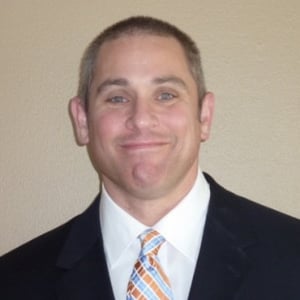
Vice President and Publisher, The Political Forum
Stephen R. Soukup is the senior commentator, Vice President, and Publisher of The Political Forum, an “independent research provider” that delivers research and consulting services to the institutional investment community, with an emphasis on economic, social, political, and geopolitical events likely to have an impact on the financial markets in the United States and abroad. He is also the Director of The Political Forum Institute, a non-profit educational organization dedicated to creating and preserving community, primarily among those who earn their livings and create wealth for the nation through the capital markets. Mr. Soukup has followed politics and federal regulatory policy for the financial community since 1996, when he joined the award-winning Washington-research office of Prudential Securities. He is also the Fellow in Culture and Economy at the Culture of Life Foundation.
Transfer Pricing Senior Associate, PricewaterhouseCoopers LLP

Professor of Law, Maurer School of Law, Indiana University of Bloomington
Professor David Gamage is a scholar of tax law and policy and also of health law and policy. He has written extensively on tax and budget policy at both the U.S. state and federal levels, as well as on tax theory, fiscal federalism, and the intersections between taxation and health care. Professor Gamage consistently ranks in the top five of the SSRN Tax Professor Rankings.
Gamage has authored or coauthored over fifty scholarly articles and essays. His scholarship has appeared in a range of journals, including the peer-edited Tax Law Review and Public Finance Review, and the flagship law reviews of the University of Chicago, the University of California, and Northwestern Law Schools. His casebook, Taxation: Law, Planning, and Policy, is published by Carolina Academic Press.
From 2010 through 2012, Gamage served as special counsel to the U.S. Department of the Treasury, Office of Tax Policy. In that position, he administered the individual income tax portfolio of the Treasury Department's Tax Legislative Counsel, and he oversaw the drafting of all individual income tax regulations and executive branch initiatives related to the individual income tax. Gamage's position primarily involved the drafting and implementation of tax provisions of the Affordable Care Act ("Obamacare"). Since returning to academia in 2012, Gamage has served on a tax reform commission for the state of California and has regularly advised other state and federal policymakers on tax and health policy.
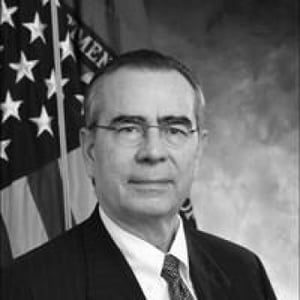
Senior Policy Advisor, PwC
L.G. “Chip” Harter: L.G. "Chip" Harter is a senior policy advisor to PwC. He served the Department of the Treasury as Deputy Assistant Secretary of Tax Policy for International Tax Affairs from September 2017 through November 2020. As Deputy Assistant Secretary for International Tax Affairs, Mr. Harter was responsible for all international tax matters at Treasury. He played a central role in representing the Treasury in the legislative process for the Tax Cuts and Jobs Act (TCJA), which was signed into law in December 2017. Mr. Harter then led the development and issuance of an integrated set of regulations to implement the new international provisions of the TCJA, including regulations to implement the Global Intangible Low Tax Income (GILTI) regime, the Base Erosion Anti-Avoidance Tax (BEAT), and the Foreign Derived Intangible Income (FDII) regime.
Mr. Harter also represented the United States in tax negotiations at the Organisation for Economic Cooperation and Development (OECD). At the OECD, he led the efforts to revise long-standing international tax rules that provide for the allocation of taxing rights over multinational businesses, representing the United States in negotiations over the designs of the Pillar 1 and Pillar 2 proposals.
In recognition of these services, Mr. Harter was awarded the Treasury Medal. Prior to joining the Treasury, Mr. Harter served for 18 years as a principal in the Washington National Tax Service of PwC. Prior to joining PwC, Mr. Harter served 18 years, first as an associate and then as a partner, with the international law firm of Baker& McKenzie. He is a member of the District of Columbia Bar.
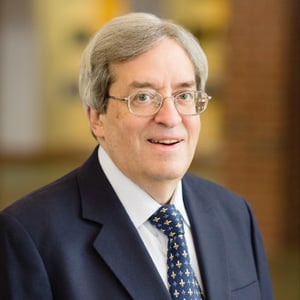
Guy Raymond Jones Chair in Law, University of Illinois
Professor Richard Kaplan, the Guy Raymond Jones Chair in Law, graduated from Indiana University with highest honors and earned his law degree from Yale University. He practiced law in Houston with Baker & Botts, specializing in U.S. tax consequences of international transactions, before joining the faculty in 1979. An internationally recognized expert on U.S. taxation and tax policy, he has lectured in these areas on three continents, testified before the U.S. Congress on several occasions, and written innovative course books on income taxation and international taxation.
Professor Kaplan developed one of the first law school courses on elder law, an emerging specialty dealing with the legal implications of extended life, and is the co-author of Elder Law in a Nutshell (7th ed. 2019). He has served as faculty advisor for the Elder Law Journal since its inception in 1992. He has also been recognized with the Outstanding Professor in the College of Law several times and has received the Campus Award for Excellence in Graduate and Professional Teaching at the University of Illinois. Professor Kaplan is a fellow of the Employee Benefits Research Institute and a member of the National Academy of Social Insurance.
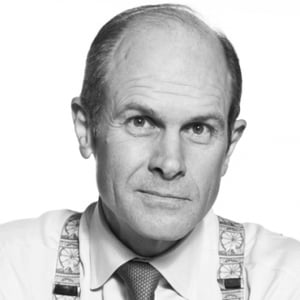
Senior Editor at Large, Fortune Magazine
Geoff Colvin is an award-winning thinker, author, broadcaster, and speaker on today's most significant trends in business.
Geoff’s latest book is Humans Are Underrated: What High Achievers Know That Brilliant Machines Never Will. Amid rising anxiety over the advance of technology and its effects on human workers, the book identifies the skills of human interaction that will be key to success for people, businesses, and nations. The New York Times calls it “profound.” The Washington Post raves that it’s “valuable for its insights into the enduring value of human performance and teamwork.” The Wall Street Journal calls it a “big idea business book [that] weaves original reporting and humor into an intelligent narrative.”
His groundbreaking bestseller Talent Is Overrated: What Really Separates World-Class Performers From Everybody Else received the Harold A. Longman Award for Best Business Book of the year and has been translated into more than a dozen languages. Geoff’s book The Upside of the Downturn: Management Strategies for Difficult Times was named the best management book of the year by Strategy + Business magazine.
As a speaker, Geoff has engaged hundreds of audiences on six continents. He is also a skilled on-stage interviewer whose subjects have included Janet Yellen, Henry Kissinger, Richard Branson, the Prince of Wales, Bill Gates, Colin Powell, Jack Welch, Alan Greenspan, Ted Turner, George H.W. Bush, George W. Bush, and many others.
Geoff is one of America's preeminent business broadcasters. He is heard daily on the CBS Radio Network, where he has made over 10,000 broadcasts and reaches seven million listeners each week. He has appeared on Today, Good Morning America, CBS This Morning, ABC's World News, CNN, CNBC, PBS's Nightly Business Report, and dozens of other programs.
A native of Vermillion, South Dakota, Geoff is an honors graduate of Harvard with a degree in economics and has an M.B.A. from New York University’s Stern School of Business.

Retired Edgar S. Woolard, Jr. Chair in Corporate Governance, University of Delaware
Professor Elson is the Edgar S. Woolard, Jr., Chair in Corporate Governance and the Director of the John L. Weinberg Center for Corporate Governance at the University of Delaware. He is also "Of Counsel" to the law firm of Holland & Knight. He formerly served as a Professor of Law at Stetson University College of Law in St. Petersburg, Florida from 1990 until 2001. His fields of expertise include corporations, securities regulation and corporate governance. He is a graduate of Harvard College and the University of Virginia Law School, and has served as a law clerk to Judges J. Harvie Wilkinson III and Elbert P. Tuttle of the United States Court of Appeals for the Fourth and Eleventh Circuits. He has been a Visiting Professor at the University of Illinois College of Law, the Cornell Law School, and the University of Maryland School of Law, and is a Salvatori Fellow at the Heritage Foundation in Washington, D.C. and a member of the American Law Institute. Professor Elson has written extensively on the subject of boards of directors. He is a frequent contributor on corporate governance issues to various scholarly and popular publications. He served on the National Association of Corporate Directors' Commissions on Director Compensation, Director Professionalism, CEO Succession, Audit Committees, Strategic Planning and Director Evaluation, was a member of its Best Practices Council on Coping With Fraud and Other Illegal Activity, and presently serves on that organization’s Advisory Council. He is Vice Chairman of the ABA Business Law Section’s Committee on Corporate Governance and a member of its Committee on Corporate Laws. Additionally, Professor Elson served as an adviser and consultant to Towers Perrin, the international human resource management consultants, a director of Circon Corporation, a medical products maker; Sunbeam Corporation, the consumer products manufacturer; Nuevo Energy Company, an independent oil and natural gas producer, the Investor Responsibility Research Center, a non-profit corporate governance research organization, Alderwoods Group, an international death care services provider and is presently, a member of the Board of Directors of AutoZone, Inc., the national automobile parts retailer, HealthSouth Corporation, a healthcare services provider.
Former Chief Justice, Delaware Supreme Court; Of Counsel, Potter Anderson
Myron T. Steele is of counsel in the firm's Corporate Litigation Group. He is the former Chief Justice of the Supreme Court of Delaware.
Previously, he served as a Judge of the Superior Court and a Vice Chancellor of the Delaware Court of Chancery after eighteen years in private litigation practice. He has presided over major corporate litigation and LLC and limited partner governance disputes, and writes frequently on issues of corporate document interpretation and corporate governance.
Chief Justice Steele has published over 400 opinions resolving disputes among members of limited liability companies, and limited partnerships, and between shareholders and management of both publicly traded and close corporations. He speaks and writes frequently on issues of corporate document interpretation and corporate governance. His thesis for the LL.M. degree, Judicial Scrutiny of Fiduciary Duties in Delaware Limited Partnerships and Limited Liability Companies, focused on the application of common law fiduciary duties within the contractual framework of alternative business organizations. It was published in the Delaware Journal of Corporate Law (32 Del. J. Corp. L. 1 (2007)). The November 2005 issue of The Business Lawyer included an article he co-authored with Sean J. Griffith entitled On Corporate Law Federalism: Threatening the Thaumatrope (61 Bus. Law. 1 (2005)). He co-authored an article with J.W. Verret entitled Delaware’s Guidance: Ensuring Equity for the Modern Witenagemot published in the Fall 2007 issue of the Virginia Law & Business Review (2 Va. L. & Bus. Rev. 188 (2007)). That article formed the basis for a keynote speech to the Business Law Section at the 2007 ABA Annual Meeting.
For the last ten years he served as judicial advisor to the Mergers and Acquisitions Committee of the ABA Business Law Section. He also co-authored an article entitled “Freedom of Contract and Default Contractual Duties in Delaware Limited Partnerships and Limited Liability Companies” (46 Am. Bus. L.J. 221 (Summer 2009)) and an essay entitled “The Moral Underpinning of Delaware’s Modern Corporate Fiduciary Duties” (26 Notre Dame J.L. Ethics & Pub. Pol’y 3 (2012)).
Chief Justice Steele served as Adjunct Professor of Law at University of Pennsylvania Law School from 2009–2013; University of Virginia Law School 2010–2017; and Pepperdine University Law School 2010–2014.

Executive Director, ESG Center, The Conference Board
Paul Washington joined The Conference Board in June 2019 as Executive Director of the ESG Center, a non-profit think tank that focuses on corporate governance, sustainability, and corporate citizenship and philanthropy.
His career has spanned the private, governmental, academic, and non-profit sectors. Before joining the ESG Center, Paul spent nearly 20 years at Time Warner Inc., serving for most of that time as Senior Vice President, Deputy General Counsel, and Corporate Secretary. He also served as Chief of Staff for the company’s Chairman and CEO. In addition to his tenure at Time Warner, Washington practiced law at the firm of Sidley & Austin and served as Vice President and Corporate Secretary of The Dime Savings Bank of New York.
In terms of public service, Paul’s served as a law clerk for former Supreme Court Associate Justices William Brennan and David Souter, and for Circuit Court Judge David Tatel. He worked on Capitol Hill for former U.S. Representative Stanley Lundine and, later, as his principal speechwriter when Lundine served as New York’s Lieutenant Governor, as well as for U.S. Senators Walter D. Huddleston and Jacob Javits. He has also served in local government in both paid and volunteer capacities.
Paul taught corporate governance as an Adjunct Professor at Fordham Law School for over a decade and has served on the boards of over 25 non-profit organizations. He was also a long-time active member of The Conference Board, including chairing its Advisory Board on Corporate/Investor Engagement.
Paul graduated magna cum laude from each of Yale College and Fordham University School of Law.
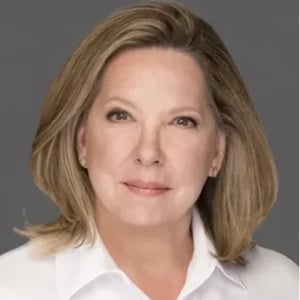
Partner and Co-Chair, Corporate Governance and Executive Compensation Practice, Sidley Austin LLP
Holly J. Gregory, co-chair of Sidley’s global Corporate Governance and Executive Compensation practice, counsels publicly held, private and not-for-profit corporations on the full range of governance issues, including governance structure and culture, fiduciary duties, risk oversight, conflicts of interest, board and committee structure, board leadership, special committee investigations, CEO transitions, board audits and self-evaluation processes, shareholder activism and initiatives, proxy contests, relationships with shareholders and proxy advisory firms, compliance with legislative, regulatory and listing rule requirements and governance “best practices.” She is frequently called on to advise boards regarding sensitive and unusual matters. While most of the matters she works on are highly confidential, high-profile matters that are in the public record include advising on governance and accountability mechanisms of the Internet Corporation for Assigned Names and Numbers (ICANN) to replace U.S. government oversight, and advising the Board of The Pennsylvania State University on governance reforms.
Holly played a key role in drafting the OECD Principles of Corporate Governance and has advised the Internal Market Directorate of the European Commission on corporate governance regulation, and the joint OECD/World Bank Global Corporate Governance Forum on governance policy for developing and emerging markets. She also drafted the National Association of Corporate Directors (NACD) Key Agreed Principles of Corporate Governance.
In addition to her legal practice and policy efforts, Holly has lectured extensively on governance topics, including at events in Europe and Asia sponsored by the U.S. State Department, International Corporate Governance Network (ICGN), The Conference Board, the NACD, Association of Corporate Counsel, Society for Corporate Governance and Institutional Shareholder Services (ISS). The author of numerous articles on governance topics, she writes the governance column for Practical Law: The Journal.
Holly recently completed her term as chair of the American Bar Association’s (ABA) Corporate Governance Committee. She is a former co-chair of the ABA’s Delaware Law and Business Forum, a former appointed member of the Corporate Laws Committee where she served as co-editor of the Corporate Director’s Guidebook (Sixth Edition). She chaired the ABA task force that delivered the Report on the Delineation of Governance Roles & Responsibilities to Congress and the SEC in 2009. Holly serves on the ABA Business Law Section Council, is a founding trustee and president of The American College of Governance Counsel and is a member of The American Law Institute. She has served as an adjunct professor at Columbia Business School and as a member of multiple NACD Blue Ribbon Commissions.
Holly clerked for the Honorable Roger J. Miner, United States Court of Appeals for the Second Circuit. A summa cum laude graduate of New York Law School and Executive Editor of its Law Review, Holly served on the Board of Trustees of New York Law School from 2009 through 2011.
Denver Managing Partner, Wilkinson Barker Knauer LLP
Raymond L. Gifford counsels communications, electric and gas utilities, and information technology companies on state and federal aspects of regulation, administrative law, and competition policy. He is an expert in public utilities law, and the law and economics of regulation of network industries. Mr. Gifford’s law and policy work focuses on the convergence of broadband communications and energy, as well as environmental policy as it applies to the electric industry. He represents clients in state and federal courts and agencies, and serves as an expert witness on utility regulation and its history. He is also a Senior Adjunct Fellow at the Silicon Flatirons Center for Law, Technology and Entrepreneurship, and Co-Directs the Institute for Regulatory Law & Economics at University of Colorado Law School.
Mr. Gifford served as Chairman of the Colorado Public Utilities Commission from 1999-2003. Following that, he served as President of The Progress & Freedom Foundation, a Washington DC-based think-tank that studied the digital revolution as it relates to regulation of network industries. He entered the regulatory law world as First Assistant Attorney General in the Colorado Attorney General’s Office. He clerked for the Honorable Richard P. Matsch of the United States District Court for the District of Colorado. Mr. Gifford has authored a number of articles on communications law, public utility regulation and competition policy in network industries. He is a graduate of University of Chicago Law School and St. John’s College in Annapolis, Maryland. He is an elected member of the American Law Institute
Barry Smitherman is principle of BARRY SMITHERMAN, P.C. and a former partner at Vinson & Elkins LLP. He served on the Texas Railroad Commission from 2011 through 2014, and was Chairman of the Commission from March 2012 through August 2014. Prior to joining the TX RRC, Barry was Chairman of the Public Utility Commission of Texas, a position he held from November 2007 through July 2011. His service as a PUCT Commissioner began in April 2004. Over this time period, Barry served two terms on the U.S. Department of Energy Electricity Advisory Committee, on the Board of Directors of the National Association of Regulatory Utility Commissioners (NARUC), Chairman of the NARUC Gas Committee, on the Electric Reliability Council of Texas (ERCOT) Board of Directors, and on the Regional State Committee of the Southwest Power Pool (SPP).
Barry presently serves on the Board of Directors of Centerpoint Energy, and of Centric Infrastructure Group. He previously served on the Board of NRG Energy, Inc. Barry is also the Chairman of BIG (Brookwood in Georgetown), a non profit which provides work, artistic, and housing opportunities for special needs adults.
Prior to beginning public service, Barry spent 16 years as a public finance investment banker with several prominent 'Wall Street' firms, including J.P. Morgan Securities, The First Boston Corporation (now part of Credit Suisse), Lazard, and Banc One Capital Markets (now part of JP MorganChase). At Banc One, he was a Managing Director and National Head of the Tax-Exempt Origination Group.
Barry received his J.D. from The University of Texas School of Law, his M.P.A. from Harvard University, and his B.B.A. summa cum laude from Texas A&M University.

Litigation Update: In re Tesla, Inc. Derivative Litigation
Robert T. Miller, Myron T. Steele
In 2018, Tesla’s board of directors proposed, and its stockholders approved by a wide margin,...
Topics
Not Another Free Lunch
This post originally appeared at Law & Liberty. Once again, we have efforts to release...
Food Safety: When Regulatory Jurisdictional Battles and Public Safety Collide
Mindy Brashears, Stephen Ostroff, Stephen Alexander Vaden, Frank Yiannas
Food is a necessity for life. It should therefore surprise few that the federal government...
Topics
A Falling Tide Reveals A Lot Of Things
Warren Buffett, the world famous investor and head of Berkshire Hathaway, has enlivened the public...
Is Crypto Legislation Coming?
J.C. Boggs, Patrick Daugherty, Dina Ellis Rochkind, Alexandra Gaiser, J. French Hill, Patrick J. McCarty
Along with the "crypto crackdown" by financial regulators in the wake of huge cryptocurrency losses...
Breakout Panel: Climate Risk a New Regulatory Risk? Implications for Financial Regulatory Control of the Financial System
Jeremy Kress, Paul H. Kupiec, Christina P. Skinner, Graham Steele, Jeffrey H. Wood
Deploying a “whole-of-government approach” to climate change, the Biden Administration has sought to disincentivize the...
Talks with Authors: The Dictatorship of Woke Capital
Eileen J. O'Connor, Stephen Soukup
Please join us for the latest installment in our Talks with Authors Series, in which...
Making Sense of Significant Potential Tax Reforms: From Global Minimums to Personal Estates
Richard Benson, David Gamage, L.G. "Chip" Harter, Richard L. Kaplan
A sharply divided Congress is facing significant challenges in order to raise revenue and meet...
Panel Two: The Shareholder and Stakeholder Views Today
Geoffrey Colvin, Charles Elson, Myron T. Steele, Paul Washington, Holly J. Gregory
A panel of scholars and practitioners will offer their divergent views on what the shareholder...
What Happened with the Texas Energy Grid
Raymond L. Gifford, Barry T. Smitherman
When the Texas electric grid failed over Valentine’s Day weekend in February 2021, the recriminations...