

Professor of Law, Antonin Scalia Law School, George Mason University
Eric R. Claeys is Professor of Law at the Antonin Scalia Law School, George Mason University. He has written widely in the fields of property, private law, and constitutional law. Professor Claeys’s current research interests focus on flourishing- and labor-based natural rights justifications for property—in American property theory, in intellectual property, and in contemporary regulation of shale gas exploration and hydraulic fracturing. He is a member of the American Law Institute, he serves on the ALI’s Members’ Consultative Group for the first Restatement of Copyright, and he also serves as an adviser to the Restatement (Fourth) of the Law of Property.
Professor Claeys received his JD from the University of Southern California Gould School of Law. He received his AB from Princeton University, and he is a former visiting fellow and current member of Princeton’s Politics Department’s James Madison Program in American Ideals and Institutions. After law school, Professor Claeys clerked for the Hon. Melvin Brunetti, U.S. Court of Appeals for the Ninth Circuit, and the Hon. William H. Rehnquist, Chief Justice of the United States.
Professor Claeys’s main teaching interests include Property, Torts, Jurisprudence, and Intellectual Property. In recent years, he has also taught Water Law, Remedies, Estates and Trusts, Trade Secrecy, Constitutional Law, Torts, and Oil and Gas law. Spring 2018, he is teaching Torts and Jurisprudence as a Visiting Professor at Harvard Law School.
U.S. Court of Appeals, Eighth Circuit
Steven M. Colloton is a federal judge on the United States Court of Appeals for the Eighth Circuit. He joined the court in 2003 after being nominated by President George W. Bush.
Born in Iowa City, Iowa, Colloton received his bachelor's degree from Princeton University in 1985 and a J.D. from Yale Law School in 1988.
Policy Counsel on Energy, Environment, and Agriculture, U.S. Senate Republican Policy Committee
Matt Leggett serves as Policy Counsel for the U.S. Senate Republican Policy Committee. He provides in-depth analysis on energy, environment, and agriculture issues, policy solutions and alternatives, and strategic guidance for all Republican members of the U.S. Senate. He manages the committee's advancement of Republican energy, environment, and agriculture policies by providing positions on legislation, floor debate, and votes. Senator John Barrasso, an orthopedic surgeon from Wyoming, serves as chairman of the committee and is the fourth ranking member of Republican leadership in the U.S. Senate.
Mr. Leggett formerly served as Legislative Counsel in the U.S. House of Representatives where he managed a Republican Congressman's Energy & Commerce Committee assignment, co-chairmanship of the Congressional Natural Gas Caucus, and co-chairmanship of the Congressional Steel Caucus. Previously, he served as a legislative aide for the U.S. House Committee on Agriculture and for a senior U.S. Senator. He also practiced corporate law in Washington, DC for two years.
Mr. Leggett graduated from the University of Virginia and Vanderbilt University Law School. He is a member of the Virginia State Bar and the District of Columbia Bar. He is also a member of the Energy Bar Association.
University Professor on the Environment, and Kerlin Professor Em, Pace University School of Law
Nicholas A. Robinson is University Professor for the Environment at Pace University and the Gilbert & Sarah Kerlin Distinguished Professor of Environmental Law at Pace Law School, and since 2006 also holds an appointment as Professor Adjunct at the Yale University School of Forestry & Environmental Studies. He served from 1996-2004 as the Legal Advisor of the International Union for the Conservation of Nature and Natural Resources (IUCN), and chaired its Commission on Environmental Law. He served on the President’s Council on Environmental Quality’s Legal Advisory Committee from 1970-72, and pioneered the early practice of environmental law in New York with James Marshall and then David Sive. In 2012, IUCN’s World Conservation Congress conferred upon him IUCN’s Honorary Membership for his contributions to IUCN and its environmental law program. In 1978, he inaugurated Pace Law School’s degree programs in environmental legal studies, taking a leave to serve as the General Counsel of the NY State Department of Environmental Conservation (1983-85). He was an environmental law delegate to the bilateral USA-USSR negotiations on cooperation in the field of environmental protection under five presidents (1974-1996). He currently serves on the Environmental & Social Advisory Council to the European Bank for Reconstruction and Development (EBRD) in London. He has chaired both the Environmental Law and International Environmental Law Committees of the New York City Bar, and served on the Board of the Environmental Law Institute (2005-11). His publications including editing the annotated 5-volume edition of the traveaux préparatoires for the 1992 Rio Earth Summit’s Agenda 21 and the UNCED Proceedings, and two volumes on Capacity Building for Environmental Law in the Asia and Pacific Region for the Asian Development Bank. He co-edited the UN Environment Programme’s Manual on International Environmental Law (2006). He has been a draftsman for the UN World Charter for Nature (UNGA Res. 37/7) and international agreements, for New York’s wetlands legislation and wild birds law, and for environmental impact assessment rules, and other domestic environmental legislation. He is a graduate of Brown University (Phi Beta Kappa, 1967) and Columbia University School of Law (1970).
Trustee Professor of Law, New York Law School
From 1972-79, Schoenbrod served as one of the leaders of the Natural Resources Defense Council, where he campaigned to reduce lead in gasoline, resurrect the then-decrepit New York City subway, and protect the environment of Puerto Rico. Previously, he was Director of Program Development at the community development project that Senator Robert Kennedy established in Bedford Stuyvesant. He has also been a senior fellow at the Cato Institute and the American Enterprise Institute.
His books include
D.C. Confidential: Inside the Five Tricks of Washington (Encounter Books, 2017) with forewords by Governor Howard Dean and Senator Mike Lee;
Breaking the Logjam: Environmental Protection That Will Work (Yale University Press, 2010)(with Richard B. Stewart and Katrina M. Wyman);
Saving Our Environment from Washington: How Congress Grabs Power, Shirks Responsibility, and Shortchanges the People (Yale University Press, 2005);
Democracy by Decree: What Happens When Courts Run Government (Yale University Press, 2003) (with Ross Sandler); and
Power Without Responsibility: How Congress Abuses the People Through Delegation (Yale University Press, 1993).
In addition to writing scholarly articles, he has frequently contributed opinion pieces to the Wall Street Journal, The Hill, the New York Times, and other publications.
He has an undergraduate degree from Yale College, a graduate degree in economics from Oxford University, which he attended as a Marshall Scholar, and a law degree from Yale Law School.
Senior Advisor, Covington & Burling LLP
Congressman Howard Berman advises clients on a wide range of foreign affairs and domestic policy matters, including defense and national security issues, investment, intellectual property, entertainment, technology and immigration. He also serves on the board of trustees of the Asia Foundation, the board of the National Democratic Institute, the Immigration Task Force of the Bipartisan Policy Center, and the Board of Directors of the Pacific Council on International Policy.
First elected to Congress in 1982, Congressman Berman became known as one of Capitol Hill’s preeminent deal-makers. National Journal described him as “one of the most creative members of the House and one of the most clear-sighted operators in American politics.”
As the chairman of the House Foreign Affairs Committee, Congressman Berman was one of Congress’ leading experts on international relations. On the Committee, he repeatedly helped build bipartisan consensus within the House, and between Congress and the Executive Branch. A long-time senior member on the House Judiciary Committee, Congressman Berman chaired the Subcommittee on Courts, the Internet and Intellectual Property, where he successfully led efforts resulting in major changes to intellectual property laws affecting the entertainment and high-tech industries.
Congressman Berman, a senior advisor not practicing law until admitted in the District of Columbia, will provide policy and legislative advice to clients and members of the firm.
Harry F. Byrd Professor of Politics, University of Virginia
James W. Ceaser is Harry F. Byrd Professor of Politics at the University of Virginia, where he has taught since 1976, and a senior fellow at the Hoover Institution. He has written several books on American politics and political thought, including Presidential Selection, Liberal Democracy and Political Science, Reconstructing America, Nature and History in American Political Development, and Designing a Polity. Professor Ceaser has served as the Academic Chairman of the Jack Miller Center since its inception in 2004. He is a regular contributor to the popular press and comments frequently on American politics for La Voix d’Amérique, the French-African outlet for the Voice of America.

U.S. Court of Appeals, Seventh Circuit
Frank H. Easterbrook is a judge of the United States Court of Appeals for the Seventh Circuit and a Senior Lecturer at the Law School of the University of Chicago. He was Chief Judge from 2006–2013. Before joining the court in 1985, he was the Lee andBrena Freeman Professor of Law at the University of Chicago, where he taught and wrote in antitrust, securities, corporate law, jurisprudence, and criminal procedure. He has published The Economic Structure of Corporate Law (with Daniel R. Fischel) and about 100 scholarly articles. He served as Co-Editor of the Journal of Law and Economics from 1982 to 1991 and as a member of the Judicial Conference’s Standing Committee on Rules of Practice and Procedure from 1991 to 1997. Before joining the faculty of the Law School in 1979, Judge Easterbrook was Deputy Solicitor General of the United States. He holds degrees from Swarthmore College (B.A. with high honors, 1970) and the University of Chicago (J.D. cum laude, 1973), and is a member of the American Academy of Arts and Sciences, the American Law Institute, the Mont Pelerin Society, Phi Beta Kappa, and the Order of the Coif.

Professor of Law, Antonin Scalia Law School, George Mason University
Professor of Law Michael S. Greve joined the faculty of the Antonin Scalia Law School, George Mason University in fall 2012 after having served as John G. Searle Scholar at the American Enterprise Institute (AEI), where he specialized in constitutional law, courts, and business regulation and served as chairman of the Competitive Enterprise Institute. Prior to joining AEI, Greve was founder and co-director of the Center for Individual Rights, a public interest law firm specializing in constitutional litigation.
Greve has served previously as an adjunct professor at a number of universities, including Cornell and Johns Hopkins Universities, and has been a visiting professor at Boston College since 2004. He was awarded a PhD and an MA in government by Cornell University. Greve also earned a Diploma from the University of Hamburg in Germany.
A prolific writer, Greve is the author of nine books and a multitude of articles appearing in scholarly publications, as well as numerous editorials, short articles, and book reviews. He is a frequent speaker for professional and scholarly organizations and has made many appearances on radio and television.
In addition Greve has provided congressional and state legislative testimony, has lobbied and consulted in federal agency proceedings, and has provided litigation services and management in over 30 cases, including matters before the U.S. Supreme Court.
Professor of Politics and Public Affairs, Princeton University
Frances E. Lee is jointly appointed in the Department of Politics and the Woodrow Wilson School of Public and International Affairs where she is Professor of Politics and Public Affairs.
Lee has broad interests in American politics, with a special focus on congressional politics, national policymaking, party politics, and representation. She is author of Insecure Majorities: Congress and the Perpetual Campaign (2016) and Beyond Ideology: Politics, Principles, and Partisanship in the U.S. Senate (2009). She is also coauthor of Sizing Up The Senate: The Unequal Consequences of Equal Representation (1999) and a textbook, Congress and Its Members (Sage / CQ Press). Her research has appeared in the American Political Science Review, American Journal of Political Science, Perspectives on Politics, Journal of Politics, Legislative Studies Quarterly, and other outlets.
Lee is editor of the Cambridge Elements Series in American Politics and a series editor for the Chicago Studies in American Politics. She was co-editor of Legislative Studies Quarterly from 2014 to 2019.
Lee earned her B.A. from the University of Southern Mississippi and her Ph.D. from Vanderbilt University. She is a fellow of the American Academy of Arts and Sciences.

Sudler Family Professor of Constitutional Law, New York University School of Law
Richard H. Pildes is one of the nation’s leading scholars of constitutional law and a specialist in legal issues affecting democracy. He is a Member of the American Academy of Arts and Sciences and the American Law Institute, and has received recognition as a Guggenheim Fellow and a Carnegie Scholar. His acclaimed casebook, The Law of Democracy: Legal Structure of the Political Process (now in its fourth edition), helped create an entirely new field of study in the law schools. The Law of Democracy systematically explores legal and policy issues concerning the structure of democratic elections and institutions, such as the role of money in politics, the design of election districts, the regulation of political parties, the design of voting systems, the representation of minority interests in democratic institutions, and similar issues. He has written extensively on the rise of political polarization in the United States, the Voting Rights Act, the dysfunction of America’s political processes, the role of the Supreme Court in overseeing American democracy, the powers of the American President and Congress, and he has criticized excessively “romantic” understandings of democracy. In addition to his scholarship on these issues, he has written on national-security law, the design of the regulatory state, and American constitutional history and theory.
Respect for his expertise in these areas is reflected in frequent citations of his work in U.S. Supreme Court opinions, the translation of his work into many languages, and his frequent public lectures and appearances around the world, including his nomination with the NBC News Team for an Emmy Award for coverage of the 2000 Presidential election litigation.
His work has been translated and published in Chinese, French, Spanish, and Portuguese. In addition to his scholarship, Professor Pildes plays an active role litigating in these areas. He has won two cases before the United States Supreme Court, including a 2015 victory in Alabama Democratic Conference v. Alabama, a case involving race and redistricting. He served as counsel to a group of former chairmen of the Securities and Exchange Commission in litigation defending the constitutionality of the Sarbanes-Oxley Act; as counsel in election litigation to the Puerto Rico Electoral Commission; as counsel to the government of Puerto Rico; as a federal court-appointed independent expert on voting rights litigation; and as counsel in successful Supreme Court litigation that challenged the way the United States Tax Court operated. He was also a senior legal advisor to the 2008 and 2012 campaigns of President Obama.
Pildes received his A.B. in physical chemistry summa cum laude from Princeton, and his J.D. magna cum laude from Harvard, where he served as Supreme Court Note Editor on the Harvard Law Review. He clerked for Judge Abner J. Mikva of the U.S. Court of Appeals for the District of Columbia Circuit and for Justice Thurgood Marshall of the U.S. Supreme Court. After practicing law in Boston, he began his academic career at the University of Michigan Law School, before joining the NYU School of Law in 2001.

Executive Vice President, The Federalist Society
Dean Reuter is Executive Vice President at the Federalist Society for Law and Public Policy Studies. He has served in two federal government agency Offices of the Inspector General, as Counsel to the Inspector General and Deputy Inspector General, responsible for policing the use of federal funds granted and contracted through those agencies. As such, he helped conduct and oversee criminal investigations across the country. He is the principal author of the non-fiction book, The Hidden Nazi: The Untold Story of America's Deal with the Devil, and editor of Liberty’s Nemesis: The Unchecked Expansion of the State and Confronting Terror: 9/11 and the Future of American National Security. He was appointed by the President and served as Vice-Chairman of the Board of Directors of the Corporation for National and Community Service, and recently served as an appointee on the U.S. Commission on Presidential Scholars. He is a graduate of Hood College (BA with Honors) and the University of Maryland School of Law.
Lecturer in Law, University of Pennsylvania Carey Law School
Matthew Lee Wiener served until recently as the twice-presidentially appointed Acting Chair and Vice Chair of the Administrative Conference of the United States (ACUS), as well as a member of its Council and its Executive Director. (In 2016, President Obama nominated him to be ACUS’s Chairman.)
He is now a special counsel to ACUS, co-chair of its Council on Federal Administrative Adjudication, and a lecturer at the University of Pennsylvania Carey Law School, where he teaches Administrative Law.
Before affiliating with ACUS, Mr. Wiener was general counsel to U.S. Senator Arlen Specter (Senate Committee on the Judiciary), counsel to the U.S. House of Representatives Committee on the Judiciary, a partner at Dechert LLP, and special counsel to Cuneo Gilbert & LaDuca.
He has taught courses on administrative law, administrative practice, regulation remedies, statutory interpretation, and separation of powers at the law schools of the University of Pennsylvania, Rutgers University, and George Mason University.
Mr. Wiener is an elected member of the American Law Institute, a fellow of the American Bar Foundation, and co-chair of the Adjudication Committee of the American Bar Association’s Section of Administrative Law and Regulatory Practice.
Mr. Wiener holds a J.D. from Stanford Law School, where he was Articles Editor of the Stanford Law Review, and an A.B. from William and Mary.
Senior Advisor, Covington & Burling LLP
Congressman Howard Berman advises clients on a wide range of foreign affairs and domestic policy matters, including defense and national security issues, investment, intellectual property, entertainment, technology and immigration. He also serves on the board of trustees of the Asia Foundation, the board of the National Democratic Institute, the Immigration Task Force of the Bipartisan Policy Center, and the Board of Directors of the Pacific Council on International Policy.
First elected to Congress in 1982, Congressman Berman became known as one of Capitol Hill’s preeminent deal-makers. National Journal described him as “one of the most creative members of the House and one of the most clear-sighted operators in American politics.”
As the chairman of the House Foreign Affairs Committee, Congressman Berman was one of Congress’ leading experts on international relations. On the Committee, he repeatedly helped build bipartisan consensus within the House, and between Congress and the Executive Branch. A long-time senior member on the House Judiciary Committee, Congressman Berman chaired the Subcommittee on Courts, the Internet and Intellectual Property, where he successfully led efforts resulting in major changes to intellectual property laws affecting the entertainment and high-tech industries.
Congressman Berman, a senior advisor not practicing law until admitted in the District of Columbia, will provide policy and legislative advice to clients and members of the firm.
Harry F. Byrd Professor of Politics, University of Virginia
James W. Ceaser is Harry F. Byrd Professor of Politics at the University of Virginia, where he has taught since 1976, and a senior fellow at the Hoover Institution. He has written several books on American politics and political thought, including Presidential Selection, Liberal Democracy and Political Science, Reconstructing America, Nature and History in American Political Development, and Designing a Polity. Professor Ceaser has served as the Academic Chairman of the Jack Miller Center since its inception in 2004. He is a regular contributor to the popular press and comments frequently on American politics for La Voix d’Amérique, the French-African outlet for the Voice of America.
U.S. Court of Appeals, Seventh Circuit
Frank H. Easterbrook is a judge of the United States Court of Appeals for the Seventh Circuit and a Senior Lecturer at the Law School of the University of Chicago. He was Chief Judge from 2006–2013. Before joining the court in 1985, he was the Lee andBrena Freeman Professor of Law at the University of Chicago, where he taught and wrote in antitrust, securities, corporate law, jurisprudence, and criminal procedure. He has published The Economic Structure of Corporate Law (with Daniel R. Fischel) and about 100 scholarly articles. He served as Co-Editor of the Journal of Law and Economics from 1982 to 1991 and as a member of the Judicial Conference’s Standing Committee on Rules of Practice and Procedure from 1991 to 1997. Before joining the faculty of the Law School in 1979, Judge Easterbrook was Deputy Solicitor General of the United States. He holds degrees from Swarthmore College (B.A. with high honors, 1970) and the University of Chicago (J.D. cum laude, 1973), and is a member of the American Academy of Arts and Sciences, the American Law Institute, the Mont Pelerin Society, Phi Beta Kappa, and the Order of the Coif.
Professor of Law, Antonin Scalia Law School, George Mason University
Professor of Law Michael S. Greve joined the faculty of the Antonin Scalia Law School, George Mason University in fall 2012 after having served as John G. Searle Scholar at the American Enterprise Institute (AEI), where he specialized in constitutional law, courts, and business regulation and served as chairman of the Competitive Enterprise Institute. Prior to joining AEI, Greve was founder and co-director of the Center for Individual Rights, a public interest law firm specializing in constitutional litigation.
Greve has served previously as an adjunct professor at a number of universities, including Cornell and Johns Hopkins Universities, and has been a visiting professor at Boston College since 2004. He was awarded a PhD and an MA in government by Cornell University. Greve also earned a Diploma from the University of Hamburg in Germany.
A prolific writer, Greve is the author of nine books and a multitude of articles appearing in scholarly publications, as well as numerous editorials, short articles, and book reviews. He is a frequent speaker for professional and scholarly organizations and has made many appearances on radio and television.
In addition Greve has provided congressional and state legislative testimony, has lobbied and consulted in federal agency proceedings, and has provided litigation services and management in over 30 cases, including matters before the U.S. Supreme Court.
Professor of Politics and Public Affairs, Princeton University
Frances E. Lee is jointly appointed in the Department of Politics and the Woodrow Wilson School of Public and International Affairs where she is Professor of Politics and Public Affairs.
Lee has broad interests in American politics, with a special focus on congressional politics, national policymaking, party politics, and representation. She is author of Insecure Majorities: Congress and the Perpetual Campaign (2016) and Beyond Ideology: Politics, Principles, and Partisanship in the U.S. Senate (2009). She is also coauthor of Sizing Up The Senate: The Unequal Consequences of Equal Representation (1999) and a textbook, Congress and Its Members (Sage / CQ Press). Her research has appeared in the American Political Science Review, American Journal of Political Science, Perspectives on Politics, Journal of Politics, Legislative Studies Quarterly, and other outlets.
Lee is editor of the Cambridge Elements Series in American Politics and a series editor for the Chicago Studies in American Politics. She was co-editor of Legislative Studies Quarterly from 2014 to 2019.
Lee earned her B.A. from the University of Southern Mississippi and her Ph.D. from Vanderbilt University. She is a fellow of the American Academy of Arts and Sciences.
Sudler Family Professor of Constitutional Law, New York University School of Law
Richard H. Pildes is one of the nation’s leading scholars of constitutional law and a specialist in legal issues affecting democracy. He is a Member of the American Academy of Arts and Sciences and the American Law Institute, and has received recognition as a Guggenheim Fellow and a Carnegie Scholar. His acclaimed casebook, The Law of Democracy: Legal Structure of the Political Process (now in its fourth edition), helped create an entirely new field of study in the law schools. The Law of Democracy systematically explores legal and policy issues concerning the structure of democratic elections and institutions, such as the role of money in politics, the design of election districts, the regulation of political parties, the design of voting systems, the representation of minority interests in democratic institutions, and similar issues. He has written extensively on the rise of political polarization in the United States, the Voting Rights Act, the dysfunction of America’s political processes, the role of the Supreme Court in overseeing American democracy, the powers of the American President and Congress, and he has criticized excessively “romantic” understandings of democracy. In addition to his scholarship on these issues, he has written on national-security law, the design of the regulatory state, and American constitutional history and theory.
Respect for his expertise in these areas is reflected in frequent citations of his work in U.S. Supreme Court opinions, the translation of his work into many languages, and his frequent public lectures and appearances around the world, including his nomination with the NBC News Team for an Emmy Award for coverage of the 2000 Presidential election litigation.
His work has been translated and published in Chinese, French, Spanish, and Portuguese. In addition to his scholarship, Professor Pildes plays an active role litigating in these areas. He has won two cases before the United States Supreme Court, including a 2015 victory in Alabama Democratic Conference v. Alabama, a case involving race and redistricting. He served as counsel to a group of former chairmen of the Securities and Exchange Commission in litigation defending the constitutionality of the Sarbanes-Oxley Act; as counsel in election litigation to the Puerto Rico Electoral Commission; as counsel to the government of Puerto Rico; as a federal court-appointed independent expert on voting rights litigation; and as counsel in successful Supreme Court litigation that challenged the way the United States Tax Court operated. He was also a senior legal advisor to the 2008 and 2012 campaigns of President Obama.
Pildes received his A.B. in physical chemistry summa cum laude from Princeton, and his J.D. magna cum laude from Harvard, where he served as Supreme Court Note Editor on the Harvard Law Review. He clerked for Judge Abner J. Mikva of the U.S. Court of Appeals for the District of Columbia Circuit and for Justice Thurgood Marshall of the U.S. Supreme Court. After practicing law in Boston, he began his academic career at the University of Michigan Law School, before joining the NYU School of Law in 2001.
Executive Vice President, The Federalist Society
Dean Reuter is Executive Vice President at the Federalist Society for Law and Public Policy Studies. He has served in two federal government agency Offices of the Inspector General, as Counsel to the Inspector General and Deputy Inspector General, responsible for policing the use of federal funds granted and contracted through those agencies. As such, he helped conduct and oversee criminal investigations across the country. He is the principal author of the non-fiction book, The Hidden Nazi: The Untold Story of America's Deal with the Devil, and editor of Liberty’s Nemesis: The Unchecked Expansion of the State and Confronting Terror: 9/11 and the Future of American National Security. He was appointed by the President and served as Vice-Chairman of the Board of Directors of the Corporation for National and Community Service, and recently served as an appointee on the U.S. Commission on Presidential Scholars. He is a graduate of Hood College (BA with Honors) and the University of Maryland School of Law.
Lecturer in Law, University of Pennsylvania Carey Law School
Matthew Lee Wiener served until recently as the twice-presidentially appointed Acting Chair and Vice Chair of the Administrative Conference of the United States (ACUS), as well as a member of its Council and its Executive Director. (In 2016, President Obama nominated him to be ACUS’s Chairman.)
He is now a special counsel to ACUS, co-chair of its Council on Federal Administrative Adjudication, and a lecturer at the University of Pennsylvania Carey Law School, where he teaches Administrative Law.
Before affiliating with ACUS, Mr. Wiener was general counsel to U.S. Senator Arlen Specter (Senate Committee on the Judiciary), counsel to the U.S. House of Representatives Committee on the Judiciary, a partner at Dechert LLP, and special counsel to Cuneo Gilbert & LaDuca.
He has taught courses on administrative law, administrative practice, regulation remedies, statutory interpretation, and separation of powers at the law schools of the University of Pennsylvania, Rutgers University, and George Mason University.
Mr. Wiener is an elected member of the American Law Institute, a fellow of the American Bar Foundation, and co-chair of the Adjudication Committee of the American Bar Association’s Section of Administrative Law and Regulatory Practice.
Mr. Wiener holds a J.D. from Stanford Law School, where he was Articles Editor of the Stanford Law Review, and an A.B. from William and Mary.
Associate Professor, George Mason University School of Policy, G, and International Affairs
Colin Dueck is an Associate Professor in George Mason University’s School of Policy, Government, and International Affairs. He studied politics at Princeton University, and international relations at Oxford under a Rhodes scholarship. He has published three books on American foreign and national security policies, The Obama Doctrine: American Grand Strategy Today (Oxford 2015), Hard Line: The Republican Party and U.S. Foreign Policy since World War II (Princeton 2010), andReluctant Crusaders: Power, Culture, and Change in American Grand Strategy (Princeton 2006.) He has provided congressional testimony and published articles on these same subjects in journals such as International Security, Orbis, Security Studies, Review of International Studies, Political Science Quarterly, and World Policy Journal, as well as online at RealClearPolitics, National Review, Foreign Affairs, The National Interest, and the New York Times. His current research focus is on the relationship between party politics, presidential leadership, American conservatism, and U.S. foreign policy strategies. He is the faculty adviser for the Alexander Hamilton Society at George Mason University, and a member of the International Institute for Strategic Studies.
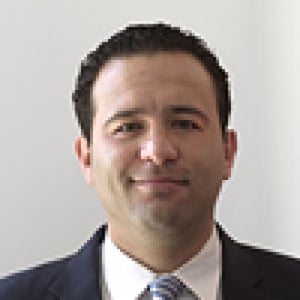
Research Fellow in Defense and Homeland Security Studies, Cato Institute
Benjamin H. Friedman is a research fellow in defense and homeland security studies. He writes about U.S. defense politics, focusing on strategy, budgeting, and war. He has co-edited two books and has published in International Security, Political Science Quarterly, Foreign Affairs, the New York Times, the LA Times, the Atlantic, the Philadelphia Inquirer, USA Today, the Hill, Politico, the Christian Science Monitor, and various other journals. Ben is a graduate of Dartmouth College, a Ph.D. candidate in Political Science at the Massachusetts Institute of Technology, and an Adjunct Lecturer at George Washington’s Elliott School of International Affairs.
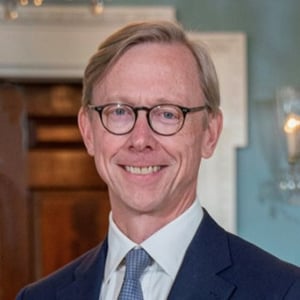
Founder, Latitude, LLC
Brian Hook is the founder of Latitude, LLC, an international strategic consulting firm based in Washington, DC.
Mr. Hook worked on the Romney campaign as senior advisor on foreign policy. He chaired the foreign policy and national security task forces of the Romney Readiness Project. From 2010-2011, he was the foreign policy director of Governor Tim Pawlenty’s presidential campaign.
Mr. Hook served in a number of positions during the Bush Administration, including Assistant Secretary of State for International Organizations; Senior Advisor to the U.S. Ambassador to the United Nations; Special Assistant to the President for Policy, Office of the Chief of Staff; and Counsel, Office of Legal Policy, at the Justice Department.
From 1999-2003, he practiced corporate law at Hogan & Hartson in Washington, D.C.
Before practicing law, he served as a policy advisor to Iowa Governor Terry Branstad and to U.S. Congressman James Leach.
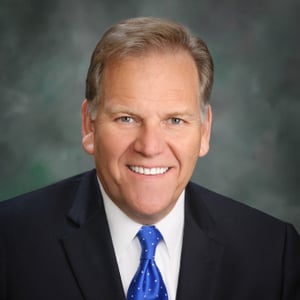
David Abshire Chair, Center for the Study of the Presidency and Congress
Mike Rogers is a former member of Congress representing Michigan's Eighth Congressional District, and previously served as an officer in the U.S. Army and FBI special agent.
While in Congress Mr. Rogers chaired the powerful House Permanent Select Committee on Intelligence (HPSCI) where he authorized and oversaw a budget of $70 billion that funded the nation's 17 intelligence agencies.
He currently serves as the Vice Chairman of the Board at the MITRE Corporation, and as a Director at leading companies including CyberSponse, IAP, and 4IQ. He is currently investing in and helping build companies that are developing solutions for healthcare, energy efficiency and communications challenges.
Mr. Rogers is a Senior Fellow at Harvard University and a member of the Board of Trustees and the David Abshire Chair at the Center for the Study of the Presidency and Congress, where he directs the Center’s national security programs. Mr. Rogers is a regular public speaker on global affairs, cybersecurity, and leadership.
He also serves as a regular national security commentator on CNN and hosted the channel’s documentary-style original series Declassified, which offered viewers insights into America’s spy stories. Mr. Rogers is a 1985 graduate of Adrian College. He is married to Kristi Rogers and has two children.
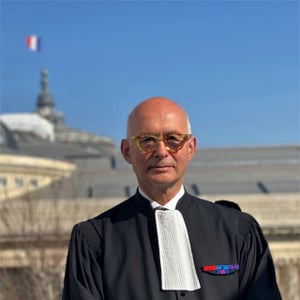
Partner, Supreme Court Attorney, Cabinet Briard LLP
François-Henri Briard is a Knight of the Legion of Honor, an Officer of the National Order of Merit and a Knight of the Palmes Académiques.
He was a member of the Governing Board of the Bar of the French Supreme Courts (2003-2005).
François-Henri Briard was a trustee of Sarah Lawrence College in New York for eight years. He is President of the Institut Vergennes, a member of the U.S. Supreme Court Historical Society and an honorary member of the Society of the Cincinnati and of the Sons of the American Revolution. He is also an expert with the Federalist Society, a U.S. think tank that focuses on constitutional and judicial issues.
He is a member of the Institute of Consulting Tax Attorneys (IACF) and an associate member of the Academy of Moral Sciences, Letters and Arts of Versailles and Ile de France.
He is a member of the French Navy civilian reserve with the rank of frigate captain and has been awarded a medal by the voluntary military services. On behalf of the Firm, he received the Military Reserve Prize (2011).
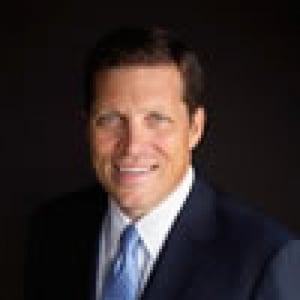
Partner, Graves Garrett LLC
Todd Graves is a lawyer in private practice with the law firm of Graves Garrett. Todd represents individuals and businesses nationwide before federal and state courts and administrative agencies. His areas of expertise include white collar criminal defense, political speech and election law, internal investigations, regulatory compliance, and complex commercial litigation. Todd is admitted to the United States Supreme Court, the Missouri Bar, the Kansas Bar, the Texas Bar, the Iowa Bar, the Federal Courts of Appeals for the Tenth Circuit, the Eighth Circuit and the Sixth Circuit, and the Federal District Courts for the Western District of Missouri, Eastern District of Missouri, the District of Kansas, and the Western District of Michigan.
Todd currently serves as Executive Vice-President of the Pony Express Council of the Boy Scouts of America. He is a member of the Board of Directors of the American Royal Association and a founding board member of the Kansas City Missouri Police Foundation.
Before forming Graves Garrett, Todd served as the United States Attorney for the Western District of Missouri. As United States Attorney, Todd was responsible for prosecuting federal crimes including mail and wire fraud, money laundering, public corruption, health care fraud, child pornography, firearms violations, narcotics trafficking, pharmaceutical diversion, corporate fraud, and terrorism financing. During Graves’ tenure, felony filings doubled.
In addition, Todd was responsible for defending civil lawsuits brought against the United States, handling federal forfeiture actions, and collecting debts and restitution. Todd managed a staff of 120 with headquarters in Kansas City and two branch offices.
Todd also served as a member of the Attorney General’s Advisory Committee, advising the Attorney General on Department of Justice national priorities and policies. Todd participated in drafting Department of Justice policies in corporate investigations including charging, pre-trial diversion, and sentencing. Todd was also a member of the national Executive Working Group, which includes six Department of Justice officials, six state attorneys general, and six district attorneys.
Todd was appointed United States Attorney from his position as Platte County Prosecuting Attorney, an office to which he was elected in 1994 and 1998. At the time of his election in 1994, he was the youngest full-time prosecuting attorney in Missouri. In that position, he oversaw a yearly caseload of approximately 400 felonies, 2500 misdemeanors and 14,000 traffic offenses.
As Prosecuting Attorney and as United States Attorney, Todd actively managed cases and trials under his authority and personally tried numerous jury trials to verdict, including cases of child molestation, drug distribution, murder and capital murder.
Prior to his service as Platte County Prosecuting Attorney, Todd was in private practice with the Bryan Cave law firm. Before joining Bryan Cave, he was an Assistant Attorney General for the State of Missouri.
In 1991, Todd received his law degree and a master’s degree in public administration from the University of Virginia. He received a bachelor’s degree, Summa Cum Laude, from the University of Missouri in 1988.
Raised on a family farm near Tarkio, Missouri, Todd has been married 24 years to his wife, Tracy. The couple has four children, and they reside on a 270 acre farm north of Kansas City that has been in the family since 1867.
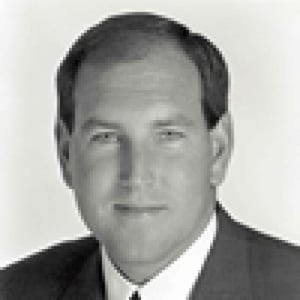
U.S. Court of Appeals, Eighth Circuit
The Honorable Raymond W. Gruender was nominated by President George W. Bush to the United States Court of Appeals for the Eighth Circuit on September 29, 2003, and confirmed by the Senate on May 20, 2004. He was sworn in on June 28, 2004. Between 2012 and 2014, he served on the Judicial Conference Committee on Criminal Law.
From May 2001 until May 2004, Judge Gruender served as the United States Attorney for the Eastern District of Missouri where he oversaw an office of sixty Assistant United States Attorneys (AUSAs) actively engaged in both civil and criminal matters. Between 2001 and 2002, he served on the Attorney General’s Advisory Committee. Prior to serving as the United States Attorney, Judge Gruender served as an AUSA between 1990 and 1994 and again between 2000 and 2001. As an AUSA, he specialized in prosecuting white-collar and public corruption matters.
In addition to his experience as a federal prosecutor, Judge Gruender spent nine years in private practice. Between 1987 and 1990, he was an associate with Lewis, Rice and Fingersh. Between 1994 and 2000, he was a partner with Thompson Coburn, LLP. He has represented both plaintiffs and defendants in a broad array of civil matters such as admiralty, antitrust, contracts, employment, securities, fraud, banking and various tort claims. His practice also included representing those accused of or under investigation for crimes, as well as victims and witnesses of crimes. Although his practice primarily was in federal courts, he also was active in state courts. He is a member of the Missouri and Illinois bars, and and the Federalist Society.
Judge Gruender graduated from St. Louis University High School in 1981. By 1987, he had obtained Bachelor of Science in Business Administration, Master of Business Administration and Juris Doctorate degrees from Washington University in St. Louis. He served on the Washington University Law Quarterly and was a member of the Order of the Coif. In December 2003, he was awarded an honorary Doctor of Laws degree by William Woods University in Fulton, Missouri.
Judge Gruender also has been active in civic affairs. He served on the Board of Directors, including as board president, of A.L.I.V.E. (Alternatives to Living in Violent Environments), a not-for-profit organization dedicated to eliminating domestic violence and serving its victims. He currently serves on the Board of Directors of the St. Louis Variety Club, having received its 2003 “Have a Heart, Lend a Hand” volunteer award. He also has served as a director of the Shakespeare Festival of St. Louis.
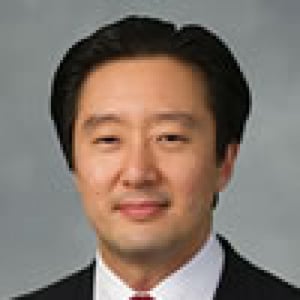
Partner, Alston & Bird LLP
Edward (Ted) Kang’s practice focuses on white collar defense and compliance in the areas of the Foreign Corrupt Practices Act (FCPA), False Claims Act (FCA), Office of Foreign Assets Control (OFAC) sanctions, anti-money laundering, antitrust, and the Food, Drug, and Cosmetic Act (FDCA).
Ted represents companies and individuals under investigation by the Department of Justice (DOJ) and other federal and state enforcement agencies. He also counsels and conducts internal investigations for clients in a wide range of industries. Ted is an accomplished courtroom lawyer and has tried a dozen cases to verdict and argued nine cases on appeal to federal circuit courts.
Ted served for eight years as a federal prosecutor in the Department of Justice’s Criminal Division and at the U.S. Attorney’s Office for the District of Connecticut, where he prosecuted some of the department’s most high-profile fraud and public corruption cases. He is a recipient of the 2012 Attorney General’s Award for Distinguished Service and was named a 2014 D.C. “Rising Star” by The National Law Journal.
Ted is frequently called upon to provide expert analysis on white collar matters. He has provided legal commentary for The Washington Post and The Wall Street Journal and was a television analyst for WUSA9-DC.

Vice President, Edwin Meese III Institute for the Rule of Law, Advancing American Freedom
John G. Malcolm oversees Advancing American Freedom’s work to increase understanding of the Constitution and the rule of law as Vice President of the organization’s Edwin Meese III Institute for the Rule of Law. Malcolm brings to the challenge a wealth of legal expertise and experience in both the public and private sectors.
Prior to joining Advancing American Freedom in 2025, Malcolm was the Vice President of the Institute for Constitutional Government and the Director of the Meese Center for Legal and Judicial Studies at the Heritage Foundation. Prior to joining Heritage in 2012, Malcolm was general counsel at the U.S. Commission on International Religious Freedom, as well as a distinguished practitioner in residence at Pepperdine Law School. From 2004 to 2009, Malcolm was executive vice president and director of worldwide anti-piracy operations for the Motion Picture Association.
Malcolm served as a deputy assistant attorney general in the Department of Justice’s Criminal Division from 2001 to 2004, where he oversaw sections on computer crime and intellectual property, domestic security, child exploitation and obscenity, and special investigations. Immediately prior to that, he was a founding partner in the Atlanta law firm of Malcolm & Schroeder, LLP.
From 1990 to 1997, Malcolm was an assistant U.S. attorney in Atlanta, assigned to the fraud and public corruption section, and also an associate independent counsel, investigating fraud and abuse in the Department of Housing and Urban Development. He was honored with the Director’s Award for Superior Performance for his work in connection with the successful prosecution of Walter Leroy Moody Jr., who assassinated an 11th Circuit judge and the head of the Savannah chapter of the NAACP.
A graduate of Harvard Law School and Columbia College, Malcolm began his career as a law clerk to a federal district court judge and a federal appellate court judge, and as an associate at the Atlanta-based law firm of Sutherland, Asbill & Brennan (new Eversheds Sutherland).
Malcolm, who resides in Washington, D.C., serves on the Board of Trustees of the Washington National Opera and is a Senate-confirmed member of the Board of Directors of the Legal Services Corporation, the largest funder of civil legal aid in the United States.

Thomas M. Siebel Senior Fellow, The Hoover Institution, Stanford University; Gary T. Schwartz Distinguished Professor of Law Emeritus, UCLA School of Law
Eugene Volokh is the Thomas M. Siebel Senior Fellow at the Hoover Institution (Stanford), as well as the Gary T. Schwartz Distinguished Professor of Law Emeritus and Distinguished Research Professor at UCLA School of Law. He recently retired from teaching at UCLA, after 30 years there, and is now focusing on research.
Volokh is the author of the textbooks The First Amendment and Related Statutes (8th ed. 2023), and Academic Legal Writing (5th ed. 2016), as well as over 100 academic law journal articles, mostly on First Amendment law. He is a member of The American Law Institute; the editor-in-chief of the Journal of Free Speech Law; and the creator and coauthor of The Volokh Conspiracy, a leading legal blog founded in 2002 (hosted at the Washington Post from 2014 to 2017 and now at Reason Magazine).
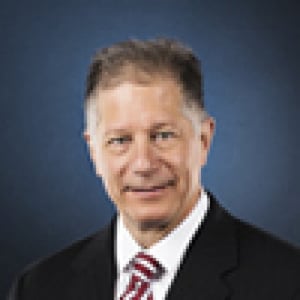
Partner, Arent Fox LLP
Peter is a partner in Arent Fox's White Collar & Investigations practice. His practice focuses on defending companies and individuals in white collar criminal matters and other issues that are related to internal fraud investigations and corporate governance.
Prior to joining Arent Fox, Peter was a partner at an international law firm where he represented businesses and individuals threatened with government investigations. Before working at that firm, he spent 17 years as a federal prosecutor at the Justice Department, where he served in both the Public Integrity Section of the Criminal Division and at the United States Attorney’s Office in the District of Columbia.
While Peter was at the DOJ, he investigated and prosecuted local, state, and federal officials. His trial experience included some of the DOJ’s highest profile criminal cases. One of these cases involved Peter’s service as a Deputy Special Counsel in the investigation and prosecution of Lewis “Scooter” Libby. While at the Public Integrity Section, Peter was also responsible for the prosecution of David Safavian, in which the former Chief of Staff of the General Services Administration (GSA) was tried for obstruction of justice and false statements in connection with the Jack Abramoff investigation.
While at the DOJ, Peter coordinated and supervised investigations conducted by the Federal Bureau of Investigation (FBI), the Office of Inspector Generals (OIG) from the GSA, the DOJ, the Drug Enforcement Agency (DEA), and the Special Inspector General for Iraq Reconstruction (SIGIR).
Prior to his work at the DOJ, Peter was an Assistant United States Attorney in the District of Columbia. There he spent the majority of his time prosecuting violent crimes, winning convictions in 16 out of 18 first-degree murder cases he tried. In addition, Peter won life sentences for all six of the defendants he prosecuted in a nine-month long Racketeer Influenced and Corrupt Organizations (RICO) prosecution of a murderous drug-gang. In his career, Peter has first-chaired over 100 jury trials and argued two dozen appellate cases.
In addition to his work at the federal level, Peter was also a state prosecutor for five years in Middlesex County, Massachusetts.

Laurence A. Tisch Professor of Law and Director, Classical Liberal Institute, New York University School of Law; Senior Fellow, The Civitas Institute, University of Texas at Austin
Richard A. Epstein is the inaugural Laurence A. Tisch Professor of Law at NYU School of Law. Prior to his joining the faculty, he was a visiting law professor at NYU from 2007 through 2009. He served as the Peter and Kirstin Bedford Senior Fellow at the Hoover Institution from 2000 to 2024. Since 2024 to the present he is a senior lecturer at the Civitas Institute at the University of Texas—Austin. Epstein is also the James Parker Hall Distinguished Service Professor of Law Emeritus and a senior lecturer at the University of Chicago. His initial law school appointment was at the University of Southern California from 1968 to 1972. Epstein received an LL.D., h.c. from the University of Ghent, 2003. He has been a member of the American Academy of Arts and Sciences since 1985 and was a Senior Fellow of the Center for Clinical Medical Ethics at the University of Chicago Division of Biological Sciences, also from 1983. to 2022 He served as editor of the Journal of Legal Studies from 1981 to 1991, and of the Journal of Law and Economics from 1991-2001. From 2001 to 2010 he was a director of the John M. Olin Program in Law and Economics at the University of Chicago.
His newest book, The Myth of Birthright Citizenship: What the Fourteenth Amendment Really Says was published in 2026 (Encounter Books). Prior to that he has published many books including, The Dubious Morality of the Modern Administrative State (Roman & Littlefield 2020).Earlier he published th Classical Liberal Constitution: The Uncertain Quest for Limited Government (Harvard 2014) iHis previous books include Design for Liberty: Private Property, Public Administration and the Rule of Law (Harvard 2011); The Case Against the Employee Free Choice Act (Hoover 2009); Supreme Neglect: How to Revive the Constitutional Protection of Property Rights (Oxford 2008); Antitrust Decrees in Theory and Practice: Why Less is More (AEI 2007); Overdose: How Excessive Government Regulation Stifles Pharmaceutical Innovation (Yale University Press. 2006); How Progressives Rewrote the Constitution (Cato 2006); Cases and Materials on Torts (Aspen Law & Business; 8th ed. 2004); Skepticism and Freedom: A Modern Case for Classical Liberalism (University of Chicago, 2003); Torts (Aspen Law & Business 1999); Principles for a Free Society: Reconciling Individual Liberty with the Common Good (Perseus Books, 1998): Mortal Peril: Our Inalienable Rights to Health Care (Addison-Wesley, 1997); Simple Rules for a Complex World (Harvard, 1995); Bargaining With the State (Princeton, 1993); Forbidden Grounds: The Case Against Employment Discrimination Laws (Harvard , 1992); Takings: Private Property and the Power of Eminent Domain (Harvard, 1985); and Modern Products Liability Law (Greenwood Press, 1980). He has also edited(with Catherine M. Sharkey) Cases and Materials on the Law of Torts (10th edition 2012).
Professor Epstein has written numerous articles on a wide range of legal and interdisciplinary subjects. He has taught courses in administrative law, antitrust law, civil procedure, communications, constitutional law, contracts, corporations, criminal law, employment discrimination law, environmental law, food and drug law health law and policy, legal history, labor law, property, real estate development and finance, jurisprudence, labor law; land use planning, patents, individual, estate and corporate taxation, Roman Law; torts, and workers' compensation.
Professor Epstein also writes a regular column for Civitas Institute, which also sponsors his podcast, The Libertarian with Charles C.W. Cooke, and Law Talk, with Cooke and John Yoo. He also does a podcast with John Batchelor. And appears regularly on the Freedom File with Judge Andrew Napolitano.
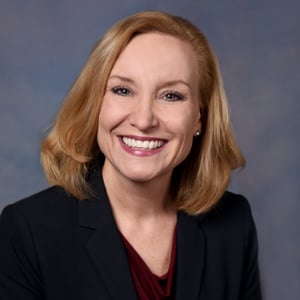
Judge, United States Court of Appeals, Sixth Circuit
The Honorable Joan L. Larsen is a judge of the United States Court of Appeals for the Sixth Circuit. She was nominated by the President on May 8, 2017 and confirmed by the Senate on November 1, 2017. Before her appointment to the federal bench, Judge Larsen served two terms as a Justice of the Michigan Supreme Court, where she was the court’s liaison to Michigan’s drug, sobriety, mental health and veteran’s courts.
Before becoming a judge, Judge Larsen was a faculty member at the University of Michigan Law School, where she was also Special Counsel to the Dean and received the L. Hart Wright Award for Excellence in Teaching. Judge Larsen's research and teaching interests included constitutional law, criminal procedure, statutory interpretation, and presidential power. Judge Larsen continues to assist the law school as the adviser to the Henry M. Campbell Moot Court Competition.
Judge Larsen began her legal career as a law clerk to the Hon. David B. Sentelle of the United States Court of Appeals for the D.C. Circuit and to Justice Antonin Scalia of the Supreme Court of the United States. Following her clerkships, she joined the law firm of Sidley Austin, where she was a member of the Constitutional, Criminal, and Civil Litigation Section. She later served as Deputy Assistant Attorney General in the United States Department of Justice, Office of Legal Counsel.
Judge Larsen graduated first in her class from Northwestern University School of Law, where she served as articles editor of the Northwestern University Law Review and earned the John Paul Stevens Award for Academic Excellence. She received her B.A., with highest honors, from the University of Northern Iowa.
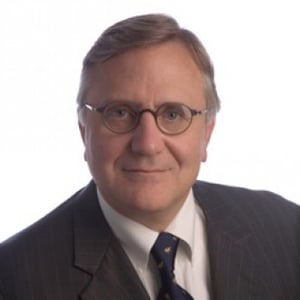
Reed Larson Professor of Labor Law, Ave Maria School of Law and, National Right To Work Legal Defense Foundation
John Raudabaugh is a labor lawyer and former Member of the U.S. National Labor Relations Board. He was a partner in law firms representing management concerning domestic and international labor law matters. Currently, he represents employees seeking relief from union and/or employer unfair labor practices. Mr. Raudabaugh has presented testimony to both Senate and House Committees regarding labor law reform. Professor Raudabaugh teaches Labor Law and a Labor Law Practicum at the Ave Maria School of Law. He is a graduate of the Wharton School of Finance and Commerce and New York State School of Industrial and Labor Relations with B.S. and M.S. degrees in labor economics and a J.D. degree from the University of Virginia Law School of Law.
Director of Government Affairs, AFL-CIO
Bill Samuel is the Director of Government Affairs at the AFL-CIO. In addition to serving as the chief lobbyist for the 10 million-member labor federation, Bill chairs the AFL-CIO’s Legislative Committee, which is made up of legislative representatives from the federation’s 54 affiliated unions.
Bill returned to the labor movement in January 2001 after a five-year stint in the Clinton Administration, serving first as Associate Deputy Secretary of Labor under Robert Reich and then Alexis Herman. In 2000, Bill joined the White House staff as senior policy advisor to Vice President Al Gore, serving as the Vice President’s principal advisor on labor policy issues and liaison to organized labor.
From 1984 to 1995, Bill was the chief lobbyist at the United Mine Workers of America. While at the UMWA, Bill lead the successful campaign to win passage of federal legislation guaranteeing lifetime health benefits to over 200,000 retired miners and their dependents. Prior to joining the UMWA, Bill was a legislative representative for the National Treasury Employees Union and the American Federation of Government Employees.
He is a graduate of Oberlin College and the George Washington University Law Center.
General Counsel, International Association of Machinists and Aerospace Workers
Mark Schneider is the General Counsel of the International Association of Machinists and Aerospace Workers. Prior to that he was Counsel for Political Programs and Associate General Counsel of the Service Employees International Union, and a partner at Jenner & Block LLC, where he was co-chair of the Telecommunications Practice Group and specialized in trial and appellate litigation. Mr. Schneider also has been an Adjunct Professor of Law at the University of Chicago.
Mr. Schneider has a B.A. from Swarthmore College, an M.Phil. from St. Edmund Hall, Oxford University, and a J.D. from Columbia University School of Law. He was a law clerk to Judge James Oakes of the United States Court of Appeals for the Second Circuit, and Harry Blackmun of the United States Supreme Court.
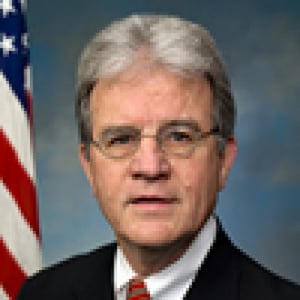
Former United States Senator, Oklahoma
Tom A. Coburn, M.D. was elected to the U.S. Senate on November 2, 2004. Dr. Coburn's priorities in the Senate included reducing wasteful spending, protecting your liberty, balancing the budget, improving health care access and affordability, protecting the sanctity of all human life - including the unborn - and representing traditional, Oklahoma values. As a citizen legislator, Dr. Coburn pledged to serve no more than two terms in the Senate and to continue to care for patients. He was a member of the Senate Judiciary Committee, Homeland Security and Governmental Affairs Committee, and the Committee on Finance.
As a Senator, Dr. Coburn offered more amendments than any of his colleagues. He offered amendments to eliminate funding for the "Bridge to Nowhere," the "Woodstock Museum" in New York and countless other special interests earmarks sponsored by members of both parties. Dr. Coburn also worked to make government more accountable and transparent. In 2006, he teamed up with then-Senator Barack Obama to create http://www.usaspending.gov/, an online database of all federal spending.
Prior to his election to the Senate, Dr. Coburn represented Oklahoma's Second Congressional District in the House of Representatives from 1995 through 2001. He was first elected in 1994, then re-elected in 1996 and 1998, becoming the first Republican to hold the seat for consecutive terms. Dr. Coburn retired from Congress in 2001, fulfilling his pledge to serve no more than three terms in the House.
In 1970, Dr. Coburn graduated with an accounting degree from Oklahoma State University. From 1970 to 1978, Dr. Coburn served as manufacturing manager at the Ophthalmic Division of Coburn Optical Industries in Colonial Heights, Virginia. Under his leadership, the Virginia division of Coburn Optical grew from 13 employees to more than 350 and captured 35 percent of the U.S. market.
After the family business was sold, Dr. Coburn changed the course of his life by returning to school to become a physician at the University of Oklahoma Medical School where he graduated in 1983. He then did his internship in general surgery at St. Anthony's Hospital in Oklahoma City and family practice residency at the University of Arkansas, Fort Smith.
Dr. Coburn returned to Muskogee where he specialized in family medicine, obstetrics and the treatment of allergies. Dr. Coburn personally delivered more than 4,000 babies.
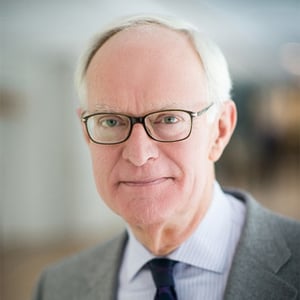
Distinguished Fellow, Hudson Institute
Christopher DeMuth is a distinguished fellow at Hudson Institute. He was president of the American Enterprise Institute for Public Policy Research (AEI) from 1986 to 2008 and was the D.C. Searle Senior Fellow at AEI from 2008 to 2011.
Mr. DeMuth was raised in Kenilworth, Illinois, and attended the Lawrenceville School (1964), Harvard College (A.B. 1968), and the University of Chicago Law School (J.D. 1973). He served as staff assistant to President Richard M. Nixon from 1969 to 1970, working first for Daniel P. Moynihan (then assistant to the President for Urban Affairs) on urban policy matters and then as chairman of the White House Task Force on Environmental Policy. Following law school, he practiced regulatory, antitrust, and general corporate law with Sidley & Austin in Chicago (1973-1976) and was associate general counsel of the Consolidated Rail Corporation (Conrail) in Philadelphia (1976-1977).
From 1977 to 1981, Mr. DeMuth was lecturer in public policy at the Kennedy School of Government at Harvard University, and director of the Harvard Faculty Project on Regulation. There he taught courses on law, economics, and regulatory policy and conducted and sponsored research on health, safety, environmental, and economic regulation.
Returning to Washington in 1981, Mr. DeMuth served as administrator for information and regulatory affairs in the U.S. Office of Management and Budget, and as executive director of the Presidential Task Force on Regulatory Relief during President Ronald Reagan’s first term of office. From 1984 to 1986, he was managing director of Lexecon Inc., a law-and-economics consulting firm; in 1986, he was also publisher and editor-in-chief of Regulation magazine. He was elected president of the American Enterprise Institute in December 1986.
Many of Mr. DeMuth’s articles, lectures, and occasional talks are posted on his website (https://www.ccdemuth.com).

Founder, Law Office of Eileen J. O'Connor PLLC
After nearly 30 years as a national tax specialist with the IRS and major accounting firms, Eileen J. O’Connor, now an attorney in private practice, was Assistant Attorney General for the Justice Department’s Tax Division for six years during the administration of President George W. Bush and a member of then-President-elect Trump’s Treasury Department Transition Team. She focuses on federal administrative and tax law.

Judge, United States Court of Appeals, D.C. Circuit
Judge Randolph was confirmed by the Senate and appointed to the United States Court of Appeals for the District of Columbia Circuit by President George H. W. Bush in July 1990.
Judge Randolph received his B.S. degree in 1966 from Drexel University, majoring in economics and basic engineering. At Drexel, he was president of the debate society, vice president of the Student Senate, and a member of the varsity wrestling squad. In 1969, he received his J.D. from the University of Pennsylvania, summa cum laude. Judge Randolph ranked first in his law school class all three years and was managing editor of the Law Review.
After graduation, Judge Randolph served as a law clerk to Judge Henry J. Friendly of the United States Court of Appeals for the Second Circuit in New York.
Admitted to the California Bar in 1970 (and to the District of Columbia bar in 1973), Judge Randolph worked as Assistant to the Solicitor General, U.S. Department of Justice, in Washington, D.C., 1970-1973.
After two years in private practice, Judge Randolph was named Deputy Solicitor General of the United States, a position he held from 1975-1977.
In 1979, Judge Randolph was appointed Special Counsel to the Committee on Standards of Official Conduct (the Ethics Committee) of the United States House of Representatives, remaining in this position until 1980.
In the 1980s, Judge Randolph held a number of positions while in private practice, including Special Assistant Attorney General for the states of New Mexico (1985 90), Utah (1986-1990) and Montana (1983-1990). He also served as a Member of the Advisory Panel of the Federal Courts Study Committee.
From 1971-1990, Judge Randolph argued 23 times in the United States Supreme Court, winning 20 of his cases.
As an Adjunct Professor of Law at Georgetown University Law Center from 1974-1978 he taught courses in civil procedure and injunctions. In 1992 he taught a course in constitutional law. He is a Distinguished Adjunct Professor of Law at George Mason School of Law and for the past ten years has been teaching First Amendment law. He also serves on the Judicial Advisory Board of the George Mason University Law and Economics Center.
From 1993 through 1995 Judge Randolph was a member of the Committee on Codes of Conduct of the Judicial Conference of the United States, and from 1995 to 1998 served as the Committee's chairman. He also served as the judicial liaison to the American Bar Association’s Administrative Law Section.
Judge Randolph is a member of the Board of Visitors at Drexel University Law School and was named to the “Drexel One Hundred” as a leading alumnus. In 2002 he was presented the James Wilson Award by the University of Pennsylvania Law School. In November 2005 he delivered the Fifth Annual Barbara K. Olson Memorial Lecture at the Annual Lawyers Convention of the Federalist Society. He has published numerous articles, the most recent of which is in the June 2006 issue of the Harvard Journal of Law and Public Policy.
Judge Randolph is married to the Honorable Eileen J. O’Connor, formerly Assistant Attorney General, Tax Division, U.S. Department of Justice. His son John Trevor Randolph is an investment banker in New York. His daughter Cynthia Lee Randolph is an artist living in San Francisco.

J.B. and Maurice C. Shapiro Professor of Public Interest Law, The George Washington University Law School
Jonathan Turley is a nationally recognized legal scholar who has written extensively in areas ranging from constitutional law to legal theory to tort law. After a stint at Tulane Law School, Professor Turley joined the GW Law faculty in 1990, and in 1998, became the youngest chaired professor in the university's history.
He is the founder and executive director of the Project for Older Prisoners (POPS). He has written more than three dozen academic articles that have appeared in a variety of leading law journals including those of Cornell, Duke, Georgetown, Harvard, and Northwestern Universities, among others. He most recently completed a three-part study of the historical and constitutional evolution of the military system.
Professor Turley has served as counsel in some of the most notable cases in the last two decades, including his representation of the Area 51 workers at a secret air base in Nevada; the nuclear couriers at Oak Ridge, Tennessee; the Rocky Flats grand jury in Colorado; Dr. Eric Foretich, the husband in the Elizabeth Morgan custody controversy; and four former U.S. Attorney Generals during the Clinton impeachment litigation. Professor Turley also has served as counsel in a variety of national security and terrorism cases, and has been ranked as one of the top 10 lawyers handling military cases.
He has served as a consultant on statutory and constitutional issues, and he has been a witness in over 100 hearings before the House and Senate, including the impeachments of Presidents Bill Clinton and Donald Trump. He also is a nationally recognized legal commentator; he ranked 38th in the top 100 most cited ‘public intellectuals’ in a recent study by Judge Richard Posner and was found to be the second most cited law professor in the country.
He is a member of the USA Today board of contributors and the recipient of the “2005 Single Issue Advocate of the Year” – the annual opinion award for the Aspen Institute and The Week magazine. Hundreds of his articles on legal and policy issues regularly appear in national newspapers. He also has worked as the legal analyst for four networks, CBS, NBC, BBC, and Fox. After 30 years as a columnist and commentator, the Washington Post called him the "Dean of Legal Analysts."
He is a best-selling author, including his latest New York Times bestseller "Rage and the Republic: The Unfinished Story of the American Revolution." (Simon & Schuster 2026). Turley's blog, Res Ipsa (www.jonathanturley.org), is one of the most read legal sites in the country.
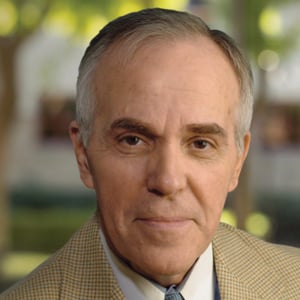
Professor of Government, Claremont Graduate University
Michael Uhlmann has been a professor in the Division of Politics & Economics at Claremont Graduate University since 2002. His research specializations include American presidency, executive–congressional relations, and the federal judiciary—namely, the federal administrative process and national security decision making. In addition to his regular coursework at CGU, Uhlmann teaches in and directs CGU’s Tribal Administration Certificate Program, made possible through a generous grant from the San Manuel Band of Mission Indians.
Uhlmann received his PhD in Government from Claremont Graduate University after receiving his BA in History from Yale University and his LLB from the University of Virginia Law School. Immediately prior to joining the CGU faculty, Uhlmann served as a senior vice president of the Lynde and Harry Bradley Foundation in Milwaukee, Wisconsin. Before that, he was a senior fellow at the Ethics and Public Policy Center in Washington, D.C. He had also served for many years as a partner in the Washington office of Pepper, Hamilton, & Scheetz, a large international law firm, where he specialized in federal antitrust and administrative law. Concurrently held alongside his position at CGU, Uhlmann is an adjunct professor at Claremont McKenna College, teaching a variety of courses in the Department of Government.
In addition to his academic career, private legal practice, and philanthropic work, Uhlmann has had a distinguished career in government, beginning with service as a staff and committee counsel in the U.S. Senate and as assistant general counsel of the Federal Trade Commission. In 1974, following Senate confirmation, he was appointed by President Gerald Ford to be assistant attorney general for Legislative Affairs in the Department of Justice. From 1981 to 1984, he served as special assistant to President Ronald Reagan and associate director of the White House Office of Policy Development. He directed legal and administrative policy for the Reagan presidential transition in 1980–1981 and chaired the Department of Justice transition team for President-Elect George H. W. Bush in 1988–1989.
Uhlmann has written for many leading newspapers and journals of opinion, including National Review, Weekly Standard, Philadelphia Inquirer, Los Angeles Times, Washington Post, First Things, and Claremont Review of Books.

Wayne A. Abernathy, Wild Bells
Wayne A. Abernathy is a former U.S. Treasury Assistant Secretary for Financial Institutions under President George W. Bush, receiving the Alexander Hamilton Award in recognition of his service. In that office he was also a member of the Board of Directors of the Securities Investor Protection Corporation. Prior to his work at the Treasury, Mr. Abernathy served as Staff Director of the Senate Banking Committee, under Chairman Phil Gramm.
Following his service at the Treasury, Mr. Abernathy worked for 15 years on the staff of the American Bankers Association, as Executive Vice President for Financial Institutions Policy and Regulatory Affairs.
Previous experience with the Senate Banking Committee includes serving as Staff Director of the Subcommittee on Securities during 1995-1998. From 1989 until 1994, Mr. Abernathy was a Republican economist for the committee. He previously worked as a senior legislative assistant for Senator Gramm during 1987-1989 and as an economist for the Banking Committee’s Subcommittee on International Finance and Monetary Policy during 1981-1986, under Chairman Jake Garn.
Mr. Abernathy earned his bachelor’s degree in International Studies from The Johns Hopkins University in 1978. In 1980, he received a master’s degree in International Studies from the School of Advanced International Studies of The Johns Hopkins University.
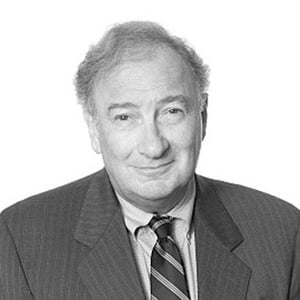
Retired, Winston & Strawn LLP
Jerry Loeser is of counsel in the Chicago office of Winston & Strawn, and his practice focuses on banking regulation. He has extensive experience in counseling financial services clients on, among other things, bank acquisitions, privacy, financial modernization, the USA PATRIOT Act, Basel II and III, lending limits, capital, trust, affiliate transactions, and Federal Reserve, OCC, FDIC, and CFPB regulations.
Prior to working at large corporate law firms, Jerry was chief regulatory and compliance counsel for Comerica Bank, where he also served as senior vice president and deputy general counsel and as general counsel of its retail bank division. Before that, he served as chief regulatory in-house counsel at Wells Fargo & Co. Jerry began his legal career advising the Board of Governors of the Federal Reserve System in Washington, D.C.
Senior Advisor, Covington & Burling LLP
Congressman Howard Berman advises clients on a wide range of foreign affairs and domestic policy matters, including defense and national security issues, investment, intellectual property, entertainment, technology and immigration. He also serves on the board of trustees of the Asia Foundation, the board of the National Democratic Institute, the Immigration Task Force of the Bipartisan Policy Center, and the Board of Directors of the Pacific Council on International Policy.
First elected to Congress in 1982, Congressman Berman became known as one of Capitol Hill’s preeminent deal-makers. National Journal described him as “one of the most creative members of the House and one of the most clear-sighted operators in American politics.”
As the chairman of the House Foreign Affairs Committee, Congressman Berman was one of Congress’ leading experts on international relations. On the Committee, he repeatedly helped build bipartisan consensus within the House, and between Congress and the Executive Branch. A long-time senior member on the House Judiciary Committee, Congressman Berman chaired the Subcommittee on Courts, the Internet and Intellectual Property, where he successfully led efforts resulting in major changes to intellectual property laws affecting the entertainment and high-tech industries.
Congressman Berman, a senior advisor not practicing law until admitted in the District of Columbia, will provide policy and legislative advice to clients and members of the firm.
Harry F. Byrd Professor of Politics, University of Virginia
James W. Ceaser is Harry F. Byrd Professor of Politics at the University of Virginia, where he has taught since 1976, and a senior fellow at the Hoover Institution. He has written several books on American politics and political thought, including Presidential Selection, Liberal Democracy and Political Science, Reconstructing America, Nature and History in American Political Development, and Designing a Polity. Professor Ceaser has served as the Academic Chairman of the Jack Miller Center since its inception in 2004. He is a regular contributor to the popular press and comments frequently on American politics for La Voix d’Amérique, the French-African outlet for the Voice of America.
U.S. Court of Appeals, Seventh Circuit
Frank H. Easterbrook is a judge of the United States Court of Appeals for the Seventh Circuit and a Senior Lecturer at the Law School of the University of Chicago. He was Chief Judge from 2006–2013. Before joining the court in 1985, he was the Lee andBrena Freeman Professor of Law at the University of Chicago, where he taught and wrote in antitrust, securities, corporate law, jurisprudence, and criminal procedure. He has published The Economic Structure of Corporate Law (with Daniel R. Fischel) and about 100 scholarly articles. He served as Co-Editor of the Journal of Law and Economics from 1982 to 1991 and as a member of the Judicial Conference’s Standing Committee on Rules of Practice and Procedure from 1991 to 1997. Before joining the faculty of the Law School in 1979, Judge Easterbrook was Deputy Solicitor General of the United States. He holds degrees from Swarthmore College (B.A. with high honors, 1970) and the University of Chicago (J.D. cum laude, 1973), and is a member of the American Academy of Arts and Sciences, the American Law Institute, the Mont Pelerin Society, Phi Beta Kappa, and the Order of the Coif.
Professor of Law, Antonin Scalia Law School, George Mason University
Professor of Law Michael S. Greve joined the faculty of the Antonin Scalia Law School, George Mason University in fall 2012 after having served as John G. Searle Scholar at the American Enterprise Institute (AEI), where he specialized in constitutional law, courts, and business regulation and served as chairman of the Competitive Enterprise Institute. Prior to joining AEI, Greve was founder and co-director of the Center for Individual Rights, a public interest law firm specializing in constitutional litigation.
Greve has served previously as an adjunct professor at a number of universities, including Cornell and Johns Hopkins Universities, and has been a visiting professor at Boston College since 2004. He was awarded a PhD and an MA in government by Cornell University. Greve also earned a Diploma from the University of Hamburg in Germany.
A prolific writer, Greve is the author of nine books and a multitude of articles appearing in scholarly publications, as well as numerous editorials, short articles, and book reviews. He is a frequent speaker for professional and scholarly organizations and has made many appearances on radio and television.
In addition Greve has provided congressional and state legislative testimony, has lobbied and consulted in federal agency proceedings, and has provided litigation services and management in over 30 cases, including matters before the U.S. Supreme Court.
Professor of Politics and Public Affairs, Princeton University
Frances E. Lee is jointly appointed in the Department of Politics and the Woodrow Wilson School of Public and International Affairs where she is Professor of Politics and Public Affairs.
Lee has broad interests in American politics, with a special focus on congressional politics, national policymaking, party politics, and representation. She is author of Insecure Majorities: Congress and the Perpetual Campaign (2016) and Beyond Ideology: Politics, Principles, and Partisanship in the U.S. Senate (2009). She is also coauthor of Sizing Up The Senate: The Unequal Consequences of Equal Representation (1999) and a textbook, Congress and Its Members (Sage / CQ Press). Her research has appeared in the American Political Science Review, American Journal of Political Science, Perspectives on Politics, Journal of Politics, Legislative Studies Quarterly, and other outlets.
Lee is editor of the Cambridge Elements Series in American Politics and a series editor for the Chicago Studies in American Politics. She was co-editor of Legislative Studies Quarterly from 2014 to 2019.
Lee earned her B.A. from the University of Southern Mississippi and her Ph.D. from Vanderbilt University. She is a fellow of the American Academy of Arts and Sciences.
Sudler Family Professor of Constitutional Law, New York University School of Law
Richard H. Pildes is one of the nation’s leading scholars of constitutional law and a specialist in legal issues affecting democracy. He is a Member of the American Academy of Arts and Sciences and the American Law Institute, and has received recognition as a Guggenheim Fellow and a Carnegie Scholar. His acclaimed casebook, The Law of Democracy: Legal Structure of the Political Process (now in its fourth edition), helped create an entirely new field of study in the law schools. The Law of Democracy systematically explores legal and policy issues concerning the structure of democratic elections and institutions, such as the role of money in politics, the design of election districts, the regulation of political parties, the design of voting systems, the representation of minority interests in democratic institutions, and similar issues. He has written extensively on the rise of political polarization in the United States, the Voting Rights Act, the dysfunction of America’s political processes, the role of the Supreme Court in overseeing American democracy, the powers of the American President and Congress, and he has criticized excessively “romantic” understandings of democracy. In addition to his scholarship on these issues, he has written on national-security law, the design of the regulatory state, and American constitutional history and theory.
Respect for his expertise in these areas is reflected in frequent citations of his work in U.S. Supreme Court opinions, the translation of his work into many languages, and his frequent public lectures and appearances around the world, including his nomination with the NBC News Team for an Emmy Award for coverage of the 2000 Presidential election litigation.
His work has been translated and published in Chinese, French, Spanish, and Portuguese. In addition to his scholarship, Professor Pildes plays an active role litigating in these areas. He has won two cases before the United States Supreme Court, including a 2015 victory in Alabama Democratic Conference v. Alabama, a case involving race and redistricting. He served as counsel to a group of former chairmen of the Securities and Exchange Commission in litigation defending the constitutionality of the Sarbanes-Oxley Act; as counsel in election litigation to the Puerto Rico Electoral Commission; as counsel to the government of Puerto Rico; as a federal court-appointed independent expert on voting rights litigation; and as counsel in successful Supreme Court litigation that challenged the way the United States Tax Court operated. He was also a senior legal advisor to the 2008 and 2012 campaigns of President Obama.
Pildes received his A.B. in physical chemistry summa cum laude from Princeton, and his J.D. magna cum laude from Harvard, where he served as Supreme Court Note Editor on the Harvard Law Review. He clerked for Judge Abner J. Mikva of the U.S. Court of Appeals for the District of Columbia Circuit and for Justice Thurgood Marshall of the U.S. Supreme Court. After practicing law in Boston, he began his academic career at the University of Michigan Law School, before joining the NYU School of Law in 2001.
Executive Vice President, The Federalist Society
Dean Reuter is Executive Vice President at the Federalist Society for Law and Public Policy Studies. He has served in two federal government agency Offices of the Inspector General, as Counsel to the Inspector General and Deputy Inspector General, responsible for policing the use of federal funds granted and contracted through those agencies. As such, he helped conduct and oversee criminal investigations across the country. He is the principal author of the non-fiction book, The Hidden Nazi: The Untold Story of America's Deal with the Devil, and editor of Liberty’s Nemesis: The Unchecked Expansion of the State and Confronting Terror: 9/11 and the Future of American National Security. He was appointed by the President and served as Vice-Chairman of the Board of Directors of the Corporation for National and Community Service, and recently served as an appointee on the U.S. Commission on Presidential Scholars. He is a graduate of Hood College (BA with Honors) and the University of Maryland School of Law.
Lecturer in Law, University of Pennsylvania Carey Law School
Matthew Lee Wiener served until recently as the twice-presidentially appointed Acting Chair and Vice Chair of the Administrative Conference of the United States (ACUS), as well as a member of its Council and its Executive Director. (In 2016, President Obama nominated him to be ACUS’s Chairman.)
He is now a special counsel to ACUS, co-chair of its Council on Federal Administrative Adjudication, and a lecturer at the University of Pennsylvania Carey Law School, where he teaches Administrative Law.
Before affiliating with ACUS, Mr. Wiener was general counsel to U.S. Senator Arlen Specter (Senate Committee on the Judiciary), counsel to the U.S. House of Representatives Committee on the Judiciary, a partner at Dechert LLP, and special counsel to Cuneo Gilbert & LaDuca.
He has taught courses on administrative law, administrative practice, regulation remedies, statutory interpretation, and separation of powers at the law schools of the University of Pennsylvania, Rutgers University, and George Mason University.
Mr. Wiener is an elected member of the American Law Institute, a fellow of the American Bar Foundation, and co-chair of the Adjudication Committee of the American Bar Association’s Section of Administrative Law and Regulatory Practice.
Mr. Wiener holds a J.D. from Stanford Law School, where he was Articles Editor of the Stanford Law Review, and an A.B. from William and Mary.

Environmental Law: The Role of Congress in Environmental Law
Eric R. Claeys, Steven Colloton, Matt Leggett, Nicholas A. Robinson, David S. Schoenbrod
Environmental law and policy raise profound questions about Congress's role and responsibilities. Many environmental regulatory...
Showcase Panel III: ROUNDTABLE: Can Changes in Incentives Significantly Address Congressional Dysfunction?
Howard L. Berman, James W. Ceaser, Frank H. Easterbrook, Michael S. Greve, Frances E. Lee, Richard H. Pildes, Dean Reuter, Matthew Lee Wiener
Over the years, and especially recently, it appears as though members of Congress primarily need...
International: When Should America Act to Maintain International Order?
Colin Dueck, Benjamin H. Friedman, Brian H. Hook, Mike J. Rogers, François-Henri Briard
Most would agree that the world is unsettled, with hotspots in the Middle East, North...
Criminal Law: Free Speech, Anti-Corruption, and the Criminalization of Government Affairs
Todd P. Graves, Raymond W. Gruender, Edward T. Kang, John G. Malcolm, Eugene Volokh, Peter R. Zeidenberg
If we accept the premise that government, and government power, is growing, then the stakes...
Labor & Employment: 80th Anniversary of the National Labor Relations Act & Congressional Action
Richard A. Epstein, Joan Larsen, John N. Raudabaugh, Bill Samuel, Mark Schneider
Our nation's private sector labor law is a product of the New Deal and the...
Administrative Law: Agency Rule: How Congress Can Reclaim its Legislative Authority
Tom A. Coburn, Christopher C. DeMuth, Eileen J. O'Connor, A. Raymond Randolph, Jonathan R. Turley, Michael Uhlmann
Lawmakers are quick to complain about government agencies exceeding their authority. While some complaint is...
Showcase Panel III: ROUNDTABLE: Can Changes in Incentives Significantly Address Congressional Dysfunction?
2015 National Lawyers Convention
Washington, DCRethinking How We Deal with Campus Sexual Assault
Today, crimes of sexual violence on campus are not always reported to law enforcement. Schools...
Consumer Financial Protection Bureau Update - September 2015 - Podcast
Wayne A. Abernathy, Julius L. Loeser
Members of the Federalist Society’s Financial Services & E-Commerce Practice Group Executive Committee provided an...