
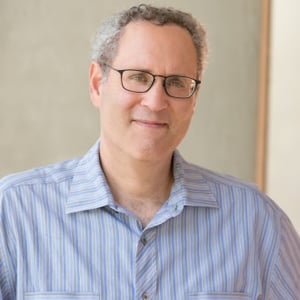
Burton Craige Distinguished Professor of Jurisprudence, UNC School of Law
Michael Gerhardt joined the Carolina Law faculty in 2005 and serves as the Burton Craige Distinguished Professor of Jurisprudence. His teaching and research focuses on constitutional conflicts between presidents and Congress. Gerhardt is the author of six books, including leading treatises on impeachment, appointments, presidential power, Supreme Court precedent, and separation of powers. He has written more than a hundred law review articles and dozens of op eds in the nation’s leading news publications, including SCOTUSblog, The New York Times, and Washington Post. His book, The Forgotten Presidents (Oxford University Press 2013), was named by The Financial Times as one of the best non-fiction books of 2013. He was inducted into the American Law Institute in 2016. Gerhardt attended the University of Chicago Law School, where he graduated order of the coif and served as a research assistant to both Phil Kurland and Cass Sunstein and as one of the two student editors of The Supreme Court Review. After law school, he clerked for Chief District Judge Robert McRae of the U.S. District Court of the Western District of Tennessee and Judge Gilbert Merritt of the U.S. Court of Appeals for the Sixth Circuit. He served as Deputy Media Director of Al Gore’s first Senate campaign, practiced law for three years for two boutique litigation firms in Washington and Atlanta, and taught for more than a decade at William & Mary Law School before joining Carolina Law.
Gerhardt’s extensive public service has included his testifying more than a dozen times before Congress, including as the only joint witness in the Clinton impeachment proceedings in the House; speaking behind closed doors to the entire House of Representatives about the history of impeachment in 1998; and serving as special counsel to the Senate Judiciary Committee for seven of the nine sitting Supreme Court justices. In 2015, he became the first legal scholar to be asked by the Library of Congress to serve as its principal adviser in revising the official United States Constitution Annotated. In 2019, the Order of the Coif named Gerhardt as its Distinguished Visitor for 2020, an award given to only one law professor each year for outstanding legal scholarship.

Professor of Law, Antonin Scalia Law School, George Mason University
ILYA SOMIN is Professor of Law at George Mason University and the B. Kenneth Simon Chair in Constitutional Studies at the Cato Institute. His research focuses on constitutional law, property law, democratic theory, federalism, and migration rights. He is the author of Free to Move: Foot Voting, Migration, and Political Freedom (Oxford University Press, revised and expanded edition, 2022), Democracy and Political Ignorance: Why Smaller Government is Smarter (Stanford University Press, revised and expanded second edition, 2016), and The Grasping Hand: Kelo v. City of New London and the Limits of Eminent Domain (University of Chicago Press, 2015, rev. paperback ed., 2016), coauthor of A Conspiracy Against Obamacare: The Volokh Conspiracy and the Health Care Case (Palgrave Macmillan, 2013), and co-editor of Eminent Domain: A Comparative Perspective (Cambridge University Press, 2017). Democracy and Political Ignorance has been translated into Italian and Japanese.
Somin’s work has appeared in numerous scholarly journals, including the Yale Law Journal, Stanford Law Review, Northwestern University Law Review, Georgetown Law Journal, Critical Review, and others. Somin has also published articles in a variety of popular press outlets, including the New York Times, Washington Post, Wall Street Journal, Los Angeles Times, CNN, NBC, The Atlantic, USA Today, Boston Globe, US News and World Report, South China Morning Post, National Law Journal and Reason. He has been quoted or interviewed by the New York Times, Washington Post, Wall Street Journal, Time, Newsweek, The Economist, the Christian Science Monitor, the Financial Times, The Guardian, the Associated Press, CBS, MSNBC, NPR, BBC, Reuters, the Canadian Broadcasting Corporation, the Australian Broadcasting Corporation, Radio Free Europe/Radio Liberty, Al Jazeera, and the Voice of America, among other media.
Somin’s writings have been cited in decisions by the United States Supreme Court, multiple state supreme courts and lower federal courts, and the Supreme Court of Israel. He is co-counsel for the plaintiffs in VOS Selections, Inc. v. Trump, a case challenging the constitutionality of President Trump’s “Liberation Day” tariffs. Somin has testified on the use of drones for targeted killing in the War on Terror before the US Senate Judiciary Subcommittee on the Constitution, Civil Rights, and Human Rights. In 2009, he testified on property rights issues at the United States Senate Judiciary Committee confirmation hearings for Supreme Court Justice Sonia Sotomayor. Somin writes regularly for the popular Volokh Conspiracy law and politics blog, now affiliated with Reason magazine (previously affiliated with the Washington Post from 2014 to 2017). From 2006 to 2013, he served as Co-Editor of the Supreme Court Economic Review, one of the country’s top-rated law and economics journals.
Somin has served as a visiting professor at the University of Pennsylvania Law School. He has also been a visiting professor or scholar at the Georgetown University Law Center, the University of Hamburg, Germany, the University of Torcuato Di Tella in Buenos Aires, Argentina, Uriel Reichman University in Israel, and Zhengzhou University in China. He is a University Affiliate of the Schar School of Policy and Government at George Mason University, and an affiliated faculty member of the George Mason University Institute for Immigration Research. Before joining the faculty at George Mason, Somin was the John M. Olin Fellow in Law at Northwestern University Law School in 2002-2003. In 2001-2002, he clerked for the Hon. Judge Jerry E. Smith of the U.S. Court of Appeals for the Fifth Circuit. Professor Somin earned his B.A., Summa Cum Laude, at Amherst College, M.A. in Political Science from Harvard University, and J.D. from Yale Law School.
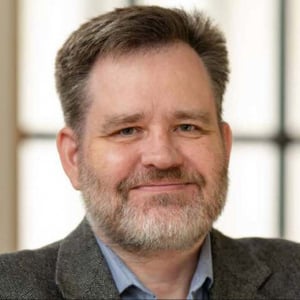
David Boies Professor of Law, Yale Law School
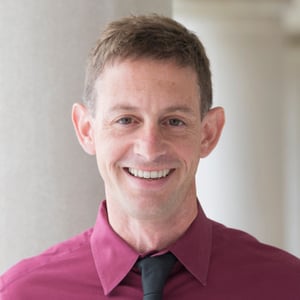
Professor of Law, University of North Carolina School of Law
Andy Hessick joined the Carolina Law faculty in 2016 and serves Judge John J. Parker Distinguished Professor of Law and Associate Dean for Strategy. His teaching and research interests include federal courts, administrative law, remedies, and criminal sentencing. His work has appeared in, among other places, the California Law Review, the Cornell Law Review, the Northwestern University Law Review, the Notre Dame Law Review, and the William and Mary Law Review. His work has been cited by the Supreme Courts of Connecticut, Iowa, Missouri, Tennessee, and Utah; various federal district and circuit courts; and the U.S. Supreme Court.
Hessick received his J.D. from Yale Law School, at which he was an editor of the Yale Law Journal. After law school, he clerked for Judge Reena Raggi on the United States Court of Appeals for the Second Circuit and Judge A. Raymond Randolph on the United States Court of Appeals for the D.C. Circuit. He then served as a Bristow Fellow in the U.S. Solicitor General’s office and practiced litigation at Kellogg Huber Hansen Todd Evans & Figel PLLC in Washington, D.C. He previously taught at the University of Utah and Arizona State University and was a visiting assistant professor at Boston University.
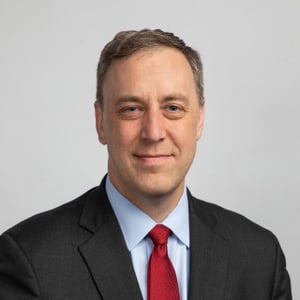
Florida Office Managing Attorney, Institute for Justice
Justin Pearson is the Institute’s Florida Office Managing Attorney. He also coordinates aspects of the Institute’s national economic liberty efforts and personally directs IJ’s National Street Vending Initiative. Justin has devoted his career to vindicating the constitutional rights of small-business owners, and he has victoriously litigated on their behalf in trial and appellate courts across the nation.
Justin often wins in novel ways. He was the lead counsel in a federal appellate court victory vindicating the right of a Florida dairy creamery to tell the truth on its labels, which was the first victorious First Amendment challenge to a food standard of identity in U.S. history. His win against Little Rock’s ban on taxi competition was based on a provision in the Arkansas Constitution that had not been successfully relied upon in over half a century. And his victory against Fort Pierce’s food truck ban included the first preliminary injunction ever issued in this type of challenge anywhere in the nation.
In addition to litigation, Justin has testified to Florida Senate and House committees dozens of times, and provisions suggested by Justin have been enacted into law. The successful bills that Justin has actively supported include Florida’s 2021 cottage food, home-based business, and local occupational licensing reforms, Florida’s historic 2020 occupational licensing reform (which repealed the most occupational licensing barriers in U.S. history), Florida’s 2019 repeal of the certificate of need requirement for hospitals, Florida’s 2019 Fresh Start reform making it easier for individuals with criminal records to obtain employment, and Florida’s 2016 overhaul of its civil forfeiture laws.
Justin’s work has appeared in countless media outlets, and Justin has spoken to scores of law schools and attorney organizations across the nation. The law schools that have hosted Justin’s talks include Yale, the University of Chicago, Duke, NYU, Notre Dame, and the University of Michigan, among many others.
Prior to joining IJ, Justin founded and managed his own law practice to advocate for small-business owners, and Justin’s law practice was successful for many years before he made the decision to join IJ in 2012 to better fight against government power gone awry.
Justin received his law degree with honors from the University of Miami in 2002, where he was the Research and Writing Editor for, and was published in, the University of Miami Business Law Review. Justin received his undergraduate degree in business management from North Carolina State University. Justin has been honored by the Daily Business Review and Law.com for being one of South Florida’s “Most Effective Lawyers.”
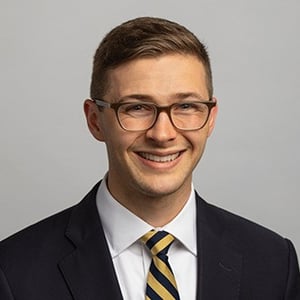
Attorney, Institute for Justice
Josh Windham is an attorney at the Institute for Justice.
Originally from Charlotte, Josh joined the Institute’s headquarters office in 2016. He received his law degree in 2016 from the University of North Carolina School of Law, where he served as president of the Federalist Society and as judicial extern to the Honorable Robert Numbers in the Eastern District of North Carolina. Josh graduated summa cum laude from North Carolina State University in 2013 with a Bachelor of Arts in History. He is an avid sports fan and dessert lover.
Josh is licensed in North Carolina.
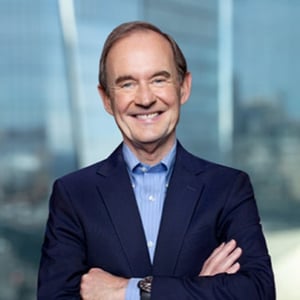
Chairman and Managing Partner, Boies Schiller Flexner
David Boies has been the Chairman and a Managing Partner of Boies Schiller Flexner since its founding in 1997.
David has been selected as one of the 100 Most Influential People in the World by Time Magazine (2010). He has been named Global International Litigator of the Year by Who’s Who Legal an unprecedented seven times. David has been named the Litigator of the Year by The American Lawyer; the Lawyer of the Year by The National Law Journal (twice); the Antitrust Lawyer of the Year by the New York Bar Association; Best Lawyers in America from 1987-2021; Lawdragon 500 Leading Lawyers; and an Eminent Practitioner by Chambers USA. He was named one of the Top 50 Big Law Innovators of the Last 50 Years by The American Lawyer in 2013.
David is the recipient of Honorary Doctor of Laws from the University of Redlands (2000), New York Law School (2007), University of New Hampshire School of Law (2013), and New York University (2013) and an Honorary Doctor of Letters from the Chicago Theological Seminary (2011). His awards include the Award of Merit from the Yale Law School, the ABA Medal from the American Bar Association, the Vanderbilt Medal from New York University Law School, the Pinnacle Award from the International Dyslexia Association, the William Brennan Award from the University of Virginia, the Role Model Award from Equality Forum, the Lead by Example Award from the National Association of Women Lawyers, the Torch of Learning Award from the American Friends of Hebrew University, the Eisendrath Bearer of Light Award from the Union for Reform Judaism, and a Lifetime Achievement Award from the Mississippi Center for Justice.
David served as Chief Counsel and Staff Director of the United States Senate Antitrust Subcommittee in 1978 and Chief Counsel and Staff Director of the United States Senate Judiciary Committee in 1979.
In 1991-1993, he was counsel to the Federal Deposit Insurance Corporation, recovering $1.2 billion from companies who sold junk bonds to failed savings and loan associations.
In 1998-2000, he served as Special Trial Counsel for the United States Department of Justice in its antitrust suit against Microsoft. David also served as the lead counsel for former Vice-President Al Gore in connection with litigation relating to the 2000 election Florida vote count. As co-lead counsel for the plaintiffs in Perry v. Brown, he won the first judgment establishing the right to marry for gay and lesbian citizens under the U.S. Constitution.
David was born in Sycamore, Illinois on March 11, 1941. He attended the University of Redlands (1960-62), and received a B.S. from Northwestern University (1964), an LL.B., magna cum laude from Yale University (1966), and an LL.M. from New York University (1967).
He is a member of Phi Beta Kappa, a Fellow of the American College of Trial Lawyers and the International Academy of Trial Lawyers; and a Trustee of the National Constitution Center, Cold Spring Harbor Laboratory, New York University Law School Foundation and St. Luke’s-Roosevelt Hospital Center. He is the author of numerous publications including Courting Justice (2004), Redeeming the Dream (with Ted Olson), and Public Control of Business (with Paul Verkuil), published by Little Brown in 1977. He has taught courses at New York University Law School and Cardozo Law School.
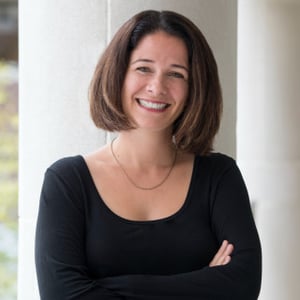
Anne Shea Ransdell and William Garland "Buck" Ransdell, Jr. Distinguished Professor of Law, University of North Carolina School of Law
Carissa Byrne Hessick joined the Carolina Law faculty in 2016. She serves as the Anne Shea Ransdell and William Garland “Buck” Ransdell, Jr. Distinguished Professor of Law and as the director of the Prosecutors and Politics Project. Her teaching and research interests include criminal law, the structure of the criminal justice system, criminal sentencing, and child pornography crimes. Hessick is the author of multiple law review articles, essays, and op eds on plea bargaining, the powers and selection of prosecutors, Sixth Amendment sentencing rights, and criminal statutes. Her work has appeared in the California Law Review, the Cornell Law Review, the L.A. Times, the UCLA Law Review, and the Virginia Law Review, among others. She founded the Prosecutors and Politics Project in 2018. And she currently serves as the Reporter for the ABA Criminal Justice Section’s Sentencing Standards Task Force.
Hessick attended Yale Law School, where she was an editor of the Yale Law Journal and winner of the Potter Stewart Prize for the Morris Tyler Moot Court of Appeals. After graduating from law school, she clerked for Judge Barbara S. Jones on the Southern District of New York and for Judge A. Raymond Randolph on the D.C. Circuit. She also worked as a litigation associate at Wachtell, Lipton, Rosen & Katz in New York City. Before joining the faculty at Carolina Law, Hessick taught on the faculties at Arizona State University’s Sandra Day O’Connor College of Law and the University of Utah’s S.J. Quinney College of Law. She also spent two years as a Climenko Fellow at Harvard Law School.
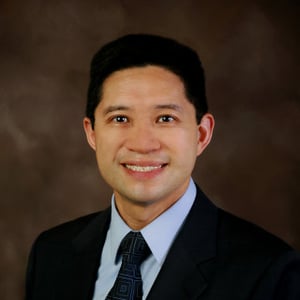
Founder, Original Jurisdiction
David Lat is a lawyer turned writer. He publishes Original Jurisdiction, a newsletter on Substack about law and legal affairs, and he writes for newspapers and magazines, including the New York Times, Washington Post, and Wall Street Journal. Prior to launching Original Jurisdiction, David founded Above the Law, one of the nation's most widely read legal news websites, and Underneath Their Robes, a popular blog about federal judges that he wrote under a pseudonym. He is also the author of a novel set in the world of the federal courts, Supreme Ambitions. Before entering the media world, David worked as a federal prosecutor in Newark, New Jersey; a litigation associate at Wachtell, Lipton, Rosen & Katz, in New York; and a law clerk to Judge Diarmuid F. O’Scannlain of the U.S. Court of Appeals for the Ninth Circuit. David graduated from Harvard College and Yale Law School, where he served as an editor of the Yale Law Journal.
Professor of Law and J. Philip Johnson Faculty Fellow, University of North Dakota School of Law
Michael S. McGinniss is Professor of Law and J. Philip Johnson Faculty Fellow at the University of North Dakota School of Law, where he joined the faculty in 2010 and served as the Dean from 2019 to 2022. He chairs the executive committee for the Federalist Society's Practice Group on Professional Responsibility and Legal Education.
Before entering the legal academy, Professor McGinniss served for twelve years as a Disciplinary Counsel for the Supreme Court of Delaware. He currently teaches courses on Professional Responsibility, Advanced Legal Ethics, Civil Procedure, and Federal Courts. He also serves as Faculty Advisor for the North Dakota Law Review and the UND Law Federalist Society student chapter.
Professor McGinniss’ research and scholarship interests are wide-ranging and include lawyer and judicial ethics, lawyer discipline and regulation of the profession, constitutional law (especially First Amendment, separation of powers, and federalism), and cultural challenges faced by conservatives in the law schools and the legal profession. His most recent law review article, Declaring Independence to Secure Integrity: The Supreme Court Justices' Code of Conduct, was published in the Federalist Society Review. His article Expressing Conscience with Candor: Saint Thomas More and First Freedoms in the Legal Profession, was published in the Harvard Journal of Law & Public Policy.
Professor McGinniss has spoken to Federalist Society lawyer and student chapters across the country about judicial independence and ethics, especially relating to the federal courts and the United States Supreme Court Justices. In addition, he has spoken to several chapters about rising challenges to ideological diversity and targeting of conservative viewpoints in law schools and the legal profession. Although he is very pleased to speak on these and many other topics that may be of interest to lawyer and student chapters, in 2026-2027, he has particular interest in speaking on the topic “Lawyer Discipline as Political ‘Resistance’: Separation of Powers, Federalism, and the Rule of Law,” concerning his work-in-progress on the weaponization of professional disciplinary processes against conservative lawyers for political and ideological purposes.
Partner, McGuireWoods
John Moran is a member of the firm’s nationally recognized Government Investigations and White Collar Litigation department. A former senior official at the U.S. Department of Justice (DOJ) and the White House and an experienced litigator and counselor, John draws on his broad experience from private practice and government service to advise and represent clients in government enforcement, congressional investigations, high-stakes civil disputes, and regulatory litigation. He also serves as co-chair of the firm’s Congressional Investigations practice, representing both companies and individuals in congressional investigations and hearings and is a member of the firm’s Appeals & Issues group.
Sterling Professor of Law, Yale Law School
Akhil Reed Amar is Sterling Professor of Law and Political Science at Yale University, where he teaches constitutional law in both Yale College and Yale Law School. After graduating from Yale College, summa cum laude, in 1980 and from Yale Law School in 1984, and clerking for Judge (later Justice) Stephen Breyer, Amar joined the Yale faculty in 1985 at the age of 26. He is Yale’s only living professor to have won the University’s unofficial triple crown — the Sterling Chair for scholarship, the DeVane Medal for teaching, and the Lamar Award for alumni service.
Amar’s work has won awards from both the American Bar Association and the Federalist Society, and he has been cited by Supreme Court justices across the spectrum in more than 50 cases — tops among scholars under age 70. According to both Fred Shapiro’s landmark 2021 study of lifetime scholarly citations and Heinonline’s most recent tabulation of lifetime law-review citations, Amar is America’s second most-cited legal scholar still under age 70. He is a member of the American Academy of Arts and Sciences and has written widely for popular publications, including The New York Times, The Washington Post, The Wall Street Journal, Time, and The Atlantic. He was an informal consultant to the popular TV show The West Wing and his scholarship has been showcased on many broadcasts, including The Colbert Report, Morning Joe, AC360, Velshi, Fox News @ Night with Shannon Bream, Fareed Zakaria GPS, Erin Burnett Outfront, and Constitution USA with Peter Sagal.
He is the author of more than a hundred law review articles and several books, including The Bill of Rights (1998 — winner of the Yale University Press Governors’ Award), America’s Constitution (2005 — winner of the ABA’s Silver Gavel Award), America’s Unwritten Constitution (2012 — named one of the year’s 100 best nonfiction books by The Washington Post), and The Constitution Today (2016 — named one of the year’s top ten nonfiction books by Time magazine). The first volume of his ambitious trilogy on American constitutional history from the Founding to the present, The Words That Made Us: America’s Constitutional Conversation, 1760-1840, came out in May 2021. The second volume, Born Equal: Remaking America’s Constitution, 1840-1920, will be published in September 2025 and is already available for pre-order. All together, his nonfiction books have won two starred reviews from Publishers Weekly and three starred reviews from Kirkus—tops, it is believed, among legal scholars under age 70. Together with Vikram David Amar (YLS ’88), he has a bi-weekly column on the Supreme Court on the distinguished website SCOTUSblog. Along with Andy Lipka, he co-hosts a popular and free weekly podcast, Amarica’s Constitution, whose listeners are eligible for CLE credit in most American jurisdictions. A wide assortment of his articles and op-eds and video links to many of his public lectures and free online courses may be found at akhilamar.com.
James L. Oberstar Professor of Law and Public Policy, University of St. Thomas School of Law
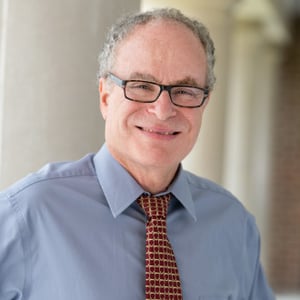
William Rand Kenan, Jr. Distinguished Professor of Law, University of North Carolina School of Law
William (Bill) Marshall joined the Carolina Law faculty in 2001 and serves as the William R. Kenan Jr. Distinguished Professor of Law. His teaching and research interests include the first amendment, presidential power, election law, federal jurisdiction, federal judicial selection, civil procedure, and media law. Marshall is the author of numerous book chapters, articles, and essays on free speech, separation of powers, the Establishment Clause, and the Free Exercise Clause. His work has appeared in the Harvard Law Review, the Yale Law Journal, the Supreme Court Review, and the University of Chicago Law Review, among others.
Marshall received his law degree from the University of Chicago and his undergraduate degree from the University of Pennsylvania. Marshall was Deputy Counsel to the President and Deputy Assistant to the President during the Clinton Administration and also served as the Solicitor General for the State of Ohio. He has taught at the Northwestern, Boston University, Vanderbilt, Ohio State, DePaul, Case Western Reserve, William and Mary, and the University Connecticut law schools. Prior to beginning his teaching career, Marshall was a Special Assistant Attorney General for the State of Minnesota.
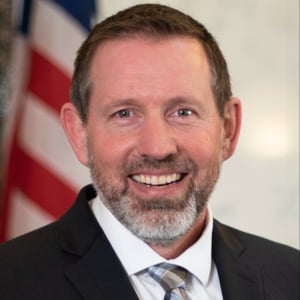
Judge, United States Court of Appeals, Ninth Circuit
Lawrence VanDyke serves as a circuit judge on the U.S. Court of Appeals for the Ninth Circuit. Prior to that appointment in January 2020, he served as a Deputy Assistant Attorney General in the Environment and Natural Resources Division of the United States Department of Justice. Before that, he served consecutively as the Solicitor General of two western states – Nevada and Montana. At the beginning of his legal career, he worked as an attorney in the Appellate and Constitutional Issues practice group at Gibson Dunn & Crutcher, LLP.
Judge VanDyke received his law degree magna cum laude from Harvard Law School, where he was an editor on the Harvard Law Review. He has engineering and theology undergraduate degrees and a masters degree in engineering management. He served as a law clerk to the Honorable Janice Rogers Brown of the United States Court of Appeals for the District of Columbia Circuit. Judge VanDyke and his wife Cheryl live in Reno, Nevada, and they have three children.
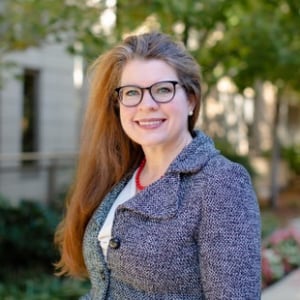
Vice President and Senior Counsel, The Becket Fund for Religious Liberty
Lori Windham is vice president and senior counsel at Becket, where she has represented clients on cutting-edge religious freedom issues since 2005. She has represented parties before the Supreme Court, arguing Becket’s unanimous victory on behalf of foster families in Fulton v. Philadelphia, as well as working with the Becket team on its Supreme Court victories in Hosanna-Tabor, Hobby Lobby, and Little Sisters of the Poor. She won a victory for the world’s largest religious media network in EWTN v. Azar, staving off millions of dollars in government fines under unlawful the HHS mandate. She has won more than a dozen victories in federal appellate courts, including successful defense of cities and school districts sued for accommodating religion, victories for houses of worship facing discrimination in the land use process, and overturning a multimillion-dollar judgment against a major evangelical ministry. She recently won a first-in-the-nation injunction for an adoption agency threatened with shutdown for its religious beliefs.
Recognized in Washington as an expert on religious freedom issues, Lori has testified in Congressional oversight hearings before the U.S. House of Representatives Judiciary Committee and before the U.S. Commission on Civil Rights. Outside Washington, Lori is sought-after speaker on First Amendment law, including appearances at Yale Law School, Harvard Law School, Stanford Law School, Georgetown University Law Center, Central European University, and many others.
In addition to these venues, Lori also defends her clients in the media, including television appearances on CBS This Morning, Hardball, CNN Tonight, On the Record, America’s Newsroom, Opinion Journal, and many others. Her work has been covered by the New York Times, Wall Street Journal, Washington Post, and dozens of other papers. She is also a regular guest on radio, with appearances on shows ranging from Sean Hannity to NPR.
Lori has successfully represented a wide array of clients, including a Santeria priest prohibited from making animal sacrifices, synagogues prohibited from building on their own land, and religious student organizations penalized for their religious speech. One of her most challenging cases involved travel to a remote farming community to ensure that members of the local Amish community were not jailed for using their traditional building methods.
Lori is a graduate of Harvard Law School and earned her B.A. summa cum laude at Abilene Christian University. She has served on the Board of Visitors of Abilene Christian University and received the ACU Young Alumnus of the Year award for her work at Becket. She sits on the board of Dominion Christian School and the visiting committee of the Fund for American Studies’ Summer Law Fellowship.
Professor of Law, University of North Carolina School of Law
Andy Hessick joined the Carolina Law faculty in 2016 and serves Judge John J. Parker Distinguished Professor of Law and Associate Dean for Strategy. His teaching and research interests include federal courts, administrative law, remedies, and criminal sentencing. His work has appeared in, among other places, the California Law Review, the Cornell Law Review, the Northwestern University Law Review, the Notre Dame Law Review, and the William and Mary Law Review. His work has been cited by the Supreme Courts of Connecticut, Iowa, Missouri, Tennessee, and Utah; various federal district and circuit courts; and the U.S. Supreme Court.
Hessick received his J.D. from Yale Law School, at which he was an editor of the Yale Law Journal. After law school, he clerked for Judge Reena Raggi on the United States Court of Appeals for the Second Circuit and Judge A. Raymond Randolph on the United States Court of Appeals for the D.C. Circuit. He then served as a Bristow Fellow in the U.S. Solicitor General’s office and practiced litigation at Kellogg Huber Hansen Todd Evans & Figel PLLC in Washington, D.C. He previously taught at the University of Utah and Arizona State University and was a visiting assistant professor at Boston University.
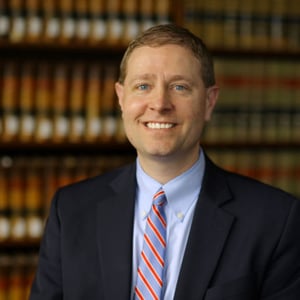
Executive Director, Salmon P. Chase Center for Civics, Culture, and Society, The Ohio State University
Professor Lee J. Strang serves as the inaugural executive director of the Salmon P. Chase Center for Civics, Culture, and Society at The Ohio State University.
Initiated in 2023 by the state of Ohio, the Chase Center will be an academic home at Ohio State for teaching, research, and programing on the foundations of the American constitutional order and its impact on society. As executive director, Professor Strang is responsible for organizing the center, overseeing the hiring and appointment of the center’s faculty, developing curriculum, and delivering student and academic programming. He also holds a faculty appointment in the Moritz College of Law at Ohio State.
Professor Strang is a nationally recognized legal scholar who has published dozens of articles in leading journals in the fields of constitutional law and interpretation, property law, and religion and the First Amendment. He co-edits the textbook Federal Constitutional Law, and his most recent book, Originalism’s Promise: A Natural Law Account of the American Constitution is the first book-length, natural law justification for originalism. He currently is writing on civic thought and leadership, and he is finalizing a book on the history of American Catholic legal education (with John M. Breen).
Before joining Ohio State, Professor Strang served as the inaugural director of the University of Toledo’s Institute of American Constitutional Thought & Leadership. He joined the Toledo College of Law faculty in 2008, was granted tenure in 2010, and was named John W. Stoepler Professor of Law & Values in 2015. The University of Toledo awarded Professor Strang its Outstanding Faculty Research and Scholarship Award in 2017. Before that, he was a visiting professor at Michigan State University College of Law. A graduate of the University of Iowa, where he was articles editor of the Iowa Law Review and Order of the Coif, Professor Strang holds an LL.M. degree from Harvard Law School.
Professor Strang has been a visiting scholar at the Georgetown Center for the Constitution and a visiting fellow at the James Madison Program at Princeton University. In 2016, he was appointed to the Ohio Advisory Committee of the U.S. Commission on Civil Rights and reappointed as chair in 2023.
Prior to teaching, Professor Strang served as a judicial clerk for Judge Alice M. Batchelder of the U.S. Court of Appeals for the Sixth Circuit. He was also an associate for Jenner & Block LLP in Chicago, where he practiced in general and appellate litigation.
Professor Strang is a frequent presenter at scholarly conferences. He is the president of the Board of Trustees of Northwest Ohio Classical Academy, Ohio’s first classical charter school. He is also a regular participant in debates at law schools across the country, a contributor to the media, and a speaker to political, civic, and religious groups.
Chairman and Managing Partner, Boies Schiller Flexner
David Boies has been the Chairman and a Managing Partner of Boies Schiller Flexner since its founding in 1997.
David has been selected as one of the 100 Most Influential People in the World by Time Magazine (2010). He has been named Global International Litigator of the Year by Who’s Who Legal an unprecedented seven times. David has been named the Litigator of the Year by The American Lawyer; the Lawyer of the Year by The National Law Journal (twice); the Antitrust Lawyer of the Year by the New York Bar Association; Best Lawyers in America from 1987-2021; Lawdragon 500 Leading Lawyers; and an Eminent Practitioner by Chambers USA. He was named one of the Top 50 Big Law Innovators of the Last 50 Years by The American Lawyer in 2013.
David is the recipient of Honorary Doctor of Laws from the University of Redlands (2000), New York Law School (2007), University of New Hampshire School of Law (2013), and New York University (2013) and an Honorary Doctor of Letters from the Chicago Theological Seminary (2011). His awards include the Award of Merit from the Yale Law School, the ABA Medal from the American Bar Association, the Vanderbilt Medal from New York University Law School, the Pinnacle Award from the International Dyslexia Association, the William Brennan Award from the University of Virginia, the Role Model Award from Equality Forum, the Lead by Example Award from the National Association of Women Lawyers, the Torch of Learning Award from the American Friends of Hebrew University, the Eisendrath Bearer of Light Award from the Union for Reform Judaism, and a Lifetime Achievement Award from the Mississippi Center for Justice.
David served as Chief Counsel and Staff Director of the United States Senate Antitrust Subcommittee in 1978 and Chief Counsel and Staff Director of the United States Senate Judiciary Committee in 1979.
In 1991-1993, he was counsel to the Federal Deposit Insurance Corporation, recovering $1.2 billion from companies who sold junk bonds to failed savings and loan associations.
In 1998-2000, he served as Special Trial Counsel for the United States Department of Justice in its antitrust suit against Microsoft. David also served as the lead counsel for former Vice-President Al Gore in connection with litigation relating to the 2000 election Florida vote count. As co-lead counsel for the plaintiffs in Perry v. Brown, he won the first judgment establishing the right to marry for gay and lesbian citizens under the U.S. Constitution.
David was born in Sycamore, Illinois on March 11, 1941. He attended the University of Redlands (1960-62), and received a B.S. from Northwestern University (1964), an LL.B., magna cum laude from Yale University (1966), and an LL.M. from New York University (1967).
He is a member of Phi Beta Kappa, a Fellow of the American College of Trial Lawyers and the International Academy of Trial Lawyers; and a Trustee of the National Constitution Center, Cold Spring Harbor Laboratory, New York University Law School Foundation and St. Luke’s-Roosevelt Hospital Center. He is the author of numerous publications including Courting Justice (2004), Redeeming the Dream (with Ted Olson), and Public Control of Business (with Paul Verkuil), published by Little Brown in 1977. He has taught courses at New York University Law School and Cardozo Law School.
Anne Shea Ransdell and William Garland "Buck" Ransdell, Jr. Distinguished Professor of Law, University of North Carolina School of Law
Carissa Byrne Hessick joined the Carolina Law faculty in 2016. She serves as the Anne Shea Ransdell and William Garland “Buck” Ransdell, Jr. Distinguished Professor of Law and as the director of the Prosecutors and Politics Project. Her teaching and research interests include criminal law, the structure of the criminal justice system, criminal sentencing, and child pornography crimes. Hessick is the author of multiple law review articles, essays, and op eds on plea bargaining, the powers and selection of prosecutors, Sixth Amendment sentencing rights, and criminal statutes. Her work has appeared in the California Law Review, the Cornell Law Review, the L.A. Times, the UCLA Law Review, and the Virginia Law Review, among others. She founded the Prosecutors and Politics Project in 2018. And she currently serves as the Reporter for the ABA Criminal Justice Section’s Sentencing Standards Task Force.
Hessick attended Yale Law School, where she was an editor of the Yale Law Journal and winner of the Potter Stewart Prize for the Morris Tyler Moot Court of Appeals. After graduating from law school, she clerked for Judge Barbara S. Jones on the Southern District of New York and for Judge A. Raymond Randolph on the D.C. Circuit. She also worked as a litigation associate at Wachtell, Lipton, Rosen & Katz in New York City. Before joining the faculty at Carolina Law, Hessick taught on the faculties at Arizona State University’s Sandra Day O’Connor College of Law and the University of Utah’s S.J. Quinney College of Law. She also spent two years as a Climenko Fellow at Harvard Law School.
Founder, Original Jurisdiction
David Lat is a lawyer turned writer. He publishes Original Jurisdiction, a newsletter on Substack about law and legal affairs, and he writes for newspapers and magazines, including the New York Times, Washington Post, and Wall Street Journal. Prior to launching Original Jurisdiction, David founded Above the Law, one of the nation's most widely read legal news websites, and Underneath Their Robes, a popular blog about federal judges that he wrote under a pseudonym. He is also the author of a novel set in the world of the federal courts, Supreme Ambitions. Before entering the media world, David worked as a federal prosecutor in Newark, New Jersey; a litigation associate at Wachtell, Lipton, Rosen & Katz, in New York; and a law clerk to Judge Diarmuid F. O’Scannlain of the U.S. Court of Appeals for the Ninth Circuit. David graduated from Harvard College and Yale Law School, where he served as an editor of the Yale Law Journal.
Professor of Law and J. Philip Johnson Faculty Fellow, University of North Dakota School of Law
Michael S. McGinniss is Professor of Law and J. Philip Johnson Faculty Fellow at the University of North Dakota School of Law, where he joined the faculty in 2010 and served as the Dean from 2019 to 2022. He chairs the executive committee for the Federalist Society's Practice Group on Professional Responsibility and Legal Education.
Before entering the legal academy, Professor McGinniss served for twelve years as a Disciplinary Counsel for the Supreme Court of Delaware. He currently teaches courses on Professional Responsibility, Advanced Legal Ethics, Civil Procedure, and Federal Courts. He also serves as Faculty Advisor for the North Dakota Law Review and the UND Law Federalist Society student chapter.
Professor McGinniss’ research and scholarship interests are wide-ranging and include lawyer and judicial ethics, lawyer discipline and regulation of the profession, constitutional law (especially First Amendment, separation of powers, and federalism), and cultural challenges faced by conservatives in the law schools and the legal profession. His most recent law review article, Declaring Independence to Secure Integrity: The Supreme Court Justices' Code of Conduct, was published in the Federalist Society Review. His article Expressing Conscience with Candor: Saint Thomas More and First Freedoms in the Legal Profession, was published in the Harvard Journal of Law & Public Policy.
Professor McGinniss has spoken to Federalist Society lawyer and student chapters across the country about judicial independence and ethics, especially relating to the federal courts and the United States Supreme Court Justices. In addition, he has spoken to several chapters about rising challenges to ideological diversity and targeting of conservative viewpoints in law schools and the legal profession. Although he is very pleased to speak on these and many other topics that may be of interest to lawyer and student chapters, in 2026-2027, he has particular interest in speaking on the topic “Lawyer Discipline as Political ‘Resistance’: Separation of Powers, Federalism, and the Rule of Law,” concerning his work-in-progress on the weaponization of professional disciplinary processes against conservative lawyers for political and ideological purposes.
Partner, McGuireWoods
John Moran is a member of the firm’s nationally recognized Government Investigations and White Collar Litigation department. A former senior official at the U.S. Department of Justice (DOJ) and the White House and an experienced litigator and counselor, John draws on his broad experience from private practice and government service to advise and represent clients in government enforcement, congressional investigations, high-stakes civil disputes, and regulatory litigation. He also serves as co-chair of the firm’s Congressional Investigations practice, representing both companies and individuals in congressional investigations and hearings and is a member of the firm’s Appeals & Issues group.
Sterling Professor of Law, Yale Law School
Akhil Reed Amar is Sterling Professor of Law and Political Science at Yale University, where he teaches constitutional law in both Yale College and Yale Law School. After graduating from Yale College, summa cum laude, in 1980 and from Yale Law School in 1984, and clerking for Judge (later Justice) Stephen Breyer, Amar joined the Yale faculty in 1985 at the age of 26. He is Yale’s only living professor to have won the University’s unofficial triple crown — the Sterling Chair for scholarship, the DeVane Medal for teaching, and the Lamar Award for alumni service.
Amar’s work has won awards from both the American Bar Association and the Federalist Society, and he has been cited by Supreme Court justices across the spectrum in more than 50 cases — tops among scholars under age 70. According to both Fred Shapiro’s landmark 2021 study of lifetime scholarly citations and Heinonline’s most recent tabulation of lifetime law-review citations, Amar is America’s second most-cited legal scholar still under age 70. He is a member of the American Academy of Arts and Sciences and has written widely for popular publications, including The New York Times, The Washington Post, The Wall Street Journal, Time, and The Atlantic. He was an informal consultant to the popular TV show The West Wing and his scholarship has been showcased on many broadcasts, including The Colbert Report, Morning Joe, AC360, Velshi, Fox News @ Night with Shannon Bream, Fareed Zakaria GPS, Erin Burnett Outfront, and Constitution USA with Peter Sagal.
He is the author of more than a hundred law review articles and several books, including The Bill of Rights (1998 — winner of the Yale University Press Governors’ Award), America’s Constitution (2005 — winner of the ABA’s Silver Gavel Award), America’s Unwritten Constitution (2012 — named one of the year’s 100 best nonfiction books by The Washington Post), and The Constitution Today (2016 — named one of the year’s top ten nonfiction books by Time magazine). The first volume of his ambitious trilogy on American constitutional history from the Founding to the present, The Words That Made Us: America’s Constitutional Conversation, 1760-1840, came out in May 2021. The second volume, Born Equal: Remaking America’s Constitution, 1840-1920, will be published in September 2025 and is already available for pre-order. All together, his nonfiction books have won two starred reviews from Publishers Weekly and three starred reviews from Kirkus—tops, it is believed, among legal scholars under age 70. Together with Vikram David Amar (YLS ’88), he has a bi-weekly column on the Supreme Court on the distinguished website SCOTUSblog. Along with Andy Lipka, he co-hosts a popular and free weekly podcast, Amarica’s Constitution, whose listeners are eligible for CLE credit in most American jurisdictions. A wide assortment of his articles and op-eds and video links to many of his public lectures and free online courses may be found at akhilamar.com.
James L. Oberstar Professor of Law and Public Policy, University of St. Thomas School of Law
William Rand Kenan, Jr. Distinguished Professor of Law, University of North Carolina School of Law
William (Bill) Marshall joined the Carolina Law faculty in 2001 and serves as the William R. Kenan Jr. Distinguished Professor of Law. His teaching and research interests include the first amendment, presidential power, election law, federal jurisdiction, federal judicial selection, civil procedure, and media law. Marshall is the author of numerous book chapters, articles, and essays on free speech, separation of powers, the Establishment Clause, and the Free Exercise Clause. His work has appeared in the Harvard Law Review, the Yale Law Journal, the Supreme Court Review, and the University of Chicago Law Review, among others.
Marshall received his law degree from the University of Chicago and his undergraduate degree from the University of Pennsylvania. Marshall was Deputy Counsel to the President and Deputy Assistant to the President during the Clinton Administration and also served as the Solicitor General for the State of Ohio. He has taught at the Northwestern, Boston University, Vanderbilt, Ohio State, DePaul, Case Western Reserve, William and Mary, and the University Connecticut law schools. Prior to beginning his teaching career, Marshall was a Special Assistant Attorney General for the State of Minnesota.
Judge, United States Court of Appeals, Ninth Circuit
Lawrence VanDyke serves as a circuit judge on the U.S. Court of Appeals for the Ninth Circuit. Prior to that appointment in January 2020, he served as a Deputy Assistant Attorney General in the Environment and Natural Resources Division of the United States Department of Justice. Before that, he served consecutively as the Solicitor General of two western states – Nevada and Montana. At the beginning of his legal career, he worked as an attorney in the Appellate and Constitutional Issues practice group at Gibson Dunn & Crutcher, LLP.
Judge VanDyke received his law degree magna cum laude from Harvard Law School, where he was an editor on the Harvard Law Review. He has engineering and theology undergraduate degrees and a masters degree in engineering management. He served as a law clerk to the Honorable Janice Rogers Brown of the United States Court of Appeals for the District of Columbia Circuit. Judge VanDyke and his wife Cheryl live in Reno, Nevada, and they have three children.
Vice President and Senior Counsel, The Becket Fund for Religious Liberty
Lori Windham is vice president and senior counsel at Becket, where she has represented clients on cutting-edge religious freedom issues since 2005. She has represented parties before the Supreme Court, arguing Becket’s unanimous victory on behalf of foster families in Fulton v. Philadelphia, as well as working with the Becket team on its Supreme Court victories in Hosanna-Tabor, Hobby Lobby, and Little Sisters of the Poor. She won a victory for the world’s largest religious media network in EWTN v. Azar, staving off millions of dollars in government fines under unlawful the HHS mandate. She has won more than a dozen victories in federal appellate courts, including successful defense of cities and school districts sued for accommodating religion, victories for houses of worship facing discrimination in the land use process, and overturning a multimillion-dollar judgment against a major evangelical ministry. She recently won a first-in-the-nation injunction for an adoption agency threatened with shutdown for its religious beliefs.
Recognized in Washington as an expert on religious freedom issues, Lori has testified in Congressional oversight hearings before the U.S. House of Representatives Judiciary Committee and before the U.S. Commission on Civil Rights. Outside Washington, Lori is sought-after speaker on First Amendment law, including appearances at Yale Law School, Harvard Law School, Stanford Law School, Georgetown University Law Center, Central European University, and many others.
In addition to these venues, Lori also defends her clients in the media, including television appearances on CBS This Morning, Hardball, CNN Tonight, On the Record, America’s Newsroom, Opinion Journal, and many others. Her work has been covered by the New York Times, Wall Street Journal, Washington Post, and dozens of other papers. She is also a regular guest on radio, with appearances on shows ranging from Sean Hannity to NPR.
Lori has successfully represented a wide array of clients, including a Santeria priest prohibited from making animal sacrifices, synagogues prohibited from building on their own land, and religious student organizations penalized for their religious speech. One of her most challenging cases involved travel to a remote farming community to ensure that members of the local Amish community were not jailed for using their traditional building methods.
Lori is a graduate of Harvard Law School and earned her B.A. summa cum laude at Abilene Christian University. She has served on the Board of Visitors of Abilene Christian University and received the ACU Young Alumnus of the Year award for her work at Becket. She sits on the board of Dominion Christian School and the visiting committee of the Fund for American Studies’ Summer Law Fellowship.
Sterling Professor of Law, Yale Law School
Akhil Reed Amar is Sterling Professor of Law and Political Science at Yale University, where he teaches constitutional law in both Yale College and Yale Law School. After graduating from Yale College, summa cum laude, in 1980 and from Yale Law School in 1984, and clerking for Judge (later Justice) Stephen Breyer, Amar joined the Yale faculty in 1985 at the age of 26. He is Yale’s only living professor to have won the University’s unofficial triple crown — the Sterling Chair for scholarship, the DeVane Medal for teaching, and the Lamar Award for alumni service.
Amar’s work has won awards from both the American Bar Association and the Federalist Society, and he has been cited by Supreme Court justices across the spectrum in more than 50 cases — tops among scholars under age 70. According to both Fred Shapiro’s landmark 2021 study of lifetime scholarly citations and Heinonline’s most recent tabulation of lifetime law-review citations, Amar is America’s second most-cited legal scholar still under age 70. He is a member of the American Academy of Arts and Sciences and has written widely for popular publications, including The New York Times, The Washington Post, The Wall Street Journal, Time, and The Atlantic. He was an informal consultant to the popular TV show The West Wing and his scholarship has been showcased on many broadcasts, including The Colbert Report, Morning Joe, AC360, Velshi, Fox News @ Night with Shannon Bream, Fareed Zakaria GPS, Erin Burnett Outfront, and Constitution USA with Peter Sagal.
He is the author of more than a hundred law review articles and several books, including The Bill of Rights (1998 — winner of the Yale University Press Governors’ Award), America’s Constitution (2005 — winner of the ABA’s Silver Gavel Award), America’s Unwritten Constitution (2012 — named one of the year’s 100 best nonfiction books by The Washington Post), and The Constitution Today (2016 — named one of the year’s top ten nonfiction books by Time magazine). The first volume of his ambitious trilogy on American constitutional history from the Founding to the present, The Words That Made Us: America’s Constitutional Conversation, 1760-1840, came out in May 2021. The second volume, Born Equal: Remaking America’s Constitution, 1840-1920, will be published in September 2025 and is already available for pre-order. All together, his nonfiction books have won two starred reviews from Publishers Weekly and three starred reviews from Kirkus—tops, it is believed, among legal scholars under age 70. Together with Vikram David Amar (YLS ’88), he has a bi-weekly column on the Supreme Court on the distinguished website SCOTUSblog. Along with Andy Lipka, he co-hosts a popular and free weekly podcast, Amarica’s Constitution, whose listeners are eligible for CLE credit in most American jurisdictions. A wide assortment of his articles and op-eds and video links to many of his public lectures and free online courses may be found at akhilamar.com.
James L. Oberstar Professor of Law and Public Policy, University of St. Thomas School of Law
William Rand Kenan, Jr. Distinguished Professor of Law, University of North Carolina School of Law
William (Bill) Marshall joined the Carolina Law faculty in 2001 and serves as the William R. Kenan Jr. Distinguished Professor of Law. His teaching and research interests include the first amendment, presidential power, election law, federal jurisdiction, federal judicial selection, civil procedure, and media law. Marshall is the author of numerous book chapters, articles, and essays on free speech, separation of powers, the Establishment Clause, and the Free Exercise Clause. His work has appeared in the Harvard Law Review, the Yale Law Journal, the Supreme Court Review, and the University of Chicago Law Review, among others.
Marshall received his law degree from the University of Chicago and his undergraduate degree from the University of Pennsylvania. Marshall was Deputy Counsel to the President and Deputy Assistant to the President during the Clinton Administration and also served as the Solicitor General for the State of Ohio. He has taught at the Northwestern, Boston University, Vanderbilt, Ohio State, DePaul, Case Western Reserve, William and Mary, and the University Connecticut law schools. Prior to beginning his teaching career, Marshall was a Special Assistant Attorney General for the State of Minnesota.
Judge, United States Court of Appeals, Ninth Circuit
Lawrence VanDyke serves as a circuit judge on the U.S. Court of Appeals for the Ninth Circuit. Prior to that appointment in January 2020, he served as a Deputy Assistant Attorney General in the Environment and Natural Resources Division of the United States Department of Justice. Before that, he served consecutively as the Solicitor General of two western states – Nevada and Montana. At the beginning of his legal career, he worked as an attorney in the Appellate and Constitutional Issues practice group at Gibson Dunn & Crutcher, LLP.
Judge VanDyke received his law degree magna cum laude from Harvard Law School, where he was an editor on the Harvard Law Review. He has engineering and theology undergraduate degrees and a masters degree in engineering management. He served as a law clerk to the Honorable Janice Rogers Brown of the United States Court of Appeals for the District of Columbia Circuit. Judge VanDyke and his wife Cheryl live in Reno, Nevada, and they have three children.
Vice President and Senior Counsel, The Becket Fund for Religious Liberty
Lori Windham is vice president and senior counsel at Becket, where she has represented clients on cutting-edge religious freedom issues since 2005. She has represented parties before the Supreme Court, arguing Becket’s unanimous victory on behalf of foster families in Fulton v. Philadelphia, as well as working with the Becket team on its Supreme Court victories in Hosanna-Tabor, Hobby Lobby, and Little Sisters of the Poor. She won a victory for the world’s largest religious media network in EWTN v. Azar, staving off millions of dollars in government fines under unlawful the HHS mandate. She has won more than a dozen victories in federal appellate courts, including successful defense of cities and school districts sued for accommodating religion, victories for houses of worship facing discrimination in the land use process, and overturning a multimillion-dollar judgment against a major evangelical ministry. She recently won a first-in-the-nation injunction for an adoption agency threatened with shutdown for its religious beliefs.
Recognized in Washington as an expert on religious freedom issues, Lori has testified in Congressional oversight hearings before the U.S. House of Representatives Judiciary Committee and before the U.S. Commission on Civil Rights. Outside Washington, Lori is sought-after speaker on First Amendment law, including appearances at Yale Law School, Harvard Law School, Stanford Law School, Georgetown University Law Center, Central European University, and many others.
In addition to these venues, Lori also defends her clients in the media, including television appearances on CBS This Morning, Hardball, CNN Tonight, On the Record, America’s Newsroom, Opinion Journal, and many others. Her work has been covered by the New York Times, Wall Street Journal, Washington Post, and dozens of other papers. She is also a regular guest on radio, with appearances on shows ranging from Sean Hannity to NPR.
Lori has successfully represented a wide array of clients, including a Santeria priest prohibited from making animal sacrifices, synagogues prohibited from building on their own land, and religious student organizations penalized for their religious speech. One of her most challenging cases involved travel to a remote farming community to ensure that members of the local Amish community were not jailed for using their traditional building methods.
Lori is a graduate of Harvard Law School and earned her B.A. summa cum laude at Abilene Christian University. She has served on the Board of Visitors of Abilene Christian University and received the ACU Young Alumnus of the Year award for her work at Becket. She sits on the board of Dominion Christian School and the visiting committee of the Fund for American Studies’ Summer Law Fellowship.
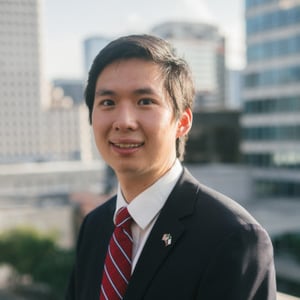
State District Judge, Austin, Texas
Cory Liu is a state district judge in Austin, Texas. He previously served as assistant general counsel to Texas Governor Greg Abbott. Mr. Liu clerked for Judge Andrew Oldham on the U.S. Court of Appeals for the Fifth Circuit and Judge Danny Boggs on the U.S. Court of Appeals for the Sixth Circuit. He was Editor-in-Chief of the Harvard Journal of Law & Public Policy and is a graduate of Harvard Law School and the University of Chicago.
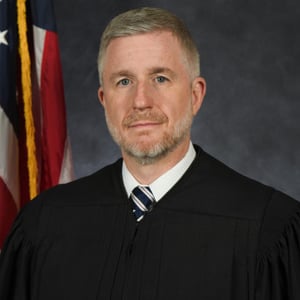
Judge, United States Court of Appeals, Third Circuit
Judge Paul Matey was appointed to the United States Court of Appeals for the Third Circuit in 2019 by President Trump.
Before his judicial service, Judge Matey was a partner at Lowenstein Sandler in New Jersey where he practiced complex commercial litigation and criminal defense. Earlier, Judge Matey was the Senior Vice President, General Counsel and Secretary for University Hospital Newark, an academic medical center and teaching hospital.
He also served as the Deputy Chief Counsel to Governor Chris Christie, and as an Assistant United States Attorney in the District of New Jersey, where he was awarded the Justice Department’s Director’s Award for Superior Performance. He also practiced at the Washington D.C. firm of Kellogg, Hansen, Todd, Figel & Frederick, and served as a law clerk to judges on the United States Court of Appeals for the Third Circuit and the United States District Court for the District of New Jersey.
He earned his bachelor’s degree from the University of Scranton, a Jesuit University, in 1993, and his juris doctorate, summa cum laude, from Seton Hall University School of Law in 2001, where he served as Editor-in-Chief of the Seton Hall Law Review.
In 2019, Judge Matey was elected to membership in the American Law Institute and, since 2020, has lectured on administrative law and the American legal history at Seton Hall.
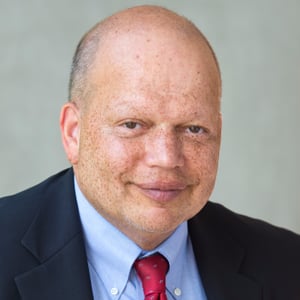
Julius L. Chambers Distinguished Professor of Law and Director of the Center for Civil Rights, University of North Carolina School of Law
Theodore M. Shaw is the Julius L. Chambers Distinguished Professor of Law and Director of the Center for Civil Rights at the University of North Carolina School of Law at Chapel Hill. Professor Shaw teaches Civil Procedure and Advanced Constitutional Law/Fourteenth Amendment. Before joining the faculty of UNC Law School, from 2008-2014 Professor Shaw taught at Columbia University Law School, where he was Professor of Professional Practice. During that time he was also “Of Counsel” to the law firm of Norton Rose Fulbright (formerly Fulbright & Jaworski, LLP). His practice involved civil litigation and representation of institutional clients on matters concerning diversity and civil rights.
Professor Shaw was the fifth Director-Counsel and President of the NAACP Legal Defense and Educational Fund, Inc., for which he worked in various capacities over the span of twenty-six years. He has litigated education, employment, voting rights, housing, police misconduct, capital punishment and other civil rights cases in trial and appellate courts, and in the United States Supreme Court.From 1982 until 1987, he litigated education, housing, and capital punishment cases and directed LDF's education litigation docket. In 1987, under the direction of LDF's third Director-Counsel, Julius Chambers, Mr. Shaw relocated to Los Angeles to establish LDF's Western Regional Office. In 1990, Mr. Shaw left LDF to join the faculty of the University of Michigan Law School, where he taught Constitutional Law, Civil Procedure and Civil Rights. While at Michigan, he played a key role in initiating a review of the law school's admissions practices and policies, and served on the faculty committee that promulgated the admissions program that was upheld by the U.S. Supreme Court in 2003 in Grutter v. Bollinger.
In 1993, Mr. Shaw returned to LDF as Associate Director-Counsel, and in 2004, he became LDF's fifth Director-Counsel. Mr. Shaw's legal career began as a Trial Attorney in the Honors Program of the United States Department of Justice, Civil Rights Division in Washington, D.C., where he worked from 1979 until 1982.
Mr. Shaw has testified on numerous occasions before Congress and before state and local legislatures. His human rights work has taken him to Africa, Asia, Europe, and South America. In addition to teaching at Columbia and at Michigan Law School, Professor Shaw held the 1997-1998 Haywood Burns Chair at CUNY School of Law at Queens College and the 2003 Phyllis Beck Chair at Temple Law School. He was a visiting scholar at the Constitution Center in Philadelphia in 2008-2009. He is a member of the faculty of the Practicing Law Institute (PLI).
Mr. Shaw served on the Obama Transition Team after the 2008 presidential election, as team leader for the Civil Rights Division of the Justice Department.
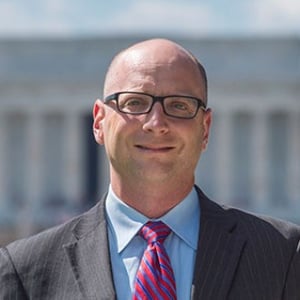
Partner, Consovoy McCarthy Park PLLC
Mr. Strawbridge provides clients with advice and representation at the pre-litigation, trial, and appellate stages. He has represented a broad range of individual and institutional clients on matters of constitutional law, financial and securities regulation, environmental laws, complex commercial disputes, and consumer protection statutes. His experience includes arbitrations, trial and appellate litigation, and administrative and regulatory proceedings.
Mr. Strawbridge served as a law clerk to Supreme Court Justice Clarence Thomas, Judge Morris Sheppard Arnold of the United States Court of Appeals for the Eighth Circuit, and Justice Howard Dana of the Supreme Judicial Court of Maine. Previously, Mr. Strawbridge was a partner at two large international law firms. He worked as a newspaper reporter for four years before attending law school. Mr. Strawbridge is an adjunct professor for the Supreme Court Clinic at the Antonin Scalia Law School at George Mason University.
Mr. Strawbridge earned a Bachelor of Journalism from the University of Missouri, and his J.D. summa cum laude from Creighton University School of Law. Mr. Strawbridge is a member of the Maine and Massachusetts bars.

Current & Future Uses of the Impeachment Power
Great Lakes Insurance SE v. Raiders Retreat Realty Co., LLC - Post-Decision SCOTUScast
F. Andrew Hessick
On February 21, 2024, the Supreme Court issued its ruling in Great Lakes Insurance SE...
Challenges to Originalism IX: Originalism is Inconsistent with Natural Law
Lee J. Strang
The Federalist Society's Student Division & UNC School of Law Student Chapterpresent Challenges to Originalism IX:...
A Preview of the Supreme Court’s 2023-24 Term
North Carolina Student Chapter
Chapel Hill, NCEthics of Client Coercion Webinar
David Boies, Carissa Byrne Hessick, David Lat, Michael S. McGinniss, John S. Moran
Is it ethical for in-house attorneys to leverage their employer’s economic clout to interfere with...
Ethics of Client Coercion Webinar
Religious Liberty after Fulton v. City of Philadelphia
Akhil Reed Amar, Thomas C. Berg, William P. Marshall, Lawrence VanDyke, Lori Windham
The 2021 National Lawyers Convention took place November 11-13, 2021 at the Mayflower Hotel in...
Religious Liberty after Fulton v. City of Philadelphia
Akhil Reed Amar, Thomas C. Berg, William P. Marshall, Lawrence VanDyke, Lori Windham
The 2021 National Lawyers Convention took place November 11-13, 2021 at the Mayflower Hotel in...
Religious Liberty after Fulton v. City of Philadelphia
2021 National Lawyers Convention
Washington, DCPanel One: Racial Preferences in Higher Education: What are the Consequences and What Will the Supreme Court Do?
Cory R. Liu, Paul B. Matey, Theodore M. Shaw, Patrick Strawbridge
Despite the fact that Title VI of the Civil Rights Act of 1964 prohibits racial...