
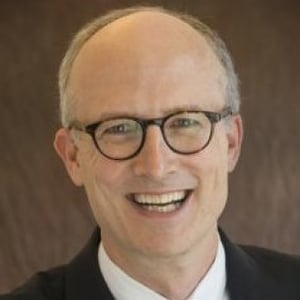
Michael J. Marks Professor of Law, University of Chicago Law School
M. Todd Henderson is the Michael J. Marks Professor of Law at the University of Chicago Law School. Professor Henderson’s research interests include corporations, securities regulation, and law and economics. He has taught classes ranging from Banking Regulation to Torts to American Indian Law.
Professor Henderson received an engineering degree cum laude from Princeton University in 1993. He worked for several years designing and building dams in California before matriculating at the Law School. While at the Law School, Todd was an editor of the Law Review and captained the Law School's all-University champion intramural football team. He graduated magna cum laude in 1998 and was elected to the Order of the Coif. Following law school, Todd served as clerk to the Hon. Dennis Jacobs of the US Court of Appeals for the Second Circuit. He then practiced appellate litigation at Kirkland & Ellis in Washington, DC, and was an engagement manager at McKinsey & Company in Boston, where he specialized in counseling telecommunications and high-tech clients on business and regulatory strategy.
C. Ben Dutton Professor of Law, Indiana University Maurer School of Law
Professor Nagy joined the law school faculty in 2006 as the C. Ben Dutton Professor of Business Law. She began her teaching career in 1994 at the University of Cincinnati College of Law, where she served as Interim Dean from 2004-05 and as Associate Dean for Faculty Development from 2002-04. In Spring 2001, she was a Visiting Professor of Law at the University of Illinois College of Law, and was a Visiting Scholar at the University of Canterbury School of Law in Christchurch, New Zealand in Spring 2002.
Professor Nagy teaches and writes in the areas of securities litigation, securities regulation, and corporations. Her scholarship includes articles in the Cornell Law Review, the Notre Dame Law Review, and the Ohio State Law Journal as well as two co-authored books, one on the law of insider trading and a casebook on Securities Litigation and Enforcement. She is a frequent speaker on securities regulation and litigation topics at law schools and professional conferences. She also served as Chair of the AALS Section on Securities Regulation in 2004-05; as Chair of the AALS Standing Committee on Sections and the Annual Meeting in 2007-08; and as a Vice President and Member of the Board of Trustees of the SEC Historical Society from 2008-11.
Prior to teaching, Professor Nagy was an associate with Debevoise & Plimpton in Washington, D.C., specializing in securities enforcement and litigation. She was named interim executive associate dean for academic affairs in August 2013 and executive associate dean in January 2014.
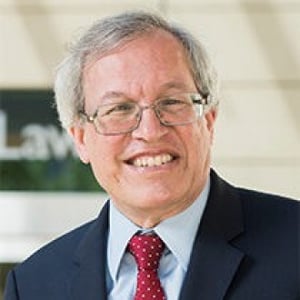
Dean and Jesse H. Choper Distinguished Professor of Law, UC Berkeley School of Law
Erwin Chemerinsky became the 13th Dean of Berkeley Law on July 1, 2017, when he joined the faculty as the Jesse H. Choper Distinguished Professor of Law.
Prior to assuming this position, from 2008-2017, he was the founding Dean and Distinguished Professor of Law, and Raymond Pryke Professor of First Amendment Law, at University of California, Irvine School of Law, with a joint appointment in Political Science. Before that he was the Alston and Bird Professor of Law and Political Science at Duke University from 2004-2008, and from 1983-2004 was a professor at the University of Southern California Law School, including as the Sydney M. Irmas Professor of Public Interest Law, Legal Ethics, and Political Science. He also has taught at DePaul College of Law and UCLA Law School.
He is the author of eleven books, including leading casebooks and treatises about constitutional law, criminal procedure, and federal jurisdiction. His most recent books are, We the People: A Progressive Reading of the Constitution for the Twenty-First Century (Picador Macmillan) published in November 2018, and two books published by Yale University Press in 2017, Closing the Courthouse Doors: How Your Constitutional Rights Became Unenforceable and Free Speech on Campus (with Howard Gillman).
He also is the author of more than 200 law review articles. He writes a regular column for the Sacramento Bee, monthly columns for the ABA Journal and the Daily Journal, and frequent op-eds in newspapers across the country. He frequently argues appellate cases, including in the United States Supreme Court.
In 2016, he was named a fellow of the American Academy of Arts and Sciences. In 2017, National Jurist magazine again named Dean Chemerinsky as the most influential person in legal education in the United States.

Dr. John Eastman is the former Henry Salvatori Professor of Law & Community Service and former Dean at Chapman University's Dale E. Fowler School of Law, where he had been a member of the faculty since 1999, specializing in Constitutional Law, Legal History, and Property. He is a founding director of the Center for Constitutional Jurisprudence, a public interest law firm affiliated with the Claremont Institute that he founded in 1999. He has a Ph.D. in Government from the Claremont Graduate School and a J.D. from the University of Chicago Law School, and a B.A. in Politics and Economics from the University of Dallas. He serves as the Chairman of the Board of the National Organization for Marriage.
Prior to joining the Chapman law faculty, Dr. Eastman served as a law clerk to the Honorable Clarence Thomas, Associate Justice, Supreme Court of the United States, and to the Honorable J. Michael Luttig, Judge, United States Court of Appeals for the Fourth Circuit and practiced law with the national law firm of Kirkland & Ellis. Dr. Eastman has also represented numerous clients in important constitutional law matters and has argued before the Supreme Court. On behalf of the Claremont Institute Center for Constitutional Jurisprudence, he has participated as amicus curiae before the Supreme Court of the United States, U.S. Courts of Appeals, and State Supreme Courts in more than one hundred cases of constitutional significance, including Boy Scouts of America v. Dale, Zelman v. Simmons-Harris (the school vouchers case), Kelo v. New London, Ct. (eminent domain), and Van Orden v. Perry (the 10 Commandments case). He has also appeared as an expert legal commentator on numerous television and radio programs, including C-SPAN, Fox News, PBS, NewsHour, and The O'Reilly Factor.

Laurence A. Tisch Professor of Law and Director, Classical Liberal Institute, New York University School of Law; Director, Classical Liberal Institute, Civitas Institute University of Texas at Austin
Richard A. Epstein is the Laurence A. Tisch Professor of Law, at New York University, a senior research fellow at the Civitas Institute at the University of Texas Austin, and a senior Lecturer, the University of Chicago. He received an LL.D., h.c . from the University of Ghent, 2003 , and an LLD h.c . from the University of Siegen in 2018 and the Bradley Prize in 2011. He has been a member of the American Academy of Arts and Sciences since 1985. He has edited both the Journal of Legal Studies (1981-1991) and the Journal of Law and Economics (1991-2001). He is also a founder and director of the Classical Liberal Institute at NYU Law School. His most recent book is The Classical Liberal Constitution: The Uncertain Quest for Limited Government (2014). His other books include Takings: Private Property and the Power of Eminent Domain ( 1985); Bargaining with the State (1993); Simple Rules for a Complex World (1995); Principles for a Free Society: Reconciling Individual Liberty and the Common Good (1998); Skepticism and Freedom: A Modern Theory of Classical Liberalism (2003); Design for Liberty: Private Property, Public Administration and the Rule of Law (2011), and most recently, The Myth of Birthright citizenship—and Beyond (2026). He has taught courses in , administrative law, antitrust, constitutional, contracts, environmental law, land use planning; real property, torts and water law. He has written and spoken extensively on a wide range of topics, and is writes a regular column for Defining Ideas.
Senior Judge, United States District Court for the Southern District of New York
Loretta A. Preska is a senior judge for the United States District Court for the Southern District of New York. She joined the court in 1992 after being nominated by President George H.W. Bush. Preska became the chief judge of the court in May of 2009 when Kimba Wood assumed senior status. She served as chief judge of the court for a seven-year term from 2009 to 2016, and took senior status in 2017.
Preska graduated from the College of St. Rose with her Bachelor's degree in 1970 and also graduated from Fordham Law with her Juris Doctor Degree in 1973. She graduated from NYU Law with her Master of Laws degree in 1978.
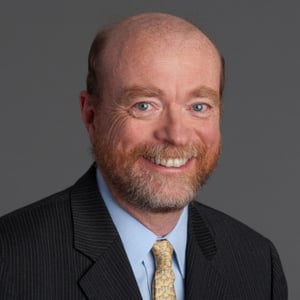
Executive Vice President and Dean of the Law Center; Paul Regis Dean Leadership Chair; Professor of Law, Georgetown University Law Center
William M. Treanor is the Executive Vice President of Georgetown University, Dean of the Law Center, and Paul Regis Dean Leadership Chair. Treanor joined Georgetown in 2010 and was reappointed to serve a third term as Dean and Executive Vice President on July 1, 2020.
Under Treanor’s leadership, Georgetown Law has hired 75 new faculty members; tripled the number of experiential offerings for students in its clinical, externship, and practicum programs; transformed its law and technology offerings into a world class program with 19 full-time faculty experts and over 80 courses in this area; and experienced its most successful era of fundraising, culminating in nearly $67 million in giving in the last fiscal year.
Treanor has also advanced Georgetown Law’s commitment to affordability and access. During his tenure, Georgetown has more than doubled financial aid; raised nearly $25 million dollars for the Law Center’s scholarship program for exceptional students with significant financial need; and launched the RISE program, which provides academic support for students from historically underrepresented groups. The Law Center also created the Early Outreach Initiative, which brings the Law Center’s dean of admissions, current law students, and alumni together to encourage students in underserved high schools to consider pursuing careers as lawyers.
In keeping with Georgetown Law’s motto, “Law is but the means; justice is the end,” Treanor has focused on increasing opportunities for students to pursue careers in public interest law. He is proud that nearly 1 in 4 graduates move straight into public service jobs – a ratio higher than any other top law school in America. The Law Center supports post-graduate fellowships that have enabled more than 400 graduates to work in public interest jobs, and, in combination with the law firms ArentFox Schiff and DLA Piper, it has launched the D.C. Affordable Law Firm, a “low bono” law firm where recent Georgetown Law graduates provide legal representation to people of limited means.
The National Jurist magazine has named Treanor one of the most influential people in legal education five times. He is a member of the Morristown (N.J.) High School Hall of Fame. In 2020, he was elected into the American Academy of Arts & Sciences for law and education. Most recently, he was selected for the inaugural Honorable Robert A. Katzmann Award for Academic Excellence by the Burton Awards.
Treanor’s areas of academic expertise include constitutional law, property law, criminal law, intellectual property, and legal history. At Georgetown Law, he has taught a first-year legal justice seminar, an upper-level course on the drafting of the U.S. Constitution, and leadership courses. His writings have principally been in the area of constitutional history, and he has been recognized as one of the 10 most-cited legal history scholars in the United States by the University of Chicago Law School’s Brian Leiter. His early work largely focused on the history of constitutional protections of private property. His article “The Original Understanding of the Takings Clause and the Political Process,” 95 Colum. L. Rev. 782 (1995), was recognized by the Land Use Professors Blog as the most cited land use article of the past 30 years. Treanor’s article, “Judicial Review before Marbury” was cited in the Moore v. Harper (2023) majority opinion written by Chief Justice Roberts. His recent article, “The Case of the Dishonest Scrivener: Gouverneur Morris and the Creation of the Federalist Constitution,” examined the changes that Gouverneur Morris and the Committee of Style made in preparing the Constitution’s final draft. W.W. Norton will publish his upcoming book, Fathers of the Constitution: Triumph, Tragedy, and the Creation of the American Republic.
Before coming to Georgetown, Treanor was Dean and Paul Fuller Professor of Law at Fordham Law School. He also served in a variety of positions in the government, including Deputy Assistant Attorney General in the Office of Legal Counsel, U.S. Department of Justice; Associate Counsel, Office of Independent Counsel during the Iran/Contra investigation. He was law clerk to the Honorable James L. Oakes, U.S. Court of Appeals for the Second Circuit. Treanor has a Ph.D. in history from Harvard University, a J.D. from Yale Law School, and a B.A., summa cum laude, from Yale College.
Partner, Gibson Dunn
Thomas H. Dupree, Jr. is a partner in the Washington, DC office of Gibson, Dunn & Crutcher. He is a member of the firm's litigation department and its Appellate and Constitutional Law practice group, and serves as the hiring partner for the DC office.
Mr. Dupree is an experienced trial and appellate advocate. He has argued more than 70 appeals in the federal courts, including in all thirteen circuits as well as the United States Supreme Court. He has represented clients throughout the country in a wide variety of trial and appellate matters, including cases involving punitive damages, class actions, product liability, arbitration, intellectual property, employment, and constitutional challenges to federal and state statutes.
In 2007, Mr. Dupree was appointed Deputy Assistant Attorney General. He served in the Civil Division at the U.S. Department of Justice from 2007 to 2009, ultimately becoming the Principal Deputy Assistant Attorney General. In that capacity, he served as the division's second-in-command, overseeing the more than 900 lawyers in the Civil Appellate, Commercial, Federal Programs and Torts branches, as well as the Office of Immigration Litigation and the Office of Consumer Litigation. Mr. Dupree was responsible for managing many of the government's most significant cases involving regulatory, commercial, constitutional and national security matters on behalf of virtually all of the federal agencies, the White House, and senior federal officials. Before being named the division's top deputy, Mr. Dupree ran its largest litigating branch, managing a staff of 280 lawyers.
Chambers and Partners named Mr. Dupree one of the leading appellate lawyers in the United States in 2012, 2013, 2014, 2015, and 2016. He received similar honors in 2010, when he was ranked as one of the top ten appellate litigators under age 40 by Law360. In 2009, the National Law Journal and Legal Times selected him as one of the top 40 lawyers under 40 in Washington, DC, as did Washingtonian magazine in 2006. Based on surveys of hundreds of corporate counsel, Mr. Dupree was named a "Client Service All-Star" by BTI Consulting Group in a 2013 report for his "overall legal prowess" and his "ability to deliver a plan of action that yields results."
Legal Times has called Mr. Dupree "no stranger to high-profile work." Among other things, he played a substantial role in the successful representation of George W. Bush before the United States Supreme Court in Bush v. Gore, and represented New England Patriots quarterback Tom Brady in challenging his "Deflategate" suspension.
In 2014, Mr. Dupree argued and won, by a unanimous 9-0 vote, a landmark personal jurisdiction case in the United States Supreme Court, Daimler AG v. Bauman. For this achievement, American Lawyer magazine named him Litigator of the Week, noting that he "won over both the liberal and conservative wings of the court."
Other matters Mr. Dupree has handled include:
Mr. Dupree appears frequently on national television as a legal analyst. He is a regular guest on Fox News Channel, and has appeared on "The O'Reilly Factor" and "The Kelly File," as well as on CNN's "Situation Room" and C-Span's "America & The Courts," among other programs. He has also been quoted in numerous print publications, including the New York Times, the Wall Street Journal, the Washington Post, the Los Angeles Times and many others, discussing legal issues and developments. Mr. Dupree has also testified before Congress on constitutional and separation-of-powers issues, including the President's authority to act through executive order.
Mr. Dupree graduated cum laude from Williams College, and with Honors from the University of Chicago Law School, where he served as an Editor of the University of Chicago Law Review. After law school, he clerked for the Honorable Jerry E. Smith of the United States Court of Appeals for the Fifth Circuit.
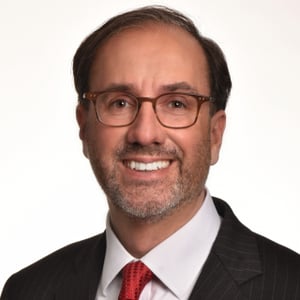
President and CEO, The Buckeye Institute
Robert Alt is the President and Chief Executive Officer of The Buckeye Institute where he has catalyzed exponential growth since he took the organization’s helm in 2012. He has since founded Buckeye’s renowned Economic Research Center and established its impactful Legal Center.
Alt is a distinguished scholar and attorney with particular expertise in legal policy, criminal justice, national security, and constitutional law. He previously worked for former U.S. Attorney General Edwin Meese III, regularly provides commentary on television and radio programs, and his writings have appeared in countless outlets.
In 2004, Alt spent five months in Iraq as an embedded war correspondent.
Alt has testified before Congress multiple times—including at the confirmation hearings for U.S. Supreme Court Justice Elena Kagan—the Federal Election Commission regarding matters of constitutional and administrative law, and numerous state legislatures.
Alt serves as an officer on the boards of The Philadelphia Society and the Federalist Society’s Columbus Lawyers Chapter. He taught national security law, criminal law, and legislation at Case Western Reserve University School of Law, as well as constitutional law and political parties and interest groups at Ashland University.
Alt earned his Doctor of Law degree from The University of Chicago Law School, where he was Symposium Editor and the winner of the Mulroy Prize for Excellence in Appellate Advocacy as well as research assistant to Professor Richard Epstein. Following law school, he clerked for Judge Alice Batchelder on the U.S. Court of Appeals for the Sixth Circuit. Alt graduated with his Bachelor of Arts in philosophy and political science magna cum laude from Azusa Pacific University where he also won the Outstanding Senior Award in Political Science.
Alt is an accomplished high-altitude alpinist and endurance athlete who has successfully climbed 6.75 of the famed Seven Summits of the World including Mount Everest. He is the creator of PROFOUND CLIMBING™ and a frequent speaker across the country and around the world on legal and public policy topics as well as effective leadership, management, decision-making, and teamwork in contexts ranging from extraordinary life/death situations to ordinary professional/business settings.
Laurence A. Tisch Professor of Law and Director, Classical Liberal Institute, New York University School of Law; Director, Classical Liberal Institute, Civitas Institute University of Texas at Austin
Richard A. Epstein is the Laurence A. Tisch Professor of Law, at New York University, a senior research fellow at the Civitas Institute at the University of Texas Austin, and a senior Lecturer, the University of Chicago. He received an LL.D., h.c . from the University of Ghent, 2003 , and an LLD h.c . from the University of Siegen in 2018 and the Bradley Prize in 2011. He has been a member of the American Academy of Arts and Sciences since 1985. He has edited both the Journal of Legal Studies (1981-1991) and the Journal of Law and Economics (1991-2001). He is also a founder and director of the Classical Liberal Institute at NYU Law School. His most recent book is The Classical Liberal Constitution: The Uncertain Quest for Limited Government (2014). His other books include Takings: Private Property and the Power of Eminent Domain ( 1985); Bargaining with the State (1993); Simple Rules for a Complex World (1995); Principles for a Free Society: Reconciling Individual Liberty and the Common Good (1998); Skepticism and Freedom: A Modern Theory of Classical Liberalism (2003); Design for Liberty: Private Property, Public Administration and the Rule of Law (2011), and most recently, The Myth of Birthright citizenship—and Beyond (2026). He has taught courses in , administrative law, antitrust, constitutional, contracts, environmental law, land use planning; real property, torts and water law. He has written and spoken extensively on a wide range of topics, and is writes a regular column for Defining Ideas.
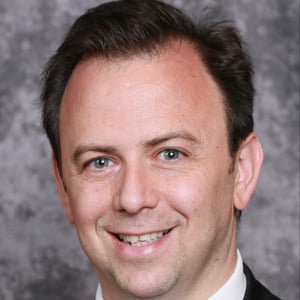
Stevenson Bernard Professor, George Washington University Law School
The Honorable F. Scott Kieff is the Stevenson Bernard Professor at George Washington University Law School and a Visiting Fellow at Stanford University’s Hoover Institution.
He served as Commissioner of the U.S. International Trade Commission from 2013-2017. He also served during the Bush, Obama, and Trump Administrations in the part-time leadership of the national security defense-intelligence community.
He was previously a professor of law and medicine at Washington University in Saint Louis and a Senior Fellow at Hoover. A former law clerk to U.S. Circuit Judge Giles S. Rich, he is a graduate of Penn Law School and MIT, where he studied molecular biology and microeconomics. He was elected to the European Academy of Sciences and Arts in 2012 and the Academia Europaea in 2024.
His private sector work through Kieff Strategies LLC (www.kieffstrategies.com) provides neutral services including mediation and compliance, and expert services including crisis management, advising, and testimony.
Senior Staff Attorney, Electronic Frontier Foundation
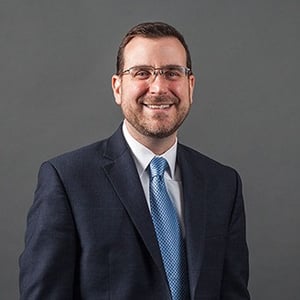
Professor of Law, Antonin Scalia Law School, George Mason University
Adam Mossoff is Professor of Law at Antonin Scalia Law School, George Mason University. He has published extensively on why patents, copyrights, and other intellectual property rights have been—and should be—legally secured to innovators and creators as property rights. His scholarship has been relied on by the United States Supreme Court, by lower federal courts, and by U.S. federal agencies. He has been invited to testify numerous times before the U.S. Senate and the House of Representatives on intellectual property legislation. His writings on intellectual property policy have also appeared in the Wall Street Journal, New York Times, Forbes, Investors Business Daily, and in other media outlets. His journal articles can be downloaded here.
Professor Mossoff is a longstanding member of the Executive Committee of the Intellectual Property Practice Group of the Federalist Society, on which he served as Chairperson from 2016-2018, and he is Chair of the Intellectual Property Working Group of the Regulatory Transparency Project of the Federalist Society. He is a Senior Fellow and Chair of the Forum for Intellectual Property at the Hudson Institute, a Visiting Intellectual Property Fellow at the Heritage Foundation, and a member of the Board of Directors of the Center for Intellectual Property Understanding. He is a member of the Intellectual Property Rights Policy Committee of ANSI and he has served as Chair and Vice-Chair of the Intellectual Property Committee of the IEEE-USA, on which he remains a member in good standing.
William H. Neukom Professor of Law, Stanford University Law School
Mark Lemley is the William H. Neukom Professor of Law at Stanford Law School, the Director of the Stanford Program in Law, Science and Technology, and the Director of Stanford's LLM Program in Law, Science and Technology. He teaches intellectual property, computer and Internet law, patent law, and antitrust. He is the author of seven books (most in multiple editions) and 123 articles on these and related subjects, including the two-volume treatise IP and Antitrust. His works have been cited more than 130 times by courts, including seven United States Supreme Court opinions, and over 9,000 times in books and law review articles. His articles have been reprinted throughout the world, and translated into Chinese, Japanese, Korean, Spanish, Italian, and Danish. He has taught intellectual property law to federal and state judges at numerous Federal Judicial Center and ABA programs, has testified seven times before Congress and numerous times before the California legislature, the Federal Trade Commission and the Antitrust Modernization Commission on patent, trade secret, antitrust and constitutional law matters, and has filed numerous amicus briefs before the U.S. Supreme Court, the California Supreme Court, and the federal circuit courts of appeals.
Mark is a founding partner of Durie Tangri LLP. He litigates and counsels clients in all areas of intellectual property, antitrust, and Internet law. He has argued six Federal appellate cases and numerous district court cases, and represented clients including Comcast, Genentech, Google, Grokster, Hummer Winblad, Impax, Intel, NetFlix, Palm, TiVo, and the University of Colorado Foundation in over 80 cases in two decades as as lawyer.
Mark is the founder and a board member of Lex Machina, Inc., a startup company providing data and analytics around IP disputes to law firms, companies, courts, and policy-makers.
Mark has been named California Lawyer's Attorney of the Year (2005), Best Lawyers’ San Francisco IP Lawyer of the Year (2010), and a Young Global Leader by the Davos World Economic Forum (2007). In 2009 he received the California State Bar’s inaugural IP Vanguard award. In 2002 he was chosen Boalt's Young Alumnus of the Year. He has been recognized as one of the top 50 litigators in the country under 45 by the American Lawyer (2007), one of the 100 most influential lawyers in the nation by the National Law Journal (2006), one of the 10 most admired attorneys in IP (2010) by IP360, one of the 25 most influential people in IP (2010) by the American Lawyer, one of the top intellectual property lawyers in California (2003, 2007, 2009, 2010), and one of the 100 most influential lawyers in California (2004, 2005, 2006, 2008, 2009, 2011) by the Daily Journal, among other honors.
After graduating from law school, Mark clerked for Judge Dorothy Nelson on the United States Court of Appeals for the Ninth Circuit, and has practiced law in Silicon Valley with Brown & Bain and with Fish & Richardson and in San Francisco with Keker & Van Nest. Until January 2000, he was the Marrs McLean Professor of Law at the University of Texas School of Law, and until June 2004 he was the Elizabeth Josslyn Boalt Professor of Law at the Boalt Hall School of Law, University of California at Berkeley.
Laurence A. Tisch Professor of Law and Director, Classical Liberal Institute, New York University School of Law; Director, Classical Liberal Institute, Civitas Institute University of Texas at Austin
Richard A. Epstein is the Laurence A. Tisch Professor of Law, at New York University, a senior research fellow at the Civitas Institute at the University of Texas Austin, and a senior Lecturer, the University of Chicago. He received an LL.D., h.c . from the University of Ghent, 2003 , and an LLD h.c . from the University of Siegen in 2018 and the Bradley Prize in 2011. He has been a member of the American Academy of Arts and Sciences since 1985. He has edited both the Journal of Legal Studies (1981-1991) and the Journal of Law and Economics (1991-2001). He is also a founder and director of the Classical Liberal Institute at NYU Law School. His most recent book is The Classical Liberal Constitution: The Uncertain Quest for Limited Government (2014). His other books include Takings: Private Property and the Power of Eminent Domain ( 1985); Bargaining with the State (1993); Simple Rules for a Complex World (1995); Principles for a Free Society: Reconciling Individual Liberty and the Common Good (1998); Skepticism and Freedom: A Modern Theory of Classical Liberalism (2003); Design for Liberty: Private Property, Public Administration and the Rule of Law (2011), and most recently, The Myth of Birthright citizenship—and Beyond (2026). He has taught courses in , administrative law, antitrust, constitutional, contracts, environmental law, land use planning; real property, torts and water law. He has written and spoken extensively on a wide range of topics, and is writes a regular column for Defining Ideas.
Senior Judge, United States District Court for the Southern District of New York
Loretta A. Preska is a senior judge for the United States District Court for the Southern District of New York. She joined the court in 1992 after being nominated by President George H.W. Bush. Preska became the chief judge of the court in May of 2009 when Kimba Wood assumed senior status. She served as chief judge of the court for a seven-year term from 2009 to 2016, and took senior status in 2017.
Preska graduated from the College of St. Rose with her Bachelor's degree in 1970 and also graduated from Fordham Law with her Juris Doctor Degree in 1973. She graduated from NYU Law with her Master of Laws degree in 1978.
Executive Vice President and Dean of the Law Center; Paul Regis Dean Leadership Chair; Professor of Law, Georgetown University Law Center
William M. Treanor is the Executive Vice President of Georgetown University, Dean of the Law Center, and Paul Regis Dean Leadership Chair. Treanor joined Georgetown in 2010 and was reappointed to serve a third term as Dean and Executive Vice President on July 1, 2020.
Under Treanor’s leadership, Georgetown Law has hired 75 new faculty members; tripled the number of experiential offerings for students in its clinical, externship, and practicum programs; transformed its law and technology offerings into a world class program with 19 full-time faculty experts and over 80 courses in this area; and experienced its most successful era of fundraising, culminating in nearly $67 million in giving in the last fiscal year.
Treanor has also advanced Georgetown Law’s commitment to affordability and access. During his tenure, Georgetown has more than doubled financial aid; raised nearly $25 million dollars for the Law Center’s scholarship program for exceptional students with significant financial need; and launched the RISE program, which provides academic support for students from historically underrepresented groups. The Law Center also created the Early Outreach Initiative, which brings the Law Center’s dean of admissions, current law students, and alumni together to encourage students in underserved high schools to consider pursuing careers as lawyers.
In keeping with Georgetown Law’s motto, “Law is but the means; justice is the end,” Treanor has focused on increasing opportunities for students to pursue careers in public interest law. He is proud that nearly 1 in 4 graduates move straight into public service jobs – a ratio higher than any other top law school in America. The Law Center supports post-graduate fellowships that have enabled more than 400 graduates to work in public interest jobs, and, in combination with the law firms ArentFox Schiff and DLA Piper, it has launched the D.C. Affordable Law Firm, a “low bono” law firm where recent Georgetown Law graduates provide legal representation to people of limited means.
The National Jurist magazine has named Treanor one of the most influential people in legal education five times. He is a member of the Morristown (N.J.) High School Hall of Fame. In 2020, he was elected into the American Academy of Arts & Sciences for law and education. Most recently, he was selected for the inaugural Honorable Robert A. Katzmann Award for Academic Excellence by the Burton Awards.
Treanor’s areas of academic expertise include constitutional law, property law, criminal law, intellectual property, and legal history. At Georgetown Law, he has taught a first-year legal justice seminar, an upper-level course on the drafting of the U.S. Constitution, and leadership courses. His writings have principally been in the area of constitutional history, and he has been recognized as one of the 10 most-cited legal history scholars in the United States by the University of Chicago Law School’s Brian Leiter. His early work largely focused on the history of constitutional protections of private property. His article “The Original Understanding of the Takings Clause and the Political Process,” 95 Colum. L. Rev. 782 (1995), was recognized by the Land Use Professors Blog as the most cited land use article of the past 30 years. Treanor’s article, “Judicial Review before Marbury” was cited in the Moore v. Harper (2023) majority opinion written by Chief Justice Roberts. His recent article, “The Case of the Dishonest Scrivener: Gouverneur Morris and the Creation of the Federalist Constitution,” examined the changes that Gouverneur Morris and the Committee of Style made in preparing the Constitution’s final draft. W.W. Norton will publish his upcoming book, Fathers of the Constitution: Triumph, Tragedy, and the Creation of the American Republic.
Before coming to Georgetown, Treanor was Dean and Paul Fuller Professor of Law at Fordham Law School. He also served in a variety of positions in the government, including Deputy Assistant Attorney General in the Office of Legal Counsel, U.S. Department of Justice; Associate Counsel, Office of Independent Counsel during the Iran/Contra investigation. He was law clerk to the Honorable James L. Oakes, U.S. Court of Appeals for the Second Circuit. Treanor has a Ph.D. in history from Harvard University, a J.D. from Yale Law School, and a B.A., summa cum laude, from Yale College.
Dr. John Eastman is the former Henry Salvatori Professor of Law & Community Service and former Dean at Chapman University's Dale E. Fowler School of Law, where he had been a member of the faculty since 1999, specializing in Constitutional Law, Legal History, and Property. He is a founding director of the Center for Constitutional Jurisprudence, a public interest law firm affiliated with the Claremont Institute that he founded in 1999. He has a Ph.D. in Government from the Claremont Graduate School and a J.D. from the University of Chicago Law School, and a B.A. in Politics and Economics from the University of Dallas. He serves as the Chairman of the Board of the National Organization for Marriage.
Prior to joining the Chapman law faculty, Dr. Eastman served as a law clerk to the Honorable Clarence Thomas, Associate Justice, Supreme Court of the United States, and to the Honorable J. Michael Luttig, Judge, United States Court of Appeals for the Fourth Circuit and practiced law with the national law firm of Kirkland & Ellis. Dr. Eastman has also represented numerous clients in important constitutional law matters and has argued before the Supreme Court. On behalf of the Claremont Institute Center for Constitutional Jurisprudence, he has participated as amicus curiae before the Supreme Court of the United States, U.S. Courts of Appeals, and State Supreme Courts in more than one hundred cases of constitutional significance, including Boy Scouts of America v. Dale, Zelman v. Simmons-Harris (the school vouchers case), Kelo v. New London, Ct. (eminent domain), and Van Orden v. Perry (the 10 Commandments case). He has also appeared as an expert legal commentator on numerous television and radio programs, including C-SPAN, Fox News, PBS, NewsHour, and The O'Reilly Factor.
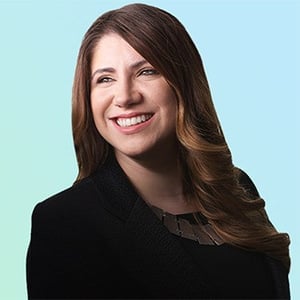
Partner, King & Spalding LLP
A partner in the FDA and Life Sciences practice at King & Spalding LLP, Marisa Maleck focuses on litigation, regulatory matters and public policy, with a focus on consumer products. As a former senior counsel at a bio-tech company and in private practice, Marisa has substantial experience with and is skilled in providing creative solutions in the face of uncertainty.
Marisa represents clients in a variety of matters with a focus on FDA-regulated products like food, beverages, pharmaceuticals, medical devices, wellness products, cosmetics, tobacco and cannabis. As a former senior counsel at an FDA-regulated biotech company and as a former partner in King & Spalding’s Litigation and Global Disputes practice group, she handled hundreds of suits in a multi-district litigation, multiple agency inquiries, an FTC lawsuit and 10+ state Attorney Generals actions. With a special focus on consumer fraud, social-media marketing and personal injury/wrongful death lawsuits, Marisa has successfully drafted and/or argued appellate briefs and critical motions in numerous cases—including class actions and complex litigation—before the U.S. Supreme Court, federal and state courts of appeals, and federal and state trial courts. She has also advocated tirelessly for her clients through engagement with agencies and policy-makers. She also advises her clients about legal risk (and how to avoid it) in investigations, enforcement actions, private litigation and private-equity investments.
Marisa also advocates for her clients’ interests in the court of public opinion. She is often solicited for her balanced legal analysis by members of the media. Marisa has appeared on (tv/radio) MSNBC, MSN, CNBC and NPR, and in (print) Newsweek, the National Law Journal, The Wall Street Journal, The Washington Post and Politico.
In addition, Marisa has an active pro-bono practice representing indigent defendants through federal appellate appointments as part of the Criminal Justice Act program and as a screener for the Mid-Atlantic Innocence Project.
Laurence A. Tisch Professor of Law and Director, Classical Liberal Institute, New York University School of Law; Director, Classical Liberal Institute, Civitas Institute University of Texas at Austin
Richard A. Epstein is the Laurence A. Tisch Professor of Law, at New York University, a senior research fellow at the Civitas Institute at the University of Texas Austin, and a senior Lecturer, the University of Chicago. He received an LL.D., h.c . from the University of Ghent, 2003 , and an LLD h.c . from the University of Siegen in 2018 and the Bradley Prize in 2011. He has been a member of the American Academy of Arts and Sciences since 1985. He has edited both the Journal of Legal Studies (1981-1991) and the Journal of Law and Economics (1991-2001). He is also a founder and director of the Classical Liberal Institute at NYU Law School. His most recent book is The Classical Liberal Constitution: The Uncertain Quest for Limited Government (2014). His other books include Takings: Private Property and the Power of Eminent Domain ( 1985); Bargaining with the State (1993); Simple Rules for a Complex World (1995); Principles for a Free Society: Reconciling Individual Liberty and the Common Good (1998); Skepticism and Freedom: A Modern Theory of Classical Liberalism (2003); Design for Liberty: Private Property, Public Administration and the Rule of Law (2011), and most recently, The Myth of Birthright citizenship—and Beyond (2026). He has taught courses in , administrative law, antitrust, constitutional, contracts, environmental law, land use planning; real property, torts and water law. He has written and spoken extensively on a wide range of topics, and is writes a regular column for Defining Ideas.
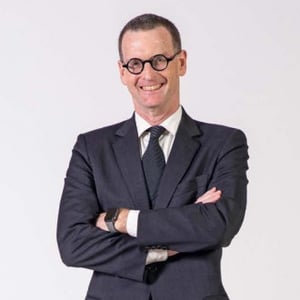
William T. Comfort, III Professor of Law, New York University School of Law
Roderick Hills teaches and writes in public law areas, including constitutional law, local government law, land-use regulation, administrative law, and statutory interpretation. His focus in each area is on the rules and policies governing division of powers between central and subcentral governments. He holds bachelor’s and law degrees from Yale University. Following law school, he served as a law clerk for Judge Patrick Higginbotham of the US Court of Appeals for the Fifth Circuit and practiced law in Colorado. Hills previously taught at the University of Michigan Law School from 1994 to 2006. He is a member of the state bar of New York and the U.S. Supreme Court.

George C. Dix Professor in Constitutional Law, Northwestern University Pritzker School of Law
John O. McGinnis is a graduate of Harvard College and Harvard Law School where he was an editor of the Harvard Law Review. He also has an MA degree from Balliol College, Oxford, in philosophy and theology. Professor McGinnis clerked on the U.S. Court of Appeals for the District of Columbia. From 1987 to 1991, he was deputy assistant attorney general in the Office of Legal Counsel at the Department of Justice. He is the author of Accelerating Democracy: Transforming Government Through Technology (Princeton 2013) and Originalism and the Good Constitution (Harvard 2013) (with M. Rappaport). He is a past winner of the Paul Bator award given by the Federalist Society to an outstanding academic under 40. He has been listed by the United States on the roster of panelists who may be called upon to decide World Trade Organization Disputes.

Securities Fraud: Should Congress Overturn Stoneridge and Expose Lawyers & Financial Advisors to More Liability?
Indiana-Bloomington Student Chapter
Bloomington, INThe Great Debate: Left vs. Right Debate the Constitutional Issues of the Day
Quanta: Patent Rights in the Supreme Court
Richard A. Epstein, F. Scott Kieff, Fred von Lohmann, Adam Mossoff, Mark Lemley
LG Electronics owned a patent for a microprocessor chip, which it licensed to Intel, but...
Does the Law of Regulatory Takings Impede Growth or Protect the Community?
Richard A. Epstein, Loretta Preska, William M. Treanor
The Federalist Society's Fordham Student Chapter presented this panel discussion on September 22, 2009, at Fordham...
Does the Law of Regulatory Takings Impede Growth or Protect the Community?
Fordham Student Chapter
New York, NYDelaware Chancery Court Addresses E-Discovery
Shauna Peterson
The Delaware Court of Chancery issued four decisions in late May and early June clarifying...
Judge Sotomayor, the Confirmation Process, and the Future of the Court
Criminalizing Legal Opinions: Can Legal Advice Lead to Indictment or Impeachment?
Austin, TexasAIG Bonus Payments
John C. Eastman, Marisa Maleck
Brought to you by the Financial Services & E-Commerce Practice Group Many have expressed outrage that 73...
Luncheon Debate: When should FDA Regulation Preempt State Tort Liability
Richard A. Epstein, Roderick M. Hills, John O. McGinnis
Prof. Richard Epstein, University of Chicago School of Law Prof. Roderick Hills, New York University...