
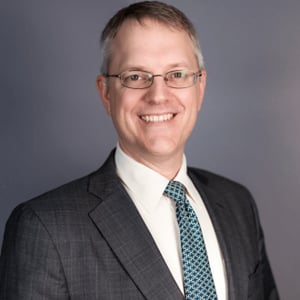
President and General Counsel, New Civil Liberties Alliance
NCLA’s President and General Counsel, Mark Chenoweth, has observed the administrative state up close and personal from perches in all four branches of the federal government. Mark served as the first chief of staff to Congressman Mike Pompeo, as legal counsel to Commissioner Anne Northup at the U.S. Consumer Product Safety Commission, as an attorney advisor in the Office of Legal Policy at the U.S. Department of Justice, and as a law clerk to the Hon. Danny J. Boggs on the U.S. Court of Appeals for the Sixth Circuit.
Mark has worked in several different roles in the private sector as well. He began his legal career in D.C. as a regulatory associate at Wilmer, Cutler & Pickering. He then returned to his home state of Kansas to serve as in-house counsel for Koch Industries. Most recently he spent over four years as general counsel of the Washington Legal Foundation.
Mark is a graduate of Yale College and the University of Chicago Law School, where he co-founded the Institute for Justice Clinic on Entrepreneurship and became a Tony Patiño Fellow. Mark has been widely quoted and/or published in newspapers and websites including the New York Times, San Francisco Chronicle, New Hampshire Union Leader, and Metropolitan Corporate Counsel. He has also had recurring op-eds in the Los Angeles Daily Journal, and at Forbes.com.
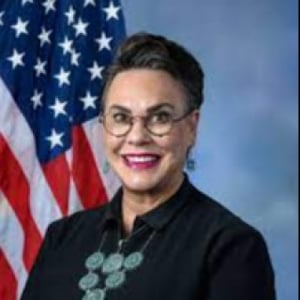
U.S. Representative, Wyoming
Congresswoman Harriet Hageman represents the state of Wyoming in the U.S. House of Representatives. She grew up on a ranch, attended Casper College on a livestock judging scholarship and earned both her bachelor's degree and law degree from the University of Wyoming. A litigator for 34 years, Harriet is nationally known for challenging federal overreach, for protecting water and property rights, for exposing federal land and wildlife mismanagement, and for fighting back against the unconstitutional and unlawful acts of unelected bureaucrats. Harriet has extensive experience engaging in complex trials against federal agencies and has been admitted to practice in several states as well as the United States Supreme Court.
In her freshman term in the 118th Congress, Harriet has been selected to serve on the House Natural Resources committee where she is Chair of the Subcommittee on Indian and Insular Affairs, and also serves on the Subcommittee on Water, Wildlife, and Fisheries. Representative Hageman also serves on the Judiciary Committee and Subcommittees on the Constitution and Limited Government; the Subcommittee on the Administrative State, Regulatory Reform, and Antitrust; and the Select Committee on the Weaponization of the Federal Government. She has shown her support for American energy independence by serving as Co-Chair of the Congressional Coal Caucus.
Legislation sponsored by Representative Hageman has been focused on reining in the regulatory state, ending the weaponization of our federal government and its proxies against American citizens, and ending the de facto moratorium on American energy production.
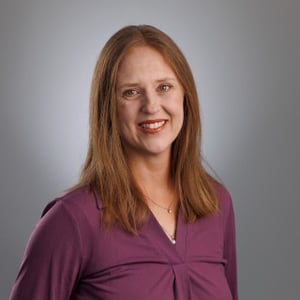
Former Acting Assistant Secretary, US Department of Education; Partner, Jackson Bone LLP, U.S. Department of Education
Candice Jackson is an attorney who served as Acting Assistant Secretary for Civil Rights and Deputy General Counsel in the US Department of Education from 2017 to 2021 where she was responsible for drafting the first-ever regulations under Title IX addressing campus sexual harassment and assault. Candice has returned to private law practice and currently represents incarcerated women in California prisons in WoLF’s lawsuit to overturn the 2021 law that allows male criminals to choose to be housed in women’s prisons based on “gender identity.” Candice lives with her wife Patricia and their 9-year-old twins Madelyn and Zachary.

Professor of History, Brooklyn College and the CUNY Graduate Center
KC Johnson is professor of history at Brooklyn College and the CUNY Graduate Center, where he has taught since 1999. He has written 13 books on topics in U.S. political history, U.S. foreign policy, and legal and policy debates surrounding campus due process and civil liberties. His Duke lacrosse case blog, Durham-in-Wonderland, was named ABA Journal’s Best Ethics Blog in 2007; and he continues to blog on higher-ed matters at the blog Minding the Campus.
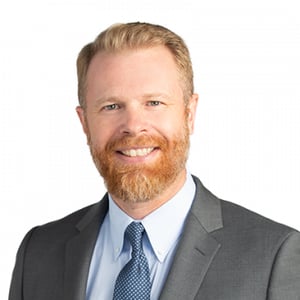
Owner, Schneider Education & Employment Law PLLC
Scott Schneider is the owner and founder of Schneider Education & Employment Law and has advised companies and educational institutions nationwide on a variety of complex legal issues with a focus on particularly sensitive matters like institutional response to sexual misconduct.
Prior to founding Schneider Education & Employment Law, Scott was an equity partner in two major national law firms and served as in-house counsel for Tulane University.
He is a prominent litigator as well as a sought-after advisor on Title IX, labor and employment law issues, and various risk management concerns. He has led numerous investigations of serial sex abuse allegations, allegations of misconduct involving senior leadership and other acts of institutional misconduct. He has also handled various high-profile program reviews of institutional response to sexual misconduct, racial discrimination, athletics department ethics and compliance, and treatment of at-risk employees and students.
Scott has provided training nationally to thousands of personnel on a variety of issues, including Title IX; labor and employment law; faculty hiring, promotion and tenure processes; and Greek Life risk management. Scott also provides expert witness testimony on matters dealing with institutional response to allegations of sexual misconduct.
Scott regularly presents to national organizations, including the National Association of College and University Attorneys (NACUA), the National Association of Independent Schools (NAIS), the Association for Student Conduct Administration (ASCA) Gehring Academy, the International Association of Campus Law Enforcement Administrators (IACLEA), the Association of College and University Housing Officers-International (ACUHO-I), EDUCAUSE and various associations of independent schools.
Additionally, Scott previously served as an award-winning professor at Tulane University, where he taught courses on higher education and labor and employment law and created the Tulane University Law School’s Title IX certification program. Scott has been retained by the National Center for Campus Public Safety to serve as a faculty member for its Trauma-Informed Sexual Assault Investigation and Adjudication training program for campus officials. Scott also serves on the faculty for the State University of New York’s Student Conduct Institute where he provides training on informal resolution and restorative justice.
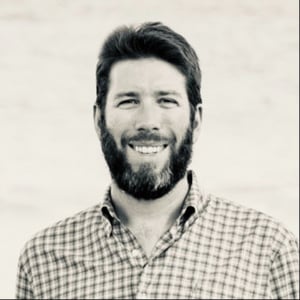
Senior Editor, National Review
Charles C. W. Cooke is a senior editor at National Review and the former editor of National Review Online. He is a graduate of the University of Oxford, at which he studied modern history and politics. His work has focused especially on Anglo-American history, British liberty, free speech, the Second Amendment, and American exceptionalism. He is the co-host of the Mad Dogs and Englishmen podcast, and is a regular guest on HBO's (Real Time with Bill Maher). He has written for the New York Times, the Washington Post, and the Los Angeles Times.

Senior Fellow and Director of Constitutional Studies, Manhattan Institute
Ilya Shapiro is a senior fellow and director of constitutional studies at the Manhattan Institute and a contributing editor of City Journal. Previously he was executive director and senior lecturer at the Georgetown Center for the Constitution, and before that a vice president of the Cato Institute.
Shapiro is the author of Lawless: The Miseducation of America’s Elites (2025) and Supreme Disorder: Judicial Nominations and the Politics of America’s Highest Court (2020), coauthor of Religious Liberties for Corporations? (2014), and editor of 11 volumes of the Cato Supreme Court Review (2008-18). He has contributed to a variety of academic, popular, and professional publications, including the Wall Street Journal, Harvard Journal of Law & Public Policy, Washington Post, Los Angeles Times, USA Today, National Review, and Newsweek. He also regularly provides commentary for various media outlets, writes the Shapiro’s Gavel newsletter on Substack, and once appeared on the Colbert Report.
Shapiro has testified many times before Congress and state legislatures and has filed more than 500 amicus curiae “friend of the court” briefs in the Supreme Court. He lectures regularly on behalf of the Federalist Society, is a member of the board of fellows of the Jewish Policy Center, was an inaugural Washington Fellow at the National Review Institute, and has been an adjunct law professor at the George Washington University and University of Mississippi. He is also the chairman of the board of advisers of the Mississippi Justice Institute, a barrister in the Edward Coke Appellate Inn of Court, and a former member of the Virginia Advisory Committee to the U.S. Commission on Civil Rights.
Earlier in his career, Shapiro was a special assistant/adviser to the Multi-National Force in Iraq on rule-of-law issues and practiced at Patton Boggs and Cleary Gottlieb. Before entering private practice, he clerked for Judge E. Grady Jolly of the U.S. Court of Appeals for the Fifth Circuit. He holds an AB from Princeton University, an MSc from the London School of Economics, and a JD from the University of Chicago Law School.
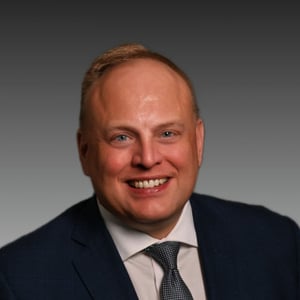
Executive Vice President and Director of Litigation, EdChoice Legal Advocates
Before founding a public interest law firm at EdChoice, Tom Fisher served as Indiana’s first Solicitor General from 2005-2023. Fisher has argued dozens of high-profile cases before both the Indiana Supreme Court and the Seventh Circuit U.S. Court of Appeals and five cases before the U.S. Supreme Court. A two-time recipient of the National Association of Attorneys General Best Brief Award, Fisher is a Fellow of the American Academy of Appellate Lawyers and a Sagamore of the Wabash. Fisher is a graduate of Wabash College and Indiana University Maurer School of Law, where he serves as an Adjunct Professor of Law.
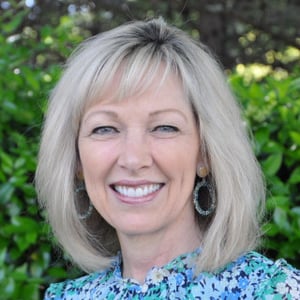
Senior Advisor, Georgia GOAL Scholarship Program
Lisa Kelly has been with the Georgia GOAL Scholarship Program since its inception, serving as President and Executive Director for 15 years. Prior to joining GOAL, Lisa served as Vice President and CFO of Brand Velocity, Inc., an international IT consulting firm, and Manager of Quality Assurance for Management Science America, Inc., at that time the largest application software company in the world. Lisa also worked for EY in the consulting group and for PwC in the audit group. She earned her accounting degree from the University of Georgia and is a Certified Public Accountant.
Lisa now serves as Senior Advisor for GOAL, continuing her engagement in the strategic direction and operations for the organization.

Shareholder, Maynard Nexsen
Jenny McCain is a Shareholder of Maynard Nexsen and Co-Chair of the firm’s Banking Practice. She also is President of Stonegate Real Estate Investments, LLC, a multi-state commercial real estate company. Ms. McCain is also the Founder, Director, and President (2013-2015) of Scholarships for Kids, Inc.
Ms. McCain provides specialized regulatory and general corporate advice to financial institutions of all sizes, including public and private banks, savings associations, credit unions, insurance companies, and other non-depository financial institutions. Ms. McCain’s clients include many of the nation’s largest banking corporations, insurance companies and credit unions based on asset size, as well as numerous community banks.
In 2010, Ms. McCain led the corporate reorganization/restructuring of a privately owned, $100 million commercial real estate company and has served for the past seven years as its President. Ms. McCain is active in both local and regional philanthropic initiatives. In 2013, Ms. McCain founded Scholarships for Kids, Inc. a nonprofit organization that provides scholarships to low income children throughout the state of Alabama. Ms. McCain actively ran the organization from 2013 until 2015, during which time Scholarships for Kids raised over $18 million, partnered with 36 schools throughout the state, and provided more than 3400 scholarships to kindergarten to 12th grade students in Alabama. A twenty-year veteran of the Federalist Society, Ms. McCain has served in leadership positions with the organization since the early 2000s.
Ms. McCain has earned numerous professional and personal accolades, including recognition by both Chambers USA and America’s Best Lawyers as a Leading Practitioner in the area of Banking and Finance. In 2015, Ms. McCain was selected as a member of the inaugural class of the Presidential Leadership Scholars, a national leadership program created by the George W. Bush, William J. Clinton, George H.W. Bush and Lyndon B. Johnson Presidential Libraries.
Ms. McCain is a graduate of the University of Virginia and the University of Texas School of Law. She was born and raised in Birmingham, Alabama.
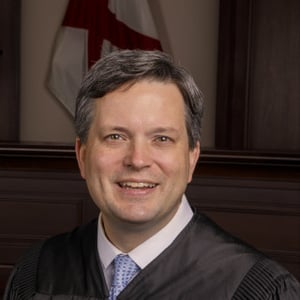
Associate Justice, Supreme Court of Alabama
Justice William G. Parker, Jr. (“Will”) was appointed to the Alabama Supreme Court on November 10, 2025, by Governor Kay Ivey. His appointment continues a career of public service dedicated to upholding the Constitution and preserving the rule of law.
Before joining the Court, Justice Parker served as an attorney in the Office of the Governor, including for nearly six years as General Counsel to the Governor. In this capacity, Justice Parker advised Governor Ivey and her administration on a wide range of issues—from education, economic development, ethics, and elections to procurement, government accountability, regulation, and public safety. By virtue of his position, Justice Parker served on the Alabama Judicial Resources Allocation Commission and the Court Advisory Committee for the U.S. District Court for the Middle District of Alabama.
Prior to joining Governor Ivey’s office, Justice Parker worked for nearly ten years as Assistant Attorney General in the Constitutional Defense Division of the Alabama Attorney General’s Office. There, Justice Parker handled cases in state and federal trial and appellate courts defending state policies in areas including court administration, campaign finance, economic policy, education, environmental law, immigration, public employment, public finance, and taxation.
Justice Parker came to the AG’s Office after clerking for the Honorable Ed Carnes of the U.S. Court of Appeals for the Eleventh Circuit. Earlier in his career, he taught U.S. History at a Montgomery public high school.
Justice Parker graduated magna cum laude from the University of Alabama School of Law, where he was Senior Articles Editor for the Alabama Law Review and a member of the National Moot Court Team. He earned his undergraduate degree in political science with a concentration in education from Davidson College, where he was Chair of the College Honor Council and President of the College Union Board.
Justice Parker and his wife Karen are the proud parents of two school-aged sons. A seventh-generation Alabamian, Justice Parker is a Trustee for the Eleventh Circuit Historical Society, a member of the Federalist Society, and a member of First Methodist Church. Growing up, Justice Parker was active in Scouting, earning his Eagle, working at Camp Tukabatchee and Philmont Scout Ranch, and serving in 1999 as National Chief of the Order of the Arrow.
President and General Counsel, New Civil Liberties Alliance
NCLA’s President and General Counsel, Mark Chenoweth, has observed the administrative state up close and personal from perches in all four branches of the federal government. Mark served as the first chief of staff to Congressman Mike Pompeo, as legal counsel to Commissioner Anne Northup at the U.S. Consumer Product Safety Commission, as an attorney advisor in the Office of Legal Policy at the U.S. Department of Justice, and as a law clerk to the Hon. Danny J. Boggs on the U.S. Court of Appeals for the Sixth Circuit.
Mark has worked in several different roles in the private sector as well. He began his legal career in D.C. as a regulatory associate at Wilmer, Cutler & Pickering. He then returned to his home state of Kansas to serve as in-house counsel for Koch Industries. Most recently he spent over four years as general counsel of the Washington Legal Foundation.
Mark is a graduate of Yale College and the University of Chicago Law School, where he co-founded the Institute for Justice Clinic on Entrepreneurship and became a Tony Patiño Fellow. Mark has been widely quoted and/or published in newspapers and websites including the New York Times, San Francisco Chronicle, New Hampshire Union Leader, and Metropolitan Corporate Counsel. He has also had recurring op-eds in the Los Angeles Daily Journal, and at Forbes.com.
U.S. Representative, Wyoming
Congresswoman Harriet Hageman represents the state of Wyoming in the U.S. House of Representatives. She grew up on a ranch, attended Casper College on a livestock judging scholarship and earned both her bachelor's degree and law degree from the University of Wyoming. A litigator for 34 years, Harriet is nationally known for challenging federal overreach, for protecting water and property rights, for exposing federal land and wildlife mismanagement, and for fighting back against the unconstitutional and unlawful acts of unelected bureaucrats. Harriet has extensive experience engaging in complex trials against federal agencies and has been admitted to practice in several states as well as the United States Supreme Court.
In her freshman term in the 118th Congress, Harriet has been selected to serve on the House Natural Resources committee where she is Chair of the Subcommittee on Indian and Insular Affairs, and also serves on the Subcommittee on Water, Wildlife, and Fisheries. Representative Hageman also serves on the Judiciary Committee and Subcommittees on the Constitution and Limited Government; the Subcommittee on the Administrative State, Regulatory Reform, and Antitrust; and the Select Committee on the Weaponization of the Federal Government. She has shown her support for American energy independence by serving as Co-Chair of the Congressional Coal Caucus.
Legislation sponsored by Representative Hageman has been focused on reining in the regulatory state, ending the weaponization of our federal government and its proxies against American citizens, and ending the de facto moratorium on American energy production.
Former Acting Assistant Secretary, US Department of Education; Partner, Jackson Bone LLP, U.S. Department of Education
Candice Jackson is an attorney who served as Acting Assistant Secretary for Civil Rights and Deputy General Counsel in the US Department of Education from 2017 to 2021 where she was responsible for drafting the first-ever regulations under Title IX addressing campus sexual harassment and assault. Candice has returned to private law practice and currently represents incarcerated women in California prisons in WoLF’s lawsuit to overturn the 2021 law that allows male criminals to choose to be housed in women’s prisons based on “gender identity.” Candice lives with her wife Patricia and their 9-year-old twins Madelyn and Zachary.
Professor of History, Brooklyn College and the CUNY Graduate Center
KC Johnson is professor of history at Brooklyn College and the CUNY Graduate Center, where he has taught since 1999. He has written 13 books on topics in U.S. political history, U.S. foreign policy, and legal and policy debates surrounding campus due process and civil liberties. His Duke lacrosse case blog, Durham-in-Wonderland, was named ABA Journal’s Best Ethics Blog in 2007; and he continues to blog on higher-ed matters at the blog Minding the Campus.
Owner, Schneider Education & Employment Law PLLC
Scott Schneider is the owner and founder of Schneider Education & Employment Law and has advised companies and educational institutions nationwide on a variety of complex legal issues with a focus on particularly sensitive matters like institutional response to sexual misconduct.
Prior to founding Schneider Education & Employment Law, Scott was an equity partner in two major national law firms and served as in-house counsel for Tulane University.
He is a prominent litigator as well as a sought-after advisor on Title IX, labor and employment law issues, and various risk management concerns. He has led numerous investigations of serial sex abuse allegations, allegations of misconduct involving senior leadership and other acts of institutional misconduct. He has also handled various high-profile program reviews of institutional response to sexual misconduct, racial discrimination, athletics department ethics and compliance, and treatment of at-risk employees and students.
Scott has provided training nationally to thousands of personnel on a variety of issues, including Title IX; labor and employment law; faculty hiring, promotion and tenure processes; and Greek Life risk management. Scott also provides expert witness testimony on matters dealing with institutional response to allegations of sexual misconduct.
Scott regularly presents to national organizations, including the National Association of College and University Attorneys (NACUA), the National Association of Independent Schools (NAIS), the Association for Student Conduct Administration (ASCA) Gehring Academy, the International Association of Campus Law Enforcement Administrators (IACLEA), the Association of College and University Housing Officers-International (ACUHO-I), EDUCAUSE and various associations of independent schools.
Additionally, Scott previously served as an award-winning professor at Tulane University, where he taught courses on higher education and labor and employment law and created the Tulane University Law School’s Title IX certification program. Scott has been retained by the National Center for Campus Public Safety to serve as a faculty member for its Trauma-Informed Sexual Assault Investigation and Adjudication training program for campus officials. Scott also serves on the faculty for the State University of New York’s Student Conduct Institute where he provides training on informal resolution and restorative justice.
Senior Editor, National Review
Charles C. W. Cooke is a senior editor at National Review and the former editor of National Review Online. He is a graduate of the University of Oxford, at which he studied modern history and politics. His work has focused especially on Anglo-American history, British liberty, free speech, the Second Amendment, and American exceptionalism. He is the co-host of the Mad Dogs and Englishmen podcast, and is a regular guest on HBO's (Real Time with Bill Maher). He has written for the New York Times, the Washington Post, and the Los Angeles Times.
Senior Fellow and Director of Constitutional Studies, Manhattan Institute
Ilya Shapiro is a senior fellow and director of constitutional studies at the Manhattan Institute and a contributing editor of City Journal. Previously he was executive director and senior lecturer at the Georgetown Center for the Constitution, and before that a vice president of the Cato Institute.
Shapiro is the author of Lawless: The Miseducation of America’s Elites (2025) and Supreme Disorder: Judicial Nominations and the Politics of America’s Highest Court (2020), coauthor of Religious Liberties for Corporations? (2014), and editor of 11 volumes of the Cato Supreme Court Review (2008-18). He has contributed to a variety of academic, popular, and professional publications, including the Wall Street Journal, Harvard Journal of Law & Public Policy, Washington Post, Los Angeles Times, USA Today, National Review, and Newsweek. He also regularly provides commentary for various media outlets, writes the Shapiro’s Gavel newsletter on Substack, and once appeared on the Colbert Report.
Shapiro has testified many times before Congress and state legislatures and has filed more than 500 amicus curiae “friend of the court” briefs in the Supreme Court. He lectures regularly on behalf of the Federalist Society, is a member of the board of fellows of the Jewish Policy Center, was an inaugural Washington Fellow at the National Review Institute, and has been an adjunct law professor at the George Washington University and University of Mississippi. He is also the chairman of the board of advisers of the Mississippi Justice Institute, a barrister in the Edward Coke Appellate Inn of Court, and a former member of the Virginia Advisory Committee to the U.S. Commission on Civil Rights.
Earlier in his career, Shapiro was a special assistant/adviser to the Multi-National Force in Iraq on rule-of-law issues and practiced at Patton Boggs and Cleary Gottlieb. Before entering private practice, he clerked for Judge E. Grady Jolly of the U.S. Court of Appeals for the Fifth Circuit. He holds an AB from Princeton University, an MSc from the London School of Economics, and a JD from the University of Chicago Law School.
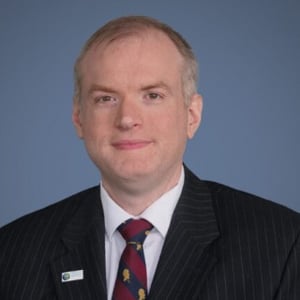
Attorney, Competitive Enterprise Institute
Devin Watkins is an attorney at the Competitive Enterprise Institute. Devin Watkins previously worked at the Cato Institute as a legal associate and interned at the Institute for Justice. At the Cato Institute, Watkins worked on a variety of Supreme Court cases, and one of the briefs he worked on was cited by the Court. His op-eds have appeared in National Review Online, The Hill, Time, and The Federalist among others.
Watkins holds a Juris Doctor cum laude from George Mason University's Antonin Scalia Law School, where he was the development editor on the Mason Law Review. Prior to his legal career Watkins was a senior software developer at Intel and WebMD. He graduated with a Bachelor of Science in Computer Science from Stevens Institute of Technology in Hoboken, New Jersey.
Watkins is a member of the Virginia State Bar, the District of Columbia Bar, the U.S. District Court for the District of Columbia Bar, and the U.S. Court of Appeals for the District of Columbia Circuit Bar.

Plenary Session 1: Title IX: Gender Identity and So Much More
Washington, DCPlenary Session 1: Title IX: Gender Identity and So Much More
Mark Chenoweth, Harriet Hageman, Candice Jackson, KC Johnson, Scott Schneider
The Biden administration contends that the U.S. Department of Education’s final Title IX regulations published...
Topics
DOJ Can’t Prosecute AI for Price Fixing Unless There’s Price Fixing
Among the Biden administration’s attempts to lower the cost of living, actions addressing housing costs have been...
An Armchair Conversation on the State of Civil Rights on Campus
Charles C. W. Cooke, Ilya Shapiro
The Manhattan Institute’s Director of Constitutional Studies Ilya Shapiro and Senior Editor at National Review...
An Armchair Conversation on the State of Civil Rights on Campus
Washington, DC2024 Education Law & Policy Conference
A New Civil Rights Movement in Education?
Washington, DCPanel III: Alabama and Education Reform
2024 Alabama Chapters Conference
Homewood, ALSEC v. Jarkesy - Post-Decision SCOTUScast
Devin Watkins
On June 27, 2024, the U.S. Supreme Court issued their 6-3 opinion in SEC v. Jarkesy. The...
Topics
Unpacking the Title IX Chaos: Are Single-Sex Spaces Allowed?
This fall, as daughters wave farewell and head to school, parents and administrators may well...
Topics
Understanding Justice Thomas and Justice Barrett’s Fight Over History
It’s unusual to see news articles about disagreements between Supreme Court Justices, especially with phrases...