

Professor of Law and Centennial Chair, South Texas College of Law Houston
Josh Blackman is a national thought leader on constitutional law and the United States Supreme Court. Josh’s work was quoted during two presidential impeachment trials. He has testified before Congress and advises federal and state lawmakers. Josh regularly appears on TV, including NBC, CBS, ABC, Fox, and the BBC. Josh is also a frequent guest on NPR and other syndicated radio programs. He has published commentaries in the New York Times, Wall Street Journal, Washington Post, and leading national publications.
Since 2012, Josh has served as a professor at the South Texas College of Law Houston. He holds the Centennial Chair of Constitutional Law. Josh is an Adjunct Fellow at the Manhattan Institute. Josh has written more than seven dozen law review articles that have been cited more than a thousand times. Josh was selected as the Jurist of the Year by the Texas Journal of Law & Public Policy, received the inaugural Meese III Originalism Award, and was awarded the Inaugural Joseph Story Award. Josh was selected by Forbes Magazine for the “30 Under 30” in Law and Policy. Josh is the President of the Harlan Institute, and founded FantasySCOTUS, the Internet’s Premier Supreme Court Fantasy League. He blogs at the Volokh Conspiracyand posts@JoshMBlackman.
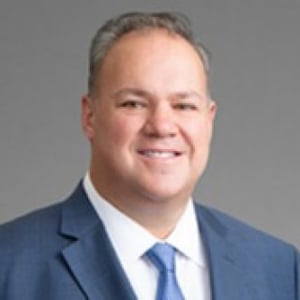
Costa is a partner in Gibson Dunn’s Houston office and co-chair of the firm’s Trials Practice Group. Mr. Costa offers clients a unique perspective as the only former federal trial and appellate judge trying cases and leading investigations. His broad experience—having handled complex civil and criminal matters, at trial and on appeal, as advocate and judge—allows him to offer invaluable skills and strategic insights.
Before joining Gibson Dunn, Mr. Costa served for more than ten years as a federal trial and appellate judge. He served on the U.S. Court of Appeals for the Fifth Circuit from 2014 to 2022. After his nomination by President Obama, the Senate confirmed him by a vote of 97-0. No federal appellate judge nominated since has received more votes. Mr. Costa first served as a district judge for the Southern District of Texas from 2012 to 2014. When appointed to the bench, he was the youngest-sitting federal judge at age 39. Mr. Costa presided over thirty federal trials in four different venues (he continued handling district court matters while serving on the court of appeals). He wrote precedential opinions in almost every area of the law, including antitrust, intellectual property, class actions, international arbitration, securities fraud, bankruptcy, conflicts of law, labor and employment, oil and gas, False Claims Act, administrative law, constitutional law, and criminal law. In press accounts of his tenure, he was described as an “exceptionally gifted jurist” with a “towering intellect” who was “respected by all sides.” The Federal Judicial Center invited Mr. Costa on multiple occasions to teach new federal district judges.
Before taking the bench, Mr. Costa was an Assistant U.S. Attorney in Houston from 2005 to 2012. As a prosecutor, he tried more than 15 jury trials, including serving as a lead prosecutor of Allen Stanford, the head of Stanford Financial Group, for orchestrating a multibillion-dollar international fraud scheme. Mr. Costa is featured in a documentary about the case, The Man Who Bought Cricket. A Reuters article about the trial quotes a victim who said that Mr. Costa’s closing argument “brought her to tears.” For his work on the Stanford case, Mr. Costa received the John Marshall Award for Trial of Litigation and the Assistant Attorney General’s Award for Exceptional Service. He also prosecuted cases involving kickbacks in the energy industry, public corruption, the Foreign Corrupt Practices Act, securities fraud, internet fraud, and counterfeit technology products. During his time as a federal prosecutor, Mr. Costa served as the Southern District of Texas’s Deputy International Affairs Coordinator, during which he assisted with investigations in more than a dozen countries.
Mr. Costa is a frequent speaker and author on legal topis, including writing for the ABA’s Litigation Journal on various trial-related issues. He also taught Federal Jurisdiction at the University of Houston Law Center, where he was named an Honorary Alumnus.
After college, Mr. Costa taught elementary school for two years in the Mississippi Delta through Teach for America. He has remained involved in the Delta and in education, launching a nonprofit in Mississippi, serving on the board of the Houston Urban Debate League, and helping teach Government at a Houston‑area charter school.

Partner, Gibson Dunn
Thomas H. Dupree, Jr. is a partner in the Washington, DC office of Gibson, Dunn & Crutcher. He is a member of the firm's litigation department and its Appellate and Constitutional Law practice group, and serves as the hiring partner for the DC office.
Mr. Dupree is an experienced trial and appellate advocate. He has argued more than 70 appeals in the federal courts, including in all thirteen circuits as well as the United States Supreme Court. He has represented clients throughout the country in a wide variety of trial and appellate matters, including cases involving punitive damages, class actions, product liability, arbitration, intellectual property, employment, and constitutional challenges to federal and state statutes.
In 2007, Mr. Dupree was appointed Deputy Assistant Attorney General. He served in the Civil Division at the U.S. Department of Justice from 2007 to 2009, ultimately becoming the Principal Deputy Assistant Attorney General. In that capacity, he served as the division's second-in-command, overseeing the more than 900 lawyers in the Civil Appellate, Commercial, Federal Programs and Torts branches, as well as the Office of Immigration Litigation and the Office of Consumer Litigation. Mr. Dupree was responsible for managing many of the government's most significant cases involving regulatory, commercial, constitutional and national security matters on behalf of virtually all of the federal agencies, the White House, and senior federal officials. Before being named the division's top deputy, Mr. Dupree ran its largest litigating branch, managing a staff of 280 lawyers.
Chambers and Partners named Mr. Dupree one of the leading appellate lawyers in the United States in 2012, 2013, 2014, 2015, and 2016. He received similar honors in 2010, when he was ranked as one of the top ten appellate litigators under age 40 by Law360. In 2009, the National Law Journal and Legal Times selected him as one of the top 40 lawyers under 40 in Washington, DC, as did Washingtonian magazine in 2006. Based on surveys of hundreds of corporate counsel, Mr. Dupree was named a "Client Service All-Star" by BTI Consulting Group in a 2013 report for his "overall legal prowess" and his "ability to deliver a plan of action that yields results."
Legal Times has called Mr. Dupree "no stranger to high-profile work." Among other things, he played a substantial role in the successful representation of George W. Bush before the United States Supreme Court in Bush v. Gore, and represented New England Patriots quarterback Tom Brady in challenging his "Deflategate" suspension.
In 2014, Mr. Dupree argued and won, by a unanimous 9-0 vote, a landmark personal jurisdiction case in the United States Supreme Court, Daimler AG v. Bauman. For this achievement, American Lawyer magazine named him Litigator of the Week, noting that he "won over both the liberal and conservative wings of the court."
Other matters Mr. Dupree has handled include:
Mr. Dupree appears frequently on national television as a legal analyst. He is a regular guest on Fox News Channel, and has appeared on "The O'Reilly Factor" and "The Kelly File," as well as on CNN's "Situation Room" and C-Span's "America & The Courts," among other programs. He has also been quoted in numerous print publications, including the New York Times, the Wall Street Journal, the Washington Post, the Los Angeles Times and many others, discussing legal issues and developments. Mr. Dupree has also testified before Congress on constitutional and separation-of-powers issues, including the President's authority to act through executive order.
Mr. Dupree graduated cum laude from Williams College, and with Honors from the University of Chicago Law School, where he served as an Editor of the University of Chicago Law Review. After law school, he clerked for the Honorable Jerry E. Smith of the United States Court of Appeals for the Fifth Circuit.
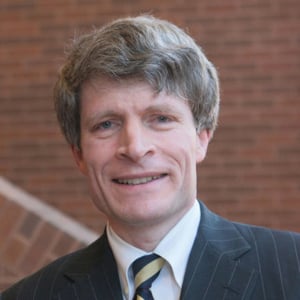
S. Walter Richey Professor of Corporate Law, University of Minnesota Law School
Professor Richard W. Painter received his B.A., summa cum laude, in history from Harvard University and his J.D. from Yale University, where he was an editor of the Yale Journal on Regulation. Following law school, he clerked for Judge John T. Noonan Jr., of the United States Court of Appeals for the Ninth Circuit and later practiced at Sullivan & Cromwell in New York City and Finn Dixon & Herling in Stamford, Connecticut.
He has served as a tenured member of the law faculty at the University of Oregon School of Law and the University of Illinois College of Law, where he was the Guy Raymond and Mildred Van Voorhis Jones Professor of Law from 2002 to 2005.
From February 2005 to July 2007, he was Associate Counsel to the President in the White House Counsel's office, serving as the chief ethics lawyer for the President, White House employees and senior nominees to Senate-confirmed positions in the Executive Branch. He is a member of the American Law Institute and is an advisor for the new ALI Principles of Government Ethics. He has also been active in the Professional Responsibility Section of the American Bar Association.
Professor Painter has also been active in law reform efforts aimed at deterring securities fraud and improving ethics of corporate managers and lawyers. A key provision of the Sarbanes-Oxley Act of 2002 requiring the SEC to issue rules of professional responsibility for securities lawyers was based on earlier proposals Professor Painter made in law review articles and to the ABA and the SEC. He has given dozens of lectures on the Sarbanes-Oxley Act to law schools, bar associations, and learned societies, such as the American Academy of Arts and Sciences. Professor Painter has on four separate occasions provided invited testimony before committees of the U.S. House of Representatives or the U.S. Senate on securities litigation and/or the role of attorneys in corporate governance.
His book, Getting the Government America Deserves: How Ethics Reform Can Make a Difference, was published by Oxford University Press in January 2009. He has written op-eds on government ethics for various publications including the New York Times, the Washington Post and the Los Angeles Times, and he has been interviewed several times on government ethics and corporate ethics by national news organizations, including appearances on Lawrence O'Donnell (MSNBC), Anderson Cooper 360 (CNN), CNN News, Fox News, National Public Radio All Things Considered, and Minnesota Public Radio News. In 2011, he testified before the U.S. House Government Oversight Committee on partisan political activity by government officials and reform of the Hatch Act. Professor Painter has also given expert testimony in cases involving securities transactions and the professional responsibility of lawyers. He testified as a defense witness in SEC. v. The Reserve Money Market Fund (SDNY, November 2012), a jury trial of an SEC enforcement action against the founders of the world's oldest money market fund that ended with a defense verdict on all of the fraud counts.
Professor Painter is the author of two casebooks: Securities Litigation and Enforcement (with Margaret Sachs and Donna Nagy; West 2003; Second Edition, 2007; Third Edition 2011) and Professional and Personal Responsibilities of the Lawyer (with Judge John T. Noonan Jr.; Foundation 1997; Second Edition, 2001; Third Edition 2011). He has written dozens of articles, book reviews, and essays, including a series of papers and a forthcoming book with Minnesota colleague Claire Hill on the personal responsibility of investment bankers.

Dr. John Eastman is the former Henry Salvatori Professor of Law & Community Service and former Dean at Chapman University's Dale E. Fowler School of Law, where he had been a member of the faculty since 1999, specializing in Constitutional Law, Legal History, and Property. He is a founding director of the Center for Constitutional Jurisprudence, a public interest law firm affiliated with the Claremont Institute that he founded in 1999. He has a Ph.D. in Government from the Claremont Graduate School and a J.D. from the University of Chicago Law School, and a B.A. in Politics and Economics from the University of Dallas. He serves as the Chairman of the Board of the National Organization for Marriage.
Prior to joining the Chapman law faculty, Dr. Eastman served as a law clerk to the Honorable Clarence Thomas, Associate Justice, Supreme Court of the United States, and to the Honorable J. Michael Luttig, Judge, United States Court of Appeals for the Fourth Circuit and practiced law with the national law firm of Kirkland & Ellis. Dr. Eastman has also represented numerous clients in important constitutional law matters and has argued before the Supreme Court. On behalf of the Claremont Institute Center for Constitutional Jurisprudence, he has participated as amicus curiae before the Supreme Court of the United States, U.S. Courts of Appeals, and State Supreme Courts in more than one hundred cases of constitutional significance, including Boy Scouts of America v. Dale, Zelman v. Simmons-Harris (the school vouchers case), Kelo v. New London, Ct. (eminent domain), and Van Orden v. Perry (the 10 Commandments case). He has also appeared as an expert legal commentator on numerous television and radio programs, including C-SPAN, Fox News, PBS, NewsHour, and The O'Reilly Factor.

Chief Counsel, Constitutional Accountability Center
Brianne is Constitutional Accountability Center’s Chief Counsel. Brianne joined CAC from private practice at O'Melveny & Myers (OMM), where she was Counsel in the firm’s Supreme Court and appellate practice. From 2009-11, prior to joining OMM, Brianne was an Attorney-Adviser in the Office of Legal Counsel at the U.S. Department of Justice. She also served as a law clerk for Justice Stephen Breyer on the U.S. Supreme Court, a law clerk for Judge Robert A. Katzmann on the U.S. Court of Appeals for the Second Circuit, and a law clerk for Judge Jed S. Rakoff on the U.S. District Court for the Southern District of New York. Brianne’s academic writings have appeared in the Yale Law Journal, the Duke Law Journal, the Northwestern University Law Review, the Washington Law Review, the American University Law Review, and the Yale Law & Policy Review. Brianne received her J.D. from Yale Law School and her M.A./B.S. from Emory University. Her master's thesis in political science examined judicial behavior on the U.S. Supreme Court.
S. Walter Richey Professor of Corporate Law, University of Minnesota Law School
Professor Richard W. Painter received his B.A., summa cum laude, in history from Harvard University and his J.D. from Yale University, where he was an editor of the Yale Journal on Regulation. Following law school, he clerked for Judge John T. Noonan Jr., of the United States Court of Appeals for the Ninth Circuit and later practiced at Sullivan & Cromwell in New York City and Finn Dixon & Herling in Stamford, Connecticut.
He has served as a tenured member of the law faculty at the University of Oregon School of Law and the University of Illinois College of Law, where he was the Guy Raymond and Mildred Van Voorhis Jones Professor of Law from 2002 to 2005.
From February 2005 to July 2007, he was Associate Counsel to the President in the White House Counsel's office, serving as the chief ethics lawyer for the President, White House employees and senior nominees to Senate-confirmed positions in the Executive Branch. He is a member of the American Law Institute and is an advisor for the new ALI Principles of Government Ethics. He has also been active in the Professional Responsibility Section of the American Bar Association.
Professor Painter has also been active in law reform efforts aimed at deterring securities fraud and improving ethics of corporate managers and lawyers. A key provision of the Sarbanes-Oxley Act of 2002 requiring the SEC to issue rules of professional responsibility for securities lawyers was based on earlier proposals Professor Painter made in law review articles and to the ABA and the SEC. He has given dozens of lectures on the Sarbanes-Oxley Act to law schools, bar associations, and learned societies, such as the American Academy of Arts and Sciences. Professor Painter has on four separate occasions provided invited testimony before committees of the U.S. House of Representatives or the U.S. Senate on securities litigation and/or the role of attorneys in corporate governance.
His book, Getting the Government America Deserves: How Ethics Reform Can Make a Difference, was published by Oxford University Press in January 2009. He has written op-eds on government ethics for various publications including the New York Times, the Washington Post and the Los Angeles Times, and he has been interviewed several times on government ethics and corporate ethics by national news organizations, including appearances on Lawrence O'Donnell (MSNBC), Anderson Cooper 360 (CNN), CNN News, Fox News, National Public Radio All Things Considered, and Minnesota Public Radio News. In 2011, he testified before the U.S. House Government Oversight Committee on partisan political activity by government officials and reform of the Hatch Act. Professor Painter has also given expert testimony in cases involving securities transactions and the professional responsibility of lawyers. He testified as a defense witness in SEC. v. The Reserve Money Market Fund (SDNY, November 2012), a jury trial of an SEC enforcement action against the founders of the world's oldest money market fund that ended with a defense verdict on all of the fraud counts.
Professor Painter is the author of two casebooks: Securities Litigation and Enforcement (with Margaret Sachs and Donna Nagy; West 2003; Second Edition, 2007; Third Edition 2011) and Professional and Personal Responsibilities of the Lawyer (with Judge John T. Noonan Jr.; Foundation 1997; Second Edition, 2001; Third Edition 2011). He has written dozens of articles, book reviews, and essays, including a series of papers and a forthcoming book with Minnesota colleague Claire Hill on the personal responsibility of investment bankers.
Partner, Gibson Dunn
Thomas H. Dupree, Jr. is a partner in the Washington, DC office of Gibson, Dunn & Crutcher. He is a member of the firm's litigation department and its Appellate and Constitutional Law practice group, and serves as the hiring partner for the DC office.
Mr. Dupree is an experienced trial and appellate advocate. He has argued more than 70 appeals in the federal courts, including in all thirteen circuits as well as the United States Supreme Court. He has represented clients throughout the country in a wide variety of trial and appellate matters, including cases involving punitive damages, class actions, product liability, arbitration, intellectual property, employment, and constitutional challenges to federal and state statutes.
In 2007, Mr. Dupree was appointed Deputy Assistant Attorney General. He served in the Civil Division at the U.S. Department of Justice from 2007 to 2009, ultimately becoming the Principal Deputy Assistant Attorney General. In that capacity, he served as the division's second-in-command, overseeing the more than 900 lawyers in the Civil Appellate, Commercial, Federal Programs and Torts branches, as well as the Office of Immigration Litigation and the Office of Consumer Litigation. Mr. Dupree was responsible for managing many of the government's most significant cases involving regulatory, commercial, constitutional and national security matters on behalf of virtually all of the federal agencies, the White House, and senior federal officials. Before being named the division's top deputy, Mr. Dupree ran its largest litigating branch, managing a staff of 280 lawyers.
Chambers and Partners named Mr. Dupree one of the leading appellate lawyers in the United States in 2012, 2013, 2014, 2015, and 2016. He received similar honors in 2010, when he was ranked as one of the top ten appellate litigators under age 40 by Law360. In 2009, the National Law Journal and Legal Times selected him as one of the top 40 lawyers under 40 in Washington, DC, as did Washingtonian magazine in 2006. Based on surveys of hundreds of corporate counsel, Mr. Dupree was named a "Client Service All-Star" by BTI Consulting Group in a 2013 report for his "overall legal prowess" and his "ability to deliver a plan of action that yields results."
Legal Times has called Mr. Dupree "no stranger to high-profile work." Among other things, he played a substantial role in the successful representation of George W. Bush before the United States Supreme Court in Bush v. Gore, and represented New England Patriots quarterback Tom Brady in challenging his "Deflategate" suspension.
In 2014, Mr. Dupree argued and won, by a unanimous 9-0 vote, a landmark personal jurisdiction case in the United States Supreme Court, Daimler AG v. Bauman. For this achievement, American Lawyer magazine named him Litigator of the Week, noting that he "won over both the liberal and conservative wings of the court."
Other matters Mr. Dupree has handled include:
Mr. Dupree appears frequently on national television as a legal analyst. He is a regular guest on Fox News Channel, and has appeared on "The O'Reilly Factor" and "The Kelly File," as well as on CNN's "Situation Room" and C-Span's "America & The Courts," among other programs. He has also been quoted in numerous print publications, including the New York Times, the Wall Street Journal, the Washington Post, the Los Angeles Times and many others, discussing legal issues and developments. Mr. Dupree has also testified before Congress on constitutional and separation-of-powers issues, including the President's authority to act through executive order.
Mr. Dupree graduated cum laude from Williams College, and with Honors from the University of Chicago Law School, where he served as an Editor of the University of Chicago Law Review. After law school, he clerked for the Honorable Jerry E. Smith of the United States Court of Appeals for the Fifth Circuit.

Justice, Supreme Court of Arizona
Clint Bolick was appointed by Governor Doug Ducey in January 2016 to serve on the Arizona Supreme Court and was retained by the voters in 2018 and 2024.
Prior to joining the Court, Justice Bolick litigated constitutional cases in state and federal courts from coast to coast, including the U.S. Supreme Court. Among other positions, he served as Vice President for Litigation at the Goldwater Institute and as Co-founder and Vice President for Litigation at the Institute for Justice. He has litigated in support of school choice, freedom of enterprise, private property rights, freedom of speech, and federalism, and against racial classifications and government subsidies.
Justice Bolick received his Juris Doctor degree from the University of California at Davis, where he has been recognized as a distinguished alumnus, and his Bachelor of Arts degree magna cum laude from Drew University. He serves as a research fellow with the Hoover Institution. Among other honors, he was named one of the 90 Greatest DC Lawyers in the Last 30 Years by Legal Times in 2008, received a Bradley Prize in 2006, and was recognized as one of the nation’s three lawyers of the year by American Lawyer in 2002 for his successful defense of school vouchers in Zelman v. Simmons-Harris.
Justice Bolick is a prolific author of a dozen books and hundreds of articles. Among his most recent books are Unshackled: Freeing America’s K-12 Education System: Immigration Wars: Forging an American Solution, co-authored with former Florida Governor Jeb Bush; and David’s Hammer: The Case for an Activist Judiciary. Bolick serves as an adjunct professor of constitutional law at Arizona State University’s Sandra Day O’Connor School of Law and has served as a lecturer at Harvard University’s John F. Kennedy School of Government.

Senior Fellow, Center for American Progress
Cynthia G. Brown is a Senior Fellow at American Progress. She was previously the Vice President for Education Policy at American Progress and formerly served as director of the “Renewing Our Schools, Securing Our Future National Task Force on Public Education,” a joint initiative of the Center for American Progress and the Institute for America’s Future. Brown has spent more than 35 years working in a variety of professional positions addressing high-quality, equitable public education.
Prior to joining American Progress, she was an independent education consultant who advised and wrote for local and state school systems, education associations, foundations, nonprofit organizations, and a corporation. From 1986 through September 2001, Brown served as director of the Resource Center on Educational Equity of the Council of Chief State School Officers. In 1980, she was appointed by President Carter as the first assistant secretary for civil rights in the U.S. Department of Education. Prior to that position, she served as principal deputy of the Department of Health, Education and Welfare’s Office for Civil Rights. Subsequent to this government service, she was co-director of the nonprofit Equality Center. Before the Carter administration, she worked for the Lawyers’ Committee for Civil Rights Under Law, the Children’s Defense Fund, and began her career in the HEW Office for Civil Rights as an investigator.
Brown has a master’s degree in public administration from the Maxwell School at Syracuse University and a B.A. from Oberlin College. She serves on the Board of Directors of the American Youth Policy Forum and Perry Street Preparatory Public Charter School.

Chief Judge, United States Court of Appeals, Fifth Circuit
Jennifer Walker Elrod is the Chief Judge of the United States Court of Appeals for the Fifth Circuit. She was nominated to the Fifth Circuit in 2007, and she served as a Circuit Judge on the court until assuming the role of Chief Judge in October 2024. Prior to serving as a Circuit Judge, Chief Judge Elrod was appointed and then twice elected Judge of the 190th District Court of Harris County, Texas, where she spent over five years presiding over more than 200 jury and non-jury trials.
Chief Judge Elrod graduated cum laude from Harvard Law School, where she was an active member of the Harvard Federalist Society, an Ames Moot Court finalist, and a Senior Editor of the Harvard Journal of Law & Public Policy. She clerked for the Honorable Sim Lake in the Southern District of Texas. Before serving as a judge, Chief Judge Elrod worked in private practice, focusing on civil litigation, antitrust, and employment matters.
She has been repeatedly recognized for her work as a jurist, as well as for her pro bono work and contributions to the community. She has been named the 2022 Texas Review of Law & Politics’ Jurist of the Year, the 2018 Harvard Federalist Society’s Alumni of the Year, the 2016–17 Texas Association of Civil Trial and Appellate Specialists’ Appellate Judge of the Year, and the 2008 Mexican-American Bar Association of Texas’s Judge of the Year.
Chief Judge Elrod is actively engaged in the academic and legal communities. Chief Judge Elrod currently serves on the Board of Directors and as the Jurist-in-Residence at the South Texas College of Law, where she teaches civil procedure and First Amendment law. She is also a member of the American Law Institute and of the Board of Advisors for the Harvard Journal of Law & Public Policy, and she is a former member of the Board of Regents of her alma mater, Baylor University, and the Board of Visitors at Brigham Young University Law School. She previously served as the Chair of the Codes of Conduct Committee for the Judicial Conference of the United States. She has also served as the M.D. Anderson Visiting Public Service Professor at the Texas Tech University School of Law and as Jurist-in-Residence at Brigham Young University Law School, and she has taught legal writing at the University of Houston Law Center. She presented the Lewis F. Powell, Jr. Distinguished Lecture at the Washington and Lee University School of Law and is a frequent speaker on the topics of trial and appellate procedure, ethics, employment law, and constitutional law. Chief Judge Elrod also serves on the board of the Garland R. Walker Inn of Court, and co-produces an annual musical CLE, for which her pupilage group has won multiple national awards.
Chief Judge Elrod’s publications include: Trial by Siri: AI Comes to the Courtroom; Don’t Mess with Texas Judges: In Praise of the State Judiciary; For Good: Enriching Your Practice and Your Life Through Pro Bono and Community Service; Is the Jury Still Out?: A Case for the Continued Viability of the American Jury; and W(h)ither the Jury? The Diminishing Role of the Jury Trial in our Legal System.
Senior Fellow, Governance Studies, The Brookings Institution
William A. Galston holds the Ezra K. Zilkha Chair in the Brookings Institution’s Governance Studies Program, where he serves as a senior fellow. A former policy advisor to President Clinton and presidential candidates, Galston is an expert on domestic policy, political campaigns, and elections. His current research focuses on designing a new social contract and the implications of political polarization.
He is also College Park Professor at the University of Maryland. Prior to January 2006, he was Saul Stern Professor and Acting Dean at the School of Public Policy, University of Maryland, director of the Institute for Philosophy and Public Policy, founding director of the Center for Information and Research on Civic Learning and Engagement (CIRCLE), and executive director of the National Commission on Civic Renewal, co-chaired by William Bennett and Sam Nunn. A participant in six presidential campaigns, he served from 1993 to 1995 as Deputy Assistant to President Clinton for Domestic Policy. From 1969 to 1970 Galston served as a member of the United States Marine Corps and was honorably discharged.
Galston is the author of eight books and more than 100 articles in the fields of political theory, public policy, and American politics. His most recent books are Liberal Pluralism (Cambridge, 2002), The Practice of Liberal Pluralism (Cambridge, 2004), and Public Matters (Rowman & Littlefield, 2005). A winner of the American Political Science Association’s Hubert H. Humphrey Award, he was elected a Fellow of the American Academy of Arts and Sciences in 2004.
Galston has appeared on all the principal television networks and is a frequent commentator on NPR. He writes a weekly column for the Wall Street Journal.
1L Committee Co-Chair, University of Virginia School of Law Student Chapter
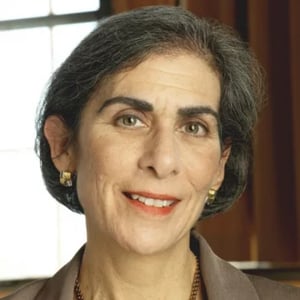
Robert Mundheim Professor of Law, University of Pennsylvania Law School
Amy Wax's work addresses issues in social welfare law and policy as well as the relationship of the family, the workplace, and labor markets. By bringing to bear her training in biomedical sciences and appellate practice as well as her interest in economic analysis, Wax has developed a uniquely insightful approach to problems in her areas of expertise.
Wax's career has been stellar. As an Assistant to the Solicitor General in the Office of the Solicitor General at the U.S. Department of Justice in the late 1980s and early 1990s, Wax argued 15 cases before the United States Supreme Court. She taught for seven years at the University of Virginia Law School before joining the Penn Law faculty in 2001.
Wax has published widely in law journals, including Chicago, Virginia, Villanova, Indiana, Emory, the Virginia Journal of Social Policy and Law, Yale Journal on Regulation and the Michigan Journal of Race and Law. Papers in press address liberal theory and welfare work requirements as well as the economics of federal disability laws. Current work in progress includes articles on law and evolutionary psychology, the political psychology of social security reform, and economic models of the family-friendly workplace. Wax has also received the A. Leo Levin Award for Excellence in an Introductory Course.
Chief Counsel, Constitutional Accountability Center
Brianne is Constitutional Accountability Center’s Chief Counsel. Brianne joined CAC from private practice at O'Melveny & Myers (OMM), where she was Counsel in the firm’s Supreme Court and appellate practice. From 2009-11, prior to joining OMM, Brianne was an Attorney-Adviser in the Office of Legal Counsel at the U.S. Department of Justice. She also served as a law clerk for Justice Stephen Breyer on the U.S. Supreme Court, a law clerk for Judge Robert A. Katzmann on the U.S. Court of Appeals for the Second Circuit, and a law clerk for Judge Jed S. Rakoff on the U.S. District Court for the Southern District of New York. Brianne’s academic writings have appeared in the Yale Law Journal, the Duke Law Journal, the Northwestern University Law Review, the Washington Law Review, the American University Law Review, and the Yale Law & Policy Review. Brianne received her J.D. from Yale Law School and her M.A./B.S. from Emory University. Her master's thesis in political science examined judicial behavior on the U.S. Supreme Court.
Dr. John Eastman is the former Henry Salvatori Professor of Law & Community Service and former Dean at Chapman University's Dale E. Fowler School of Law, where he had been a member of the faculty since 1999, specializing in Constitutional Law, Legal History, and Property. He is a founding director of the Center for Constitutional Jurisprudence, a public interest law firm affiliated with the Claremont Institute that he founded in 1999. He has a Ph.D. in Government from the Claremont Graduate School and a J.D. from the University of Chicago Law School, and a B.A. in Politics and Economics from the University of Dallas. He serves as the Chairman of the Board of the National Organization for Marriage.
Prior to joining the Chapman law faculty, Dr. Eastman served as a law clerk to the Honorable Clarence Thomas, Associate Justice, Supreme Court of the United States, and to the Honorable J. Michael Luttig, Judge, United States Court of Appeals for the Fourth Circuit and practiced law with the national law firm of Kirkland & Ellis. Dr. Eastman has also represented numerous clients in important constitutional law matters and has argued before the Supreme Court. On behalf of the Claremont Institute Center for Constitutional Jurisprudence, he has participated as amicus curiae before the Supreme Court of the United States, U.S. Courts of Appeals, and State Supreme Courts in more than one hundred cases of constitutional significance, including Boy Scouts of America v. Dale, Zelman v. Simmons-Harris (the school vouchers case), Kelo v. New London, Ct. (eminent domain), and Van Orden v. Perry (the 10 Commandments case). He has also appeared as an expert legal commentator on numerous television and radio programs, including C-SPAN, Fox News, PBS, NewsHour, and The O'Reilly Factor.

Constitution Day
Sanctioning (Government) Lawyers - Podcast
Richard W. Painter, Thomas H. Dupree
On May 19, 2016, the United States District Court for the Southern District of Texas...
Sanctioning (Government) Lawyers
TeleforumProportionality in Discovery
Houston, TexasPanel IV: Education Reform and Equality of Opportunity
Clint Bolick, Cynthia G. Brown, Jennifer Walker Elrod, William A. Galston, Abby Warren, Amy Wax
Equality of opportunity is supposed to be a fundamental American principle. But it is not...
The Texas Immigration Case: What Does it Mean, What Happens Next? - Podcast
Brianne Gorod, John C. Eastman
In February of 2015, federal District Court Judge Andrew Hanen (Southern District of Texas) temporarily...
The Texas Immigration Case: What Does it Mean, What Happens Next?
TeleforumCivility & Ethics in the Practice of Law
Kansas City, MissouriRules, Rulemaking, and Lessons of Life
Overtime Exemption Litigation Targets the Pharmaceutical Industry
Brent D. Knight, Michelle G. Marks
In the last several years, pharmaceutical companies have been targeted by the plaintiffs’ bar for...