
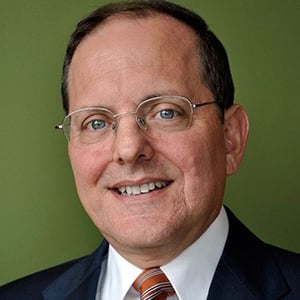
President, Housing Policy Council
Ed DeMarco is President of the Housing Policy Council. Prior to joining HPC in June 2017, DeMarco was a senior fellow in residence at the Milken Institute’s Center for Financial Markets.
From 2009 to 2014, DeMarco was acting director of the Federal Housing Finance Agency (FHFA), where he served as the conservator for Fannie Mae and Freddie Mac and regulator of those companies and the Federal Home Loan Banks. He was named HousingWire Magazine’s Person of the Year in 2012 for his impact on housing finance. DeMarco was chief operating officer and senior deputy director of the FHFA and its predecessor agency from 2006 to 2009.
DeMarco’s career in public service includes positions at the Social Security Administration, the Treasury Department, and GAO. He earned a B.A. in economics from the University of Notre Dame and a Ph.D. in economics from the University of Maryland.
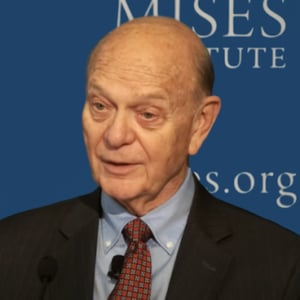
Senior Fellow, Mises Institute
Alex J. Pollock is a Senior Fellow with the Mises Institute, providing thought and policy leadership on financial issues and the study of financial systems. His work includes cycles of booms and busts, financial crises with their political responses, housing finance, government-sponsored enterprises, risk and uncertainty, central banking, banking and financial regulation, corporate governance, retirement finance, student loans, and the politics of finance.
He previously served as the Principal Deputy Director of the Office of Financial Research in the U.S. Treasury Department 2019-2021. He was a Distinguished Senior Fellow with the R Street Institute 2015-2019 and 2021, and a resident fellow at the American Enterprise Institute, 2004-2015. Among the many aspects of his AEI work, he developed the One Page Mortgage Form to give borrowers in clear form the key information they need in order to know what they are committing themselves to. He was President and CEO of the Federal Home Loan Bank of Chicago from 1991 to 2004. There he invented the Mortgage Partnership Finance program, which successfully created front-end mortgage credit risk sharing beginning in 1997. His decades of banking experience include being a Visiting Scholar at the Federal Reserve Bank of St. Louis, 1991.
Pollock was a director of the CME Group 2004-2019 and of Ascendium Education Group 1989-2019. He is a director and past-chairman of the Great Books Foundation and a past president of the International Union for Housing Finance.
He is the co-author of Surprised Again! - The COVID Crisis and the New Market Bubble (2022), and the author of Finance and Philosophy—Why We’re Always Surprised (2018) and Boom and Bust: Financial Cycles and Human Prosperity (2011), as well as numerous articles and Congressional testimony.
Pollock is a graduate of Williams College, the University of Chicago, and Princeton University.
His work is available on alexjpollock.com.
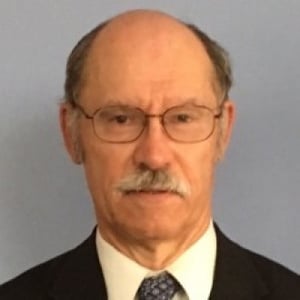
Professorial Lecturer in Law, George Washington University Law School
Theodore C. (Ted) Hirt was an attorney in the Department of Justice's Civil Division from August 1979 to March 2016. He was in its Federal Programs Branch from 1979 to 2008 (trial attorney, senior trial counsel, assistant director), and then in its Office of Immigration Litigation from 2008 to 2016 (trial attorney and senior litigation counsel). Among his responsibilities (September 2001 to March 2016) was being an advisor to the Assistant Attorneys General for the Civil Division, who serve ex officio on the Civil Rules Advisory Committee. Mr. Hirt’s areas of specialization include First Amendment issues, internet and telecommunications law, and electronic discovery. From 1976 to 1979, he was an associate at Fried, Frank, Harris, Shriver & Kampelman. From 1975 to 1976 he was an attorney in the Prehearing Division of the Michigan Court of Appeals.

Founder, Libertas-West Project
Karen Lugo is a constitutional law consultant and national security analyst. She was Director of the Center for Tenth Amendment at Texas Public Policy Foundation from 2013 to 2015. When living in California, she was Co-Director of the Center for Constitutional Jurisprudence Center. From 2005 – 2012, she was a clinical visiting and adjunct professor at Chapman University School of Law where she co-taught the advanced Constitutional Law Clinic. Karen has co-authored and written circuit-level and Supreme Court amicus briefs on such issues as FISA Surveillance, Healthcare Reform, Arizona’s Border Security, Gay Marriage, The Ten Commandments, Eminent Domain, Christian Clubs on University Campuses, and Material Support for Terrorists.
Karen is the founder of the Libertas-West Project, a center for study Islamic integration and radicalization issues. In this capacity, she consulted with the Center for Security Policy to write a book on local over-watch of mosque construction and community engagement called: Mosques in America: A Guide to Accountable Permit Hearings and Continuing Citizen Oversight.
Karen writes and speaks for European and American groups on the importance of basing assimilation efforts on principles of Western exceptionalism. She presented a policy brief to the French Conseil d’Etat analyzing the legal implications of banning the burqa. Ms. Lugo has written one of the most comprehensive overviews of sharia law in American courts, American Family Law and Sharia-Compliant Marriages, for the Federalist Society law journal, Engage. She has written several white papers on the American Law for American Courts legislation and sharia tribunals in America.
Ms. Lugo was an appointee to the California Advisory Committee to the U.S. Commission on Civil Rights. She also taught a Human Rights law course on the contrast between French and English Enlightenment theories in Strasbourg, France.
Until moving from California, Ms. Lugo was a member of the David Horowitz Freedom Center Board of Directors. She was also a regular guest on the Orange County PBS local issues debate program, Inside OC, and she is a contributor to Pajamas Media, National Review Online, City Journal, American Spectator, American Greatness, Townhall.com, American Thinker, Daily Caller, and Family Security Matters. She has been interviewed by dozens of radio hosts and has spoken for civic groups on constitutional and cultural concerns.
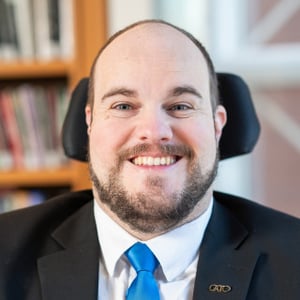
Director, Project on Criminal Justice, Cato Institute
Matthew Cavedon is the Director of the Cato Institute’s Project on Criminal Justice. He focuses on reforming plea-driven mass adjudication, ensuring police accountability, and defending constitutional criminal originalism. Cavedon’s scholarship has been published (or is forthcoming in) publications including the Arizona State Law Journal, Cato Supreme Court Review, Seattle University Law Review, and Georgetown Journal of Law and Public Policy. Formerly a Georgia public defender and fellow at the Institute for Justice, Cavedon has taught law school courses on criminal law and procedure, as well as the First Amendment. Cavedon clerked for a U.S. district court and the Supreme Court of Georgia. He came to Cato following a fellowship at the Emory University Center for the Study of Law and Religion.
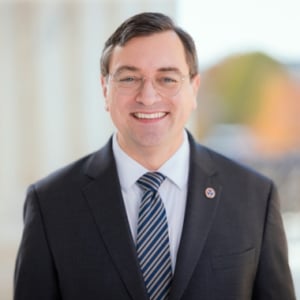
Attorney General of Tennessee
Jonathan Skrmetti was sworn in to an eight-year term as Tennessee’s Attorney General and Reporter on September 1, 2022.
Prior to his current role, General Skrmetti served as Chief Counsel to Governor Bill Lee and as Chief Deputy Attorney General to his predecessor, Tennessee Attorney General Herbert Slatery.
Before working for the State of Tennessee, General Skrmetti was a partner at Butler Snow LLP in Memphis. His legal career began with nearly a decade as a federal prosecutor. He worked at the Civil Rights Division at Main Justice and then at the Memphis U.S. Attorney’s Office and prosecuted sex traffickers, corrupt government officials, and violent white supremacists. In addition, General Skrmetti taught cyberlaw as an adjunct professor at the University of Memphis.
General Skrmetti earned honors degrees from George Washington University, the University of Oxford, and Harvard Law School, where he was editor-in-chief of the Harvard Journal of Law & Public Policy. Following law school, Jonathan clerked for Judge Steven Colloton on the U.S. Court of Appeals for the Eighth Circuit. He lives in Franklin, Tennessee, with his wife and four children.
Professorial Lecturer in Law, George Washington University Law School
Theodore C. (Ted) Hirt was an attorney in the Department of Justice's Civil Division from August 1979 to March 2016. He was in its Federal Programs Branch from 1979 to 2008 (trial attorney, senior trial counsel, assistant director), and then in its Office of Immigration Litigation from 2008 to 2016 (trial attorney and senior litigation counsel). Among his responsibilities (September 2001 to March 2016) was being an advisor to the Assistant Attorneys General for the Civil Division, who serve ex officio on the Civil Rules Advisory Committee. Mr. Hirt’s areas of specialization include First Amendment issues, internet and telecommunications law, and electronic discovery. From 1976 to 1979, he was an associate at Fried, Frank, Harris, Shriver & Kampelman. From 1975 to 1976 he was an attorney in the Prehearing Division of the Michigan Court of Appeals.
President, Housing Policy Council
Ed DeMarco is President of the Housing Policy Council. Prior to joining HPC in June 2017, DeMarco was a senior fellow in residence at the Milken Institute’s Center for Financial Markets.
From 2009 to 2014, DeMarco was acting director of the Federal Housing Finance Agency (FHFA), where he served as the conservator for Fannie Mae and Freddie Mac and regulator of those companies and the Federal Home Loan Banks. He was named HousingWire Magazine’s Person of the Year in 2012 for his impact on housing finance. DeMarco was chief operating officer and senior deputy director of the FHFA and its predecessor agency from 2006 to 2009.
DeMarco’s career in public service includes positions at the Social Security Administration, the Treasury Department, and GAO. He earned a B.A. in economics from the University of Notre Dame and a Ph.D. in economics from the University of Maryland.
Senior Fellow, Mises Institute
Alex J. Pollock is a Senior Fellow with the Mises Institute, providing thought and policy leadership on financial issues and the study of financial systems. His work includes cycles of booms and busts, financial crises with their political responses, housing finance, government-sponsored enterprises, risk and uncertainty, central banking, banking and financial regulation, corporate governance, retirement finance, student loans, and the politics of finance.
He previously served as the Principal Deputy Director of the Office of Financial Research in the U.S. Treasury Department 2019-2021. He was a Distinguished Senior Fellow with the R Street Institute 2015-2019 and 2021, and a resident fellow at the American Enterprise Institute, 2004-2015. Among the many aspects of his AEI work, he developed the One Page Mortgage Form to give borrowers in clear form the key information they need in order to know what they are committing themselves to. He was President and CEO of the Federal Home Loan Bank of Chicago from 1991 to 2004. There he invented the Mortgage Partnership Finance program, which successfully created front-end mortgage credit risk sharing beginning in 1997. His decades of banking experience include being a Visiting Scholar at the Federal Reserve Bank of St. Louis, 1991.
Pollock was a director of the CME Group 2004-2019 and of Ascendium Education Group 1989-2019. He is a director and past-chairman of the Great Books Foundation and a past president of the International Union for Housing Finance.
He is the co-author of Surprised Again! - The COVID Crisis and the New Market Bubble (2022), and the author of Finance and Philosophy—Why We’re Always Surprised (2018) and Boom and Bust: Financial Cycles and Human Prosperity (2011), as well as numerous articles and Congressional testimony.
Pollock is a graduate of Williams College, the University of Chicago, and Princeton University.
His work is available on alexjpollock.com.
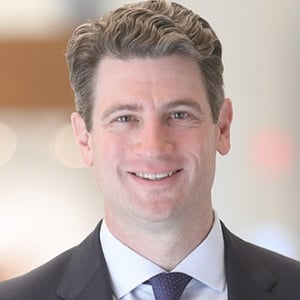
General Counsel and Corporate Secretary, Citigroup
Brent McIntosh joined Citi as General Counsel and Corporate Secretary in October 2021. Brent leads Citi's global legal team, including Citi security and investigative services, and oversees Citi’s independent compliance risk management function.
Brent served as Under Secretary of the Treasury for International Affairs from 2019 to 2021. He led the Treasury Department’s engagement in the G7 and G20, represented the United States on the Financial Stability Board, and managed U.S. participation at the IMF and World Bank. He oversaw Treasury’s international economic and financial policy work, including significant engagements on investment security and regulation of digital currencies. During 2020, he coordinated initiatives to alleviate the COVID-19 pandemic’s economic consequences.
From 2017 to 2019, Brent served as Treasury’s General Counsel, leading the department’s approximately 2,000 lawyers and spearheading its regulatory reform efforts. Prior to that, he was a partner in the law firm of Sullivan & Cromwell, where his practice focused on complex disputes involving financial institutions and multinational corporations.
Brent served in the White House from 2006 until 2009, first as Associate Counsel to the President and then as Deputy Assistant to the President and Deputy Staff Secretary. Before that, he was a Deputy Assistant Attorney General at the Justice Department, where his work focused on national security matters.
A Michigan native, Brent holds an A.B. in economics and political science from the University of Michigan and a J.D. from Yale Law School. Following law school, he was a law clerk to two federal appellate judges, Dennis Jacobs of the Second Circuit and Laurence H. Silberman of the D.C. Circuit. Brent serves on the Board of Directors of the Alexander Hamilton Society, the Board of Advisors for the National Security Institute at George Mason University’s Antonin Scalia Law School, and the Advisory Council of the Official Monetary and Financial Institutions Forum. He is a member of the Council on Foreign Relations, where he previously served as an Adjunct Senior Fellow for International Economics and Finance, as well as the Bretton Woods Committee and the International Institute for Strategic Studies.

What Should the FHFA's 2019 Agenda Be?
Ed DeMarco, Alex J. Pollock
January 7, 2019 starts a new leadership era for the Federal Housing Finance Agency, as...
Deep Dive Episode 36 – What Should the FHFA's 2019 Agenda Be?
Regulatory Transparency Project Teleforum
TeleforumCan and Should the Federal Judiciary Rein In Our Expansive Administrative State?
Ted Hirt
Note from the Editor: The Federalist Society takes no positions on particular legal and public...
Giving Credit for Shaping the Constitution
Karen J. Lugo
A review of: The Lives of the Constitution: Ten Exceptional Minds That Shaped America’s Supreme Law,...
Party Like It’s 1935?: Gundy v. United States and the Future of the Non-Delegation Doctrine
Matthew P. Cavedon, Jonathan Skrmetti
Note from the Editor: This article discusses Gundy v. United States, a case involving the...
Can Americans Reconcile Our Constitutional System With an Expansive Administrative State?
Ted Hirt
A review of: Bureaucracy in America: The Administrative State’s Challenge to Constitutional Government, by Joseph...
Topics
Will OIRA Extend its Review to Independent Agencies?
At the Federalist Society’s Sixth Annual Executive Branch Review Conference, Office of information and Regulatory Affairs ("OIRA")...
Topics
The Fifth Circuit Vacates the Fiduciary Rule
On March 15, 2018, the Fifth Circuit struck down one of the most controversial regulatory...
March 2018 DC Lunch with Treasury General Counsel Brent McIntosh
Washington, DCTopics
President Trump and CFIUS Were Right To Halt Broadcom’s Hostile Takeover Attempt of Qualcomm
On Monday evening, President Trump swiftly shut down Broadcom/Avago’s attempted hostile takeover of Qualcomm, thus...