
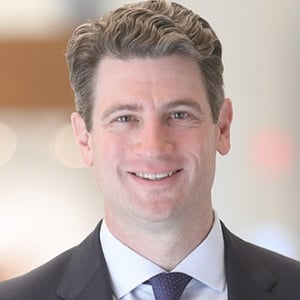
General Counsel and Corporate Secretary, Citigroup
Brent McIntosh joined Citi as General Counsel and Corporate Secretary in October 2021. Brent leads Citi's global legal team, including Citi security and investigative services, and oversees Citi’s independent compliance risk management function.
Brent served as Under Secretary of the Treasury for International Affairs from 2019 to 2021. He led the Treasury Department’s engagement in the G7 and G20, represented the United States on the Financial Stability Board, and managed U.S. participation at the IMF and World Bank. He oversaw Treasury’s international economic and financial policy work, including significant engagements on investment security and regulation of digital currencies. During 2020, he coordinated initiatives to alleviate the COVID-19 pandemic’s economic consequences.
From 2017 to 2019, Brent served as Treasury’s General Counsel, leading the department’s approximately 2,000 lawyers and spearheading its regulatory reform efforts. Prior to that, he was a partner in the law firm of Sullivan & Cromwell, where his practice focused on complex disputes involving financial institutions and multinational corporations.
Brent served in the White House from 2006 until 2009, first as Associate Counsel to the President and then as Deputy Assistant to the President and Deputy Staff Secretary. Before that, he was a Deputy Assistant Attorney General at the Justice Department, where his work focused on national security matters.
A Michigan native, Brent holds an A.B. in economics and political science from the University of Michigan and a J.D. from Yale Law School. Following law school, he was a law clerk to two federal appellate judges, Dennis Jacobs of the Second Circuit and Laurence H. Silberman of the D.C. Circuit. Brent serves on the Board of Directors of the Alexander Hamilton Society, the Board of Advisors for the National Security Institute at George Mason University’s Antonin Scalia Law School, and the Advisory Council of the Official Monetary and Financial Institutions Forum. He is a member of the Council on Foreign Relations, where he previously served as an Adjunct Senior Fellow for International Economics and Finance, as well as the Bretton Woods Committee and the International Institute for Strategic Studies.
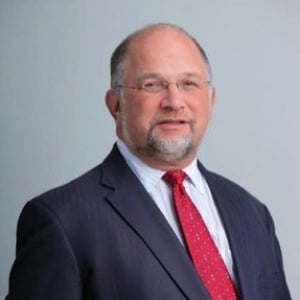
Stu Bassin has been a leading figure in the federal tax arena for the past two decades. He founded the Bassin Law Firm following a long career as one of the U.S. Department of Justice’s top tax litigators and a stint as the national leader of the civil tax litigation practice of an AmLaw 100 law firm.
The U.S. Justice Department has recognized his skills by naming him an Outstanding Attorney on six different occasions. His work for private clients was recognized by U.S. News and World Report, which named his prior firm as one of the country’s top 15 tax litigation firms. During 2019, he was elected to the American College of Tax Counsel, an honorary society reserved for those at the top of the profession. He is recognized as a thought leader in the profession, frequently speaking at bar association events and publishing in leading professional journals.
Stu handles a wide variety of tax matters, particularly involving disputes with the IRS. He is one of the leading tax litigators in the country and has tried many of the most prominent cases of the past decade. He also has broad expertise in civil litigation, particularly complex cases and matters involving electronic discovery questions. Often, he advises small businesses on an array of general corporate and business issues.
He lives in Bethesda, Maryland with his wife, daughter, and dog. In his free time, he served on the board of his local high school crew club and is involved in other community affairs. He is admitted to practice in Maryland, the District of Columbia, and many federal courts.
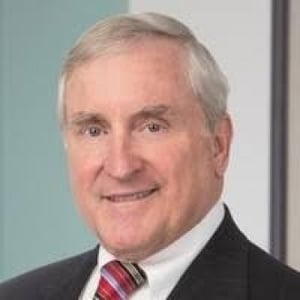
Senior Counsel, Caplin & Drysdale; Adjunct Professor of Law, Georgetown Law
Professor Carney is a Senior Counsel with Caplin & Drysdale, Cht’d. in Washington, D.C. He served as a Trial Attorney for the Tax Division of the U.S. Department of Justice for six years, and was in private (law firm) tax practice for many years, specializing in IRS administrative practice, tax controversies (audit and IRS Appeals Office), and tax litigation. He also advised clients in a similar capacity as a partner in the National Tax Office of Ernst & Young LLP in Washington. He is a member of the District of Columbia bar, as well as the bars of the U.S. Tax Court, U.S. Court of Federal Claims, U.S. District Court for the District of Columbia, and the U.S. Courts of Appeals for the Federal Circuit, D.C Circuit, and Eleventh Circuit.
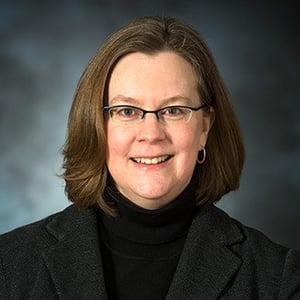
Associate Dean for Research and Intellectual Life, McKnight Presidential Professor in Law, Distinguished McKnight University Professor, Harlan Albert Rogers Professor in Law, Associate Director, Corporate Institute, University of Minnesota Law School
Professor Kristin E. Hickman is the McKnight Presidential Professor in Law, a Distinguished McKnight University Professor, and Harlan Albert Rogers Professor in Law at the University of Minnesota Law School. She also has taught at Harvard Law School and Northwestern University School of Law. Professor Hickman teaches and writes primarily in the areas of administrative law, tax administration, and statutory interpretation. Her articles on these topics have appeared in the Columbia Law Review, Cornell Law Review, Virginia Law Review, Duke Law Journal, and other publications. She also co-authors the Administrative Law Treatise with Richard J. Pierce, Jr., and a casebook on federal administrative law with Pierce and Christopher J. Walker. Her scholarly work has been cited several times in opinions of the United States Supreme Court as well as regularly in lower court judicial opinions and court briefs.
In 2018-19, Professor Hickman served as Special Adviser to the Administrator of the Office of Information and Regulatory Affairs in Washington, D.C. She presently serves as a Senior Fellow, and previously served as a public member and chair of the judicial review committee, for the Administrative Conference of the United States. She also is a Fellow of the American College of Tax Counsel.
Professor Hickman received her B.S. degree in business administration with a concentration in accounting and a secondary major in history from Trinity University in San Antonio, Texas. After practicing for several years as a certified public accountant, Professor Hickman earned her J.D. degree, magna cum laude, from Northwestern University School of Law, where she was awarded the Raoul Berger Prize and the Lowden Wigmore Prize for her scholarly writings. Following law school, Professor Hickman clerked for The Honorable David B. Sentelle of the United States Court of Appeals for the District of Columbia Circuit and practiced law as an associate with the Chicago office of Skadden, Arps, Slate, Meagher & Flom, concentrating on corporate and international tax transactions and matters.
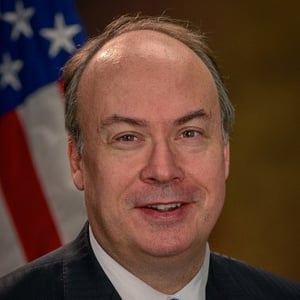
Assistant Attorney General, Environment and Natural Resources Division, U.S. Department of Justice
Jeffrey Bossert Clark was born in Philadelphia, Pennsylvania on April 17, 1967. He is a graduate of Harvard University (A.B. in economics and history, 1989), the University of Delaware (M.A. in urban affairs and public policy, 1993), and the Georgetown University Law Center (J.D., 1995).
Mr. Clark began his career working for the State of Delaware’s Department of Finance, Division of Revenue as an economics analyst in the field of tax policy. During his tenure from 1989 to 1992, he authored several white papers analyzing Delaware revenue sources. Delaware also selected Mr. Clark to submit an economic report and affidavit to the United States Supreme Court in the original jurisdiction case of Delaware v. New York, 507 U.S. 490 (1993).
He entered Georgetown’s law school in 1992 where he earned honors as an articles editor of the Georgetown Law Journal, an Olin Law & Economics Fellow, and a member of the Order of the Coif. From 1995 to 1996, Mr. Clark clerked for Judge Boggs of the U.S. Court of Appeals of the Sixth Circuit. Mr. Clark then joined the law firm of Kirkland & Ellis as an associate from 1996-2001. He worked as an appellate litigator on numerous Supreme Court and other appellate cases and developed expertise in administrative law, statutory interpretation, as well as antitrust, labor, environmental, and telecommunications law.
Mr. Clark went on to serve in ENRD from 2001-2005 as a Deputy Assistant Attorney General selected by Attorney General Ashcroft and Assistant Attorney General Tom Sansonetti. In that capacity, he supervised ENRD’s Appellate and Indian Resources Sections. He reviewed, edited, and contributed to virtually every brief that ENRD filed in the Courts of Appeals, including several cases of exceptional significance that he personally briefed and argued. During his service in the early 2000s, Mr. Clark argued and won numerous cases in multiple U.S. Courts of Appeals and worked on all Supreme Court cases arising out of ENRD’s work.
In 2005, Mr. Clark returned to Kirkland & Ellis LLP as a partner, where he litigated until his return to ENRD in 2018. There he worked on numerous multi-billion-dollar matters and continued to argue many appellate cases. His practice operated at all levels — appellate litigation, trial court litigation, agency proceedings, and regulatory and litigation counseling. He has been named a Super Lawyer for multiple years running, highlighted in the Legal 500, named to the “Legal Who’s Who for Environmental Law” in Corporate Responsibility Magazine, rated A.V. preeminent by Martindale Hubbell, and named a member of the National Association of Distinguished Counsel’s Nation’s One Percent. He also was named one of America’s Top 100 High Stakes Litigators.
President Trump nominated Mr. Clark to be the Assistant Attorney General of the Environment and Natural Resources Division (ENRD) on June 7, 2017. He was confirmed by the U.S. Senate on October 11, 2018 and sworn into office on November 1, 2018, followed by an investiture ceremony on November 15, 2018.
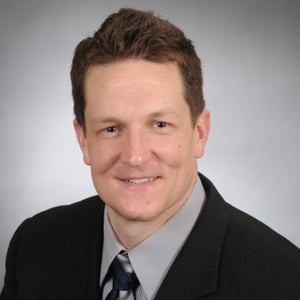
Mike Jayne is an attorney for the U.S. Department of Education. Previously, he worked for the Mercatus Center at George Mason University.
Stu Bassin has been a leading figure in the federal tax arena for the past two decades. He founded the Bassin Law Firm following a long career as one of the U.S. Department of Justice’s top tax litigators and a stint as the national leader of the civil tax litigation practice of an AmLaw 100 law firm.
The U.S. Justice Department has recognized his skills by naming him an Outstanding Attorney on six different occasions. His work for private clients was recognized by U.S. News and World Report, which named his prior firm as one of the country’s top 15 tax litigation firms. During 2019, he was elected to the American College of Tax Counsel, an honorary society reserved for those at the top of the profession. He is recognized as a thought leader in the profession, frequently speaking at bar association events and publishing in leading professional journals.
Stu handles a wide variety of tax matters, particularly involving disputes with the IRS. He is one of the leading tax litigators in the country and has tried many of the most prominent cases of the past decade. He also has broad expertise in civil litigation, particularly complex cases and matters involving electronic discovery questions. Often, he advises small businesses on an array of general corporate and business issues.
He lives in Bethesda, Maryland with his wife, daughter, and dog. In his free time, he served on the board of his local high school crew club and is involved in other community affairs. He is admitted to practice in Maryland, the District of Columbia, and many federal courts.
Senior Counsel, Caplin & Drysdale; Adjunct Professor of Law, Georgetown Law
Professor Carney is a Senior Counsel with Caplin & Drysdale, Cht’d. in Washington, D.C. He served as a Trial Attorney for the Tax Division of the U.S. Department of Justice for six years, and was in private (law firm) tax practice for many years, specializing in IRS administrative practice, tax controversies (audit and IRS Appeals Office), and tax litigation. He also advised clients in a similar capacity as a partner in the National Tax Office of Ernst & Young LLP in Washington. He is a member of the District of Columbia bar, as well as the bars of the U.S. Tax Court, U.S. Court of Federal Claims, U.S. District Court for the District of Columbia, and the U.S. Courts of Appeals for the Federal Circuit, D.C Circuit, and Eleventh Circuit.
Associate Dean for Research and Intellectual Life, McKnight Presidential Professor in Law, Distinguished McKnight University Professor, Harlan Albert Rogers Professor in Law, Associate Director, Corporate Institute, University of Minnesota Law School
Professor Kristin E. Hickman is the McKnight Presidential Professor in Law, a Distinguished McKnight University Professor, and Harlan Albert Rogers Professor in Law at the University of Minnesota Law School. She also has taught at Harvard Law School and Northwestern University School of Law. Professor Hickman teaches and writes primarily in the areas of administrative law, tax administration, and statutory interpretation. Her articles on these topics have appeared in the Columbia Law Review, Cornell Law Review, Virginia Law Review, Duke Law Journal, and other publications. She also co-authors the Administrative Law Treatise with Richard J. Pierce, Jr., and a casebook on federal administrative law with Pierce and Christopher J. Walker. Her scholarly work has been cited several times in opinions of the United States Supreme Court as well as regularly in lower court judicial opinions and court briefs.
In 2018-19, Professor Hickman served as Special Adviser to the Administrator of the Office of Information and Regulatory Affairs in Washington, D.C. She presently serves as a Senior Fellow, and previously served as a public member and chair of the judicial review committee, for the Administrative Conference of the United States. She also is a Fellow of the American College of Tax Counsel.
Professor Hickman received her B.S. degree in business administration with a concentration in accounting and a secondary major in history from Trinity University in San Antonio, Texas. After practicing for several years as a certified public accountant, Professor Hickman earned her J.D. degree, magna cum laude, from Northwestern University School of Law, where she was awarded the Raoul Berger Prize and the Lowden Wigmore Prize for her scholarly writings. Following law school, Professor Hickman clerked for The Honorable David B. Sentelle of the United States Court of Appeals for the District of Columbia Circuit and practiced law as an associate with the Chicago office of Skadden, Arps, Slate, Meagher & Flom, concentrating on corporate and international tax transactions and matters.
Assistant Attorney General, Environment and Natural Resources Division, U.S. Department of Justice
Jeffrey Bossert Clark was born in Philadelphia, Pennsylvania on April 17, 1967. He is a graduate of Harvard University (A.B. in economics and history, 1989), the University of Delaware (M.A. in urban affairs and public policy, 1993), and the Georgetown University Law Center (J.D., 1995).
Mr. Clark began his career working for the State of Delaware’s Department of Finance, Division of Revenue as an economics analyst in the field of tax policy. During his tenure from 1989 to 1992, he authored several white papers analyzing Delaware revenue sources. Delaware also selected Mr. Clark to submit an economic report and affidavit to the United States Supreme Court in the original jurisdiction case of Delaware v. New York, 507 U.S. 490 (1993).
He entered Georgetown’s law school in 1992 where he earned honors as an articles editor of the Georgetown Law Journal, an Olin Law & Economics Fellow, and a member of the Order of the Coif. From 1995 to 1996, Mr. Clark clerked for Judge Boggs of the U.S. Court of Appeals of the Sixth Circuit. Mr. Clark then joined the law firm of Kirkland & Ellis as an associate from 1996-2001. He worked as an appellate litigator on numerous Supreme Court and other appellate cases and developed expertise in administrative law, statutory interpretation, as well as antitrust, labor, environmental, and telecommunications law.
Mr. Clark went on to serve in ENRD from 2001-2005 as a Deputy Assistant Attorney General selected by Attorney General Ashcroft and Assistant Attorney General Tom Sansonetti. In that capacity, he supervised ENRD’s Appellate and Indian Resources Sections. He reviewed, edited, and contributed to virtually every brief that ENRD filed in the Courts of Appeals, including several cases of exceptional significance that he personally briefed and argued. During his service in the early 2000s, Mr. Clark argued and won numerous cases in multiple U.S. Courts of Appeals and worked on all Supreme Court cases arising out of ENRD’s work.
In 2005, Mr. Clark returned to Kirkland & Ellis LLP as a partner, where he litigated until his return to ENRD in 2018. There he worked on numerous multi-billion-dollar matters and continued to argue many appellate cases. His practice operated at all levels — appellate litigation, trial court litigation, agency proceedings, and regulatory and litigation counseling. He has been named a Super Lawyer for multiple years running, highlighted in the Legal 500, named to the “Legal Who’s Who for Environmental Law” in Corporate Responsibility Magazine, rated A.V. preeminent by Martindale Hubbell, and named a member of the National Association of Distinguished Counsel’s Nation’s One Percent. He also was named one of America’s Top 100 High Stakes Litigators.
President Trump nominated Mr. Clark to be the Assistant Attorney General of the Environment and Natural Resources Division (ENRD) on June 7, 2017. He was confirmed by the U.S. Senate on October 11, 2018 and sworn into office on November 1, 2018, followed by an investiture ceremony on November 15, 2018.
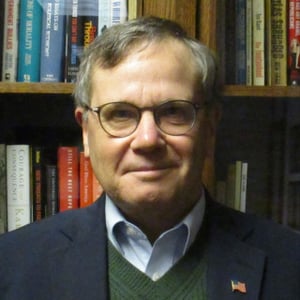
Senior Fellow in Constitutional Jurisprudence, Independence Institute
Professor Robert G. Natelson is a constitutional scholar and author.
Rob’s constitutional scholarship has been cited repeatedly by justices and parties at the U.S. Supreme Court—as well as by federal appeals courts, and at least 18 state supreme courts.
Rob’s research into the Constitution’s original meaning has carried him to libraries throughout the United States and in Britain, including four months at Oxford University. His books and articles span many different parts of the Constitution, including groundbreaking studies of the Necessary and Proper Clause, the Indian Commerce Clause, federalism, Founding-Era interpretation, regulation of elections, and the amendment process of Article V. He created the first-ever online bibliography for 18th century materials used in constitutional research. He is a contributing author to the Encyclopedia of the Supreme Court of the United States (on Magna Carta). He contributed eight essays to the third edition of the Heritage Guide to the Constitution: five on the amendment procedure and one each on the Guarantee Clause, the Postal Clause, and the Recess Appointments Clause.
U.S. Supreme Court justices have relied explicitly on Rob’s research in 41 citations in 13 separate cases.
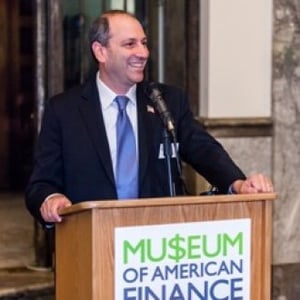
President/CEO, Museum of American Finance
David Cowen, the Museum's President/CEO, has over 20 years experience as a trader on Wall Street, including in the foreign exchange groups at Bankers Trust and Deutsche Bank. The founder of Quasar Capital Partners, a macro hedge fund, Mr. Cowen holds a BA in American history from Columbia College, an MBA from the Wharton School of Business, and an MA and Ph.D. in American history from NYU. He has written extensively on US financial history and is the co-author of Alexander Hamilton on Finance, Credit, and Debt (Columbia University Press, 2018) and Financial Founding Fathers: The Men Who Made America Rich (University of Chicago Press, 2006). He is a founding co-chair of the International Federation of Finance Museums (IFFM) and has served on the Smithsonian Affiliates Advisory Council and the Federal Reserve Board's Centennial Advisory Council.
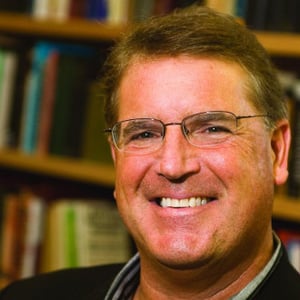
Professor of Economics, Loyola University Maryland
Thomas DiLorenzo is professor of economics at Loyola University Maryland and a member of the senior faculty of the Mises Institute. He is the author of The Real Lincoln; How Capitalism Saved America; Lincoln Unmasked; Hamilton's Curse; Organized Crime: The Unvarnished Truth About Government; and The Problem with Socialism.
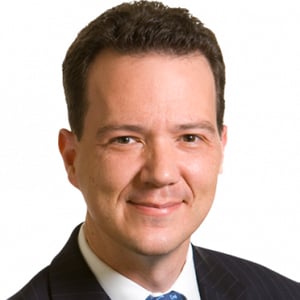
Senior Research Fellow in Anglo-American Relations, Margaret Thatcher Center for Freedom, The Heritage Foundation
Theodore "Ted" R. Bromund studies and writes on Anglo-American relations, U.S. and British relations with Europe and the European Union, America’s leadership role in the world, and international organizations and treaties as senior research fellow in The Heritage Foundation’s Margaret Thatcher Center for Freedom.
Bromund, who joined Heritage in 2008, previously served nine years as associate director of International Security Studies at Yale University, a center dedicated to the study and teaching of diplomatic history and grand strategy. He was a lecturer in history beginning in 1999, and in international affairs for the master of arts program beginning in 2004.
A columnist for Newsday, Forbes, and Great Britain’s Yorkshire Post, Bromund also writes regularly for National Review, The Weekly Standard, and FoxNews.com, and, in Britain, CapX. He has been interviewed or cited by BBC News, CBS News, Fox News Channel, CNN, Fox Business, Politifact, Radio Free Europe, The Christian Science Monitor, Time, and Financial Times, among others.
Besides contributing articles to scholarly journals, Bromund is the author of a chapter on former British Prime Minister Tony Blair and the fall of Iraqi dictator Saddam Hussein in the book The Blair Legacy: Politics, Policy, Governance, and Foreign Affairs (Palgrave Macmillan, 2009).
In 2013, Bromund was recognized by the Second Amendment Foundation as its Scholar of the Year for his analysis of the Arms Trade Treaty.
Bromund received his doctorate in history in 1999 from Yale. His thesis on Britain’s first application to the European Economic Community won the Samuel H. Beer Dissertation Prize from the American Political Science Association’s British Politics Group. In 2016, he received Heritage’s Joseph Shattan Award in recognition of the quality of his writing.
He is an adjunct professor of strategic studies in the Strategic Studies Program at the Johns Hopkins University School of Advanced International Studies, where he teaches courses on grand strategy. He also holds two master’s degrees in history from Yale as well as a bachelor of arts degree from Iowa’s Grinnell College.
A native of Wooster, Ohio, he currently resides in Washington, D.C.
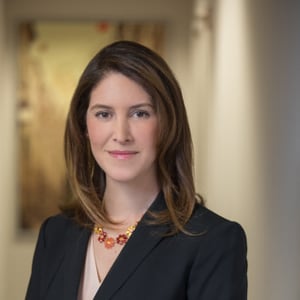
Partner, Grossman Young & Hammond
Sandra Grossman is a partner at Grossman Young & Hammond, LLC, located in Bethesda, Maryland. She is a skilled immigration litigator with over a decade of experience in all matters related to the practice of immigration law. She is known for providing top-notch, personalized service to both individual and corporate clients with complex immigration cases and highly specialized needs. Her pragmatic and creative approach to immigration challenges has earned her an international reputation as a lawyer who can get the job done for the most discriminating of clients.
Sandra has developed a unique practice that addresses complex inadmissibility issues, often involving matters before INTERPOL, high-profile clients, politically sensitive matters, and diplomatic issues with foreign policy implications, and requiring knowledge and expertise on a range of issues involving public international law and U.S. domestic law. Sandra is fiercely dedicated to guiding her clients through the complex maze of U.S. immigration laws in order to find workable solutions to achieve their goals.
Sandra has successfully represented individuals in diverse aspects of immigration law before the immigration courts, the Board of Immigration Appeals, and the Federal District Courts. She also represents clients in the areas of deportation defense, detention and bond issues, the immigration consequences of criminal convictions, requests under the Freedom of Information Act (FOIA), waivers of inadmissibility, asylum, and adjustment of status and naturalization applications, among other matters. Her experience includes representation of clients in lawsuits to prompt U.S. Citizenship and Immigration Service (USCIS) action on long-delayed applications, including applications for naturalization, adjustment of status, waivers, and replacement green cards.
The Washingtonian Magazine recognized Sandra as one of “Washington’s Top Lawyers.” She is an active member of the American Immigration Lawyers Association (AILA), a former adjunct professor in immigration law at the Washington College of Law at American University, and a member of the Editorial Board of Bender’s Immigration Bulletin. Sandra regularly handles pro-bono client matters and offers reduced rate services for such organizations as the Maryland Immigrant Rights Coalition (MIRC), CASA de Maryland, Catholic Charities, and Identity.
Sandra is a native Spanish and English speaker and is conversant in French.
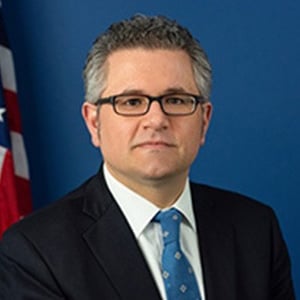
Director, Federal Housing Finance Agency
Mark Calabria is the Director of the Federal Housing Finance Agency.
He was formerly the chief economist for Vice President Mike Pence. Prior to that, he served as Director of Financial Regulation Studies at the Cato Institute. Before joining Cato in 2009, he spent six years as a member of the senior professional staff of the U.S. Senate Committee on Banking, Housing and Urban Affairs. In that position, Calabria handled issues related to housing, mortgage finance, economics, banking and insurance for Ranking Member Richard Shelby (R-AL). Prior to his service on Capitol Hill, Calabria served as Deputy Assistant Secretary for Regulatory Affairs at the U.S. Department of Housing and Urban Development, and also held a variety of positions at Harvard University’s Joint Center for Housing Studies, the National Association of Home Builders and the National Association of Realtors. Calabria has also been a Research Associate with the U.S. Census Bureau’s Center for Economic Studies.
He has extensive experience evaluating the impacts of legislative and regulatory proposals on financial and real estate markets, with particular emphasis on how policy changes in Washington affect low and moderate income households.
He holds a doctorate in economics from George Mason University.
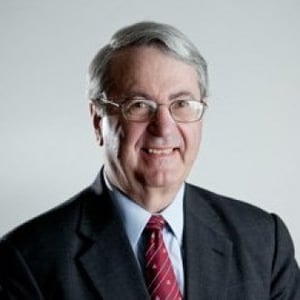
Resident Fellow and Director, AEI Housing Center, American Enterprise Institute
Edward J. Pinto is a resident fellow and the director of the AEI Housing Center at the American Enterprise Institute (AEI). He is currently researching how to increase the entry-level housing supply for first-time buyers and renters who earn hourly wages, as well as examining the current house price boom that began in 2012. This continues his previous work on the role of federal housing policy in the 2008 mortgage and financial crisis.
Along with AEI Resident Scholar Stephen Oliner, Mr. Pinto created the Wealth Building Home Mortgage, a new approach to home finance designed to provide a more reliable and effective way of building wealth than is available under existing policies. This mortgage allows home buyers to maintain a buying power similar to a 30-year loan. It is aimed at a broad range of homebuyers, including low-income, minority, and first-time buyers.
Before joining AEI, Mr. Pinto was an executive vice president and chief credit officer for Fannie Mae until the late 1980s. Today, he is frequently interviewed on radio and television and often testifies before Congress. His writings have been published in trade publications and the popular press, including in the American Banker, The Hill, RealClearPolitics, and The Wall Street Journal. In addition, as the director of the AEI Housing Center, he oversees the monthly publication of the AEI Housing Market Indicators, which has replaced AEI’s monthly Housing Risk Watch and AEI’s FHA Watch.
Mr. Pinto has a JD from Indiana University Maurer School of Law and a BA from the University of Illinois at Urbana-Champaign.
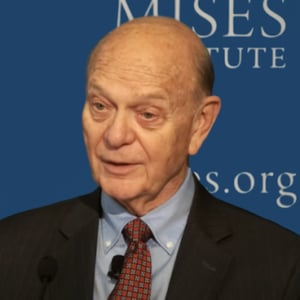
Senior Fellow, Mises Institute
Alex J. Pollock is a Senior Fellow with the Mises Institute, providing thought and policy leadership on financial issues and the study of financial systems. His work includes cycles of booms and busts, financial crises with their political responses, housing finance, government-sponsored enterprises, risk and uncertainty, central banking, banking and financial regulation, corporate governance, retirement finance, student loans, and the politics of finance.
He previously served as the Principal Deputy Director of the Office of Financial Research in the U.S. Treasury Department 2019-2021. He was a Distinguished Senior Fellow with the R Street Institute 2015-2019 and 2021, and a resident fellow at the American Enterprise Institute, 2004-2015. Among the many aspects of his AEI work, he developed the One Page Mortgage Form to give borrowers in clear form the key information they need in order to know what they are committing themselves to. He was President and CEO of the Federal Home Loan Bank of Chicago from 1991 to 2004. There he invented the Mortgage Partnership Finance program, which successfully created front-end mortgage credit risk sharing beginning in 1997. His decades of banking experience include being a Visiting Scholar at the Federal Reserve Bank of St. Louis, 1991.
Pollock was a director of the CME Group 2004-2019 and of Ascendium Education Group 1989-2019. He is a director and past-chairman of the Great Books Foundation and a past president of the International Union for Housing Finance.
He is the co-author of Surprised Again! - The COVID Crisis and the New Market Bubble (2022), and the author of Finance and Philosophy—Why We’re Always Surprised (2018) and Boom and Bust: Financial Cycles and Human Prosperity (2011), as well as numerous articles and Congressional testimony.
Pollock is a graduate of Williams College, the University of Chicago, and Princeton University.
His work is available on alexjpollock.com.
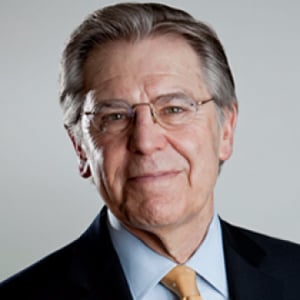
Senior Fellow, Arthur F. Burns Fellow in Financial Policy Studies, American Enterprise Institute
Peter J. Wallison holds the Arthur F. Burns Chair in Financial Policy Studies and is co-director of AEI’s program on Financial Policy Studies. Prior to joining AEI, he practiced banking, corporate and financial law at Gibson, Dunn & Crutcher in Washington, D.C., and New York. Mr. Wallison has held a number of government positions. From June 1981 to January 1985, he was General Counsel of the United States Treasury Department, where he had a significant role in the development of the Reagan Administration's proposals for deregulation in the financial services industry. During 1986 and 1987, Mr. Wallison was White House counsel to President Ronald Reagan, and between 1972 and 1976, he served first as Special Assistant to New York's Gov. Nelson A. Rockefeller and, subsequently, as counsel to Mr. Rockefeller as vice president of the United States.
Mr. Wallison was admitted to practice before the courts of New York and the District of Columbia, and is retired from practice in New York. He continues to be a member of the District of Columbia Bar Association. He received his undergraduate degree from Harvard College in 1963 and law degree from Harvard Law School in 1966.
Mr. Wallison is the author of Ronald Reagan: The Power of Conviction and the Success of His Presidency, published in December 2002 by Westview Press. On campaign finance, he is the author (with Joel Gora) of Better Parties, Better Government, (AEI Press 2009). On financial or regulatory matters, he is the author of Back From the Brink, a proposal for a private deposit insurance system, and co-author of Nationalizing Mortgage Risk: The Growth of Fannie Mae and Freddie Mac; The GAAP Gap: Corporate Disclosure in the Internet Age; Competitive Equity: A Better Way to Organize Mutual Funds; Bad History, Worse Policy: How a False Narrative about the Financial Crisis Led to the Dodd-Frank Act (AEI Press 2013); and Hidden In Plain Sight: What Caused the World’s Worst Financial Crisis and Why it Could Happen Again (Encounter Books 2015). His most recent book is Judicial Fortitude: The Last Chance to Rein in the Administrative State, published by Encounter Books in October 2018.
He testifies frequently before committees of Congress, and is a frequent contributor to the op-ed pages of the Wall Street Journal and other print and online journals. He has also been a speaker at many conferences on financial services, housing, the causes of the financial crisis, the Dodd-Frank Act, accounting, and corporate governance, and was a member of the Shadow Financial Regulatory Committee between 1995 and 2015. He was a member of the SEC Advisory Committee on Improvements to Financial Reporting (2008), co-Chair of the Pew Financial Reform Task Force (2009), and a member of the congressionally- appointed Financial Crisis Inquiry Commission (2009-2011). In May 2011, for his work in financial policy, Mr. Wallison received an honorary doctorate in Humane Letters from the University of Colorado.

Capital Conversations: Brent J. McIntosh, Under Secretary, International Affairs, U.S. Department of the Treasury
TeleforumAs Far As Reasonably Practicable: Reimagining the Role of Congress in Agency Rulemaking
Mike Jayne
Note from the Editor: The Federalist Society takes no positions on particular legal and public...
The Changing Environment for APA Challenges to Tax Regulations
Stuart Bassin, Robert T. Carney, Kristin E. Hickman
Until recently, the Internal Revenue Service and Treasury Department typically issued regulations involving the tax...
Capital Conversations: Jeffrey Clark, Assistant Attorney General, Environment and Natural Resources Division (ENRD), Department of Justice
Jeffrey Bossert Clark
The Environment and Natural Resources Division of the Department of Justice recently announced a policy...
The Changing Environment for APA Challenges to Tax Regulations
Administrative Law Practice Group Teleforum
TeleforumCapital Conversations: Jeffrey Clark, Assistant Attorney General, Environment and Natural Resources Division (ENRD), Department of Justice
The Limits of EPA Authority: Supplemental Environmental Projects
TeleforumNew Evidence on the Constitution’s Impeachment Standard: “high . . . Misdemeanors” Means Serious Crimes
Robert G. Natelson
Note from the Editor: The Federalist Society takes no positions on particular legal and public...
Hamilton v. Jefferson: The Central Bank Debate [POLICYbrief]
David Cowen, Thomas J. DiLorenzo
In 1791, two great minds clashed over an issue of constitutional and historical significance. Alexander...
The TRAP Act’s Contribution to Preventing Transnational Repression Through Interpol
Ted R. Bromund, Sandra Grossman
Note from the Editor: The Federalist Society takes no positions on particular legal and public...
What's Next for Fannie, Freddie, and Housing Finance Reform?
Mark Calabria, Edward Pinto, Alex J. Pollock, Peter J. Wallison
On December 10, 2019, the Regulatory Transparency Project hosted an event at the National Press...