
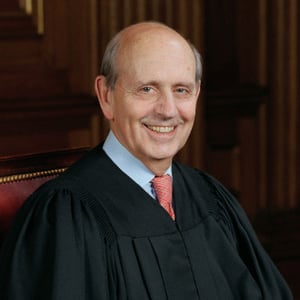
Former Associate Justice, United States Supreme Court
Stephen G. Breyer was born in San Francisco, California, August 15, 1938. He married Joanna Hare in 1967, and has three children - Chloe, Nell, and Michael. He received an A.B. from Stanford University, a B.A. from Magdalen College, Oxford, and an LL.B. from Harvard Law School. He served as a law clerk to Justice Arthur Goldberg of the Supreme Court of the United States during the 1964 Term, as a Special Assistant to the Assistant U.S. Attorney General for Antitrust, 1965–1967, as an Assistant Special Prosecutor of the Watergate Special Prosecution Force, 1973, as Special Counsel of the U.S. Senate Judiciary Committee, 1974–1975, and as Chief Counsel of the committee, 1979–1980. He was an Assistant Professor, Professor of Law, and Lecturer at Harvard Law School, 1967–1994, a Professor at the Harvard University Kennedy School of Government, 1977–1980, and a Visiting Professor at the College of Law, Sydney, Australia and at the University of Rome. From 1980–1990, he served as a Judge of the United States Court of Appeals for the First Circuit, and as its Chief Judge, 1990–1994. He also served as a member of the Judicial Conference of the United States, 1990–1994, and of the United States Sentencing Commission, 1985–1989. President Clinton nominated him as an Associate Justice of the Supreme Court, and he took his seat August 3, 1994. Justice Breyer retired from the Supreme Court on June 30, 2022.

U.S. Court of Appeals, Seventh Circuit
Frank H. Easterbrook is a judge of the United States Court of Appeals for the Seventh Circuit and a Senior Lecturer at the Law School of the University of Chicago. He was Chief Judge from 2006–2013. Before joining the court in 1985, he was the Lee andBrena Freeman Professor of Law at the University of Chicago, where he taught and wrote in antitrust, securities, corporate law, jurisprudence, and criminal procedure. He has published The Economic Structure of Corporate Law (with Daniel R. Fischel) and about 100 scholarly articles. He served as Co-Editor of the Journal of Law and Economics from 1982 to 1991 and as a member of the Judicial Conference’s Standing Committee on Rules of Practice and Procedure from 1991 to 1997. Before joining the faculty of the Law School in 1979, Judge Easterbrook was Deputy Solicitor General of the United States. He holds degrees from Swarthmore College (B.A. with high honors, 1970) and the University of Chicago (J.D. cum laude, 1973), and is a member of the American Academy of Arts and Sciences, the American Law Institute, the Mont Pelerin Society, Phi Beta Kappa, and the Order of the Coif.
Former Executive Director, Federal Defender Program
Mr. MacCarthy graduated at the top of his class from St. Joseph's College in 1955, with a B.A. in Philosophy. After serving as a Lieutenant in the Marines, he attended law school at DePaul, graduating again in the top ten percent of his class in 1960. Following graduation, he served as an Assistant Professor of contracts and real property before beginning a clerkship to former Chief Judge William J. Campbell of the US District Court for the Northern District of Illinois and serving as Illinois Special Assistant Attorney General, specializing in civil trials and appeals. In 1966, he began serving as Executive Director of the Federal Defender Program in the US District Court for the Northern District of Illinois. He was selected for the position by the judges of the District Court and the deans of the six Chicago law schools. As Executive Director, Mr. MacCarthy was primarily responsible for the administration of the unique and highly successful program that provides counsel for some 1500 defendants each year who are charged with federal crimes but are unable to afford private counsel. Since its beginning, the office is frequently reported as being one of the best defender offices in the nation. Always a strong believer in mentoring, Mr. MacCarthy has authored and published over twenty legal articles. Terrence MacCarthy is a member of the American, Illinois, Chicago, Federal and Seventh Circuit Bar Associations, the Illinois Attorneys for Criminal Justice, the National College of Criminal Defense, the National Legal Aid & Defender Association and the National Association of Criminal Defense Lawyers serving on the Board of each. He has been awarded the DePaul University College of Law 1994 Alumni Service Award, the 1993 National Association of Criminal Lawyers Distinguished Service Award, the Illinois Attorneys for Criminal Justice 1993 Annual Award for Extraordinary Contribution to the Goals and Ideals of the Association, the California Attorneys for Criminal Justice 1990 Annual Award for Significant Contribution to Criminal Justice and the 1989 University of Virginia School of Law William J. Brennan, Jr. Award, presented to him by Justice Brennan.
President, Education Executives, LLC
Ilene H. Nagel is President of Education Executives, LLC, a consulting firm that specializes in the search for AAU and research university presidents, provosts, and deans, as well as the search for senior leaders of distinguished scientific organizations. In addition, Ilene has led the search for the VP for Health Sciences and/or Dean of Medicine for Hopkins, Stanford, UCLA, the University of Michigan, Harvard, Emory, UVA, Brown, UT Southwestern, UAB, Stony Brook, SUNY Buffalo, Indiana University, among others, as well as a variety of chair searches for academic medical centers, and the search for the CEO of the hospital systems for Stanford and for UCLA.
From 2005-2016, Ilene led the Higher Education practice for Russell Reynolds Associates, an internationally renowned executive search firm; her clients included Harvard, MIT, Stanford, Lehigh, USC, Northwestern, the University of Pennsylvania, NYU, Johns Hopkins, Duke, Georgetown, Washington University, Brown, Emory, UCLA, UVA, UCSD, the University of Michigan, the University of North Carolina, Chapel Hill, UT Austin, the University of Minnesota, and a host of others, including, but not limited to the Fred Hutchinson Cancer Center, the Salk Institute for Biological Studies, the Smithsonian, the Moore Foundation, and Brookhaven National Laboratory.
Before becoming a search consultant, Ilene had more than 30 years’ experience as an academic, with professorial appointments in several AAU research universities. Most recently, Ilene served as the Executive Vice Chancellor (chief academic officer) at the University of California, Santa Barbara. Before joining the University of California, Ilene was Dean of the Graduate School and Associate Provost for Research at the University of Maryland, College Park. Previously, she was on the law faculty at Indiana University, Bloomington, where she was a tenured Full Professor, with a joint appointment in the College of Arts and Sciences. During her 20+ year tenure at Indiana University, Ilene took several leaves of absence to accept a variety of visiting faculty appointments at Yale Law School, Cambridge University, Columbia University School of Law, and George Washington University’s National Law Center.
Ilene received her B.A., magna cum laude, from Hunter College, and her M.A. and Ph.D. from New York University. She did a post-doctoral fellowship at the University of Minnesota, and received her Master’s of Legal Studies from Stanford Law School. She was a Guggenheim Fellow at Yale Law School, a Visiting Scholar at the Bellagio Conference Center in Italy, and a Visiting Scholar at Cambridge University.
In addition to her academic appointments, Ilene was nominated by the President, and confirmed by the United States Senate to serve a 6-year term in the federal judiciary, as a Member of the United States Sentencing Commission. She ultimately served for 9 years, full time, from 1985-1994, under three United States presidents, while retaining her faculty appointments on a part time basis.
Ilene serves as a corporate board member of Strada Education Network, an Indiana based Higher Education company, as well as a member of the Board of CGS (the Celerian Group), a subsidiary of Blue Cross Blue Shield of South Carolina. In addition, Ilene served for several terms on the Board of the Santa Barbara Museum of Art, and on the Board of Santa Barbara Visiting Nurse and Hospice Association. She is a past and now honorary member of the Board of the Santa Barbara International Film Festival, and a prior member of the Alfred University Board of Trustees. She is also presently serving as a Board member of the Cape Ann Museum, and the Birnam Wood Golf Club.
Ilene and her husband, contemporary sculptor Aristides Burton Demetrios, reside in Montecito, California. Aris is a graduate of Harvard University; he is the son of Virginia Lee Burton, renowned children’s book author and illustrator, and George Demetrios, a classical sculptor.
Frank Buckley is a Foundation Professor at George Mason University School of Law, where he has taught since 1989. Before then, he was a visiting Olin Fellow at the University of Chicago Law School. He has also taught at McGill Law School in Montreal, the Sorbonne (Paris II),and Sciences Po in Paris. His most recent books are The American Illness (Yale 2013), Fair Governance (Oxford 2009), Just Exchange (Routledge 2005) and The Morality of Laughter (Michigan 2003). His The Once and Future King will be published by Encounter Books in Spring 2014. He is a senior editor of The American Spectator. He lives in Alexandria VA with his wife, Esther.
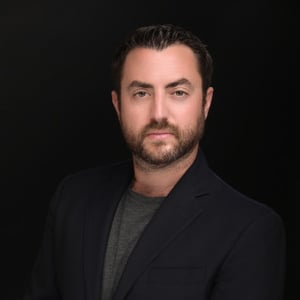
Newsweek Senior Editor-at-Large, Syndicated Columnist, Host of "The Josh Hammer Show," Article III Project Senior Counsel, Newsweek, Salem Media, Article III Project, David Horowitz Freedom Center
Josh Hammer is the senior editor-at-large of Newsweek and host of "The Josh Hammer Show," a podcast, a syndicated radio show, and TV program on Salem News Channel. A syndicated columnist through Creators Syndicate, Josh is a frequent pundit and essayist on political, legal, and cultural issues. He is also senior counsel for the Article III Project and Internet Accountability Project, as well as a Shillman Fellow with the David Horowitz Freedom Center and a fellow with the Palm Beach Freedom Institute.
An outspoken conservative, Josh opines on conservative intellectual trends, contemporary domestic and foreign policy debates, constitutional and legal issues, and the intersection of law, politics and culture. He has been published by many leading outlets, including the Los Angeles Times, the New York Post, Daily Mail, Newsweek, the Claremont Review of Books, National Affairs, American Affairs, The New Criterion, The National Interest, National Review, RealClearPolitics, First Things, City Journal, Public Discourse, Law & Liberty, Tablet Magazine, Deseret Magazine, Compact Magazine, Chronicles Magazine, The Spectator, The American Mind, The American Conservative, The European Conservative, American Greatness, American Compass, The Federalist, Blaze Media, TomKlingenstein.com, Townhall, The Daily Wire, The Daily Signal, The Daily Caller, The Epoch Times, Anchoring Truths, Fortune, Fox Business, The Jerusalem Post, The Times of Israel, The Forward, Jewish Telegraphic Agency and the Jewish Journal. He has also had legal scholarship published by the Harvard Journal of Law & Public Policy and the University of St. Thomas Law Journal.
Josh is a college campus speaker through Young America's Foundation and the Intercollegiate Studies Institute, and a law school campus speaker through the Federalist Society. Prior to Newsweek and The Daily Wire, where he was an editor, Josh worked at Kirkland & Ellis LLP and clerked for the Hon. James C. Ho on the U.S. Court of Appeals for the Fifth Circuit. Josh has also served as a John Marshall Fellow with the Claremont Institute and as a Fellow with the James Wilson Institute. He is the former host of "America on Trial with Josh Hammer," a one-season daily podcast with The First that covered the unique legal issues surrounding the 2024 presidential election.
Josh graduated from Duke University, where he majored in economics, and from the University of Chicago Law School. He lives in Florida, but remains an active member of the State Bar of Texas.
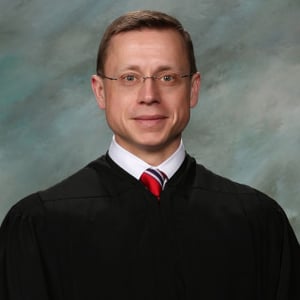
Judge, United States Court of Appeals, Fifth Circuit
Andrew Oldham is a Circuit Judge on the United States Court of Appeals for the Fifth Circuit. Before ascending to the bench, Judge Oldham served as General Counsel to Texas Governor Greg Abbott, where he advised the Governor on a range of issues under federal and state law and managed litigation in which the Governor was an interested party. Before that he served as Deputy Solicitor General for the State of Texas, where he represented Texas in federal courts across the country, including twice before the United States Supreme Court. Before moving to Texas, Judge Oldham was an attorney at Kellogg Hansen Todd Figel & Frederick in Washington, D.C. His practice focused on appellate litigation in federal courts of appeals throughout the country. Before entering private practice, Judge Oldham served as a law clerk to Justice Samuel A. Alito, Jr., at the Supreme Court of the United States and to Judge David B. Sentelle of the U.S. Court of Appeals for the District of Columbia Circuit. He also worked as an attorney-adviser in the Office of Legal Counsel at the U.S. Department of Justice from 2006 to 2008. Judge Oldham earned a B.A. from the University of Virginia with highest honors, a Truman Scholarship for graduate school, an M. Phil., first class (with distinction), from Cambridge University, and a J.D., magna cum laude, from Harvard Law School.

Professor, University of Minnesota Law School
Ilan Wurman is the Julius E. Davis Professor of Law at the University of Minnesota, where he teaches administrative law and constitutional law. He previously taught at Arizona State University. He writes primarily on the Fourteenth Amendment, administrative law, separation of powers, and constitutionalism. His academic writing has appeared in the Yale Law Journal, the Stanford Law Review, the University of Chicago Law Review, the University of Pennsylvania Law Review, the Virginia Law Review, the Duke Law Journal, the Minnesota Law Review, the Notre Dame Law Review, and the Texas Law Review among other journals.
Professor Wurman is the author of the new book The Constitution of 1789: A New Introduction (Cambridge 2026). His previous books include A Debt Against the Living: An Introduction to Originalism (Cambridge 2017), and The Second Founding: An Introduction to the Fourteenth Amendment (Cambridge 2020). He is also the author of the casebook, Administrative Law Theory and Fundamentals: An Integrated Approach (Foundation Press 3d ed. 2025).
Professor Wurman practices law with the firm Tully Bailey. He has litigated a variety of administrative law and constitutional law cases, including cases involving COVID-19 restrictions, transmission lines, and Appointments Clause challenges. He also devised winning public nuisance theories to force city governments to address the increasingly challenging public camping crises throughout the country.
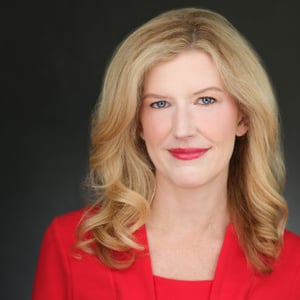
Justice, Texas Fifteenth District Court of Appeals
April Farris was appointed to the Fifteenth Court of Appeals on September 1 of 2024. April previously served on the First Court of Appeals after being appointed in 2021 and elected in 2022.
Before joining the Court, April was a partner at Yetter Coleman LLP, where she handled complex appellate litigation for energy, technology, and government clients. While in private practice, she was recognized in appellate law by Law360, Best Lawyers in America, and Thompson Reuters' Super Lawyers. In 2020, she was one of five attorneys in the nation to be named a Law360 appellate Rising Star, an honor reserved for lawyers under 40.
April previously served as an Assistant Solicitor General for the State of Texas, handling appeals for various Texas agencies. She is a former councilmember for the Texas State Bar's Appellate Section and a current councilmember for the Civil Rights & Civil Liberties Section. She serves as a trustee for the Texas Supreme Court Historical Association, and she is on the board of the Garland R. Walker Inn of Court in Houston. She is a member of the State Bar of Texas Pattern Jury Charge Oversight Committee, and she is on the editorial board of The Advocate. In 2022 and 2023, she was a guest instructor for Harvard Law School's Introduction to Trial Advocacy Program. She taught Origins of the Federal Constitution with Judge Charles Eskridge at the University of Texas School of Law in 2025, and she previously taught First Amendment at South Texas College of Law.
April clerked for Judge Jennifer Walker Elrod on the U.S. Court of Appeals for the Fifth Circuit. She graduated from Harvard Law School cum laude in 2009, and she earned her bachelor's degree summa cum laude from Abilene Christian University in 2006. She was named ACU's Young Alumnus of the Year for 2025. She enjoys spending time with her husband and children, tennis, and theology.
Frank Buckley is a Foundation Professor at George Mason University School of Law, where he has taught since 1989. Before then, he was a visiting Olin Fellow at the University of Chicago Law School. He has also taught at McGill Law School in Montreal, the Sorbonne (Paris II),and Sciences Po in Paris. His most recent books are The American Illness (Yale 2013), Fair Governance (Oxford 2009), Just Exchange (Routledge 2005) and The Morality of Laughter (Michigan 2003). His The Once and Future King will be published by Encounter Books in Spring 2014. He is a senior editor of The American Spectator. He lives in Alexandria VA with his wife, Esther.
Newsweek Senior Editor-at-Large, Syndicated Columnist, Host of "The Josh Hammer Show," Article III Project Senior Counsel, Newsweek, Salem Media, Article III Project, David Horowitz Freedom Center
Josh Hammer is the senior editor-at-large of Newsweek and host of "The Josh Hammer Show," a podcast, a syndicated radio show, and TV program on Salem News Channel. A syndicated columnist through Creators Syndicate, Josh is a frequent pundit and essayist on political, legal, and cultural issues. He is also senior counsel for the Article III Project and Internet Accountability Project, as well as a Shillman Fellow with the David Horowitz Freedom Center and a fellow with the Palm Beach Freedom Institute.
An outspoken conservative, Josh opines on conservative intellectual trends, contemporary domestic and foreign policy debates, constitutional and legal issues, and the intersection of law, politics and culture. He has been published by many leading outlets, including the Los Angeles Times, the New York Post, Daily Mail, Newsweek, the Claremont Review of Books, National Affairs, American Affairs, The New Criterion, The National Interest, National Review, RealClearPolitics, First Things, City Journal, Public Discourse, Law & Liberty, Tablet Magazine, Deseret Magazine, Compact Magazine, Chronicles Magazine, The Spectator, The American Mind, The American Conservative, The European Conservative, American Greatness, American Compass, The Federalist, Blaze Media, TomKlingenstein.com, Townhall, The Daily Wire, The Daily Signal, The Daily Caller, The Epoch Times, Anchoring Truths, Fortune, Fox Business, The Jerusalem Post, The Times of Israel, The Forward, Jewish Telegraphic Agency and the Jewish Journal. He has also had legal scholarship published by the Harvard Journal of Law & Public Policy and the University of St. Thomas Law Journal.
Josh is a college campus speaker through Young America's Foundation and the Intercollegiate Studies Institute, and a law school campus speaker through the Federalist Society. Prior to Newsweek and The Daily Wire, where he was an editor, Josh worked at Kirkland & Ellis LLP and clerked for the Hon. James C. Ho on the U.S. Court of Appeals for the Fifth Circuit. Josh has also served as a John Marshall Fellow with the Claremont Institute and as a Fellow with the James Wilson Institute. He is the former host of "America on Trial with Josh Hammer," a one-season daily podcast with The First that covered the unique legal issues surrounding the 2024 presidential election.
Josh graduated from Duke University, where he majored in economics, and from the University of Chicago Law School. He lives in Florida, but remains an active member of the State Bar of Texas.
Judge, United States Court of Appeals, Fifth Circuit
Andrew Oldham is a Circuit Judge on the United States Court of Appeals for the Fifth Circuit. Before ascending to the bench, Judge Oldham served as General Counsel to Texas Governor Greg Abbott, where he advised the Governor on a range of issues under federal and state law and managed litigation in which the Governor was an interested party. Before that he served as Deputy Solicitor General for the State of Texas, where he represented Texas in federal courts across the country, including twice before the United States Supreme Court. Before moving to Texas, Judge Oldham was an attorney at Kellogg Hansen Todd Figel & Frederick in Washington, D.C. His practice focused on appellate litigation in federal courts of appeals throughout the country. Before entering private practice, Judge Oldham served as a law clerk to Justice Samuel A. Alito, Jr., at the Supreme Court of the United States and to Judge David B. Sentelle of the U.S. Court of Appeals for the District of Columbia Circuit. He also worked as an attorney-adviser in the Office of Legal Counsel at the U.S. Department of Justice from 2006 to 2008. Judge Oldham earned a B.A. from the University of Virginia with highest honors, a Truman Scholarship for graduate school, an M. Phil., first class (with distinction), from Cambridge University, and a J.D., magna cum laude, from Harvard Law School.
Professor, University of Minnesota Law School
Ilan Wurman is the Julius E. Davis Professor of Law at the University of Minnesota, where he teaches administrative law and constitutional law. He previously taught at Arizona State University. He writes primarily on the Fourteenth Amendment, administrative law, separation of powers, and constitutionalism. His academic writing has appeared in the Yale Law Journal, the Stanford Law Review, the University of Chicago Law Review, the University of Pennsylvania Law Review, the Virginia Law Review, the Duke Law Journal, the Minnesota Law Review, the Notre Dame Law Review, and the Texas Law Review among other journals.
Professor Wurman is the author of the new book The Constitution of 1789: A New Introduction (Cambridge 2026). His previous books include A Debt Against the Living: An Introduction to Originalism (Cambridge 2017), and The Second Founding: An Introduction to the Fourteenth Amendment (Cambridge 2020). He is also the author of the casebook, Administrative Law Theory and Fundamentals: An Integrated Approach (Foundation Press 3d ed. 2025).
Professor Wurman practices law with the firm Tully Bailey. He has litigated a variety of administrative law and constitutional law cases, including cases involving COVID-19 restrictions, transmission lines, and Appointments Clause challenges. He also devised winning public nuisance theories to force city governments to address the increasingly challenging public camping crises throughout the country.
Justice, Texas Fifteenth District Court of Appeals
April Farris was appointed to the Fifteenth Court of Appeals on September 1 of 2024. April previously served on the First Court of Appeals after being appointed in 2021 and elected in 2022.
Before joining the Court, April was a partner at Yetter Coleman LLP, where she handled complex appellate litigation for energy, technology, and government clients. While in private practice, she was recognized in appellate law by Law360, Best Lawyers in America, and Thompson Reuters' Super Lawyers. In 2020, she was one of five attorneys in the nation to be named a Law360 appellate Rising Star, an honor reserved for lawyers under 40.
April previously served as an Assistant Solicitor General for the State of Texas, handling appeals for various Texas agencies. She is a former councilmember for the Texas State Bar's Appellate Section and a current councilmember for the Civil Rights & Civil Liberties Section. She serves as a trustee for the Texas Supreme Court Historical Association, and she is on the board of the Garland R. Walker Inn of Court in Houston. She is a member of the State Bar of Texas Pattern Jury Charge Oversight Committee, and she is on the editorial board of The Advocate. In 2022 and 2023, she was a guest instructor for Harvard Law School's Introduction to Trial Advocacy Program. She taught Origins of the Federal Constitution with Judge Charles Eskridge at the University of Texas School of Law in 2025, and she previously taught First Amendment at South Texas College of Law.
April clerked for Judge Jennifer Walker Elrod on the U.S. Court of Appeals for the Fifth Circuit. She graduated from Harvard Law School cum laude in 2009, and she earned her bachelor's degree summa cum laude from Abilene Christian University in 2006. She was named ACU's Young Alumnus of the Year for 2025. She enjoys spending time with her husband and children, tennis, and theology.
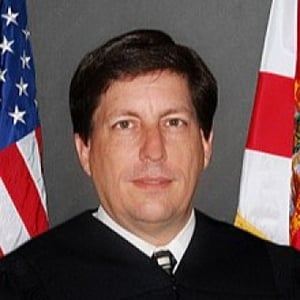
Judge, Florida Second District Court of Appeal
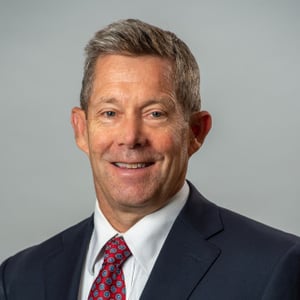
Chief Judge, United States Court of Appeals, Sixth Circuit
JEFFREY S. SUTTON is the Chief Judge of the United States Court of Appeals for the Sixth Circuit. He has served as Chair of the Federal Judicial Conference Committee on Rules of Practice and Procedure, Chair of the Advisory Committee on Appellate Rules, and Chair of the Supreme Court Fellows Commission. He currently serves as Chair of the Executive Committee of the Judicial Conference of the United States. Since 1993, Chief Judge Sutton has been an adjunct professor at The Ohio State University College of Law, where he teaches seminars on State Constitutional Law, the United States Supreme Court, and Appellate Advocacy. He also teaches a class on State Constitutional Law at Harvard Law School. Among other publications, he is the author of Who Decides? States as Laboratories of Constitutional Experimentation and 51 Imperfect Solutions: States and the Making of American Constitutional Law. He is the co-author of a casebook, State Constitutional Law: The Modern Experience, as well as The Law of Judicial Precedent. He is also the co-editor of The Essential Scalia: On the Constitution, the Courts, and the Rule of Law. In 2006, Chief Judge Sutton was elected to the American Law Institute, and in 2017 he was elected to its Council.
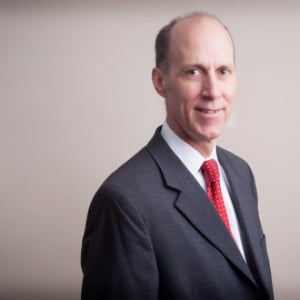
Distinguished Senior Fellow and Antonin Scalia Chair in Constitutional Studies, Ethics and Public Policy Center
Edward Whelan is a Distinguished Senior Fellow of the Ethics and Public Policy Center and holds EPPC’s Antonin Scalia Chair in Constitutional Studies. He is the longest-serving President in EPPC’s history, having held that position from March 2004 through January 2021.
Mr. Whelan directs EPPC’s program on The Constitution, the Courts, and the Culture. His areas of expertise include constitutional law and the judicial confirmation process. As a contributor to National Review Online’s Bench Memos blog, he has been a leading commentator on nominations to the Supreme Court and the lower courts and on issues of constitutional law. He has written essays and op-eds for leading newspapers—including the Wall Street Journal, the New York Times, and the Washington Post—opinion journals, and academic symposia and law reviews. The National Law Journal has named Mr. Whelan among its “Champions and Visionaries” in the practice of law in D.C.
Mr. Whelan is co-editor of three volumes of Supreme Court Justice Antonin Scalia’s work: Scalia Speaks: Reflections on Law, Faith, and Life Well Lived (Crown Forum, 2017), a New York Times bestselling collection of speeches by Justice Scalia; On Faith: Lessons from an American Believer (Crown Forum, 2019), a collection of Justice Scalia’s writings on faith and religion; and The Essential Scalia: On the Constitution, the Courts, and the Rule of Law (Crown Forum, 2020), a collection of Justice Scalia’s views on legal issues.
Mr. Whelan, a lawyer and a former law clerk to Justice Scalia, has served in positions of responsibility in all three branches of the federal government. From just before the terrorist attacks of September 11, 2001, until joining EPPC in 2004, Mr. Whelan was the Principal Deputy Assistant Attorney General for the Office of Legal Counsel in the U.S. Department of Justice. In that capacity, he advised the White House Counsel’s Office, the Attorney General and other senior DOJ officials, and departments and agencies throughout the executive branch on difficult and sensitive legal questions. Mr. Whelan previously served on Capitol Hill as General Counsel to the U.S. Senate Committee on the Judiciary. In addition to clerking for Justice Scalia, he was a law clerk to Judge J. Clifford Wallace of the U.S. Court of Appeals for the Ninth Circuit.
In 1981 Mr. Whelan graduated with honors from Harvard College and was inducted into Phi Beta Kappa. He received his J.D. magna cum laude in 1985 from Harvard Law School, where he was a member of the Board of Editors of the Harvard Law Review.
For more on Mr. Whelan’s background, see this interview.

Professor Emeritus, Paul M. Hebert Law Center, Louisiana State University
In memoriam
Dr. John Baker is Professor Emeritus of Law, and previously the Dale E. Bennett Professor of Law, at Louisiana State University Law School. He is currently Visiting Professor at Peking University School of Transnational Law (via Zoom) and has been Visiting Professor at The Center for the Constitution, Georgetown Law School (2013-2020). He has also been a Visiting Fellow at Oriel College, the University of Oxford (2012-2014) and taught at Blackfriars Hall, Oxford in 2014. Dr. Baker has also been an adjunct Fellow at the Heritage Foundation (Spring, 2008) and a Distinguished Scholar at the Catholic University of America Law School (2011-12). He has taught at Tulane Law School, George Mason Law School, Pepperdine Law School, New York Law School, Hong Kong University, and the University of Dallas, School of Management and also taught and/or lectured in 17 foreign countries. Notable among his foreign visits are the
following: Visiting Professor at the University of Lyon III (France) (1999-2011); Visiting Professor at the Universidad de los Andes, Chile (2012), as a Fulbright Specialist (2006); and a Fulbright Scholar at various universities in the Philippines. Dr. Baker received his J.D., with honors, from the University of Michigan Law School and his B.A., magna cum laude, from the University of Dallas. He also earned a Ph.D. in Political Thought from the University of London. Baker has taught over a dozen different subjects, mostly courses in public law. His main areas of interest are Constitutional Law (particularly federalism and separation of powers), Criminal Law, Anti-Terrorism Law, International Law, Health Care Law, Mediation, and Comparative Law.
In addition to law review articles and book chapters, Dr. Baker’s academic publications include Hall's Criminal Law: Cases and Materials (with Benson, Force and George; 5th ed. Michie, 1993); An Introduction to the Law of the United States (ed. with Levasseur; University Press of America, 1992). He has also published on Forbes.com, FoxNews.com, in The Washington Times, and a number of times in The Wall Street Journal. He argues in federal court, including two oral arguments in the U.S. Supreme Court. For many years, he co-taught courses for the Federalist Society on separation of powers with the late Supreme Court Justice Antonin Scalia. In September 2016, he co-taught a Supreme Court seminar in China with Justice Samuel Alito. Following law school, he served as a law clerk in federal district court and as an assistant district attorney in New Orleans before joining LSU in 1975. While a professor, he has been as a consultant to USAID, USIA (since rolled into the State Department), the Justice Department, the U.S. Senate Judiciary Subcommittee on Separation of Powers, and the Office of Planning in the White House. He served on an ABA Task Force which issued the report, The Federalization of Crime (1998) and later as a consultant to the “Bi-Partisan Task Force on the Over- federalization of Crime” (2012-2014) created by the U.S. House Judiciary Subcommittee on Crime. Dr. Baker was a co-founder of the first iteration (1995) of Stratfor Inc., a global intelligence agency. He co-authored its first book: The Intelligence Edge (with Friedman, Friedman and Chapman; Crown Books/Random House 1997). In 2022, he began a short, weekly video podcast available on YouTube and Rumble, The Baker Brief.
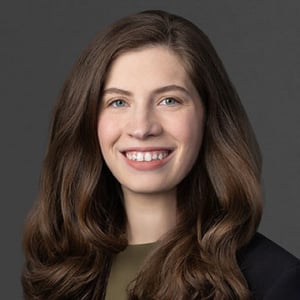
Associate, Kirkland & Ellis LLP
Rachel Daley is a litigation associate at Kirkland & Ellis LLP. Her practice focuses on drafting dispositive motions and appellate briefs in federal courts around the country. Rachel previously served as a law clerk to Justice Neil M. Gorsuch on the Supreme Court of the United States, Judge Amul R. Thapar on the U.S. Court of Appeals for the Sixth Circuit, and Judge Andrew S. Oldham on the U.S. Court of Appeals for the Fifth Circuit. Rachel is a graduate of the University of Virginia School of Law. She served as president of the law school's Federalist Society chapter in 2021, when UVA received the Federalist Society's award for Chapter of the Year. She lives in Austin, Texas with her husband, Kevin, and their two daughters.
Judge, United States Court of Appeals, Fifth Circuit
Andrew Oldham is a Circuit Judge on the United States Court of Appeals for the Fifth Circuit. Before ascending to the bench, Judge Oldham served as General Counsel to Texas Governor Greg Abbott, where he advised the Governor on a range of issues under federal and state law and managed litigation in which the Governor was an interested party. Before that he served as Deputy Solicitor General for the State of Texas, where he represented Texas in federal courts across the country, including twice before the United States Supreme Court. Before moving to Texas, Judge Oldham was an attorney at Kellogg Hansen Todd Figel & Frederick in Washington, D.C. His practice focused on appellate litigation in federal courts of appeals throughout the country. Before entering private practice, Judge Oldham served as a law clerk to Justice Samuel A. Alito, Jr., at the Supreme Court of the United States and to Judge David B. Sentelle of the U.S. Court of Appeals for the District of Columbia Circuit. He also worked as an attorney-adviser in the Office of Legal Counsel at the U.S. Department of Justice from 2006 to 2008. Judge Oldham earned a B.A. from the University of Virginia with highest honors, a Truman Scholarship for graduate school, an M. Phil., first class (with distinction), from Cambridge University, and a J.D., magna cum laude, from Harvard Law School.
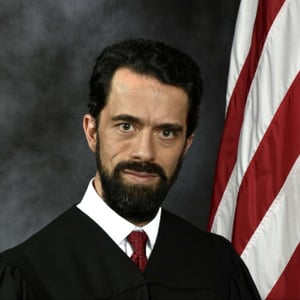
Judge, United States Court of Appeals, Third Circuit
Stephanos Bibas is a judge on the U.S. Court of Appeals for the Third Circuit. Judge Bibas was previously a professor of law and criminology at the University of Pennsylvania Law School. As director of the Penn Law Supreme Court Clinic, he argued six cases before the Supreme Court of the United States and filed briefs in dozens of others. He graduated summa cum laude and Phi Beta Kappa from Columbia University in 1989 with a B.A. in political theory and from Oxford University in 1991 with a B.A. in jurisprudence. He then earned his J.D. from Yale Law School in 1994.
After graduating from Yale Law, Judge Bibas clerked for Judge Patrick Higginbotham of the U.S. Court of Appeals for the Fifth Circuit and Justice Anthony Kennedy on the Supreme Court and was a litigation associate at Covington & Burling LLP in Washington, D.C. Thereafter, Judge Bibas served as an Assistant U.S. Attorney in the Southern District of New York, where he successfully prosecuted the world’s leading expert in Tiffany stained glass for hiring a grave robber to steal priceless Tiffany windows from cemeteries. Before his tenure at Penn Law, Judge Bibas taught at the University of Chicago Law School and the University of Iowa College of Law and was a research fellow at Yale Law School. He has published two books and seventy scholarly articles.
Chief Judge, United States Court of Appeals, Sixth Circuit
JEFFREY S. SUTTON is the Chief Judge of the United States Court of Appeals for the Sixth Circuit. He has served as Chair of the Federal Judicial Conference Committee on Rules of Practice and Procedure, Chair of the Advisory Committee on Appellate Rules, and Chair of the Supreme Court Fellows Commission. He currently serves as Chair of the Executive Committee of the Judicial Conference of the United States. Since 1993, Chief Judge Sutton has been an adjunct professor at The Ohio State University College of Law, where he teaches seminars on State Constitutional Law, the United States Supreme Court, and Appellate Advocacy. He also teaches a class on State Constitutional Law at Harvard Law School. Among other publications, he is the author of Who Decides? States as Laboratories of Constitutional Experimentation and 51 Imperfect Solutions: States and the Making of American Constitutional Law. He is the co-author of a casebook, State Constitutional Law: The Modern Experience, as well as The Law of Judicial Precedent. He is also the co-editor of The Essential Scalia: On the Constitution, the Courts, and the Rule of Law. In 2006, Chief Judge Sutton was elected to the American Law Institute, and in 2017 he was elected to its Council.
Distinguished Senior Fellow and Antonin Scalia Chair in Constitutional Studies, Ethics and Public Policy Center
Edward Whelan is a Distinguished Senior Fellow of the Ethics and Public Policy Center and holds EPPC’s Antonin Scalia Chair in Constitutional Studies. He is the longest-serving President in EPPC’s history, having held that position from March 2004 through January 2021.
Mr. Whelan directs EPPC’s program on The Constitution, the Courts, and the Culture. His areas of expertise include constitutional law and the judicial confirmation process. As a contributor to National Review Online’s Bench Memos blog, he has been a leading commentator on nominations to the Supreme Court and the lower courts and on issues of constitutional law. He has written essays and op-eds for leading newspapers—including the Wall Street Journal, the New York Times, and the Washington Post—opinion journals, and academic symposia and law reviews. The National Law Journal has named Mr. Whelan among its “Champions and Visionaries” in the practice of law in D.C.
Mr. Whelan is co-editor of three volumes of Supreme Court Justice Antonin Scalia’s work: Scalia Speaks: Reflections on Law, Faith, and Life Well Lived (Crown Forum, 2017), a New York Times bestselling collection of speeches by Justice Scalia; On Faith: Lessons from an American Believer (Crown Forum, 2019), a collection of Justice Scalia’s writings on faith and religion; and The Essential Scalia: On the Constitution, the Courts, and the Rule of Law (Crown Forum, 2020), a collection of Justice Scalia’s views on legal issues.
Mr. Whelan, a lawyer and a former law clerk to Justice Scalia, has served in positions of responsibility in all three branches of the federal government. From just before the terrorist attacks of September 11, 2001, until joining EPPC in 2004, Mr. Whelan was the Principal Deputy Assistant Attorney General for the Office of Legal Counsel in the U.S. Department of Justice. In that capacity, he advised the White House Counsel’s Office, the Attorney General and other senior DOJ officials, and departments and agencies throughout the executive branch on difficult and sensitive legal questions. Mr. Whelan previously served on Capitol Hill as General Counsel to the U.S. Senate Committee on the Judiciary. In addition to clerking for Justice Scalia, he was a law clerk to Judge J. Clifford Wallace of the U.S. Court of Appeals for the Ninth Circuit.
In 1981 Mr. Whelan graduated with honors from Harvard College and was inducted into Phi Beta Kappa. He received his J.D. magna cum laude in 1985 from Harvard Law School, where he was a member of the Board of Editors of the Harvard Law Review.
For more on Mr. Whelan’s background, see this interview.

Equality vs. Discretion in Sentencing [Archive Collection]
Stephen G. Breyer, Frank H. Easterbrook, Terence F. MacCarthy, Ilene H. Nagel
On September 9-10, 1988, The Federalist Society hosted its second annual National Lawyers Convention at...
The Essential Scalia: On the Constitution, the Courts, and the Rule of Law
Tampa Bay Lawyers Chapter - Online Event
Feddie Night Fights: The Federalist/Anti-Federalist Debate
University of Virginia Student Chapter
The Essential Scalia: On the Constitution, the Courts, and the Rule of Law - Philadelphia
Philadelphia Lawyers Chapter - Online Event
Supreme Court Review
Los Angeles Lawyers Chapter
“Better Than Nothing”: Supreme Court in Mazars Devises a New Four-Factor Test for Congressional Subpoenas of a President’s Personal Documents
On July 9, 2020, the Supreme Court delivered its long-awaited opinions in two cases concerning...
Fellowship of Possible Interest
The Fund for American Studies (TFAS) Summer Law Fellowship is a highly sought after program for those...
Fourth Circuit (Over Dissent): No Taking When Maryland Outlawed "Rapid Fire Trigger Activators"
Maryland outlawed "rapid fire trigger activators" ("devices that, when attached to a firearm, increase its...
The Future of Originalism: A Federalist Society Zoom Dialogue
Frank H. Buckley, Josh Hammer, Andrew Oldham, Ilan Wurman, April Farris
On May 27, 2020, the Federalist Society's Houston and Austin lawyers chapters co-hosted a Zoom...
The Future of Originalism: A Federalist Society Zoom Dialogue
Frank H. Buckley, Josh Hammer, Andrew Oldham, Ilan Wurman, April Farris
On May 27, 2020, the Federalist Society's Houston and Austin lawyers chapters co-hosted a Zoom...