




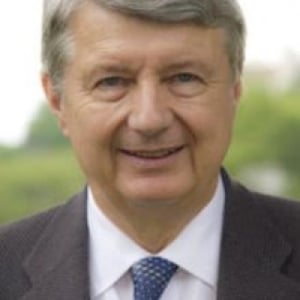
Tara Leigh Grove is the Vinson & Elkins Chair in Law at the University of Texas School of Law. Grove graduated summa cum laude from Duke University and magna cum laude from Harvard Law School, where she served as the Supreme Court Chair of the Harvard Law Review. Grove clerked for Judge Emilio Garza on the U.S. Court of Appeals for the Fifth Circuit, and then spent four years as an attorney for the U.S. Department of Justice, Civil Division, Appellate Staff, where she argued fifteen cases in the courts of appeals.
Grove’s research focuses on the federal judiciary, interpretive theory, and the constitutional separation of powers. She has published with such prestigious law journals as the Harvard Law Review, the Yale Law Journal, the Columbia Law Review, the University of Pennsylvania Law Review, the New York University Law Review, the University of Chicago Law Review, the Virginia Law Review, the Texas Law Review, the Cornell Law Review, the Northwestern University Law Review, and the Vanderbilt Law Review. Grove has received awards for both her research and her teaching.
In 2021, Grove served on the Presidential Commission on the Supreme Court of the United States, a bipartisan commission created by President Biden and charged with examining proposals for Supreme Court reform. Since 2022, Grove has worked on the Princeton Initiative on Reclaiming the Constitutional Powers of Congress, which brings together former members of Congress, political scientists, and law professors. Grove serves as the Co-Chair of the section on the Appointments Process for the Princeton Initiative. Grove is a co-author of Low & Jeffries' Federal Courts and the Law of Federal-State Relations, a leading federal courts casebook, and she has served as the Chair of the Federal Courts Section of the Association of American Law Schools. Grove has been a visiting professor at both Harvard Law School and Northwestern Pritzker School of Law.






15 Years on the Least Dangerous Branch: A Fireside Chat with Judge Elrod
Stanford, CALitigation Update: Gonzalez v. Trevino – When the Courts Wrestle with Qualified Immunity
Anya Bidwell
Gonzalez v. Trevino involves an alleged retaliatory conspiracy of city officials from Castle Hills, Texas...
Litigation Update: Gonzalez v. Trevino – When the Courts Wrestle with Qualified Immunity
Anya Bidwell
Gonzalez v. Trevino involves an alleged retaliatory conspiracy of city officials from Castle Hills, Texas...
Litigation Update: Gonzalez v. Trevino – When the Courts Wrestle with Qualified Immunity
Dubin v. United States - Post-Argument SCOTUScast
John C. Richter
On February 27, 2023, the United States Supreme Court heard oral argument in Dubin v. United...
Panel V: Is Judicial Review Democratic?
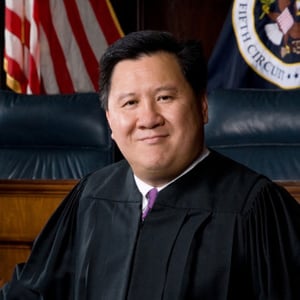
Tara Leigh Grove, James C. Ho, Lawrence Sager, Keith E. Whittington
Judicial Review has been criticized throughout American history as undemocratic, creating what has been known...
Panel V: Is Judicial Review Democratic?
Tara Leigh Grove, James C. Ho, Lawrence Sager, Keith E. Whittington
Judicial Review has been criticized throughout American history as undemocratic, creating what has been known...
Panel IV: Does Federalism Lead to a More United or Disunited Democracy?
Jud Campbell, Michael S. Greve, Andrew Oldham, Ilya Somin
The United States is constitutionally not one, but fifty-one, democracies. How can they all fit...
Panel IV: Does Federalism Lead to a More United or Disunited Democracy?
Jud Campbell, Michael S. Greve, Andrew Oldham, Ilya Somin
The United States is constitutionally not one, but fifty-one, democracies. How can they all fit...
Panel I: What is Democracy?
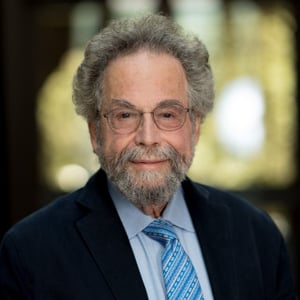
J. Joel Alicea, Bruce Cain, Edith H. Jones, Daniel H. Lowenstein, Stephen I. Vladeck
There has been much discussion about threats to democracy over the past year. But conceptions...