
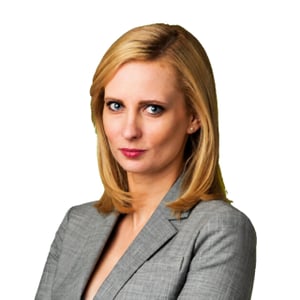
Executive Director, Committee for Justice
Ashley Baker is Executive Director of the Committee for Justice and founder of the Alliance on Antitrust coalition. Her work focuses on antitrust law, technology regulation, administrative-agency authority, the Supreme Court, and judicial nominations. She closely follows the Federal Trade Commission and the Department of Justice’s Antitrust Division, with particular attention to merger review, agency procedure, and the effects of regulation on American innovation and competitiveness. She is also founder of the Alliance on Antitrust Coalition.
Ashley has testified before the United States Senate on antitrust law. Her writing has appeared in Fox News, USA Today, The Boston Globe, The Hill, RealClearPolitics, The American Spectator, and other national publications. She also provides policy analysis through congressional testimony and correspondence, regulatory comments, and public commentary.
Ashley serves on the Federalist Society’s Regulatory Transparency Project and Antitrust and Consumer Protection Practice Group Executive Committee. She is also active in the Republican National Lawyers Association and has spoken on the Supreme Court and the federal judiciary. An authority on the judicial-confirmation process, she worked closely on the successful confirmation efforts for Justices Neil Gorsuch and Brett Kavanaugh, as well as multiple federal appellate judges.
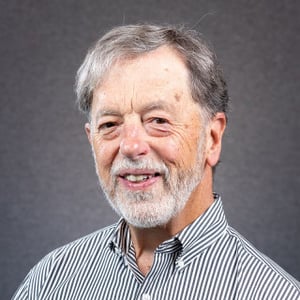
Professor of Law, Seattle University School of Law
John B. Kirkwood is a Professor at Seattle University School of Law and a member of the American Law Institute. The Supreme Court has quoted his work and four of his articles have won national awards for pathbreaking antitrust scholarship. He has published in the Florida Law Review, the Notre Dame Law Review, the Boston University Law Review, and many other journals and books. He has testified before Congress and at the hearings on predatory pricing held by the FTC and Justice Department. The New York Times, USA Today, The Seattle Times, and numerous other print and broadcast media have quoted him. He speaks often at antitrust conferences, consults on antitrust cases, and has drafted professors' amicus briefs in high-profile antitrust appeals. He is the immediate past Chair of the Antitrust and Economic Regulation Section of the Association of American Law Schools and an Advisor to the American Antitrust Institute and the Institute of Consumer Antitrust Studies. He was Co-Editor of Research in Law and Economics for eight years. After graduating from Yale magna cum laude and with Honors of Exceptional Distinction in Economics, he received a master's degree in public policy and a law degree from Harvard, both with honors. He set up the FTC's first antitrust policy planning office and later managed the Evaluation Office and the Premerger Notification Program. After transferring to the FTC's Northwest Regional Office, he led cases and investigations. At Seattle University, he has received the Outstanding Faculty Award and the Dean's Medal.
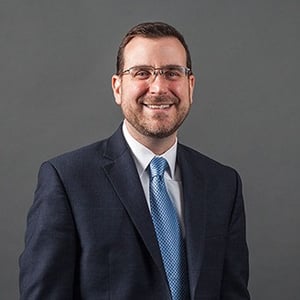
Professor of Law, Antonin Scalia Law School, George Mason University
Adam Mossoff is Professor of Law at Antonin Scalia Law School, George Mason University. He has published extensively on why patents, copyrights, and other intellectual property rights have been—and should be—legally secured to innovators and creators as property rights. His scholarship has been relied on by the United States Supreme Court, by lower federal courts, and by U.S. federal agencies. He has been invited to testify numerous times before the U.S. Senate and the House of Representatives on intellectual property legislation. His writings on intellectual property policy have also appeared in the Wall Street Journal, New York Times, Forbes, Investors Business Daily, and in other media outlets. His journal articles can be downloaded here.
Professor Mossoff is a longstanding member of the Executive Committee of the Intellectual Property Practice Group of the Federalist Society, on which he served as Chairperson from 2016-2018, and he is Chair of the Intellectual Property Working Group of the Regulatory Transparency Project of the Federalist Society. He is a Senior Fellow and Chair of the Forum for Intellectual Property at the Hudson Institute, a Visiting Intellectual Property Fellow at the Heritage Foundation, and a member of the Board of Directors of the Center for Intellectual Property Understanding. He is a member of the Intellectual Property Rights Policy Committee of ANSI and he has served as Chair and Vice-Chair of the Intellectual Property Committee of the IEEE-USA, on which he remains a member in good standing.
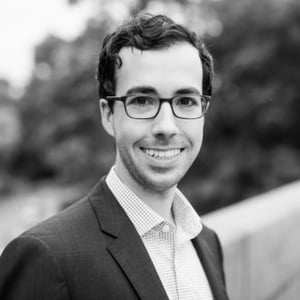
Senior Counsel, Becket Fund for Religious Liberty
Nick Reaves joined Becket in 2018. His practice centers on First Amendment appellate litigation. Nick has played a leading role in multiple religious freedom cases at the U.S. Supreme Court and has argued in federal appellate and trial courts across the country. He has represented individuals and organizations of many faith traditions—including Sikhs, Jews, Muslims, Hindus, Buddhists, and Christians—in their pursuit of the fundamental right to freely practice their religion.
In 2022, Nick was appointed as a Visiting Clinical Lecturer in Law at Yale Law School, where he co-directs Yale Law School’s Free Exercise Clinic. His scholarly work has been published in the Yale Law Journal Forum, the Harvard Journal of Law & Public Policy Per Curiam, the Virginia Journal of Social Policy & the Law, and the Notre Dame Law Review Reflection, among other leading legal journals. His writing has also been cited by the U.S. Supreme Court.
Recognized as a sought-after voice on religious freedom, Nick has spoken at institutions such as the University of Notre Dame, the University of Virginia, and Princeton Theological Seminary. He has also provided expert testimony before both the U.S. Commission on Civil Rights and the Equal Employment Opportunity Commission.
Before joining Becket, Nick practiced trial and appellate litigation as an associate at Jones Day and clerked for Chief Judge D. Brooks Smith on the U.S. Court of Appeals for the Third Circuit.
Nick earned his J.D. from the University of Virginia School of Law, where he served on the Managing Board of the Virginia Law Review and was elected to the Order of the Coif. He also graduated magna cum laude from the University of Notre Dame as a member of the Glynn Family Honors Program.
Paralegal, Becket
Matthew is a paralegal at the Becket Fund for Religious Liberty, where he's worked since 2022. He supports the attorney team with editing, legal research, and administrative duties.
Before Becket, Matthew’s legal experience included internships with the Federalist Society and the Champaign County Public Defender’s Office.
Matthew graduated from the University of Illinois Urbana-Champaign magna cum laude with a bachelor’s degree in Political Science with minors in Legal Studies and Philosophy. His senior honors thesis empirically evaluated the effects of state legislation on religious liberty litigation.
Outside of work, Matthew has continued studying philosophy, law, and policy. He is currently a Richard John Neuhaus Fellow with the Public Interest Fellowship. Previously, he participated in the Hertog Foundation’s The Supreme Court & American Politics cohort as a Fellow.
In his free time, Matthew enjoys volunteering at his parish, trips to the Library of Congress manuscript room, café hopping with a book in hand around the DMV, and training for the Chicago Marathon.
Shareholder & Co-Chair of the Workplace Policy Institute, Littler Mendelson P.C.
Alexander T. MacDonald advises employers on all aspects of the employment and labor landscape, focusing on emerging legislation and regulation. He has extensive experience advising businesses on worker classification, arbitration, the administrative and regulatory process, and the future of work. He frequently writes, publishes, and speaks on these subjects. His work has been cited by scholars and appellate courts. He is a recognized voice for the management perspective.
Alexander is a co-chair of the Workplace Policy Institute (WPI) team. With WPI, he advises employers on legislative, administrative, and regulatory developments at the state and federal level. He advocates for employers in the regulatory and administrative process. He also helps employers protect their businesses by understanding and anticipating cutting-edge legal developments.
Alexander also has extensive experience in traditional labor law. He represents management in all aspects of labor-management relations, including unfair labor practice charges, grievance arbitrations, representation elections, contract negotiations, and related litigation, including litigation in the U.S. courts of appeals.
Before joining Littler, Alexander served as the director, future of work, for a major technology company. He also worked in a national labor and employment law firm and a major public-sector general counsel’s office. He was a law clerk to the senior judges in the District of Columbia Court of Appeals.
He is also a veteran of the U.S. Air Force. He served in Operations Enduring Freedom and Iraqi Freedom. In law school, he graduated first in his class

Partner, Lewis Brisbois
Sarah E. Lang is a partner in the New York office of Lewis Brisbois and a member of the Appellate Practice. Ms. Lang has represented clients at all levels of state and federal courts, including the New York State Appellate Division, the Second Circuit Court of Appeals, and the U.S. Supreme Court. The primary focus of her practice is drafting and arguing substantive motions and appeals before the federal courts and New York’s trial and appellate courts in substantive areas including general liability, New York Labor Law, medical malpractice, premises liability, and rideshare and transportation matters, among others. She also has extensive experience representing clients, including religious institutions, in matters arising under Title VII, the First Amendment, RLUIPA, New York’s City and State Human Rights Laws, New York’s Religious Corporations Law, and New York’s Real Property Tax Law. This includes federal jury trial experience and providing preventive advice and counseling. Prior to joining the firm, Ms. Lang clerked on the United States Court of Appeals for the Eighth Circuit, as well as the United States District Court for the Eastern District of North Carolina. She also previously served as an Attorney Advisor for the United States Department of Education.
Deputy Assistant to the President for Economic Policy, The White House
Ryan Baasch serves as the Deputy Director of President Trump's National Economic Council (NEC), and as Deputy Assistant to the President on Economic Policy, where he focuses on cutting-edge technology issues at the frontier of AI regulation, space commercialization, and telecommunications networks. Before joining NEC, Ryan occupied multiple positions in the Texas Attorney General's office where he supervised all of the office's offensive civil litigation and maintained a heavy appellate caseload touching First Amendment and technology issues. Ryan began his career as a law clerk to Judge Karen LeCraft Henderson and spent five years at a large law firm in Washington D.C. and New York.
Independent Analyst, None
Allison Hayward most recently served as the Head of Case Selection at the Oversight Board. Previously, she was a Commissioner at the California Fair Political Practices Commission, a Board Member at the Office of Congressional Ethics, and an Assistant Professor of Law at George Mason University School of Law. She also previously worked as Chief of Staff and Counsel in the office of Federal Election Commission Commissioner Bradley A. Smith and practiced election law in California and in Washington DC.
In 1994-1995, Professor Hayward was a judicial clerk for the Honorable Danny J. Boggs, United States Court of Appeal for the Sixth Circuit.
She is a member of the State Bar of California and the District of Columbia Bar.
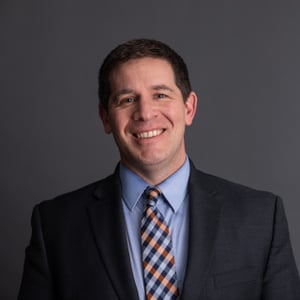
Vice President for Legal Strategy, Stand Together
Casey Mattox is Vice President for Legal Strategy at Stand Together and Senior Advisor at
Americans for Prosperity. In these roles he advocates for and creates strategies and
partnerships to ensure a constitutionally limited government that protects the civil liberties of all
Americans. Prior to joining Stand Together and AFP Casey’s legal career focused on defending
the First Amendment rights of students, faculty, healthcare workers and religious organizations.
Casey has a J.D. from Boston College School of Law and an undergraduate degree from the
University of Virginia. You can find him on Twitter at @CaseyMattox_ and on LinkedIn at
@Casey-Mattox-ST.
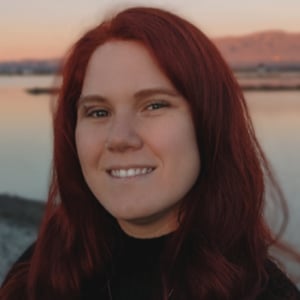
Legal Advocacy Counsel, Chamber of Progress
Jess Miers is Legal Advocacy Counsel at Chamber of Progress. As a lawyer and technologist, Jess primarily focuses on the intersection of law and the Internet. She is widely considered an expert on U.S. intermediary liability law and has written, spoken, and taught extensively about topics such as speech and Section 230, content moderation, intellectual property, and cyber crime. Jess is also currently an advisor to the Trust & Safety Professional Association, and an industry mentor for Santa Clara Law’s Tech Edge J.D. certificate program.
Jess joins Chamber of Progress from Google where she was a Senior Government Affairs & Public Policy Analyst. At Google, Jess oversaw the state and federal content policy portfolios. In addition to monitoring emerging U.S. content policy, Jess also worked closely with Google’s Litigation teams to influence the courts on key online speech issues, many of which are currently pending U.S. Supreme Court review.
Before law school, Jess received her Bachelor’s in Computer Science from George Mason University. She spent four years as a Software Engineer for a defense contractor in Northern Virginia. Throughout law school, Jess interned at Twitter, TechFreedom, The UCLA Technology Law and Policy Institute, and Google Trust & Safety. She also founded the SCU Internet Law Student Organization, with the goal of encouraging students to explore and pursue careers in Internet law and policy.
Jess currently resides in the heart of Silicon Valley in California. When she’s not advocating for online speech, Jess enjoys climbing peaks and exploring the many beautiful California coastal trails with her husband and her dog.
Deputy Assistant to the President for Economic Policy, The White House
Ryan Baasch serves as the Deputy Director of President Trump's National Economic Council (NEC), and as Deputy Assistant to the President on Economic Policy, where he focuses on cutting-edge technology issues at the frontier of AI regulation, space commercialization, and telecommunications networks. Before joining NEC, Ryan occupied multiple positions in the Texas Attorney General's office where he supervised all of the office's offensive civil litigation and maintained a heavy appellate caseload touching First Amendment and technology issues. Ryan began his career as a law clerk to Judge Karen LeCraft Henderson and spent five years at a large law firm in Washington D.C. and New York.
Independent Analyst, None
Allison Hayward most recently served as the Head of Case Selection at the Oversight Board. Previously, she was a Commissioner at the California Fair Political Practices Commission, a Board Member at the Office of Congressional Ethics, and an Assistant Professor of Law at George Mason University School of Law. She also previously worked as Chief of Staff and Counsel in the office of Federal Election Commission Commissioner Bradley A. Smith and practiced election law in California and in Washington DC.
In 1994-1995, Professor Hayward was a judicial clerk for the Honorable Danny J. Boggs, United States Court of Appeal for the Sixth Circuit.
She is a member of the State Bar of California and the District of Columbia Bar.
Vice President for Legal Strategy, Stand Together
Casey Mattox is Vice President for Legal Strategy at Stand Together and Senior Advisor at
Americans for Prosperity. In these roles he advocates for and creates strategies and
partnerships to ensure a constitutionally limited government that protects the civil liberties of all
Americans. Prior to joining Stand Together and AFP Casey’s legal career focused on defending
the First Amendment rights of students, faculty, healthcare workers and religious organizations.
Casey has a J.D. from Boston College School of Law and an undergraduate degree from the
University of Virginia. You can find him on Twitter at @CaseyMattox_ and on LinkedIn at
@Casey-Mattox-ST.
Legal Advocacy Counsel, Chamber of Progress
Jess Miers is Legal Advocacy Counsel at Chamber of Progress. As a lawyer and technologist, Jess primarily focuses on the intersection of law and the Internet. She is widely considered an expert on U.S. intermediary liability law and has written, spoken, and taught extensively about topics such as speech and Section 230, content moderation, intellectual property, and cyber crime. Jess is also currently an advisor to the Trust & Safety Professional Association, and an industry mentor for Santa Clara Law’s Tech Edge J.D. certificate program.
Jess joins Chamber of Progress from Google where she was a Senior Government Affairs & Public Policy Analyst. At Google, Jess oversaw the state and federal content policy portfolios. In addition to monitoring emerging U.S. content policy, Jess also worked closely with Google’s Litigation teams to influence the courts on key online speech issues, many of which are currently pending U.S. Supreme Court review.
Before law school, Jess received her Bachelor’s in Computer Science from George Mason University. She spent four years as a Software Engineer for a defense contractor in Northern Virginia. Throughout law school, Jess interned at Twitter, TechFreedom, The UCLA Technology Law and Policy Institute, and Google Trust & Safety. She also founded the SCU Internet Law Student Organization, with the goal of encouraging students to explore and pursue careers in Internet law and policy.
Jess currently resides in the heart of Silicon Valley in California. When she’s not advocating for online speech, Jess enjoys climbing peaks and exploring the many beautiful California coastal trails with her husband and her dog.
Executive Director, Committee for Justice
Ashley Baker is Executive Director of the Committee for Justice and founder of the Alliance on Antitrust coalition. Her work focuses on antitrust law, technology regulation, administrative-agency authority, the Supreme Court, and judicial nominations. She closely follows the Federal Trade Commission and the Department of Justice’s Antitrust Division, with particular attention to merger review, agency procedure, and the effects of regulation on American innovation and competitiveness. She is also founder of the Alliance on Antitrust Coalition.
Ashley has testified before the United States Senate on antitrust law. Her writing has appeared in Fox News, USA Today, The Boston Globe, The Hill, RealClearPolitics, The American Spectator, and other national publications. She also provides policy analysis through congressional testimony and correspondence, regulatory comments, and public commentary.
Ashley serves on the Federalist Society’s Regulatory Transparency Project and Antitrust and Consumer Protection Practice Group Executive Committee. She is also active in the Republican National Lawyers Association and has spoken on the Supreme Court and the federal judiciary. An authority on the judicial-confirmation process, she worked closely on the successful confirmation efforts for Justices Neil Gorsuch and Brett Kavanaugh, as well as multiple federal appellate judges.
Professor of Law, Seattle University School of Law
John B. Kirkwood is a Professor at Seattle University School of Law and a member of the American Law Institute. The Supreme Court has quoted his work and four of his articles have won national awards for pathbreaking antitrust scholarship. He has published in the Florida Law Review, the Notre Dame Law Review, the Boston University Law Review, and many other journals and books. He has testified before Congress and at the hearings on predatory pricing held by the FTC and Justice Department. The New York Times, USA Today, The Seattle Times, and numerous other print and broadcast media have quoted him. He speaks often at antitrust conferences, consults on antitrust cases, and has drafted professors' amicus briefs in high-profile antitrust appeals. He is the immediate past Chair of the Antitrust and Economic Regulation Section of the Association of American Law Schools and an Advisor to the American Antitrust Institute and the Institute of Consumer Antitrust Studies. He was Co-Editor of Research in Law and Economics for eight years. After graduating from Yale magna cum laude and with Honors of Exceptional Distinction in Economics, he received a master's degree in public policy and a law degree from Harvard, both with honors. He set up the FTC's first antitrust policy planning office and later managed the Evaluation Office and the Premerger Notification Program. After transferring to the FTC's Northwest Regional Office, he led cases and investigations. At Seattle University, he has received the Outstanding Faculty Award and the Dean's Medal.
Professor of Law, Antonin Scalia Law School, George Mason University
Adam Mossoff is Professor of Law at Antonin Scalia Law School, George Mason University. He has published extensively on why patents, copyrights, and other intellectual property rights have been—and should be—legally secured to innovators and creators as property rights. His scholarship has been relied on by the United States Supreme Court, by lower federal courts, and by U.S. federal agencies. He has been invited to testify numerous times before the U.S. Senate and the House of Representatives on intellectual property legislation. His writings on intellectual property policy have also appeared in the Wall Street Journal, New York Times, Forbes, Investors Business Daily, and in other media outlets. His journal articles can be downloaded here.
Professor Mossoff is a longstanding member of the Executive Committee of the Intellectual Property Practice Group of the Federalist Society, on which he served as Chairperson from 2016-2018, and he is Chair of the Intellectual Property Working Group of the Regulatory Transparency Project of the Federalist Society. He is a Senior Fellow and Chair of the Forum for Intellectual Property at the Hudson Institute, a Visiting Intellectual Property Fellow at the Heritage Foundation, and a member of the Board of Directors of the Center for Intellectual Property Understanding. He is a member of the Intellectual Property Rights Policy Committee of ANSI and he has served as Chair and Vice-Chair of the Intellectual Property Committee of the IEEE-USA, on which he remains a member in good standing.
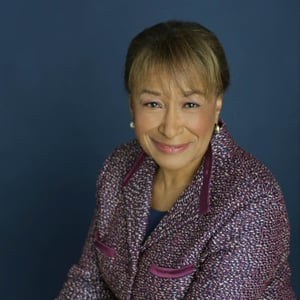
Judge, United States Court of Appeals, District of Columbia Circuit (ret.)
The Honorable Janice Rogers Brown was confirmed to the United States Court of Appeals for the District of Columbia Circuit on June 8, 2005. She retired from the court in 2017. From 1996 to 2005, she was an associate justice of the California Supreme Court. Prior to this, she served as associate justice of the Third District Court of Appeals in Sacramento and as legal affairs secretary to California Governor Pete Wilson. Earlier in her career, she served as Deputy Secretary and General Counsel for California’s Business, Transportation and Housing Agency after having worked in the criminal appellate and civil trial divisions of the California Attorney General’s Office. She currently chairs the Advisory Board of the New Civil Liberties Alliance, and serves on the Board of the Coolidge Foundation and the Association of College Trustees and Alumni. She is the Darling Foundation Jurist-in-Residence and visiting professor of Law at the University of California Boalt School of Law. Brown has been honored with the Jurisprudence Award of Claremont Institute’s Center for Constitutional Jurisprudence, the Baroness Thatcher Award of the Pacific Research Institute, the Edwin Meese III, Originalism and Religious Liberty Award from the Alliance Defending Freedom, the James Wilson Institute Leadership and the Law Award, and the 2019 Bradley Award. She earned her law degree from the University of California – Los Angeles School of Law, and a Master of Laws in judicial process from the University of Virginia School of Law.
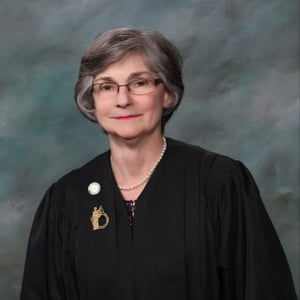
Judge, United States Court of Appeals, Fifth Circuit
Edith Jones graduated from Alamo Heights High School, where she was a National Merit Scholar. In 1971, she received her B.A. in Economics from Cornell University, graduating with honors. In 1974, she was awarded her J.D. at the University of Texas Law School, where she was a law review editor and received the Order of the Coif.
Judge Jones was the first female partner at Andrews, Kurth, Campbell & Jones (now Hunton Andrews Kurth) where she practiced various types of litigation and bankruptcy cases. Judge Jones went on the federal bench on June 1, 1985.
Judge Jones served as a former member of the National Bankruptcy Review Commission, and as a member of the Judicial Conference Commission on Bankruptcy Rules. Judge Jones served on the White House Fellows Commission. Judge Jones served on the board of the Sam Houston Area Council of the Boy Scouts of America. She has been a member of the Garland Walker Inn of Court in Houston for more than 20 years and its President for at least ten years. Judge Jones is also on the Board of the Calvin Coolidge Presidential Foundation.
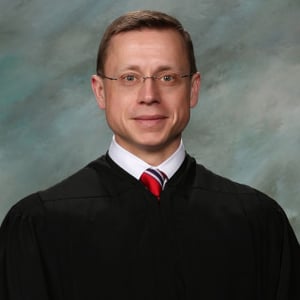
Judge, United States Court of Appeals, Fifth Circuit
Andrew Oldham is a Circuit Judge on the United States Court of Appeals for the Fifth Circuit. Before ascending to the bench, Judge Oldham served as General Counsel to Texas Governor Greg Abbott, where he advised the Governor on a range of issues under federal and state law and managed litigation in which the Governor was an interested party. Before that he served as Deputy Solicitor General for the State of Texas, where he represented Texas in federal courts across the country, including twice before the United States Supreme Court. Before moving to Texas, Judge Oldham was an attorney at Kellogg Hansen Todd Figel & Frederick in Washington, D.C. His practice focused on appellate litigation in federal courts of appeals throughout the country. Before entering private practice, Judge Oldham served as a law clerk to Justice Samuel A. Alito, Jr., at the Supreme Court of the United States and to Judge David B. Sentelle of the U.S. Court of Appeals for the District of Columbia Circuit. He also worked as an attorney-adviser in the Office of Legal Counsel at the U.S. Department of Justice from 2006 to 2008. Judge Oldham earned a B.A. from the University of Virginia with highest honors, a Truman Scholarship for graduate school, an M. Phil., first class (with distinction), from Cambridge University, and a J.D., magna cum laude, from Harvard Law School.
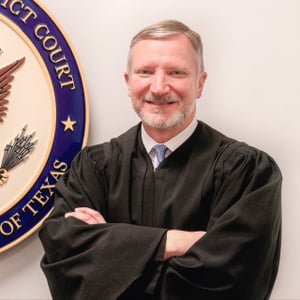
United States District Court, Southern District of Texas
Prior to joining TXSE, Jeff served as acting general counsel of Charles Schwab and led its Office of Legislative and Regulatory Affairs in Washington, D.C. for the past two decades, managing the company's response to public policy initiatives and advocating for policies that aid individual investors. He has over four decades of securities markets experience, starting his career as an options trader at the Philadelphia Stock Exchange, then founding his own trading firm, and later serving on the exchange's Board of Governors. He also served as senior counsel in the Division of Market Regulation at the U.S. Securities and Exchange Commission. Jeff's additional experience in the securities industry includes serving as vice president for regulation and general counsel at the Cincinnati Stock Exchange and as chairman of the Operating Committee of the National Market System Plan governing Nasdaq securities. Jeff holds degrees from the Wharton School of the University of Pennsylvania and Ohio Northern School of Law.
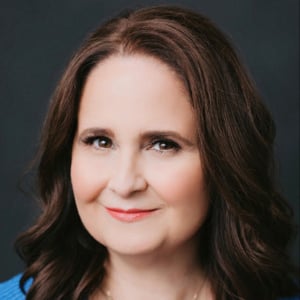
Chief Judge, United States Court of Appeals, Fifth Circuit
Jennifer Walker Elrod is the Chief Judge of the United States Court of Appeals for the Fifth Circuit. She was nominated to the Fifth Circuit in 2007, and she served as a Circuit Judge on the court until assuming the role of Chief Judge in October 2024. Prior to serving as a Circuit Judge, Chief Judge Elrod was appointed and then twice elected Judge of the 190th District Court of Harris County, Texas, where she spent over five years presiding over more than 200 jury and non-jury trials.
Chief Judge Elrod graduated cum laude from Harvard Law School, where she was an active member of the Harvard Federalist Society, an Ames Moot Court finalist, and a Senior Editor of the Harvard Journal of Law & Public Policy. She clerked for the Honorable Sim Lake in the Southern District of Texas. Before serving as a judge, Chief Judge Elrod worked in private practice, focusing on civil litigation, antitrust, and employment matters.
She has been repeatedly recognized for her work as a jurist, as well as for her pro bono work and contributions to the community. She has been named the 2022 Texas Review of Law & Politics’ Jurist of the Year, the 2018 Harvard Federalist Society’s Alumni of the Year, the 2016–17 Texas Association of Civil Trial and Appellate Specialists’ Appellate Judge of the Year, and the 2008 Mexican-American Bar Association of Texas’s Judge of the Year.
Chief Judge Elrod is actively engaged in the academic and legal communities. Chief Judge Elrod currently serves on the Board of Directors and as the Jurist-in-Residence at the South Texas College of Law, where she teaches civil procedure and First Amendment law. She is also a member of the American Law Institute and of the Board of Advisors for the Harvard Journal of Law & Public Policy, and she is a former member of the Board of Regents of her alma mater, Baylor University, and the Board of Visitors at Brigham Young University Law School. She previously served as the Chair of the Codes of Conduct Committee for the Judicial Conference of the United States. She has also served as the M.D. Anderson Visiting Public Service Professor at the Texas Tech University School of Law and as Jurist-in-Residence at Brigham Young University Law School, and she has taught legal writing at the University of Houston Law Center. She presented the Lewis F. Powell, Jr. Distinguished Lecture at the Washington and Lee University School of Law and is a frequent speaker on the topics of trial and appellate procedure, ethics, employment law, and constitutional law. Chief Judge Elrod also serves on the board of the Garland R. Walker Inn of Court, and co-produces an annual musical CLE, for which her pupilage group has won multiple national awards.
Chief Judge Elrod’s publications include: Trial by Siri: AI Comes to the Courtroom; Don’t Mess with Texas Judges: In Praise of the State Judiciary; For Good: Enriching Your Practice and Your Life Through Pro Bono and Community Service; Is the Jury Still Out?: A Case for the Continued Viability of the American Jury; and W(h)ither the Jury? The Diminishing Role of the Jury Trial in our Legal System.
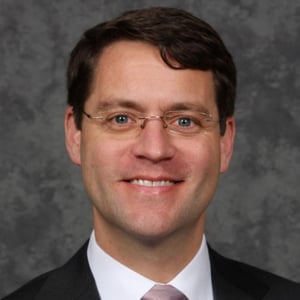
Judge, United States District Court for the Eastern District of Texas
Jeremy D. Kernodle is a judge on the United States District Court for the Eastern District of Texas. He was nominated by President Trump in 2018.
Kernodle previously served as a partner at Haynes and Boone, where he founded and chaired the firm’s False Claims Act practice group and focuses on representing healthcare providers and government contractors in federal courts throughout the country. He also served on the firm’s executive committee.
Kernodle is a past president of the Dallas Chapter of the Federal Bar Association and has served as secretary of the Dallas Bar Association’s Appellate Section.
Before joining Haynes and Boone, Kernodle was an attorney-advisor in the Office of Legal Counsel at the U.S. Department of Justice.
After earning his law degree at Vanderbilt in 2001, Kernodle was a law clerk for Judge Gerald Bard Tjoflat of the U.S. Court of Appeals for the Eleventh Circuit. He then joined Covington and Burling in Washington, D.C., as an associate.
He earned his B.A. and B.B.A., both summa cum laude, from Harding University.
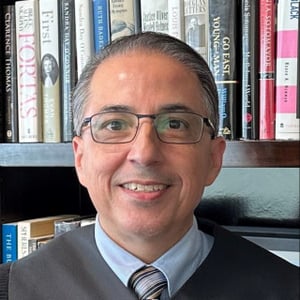
Judge, U.S. District Court, Southern District of Texas
Since June 2018, Fernando Rodriguez, Jr. has served as a United States District Judge for the Southern District of Texas, Brownsville Division.
Judge Rodriguez began his legal career as a briefing attorney for then-Justice Nathan L. Hecht of the Supreme Court of Texas. Following the judicial clerkship, he practiced law in Dallas, Texas with Baker Botts LLP., maintaining a commercial litigation practice for eleven years.
In 2010, Judge Rodriguez joined the International Justice Mission, serving over eight years as Field Office Director, first in Bolivia and then in the Dominican Republic. In that capacity, he led efforts to support the local and national government in the investigation and prosecution of child sexual assault and human trafficking cases, as well as in the services provided to survivors for their recovery and empowerment.
Judge Rodriguez graduated with a B.A. from Yale University and from the University of Texas School of Law. Before obtaining his law degree, he taught at an elementary school in Houston, Texas through Teach for America.
Judge Rodriguez and his wife Terry have been married for almost thirty years and have four children.
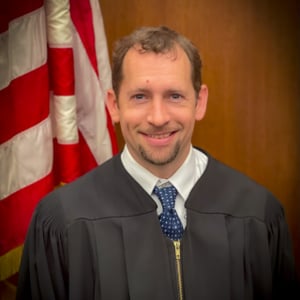
District Judge, United States District Court for the Northern District of Texas
Judge Brantley Starr was appointed to United States District Court for the Northern District of Texas in August 2019. Before his appointment, Judge Starr was the Deputy First Assistant Attorney General of Texas. Prior to that appointment, he served as Deputy Attorney General for Legal Counsel. From 2011 to 2015, Judge Starr served as career staff attorney to Texas Supreme Court Justice Eva Guzman. From 2008 to 2011, he practiced at King & Spalding, LLP. He served in the Office of the Solicitor General from 2006 to 2008. Prior to that, Judge Starr clerked for then-Justice Don Willett on the Texas Supreme Court after serving at the Office of the Attorney General. Judge Starr received his law degree from the University of Texas School of Law and his bachelor of arts degree from Abilene Christian University in 2001. Judge Starr has taught the Origins of the Constitution Class at the University of Texas law, Texas A&M law, and SMU law.
Deputy Assistant to the President for Economic Policy, The White House
Ryan Baasch serves as the Deputy Director of President Trump's National Economic Council (NEC), and as Deputy Assistant to the President on Economic Policy, where he focuses on cutting-edge technology issues at the frontier of AI regulation, space commercialization, and telecommunications networks. Before joining NEC, Ryan occupied multiple positions in the Texas Attorney General's office where he supervised all of the office's offensive civil litigation and maintained a heavy appellate caseload touching First Amendment and technology issues. Ryan began his career as a law clerk to Judge Karen LeCraft Henderson and spent five years at a large law firm in Washington D.C. and New York.
Independent Analyst, None
Allison Hayward most recently served as the Head of Case Selection at the Oversight Board. Previously, she was a Commissioner at the California Fair Political Practices Commission, a Board Member at the Office of Congressional Ethics, and an Assistant Professor of Law at George Mason University School of Law. She also previously worked as Chief of Staff and Counsel in the office of Federal Election Commission Commissioner Bradley A. Smith and practiced election law in California and in Washington DC.
In 1994-1995, Professor Hayward was a judicial clerk for the Honorable Danny J. Boggs, United States Court of Appeal for the Sixth Circuit.
She is a member of the State Bar of California and the District of Columbia Bar.
Vice President for Legal Strategy, Stand Together
Casey Mattox is Vice President for Legal Strategy at Stand Together and Senior Advisor at
Americans for Prosperity. In these roles he advocates for and creates strategies and
partnerships to ensure a constitutionally limited government that protects the civil liberties of all
Americans. Prior to joining Stand Together and AFP Casey’s legal career focused on defending
the First Amendment rights of students, faculty, healthcare workers and religious organizations.
Casey has a J.D. from Boston College School of Law and an undergraduate degree from the
University of Virginia. You can find him on Twitter at @CaseyMattox_ and on LinkedIn at
@Casey-Mattox-ST.
Legal Advocacy Counsel, Chamber of Progress
Jess Miers is Legal Advocacy Counsel at Chamber of Progress. As a lawyer and technologist, Jess primarily focuses on the intersection of law and the Internet. She is widely considered an expert on U.S. intermediary liability law and has written, spoken, and taught extensively about topics such as speech and Section 230, content moderation, intellectual property, and cyber crime. Jess is also currently an advisor to the Trust & Safety Professional Association, and an industry mentor for Santa Clara Law’s Tech Edge J.D. certificate program.
Jess joins Chamber of Progress from Google where she was a Senior Government Affairs & Public Policy Analyst. At Google, Jess oversaw the state and federal content policy portfolios. In addition to monitoring emerging U.S. content policy, Jess also worked closely with Google’s Litigation teams to influence the courts on key online speech issues, many of which are currently pending U.S. Supreme Court review.
Before law school, Jess received her Bachelor’s in Computer Science from George Mason University. She spent four years as a Software Engineer for a defense contractor in Northern Virginia. Throughout law school, Jess interned at Twitter, TechFreedom, The UCLA Technology Law and Policy Institute, and Google Trust & Safety. She also founded the SCU Internet Law Student Organization, with the goal of encouraging students to explore and pursue careers in Internet law and policy.
Jess currently resides in the heart of Silicon Valley in California. When she’s not advocating for online speech, Jess enjoys climbing peaks and exploring the many beautiful California coastal trails with her husband and her dog.

Courthouse Steps Oral Argument: Illumina v. FTC
Ashley Baker, John B. Kirkwood, Adam Mossoff
In September, a panel of judges on the Fifth Circuit Court of Appeals heard oral...
Courthouse Steps Oral Argument: Illumina v. FTC
A Regulatory Transparency Project Webinar
Religious Liberty Pragmatism
Nick Reaves, Matthew Krauter
A review of Thomas C. Berg, Religious Liberty in a Polarized Age (Eerdmans 2023) In...
The Labor Law Enigma: Article III, Judicial Power, and the National Labor Relations Board
Alexander T. MacDonald
Axon Enterprises v. FTC[1] wasn’t supposed to be about labor law. In fact, it wasn’t...
Groff v. DeJoy: The Death of the “De Minimis” Test Breathes Life Back into Religious Accommodation
Sarah E. Lang
In a unanimous decision last June, the Supreme Court in Groff v. DeJoy heightened the...
Gregory S. Coleman Memorial Lecture & Luncheon
2023 Texas Chapters Conference
Houston, TXStudent Chapter Panel: The Role of the Trial Court Judge
2023 Texas Chapters Conference
Houston, TXNet Choices: Social Media, Content Moderation, and the First Amendment
Ryan Baasch, Allison R. Hayward, Casey Mattox, Jess Miers
In 2021, both Florida and Texas enacted legislation to limit how social media platforms could...
Net Choices: Social Media, Content Moderation, and the First Amendment
Ryan Baasch, Allison R. Hayward, Casey Mattox, Jess Miers
In 2021, both Florida and Texas enacted legislation to limit how social media platforms could...
Net Choices: Social Media, Content Moderation, and the First Amendment
Teleforum