
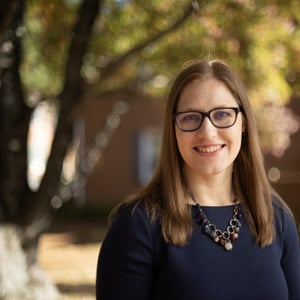
Fellow, Ethics and Public Policy Center
Rachel N. Morrison is an attorney and Fellow at the Ethics and Public Policy Center, where she directs EPPC’s Administrative State Accountability Project. Her legal and policy work focuses on religious liberty, health care rights of conscience, the right to life, nondiscrimination, and civil rights.
Before joining EPPC, Ms. Morrison served as an Attorney Advisor and Special Assistant to General Counsel Sharon Fast Gustafson at the Equal Employment Opportunity Commission (EEOC), where she focused on religious discrimination issues and was a member of the General Counsel’s Religious Discrimination Work Group. Before that, she served as Litigation Counsel for Americans United for Life and as a Constitutional Law Fellow at the Becket Fund for Religious Liberty, defending the right to life and religious freedom for all. She also clerked on the U.S. Court of Federal Claims.
Ms. Morrison’s legal analysis has been published in the Seton Hall Law Review, the Pepperdine Law Review, and the Ave Maria Law Review, as well as various other print media outlets.
Ms. Morrison earned her J.D., magna cum laude, from the Pepperdine University School of Law, where she was elected to the Order of the Coif and served as an editor for the Pepperdine Law Review and the Harvard Journal of Law & Public Policy. She received her B.A. in Mathematics and Speech Communication, summa cum laude, from Whitworth University (Spokane, WA). She is a member of the District of Columbia and the Washington State bars.
Ms. Morrison lives with her husband and daughter in Virginia.
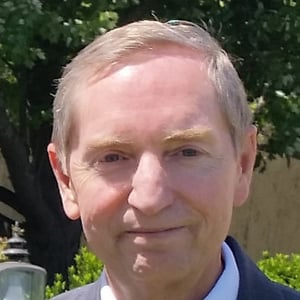
Legal Director & General Counsel, Criminal Justice Legal Foundation
Kent S. Scheidegger has been the Legal Director of the Criminal Justice Legal Foundation since December 1986. He also served as Chairman of the Criminal Law Practice Group of the Federalist Society 2003 to 2005. His articles on criminal and constitutional law have been published in law reviews, national legal publications, and congressional reports. Legal arguments authored by Mr. Scheidegger have been cited and incorporated in several precedent-setting United States Supreme Court decisions.
After receiving a degree in physics with honors from New Mexico State University in 1976, Mr. Scheidegger served for six years in the United States Air Force as a Nuclear Research Officer. He took his law degree with distinction from the University of the Pacific, McGeorge School of Law in 1982 and practiced civil law in Northern California. He was general counsel of California Cooler, Inc. from 1984 until 1986, when he joined the Foundation.
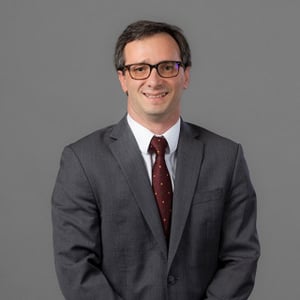
Assistant Professor of Law, George Mason University, Antonin Scalia Law School
Robert Leider is an Assistant Professor of Law at Antonin Scalia Law School, George Mason University. His scholarly interests are in criminal law, criminal procedure, and constitutional law, especially concerning questions about the use of force and the rule of law. He has written on the law of self-defense, the constitutional allocation of military power, and gun control. Among other places, he has published in the Florida Law Review (forthcoming), the Indiana Law Journal, and the Wall Street Journal.
Before joining Antonin Scalia Law School, Professor Leider was at Arnold & Porter in Washington, DC. He was previously with Mayer Brown LLP and was an Olin-Searle-Smith Fellow at the University of Pennsylvania Law School. He has clerked for Judge Diane S. Sykes, of the U.S. Court of Appeals for the Seventh Circuit, and Justice Clarence Thomas. Professor Leider earned a BA, summa cum laude, from The George Washington University, a JD from Yale Law School, and a PhD in Philosophy (dissertation defended with distinction) from Georgetown University. While at Yale, he served as an articles editor for the Yale Law Journal.
Professor Leider teaches criminal law and torts.
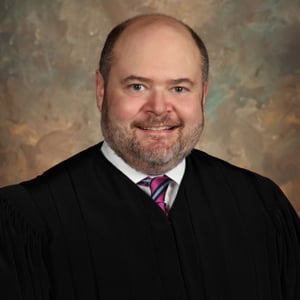
Judge, United States Court of Appeals, Eighth Circuit
David Stras became a judge on the United States Court of Appeals for the Eighth Circuit on January 31, 2018. Before serving on the Eighth Circuit, Judge Stras was an Associate Justice of the Minnesota Supreme Court, a position he occupied from July 1, 2010 until his appointment to the Eighth Circuit.
Prior to becoming a judge, Stras was a member of the faculty of the University of Minnesota Law School from 2004 through 2010. He taught and wrote in the areas of federal courts and jurisdiction, constitutional law, criminal law, and law and politics.
Judge Stras received his Bachelor of Arts degree, with highest distinction, in 1995 and his Master of Business Administration in 1999, both from the University of Kansas. He also received his law degree from the University of Kansas School of Law in 1999, where he served as Editor-in-Chief of the Criminal Procedure Edition of the Kansas Law Review.
Following law school, Stras clerked for The Honorable Melvin Brunetti of the United States Court of Appeals for the Ninth Circuit and then for The Honorable J. Michael Luttig of the United States Court of Appeals for the Fourth Circuit.
From 2001 to 2002, he practiced white-collar criminal and appellate litigation with the Washington, D.C., office of Sidley Austin Brown & Wood. Following his year in practice, he clerked for The Honorable Clarence Thomas of the Supreme Court of the United States.
Judge, United States Court of Appeals, Eighth Circuit
David Stras became a judge on the United States Court of Appeals for the Eighth Circuit on January 31, 2018. Before serving on the Eighth Circuit, Judge Stras was an Associate Justice of the Minnesota Supreme Court, a position he occupied from July 1, 2010 until his appointment to the Eighth Circuit.
Prior to becoming a judge, Stras was a member of the faculty of the University of Minnesota Law School from 2004 through 2010. He taught and wrote in the areas of federal courts and jurisdiction, constitutional law, criminal law, and law and politics.
Judge Stras received his Bachelor of Arts degree, with highest distinction, in 1995 and his Master of Business Administration in 1999, both from the University of Kansas. He also received his law degree from the University of Kansas School of Law in 1999, where he served as Editor-in-Chief of the Criminal Procedure Edition of the Kansas Law Review.
Following law school, Stras clerked for The Honorable Melvin Brunetti of the United States Court of Appeals for the Ninth Circuit and then for The Honorable J. Michael Luttig of the United States Court of Appeals for the Fourth Circuit.
From 2001 to 2002, he practiced white-collar criminal and appellate litigation with the Washington, D.C., office of Sidley Austin Brown & Wood. Following his year in practice, he clerked for The Honorable Clarence Thomas of the Supreme Court of the United States.

Topics
2019 National Lawyers Convention Digital Survival Guide
This "Survival Guide" is your one-stop-shop for all things digital at the National Lawyers Convention....
Topics
The Future of the Establishment Clause in the Roberts Court
Next Thursday’s Establishment Clause Panel at the Federalist Society National Lawyer’s Convention will be both...
Topics
Lessons for University Administrators: Courts Protect Religious Student Groups on Campus
This fall, University of Iowa officials and their lawyer heard this from a federal judge:...
The Supreme Court Takes Up Abortion: What You Need to Know About June Medical Services v. Gee
Rachel N. Morrison
Note from the Editor: The Federalist Society takes no positions on particular legal and public...
Q& A with Judge Stras from the U.S. Court of Appeals for the Eighth Circuit
Minnesota Lawyers Chapter
Minneapolis, MNReflections on Judging: A Conversation with Judge Erickson and Judge Stras of the Eighth Circuit Court of Appeals
North Dakota Lawyers Chapter
Grand Forks, NDTopics
Telescope Media Group v. Lucero Decided: Religious Liberty in the 8th Circuit
Assessing a pre-enforcement challenge, the 8th Circuit via Judge Stras protects religious liberty and conscience...
Bucklew v. Precythe - Post-Decision SCOTUScast
Kent Scheidegger
On April 1, 2019, the Supreme Court decided Bucklew v. Precythe, a case considering the...
Topics
Baldwin v. U.S.: Will the Chevron Doctrine Be Refined or Overruled?
In Baldwin v. United States, No. 17-55115 (filed April 16, 2019), the United States...
United States v. Stitt and United States v. Sims - Post-Decision
Robert Leider
On December 10, 2018, the Supreme Court decided the consolidated cases United States v. Stitt...