
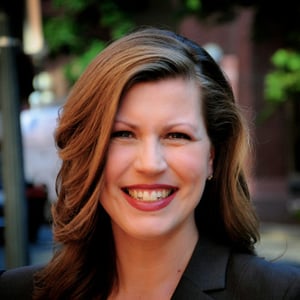
Senior Counsel, The Becket Fund for Religious Liberty
Senior Counsel Hannah Smith joined Becket in 2007 following two clerkships at the U.S. Supreme Court for Justices Clarence Thomas and Samuel A. Alito, Jr.
Ms. Smith was a member of the Becket legal team that secured victories in key U.S. Supreme Court religious liberty cases, including Holt v. Hobbs, 574 U.S. ___ (Jan. 20, 2015), where a unanimous Court held in an opinion authored by Justice Alito that the Religious Land Use and Institutionalized Persons Act requires prison officials to accommodate peaceful expressions of religious devotion; Burwell v. Hobby Lobby, 134 S. Ct. 2751 (June 30, 2014), where the Court held in a 5-4 opinion authored by Justice Alito that family-owned businesses enjoy religious liberty rights under the Religious Freedom Restoration Act and that the HHS mandate violated the Act; and Hosanna-Tabor Evangelical Lutheran Church and School v. EEOC, 132 S. Ct. 694 (2012), where a unanimous Court held in an opinion authored by Chief Justice Roberts that the “ministerial exception” under the First Amendment protects a church’s right to choose its own ministers.
Ms. Smith contributed to Becket's Supreme Court filings in Little Sisters of the Poor v. Burwell (2015); Houston Baptist University v. Burwell (2015); Stormans v. Wiesman (2015); Michigan Catholic Conference v. Burwell (2015); Obergefell v. Hodges (2015); University of Notre Dame v. Burwell (2014); Wheaton College v. Burwell, 134 S. Ct. 2806 (2014); Little Sisters of the Poor v. Sebelius, 134 S. Ct. 1022 (2014); Bronx Household of Faith v. New York City Board of Education (2014), Elmbrook School District v. Doe (2014), Big Sky Colony v. Montana Department of Labor and Industry (2013), Sossamon v. Texas (2011), Arizona Christian School Tuition Association v. Winn (2011), Bronx Household of Faith v. New York City Board of Education (2011), Utah Highway Patrol Association v. American Atheists (2011), Christian Legal Society v. Martinez (2010), and Salazar v. Buono (2010).
Ms. Smith has been featured on CNN, Fox News, The O'Reilly Factor, The Sean Hannity Show, C-Span, EWTN, Al Jazeera America, the Wall Street Journal, the Washington Post, the Los Angeles Times, U.S. News and World Report, the Associated Press, National Review Online, Bloomberg News, NPR, BBC, the Laura Ingraham Show, the Rush Limbaugh Show, the Hugh Hewitt Show, BYU Radio, and many other publications and radio shows. She has been invited to speak on religious liberty at Harvard Law School, Princeton University, Stanford Law School, University of Pennsylvania Law School, Southern Methodist University Law School, Brigham Young University Law School, American University Washington College of the Law, and Central European University. And she has given briefings on religious liberty issues at the U.S. Capitol, the State Department, the Heritage Foundation, the Ethics and Public Policy Center, the Federalist Society for Law and Public Policy Studies, the American Bar Association, and the National Constitution Center.
Ms. Smith received her B.A. from Princeton University, concentrating in the Woodrow Wilson School of Public and International Affairs. She graduated with honors from Brigham Young University Law School and was elected to the Order of the Coif. She served as Executive Editor of the BYU Law Review, as a research assistant for the BYU International Center for Law and Religion Studies, and as president of the BYU Federalist Society. BYU awarded her its Alumni Achievement Award for her work in the defense of religious freedom. Ms. Smith also received the J. Reuben Clark Law Society's Women-in-Law Leadership Award for her national leadership in defending religious liberty and advancing the contributions of Mormon women to the law.
Following law school and in between clerkships, she was an associate in private practice at Williams & Connolly and Sidley Austin in Washington D.C., representing clients before state and federal courts and the U.S. Supreme Court in civil, criminal, and constitutional cases. Her private practice religious liberty work included the U.S. Supreme Court petition for certiorari in Corporation of the Presiding Bishop of the Church of Jesus Christ of Latter-day Saints v. First Unitarian Church of Salt Lake City (2003), as well as matters on behalf of Brigham Young University, the Church of Jesus Christ of Latter-day Saints, and the Roman Catholic Archdiocese of Washington D.C.
Ms. Smith served as a full-time volunteer missionary for the Church of Jesus Christ of Latter-day Saints in France and Switzerland. She currently serves as a member of the J. Reuben Clark Law Society International Board and as a member of the Deseret News Editorial Advisory Board. She writes on religious liberty issues in the Deseret News. Hannah and her husband John are happily married with 4 wonderful children.

Senior Fellow and Director of Constitutional Studies, Manhattan Institute
Ilya Shapiro is a senior fellow and director of constitutional studies at the Manhattan Institute and a contributing editor of City Journal. Previously he was executive director and senior lecturer at the Georgetown Center for the Constitution, and before that a vice president of the Cato Institute.
Shapiro is the author of Lawless: The Miseducation of America’s Elites (2025) and Supreme Disorder: Judicial Nominations and the Politics of America’s Highest Court (2020), coauthor of Religious Liberties for Corporations? (2014), and editor of 11 volumes of the Cato Supreme Court Review (2008-18). He has contributed to a variety of academic, popular, and professional publications, including the Wall Street Journal, Harvard Journal of Law & Public Policy, Washington Post, Los Angeles Times, USA Today, National Review, and Newsweek. He also regularly provides commentary for various media outlets, writes the Shapiro’s Gavel newsletter on Substack, and once appeared on the Colbert Report.
Shapiro has testified many times before Congress and state legislatures and has filed more than 500 amicus curiae “friend of the court” briefs in the Supreme Court. He lectures regularly on behalf of the Federalist Society, is a member of the board of fellows of the Jewish Policy Center, was an inaugural Washington Fellow at the National Review Institute, and has been an adjunct law professor at the George Washington University and University of Mississippi. He is also the chairman of the board of advisers of the Mississippi Justice Institute, a barrister in the Edward Coke Appellate Inn of Court, and a former member of the Virginia Advisory Committee to the U.S. Commission on Civil Rights.
Earlier in his career, Shapiro was a special assistant/adviser to the Multi-National Force in Iraq on rule-of-law issues and practiced at Patton Boggs and Cleary Gottlieb. Before entering private practice, he clerked for Judge E. Grady Jolly of the U.S. Court of Appeals for the Fifth Circuit. He holds an AB from Princeton University, an MSc from the London School of Economics, and a JD from the University of Chicago Law School.
Senior Counsel, The Becket Fund for Religious Liberty
Senior Counsel Hannah Smith joined Becket in 2007 following two clerkships at the U.S. Supreme Court for Justices Clarence Thomas and Samuel A. Alito, Jr.
Ms. Smith was a member of the Becket legal team that secured victories in key U.S. Supreme Court religious liberty cases, including Holt v. Hobbs, 574 U.S. ___ (Jan. 20, 2015), where a unanimous Court held in an opinion authored by Justice Alito that the Religious Land Use and Institutionalized Persons Act requires prison officials to accommodate peaceful expressions of religious devotion; Burwell v. Hobby Lobby, 134 S. Ct. 2751 (June 30, 2014), where the Court held in a 5-4 opinion authored by Justice Alito that family-owned businesses enjoy religious liberty rights under the Religious Freedom Restoration Act and that the HHS mandate violated the Act; and Hosanna-Tabor Evangelical Lutheran Church and School v. EEOC, 132 S. Ct. 694 (2012), where a unanimous Court held in an opinion authored by Chief Justice Roberts that the “ministerial exception” under the First Amendment protects a church’s right to choose its own ministers.
Ms. Smith contributed to Becket's Supreme Court filings in Little Sisters of the Poor v. Burwell (2015); Houston Baptist University v. Burwell (2015); Stormans v. Wiesman (2015); Michigan Catholic Conference v. Burwell (2015); Obergefell v. Hodges (2015); University of Notre Dame v. Burwell (2014); Wheaton College v. Burwell, 134 S. Ct. 2806 (2014); Little Sisters of the Poor v. Sebelius, 134 S. Ct. 1022 (2014); Bronx Household of Faith v. New York City Board of Education (2014), Elmbrook School District v. Doe (2014), Big Sky Colony v. Montana Department of Labor and Industry (2013), Sossamon v. Texas (2011), Arizona Christian School Tuition Association v. Winn (2011), Bronx Household of Faith v. New York City Board of Education (2011), Utah Highway Patrol Association v. American Atheists (2011), Christian Legal Society v. Martinez (2010), and Salazar v. Buono (2010).
Ms. Smith has been featured on CNN, Fox News, The O'Reilly Factor, The Sean Hannity Show, C-Span, EWTN, Al Jazeera America, the Wall Street Journal, the Washington Post, the Los Angeles Times, U.S. News and World Report, the Associated Press, National Review Online, Bloomberg News, NPR, BBC, the Laura Ingraham Show, the Rush Limbaugh Show, the Hugh Hewitt Show, BYU Radio, and many other publications and radio shows. She has been invited to speak on religious liberty at Harvard Law School, Princeton University, Stanford Law School, University of Pennsylvania Law School, Southern Methodist University Law School, Brigham Young University Law School, American University Washington College of the Law, and Central European University. And she has given briefings on religious liberty issues at the U.S. Capitol, the State Department, the Heritage Foundation, the Ethics and Public Policy Center, the Federalist Society for Law and Public Policy Studies, the American Bar Association, and the National Constitution Center.
Ms. Smith received her B.A. from Princeton University, concentrating in the Woodrow Wilson School of Public and International Affairs. She graduated with honors from Brigham Young University Law School and was elected to the Order of the Coif. She served as Executive Editor of the BYU Law Review, as a research assistant for the BYU International Center for Law and Religion Studies, and as president of the BYU Federalist Society. BYU awarded her its Alumni Achievement Award for her work in the defense of religious freedom. Ms. Smith also received the J. Reuben Clark Law Society's Women-in-Law Leadership Award for her national leadership in defending religious liberty and advancing the contributions of Mormon women to the law.
Following law school and in between clerkships, she was an associate in private practice at Williams & Connolly and Sidley Austin in Washington D.C., representing clients before state and federal courts and the U.S. Supreme Court in civil, criminal, and constitutional cases. Her private practice religious liberty work included the U.S. Supreme Court petition for certiorari in Corporation of the Presiding Bishop of the Church of Jesus Christ of Latter-day Saints v. First Unitarian Church of Salt Lake City (2003), as well as matters on behalf of Brigham Young University, the Church of Jesus Christ of Latter-day Saints, and the Roman Catholic Archdiocese of Washington D.C.
Ms. Smith served as a full-time volunteer missionary for the Church of Jesus Christ of Latter-day Saints in France and Switzerland. She currently serves as a member of the J. Reuben Clark Law Society International Board and as a member of the Deseret News Editorial Advisory Board. She writes on religious liberty issues in the Deseret News. Hannah and her husband John are happily married with 4 wonderful children.
U.S. Court of Appeals, Eighth Circuit
Lavenski R. Smith is a federal judge on the United States Court of Appeals for the Eighth Circuit. He joined the court in 2002 after being nominated by former President George W. Bush.

Thomas M. Siebel Senior Fellow, The Hoover Institution, Stanford University; Gary T. Schwartz Distinguished Professor of Law Emeritus, UCLA School of Law
Eugene Volokh is the Thomas M. Siebel Senior Fellow at the Hoover Institution (Stanford), as well as the Gary T. Schwartz Distinguished Professor of Law Emeritus and Distinguished Research Professor at UCLA School of Law. He recently retired from teaching at UCLA, after 30 years there, and is now focusing on research.
Volokh is the author of the textbooks The First Amendment and Related Statutes (8th ed. 2023), and Academic Legal Writing (5th ed. 2016), as well as over 100 academic law journal articles, mostly on First Amendment law. He is a member of The American Law Institute; the editor-in-chief of the Journal of Free Speech Law; and the creator and coauthor of The Volokh Conspiracy, a leading legal blog founded in 2002 (hosted at the Washington Post from 2014 to 2017 and now at Reason Magazine).
Partner, Arnold & Porter Kaye Scholer LLP
Rob Weiner has significant experience as a trial lawyer, appellate advocate, and legal strategist in complex litigation. He is skilled in developing creative legal approaches to bring cases to a quick, cheap and successful resolution. Mr. Weiner’s long experience representing business and sovereign clients in litigation, and his three tours of duty as a government lawyer, have honed his ability to deal with the regulatory, tactical, and constitutional issues arising when the federal government is, or may become, a party in litigation. From 2010-2012, Mr. Weiner was Associate Deputy Attorney General at the US Department of Justice, where his principal responsibility was to oversee the defense of the Affordable Care Act. He also handled sensitive negotiations with a foreign government involving bank secrecy, and dealt with or headed-off difficult issues across the range of the Department’s matters. Mr. Weiner also has served as Senior Counsel in the White House Counsel’s Office, and as an Associate Independent Counsel. He began his career as a law clerk for The Honorable Henry J. Friendly and for Justice Thurgood Marshall.
At the firm, Mr. Weiner has litigated major administrative and constitutional cases; served as national coordinating and trial counsel in product liability and toxic tort cases; represented clients in media-intensive Congressional regulatory, criminal, and disciplinary investigations; and was lead counsel for the State of Israel in litigation involving national security policies. In addition, clients frequently seek him out to author briefs in the US Supreme Court and other forums.
U.S. Court of Appeals, Eighth Circuit
Lavenski R. Smith is a federal judge on the United States Court of Appeals for the Eighth Circuit. He joined the court in 2002 after being nominated by former President George W. Bush.
Thomas M. Siebel Senior Fellow, The Hoover Institution, Stanford University; Gary T. Schwartz Distinguished Professor of Law Emeritus, UCLA School of Law
Eugene Volokh is the Thomas M. Siebel Senior Fellow at the Hoover Institution (Stanford), as well as the Gary T. Schwartz Distinguished Professor of Law Emeritus and Distinguished Research Professor at UCLA School of Law. He recently retired from teaching at UCLA, after 30 years there, and is now focusing on research.
Volokh is the author of the textbooks The First Amendment and Related Statutes (8th ed. 2023), and Academic Legal Writing (5th ed. 2016), as well as over 100 academic law journal articles, mostly on First Amendment law. He is a member of The American Law Institute; the editor-in-chief of the Journal of Free Speech Law; and the creator and coauthor of The Volokh Conspiracy, a leading legal blog founded in 2002 (hosted at the Washington Post from 2014 to 2017 and now at Reason Magazine).
Partner, Arnold & Porter Kaye Scholer LLP
Rob Weiner has significant experience as a trial lawyer, appellate advocate, and legal strategist in complex litigation. He is skilled in developing creative legal approaches to bring cases to a quick, cheap and successful resolution. Mr. Weiner’s long experience representing business and sovereign clients in litigation, and his three tours of duty as a government lawyer, have honed his ability to deal with the regulatory, tactical, and constitutional issues arising when the federal government is, or may become, a party in litigation. From 2010-2012, Mr. Weiner was Associate Deputy Attorney General at the US Department of Justice, where his principal responsibility was to oversee the defense of the Affordable Care Act. He also handled sensitive negotiations with a foreign government involving bank secrecy, and dealt with or headed-off difficult issues across the range of the Department’s matters. Mr. Weiner also has served as Senior Counsel in the White House Counsel’s Office, and as an Associate Independent Counsel. He began his career as a law clerk for The Honorable Henry J. Friendly and for Justice Thurgood Marshall.
At the firm, Mr. Weiner has litigated major administrative and constitutional cases; served as national coordinating and trial counsel in product liability and toxic tort cases; represented clients in media-intensive Congressional regulatory, criminal, and disciplinary investigations; and was lead counsel for the State of Israel in litigation involving national security policies. In addition, clients frequently seek him out to author briefs in the US Supreme Court and other forums.
Senior Fellow and Director of Constitutional Studies, Manhattan Institute
Ilya Shapiro is a senior fellow and director of constitutional studies at the Manhattan Institute and a contributing editor of City Journal. Previously he was executive director and senior lecturer at the Georgetown Center for the Constitution, and before that a vice president of the Cato Institute.
Shapiro is the author of Lawless: The Miseducation of America’s Elites (2025) and Supreme Disorder: Judicial Nominations and the Politics of America’s Highest Court (2020), coauthor of Religious Liberties for Corporations? (2014), and editor of 11 volumes of the Cato Supreme Court Review (2008-18). He has contributed to a variety of academic, popular, and professional publications, including the Wall Street Journal, Harvard Journal of Law & Public Policy, Washington Post, Los Angeles Times, USA Today, National Review, and Newsweek. He also regularly provides commentary for various media outlets, writes the Shapiro’s Gavel newsletter on Substack, and once appeared on the Colbert Report.
Shapiro has testified many times before Congress and state legislatures and has filed more than 500 amicus curiae “friend of the court” briefs in the Supreme Court. He lectures regularly on behalf of the Federalist Society, is a member of the board of fellows of the Jewish Policy Center, was an inaugural Washington Fellow at the National Review Institute, and has been an adjunct law professor at the George Washington University and University of Mississippi. He is also the chairman of the board of advisers of the Mississippi Justice Institute, a barrister in the Edward Coke Appellate Inn of Court, and a former member of the Virginia Advisory Committee to the U.S. Commission on Civil Rights.
Earlier in his career, Shapiro was a special assistant/adviser to the Multi-National Force in Iraq on rule-of-law issues and practiced at Patton Boggs and Cleary Gottlieb. Before entering private practice, he clerked for Judge E. Grady Jolly of the U.S. Court of Appeals for the Fifth Circuit. He holds an AB from Princeton University, an MSc from the London School of Economics, and a JD from the University of Chicago Law School.
Senior Counsel, The Becket Fund for Religious Liberty
Senior Counsel Hannah Smith joined Becket in 2007 following two clerkships at the U.S. Supreme Court for Justices Clarence Thomas and Samuel A. Alito, Jr.
Ms. Smith was a member of the Becket legal team that secured victories in key U.S. Supreme Court religious liberty cases, including Holt v. Hobbs, 574 U.S. ___ (Jan. 20, 2015), where a unanimous Court held in an opinion authored by Justice Alito that the Religious Land Use and Institutionalized Persons Act requires prison officials to accommodate peaceful expressions of religious devotion; Burwell v. Hobby Lobby, 134 S. Ct. 2751 (June 30, 2014), where the Court held in a 5-4 opinion authored by Justice Alito that family-owned businesses enjoy religious liberty rights under the Religious Freedom Restoration Act and that the HHS mandate violated the Act; and Hosanna-Tabor Evangelical Lutheran Church and School v. EEOC, 132 S. Ct. 694 (2012), where a unanimous Court held in an opinion authored by Chief Justice Roberts that the “ministerial exception” under the First Amendment protects a church’s right to choose its own ministers.
Ms. Smith contributed to Becket's Supreme Court filings in Little Sisters of the Poor v. Burwell (2015); Houston Baptist University v. Burwell (2015); Stormans v. Wiesman (2015); Michigan Catholic Conference v. Burwell (2015); Obergefell v. Hodges (2015); University of Notre Dame v. Burwell (2014); Wheaton College v. Burwell, 134 S. Ct. 2806 (2014); Little Sisters of the Poor v. Sebelius, 134 S. Ct. 1022 (2014); Bronx Household of Faith v. New York City Board of Education (2014), Elmbrook School District v. Doe (2014), Big Sky Colony v. Montana Department of Labor and Industry (2013), Sossamon v. Texas (2011), Arizona Christian School Tuition Association v. Winn (2011), Bronx Household of Faith v. New York City Board of Education (2011), Utah Highway Patrol Association v. American Atheists (2011), Christian Legal Society v. Martinez (2010), and Salazar v. Buono (2010).
Ms. Smith has been featured on CNN, Fox News, The O'Reilly Factor, The Sean Hannity Show, C-Span, EWTN, Al Jazeera America, the Wall Street Journal, the Washington Post, the Los Angeles Times, U.S. News and World Report, the Associated Press, National Review Online, Bloomberg News, NPR, BBC, the Laura Ingraham Show, the Rush Limbaugh Show, the Hugh Hewitt Show, BYU Radio, and many other publications and radio shows. She has been invited to speak on religious liberty at Harvard Law School, Princeton University, Stanford Law School, University of Pennsylvania Law School, Southern Methodist University Law School, Brigham Young University Law School, American University Washington College of the Law, and Central European University. And she has given briefings on religious liberty issues at the U.S. Capitol, the State Department, the Heritage Foundation, the Ethics and Public Policy Center, the Federalist Society for Law and Public Policy Studies, the American Bar Association, and the National Constitution Center.
Ms. Smith received her B.A. from Princeton University, concentrating in the Woodrow Wilson School of Public and International Affairs. She graduated with honors from Brigham Young University Law School and was elected to the Order of the Coif. She served as Executive Editor of the BYU Law Review, as a research assistant for the BYU International Center for Law and Religion Studies, and as president of the BYU Federalist Society. BYU awarded her its Alumni Achievement Award for her work in the defense of religious freedom. Ms. Smith also received the J. Reuben Clark Law Society's Women-in-Law Leadership Award for her national leadership in defending religious liberty and advancing the contributions of Mormon women to the law.
Following law school and in between clerkships, she was an associate in private practice at Williams & Connolly and Sidley Austin in Washington D.C., representing clients before state and federal courts and the U.S. Supreme Court in civil, criminal, and constitutional cases. Her private practice religious liberty work included the U.S. Supreme Court petition for certiorari in Corporation of the Presiding Bishop of the Church of Jesus Christ of Latter-day Saints v. First Unitarian Church of Salt Lake City (2003), as well as matters on behalf of Brigham Young University, the Church of Jesus Christ of Latter-day Saints, and the Roman Catholic Archdiocese of Washington D.C.
Ms. Smith served as a full-time volunteer missionary for the Church of Jesus Christ of Latter-day Saints in France and Switzerland. She currently serves as a member of the J. Reuben Clark Law Society International Board and as a member of the Deseret News Editorial Advisory Board. She writes on religious liberty issues in the Deseret News. Hannah and her husband John are happily married with 4 wonderful children.
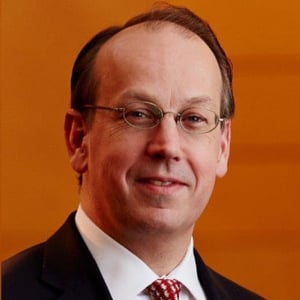
Partner, Clement & Murphy, PLLC
Paul served as the 43rd Solicitor General of the United States from June 2005 until June 2008. Before his confirmation as Solicitor General, he served as Acting Solicitor General for nearly a year and as Principal Deputy Solicitor General for over three years.
Paul has argued over 100 cases before the United States Supreme Court, including McConnell v. FEC, Tennessee v. Lane, United States v. Booker, MGM v. Grokster, Hobby Lobby v. Burwell, Epic Systems Corp. v. Lewis, Rucho v. Common Cause, Facebook v. Duguid, and TransUnion v. Ramirez. Paul has argued more Supreme Court cases since 2000 than any lawyer in or out of government. He has also argued many important cases in the lower courts, including Walker v. Cheney, United States v. Moussaoui and NFL v. Brady.
Paul’s practice focuses on appellate matters, constitutional litigation and strategic counseling. He represents a broad array of clients in the Supreme Court and in federal and state appellate courts. Last year, for example, he successfully argued Supreme Court cases involving significant issues of energy regulation, statutory interpretation, state sovereign immunity and Article III standing, and successfully argued a trademark appeal in the Fourth Circuit, and a constitutional appeal before the en banc Eleventh Circuit.
Paul focuses on high-stakes appeals. In recent years, he successfully defended a $1.2 billion jury verdict for clients in a Tenth Circuit case, while securing the reversal of an over $2 billion jury verdict for another client in the Seventh Circuit and the approval of a nearly $1 billion dollar class action settlement in the Third Circuit. He has initiated major administrative law challenges and constitutional litigation against the federal government, such as the successful challenge to the HHS drug-pricing rule and threatened challenges that led to the withdrawal of the Treasury Department’s proposed cryptocurrency regulations. He also counsels clients on a variety of strategic legal questions, whether arising from pending legislation, government inquiries or ongoing litigation.
Paul has undertaken substantial pro bono engagements in the Supreme Court, such as twice successfully representing the defendant in Bond v. United States and successfully representing the Omaha Tribe in Nebraska v. Parker, the guardian ad litem in Adoptive Couple v. Baby Girl, the defendant in Sekhar v. United States, a high school football coach in Kennedy v. Bremerton, and the Little Sisters of the Poor. Paul’s pro bono representation also precipitated the federal government’s confession of error in United States v. Rojas.
Following law school, Paul clerked for Judge Laurence H. Silberman of the U.S. Court of Appeals for the D.C. Circuit and for Associate Justice Antonin Scalia of the U.S. Supreme Court. After his clerkships, he went on to serve as Chief Counsel of the U.S. Senate Subcommittee on the Constitution, Federalism and Property Rights.
Paul is a Distinguished Lecturer in Law at the Georgetown University Law Center, where he has taught in various capacities since 1998. He also serves as a Senior Fellow of the Law Center’s Supreme Court Institute. He is the Justice Joseph Story Distinguished Practitioner in Residence at the Gray Center at Scalia Law School.
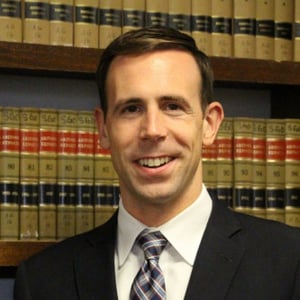
Shareholder, Greenberg Traurig, LLP
Dominic E. Draye has litigated at every level of the state and federal judiciary—from state trial court to the Supreme Court of the United States. His practice focuses on constitutional, regulatory, and environmental matters, and he has represented clients in both the public and private sectors. In the federal appellate courts, Mr. Draye has represented clients in the Second, Fifth, Seventh, Ninth, and D.C. Circuits.
Before joining Greenberg, Mr. Draye served as the Solicitor General of Arizona, where he briefed and argued the State’s highest-profile civil and criminal appeals and served as lead counsel for several multi-state coalitions litigating over agency rulemaking in the D.C. Circuit. Prior to government service, Mr. Draye was a litigator in the Washington, D.C., office of Kirkland & Ellis LLP, where his practice focused on legal issues and appeals.
Mr. Draye is a sought-after speaker on topics of administrative and constitutional law. He clerked for Hon. Edith H. Jones on the United States Court of Appeals for the Fifth Circuit and attended the University of Pennsylvania Law School.
U.S. Court of Appeals, Eighth Circuit
Lavenski R. Smith is a federal judge on the United States Court of Appeals for the Eighth Circuit. He joined the court in 2002 after being nominated by former President George W. Bush.
Thomas M. Siebel Senior Fellow, The Hoover Institution, Stanford University; Gary T. Schwartz Distinguished Professor of Law Emeritus, UCLA School of Law
Eugene Volokh is the Thomas M. Siebel Senior Fellow at the Hoover Institution (Stanford), as well as the Gary T. Schwartz Distinguished Professor of Law Emeritus and Distinguished Research Professor at UCLA School of Law. He recently retired from teaching at UCLA, after 30 years there, and is now focusing on research.
Volokh is the author of the textbooks The First Amendment and Related Statutes (8th ed. 2023), and Academic Legal Writing (5th ed. 2016), as well as over 100 academic law journal articles, mostly on First Amendment law. He is a member of The American Law Institute; the editor-in-chief of the Journal of Free Speech Law; and the creator and coauthor of The Volokh Conspiracy, a leading legal blog founded in 2002 (hosted at the Washington Post from 2014 to 2017 and now at Reason Magazine).
Partner, Arnold & Porter Kaye Scholer LLP
Rob Weiner has significant experience as a trial lawyer, appellate advocate, and legal strategist in complex litigation. He is skilled in developing creative legal approaches to bring cases to a quick, cheap and successful resolution. Mr. Weiner’s long experience representing business and sovereign clients in litigation, and his three tours of duty as a government lawyer, have honed his ability to deal with the regulatory, tactical, and constitutional issues arising when the federal government is, or may become, a party in litigation. From 2010-2012, Mr. Weiner was Associate Deputy Attorney General at the US Department of Justice, where his principal responsibility was to oversee the defense of the Affordable Care Act. He also handled sensitive negotiations with a foreign government involving bank secrecy, and dealt with or headed-off difficult issues across the range of the Department’s matters. Mr. Weiner also has served as Senior Counsel in the White House Counsel’s Office, and as an Associate Independent Counsel. He began his career as a law clerk for The Honorable Henry J. Friendly and for Justice Thurgood Marshall.
At the firm, Mr. Weiner has litigated major administrative and constitutional cases; served as national coordinating and trial counsel in product liability and toxic tort cases; represented clients in media-intensive Congressional regulatory, criminal, and disciplinary investigations; and was lead counsel for the State of Israel in litigation involving national security policies. In addition, clients frequently seek him out to author briefs in the US Supreme Court and other forums.

Ethics With The Judges
Saint Charles, MissouriWhen a Pastor’s House Is a Church Home: Why the Parsonage Allowance Is Desirable Under the Establishment Clause
Daniel Benson, Hannah C. Smith
Note from the Editor: This article discusses the parsonage allowance, whereby the value of a...
Courthouse Steps: Trinity Lutheran Church of Columbia v. Comer - Podcast
Ilya Shapiro, Hannah C. Smith
The Missouri Department of Natural Resources (DNR) denied a Learning Center run by Trinity Lutheran...
Courthouse Steps: Trinity Lutheran Church of Columbia v. Comer
TeleforumLunch with Paul Clement
PhoenixDebate: ABA Model Rule 8.4
Lavenski Smith, Eugene Volokh, Robert N. Weiner
In August 2016, the American Bar Association (ABA) added new anti-discrimination guidelines for lawyers to...
Debate: ABA Model Rule 8.4
Lavenski Smith, Eugene Volokh, Robert N. Weiner
In August 2016, the American Bar Association (ABA) added new anti-discrimination guidelines for lawyers to...
Debate: ABA Model Rule 8.4
2017 National Student Symposium
New York, NYTopics
Marijuana Use and Firearm Ownership
On November 8th, voters approved recreational marijuana initiatives in California, Massachusetts, Maine, and Nevada, and...
Topics
The Dog That Hasn't Barked (Yet): Waiting on Trinity Lutheran Church of Columbia, Inc. v. Pauley
As the Supreme Court continues to fill its schedule for October Term 2016, one particularly...