
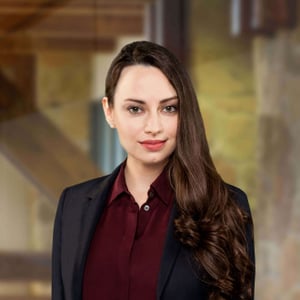
Senior Counsel, First Liberty Institute
Stephanie N. Taub serves as Senior Counsel with First Liberty Institute, focusing on litigation, appellate advocacy, and legal education.
While at First Liberty, her article on the rights of faith-based organizations under Title VII of the Civil Rights Act of 1964 has been published in the Texas Review of Law and Politics. She has also authored pieces published in National Review, the Daily Signal, the Washington Times, the Des Moines Register, and the New York Daily News. In 2017, Taub was named one of 15 recipients of the James Wilson Fellowship in natural law.
Before joining First Liberty, Taub worked as a law clerk to the Honorable Reed O’Connor in the U.S. District Court of the Northern District of Texas.
Taub is a Harvard Law School graduate in the class of 2014 and a Blackstone Fellow in the class of 2012. During law school, she served as Co-President of the HLS Christian Fellowship and Managing Technical Editor of the Harvard Human Rights Journal. Taub spent her law school summers defending religious liberty in public interest law firms and clerking in the Texas Office of Solicitor General.
For her undergraduate studies at the University of Southern California, Taub graduated summa cum laude, majoring in Business Administration with a minor in Philosophy.
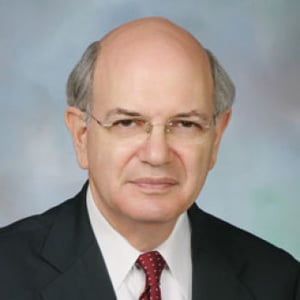
Former Congressman, Vice-President, U.S. Association of Former Members of Congress
The Honorable Martin Frost served in the U.S. House of Representatives from 1979-2005.
With 26 years of legislative experience, he is regarded as a preeminent political analyst among his peers. He held numerous leadership positions in his party and is also considered to be one of its top strategists, an innovative lawmaker who is able to craft bipartisan legislation, and a strong fundraiser for fellow Democrats. He is also the co-author, with Congressman Tom Davis (V-RA) of The PARTISAN DIVIDE: Congress in Crisis, which looks at how to solve the gridlock in Washington. In his presentations, Martin Frost addresses our current political climate, what to expect from Congress after the election, and what it takes to achieve bi-partisan cooperation.n, and what it takes to achieve bi-partisan cooperation.
Early in his political career, Frost served six years on the House Budget Committee and was chairman of the Health Task Force from 1985–1988. During the 1996 and 1998 elections, Frost was the chair of the Democratic Congressional Campaign Committee, a position he utilized to help his party gain 14 seats in the House. In 1999, he earned the distinguished role of chairman of the House Democratic Caucus, the party’s third-highest leadership role. During his last term, Frost held noteworthy positions as the ranking member of the House Rules Committee and highest ranking Southerner in the House Democratic Leadership. He was also the senior southern democrat in the House and the dean of the Texas congressional delegation.
Frost earned his bachelor’s degree in journalism and history from the University of Missouri-Columbia. Following his graduation from Georgetown Law School, he practiced in Dallas until his election in 1978. In 2005, Frost was a fellow at the Institute of Politics at the John F. Kennedy School of Government at Harvard, and in 2006, the Woodrow Wilson International Center for Scholars named him a public policy scholar.
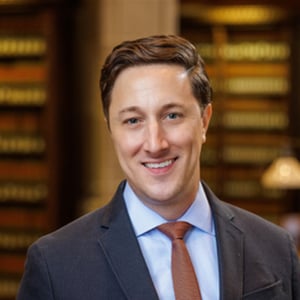
Professor of Law, Notre Dame Law School
Professor Derek Muller is a nationally-recognized scholar in the field of election law. His research focuses on the role of states in the administration of federal elections, the constitutional contours of voting rights and election administration, the limits of judicial power in the domain of elections, and the Electoral College.
He has published more than two dozen academic works, and his op-eds have appeared in the New York Times, the Los Angeles Times, and the Wall Street Journal. He has testified before Congress, and he is a contributor at the Election Law Blog. He is a co-author on a Federal Courts casebook published by Carolina Academic Press. He is also the co-reporter on a new Restatement of the Law, Election Litigation, an effort led by the American Law Institute.
Professor Muller teaches Election Law, Civil Procedure, and Evidence.
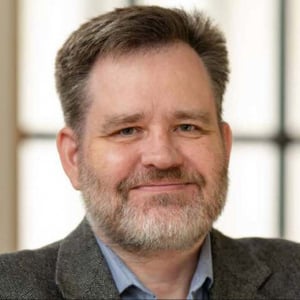
David Boies Professor of Law, Yale Law School

Partner, Patrick Doerr
Mr. Rando has represented clients in matters involving computer hardware and software, silicon chip manufacturing, biotechnology, medical devices, pharmaceuticals, chemical compounds, food additives, alternative energy, AI, autonomous vehicles, blockchain, consumer electronics, communications, internet, and e-commerce. He has appeared in courts across the country, including the Southern and Eastern Districts of New York and multiple U.S. Courts of Appeals.
As appellate counsel, Mr. Rando has served as counsel of record or co-counsel in more than 30 amicus briefs filed before the U.S. Supreme Court and Federal Circuit on issues of patent law, statutory interpretation, separation of powers, and constitutional law. Noteworthy filings include eBay Inc. v. MercExchange (2006), Oil States v. Greene’s Energy (2017), American Axle v. Neapco (2021), Amgen v. Sanofi (2023), and Cellect v. Vidal (2024).
Mr. Rando is a Fellow of the Academy of Court-Appointed Masters, having served by judicial appointment as Special Master in numerous complex patent cases, including multi-day Markman hearings and post-discovery proceedings. He also serves as a court-appointed Mediator and Neutral in both patent and commercial disputes.
He has played an active role in judicial and legislative engagement. Mr. Rando co-developed and conducted lecture series for the SDNY and EDNY Patent Pilot Program Judges and Clerks, covering the America Invents Act and Section 101 eligibility post-Alice and Mayo. He represented both the Federal Bar Association (FBA) and New York Intellectual Property Law Association (NYIPLA) at the Tillis/Coons Section 101 Patent Reform Roundtable, and submitted written testimony to the U.S. Senate Judiciary Committee in 2019.
Mr. Rando is a former president of the NYIPLA (2023–2024) and has held nearly every leadership position in the organization. He also served as Chair of the FBA’s Intellectual Property Law Section and was a founding member and president of the FBA’s EDNY Chapter. He is a founding member of the Association of Amicus Counsel, and an active contributor to the Federalist Society IP Practice Group Executive Committee.
He frequently lectures at CLE programs, universities, and legal associations on IP, constitutional law, and appellate advocacy. He has been quoted extensively in publications such as Law360, Bloomberg Law, WIPR, and National Law Journal. His scholarly publications include articles in The Federal Lawyer, Touro Law Review, and IPWatchdog.
Senior Research Fellow in Anglo-American Relations, Margaret Thatcher Center for Freedom, The Heritage Foundation
Theodore "Ted" R. Bromund studies and writes on Anglo-American relations, U.S. and British relations with Europe and the European Union, America’s leadership role in the world, and international organizations and treaties as senior research fellow in The Heritage Foundation’s Margaret Thatcher Center for Freedom.
Bromund, who joined Heritage in 2008, previously served nine years as associate director of International Security Studies at Yale University, a center dedicated to the study and teaching of diplomatic history and grand strategy. He was a lecturer in history beginning in 1999, and in international affairs for the master of arts program beginning in 2004.
A columnist for Newsday, Forbes, and Great Britain’s Yorkshire Post, Bromund also writes regularly for National Review, The Weekly Standard, and FoxNews.com, and, in Britain, CapX. He has been interviewed or cited by BBC News, CBS News, Fox News Channel, CNN, Fox Business, Politifact, Radio Free Europe, The Christian Science Monitor, Time, and Financial Times, among others.
Besides contributing articles to scholarly journals, Bromund is the author of a chapter on former British Prime Minister Tony Blair and the fall of Iraqi dictator Saddam Hussein in the book The Blair Legacy: Politics, Policy, Governance, and Foreign Affairs (Palgrave Macmillan, 2009).
In 2013, Bromund was recognized by the Second Amendment Foundation as its Scholar of the Year for his analysis of the Arms Trade Treaty.
Bromund received his doctorate in history in 1999 from Yale. His thesis on Britain’s first application to the European Economic Community won the Samuel H. Beer Dissertation Prize from the American Political Science Association’s British Politics Group. In 2016, he received Heritage’s Joseph Shattan Award in recognition of the quality of his writing.
He is an adjunct professor of strategic studies in the Strategic Studies Program at the Johns Hopkins University School of Advanced International Studies, where he teaches courses on grand strategy. He also holds two master’s degrees in history from Yale as well as a bachelor of arts degree from Iowa’s Grinnell College.
A native of Wooster, Ohio, he currently resides in Washington, D.C.
Partner, Grossman Young & Hammond
Sandra Grossman is a partner at Grossman Young & Hammond, LLC, located in Bethesda, Maryland. She is a skilled immigration litigator with over a decade of experience in all matters related to the practice of immigration law. She is known for providing top-notch, personalized service to both individual and corporate clients with complex immigration cases and highly specialized needs. Her pragmatic and creative approach to immigration challenges has earned her an international reputation as a lawyer who can get the job done for the most discriminating of clients.
Sandra has developed a unique practice that addresses complex inadmissibility issues, often involving matters before INTERPOL, high-profile clients, politically sensitive matters, and diplomatic issues with foreign policy implications, and requiring knowledge and expertise on a range of issues involving public international law and U.S. domestic law. Sandra is fiercely dedicated to guiding her clients through the complex maze of U.S. immigration laws in order to find workable solutions to achieve their goals.
Sandra has successfully represented individuals in diverse aspects of immigration law before the immigration courts, the Board of Immigration Appeals, and the Federal District Courts. She also represents clients in the areas of deportation defense, detention and bond issues, the immigration consequences of criminal convictions, requests under the Freedom of Information Act (FOIA), waivers of inadmissibility, asylum, and adjustment of status and naturalization applications, among other matters. Her experience includes representation of clients in lawsuits to prompt U.S. Citizenship and Immigration Service (USCIS) action on long-delayed applications, including applications for naturalization, adjustment of status, waivers, and replacement green cards.
The Washingtonian Magazine recognized Sandra as one of “Washington’s Top Lawyers.” She is an active member of the American Immigration Lawyers Association (AILA), a former adjunct professor in immigration law at the Washington College of Law at American University, and a member of the Editorial Board of Bender’s Immigration Bulletin. Sandra regularly handles pro-bono client matters and offers reduced rate services for such organizations as the Maryland Immigrant Rights Coalition (MIRC), CASA de Maryland, Catholic Charities, and Identity.
Sandra is a native Spanish and English speaker and is conversant in French.
Dr. William J. Murphy is the founder and president of Good Government Now. He is active with several advocacy and policy research organizations including service as a Policy Advisor to the Center for Constitutional Reform at the Heartland Institute and a Co-Chair of Physicians Against Drug Shortages, an advocacy group dedicated to promoting competition in the pharmaceutical and medical product markets.
He is an Associate Professor of Social Science at the New England Institute of Technology in East Greenwich, RI where he teaches American government, economics, and U.S. national security policy. Dr. Murphy holds M.A. and Ph.D. degrees in Political Science from the University of Pennsylvania as well as an A.B. in Government from Harvard College. Dr. Murphy is also a veteran of enlisted and officer service in the armor branch of the United States Army from 1988-1991, including assignments as a tank platoon leader and battalion staff officer with the 2nd Infantry Division in Korea.
Partner, Briscoe Prows Kao Ivester & Bazel LLP
Tony Francois is experienced in Water and Real Property Law, Land Use and Zoning, Environmental Regulation, Natural Resources Development, Agricultural Law, and Constitutional Law. He has represented homeowners, builders, farmers and ranchers, trade associations, and water districts in administrative, civil, and criminal proceedings before state and federal administrative agencies and state and federal trial and appellate courts. He is a member of the California State Bar and the Northern, Eastern, and Central Districts of California and the Districts of New Mexico and North Dakota, and has litigated cases in federal courts in California, Oregon, Washington, Idaho, Montana, Nevada, Arizona, New Mexico, Colorado, North and South Dakota, Minnesota, Massachusetts, Maryland, South Carolina, and the District of Columbia, as well as the Sixth, Eighth, Ninth, and Tenth Circuit Courts of Appeals. He has appeared before the Supreme Courts of California, Idaho, Nevada, and the United States.
Prior to attending law school, he served as an infantry officer in the United States Army, and was stationed in the former West Germany during the fall of the Berlin Wall.
Tony was an Attorney at Pacific Legal Foundation from 2012 to 2021. He was a lobbyist for 10 years, first with California Farm Bureau Federation from 2003 to 2007, and then with KP Public Affairs from 2007 to 2012. He was an attorney at McQuaid, Bedford & Van Zandt in San Francisco from 1999 – 2003.

Professor, University of Minnesota Law School
Ilan Wurman is the Julius E. Davis Professor of Law at the University of Minnesota, where he teaches administrative law and constitutional law. He previously taught at Arizona State University. He writes primarily on the Fourteenth Amendment, administrative law, separation of powers, and constitutionalism. His academic writing has appeared in the Yale Law Journal, the Stanford Law Review, the University of Chicago Law Review, the University of Pennsylvania Law Review, the Virginia Law Review, the Duke Law Journal, the Minnesota Law Review, the Notre Dame Law Review, and the Texas Law Review among other journals.
Professor Wurman is the author of the new book The Constitution of 1789: A New Introduction (Cambridge 2026). His previous books include A Debt Against the Living: An Introduction to Originalism (Cambridge 2017), and The Second Founding: An Introduction to the Fourteenth Amendment (Cambridge 2020). He is also the author of the casebook, Administrative Law Theory and Fundamentals: An Integrated Approach (Foundation Press 3d ed. 2025).
Professor Wurman practices law with the firm Tully Bailey. He has litigated a variety of administrative law and constitutional law cases, including cases involving COVID-19 restrictions, transmission lines, and Appointments Clause challenges. He also devised winning public nuisance theories to force city governments to address the increasingly challenging public camping crises throughout the country.
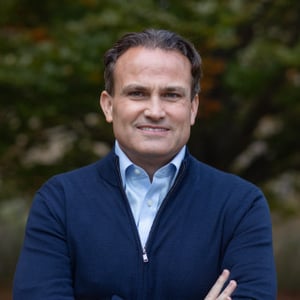
Professor of Law, University of Michigan Law School
Christopher J. Walker is a Professor of Law at the University of Michigan. Prior to joining Michigan law faculty in 2022, he spent a decade teaching at The Ohio State University Moritz College of Law. He previously clerked for Justice Anthony Kennedy of the U.S. Supreme Court, worked on the Civil Appellate Staff at the U.S. Department of Justice, and served on the Senate Judiciary Committee staff for the Gorsuch Supreme Court confirmation. Professor Walker’s research focuses on administrative law, regulation, and law and policy at the agency level. Outside the law school, he chaired the American Bar Association’s Section of Administrative Law and Regulatory Practice in 2020-21 and served as one of forty Public Members of the Administrative Conference of the United States from 2016-2022, and he continues to serve in both organizations in various capacities. He also works of counsel at the U.S. Chamber Litigation Center. In 2022, he received the Federalist Society’s Joseph Story Award.
David Boies Professor of Law, Yale Law School

NY v. HHS and the Challenge of Protecting Conscience Rights in Healthcare
Stephanie Taub
Note from the Editor: The Federalist Society takes no positions on particular legal and public...
Should We Change the Size of Congress? [Article I Initiative]
Martin Frost, Derek T. Muller, Keith E. Whittington
How are Congressional seats allotted to the various states? Why has the total number of...
Topics
The Controversy about the ERA Amendment Process
It seems likely that another constitutional controversy will soon emerge. Next year, the Virginia Legislature...
Congress, the EPA, and the Administrative State - Can Climate Change the Constitution?
Arizona State Student Chapter
Phoenix, AZTopics
Quarles’ Conundrum of Bank Supervision
Without subpoenas, bank examiners routinely poke through the books, records, premises, and operations of...
Congress and the Courts: From Advisory Commissions to the Judiciary Committee
Kentucky Student Chapter
Lexington, KYPeter v. NantKwest Inc. Post-Decision SCOTUScast
Robert J. Rando
On Dec 11, 2019 the Supreme Court decided Peter v. NantKwest Inc., a case considering...
“High Crimes and Misdemeanors”: The Constitutional How and Why of Impeachment
Harrisburg, PAThe TRAP Act’s Contribution to Preventing Transnational Repression Through Interpol
Ted R. Bromund, Sandra Grossman
Note from the Editor: The Federalist Society takes no positions on particular legal and public...
Necessary & Proper Episode 52: Can Congress Enforce their Subpoenas?
William J. Murphy
Can Congress enforce subpoenas they issue? Dr. William Murphy, Founder and President of Good Government...