Should We Change the Size of Congress? [Article I Initiative]
Short video featuring Martin Frost, Derek Muller, and Keith Whittington
How are Congressional seats allotted to the various states? Why has the total number of seats remained the same, despite the population growth of the United States? Representative Martin Frost, Professor Derek Muller, and Professor Keith Whittington explain the size and structure of the House of Representatives today and as envisioned by the Founders. They then discuss the pros and cons of expanding the size of the House, including repercussions for the Electoral College.
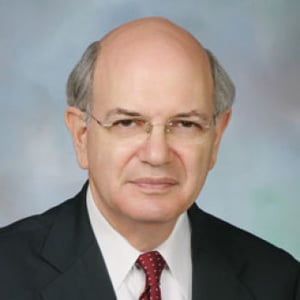
The Honorable Martin Frost served in the U.S. House of Representatives from 1979 to 2005. He is currently the President of the Association of Former Members of Congress (FMC). https://gspm.gwu.edu/martin-frost
You can follow Hon. Martin Frost and his work at @HonMartinFrost https://twitter.com/HonMartinFrost
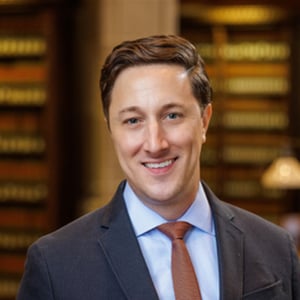
Derek Muller is a Professor of Law at Pepperdine University Caruso School of Law. https://law.pepperdine.edu/faculty-research/derek-muller/
You can follow Derek Muller and his work at @derektmuller https://twitter.com/derektmuller
Keith Whittington is the William Cromwell Nelson Professor of Politics at Princeton University. https://scholar.princeton.edu/kewhitt/home
You can follow Keith Whittington and his work at @kewhittington https://twitter.com/kewhittington
As always, the Federalist Society takes no position on particular legal or public policy issues; all expressions of opinion are those of the speaker.
This project is part of the Federalist Society’s Article I Initiative, which explores the proper role of Congress according to its constitutional design. To learn more, please visit the Article I Initiative website: https://articleiinitiative.org/
Subscribe to the series’ playlist:
https://www.youtube.com/playlist?list=PLWwcngsYgoUX2-aBWE4nGUoZbhfZmrbP7
Related Links:
Wyoming Rule
https://en.wikipedia.org/wiki/Wyoming_Rule
A Bigger House is a Bad Idea, Jonathan Bernstein, Bloomberg
https://www.bloomberg.com/opinion/articles/2018-11-13/a-bigger-house-is-a-bad-idea
American Needs a Bigger House, New York Times Editorial Board
https://www.nytimes.com/interactive/2018/11/09/opinion/expanded-house-representatives-size.html

Former Congressman, Vice-President, U.S. Association of Former Members of Congress
The Honorable Martin Frost served in the U.S. House of Representatives from 1979-2005.
With 26 years of legislative experience, he is regarded as a preeminent political analyst among his peers. He held numerous leadership positions in his party and is also considered to be one of its top strategists, an innovative lawmaker who is able to craft bipartisan legislation, and a strong fundraiser for fellow Democrats. He is also the co-author, with Congressman Tom Davis (V-RA) of The PARTISAN DIVIDE: Congress in Crisis, which looks at how to solve the gridlock in Washington. In his presentations, Martin Frost addresses our current political climate, what to expect from Congress after the election, and what it takes to achieve bi-partisan cooperation.n, and what it takes to achieve bi-partisan cooperation.
Early in his political career, Frost served six years on the House Budget Committee and was chairman of the Health Task Force from 1985–1988. During the 1996 and 1998 elections, Frost was the chair of the Democratic Congressional Campaign Committee, a position he utilized to help his party gain 14 seats in the House. In 1999, he earned the distinguished role of chairman of the House Democratic Caucus, the party’s third-highest leadership role. During his last term, Frost held noteworthy positions as the ranking member of the House Rules Committee and highest ranking Southerner in the House Democratic Leadership. He was also the senior southern democrat in the House and the dean of the Texas congressional delegation.
Frost earned his bachelor’s degree in journalism and history from the University of Missouri-Columbia. Following his graduation from Georgetown Law School, he practiced in Dallas until his election in 1978. In 2005, Frost was a fellow at the Institute of Politics at the John F. Kennedy School of Government at Harvard, and in 2006, the Woodrow Wilson International Center for Scholars named him a public policy scholar.
Professor of Law, Notre Dame Law School
Professor Derek Muller is a nationally-recognized scholar in the field of election law. His research focuses on the role of states in the administration of federal elections, the constitutional contours of voting rights and election administration, the limits of judicial power in the domain of elections, and the Electoral College.
He has published more than two dozen academic works, and his op-eds have appeared in the New York Times, the Los Angeles Times, and the Wall Street Journal. He has testified before Congress, and he is a contributor at the Election Law Blog. He is a co-author on a Federal Courts casebook published by Carolina Academic Press. He is also the co-reporter on a new Restatement of the Law, Election Litigation, an effort led by the American Law Institute.
Professor Muller teaches Election Law, Civil Procedure, and Evidence.
David Boies Professor of Law, Yale Law School