
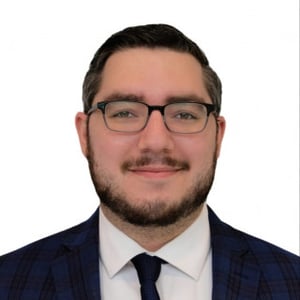
Visiting Fellow in Bioethics, Ethics & Public Policy Center
Alexander Raikin is a Visiting Fellow in the Bioethics, Technology and Human Flourishing Program at the Ethics and Public Policy Center. His research focuses on the dignity of human life and end-of-life issues, especially on its impact on the field of medicine and broader ethical questions of social belonging.
For tips, please send an email to araikin+tips@eppc.org.
His writing has been widely cited in major publications such as The Atlantic and the New York Times and in academic journals in the United States, Canada, UK, and France. He wrote cover stories for National Review and The New Atlantis, while his other bylines include City Journal, Plough, and the Washington Free Beacon. Raikin frequently speaks on national radio and on major podcasts.
Last year, Raikin was an inaugural Richard John Neuhaus Fellow at the Public Interest Fellowship and EPPC. He was a Tikvah Summer Fellow and a Killam scholar with Fulbright at American University. He graduated from Carleton University with a bachelor’s degree in public policy. Raikin is a proud member of Kesher Israel synagogue and lives with his wife in Washington, D.C.
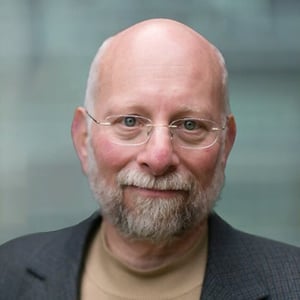
Senior Fellow, Cato Institute
Jeffrey A. Singer is a senior fellow at the Cato Institute and works in the Department of Health Policy Studies. He is principal and founder of Valley Surgical Clinics Ltd., the largest and oldest group private surgical practice in Arizona, and has been in private practice as a general surgeon for more than 35 years.
He is also a visiting fellow at the Goldwater Institute in Phoenix. Singer is a member of the Board of Scientific Advisors of the American Council on Science and Health. From 1994 to 2016, he was a regular contributor to Arizona Medicine, the journal of the Arizona Medical Association. He served on the Advisory Board Council of the Center for Political Thought and Leadership at Arizona State University from 2014 to 2018 and is an adjunct instructor in the Program on Political History and Leadership at ASU. He writes and speaks extensively on regional and national public policy, with a specific focus on the areas of health care policy and the harmful effects of drug prohibition.
He received his BA from Brooklyn College (City University of New York) and his MD from New York Medical College. He is a fellow of the American College of Surgeons.
Managing Director, Berkeley Research Group
Dan Troy is Managing Director and an expert witness on FDA matters at Berkeley Research Group. Previously he served as Chief Counsel of the US Food and Drug Administration and General Counsel of GlaxoSmithKline PLC.
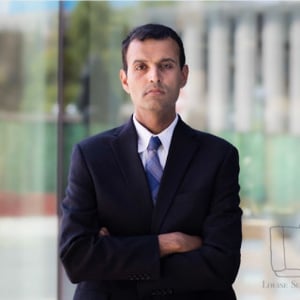
Managing Director, Berkeley Research Group (BRG)
Dr. Dasgupta served as Assistant Secretary for Trade and Economic Security, responsible for a comprehensive national security portfolio. His duties included oversight of the Committee on Foreign Investment in the United States (CFIUS), Team Telecom, the Forced Labor Enforcement Task Force (FLETF), Information and Communications Technology and Services (ICTS), Arctic security initiatives, the Icebreaker Collaboration Effort (ICE) Pact, and related trade matters. Sohan Dasgupta also served as political head of the Millennium Challenge Corporation (MCC), supporting U.S. foreign policy and national security objectives. Previously, he had served as Deputy General Counsel of the U.S. Department of Homeland Security (DHS).
Dr. Dasgupta holds a JD from the University of California, Berkeley, where he was elected to the Order of the Coif; a PhD in international trade and arbitration from the University of Cambridge; MSc from the University of Oxford; and BA in Economics–Operations Research and History from Columbia University. He commenced his legal career with clerkships on the U.S. Court of Appeals for the Ninth Circuit and the U.S. District Court for the Southern District of West Virginia.
Dr. Dasgupta has addressed the Hungarian, Romanian, and Guatemalan parliaments, and has spoken at the invitation of Members of the U.S. Congress, the British Parliament, the European Union Parliament, the Congress of the Philippines, and the Legislative Assembly of El Salvador.
Visiting Professor of Public and International Affairs, Charles and Marie Robertson Visiting Professor, Princeton School of Public and International Affairs
Martin S. Flaherty is a longtime is Visiting Professor at the Princeton School of Public and International Affairs, where he was Fellow in the Program in Law and Public Affairs. He is also Leitner Family Professor of International Human Rights Law and Founding Co-Director of the Leitner Center for International Law and Justice at Fordham Law School. Professor Flaherty also currently teaches at Columbia Law School and Barnard College. Previously he has taught at China University of Political Science and Law and the National Judges College in Beijing, Sungkyunkwan University in Seoul, Queen’s University Belfast. Professor Flaherty earlier served as a law clerk for Justice Byron R. White of the U.S. Supreme Court and Chief Judge John Gibbons of the U.S. Court of Appeals for the Third Circuit.
Flaherty received a J.D. from Columbia Law School, where he was Book Reviews and Articles Editor of the Columbia Law Review, an M.A. and M.Phil., with distinction, from Yale (in history), and B.A. summa cum laude from Princeton. For the Leitner Center, Human Rights First, and the New York City Bar Association, he has led or participated in human rights missions to Northern Ireland, Turkey, Hong Kong, Mexico, Malaysia, Kenya, Romania and China. Professor Flaherty is currently the President of the American Association of the International Commission of Jurists, https://www.aaicj.org, a member of the Council on Foreign Relations, and a legal expert advisor at the Sixth Committee of the United Nations General Assembly.
Flaherty’s scholarly publications focus upon international human rights, foreign affairs, and constitutional law and history, and appear in such journals as the Columbia Law Review, the Yale Law Journal, the Michigan Law Review, the University of Chicago Law Review, Constitutional Commentary, the Harvard Journal of Law and Policy, and the Harvard Human Rights Journal. He has written, appeared, or been quoted in The New York Times, The Washington Post, The New Yorker, The Boston Globe, The Daily News, Newsday, the PBS Newshour, CNN, MSNBC, and NPR. He is also the author of the Restoring the Global Judiciary: Why the Supreme Court Should Rule in Foreign Affairs (Princeton University Press, 2019).

Professor Emeritus of Law, Antonin Scalia Law School, George Mason University
Jeremy A. Rabkin is a Professor Emeritus of Law at the Antonin Scalia Law School, George Mason University. Before joining the faculty in June 2007, he was for over two decades a professor in the Department of Government at Cornell University. Professor Rabkin serves on the board of directors of the Center for Individual Rights, a public interest law firm based in Washington, D.C. Previously he was a board member of the U.S. Institute of Peace and the board of academic advisors of the American Enterprise Institute.
Professor Rabkin’s books include Law Without Nations? (Princeton University Press, 2005). He authored “If You Need a Friend, Don’t Call a Cosmopolitan,” a chapter in Varieties of Sovereignty and Citizenship (Sigal R. Ben-Porath & Rogers M. Smith eds., University of Pennsylvania Press, 2012). His articles have appeared in major law reviews and political science journals and his journalistic contributions in a range of magazines and newspapers, including the Washington Post and the Wall Street Journal.
Pioneers Chair in Telecommunications, Penn State University
Dr. Christopher Ali is the Pioneers Chair in Telecommunications and a full professor of telecommunications in the Bellisario College. He is also an affiliate faculty with the College of Information, Science and Technology (IST) at Penn State. He holds a Ph.D. in communication studies from the Annenberg School for Communication at the University of Pennsylvania (2013). His research interests include media and telecommunications policy and regulation, broadband policy, critical political economy, critical geography, comparative media systems, qualitative research methods, media localism, and local news.
Ali uses critical, qualitative methods to research broadband policy, planning, deployment and digital equity in the United States. Presently, he has a series of projects dedicated to “broadband stories,” where he is researching how community-based stories can influence public policy. These projects form the basis of his forthcoming book, Where the wires end: Stories from the Digital Divide to be published in Spring 2027 with the University of Chicago Press. In 2026, Dr. Ali also completed a major grant funded research project for the Center for Rural Pennsylvania analyzing how the digital divide impacts rural first responders in the Commonwealth of Pennsylvania.
Dr. Ali is the author or editor of four books: "Public Service Media’s Contribution to Society"(Nordicom, 2023, with Prof. Dr. Manuel Puppis), "Farm Fresh Broadband: The Politics of Rural Connectivity" (MIT Press, 2021), "Media Localism: The Policies of Place" (University of Illinois Press, 2017), "Echoes of Gabriel Tarde: What we know better or different 100 years later" (USC Annenberg Press, 2014, with Drs. Elihu Katz and Joohan Kim).
Based on his expertise, Ali was called to testify before the Senate Commerce Committee in 2021 on broadband funding and policy programs. He has also briefed members of the House Democrats Task Force on Rural Broadband, the New York State Blue Ribbon Commission on Re-Imagining New York, the Federal Communications Commission, and has presented before numerous state and county governments.
Dr. Ali has published over two dozen peer reviewed articles in high-ranking academic journals including, The Journal of Communication, Communication Theory, Media Culture & Society, and Telecommunications Policy. His writing has also been published in Tech Policy Press, The New York Times, The Hill, Realtor Magazine, Law & Political Economy, Digital Beat, GovTech, Zocalo Public Square, the Canadian Broadcasting Corporation, Washington Monthly, Columbia Journalism Review, and The Conversation. He is a frequent press commentator on the subjects of broadband, media policy, and local news, with interviews in the Associated Press, Hollywood Reporter, Business Insider, Washington Post, Philadelphia Inquirer, Los Angeles Times, NPR, CNET, CBC, Bloomberg, and other major national and international news outlets.
Ali presently serves as the Associate Editor of the journal Communication Law & Policy. He also sits on the advisory board of the Centre County Film Festival.
Previously, he served as the Chair of the Communication Law and Policy Division of the International Communication Association (2021-2023) and was an advisor to the Virginia Joint Committee on Technology & Science. He has also served on the Federal Communication Commission’s Communication Equity and Diversity Council Working Group and was a board member of Charlottesville Tomorrow, a non-profit news organization in Charlottesville, Virginia.
Dr. Ali has held fellowships or grants from the Center for Rural Pennsylvania (2025), the Benton Institute for Broadband and Society (2019-2020), the Global Future Council of the World Economic Forum (2018), the Center for Advanced Research in Global Communications (CARGC) at the University of Pennsylvania (2017 & 2022), the Tow Center for Digital Journalism at Columbia University (2016-2017 & 2019-2021), the University of Fribourg in Fribourg Switzerland (2015), and the Social Sciences and Humanities Research Council of Canada (2011).
Ali is an award-winning scholar, having been honored with the 2024 Bellisario Alumni Association Teaching Excellence Award, the 2025 Dean’s Excellence Award for Research & Creative Accomplishment, and the 2025 Broadband Hero Award.
Vice President and Deputy Chief Counsel, U.S. Chamber Litigation Center, U.S. Chamber of Commerce
Jennifer B. Dickey is vice president and deputy chief counsel at the U.S. Chamber Litigation Center, the litigation arm of the U.S. Chamber of Commerce. Dickey handles a variety of litigation matters for the Chamber.
Dickey joined the Chamber following her service as Acting Assistant Attorney General and Principal Deputy Assistant Attorney General in the Civil Division at the U.S. Department of Justice. She also previously served as Deputy Associate Attorney General, providing strategic oversight of the Civil Division, Civil Rights Division, and Foreign Claims Settlement Commission, as well as Special Assistant to the President and Associate Counsel to the President. In the latter capacity, she provided legal advice on a wide array of executive actions and rulemakings, civil litigation, and judicial nominations.
Dickey also practiced law at Kirkland & Ellis LLP before her government service. She was a commercial and appellate litigator, representing businesses in federal and state courts.
Earlier in her career, Dickey served as a law clerk for the Honorable Clarence Thomas of the Supreme Court of the United States and the Honorable William H. Pryor Jr. of the United States Court of Appeals for the Eleventh Circuit.
Dickey earned her law degree magna cum laude from Duke University School of Law, where she was an Executive Editor of the Duke Law Journal, and her undergraduate degree magna cum laude from Dartmouth College.
Counsel, U.S. House Energy and Commerce Committee
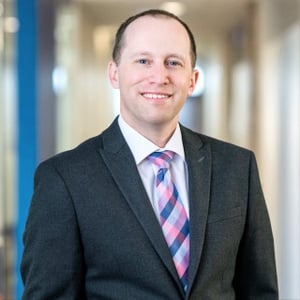
Partner, Wilkinson Barker Knauer, LLP
Dan leverages a deep understanding of telecommunications regulation and the broader legal landscape to help clients achieve their business goals. He provides practical and creative advice, develops persuasive policy advocacy, and represents clients in court appeals of agency matters. In an era in which courts play a larger role than ever in shaping regulation, Dan’s mix of legal depth, regulatory knowledge, and policymaking experience make him stand out.
His practice encompasses federal and state telecommunications regulation, emerging Internet issues, funding programs, online privacy frameworks, and consumer protection laws. He co-teaches a telecommunications law course at Georgetown Law School.
Prior to joining WBK, Dan spent eight years in leadership positions in the Federal Communications Commission’s Wireline Competition Bureau. There, Dan guided net neutrality and broadband infrastructure proceedings, implementation of caller ID authentication and the Robocall Mitigation Database, transaction reviews, and many other agency actions. He is especially proud of his contributions to establishing 988 as the three-digit code for the national suicide prevention hotline.
Today, courts make many of the most important decisions regarding agencies, and Dan regularly represents clients in court appeals concerning agency matters. He and the WBK team prevailed before the U.S. Supreme Court on behalf of industry associations in FCC v. Consumers’ Research, which affirmed the constitutionality of the Universal Service Fund.
Dan is a graduate of Yale University and Harvard Law School. Outside of work, Dan enjoys spending time with his kids, baking bread and cooking, playing card and board games, attempting to play sports, and science fiction/fantasy.

Vice President for Legal Affairs, Goldwater Institute
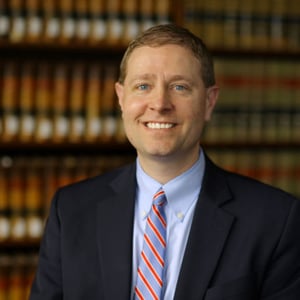
Executive Director, Salmon P. Chase Center for Civics, Culture, and Society, The Ohio State University
Professor Lee J. Strang serves as the inaugural executive director of the Salmon P. Chase Center for Civics, Culture, and Society at The Ohio State University.
Initiated in 2023 by the state of Ohio, the Chase Center will be an academic home at Ohio State for teaching, research, and programing on the foundations of the American constitutional order and its impact on society. As executive director, Professor Strang is responsible for organizing the center, overseeing the hiring and appointment of the center’s faculty, developing curriculum, and delivering student and academic programming. He also holds a faculty appointment in the Moritz College of Law at Ohio State.
Professor Strang is a nationally recognized legal scholar who has published dozens of articles in leading journals in the fields of constitutional law and interpretation, property law, and religion and the First Amendment. He co-edits the textbook Federal Constitutional Law, and his most recent book, Originalism’s Promise: A Natural Law Account of the American Constitution is the first book-length, natural law justification for originalism. He currently is writing on civic thought and leadership, and he is finalizing a book on the history of American Catholic legal education (with John M. Breen).
Before joining Ohio State, Professor Strang served as the inaugural director of the University of Toledo’s Institute of American Constitutional Thought & Leadership. He joined the Toledo College of Law faculty in 2008, was granted tenure in 2010, and was named John W. Stoepler Professor of Law & Values in 2015. The University of Toledo awarded Professor Strang its Outstanding Faculty Research and Scholarship Award in 2017. Before that, he was a visiting professor at Michigan State University College of Law. A graduate of the University of Iowa, where he was articles editor of the Iowa Law Review and Order of the Coif, Professor Strang holds an LL.M. degree from Harvard Law School.
Professor Strang has been a visiting scholar at the Georgetown Center for the Constitution and a visiting fellow at the James Madison Program at Princeton University. In 2016, he was appointed to the Ohio Advisory Committee of the U.S. Commission on Civil Rights and reappointed as chair in 2023.
Prior to teaching, Professor Strang served as a judicial clerk for Judge Alice M. Batchelder of the U.S. Court of Appeals for the Sixth Circuit. He was also an associate for Jenner & Block LLP in Chicago, where he practiced in general and appellate litigation.
Professor Strang is a frequent presenter at scholarly conferences. He is the president of the Board of Trustees of Northwest Ohio Classical Academy, Ohio’s first classical charter school. He is also a regular participant in debates at law schools across the country, a contributor to the media, and a speaker to political, civic, and religious groups.
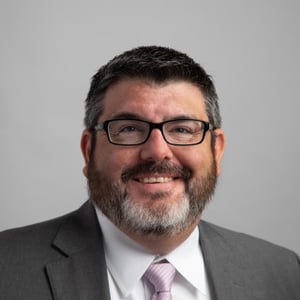
Senior Attorney, Institute for Justice
Paul Avelar is the Managing Attorney of the Institute for Justice Arizona Office. He joined the Institute in March 2010 and litigates free speech, property rights, economic liberty, school choice and other constitutional cases in federal and state courts.
As the head of IJ’s national Braiding Freedom Initiative, Paul represents natural hair braiders across the country to protect their right to earn an honest living. The Initiative uses lawsuits, activism and research to remove laws that require potential braiders to undergo hundreds of costly training hours just to braid hair. Since IJ launched the Braiding Freedom Initiative in 2014, 12 additional states have freed braiders from unnecessary licensing burdens. Paul drafted the model Natural Hair Braiding Protection Act, which has been adopted in Arkansas, Indiana, Iowa, Kentucky, Nebraska, New Hampshire, Texas and South Dakota. He is currently representing braiders in Missouri, where state laws infringe upon their right to earn an honest living.
In his free speech work, Paul has challenged numerous laws that trample First Amendment rights. In Arizona Freedom Club PAC v. Bennett, he represented candidates and independent groups in a successful U.S. Supreme Court challenge to the “matching funds” provision of Arizona’s publicly financed elections system. He represented grassroots groups and individuals in Arizona, Mississippi and Washington, where state laws burdened their political speech by requiring them to register with the government, to navigate complex regulations and to face fines and possible criminal penalties merely because they talked about political issues. In Washington, Paul protected a lawyer’s right to defend, pro-bono, the First Amendment rights of political speakers. Through litigation and legislation, Paul leads the fight against abusive civil forfeiture laws in Arizona and elsewhere.
Paul also co-authored the most comprehensive published study of economic liberty protections in the Arizona Constitution. The Chief Justice of the Arizona Supreme Court appointed Paul to the Task Force on the Review of the Role and Governance Structure of the State Bar of Arizona, where he dissented from the majority report and called on leaders to substantially reform the Bar and state regulation of the practice of law. He often speaks at law schools across the country about constitutional issues and his work at IJ.
Prior to joining IJ-AZ, Paul worked as an attorney in Philadelphia. He clerked for Judge Roger Miner on the 2nd U.S. Circuit Court of Appeals, Justice Andrew Hurwitz on the Arizona Supreme Court, and Judge Daniel Barker on the Arizona Court of Appeals.
Paul graduated manga cum laude from the Arizona State University College of Law in 2004 and was elected to the Order of the Coif. He received his undergraduate degree from Princeton University in 2000.
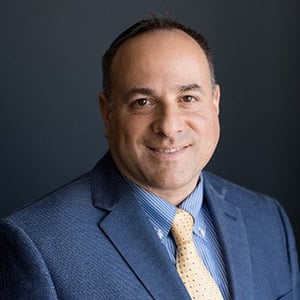
Policy Advisor, Heartland Institute
Jeff Stier is a policy advisor to the Heartland Institute.
He is widely quoted in the media and has written health policy op-eds for The Wall Street Journal, the Los Angeles Times, USA Today, The New York Post, The Washington Examiner, and Foxnews.com. The New York Times, the Associated Press, Reuters, CNN, Fox News, CNBC, MSNBC, NPR and other major outlets have interviewed and quoted Stier on a wide range of topics.
Stier has testified at state and local legislatures throughout the U.S., at FDA scientific hearings and at the Office of Management and Budget. He has also been a voice for freedom at hearings at the United Nations and in Israel’s Knesset. During more than two decades of advancing public health and defending liberty, Stier has been a speaker at CPAC, policy retreats for elected officials and medical and legal conferences.
Stier advises leading investment firms on regulatory and legal risk.
Earlier, Mr. Stier crafted health and environmental policy in the Office of the Mayor during the Giuliani administration in New York City.
Mr. Stier serves on the boards of the non-profit Jewish International Connections and Park City Jewish Collective. While earning his law degree at the Benjamin N. Cardozo School of Law, Mr. Stier served two terms as Editor-In-Chief of the Cardozo Law Forum. Jeff and his canine, BB, served as a Certified Crisis Response Strike Team with NATIONAL Crisis Response Canines, supporting survivors and first-responders.
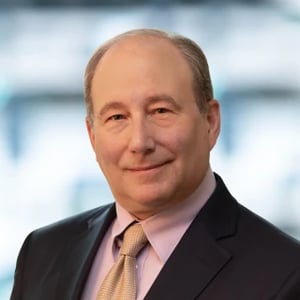
Managing Director, Berkeley Research Group
Dan Troy is the Managing Director at Berkeley Research Group.
Prior to that, he was the Chief Business Officer, Chief Administrative Officer, and General Counsel of Valo in Boston, Massachusetts.
Prior to joining Valo, he served as the Senior Vice President & General Counsel of GlaxoSmithKline and was a member of its Corporate Executive Team. Dan joined GSK in September 2008 and was responsible for leading the company’s legal department in protecting GSK’s intellectual property; managing litigation; supporting business development transactions; and business compliance and risk management. In 2012, Dan led the integration team following the acquisition of Human Genome Sciences, which later resulted in the launch of Benlysta, the first lupus treatment in 50 years. Dan led GSK’s Contributions Committee in the US and also led the Government Affairs, Public Policy and Patient Advocacy team from 2012 until 2014.
Prior to joining GSK, he was a Partner at the Washington law firm Sidley Austin LLP, where he principally represented pharmaceutical companies and trade associations on matters related to the US Food and Drug Administration (FDA) and government regulations. Dan was formerly Chief Counsel for the FDA, where he served as a primary liaison to the White House and the US Department of Health and Human Services.
Dan has chaired the American Bar Association's Section of Administrative Law and is a member of the American Law Institute. He currently chairs the US Chamber of Commerce Litigation Center. He has also chaired the Civil Justice Reform Group, as well as the PhRMA Law Section Executive Committee. He was the 2012 CPR Corporate Leadership Award recipient and, in 2013, was named a 'Legend in the Law' at the Burton Awards.
Dan holds a B.S. in Industrial and Labor Relations from Cornell University and a J.D. from Columbia University School of Law, where he was a member of the Law Review and a Kent Scholar. After graduation from law school, he was a law clerk for the US Circuit Court of Appeals for the District of Columbia Circuit.

James Madison Distinguished Professor of Law and Class of 1941 Research Professor of Law, University of Virginia School of Law
Professor John C. Harrison is the James Madison Distinguished Professor of Law and Class of 1941 Research Professor of Law at the University of Virginia School of Law. He joined the faculty at University of Virginia in 1993 as an associate professor of law after a distinguished career with the U.S. Department of Justice. His teaching subjects include constitutional history, federal courts, remedies, corporations, civil procedure, legislation and property. In 2008 he was on leave from the Law School to serve as counselor on international law in the Office of the Legal Adviser at the U.S. Department of State.
A 1977 graduate of the University of Virginia, Harrison earned his law degree in 1980 at Yale, where he served as editor of the Yale Law Journal and editor and articles editor of the Yale Studies in World Public Order. He was an associate at Patton Boggs & Blow in Washington, D.C., and clerked for Judge Robert Bork on the U.S. Court of Appeals for the District of Columbia Circuit. He worked with the Department of Justice from 1983-93, serving in numerous capacities, including deputy assistant attorney general in the Office of Legal Counsel (1990-93).
Professor Emeritus of Law, Antonin Scalia Law School, George Mason University
Jeremy A. Rabkin is a Professor Emeritus of Law at the Antonin Scalia Law School, George Mason University. Before joining the faculty in June 2007, he was for over two decades a professor in the Department of Government at Cornell University. Professor Rabkin serves on the board of directors of the Center for Individual Rights, a public interest law firm based in Washington, D.C. Previously he was a board member of the U.S. Institute of Peace and the board of academic advisors of the American Enterprise Institute.
Professor Rabkin’s books include Law Without Nations? (Princeton University Press, 2005). He authored “If You Need a Friend, Don’t Call a Cosmopolitan,” a chapter in Varieties of Sovereignty and Citizenship (Sigal R. Ben-Porath & Rogers M. Smith eds., University of Pennsylvania Press, 2012). His articles have appeared in major law reviews and political science journals and his journalistic contributions in a range of magazines and newspapers, including the Washington Post and the Wall Street Journal.

Emanuel S. Heller Professor of Law, University of California at Berkeley; Thomas Smith Senior Research Fellow, Civitas Institute, University of Texas at Austin
John Yoo is the Emanuel Heller Professor of Law at the University of California at Berkeley. He is also the Thomas Smith Senior Research Fellow, Civitas Institute, at the University of Texas at Austin. He is also a Nonresident Senior Fellow at the American Enterprise Institute.
His most recent book, The Politically Incorrect Guide to the Supreme Court, co-authored with Robert Delahunty, was published in 2023. Professor Yoo’s other books include Defender-in-Chief: Trump’s Fight for Presidential Power; Striking Power: How Cyber, Robots, and Space Weapons Change the Rules for War; Point of Attack: Preventive War, International Law, and Global Welfare; and Crisis and Command: A History of Executive Power from George Washington to George Bush.
He is a co-author of volumes 1 and 2 of R. Rossum, G. Tarr, V. Munoz & J. Yoo American Constitution Law (Routledge, 2026), and a co-editor of the eight-volume series on the 250th anniversary of the American Revolution, We Hold These Truths, with Yuval Levin and Adam White of the American Enterprise Institute.
Professor Yoo has published more than 100 articles in academic journals on subjects including national security, constitutional law, international law, and the Supreme Court. He also regularly contributes to the editorial pages of the Wall Street Journal, New York Times, Washington Post, Los Angeles Times, and National Review, among others.
Professor Yoo has served in all three branches of government. He was an official in the U.S. Department of Justice, where he worked on national security and terrorism issues after the 9/11 attacks. He served as general counsel of the U.S. Senate Judiciary Committee. He has been a law clerk for Supreme Court Justice Clarence Thomas and federal appeals Judge Laurence Silberman. He has been a visiting professor at the University of Texas at Austin’s School of Civic Leadership, Seoul National University, the Interdisciplinary Center Herzliya, Keio University, Trento University, the University of Chicago, and the Free University of Amsterdam.
Professor Yoo supervises the Public Law and Policy Program and the California Constitution Center. He also serves on the boards of Founding Forward, the Washington Legal Foundation, the Pacific Legal Foundation, the Ulysses Grant Institute, the Federalist Society’s Separation of Powers and Federalism Division, the Universidad Cientifica del Sur Law School, and the Asia-Pacific Law Institute at Seoul National University. He is a winner of the Federalist Society’s Paul Bator award and the Heritage Foundation’s Edwin Meese III Originalism Lectureship.
Professor Yoo graduated from Yale Law School and summa cum laude from Harvard College.
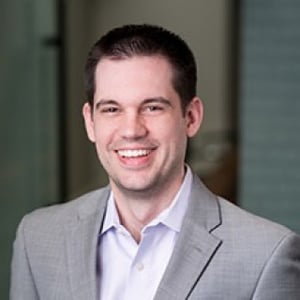
Executive Director, Consumers’ Research
Will Hild is the Executive Director of Consumers’ Research. Will has a decade of non-profit, legal and public policy experience. Prior to joining CR, Will served as the Deputy Director of the Regulatory Transparency Project. Before that, he worked at the Philanthropy Roundtable as the Director of External Affairs for the Culture of Freedom Initiative, and as the Chief Operating Officer of that Initiative when it grew to become a separate organization. He helped co-found the public interest law firm, Cause of Action, and served as the firm’s acting communications director for nearly a year.
Will received his J.D. from Georgetown University Law Center, and a B.A. in Political Science from the University of Florida. He is licensed to practice law in the Commonwealth of Virginia.
Will resides in Bethesda, MD, with his wife Cheryl, a practicing OB/GYN, and their son Liam.
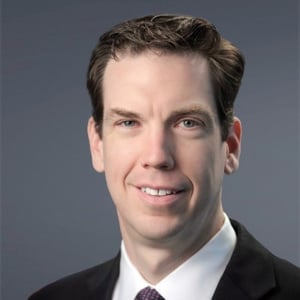
Partner, Fusion Law, PLLC
Paul is the founding partner of Fusion Law, PLLC. He has extensive experience with state, federal, and global regulators building coalitions and implementing policies to promote innovation in financial services. He is responsible for designing and implementing the first state (Arizona) and federal (CFPB) FinTech sandboxes in the United States. He also designed the CFPB no-action letter and trial disclosure policies. He helped found the first global regulatory innovation coalition (Global Financial Innovation Network) and led the founding of the first U.S. regulatory innovation coalition (American Consumer Financial Innovation Network). He served on the Financial Stability Oversight Council subcommittee on digital assets. He also has drafted state-level laws on blockchain and utility tokens.
Paul also has significant enforcement and litigation experience. He led many multi-state consumer protection enforcement matters as Civil Litigation Division Chief at the Arizona Attorney General’s Office.
Prior to his government service, Paul practiced law in the areas of securities litigation and transactional work for approximately six years at two well-known law firms. He also clerked on the U.S. Court of Appeals for the Fourth Circuit.
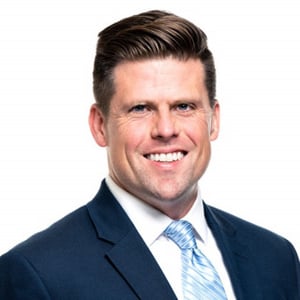
First Assistant Attorney General, Texas
Brent Webster was appointed by Ken Paxton to be First Assistant Attorney General in 2020. As second in command to Ken Paxton, Brent’s job is to implement Paxton’s policy and litigation initiatives and manage the day-to-day operation of the Office of the Attorney General, which employs approximately 4200 Texans.
Since his appointment in October 2020, Brent has led a multi-pronged initiative at Ken Paxton’s request to (1) serve as the primary check on the federal governments overreach, (2) ensure that Texas is deterring wrongful conduct in the state through civil enforcement mechanisms, and (3) instill a trial-focused, litigation-first mentality across the agency to foster better results for Texas when involved in litigation. Brent has led Ken Paxton’s litigation against the federal government in 106 lawsuits, with a staggering win rate above 75%, he has doubled the average annual recovery through civil enforcement, amounting to over $426 million dollars in his first fiscal year and $548 million in his second fiscal year, and he has led an agency-wide initiative to empower OAG lawyers to aggressively pursue the State’s interests in court, whether against liberal municipalities, rogue school districts, or anyone else who violates the law in Texas. Most recently, Brent was the lead negotiator at mediation for the historic 1.4-billion-dollar settlement against Meta for the State of Texas.
Prior to joining the Attorney General's Office, Webster served in a variety of leadership roles including First Assistant District Attorney in Williamson County, Texas, Chief Operations Officer and General Counsel at an Austin start-up, and Senior Counsel at a litigation law firm. While serving as a Criminal Prosecutor for 10 years in Williamson he was awarded the “Crime Victim Advocate Hall of Fame Award” for outstanding service to crime victims.
Webster received his undergraduate education at Southwestern University in Georgetown, Texas graduating in 2003, and received his legal education at University of Houston Law Center in 2005. He is licensed to practice law by the state of Texas and is admitted to practice before the U.S. Supreme Court, and the federal district courts in the Western, Southern, and Northern districts of Texas.

George C. Dix Professor in Constitutional Law, Northwestern University Pritzker School of Law
John O. McGinnis is a graduate of Harvard College and Harvard Law School where he was an editor of the Harvard Law Review. He also has an MA degree from Balliol College, Oxford, in philosophy and theology. Professor McGinnis clerked on the U.S. Court of Appeals for the District of Columbia. From 1987 to 1991, he was deputy assistant attorney general in the Office of Legal Counsel at the Department of Justice. He is the author of Accelerating Democracy: Transforming Government Through Technology (Princeton 2013) and Originalism and the Good Constitution (Harvard 2013) (with M. Rappaport). He is a past winner of the Paul Bator award given by the Federalist Society to an outstanding academic under 40. He has been listed by the United States on the roster of panelists who may be called upon to decide World Trade Organization Disputes.
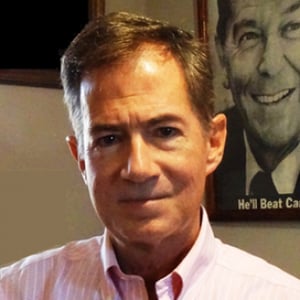
Former General Counsel of the U.S. Immigration and Naturalization, Former United States Ambassador to East Timor
Grover Joseph Rees is a Louisiana native whose family has lived in the Breaux Bridge/Lafayette area since the 1700s.
His first job after college was as an assistant to Congressman Dave Treen (R-LA3), who had just been elected as the first Republican Congressman from Louisiana since Reconstruction.
Rees graduated with honors from LSU Law School, where he served as Editor-in-Chief of the Louisiana Law Review. While in law school he worked on Ronald Reagan’s 1976 presidential campaign and was a Reagan delegate from Louisiana to the Republican National Convention. He also served as a member of the Lafayette Parish Republican Executive Committee and as a board member of Acadiana Right to Life.
In 1979, when Congressman Treen ran successfully for Governor, he asked Rees to write his authorized biography. The book, Dave Treen of Louisiana, was read and discussed widely during the campaign and after Treen’s election.
In 1985-86 Rees served as Special Counsel for Judicial Selection in President Reagan’s Justice Department, working closely with Attorney General Ed Meese to reorganize the judicial selection process to make it more philosophically oriented. These efforts resulted in the appointment of over 100 federal judges and were widely credited with transforming the federal judiciary.
From 1986 through 1991 Rees served as Chief Justice of the High Court of American Samoa, an Article I federal judicial position.
From 1991 through 1993 he was General Counsel of the U.S. Immigration and Naturalization Service.
In 1995 Rees went to work for the new Republican Congress as staff director and chief counsel of the Subcommittee on International Operations and Human Rights. He worked with subcommittee chairman Chris Smith (R.-N.J.) to cut U.S. funding for the International Planned Parenthood Federation and other organizations that perform and promote abortions overseas. Rees also worked on the drafting and enactment of the International Religious Freedom Act, the Trafficking Victims Protection Act, and other legislation that has helped to bring U.S. foreign policy into closer alignment not only with our national interests but also with our values.
In 2001-2002 Rees worked for Congressman Henry Hyde (R.-Ill.), who was then serving as Chairman of the House International Relations Committee.
From 2002 until 2006 Rees served as the first United States Ambassador to newly independent East Timor.
From 2006 until 2009 Ambassador Rees was the United States Special Representative for Social Issues, responsible for representing the United States on issues relating to vulnerable persons and the family within the United Nations system.
Ambassador Rees retired from government service in January 2009 and returned to Lafayette. He is married to Lan Dai Nguyen Rees and is a member of St. Genevieve’s Catholic parish in Lafayette. He was recently elected to serve as a member of the Louisiana Republican State Central Committee.
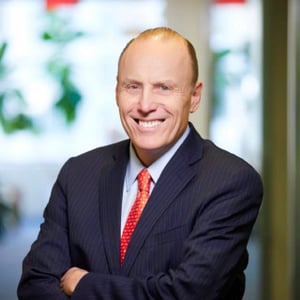
Senior Vice President, UN Foundation and President, the Better World Campaign
One of nation’s most esteemed experts on U.S.-UN affairs, Peter Yeo leads the Better World Campaign’s strategic engagement with Congress, the Administration, and organizations supporting stronger American leadership on the world stage. Yeo’s leadership has helped advance critical legislation in the U.S. Congress to ensure the country meets its obligations to the United Nations, UN Peacekeeping Operations, and UN agencies and organizations.
Yeo joined the Better World Campaign in 2009 with over twenty years of legislative, analytical, and management experience, including senior roles on Capitol Hill and in the State Department. Prior to arriving at UN Foundation, Yeo spent a decade as Deputy Staff Director on the House Foreign Affairs Committee. He has worked on a broad range of foreign policy and foreign aid issues, including leading negotiations for the landmark HIV/AIDS, Tuberculosis and Malaria Act of 2003 — PEPFAR — as well as the $50 billion reauthorization of the law in 2008. He also shepherded into law several measures dealing with China, Tibet, Burma, and East Timor.
Prior to his work with the Committee, Yeo served as a Deputy Assistant Secretary at the U.S. State Department, where he successfully advocated for repayment of the U.S. arrears to the UN, and was part of the U.S. delegation to the climate negotiations in Kyoto.
Yeo holds an master’s in East Asian Studies from Harvard University and a bachelor’s in East Asian Studies from Wesleyan University. He is a member of the Council on Foreign Relations and a Board Member of the U.S. Global Leadership Coalition.

Comfort Care or Hastened Death? Assisted Suicide and the Medicare Hospice Benefit
Alexander Raikin, Jeffrey A. Singer, Daniel E. Troy
Assisted suicide is a contested issue in American law and medicine, raising questions over individual...
What Would the Founders Think of the War in Iran?
Sohan Dasgupta, Martin Flaherty, Jeremy A. Rabkin
In this Federalist Society America 250 series, experts analyze modern legal and policy debates through...
Litigation Update: Minnesota Telecom Alliance v. FCC
Christopher Ali, Jennifer B. Dickey, Matthew Furlow, Daniel H. Kahn
The U.S. Court of Appeals for the Eighth Circuit recently vacated the Federal Communications Commission’s...
Proclaiming Liberty with Tim Sandefur
Timothy Sandefur, Lee J. Strang
As America celebrates the 250th anniversary of the Declaration of Independence, Proclaiming Liberty by Timothy...
Is the FDA Trying to Ban Direct-to-Consumer Drug Ads?
Paul Avelar, Jeff Stier, Dan Troy
The Trump Administration has been exploring new ways to tighten requirements for direct-to-consumer advertisements for...
The Return of the Monroe Doctrine? Venezuela, Ecuador, and American Foreign Policy
John C. Harrison, Jeremy A. Rabkin, John C. Yoo
Nearly two centuries after President James Monroe announced a landmark foreign-policy principle in his 1823 address to...
The End of ESG Collusion? A Conversation on the Vanguard Case
Will Hild, Paul N. Watkins, Brent Webster
This week, investment fund manager The Vanguard Group committed to ending its ESG-driven investment initiatives, ceasing...
Preliminary Thoughts on Legal Issues Relating to the Maduro Seizure
Prof. Roger Alford, Professor of Law, Notre Dame Law School Prof. Soledad Bertelsen, Assistant Professor...
Topics
Executive Action Review: The First 100 Days of Trump’s Environmental Policy
We are now more than 100 days into the second Donald Trump administration, and the...
Reform or Withdraw? The United States and the Future of the United Nations
John O. McGinnis, Grover Joseph Rees, Peter Yeo
The United Nations was founded to promote peace, security, and international cooperation, but critics argue...