
Former Acting Deputy Secretary, Department of Homeland Security
Senior Fellow for Homeland Security at The Center for Renewing America, Mr. Cuccinelli has been a trial and appellate litigator, including constitutional law, for over 25 years. Additionally, Mr. Cuccinelli served in state government in the Virginia State Senate from 2002-2010, and as Virginia’s Attorney General from 2010-2014. As Virginia’s Attorney General, Mr. Cuccinelli led national litigation against Obamacare and other illegal and unconstitutional federal overreach. He also led Virginia from being among the worst states in fighting human trafficking to becoming one of the best; and his successful prosecutorial efforts resulted in record enforcement against gangs, health care fraud and child predators, all while protecting life and constitutional rights.
Mr. Cuccinelli also served in the federal government, first as the Acting Director of
United States Citizenship & Immigration Services, and then as the Acting Deputy
Secretary for the Department of Homeland Security. During his tenure, Mr. Cuccinelli
was a leading spokesman for the administration on immigration, election security and
homeland security issues. He was responsible for planning and managing a budget of
over $50 billion per year, while serving as the chief operating officer for the Department
of the federal government responsible for responding to most forms of crises in the
United States. Mr. Cuccinelli was appointed by the President to serve as an original
member of the Coronavirus Task Force upon the emergence of the Covid-19 pandemic.
Following his time in federal service, Mr. Cuccinelli assumed leadership of the joint
Susan B. Anthony List/American Principles Project Election Transparency Initiative, in
which position Mr. Cuccinelli seeks to fend off a federal takeover of state elections while
at the same time advancing election reforms to achieve security, transparency and
accountability in our elections.
Mr. Cuccinelli continues to be a frequent media contributor on the wide array of
subjects in which he is an expert.
Mr. Cuccinelli and his wife, Teiro, grew up and live in Virginia and they have seven
children, two sons-in-law and most joyously of all – four grandchildren (so far).
In his spare time, Mr. Cuccinelli enjoys spending time with his family, reading, shooting,
playing ultimate frisbee and watching college basketball.

Dr. John Eastman is the former Henry Salvatori Professor of Law & Community Service and former Dean at Chapman University's Dale E. Fowler School of Law, where he had been a member of the faculty since 1999, specializing in Constitutional Law, Legal History, and Property. He is a founding director of the Center for Constitutional Jurisprudence, a public interest law firm affiliated with the Claremont Institute that he founded in 1999. He has a Ph.D. in Government from the Claremont Graduate School and a J.D. from the University of Chicago Law School, and a B.A. in Politics and Economics from the University of Dallas. He serves as the Chairman of the Board of the National Organization for Marriage.
Prior to joining the Chapman law faculty, Dr. Eastman served as a law clerk to the Honorable Clarence Thomas, Associate Justice, Supreme Court of the United States, and to the Honorable J. Michael Luttig, Judge, United States Court of Appeals for the Fourth Circuit and practiced law with the national law firm of Kirkland & Ellis. Dr. Eastman has also represented numerous clients in important constitutional law matters and has argued before the Supreme Court. On behalf of the Claremont Institute Center for Constitutional Jurisprudence, he has participated as amicus curiae before the Supreme Court of the United States, U.S. Courts of Appeals, and State Supreme Courts in more than one hundred cases of constitutional significance, including Boy Scouts of America v. Dale, Zelman v. Simmons-Harris (the school vouchers case), Kelo v. New London, Ct. (eminent domain), and Van Orden v. Perry (the 10 Commandments case). He has also appeared as an expert legal commentator on numerous television and radio programs, including C-SPAN, Fox News, PBS, NewsHour, and The O'Reilly Factor.
Professor of Law, The George Washington University Law School; CEO Emeritus, National Constitution Center
Jeffrey Rosen is the CEO Emeritus of the National Constitution Center, a professor of law at the George Washington University Law School, a senior fellow at the Foundation for Individual Rights and Expression (FIRE), and a contributing editor of The Atlantic. Host of "The Blessings of Liberty" podcast, he was previously the legal affairs editor of The New Republic and a staff writer for the New Yorker.
Rosen is the author of the New York Times bestsellers The Pursuit of Happiness and Conversations with RBG. His new book is The Pursuit of Liberty: How Hamilton vs. Jefferson Ignited the Lasting Battle Over Power in America.
Rosen is a graduate of Harvard College; Oxford University, where he was a Marshall Scholar; and Yale Law School. He is an elected member of the American Philosophical Society and the American Law Institute. In 2024, the French government recognized him as a Chevalier in the Ordre des Arts et des Lettres.

Chief Judge, United States Court of Appeals, Sixth Circuit
JEFFREY S. SUTTON is the Chief Judge of the United States Court of Appeals for the Sixth Circuit. He has served as Chair of the Federal Judicial Conference Committee on Rules of Practice and Procedure, Chair of the Advisory Committee on Appellate Rules, and Chair of the Supreme Court Fellows Commission. He currently serves as Chair of the Executive Committee of the Judicial Conference of the United States. Since 1993, Chief Judge Sutton has been an adjunct professor at The Ohio State University College of Law, where he teaches seminars on State Constitutional Law, the United States Supreme Court, and Appellate Advocacy. He also teaches a class on State Constitutional Law at Harvard Law School. Among other publications, he is the author of Who Decides? States as Laboratories of Constitutional Experimentation and 51 Imperfect Solutions: States and the Making of American Constitutional Law. He is the co-author of a casebook, State Constitutional Law: The Modern Experience, as well as The Law of Judicial Precedent. He is also the co-editor of The Essential Scalia: On the Constitution, the Courts, and the Rule of Law. In 2006, Chief Judge Sutton was elected to the American Law Institute, and in 2017 he was elected to its Council.
Former Acting Deputy Secretary, Department of Homeland Security
Senior Fellow for Homeland Security at The Center for Renewing America, Mr. Cuccinelli has been a trial and appellate litigator, including constitutional law, for over 25 years. Additionally, Mr. Cuccinelli served in state government in the Virginia State Senate from 2002-2010, and as Virginia’s Attorney General from 2010-2014. As Virginia’s Attorney General, Mr. Cuccinelli led national litigation against Obamacare and other illegal and unconstitutional federal overreach. He also led Virginia from being among the worst states in fighting human trafficking to becoming one of the best; and his successful prosecutorial efforts resulted in record enforcement against gangs, health care fraud and child predators, all while protecting life and constitutional rights.
Mr. Cuccinelli also served in the federal government, first as the Acting Director of
United States Citizenship & Immigration Services, and then as the Acting Deputy
Secretary for the Department of Homeland Security. During his tenure, Mr. Cuccinelli
was a leading spokesman for the administration on immigration, election security and
homeland security issues. He was responsible for planning and managing a budget of
over $50 billion per year, while serving as the chief operating officer for the Department
of the federal government responsible for responding to most forms of crises in the
United States. Mr. Cuccinelli was appointed by the President to serve as an original
member of the Coronavirus Task Force upon the emergence of the Covid-19 pandemic.
Following his time in federal service, Mr. Cuccinelli assumed leadership of the joint
Susan B. Anthony List/American Principles Project Election Transparency Initiative, in
which position Mr. Cuccinelli seeks to fend off a federal takeover of state elections while
at the same time advancing election reforms to achieve security, transparency and
accountability in our elections.
Mr. Cuccinelli continues to be a frequent media contributor on the wide array of
subjects in which he is an expert.
Mr. Cuccinelli and his wife, Teiro, grew up and live in Virginia and they have seven
children, two sons-in-law and most joyously of all – four grandchildren (so far).
In his spare time, Mr. Cuccinelli enjoys spending time with his family, reading, shooting,
playing ultimate frisbee and watching college basketball.
Dr. John Eastman is the former Henry Salvatori Professor of Law & Community Service and former Dean at Chapman University's Dale E. Fowler School of Law, where he had been a member of the faculty since 1999, specializing in Constitutional Law, Legal History, and Property. He is a founding director of the Center for Constitutional Jurisprudence, a public interest law firm affiliated with the Claremont Institute that he founded in 1999. He has a Ph.D. in Government from the Claremont Graduate School and a J.D. from the University of Chicago Law School, and a B.A. in Politics and Economics from the University of Dallas. He serves as the Chairman of the Board of the National Organization for Marriage.
Prior to joining the Chapman law faculty, Dr. Eastman served as a law clerk to the Honorable Clarence Thomas, Associate Justice, Supreme Court of the United States, and to the Honorable J. Michael Luttig, Judge, United States Court of Appeals for the Fourth Circuit and practiced law with the national law firm of Kirkland & Ellis. Dr. Eastman has also represented numerous clients in important constitutional law matters and has argued before the Supreme Court. On behalf of the Claremont Institute Center for Constitutional Jurisprudence, he has participated as amicus curiae before the Supreme Court of the United States, U.S. Courts of Appeals, and State Supreme Courts in more than one hundred cases of constitutional significance, including Boy Scouts of America v. Dale, Zelman v. Simmons-Harris (the school vouchers case), Kelo v. New London, Ct. (eminent domain), and Van Orden v. Perry (the 10 Commandments case). He has also appeared as an expert legal commentator on numerous television and radio programs, including C-SPAN, Fox News, PBS, NewsHour, and The O'Reilly Factor.
Professor of Law, The George Washington University Law School; CEO Emeritus, National Constitution Center
Jeffrey Rosen is the CEO Emeritus of the National Constitution Center, a professor of law at the George Washington University Law School, a senior fellow at the Foundation for Individual Rights and Expression (FIRE), and a contributing editor of The Atlantic. Host of "The Blessings of Liberty" podcast, he was previously the legal affairs editor of The New Republic and a staff writer for the New Yorker.
Rosen is the author of the New York Times bestsellers The Pursuit of Happiness and Conversations with RBG. His new book is The Pursuit of Liberty: How Hamilton vs. Jefferson Ignited the Lasting Battle Over Power in America.
Rosen is a graduate of Harvard College; Oxford University, where he was a Marshall Scholar; and Yale Law School. He is an elected member of the American Philosophical Society and the American Law Institute. In 2024, the French government recognized him as a Chevalier in the Ordre des Arts et des Lettres.
Chief Judge, United States Court of Appeals, Sixth Circuit
JEFFREY S. SUTTON is the Chief Judge of the United States Court of Appeals for the Sixth Circuit. He has served as Chair of the Federal Judicial Conference Committee on Rules of Practice and Procedure, Chair of the Advisory Committee on Appellate Rules, and Chair of the Supreme Court Fellows Commission. He currently serves as Chair of the Executive Committee of the Judicial Conference of the United States. Since 1993, Chief Judge Sutton has been an adjunct professor at The Ohio State University College of Law, where he teaches seminars on State Constitutional Law, the United States Supreme Court, and Appellate Advocacy. He also teaches a class on State Constitutional Law at Harvard Law School. Among other publications, he is the author of Who Decides? States as Laboratories of Constitutional Experimentation and 51 Imperfect Solutions: States and the Making of American Constitutional Law. He is the co-author of a casebook, State Constitutional Law: The Modern Experience, as well as The Law of Judicial Precedent. He is also the co-editor of The Essential Scalia: On the Constitution, the Courts, and the Rule of Law. In 2006, Chief Judge Sutton was elected to the American Law Institute, and in 2017 he was elected to its Council.
Chief Legal Officer and General Counsel, U.S. Chamber Of Commerce
Editor-at-Large, The American Prospect
Senior Fellow for Economic History, Council on Foreign Relations
Director of Policy and Special Counsel, AFL-CIO
Damon A. Silvers is the Director of Policy and Special Counsel for the AFL-CIO. He joined the AFL-CIO as Associate General Counsel in 1997.
Mr. Silvers serves on a pro bono basis as a Special Assistant Attorney General for the state of New York. Mr. Silvers is also a member of the Investor Advisory Committee of the Securities and Exchange Commission, the Treasury Department’s Financial Research Advisory Committee, the Public Company Accounting Oversight Board’s Standing Advisory Group and its Investor Advisory Group.
Mr. Silvers served as the Deputy Chair of the Congressional Oversight Panel for TARP from 2008 to 2011. Between 2006 and 2008, Mr. Silvers served as the Chair of the Competition Subcommittee of the United States Treasury Department Advisory Committee on the Auditing Profession and as a member of the United States Treasury Department Investor’s Practice Committee of the President’s Working Group on Financial Markets.
Prior to working for the AFL-CIO, Mr. Silvers worked for the Harvard Union of Clerical and Technical Workers, the Amalgamated Clothing and Textile Workers, and as a law clerk at the Delaware Court of Chancery for Chancellor William T. Allen and Vice-Chancellor Bernard Balick.

George Mason University Foundation Professor of Law, Antonin Scalia Law School, George Mason University
TODD J. ZYWICKI is George Mason University Foundation Professor of Law at Antonin Scalia Law School at George Mason University and Research Fellow of the George Mason Law and Economics Center. During the Fall 2023 semester he served as the Visiting Scholar in Conservative Thought and Policy for the Bruce Benson Center for the Study of Western Civilization at the University of Colorado-Boulder. From 2020-2021 he was Chair of the Consumer Financial Protection Bureau Taskforce on Federal Consumer Financial Law. In 2021 he was inducted to the American College of Consumer Financial Services Lawyers. He is also a Senior Fellow of the F.A. Hayek Program for the Advanced Study of Politics, Philosophy, and Economics at George Mason University and a former Senior Fellow of the Cato Institute. From 2015-2017 he was Executive Director of the George Mason Law and Economics Center. He served as Co-Editor of the Supreme Court Economic Review from 2006-2017. From 2003-2004, Professor Zywicki served as the Director of the Office of Policy Planning at the Federal Trade Commission. He has also taught at Vanderbilt University Law School, Georgetown University Law Center, Boston College Law School, Mississippi College School of Law, and China University of Political Science and Law.
Professor Zywicki clerked for Judge Jerry E. Smith of the U.S. Court of Appeals for the Fifth Circuit and worked as an associate at Alston & Bird in Atlanta, Georgia, where he practiced bankruptcy and commercial law. He received his J.D. from the University of Virginia, where he was executive editor of the Virginia Tax Review and John M. Olin Scholar in Law and Economics. Professor Zywicki also received an M.A. in Economics from Clemson University and an A.B. cum Laude with high honors in his major from Dartmouth College.
Professor Zywicki is also a Lone Mountain Fellow of the Property and Environment Research Center, a Fellow of the International Centre for Economic Research in Turin, Italy, and a former Senior Fellow of the Goldwater Institute. During the Fall 2008 Semester Professor Zywicki was the Searle Fellow of the George Mason University School of Law and was a 2008-09 W. Glenn Campbell and Rita Ricardo-Campbell National Fellow and the Arch W. Shaw National Fellow at the Hoover Institution on War, Revolution and Peace. He has lectured and consulted with government officials around the world, including Iceland, Italy, Japan, and Guatemala. In 2006 Professor Zywicki served as a Member of the United States Department of Justice Study Group on “Identifying Fraud, Abuse and Errors in the United States Bankruptcy System.”
Professor Zywicki is the author of more than 130 articles in leading law reviews and peer-reviewed economics journals. He is one of the Top 10 most-cited law professors in the field of Commercial Law and one of the Top 25 law professors on Twitter as measured by engagement levels. He is one of the Top 50 Most Downloaded Law Authors at the Social Science Research Network. He has testified multiple times before Congress on issues of consumer bankruptcy law and consumer credit and is a frequent commentator on legal issues in the print and broadcast media, including the Wall Street Journal, New York Times, The Washington Post, The Washington Times, Nightline, The Newshour with Jim Lehrer, Neil Cavuto Show, Fox & Friends, Smerconish, Fox News @ Night with Shannon Bream, Fox Business, CNN, CNBC, Bloomberg News, BBC, The Diane Rehm Show, Lou Dobbs Show, Jerry Doyle Show, and The Laura Ingraham Show.
Professor Zywicki is former Chairman and a current member of the Board of Directors of the Competitive Enterprise Institute, and is a member of the Board of Directors of the Institute for Humane Studies, Bill of Rights Institute, the Executive Committee for the Federalist Society's Financial Institutions and E-Commerce Practice Group, the Board of Trustees of the Foundation for Research on Economics and the Environment. He formerly served on the Governing Board and the Advisory Council for the Financial Services Research Program at George Washington University School of Business. He is currently the Chair of the Academic Advisory Council for the following organizations: The Bill of Rights Institute, the film “We the People in IMAX,” and the McCormick-Tribune Foundation “Freedom Museum” in Chicago, Illinois. He is a member of the Board of Visitors of Ralston College and was a member of the Board of Trustees of Yorktown University. From 2005-2009 he served as an elected Alumni Trustee of the Dartmouth College Board of Trustees.
Editor, The Weekly Standard
William Kristol is the editor of The Weekly Standard. He is also a regular panelist on Fox News Sunday, a contributor for the Fox News Channel, and a monthly columnist for the Washington Post. Before starting the Weekly Standard in 1995, Mr. Kristol led the Project for the Republican Future, where he helped shape the strategy that produced the 1994 Republican congressional victory. Prior to that, Mr. Kristol served as chief of staff to Vice President Dan Quayle during the first Bush Administration, and to Education Secretary William Bennett under President Reagan. Before coming to Washington in 1985, Mr. Kristol was on the faculty of Harvard University’s Kennedy School of Government and the Department of Political Science at the University of Pennsylvania.

Executive Vice President, The Federalist Society
Dean Reuter is Executive Vice President at the Federalist Society for Law and Public Policy Studies. He has served in two federal government agency Offices of the Inspector General, as Counsel to the Inspector General and Deputy Inspector General, responsible for policing the use of federal funds granted and contracted through those agencies. As such, he helped conduct and oversee criminal investigations across the country. He is the principal author of the non-fiction book, The Hidden Nazi: The Untold Story of America's Deal with the Devil, and editor of Liberty’s Nemesis: The Unchecked Expansion of the State and Confronting Terror: 9/11 and the Future of American National Security. He was appointed by the President and served as Vice-Chairman of the Board of Directors of the Corporation for National and Community Service, and recently served as an appointee on the U.S. Commission on Presidential Scholars. He is a graduate of Hood College (BA with Honors) and the University of Maryland School of Law.
Professor of Practice, Cardozo School of Law
Gabor Rona received his B.A. from Brandeis University, J.D. from Vermont Law School and LL.M from Columbia Law School.
As the former International Legal Director of Human Rights First, he advised Human Rights First programs on questions of international law and coordinates international human rights litigation. He also represented Human Rights First with governments, intergovernmental and non-governmental organizations, the media and the public on matters of international human rights and international humanitarian law (the law of armed conflict).
Before Human Rights First, Rona was a Legal Advisor in the Legal Division of the International Committee of the Red Cross (ICRC) in Geneva. At the ICRC he focused on the application of international humanitarian and human rights law in the context of counter-terrorism policies and practices. He represented the ICRC in intergovernmental, nongovernmental, academic and public forums and his articles on the topic have appeared in the Financial Times, the Fletcher Forum on World Affairs and the Chicago Journal of International Law, among other publications. In addition, he represented the ICRC in connection with the establishment of international and other criminal tribunals, including the International Criminal Court. He has also taught International Humanitarian Law, International Human Rights Law and International Criminal Law at the International Institute of Human Rights in Strasbourg, France, the University Centre for International Humanitarian Law in Geneva, Switzerland and Columbia Law School in New York.
Retired Partner, Sullivan & Cromwell LLP
Upon his resignation as the Legal Adviser of the U.S. Department of State in January 1993, Mr. Williamson rejoined Sullivan & Cromwell's Washington, D.C. office. He originally joined the Firm in 1964 after graduating from New York University School of Law, where he was an editor of the Law Review. He became a partner of the Firm in 1971, moved to its London office in 1976, returned to its New York office in 1979, moved to its Washington, D.C. office in 1988 and became Of Counsel in 2007. In 2018, he retired from the firm.
At Sullivan & Cromwell, Mr. Williamson engaged in a broad and wide-ranging domestic and international financing and transactions practice, as well as advice with respect to corporate governance issues, the United States’ economic sanctions laws, the ethics rules applicable to government officials and the immunities of foreign sovereigns and international organizations.
Mr. Williamson has been an active participant on panels and other forums involving public international law and national security issues, such as the domestic and international bases for the use of force, the role of the United States with respect to the International Criminal Court, the law of the sea and the application of international legal principles in the war against terrorism.
Mr. Williamson is a member of the Council on Foreign Relations and a former member of the Executive Council of the American Society of International Law, the Executive Committees of the Business and Advisory Committee (BIAC) to the OECD and the U.S. Council for International Business, the United States Advisory Board of NTT DoCoMo, Inc. and the Board of Directors of Triton Oil & Gas Limited.
Mr. Williamson has served on the Boards of Regents and Trustees of the University of the South and as chair of the Board of Regents. He is currently a member of the Board of Directors of the American Council of Trustees and Alumni, a higher education watchdog.
Senior Fellow, Governance Studies, The Brookings Institution
Benjamin Wittes is a senior fellow in Governance Studies at The Brookings Institution. He co-founded and is the editor-in-chief of the Lawfare blog, which is devoted to sober and serious discussion of "Hard National Security Choices," and is a member of the Hoover Institution's Task Force on National Security and Law. He is the author of Detention and Denial: The Case for Candor After Guantanamo, published in November 2011, co-editor of Constitution 3.0: Freedom and Technological Change, published in December 2011, and editor of Campaign 2012: Twelve Independent Ideas for Improving American Public Policy (Brookings Institution Press, May 2012). He is also writing a book on data and technology proliferation and their implications for security. He is the author of Law and the Long War: The Future of Justice in the Age of Terror, published in June 2008 by The Penguin Press, and the editor of the 2009 Brookings book, Legislating the War on Terror: An Agenda for Reform.
His previous books include Starr: A Reassessment, published in 2002 by Yale University Press, and Confirmation Wars: Preserving Independent Courts in Angry Times, published in 2006 by Rowman & Littlefield and the Hoover Institution.
Between 1997 and 2006, he served as an editorial writer for The Washington Post specializing in legal affairs. Before joining the editorial page staff of The Washington Post, Wittes covered the Justice Department and federal regulatory agencies as a reporter and news editor at Legal Times. His writing has also appeared in a wide range of journals and magazines including The Atlantic, Slate, The New Republic, The Wilson Quarterly, The Weekly Standard, Policy Review, and First Things.
Benjamin Wittes was born in Boston, Massachusetts. He graduated from Oberlin College in 1990, and he has a black belt in taekwondo.

Partner, Clement & Murphy, PLLC
Paul served as the 43rd Solicitor General of the United States from June 2005 until June 2008. Before his confirmation as Solicitor General, he served as Acting Solicitor General for nearly a year and as Principal Deputy Solicitor General for over three years.
Paul has argued over 100 cases before the United States Supreme Court, including McConnell v. FEC, Tennessee v. Lane, United States v. Booker, MGM v. Grokster, Hobby Lobby v. Burwell, Epic Systems Corp. v. Lewis, Rucho v. Common Cause, Facebook v. Duguid, and TransUnion v. Ramirez. Paul has argued more Supreme Court cases since 2000 than any lawyer in or out of government. He has also argued many important cases in the lower courts, including Walker v. Cheney, United States v. Moussaoui and NFL v. Brady.
Paul’s practice focuses on appellate matters, constitutional litigation and strategic counseling. He represents a broad array of clients in the Supreme Court and in federal and state appellate courts. Last year, for example, he successfully argued Supreme Court cases involving significant issues of energy regulation, statutory interpretation, state sovereign immunity and Article III standing, and successfully argued a trademark appeal in the Fourth Circuit, and a constitutional appeal before the en banc Eleventh Circuit.
Paul focuses on high-stakes appeals. In recent years, he successfully defended a $1.2 billion jury verdict for clients in a Tenth Circuit case, while securing the reversal of an over $2 billion jury verdict for another client in the Seventh Circuit and the approval of a nearly $1 billion dollar class action settlement in the Third Circuit. He has initiated major administrative law challenges and constitutional litigation against the federal government, such as the successful challenge to the HHS drug-pricing rule and threatened challenges that led to the withdrawal of the Treasury Department’s proposed cryptocurrency regulations. He also counsels clients on a variety of strategic legal questions, whether arising from pending legislation, government inquiries or ongoing litigation.
Paul has undertaken substantial pro bono engagements in the Supreme Court, such as twice successfully representing the defendant in Bond v. United States and successfully representing the Omaha Tribe in Nebraska v. Parker, the guardian ad litem in Adoptive Couple v. Baby Girl, the defendant in Sekhar v. United States, a high school football coach in Kennedy v. Bremerton, and the Little Sisters of the Poor. Paul’s pro bono representation also precipitated the federal government’s confession of error in United States v. Rojas.
Following law school, Paul clerked for Judge Laurence H. Silberman of the U.S. Court of Appeals for the D.C. Circuit and for Associate Justice Antonin Scalia of the U.S. Supreme Court. After his clerkships, he went on to serve as Chief Counsel of the U.S. Senate Subcommittee on the Constitution, Federalism and Property Rights.
Paul is a Distinguished Lecturer in Law at the Georgetown University Law Center, where he has taught in various capacities since 1998. He also serves as a Senior Fellow of the Law Center’s Supreme Court Institute. He is the Justice Joseph Story Distinguished Practitioner in Residence at the Gray Center at Scalia Law School.
Partner, O'Melveny & Myers LLP
Walter Dellinger is an influential authority on appellate and Supreme Court decisions, lending his experience as a former Solicitor General and decades of legal knowledge to amicus briefs, a multitude of pro bono clients, and public and private companies involved in bet-the-company litigation. A frequent commentator for the Wall Street Journal, Slate, and major television networks, Walter holds the designation of the Douglas B. Maggs Emeritus Professor of Law at Duke University. He was named one of the 100 Most Influential Lawyers in America by the National Law Journal and recognized with a Lifetime Achievement Award from the American Lawyer.
Walter, who formerly served as O’Melveny’s Diversity and Inclusion Partner, helped convince the US Supreme Court that proponents of Proposition 8, California's ban on same-sex marriage, did not have standing to appeal a court order invalidating it. That ruling, Hollingsworth v. Perry, cleared the way for marriage equality in California and eventually nationwide.
Walter served as Assistant Attorney General and head of the Office of Legal Counsel (OLC) from 1993 to 1996. He was acting Solicitor General for the 1996-97 Term of the US Supreme Court. During that time, Walter argued nine cases before the Court, the most by any Solicitor General in more than 20 years. His arguments included cases dealing with physician-assisted suicide, the line item veto, the cable television act, the Brady Act, the Religious Freedom Restoration Act, and the constitutionality of remedial services for parochial school children.
Walter has served as Special Counsel to the Board of Directors of the New York Stock Exchange in connection with the NYSE’s transformation into a publicly held company and its acquisition of an electronic trading company.
After serving in early 1993 in the White House as an advisor to the President on constitutional issues, Walter was nominated by the President to be Assistant Attorney General. He was confirmed by the Senate in October 1993 and served for three years. As head of the OLC, Walter issued opinions on a wide variety of issues, including: the President's authority to deploy United States forces in Haiti and Bosnia; whether the trade agreements required treaty ratification; and a major review of separation of powers questions. He provided extensive legal advice on questions arising out of the shutdown of the federal government, on national debt ceiling issues, and on loan guarantees for Mexico.
Walter has published articles on constitutional issues for scholarly journals including the Harvard Law Review, the Yale Law Journal, and the Duke Law Journal, and has written for the New York Times, the Washington Post, Newsweek, the New Republic, and the London Times. He has been a visiting professor at the Catholic University of Belgium and has given lectures to university faculties in Florence, Siena, Nuremberg, Copenhagen, Leiden, Utrecht, Tilburg, Mexico, and Rio de Janeiro, and has delivered major lectures at Stanford, Yale, Harvard, Michigan, Berkeley, Penn, Duke, Chicago, and other US law schools. He has testified more than 25 times before committees of Congress.
In private practice, Walter’s arguments before the United States Supreme Court have included Exxon Shipping Co. v. Baker, Morgan Stanley Capital Group Inc. v. Public Utility District No. 1 of Snohomish County, Alabama v. North Carolina, Hosanna-Tabor v. EEOC, Heller v. District of Columbia, Jackson v. Birmingham School District, Brown v. Legal Foundation of Washington, US Airways v. Barnett, Utah v. Evans, Hunt v. Cromartie, and Hunt v. Easley. His most notable Court of Appeals and state supreme court arguments include Martha Stewart v. United States, Whiteside v. United States, and Exxon v. Alabama, LCI v. Phillips.
Dr. John Eastman is the former Henry Salvatori Professor of Law & Community Service and former Dean at Chapman University's Dale E. Fowler School of Law, where he had been a member of the faculty since 1999, specializing in Constitutional Law, Legal History, and Property. He is a founding director of the Center for Constitutional Jurisprudence, a public interest law firm affiliated with the Claremont Institute that he founded in 1999. He has a Ph.D. in Government from the Claremont Graduate School and a J.D. from the University of Chicago Law School, and a B.A. in Politics and Economics from the University of Dallas. He serves as the Chairman of the Board of the National Organization for Marriage.
Prior to joining the Chapman law faculty, Dr. Eastman served as a law clerk to the Honorable Clarence Thomas, Associate Justice, Supreme Court of the United States, and to the Honorable J. Michael Luttig, Judge, United States Court of Appeals for the Fourth Circuit and practiced law with the national law firm of Kirkland & Ellis. Dr. Eastman has also represented numerous clients in important constitutional law matters and has argued before the Supreme Court. On behalf of the Claremont Institute Center for Constitutional Jurisprudence, he has participated as amicus curiae before the Supreme Court of the United States, U.S. Courts of Appeals, and State Supreme Courts in more than one hundred cases of constitutional significance, including Boy Scouts of America v. Dale, Zelman v. Simmons-Harris (the school vouchers case), Kelo v. New London, Ct. (eminent domain), and Van Orden v. Perry (the 10 Commandments case). He has also appeared as an expert legal commentator on numerous television and radio programs, including C-SPAN, Fox News, PBS, NewsHour, and The O'Reilly Factor.
Professor of Law, The George Washington University Law School; CEO Emeritus, National Constitution Center
Jeffrey Rosen is the CEO Emeritus of the National Constitution Center, a professor of law at the George Washington University Law School, a senior fellow at the Foundation for Individual Rights and Expression (FIRE), and a contributing editor of The Atlantic. Host of "The Blessings of Liberty" podcast, he was previously the legal affairs editor of The New Republic and a staff writer for the New Yorker.
Rosen is the author of the New York Times bestsellers The Pursuit of Happiness and Conversations with RBG. His new book is The Pursuit of Liberty: How Hamilton vs. Jefferson Ignited the Lasting Battle Over Power in America.
Rosen is a graduate of Harvard College; Oxford University, where he was a Marshall Scholar; and Yale Law School. He is an elected member of the American Philosophical Society and the American Law Institute. In 2024, the French government recognized him as a Chevalier in the Ordre des Arts et des Lettres.
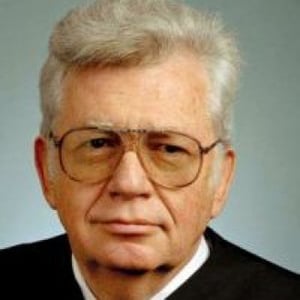
Judge, U.S. Court of Appeals, District of Columbia Circuit
Judge Sentelle was appointed United States Circuit Judge in October 1987, served as Chief Judge from February 11, 2008 until February 11, 2013, and took senior status on February 12, 2013. He is a 1968 graduate of the University of North Carolina Law School. Following law school, he practiced with the firm of Uzzell & DuMont until he became an Assistant U.S. Attorney in Charlotte, N.C. in 1970. From 1974 to 1977, he served as a North Carolina State District Judge but left the bench in 1977 to become a partner with the firm of Tucker, Hicks, Sentelle, Moon & Hodge. In 1985, Judge Sentelle joined the U.S. District Court, Western District of North Carolina, in Asheville, where he served until his appointment to the D.C. Circuit. Judge Sentelle was the Presiding Judge of the Special Division for the Purpose of Appointing Independent Counsels (1992-2006). He also served as the Chair of the U.S. Judicial Conference's Executive Committee (2010-2013). Judge Sentelle served for over 20 years as President of the Edward Bennett Williams Inn of the American Inns of Court.
David Berger Professor for the Administration of Justice Emeritus, University of Pennsylvania Carey Law School

Founding Partner, Cooper & Kirk PLLC
Charles J. Cooper is a founding member and the chairman of Cooper & Kirk, PLLC, “one of the Nation’s leading litigation boutiques” (Above The Law 2017). The National Law Journal recently wrote that Mr. Cooper’s “brilliant legal career has so far spanned five decades and thrust Cooper into the spotlight in some of the most historic moments of the country’s modern history.” He has argued nine cases before the United States Supreme Court and scores of appeals before each of the 13 federal courts of appeals and several state supreme courts. He has been lead trial counsel in numerous complex, weeks-long trials in federal courts throughout the country. Named by the National Law Journal as one of the 10 best litigators in Washington D.C., Mr. Cooper’s work has been reported in numerous press accounts, and he has been called a “powerhouse attorney” (Fortune 2015), “a hard-nosed litigator” (Washington Post 2017), and “one of the country’s most in-demand civil litigators and a Washington legal institution unto himself” (The American Spectator 2014).
After graduating from the University of Alabama School of Law in 1977, where he ranked first in his class and served as Editor-in-Chief of the Alabama Law Review, Mr. Cooper began his career as a law clerk to Judge Paul Roney on the Fifth Circuit Court of Appeals and to Justice William H. Rehnquist in 1978–79. He then practiced law in Atlanta for two years before joining the Civil Rights Division of the U.S. Department of Justice, where he served as the Deputy Assistant Attorney General in charge of, among other things, appellate matters. In 1985 President Reagan appointed him to the position of Assistant Attorney General for the Office of Legal Counsel, which is the office responsible for providing legal opinions and advice to the White House, the Attorney General, and Executive Branch departments and agencies on issues covering the full spectrum of federal constitutional, statutory, and regulatory law.
In 1988 he returned to private practice as a litigation partner in the Washington, D.C. office of McGuireWoods. From 1990 until the founding of Cooper & Kirk in 1996, he was a partner at Shaw Pittman (now Pillsbury Winthrop Shaw Pittman), where he headed the firm’s Constitutional and Government Litigation Group.
Mr. Cooper has represented a wide range of public and private clients in highly complex constitutional, civil rights, antitrust, healthcare, banking, intellectual property, elections, campaign finance, administrative, commercial, and government contract cases. He has led trial teams in cases that have won judgments and settlements valued in the billions of dollars and that have established ground-breaking constitutional precedents.
Much of Mr. Cooper’s practice has involved representing high-profile clients in nationally prominent matters, including: the State of Florida in a First Amendment suit brought by the Disney Company concerning its autonomous regulatory authority over its Disney World property; the Commonwealth of Virginia in a suit seeking to enjoin the removal of noncitizens from its voter rolls; 38 members of the Duke Lacrosse team falsely accused of rape by officials of Duke University and the City of Durham; Harper Lee in a copyright dispute with the heirs of Gregory Peck; high-ranking former government officials such as former Attorneys General John Ashcroft, Jeff Sessions, and William Barr, and Ambassador John Bolton; several Governors and United States Senators; over 100 Members of Congress; and many state, territorial, and local government bodies and officials. He has also represented and advised government officials and public figures in connection with sensitive private issues that needed to be, and were, resolved discreetly without becoming matters of public record.
In 1998 Chief Justice Rehnquist appointed Mr. Cooper to the Standing Committee on Rules of Practice and Procedure of the Judicial Conference of the United States, where he served for three terms. He also served as a Public Member, appointed by President George H.W. Bush, of the National Commission on Judicial Discipline and Removal. He is a member of numerous professional associations, including the American Law Institute (since 1993) and the American Academy of Appellate Lawyers (since 1996). He is also an active member of the Federalist Society and the Republican National Lawyers Association, which in 2010 named him Republican Lawyer of the Year and in 2016 honored him with its Edwin Meese III Award.
Mr. Cooper has published scores of articles and spoken extensively on constitutional and legal policy topics. He has appeared before congressional committees on 26 occasions, testifying as an expert on a wide variety of legal issues, including the Chevron doctrine of judicial deference to administrative agencies, the diversity of citizenship jurisdiction of federal courts, statehood bills for Puerto Rico and the District of Columbia, and the impeachment of President Clinton.
Professor of Law, Northwestern University School of Law
James Lindgren is a law professor at Northwestern University, with a BA from Yale and a JD and a PhD in (quantitative) sociology from the University of Chicago. He is a cofounder of the Section on Scholarship of the Association of American Law Schools and a former chair of its Section on Social Science and the Law. He has published in the Yale Law Journal and the Harvard, Stanford, Columbia, University of Chicago, University of Pennsylvania, California, Northwestern, Georgetown, and UCLA Law Reviews, among others. His work includes "Fall from Grace: Arming America and the Bellesiles Scandal " (Yale Law Journal, 2002) and "Term Limits for the Supreme Court: Life Tenure Reconsidered " (Harvard Journal of Law & Public Policy, 2006). In Evans v. US (1992), the US Supreme Court adopted Lindgren's view of the overlap of bribery and federal extortion. He blogs at the Washington Post.

Judge, United States Court of Appeals, Eighth Circuit
David Stras became a judge on the United States Court of Appeals for the Eighth Circuit on January 31, 2018. Before serving on the Eighth Circuit, Judge Stras was an Associate Justice of the Minnesota Supreme Court, a position he occupied from July 1, 2010 until his appointment to the Eighth Circuit.
Prior to becoming a judge, Stras was a member of the faculty of the University of Minnesota Law School from 2004 through 2010. He taught and wrote in the areas of federal courts and jurisdiction, constitutional law, criminal law, and law and politics.
Judge Stras received his Bachelor of Arts degree, with highest distinction, in 1995 and his Master of Business Administration in 1999, both from the University of Kansas. He also received his law degree from the University of Kansas School of Law in 1999, where he served as Editor-in-Chief of the Criminal Procedure Edition of the Kansas Law Review.
Following law school, Stras clerked for The Honorable Melvin Brunetti of the United States Court of Appeals for the Ninth Circuit and then for The Honorable J. Michael Luttig of the United States Court of Appeals for the Fourth Circuit.
From 2001 to 2002, he practiced white-collar criminal and appellate litigation with the Washington, D.C., office of Sidley Austin Brown & Wood. Following his year in practice, he clerked for The Honorable Clarence Thomas of the Supreme Court of the United States.

United States Court of Appeals, Fourth Circuit
James Harvie Wilkinson III is an Article III federal judge on the United States Court of Appeals for the Fourth Circuit. He joined the Court in 1984 after being nominated by President Ronald Reagan.
Born in New York City, New York, Wilkinson graduated from Yale University with his Bachelor's degree in 1967. Wilkinson served in the United States Army from 1968 to 1969 and received his Juris Doctor degree from the University of Virginia School of Law in 1972.
On the recommendation of Virginia U.S. Senator John Warner, Wilkinson was nominated to the United States Court of Appeals for the Fourth Circuit by President Ronald Reagan on January 30, 1984 to a seat vacated by John Butzner, Jr.,. Wilkinson was confirmed by the Senate on August 9, 1984 on a Senate vote and received commission on August 13, 1984. Wilkinson served as the Chief Judge of the Court from 1996 to 2003.

Judge, United States Court of Appeals, Ninth Circuit
Judge Carlos Bea serves as a judge on the United States Court of Appeals for the Ninth Circuit. He received his Bachelor's Degree from Stanford University in 1956 and his J.D. from Stanford Law School in 1958. Judge Bea was born in San Sebastian, Spain, and immigrated with his family to Cuba in 1939. In 1952, he represented Cuba on the Cuban National basketball team in the Helsinki Olympics. Judge Bea became a naturalized citizen of the United States in 1958. He engaged in private practice in San Francisco, principally in the area of civil trials (jury and non-jury), from 1959-75 at Dunne, Phelps & Mills and from 1975-90 at Carlos Bea, A Law Corporation. He taught courses in civil litigation advocacy at Hastings College of Law and Stanford Law School. From 1990 to 2003, Judge Bea served as a judge of the San Francisco Superior Court. He was nominated by President George W. Bush to the United States Court of Appeals for the Ninth Circuit and was confirmed in 2003.
Judge Bea and his wife Louise reside in San Francisco, where they raised their four sons, Sebastian, Alexander, Nicholas, and Dominic.

Provost and Senior Vice President for Academic Affairs, University of Southern California
Elizabeth Garrett was appointed provost and senior vice president for academic affairs on October 28, 2010. As the university’s second-ranking officer, she oversees the USC Dana and David Dornsife College of Letters, Arts and Sciences as well as the Keck School of Medicine of USC and 16 other professional schools, in addition to the divisions of student affairs, libraries, information technology services, research, student religious life and enrollment services. She also sits on the governing board of the USC hospitals.
As Provost, Garrett has directed substantial new efforts to hire transformative faculty members, including initiatives to recruit faculty in neuroscience, the humanities, and the social sciences, with the goal of catalyzing targeted fields of scholarship and invigorating USC’s research environment. She has also accelerated the recruitment of Provost Professors and created recruitment of the Provost’s Post-Doctoral Scholars Program in the Humanities. From 2006 to 2011 she led USC’s successful reaccreditation through the Western Association of Schools and Colleges. Garrett has also been instrumental in the integration of the new Keck Hospitals of USC and the faculty practice plans into the university, which created an academic medical center on the Health Sciences Campus. Garrett is the Frances R. and John J. Duggan Professor in the USC Gould School of Law. In addition to this primary faculty appointment, she has joint appointments in USC Dornsife College and the School of Policy, Planning, and Development, as well as a courtesy appointment in the USC Annenberg School for Communication and Journalism.
She serves on the Board of Directors of the Initiative and Referendum Institute at USC and, in August 2009, was appointed one of five commissioners on the California Fair Political Practices Commission, the state’s independent political oversight agency. Then-president George W. Bush appointed her to serve on the nine-member bipartisan Tax Reform Panel in 2005. She previously served as director of the USC-Caltech Center for the Study of Law and Politics.
Garrett previously served as USC’s vice president for academic planning and budget, a position she had held since June 2006.
Garrett’s primary scholarly interests are legislative process, direct democracy, the federal budget process, democratic institutions, statutory interpretation, administrative law and tax policy. The author of more than 50 articles, book chapters and essays, she is co-author of the fourth edition of the leading casebook on legislation and statutory interpretation, Cases and Materials on Legislation: Statutes and the Creation of Public Policy, and co-editor of Statutory Interpretation Stories and Fiscal Challenges: An Interdisciplinary Approach to Budget Policy.
Before joining the faculty of USC, she was a professor of law at the University of Chicago, where she also served as deputy dean for academic affairs, and she has been a visiting professor at Harvard Law School, the University of Virginia Law School, Central European University in Budapest, and the Interdisciplinary Center Law School in Israel. Before entering academics, she clerked for Justice Thurgood Marshall on the U.S. Supreme Court, and she served as legal counsel and legislative director for Senator David L. Boren (D-Okla.). She received her B.A. in History with special distinction from the University of Oklahoma and her J.D. from the University of Virginia School of Law.
Garrett is a fellow of the American Law Institute, a life fellow of the American Bar Foundation, and a member of the Pacific Council for International Policy. In 2011 she was elected a Harold Lasswell Fellow of the American Academy of Political and Social Science. She also serves on the editorial board of Election Law Journal, and is a member of the World Economic Forum’s Global Agenda Council on the United States 2011.
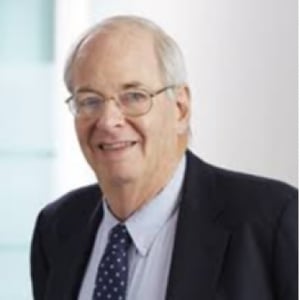
Professor of Law, UCLA Law School
Daniel Lowenstein was the first American law professor to specialize in Election Law and established a leading reputation in that field. He authored the first twentieth century textbook in the field — Election Law: Cases and Materials (Carolina Academic Press, 1995), now in its sixth edition. As co-editor with Professor Rick Hasen he inaugurated the Election Law Journal, the leading journal in the field. On January 29, 2010, leading scholars in Election Law put on a festschrift celebrating Lowenstein’s work in the field.
On July 1, 2009, Lowenstein became Director of the new UCLA Center for the Liberal Arts and Free Institutions (CLAFI), intended to facilitate and promote study of the great works and achievements of western civilization. He currently teaches undergraduate courses, primarily in literature.
Lowenstein worked as a staff attorney at California Rural Legal Assistance for two and one-half years beginning in 1968. While working for California's Secretary of State, Edmund G. Brown Jr. starting in 1971, he specialized in Election Law and was the main drafter of the Political Reform Act, an initiative statute that California voters approved in 1974, thereby creating a new Fair Political Practices Commission. Governor Brown appointed Lowenstein as first chairman of the Commission in 1975. Lowenstein has served on the national governing board of Common Cause and has been a board member and a vice president of Americans for Nonsmokers' Rights. He has also served as chairman of the Board of Directors of the award-winning theatre troupe Interact and regularly brings the company to the School of Law to perform plays with legal themes, such as Sophocles' Antigone, Ibsen’s An Enemy of the People, and Wouk's The Caine Mutiny Court Martial.
Professor Lowenstein’s published research runs the gamut of Election Law subjects, including campaign finance, redistricting, voting rights, political parties, and initiatives. He has also published literary criticism on works such as The Merchant of Venice and Bleak House.
To obtain news and information about CLAFI or about the Interact play readings at the School of Law, please write to Lowenstein at Lowenstein@law.ucla.edu.
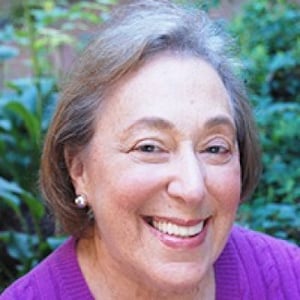
Founder and Co-President Emerita, National Women's Law Center
Described as "guiding the battles of the women's rights movement" by the New York Times, Marcia Greenberger is the founder and Co-President of the National Women's Law Center. The creation of the Center forty years ago established her as the first full-time women's rights legal advocate in Washington, D.C.
A recognized expert on women and the law, particularly in the areas of education and employment, health and reproductive rights, and family economic security, Ms. Greenberger has been a leader in securing the passage of major legislation, counsel in landmark litigation establishing new legal protections for women, and the author of numerous published articles. Examples include the Lilly Ledbetter Fair Pay Act, the Pregnancy Discrimination Act, the Civil Rights Act of 1991 providing critical protections against sexual harassment on the job, and Supreme Court victories strengthening protections for students and teachers against sex discrimination in schools.
Her leadership and contributions are reflected in the professional honors she has received and the numerous boards on which she has served. She has been given the James Wilson Award and the Alumni Award of Merit from the University of Pennsylvania Law School and the Trustees’ Council of Penn Women "Beacon" Leadership Award, the American Bar Association Margaret Brent Award for 2012, the National Association of Women Lawyers' Arabella Babb Mansfield Award, and an honorary Doctor of Laws degree from Lafayette College as well as the Woman Lawyer of the Year Award by the D.C. Women's Bar Association and the William J. Brennan, Jr. Award by the District of Columbia Bar. Additionally, she has been recognized by Working Woman Magazine as one of the 25 heroines whose activities over 25 years have helped women in the workplace, by Washingtonian Magazine as one of Washington, D.C.'s most powerful women, by Legal Times as a "Top Lawyer" and one of its "30 Champions", and by Legal Times and The National Law Journal as one of "Washington's Most Influential Women Lawyers." She has received the Dr. Jane Evans Pursuit of Justice Award from Women of Reform Judaism, A Woman of Genius Award from Trinity College, the "21 Leaders of the 21st Century" Award from Womens eNews, and the Woman of Distinction Award from Soroptimist International of the Americas. She was elected to the Court of Honor of the Philadelphia High School for Girls, received the Hope Award from Calvary Women's Shelter and awards from the National Family Planning and Reproductive Health Association and the Center for Law and Social Policy. She received a Presidential appointment to the National Skill Standards Board, and currently serves as a member of the Executive Committee of the Leadership Conference on Civil Rights.
Ms. Greenberger received her B.A. with honors and J.D. cum laude from the University of Pennsylvania. She practiced law with the Washington, D.C., firm of Caplin and Drysdale before she started and became Director of the Women's Rights Project of the Center for Law and Social Policy, which became the National Women's Law Center in 1981.

Distinguished Senior Fellow and Antonin Scalia Chair in Constitutional Studies, Ethics and Public Policy Center
Edward Whelan is a Distinguished Senior Fellow of the Ethics and Public Policy Center and holds EPPC’s Antonin Scalia Chair in Constitutional Studies. He is the longest-serving President in EPPC’s history, having held that position from March 2004 through January 2021.
Mr. Whelan directs EPPC’s program on The Constitution, the Courts, and the Culture. His areas of expertise include constitutional law and the judicial confirmation process. As a contributor to National Review Online’s Bench Memos blog, he has been a leading commentator on nominations to the Supreme Court and the lower courts and on issues of constitutional law. He has written essays and op-eds for leading newspapers—including the Wall Street Journal, the New York Times, and the Washington Post—opinion journals, and academic symposia and law reviews. The National Law Journal has named Mr. Whelan among its “Champions and Visionaries” in the practice of law in D.C.
Mr. Whelan is co-editor of three volumes of Supreme Court Justice Antonin Scalia’s work: Scalia Speaks: Reflections on Law, Faith, and Life Well Lived (Crown Forum, 2017), a New York Times bestselling collection of speeches by Justice Scalia; On Faith: Lessons from an American Believer (Crown Forum, 2019), a collection of Justice Scalia’s writings on faith and religion; and The Essential Scalia: On the Constitution, the Courts, and the Rule of Law (Crown Forum, 2020), a collection of Justice Scalia’s views on legal issues.
Mr. Whelan, a lawyer and a former law clerk to Justice Scalia, has served in positions of responsibility in all three branches of the federal government. From just before the terrorist attacks of September 11, 2001, until joining EPPC in 2004, Mr. Whelan was the Principal Deputy Assistant Attorney General for the Office of Legal Counsel in the U.S. Department of Justice. In that capacity, he advised the White House Counsel’s Office, the Attorney General and other senior DOJ officials, and departments and agencies throughout the executive branch on difficult and sensitive legal questions. Mr. Whelan previously served on Capitol Hill as General Counsel to the U.S. Senate Committee on the Judiciary. In addition to clerking for Justice Scalia, he was a law clerk to Judge J. Clifford Wallace of the U.S. Court of Appeals for the Ninth Circuit.
In 1981 Mr. Whelan graduated with honors from Harvard College and was inducted into Phi Beta Kappa. He received his J.D. magna cum laude in 1985 from Harvard Law School, where he was a member of the Board of Editors of the Harvard Law Review.
For more on Mr. Whelan’s background, see this interview.
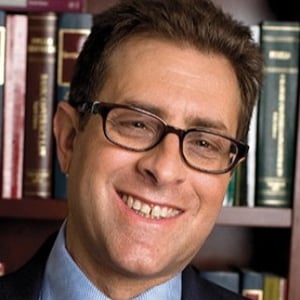
Jacob D. Fuchsberg Professor of Law, New York University School of Law
Professor Friedman is one of the country’s leading authorities on constitutional law and the federal courts. He is a prolific scholar, working at the intersections of law, politics and history. Friedman teaches a wide variety of courses including Constitutional Law, Federal Courts, and Criminal Procedure. He writes extensively about judicial review, constitutional law and theory, federal jurisdiction and judicial behavior. His scholarship appears regularly in the nation’s top law and peer-edited reviews. He is the author of widely-recognized The Will of the People: How Public Opinion Has Influenced the Supreme Court and Shaped the Meaning of the Constitution (Farrar, Strauss & Giroux, 2009), which examines the history of the relationship between popular opinion and the Supreme Court, from 1776 to the present. Along with his co-author Stephen Burbank, Friedman co-edited and contributed to Judicial Independence at the Crossroads: An Interdisciplinary Approach, which questions common assumptions about the nature of judicial independence and how it can be protected. The book has been cited and relied upon countless times by scholars and policymakers alike. Professor Friedman is a frequent contributor to the nation's leading journals, both on-line and print. His work has appeared in The New York Times, Salon, The Los Angeles Times, Politico andThe New Republic, among others.
Professor Friedman is a frequent speaker at events of all sorts. Given the interdisciplinary nature of his work, Professor Friedman regularly appears at conferences in law, political science and history. He is a founder and co-convener of the “roughly biennial” Constitutional Theory Conference. He organizes many multi-disciplinary conferences, including one on Modeling Law, and another – done under the auspices of the American Constitution Society – on Reconstruction: America’s Second Founding. He presents papers regularly at home and abroad. He has been a visiting scholar and lecturer at the Rockefeller Foundation Study and Conference Center in Bellagio, Italy, the Groupe d’Etudes et de Recherches sur law Justice Constitutionnelle Aix-en-Provence, Sciences-Po in Aix-en-Provence, and Hong Kong University.
Professor Friedman regularly serves as a litigator or litigation consultant in a variety of matters in the federal and state courts. He has represented a wide range of clients, both public and private. Notably, he represents both civil liberties claimants and state and local governments. He has been active in the areas of reproductive rights, the jurisdictional allocation of cases between the federal and state courts, and the proper scope of the federal government’s commerce power. He has filed a number of amicus briefs with the U.S. Supreme Court.
Actively engaged in a range of important service activities, at NYU Professor Friedman created the Academic Careers Program and founded and is now co-director of the Furman Academic Program. Both programs are dedicated to preparing young scholars for academic careers. In the past he was extensively involved with the American Judicature Society, was President of the Tennessee Civil Liberties Union, served on the Board of the State and Local Legal Center, and on the steering committee of New York University’s Institute for Law and Society. He recently completed a term as Vice Dean of New York University School of Law.
Professor Friedman graduated from the University of Chicago and received his law degree magna cum laude from Georgetown University Law Center. He clerked for the Honorable Phyllis A. Kravitch of the U.S. Court of Appeals for the 11th Circuit and also worked as a litigation associate at Davis, Polk & Wardwell in Washington D.C. He was a professor at Vanderbilt Law School before joining the NYU faculty in 2000. In 1995 he won the Clarence Darrow Award from the ACLU of Tennessee for his work in defense of civil liberties.
J.D., Georgetown University Law Center, 1982
B.A., University of Chicago, 1978
Adjunct Professor, Fordham University School of Law
Ms. McAvoy is an attorney, a former federal prosecutor and former in-house counsel for financial institutions. She specializes in Anti-Money Laundering and Terrorist Financing issues. She is an adjunct professor at Fordham Law School and heads Fordham’s Adjunct Faculty Committee. Ms. McAvoy has been politically active as well, including having run for the position of Comptroller of the City of New York as Rudy Giuliani’s running mate. She also was on John McCain’s NY Steering Committee and was Co-Chair of NY Women for McCain during his most recent presidential bid.
She obtained a Bachelor of Arts degree from St. John’s University in 1984, where she graduated summa cum laude as valedictorian and was NYS debate champion. Ms. McAvoy received a Juris Doctor degree from Fordham Law School in 1987 where she participated as a member of its National Moot Court team.
Ms. McAvoy began practicing law as a litigation associate at Mudge Rose Guthrie & Ferdon. After that she became an Assistant U.S. Attorney in the EDNY’s Civil and Criminal Divisions, where she received awards from both the U.S. Customs Service and the U.S. Department of Agriculture. She practiced in US District Court, the US Court of Appeals for the 2d Circuit, Surrogate’s Court and US Bankruptcy Court. Civil cases she handled included employment discrimination, forfeitures, medical malpractice, suits brought against government employees, Social Security disability, personal injury and tax cases. The criminal matters she handled included money laundering, bank robbery, mail fraud, illegal weapons sales, insurance fraud, credit card fraud, Food Stamp fraud, counterfeiting and narcotics violations.
After leaving the US Attorney’s Office, Ms. McAvoy became Senior Attorney at Morgan Stanley, where she was in charge of anti-money laundering prevention efforts and the reporting of suspicious activity. She also handled insider trading matters, fraud issues, general securities litigation and criminal matters. She received an award from the U.S. Secret Service for her work and as a member of the Securities Industry Ad Hoc Bank Secrecy Act Group she assisted the U.S. Treasury Department and the Federal Reserve Board in drafting suspicious activity regulations relating to the securities industry.
Ms. McAvoy thereafter joined Citigroup, where she was Senior Legal Counsel for Citigroup Corporate Security and Investigative Services, providing legal advice on fraud issues, corporate security, investigations and anti-money laundering compliance for Citigroup’s businesses, including Citibank, Travelers Insurance, Salomon Smith Barney and Primerica Financial Services.
Since 2000 Ms. McAvoy has been doing private consulting work for the financial industry. She has conducted extensive training for banks, securities firms, the NASD and law enforcement. She has also participated in internal corporate investigations and look-backs at financial institutions, has helped institutions develop appropriate policies and procedures and has acted as an expert consulting witness for law firms. She also continues to teach at Fordham Law School as an adjunct professor and remains active in politics.
Ms. McAvoy has provided legal, political and business commentary on a variety of television networks and on radio. She is a regular commentator on foxnews.com’s Strategy Room and has appeared on various programs on the Fox Cable News Channel including The O’Reilly Factor. She is a legal contributor for the Grinder Show on NY 970 The Apple, a nationally broadcast radio show which also streams live on the internet.
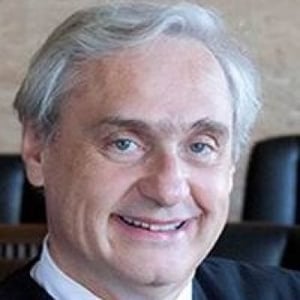
Former Judge, United States Court of Appeals, Ninth Circuit
Judge Kozinski served as a United States Circuit Judge for the Ninth Circuit from November 1985 until December 2017. He served as Chief Judge from 2007 to 2014. He graduated from UCLA, receiving an A.B. degree in 1972, and from UCLA Law School, receiving a J.D. degree in 1975.
Prior to his appointment to the appellate bench, Judge Kozinski served as Chief Judge of the United States Claims Court, 1982-85; Special Counsel, Merit Systems Protection Board, 1981-82; Assistant Counsel, Office of Counsel to the President, 1981; Deputy Legal Counsel, Office of President-Elect Reagan, 1980-81; Attorney, Covington & Burling, 1979-81; Attorney, Forry Golbert Singer & Gelles, 1977-79; Law Clerk to Chief Justice Warren E. Burger, 1976-77; and Law Clerk to Circuit Judge Anthony M. Kennedy, 1975-76.
Judge Kozinski is married to Marcy Jane Tiffany and has three children: Yale, Wyatt and Clayton, and three grandchildren: Quinn, Owen and Anna.


Federalism: Is There Any Remaining Limit to Federal Power?
Kenneth T. Cuccinelli, John C. Eastman, Jeffrey Rosen, Jeffrey S. Sutton
Prof. John C. Eastman, Donald P. Kennedy Chair in Law, Director, Center for Constitutional Jurisprudence,...
Federalism: Is There Any Remaining Limit to Federal Power?
Kenneth T. Cuccinelli, John C. Eastman, Jeffrey Rosen, Jeffrey S. Sutton
Prof. John C. Eastman, Donald P. Kennedy Chair in Law, Director, Center for Constitutional Jurisprudence,...
What’s Right (and Wrong) with the Confirmation Process . . . And Elena Kagan
New York, New YorkAnnual Banquet
Los Angeles, CaliforniaLabor: Wall Street, Labor Unions, and the Obama Administration: A New Paradigm for Capital and Labor?
Steven J. Law, Harold Meyerson, Amity Shlaes, Damon A. Silvers, Todd J. Zywicki
In the government’s dramatic interventions in the private sector over the last year, labor and...
Panel 2: Preventing Attacks through Interrogation and Transfer of Terrorists Suspects
William Kristol, Deborah Pearlstein, Dean Reuter, Gabor Rona, Edwin D. Williamson, Benjamin Wittes
Deborah Pearlstein, Associate Research Scholar, Woodrow Wilson School of Public and International Affairs, Princeton University...
Federalism: The Roberts Court and Federalism
Paul D. Clement, Walter E. Dellinger, John C. Eastman, Jeffrey Rosen, David B. Sentelle
Hon. Paul D. Clement, Former United States Solicitor General Hon. Walter E. Dellinger III, Duke...
Showcase Panel II: Judicial Tenure: Life Tenure or Fixed Nonrenewable Terms?
Stephen B. Burbank, Charles J. Cooper, James T. Lindgren, David R. Stras, J. Harvie Wilkinson
The Supreme Court of the United States is the only major court of its kind...
Panel II: Contemporary Themes in Direct Democracy
Carlos T. Bea, Elizabeth Garrett, Daniel H. Lowenstein, John Matsusaka
The Federalist Society presented this panel during the Second Annual Western Conference at The Ronald...
Gonzales v. Carhart: Its Aftermath and Implications for Abortion Regulation and Jurisprudence
Judith C. Applebaum, Eve C. Gartner, Marcia D. Greenberger, Cathleen Cleaver Ruse, Edward Whelan
On April 18, 2007, the Supreme Court ruled that the Federal Partial-Birth Abortion Ban Act...