
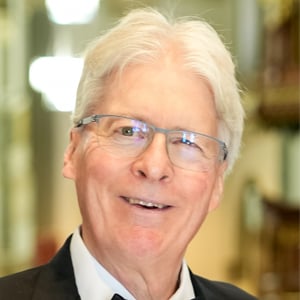
General Counsel, James Madison Center for Free Speech
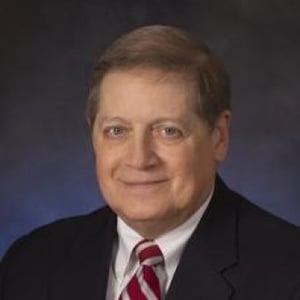
JOHN L. RYDER concentrates his practice in the areas of bankruptcy and commercial litigation. He has represented secured lenders, unsecured creditor's committees, trustees and debtors in the bankruptcy process. He has participated in a number of major bankruptcies including: The Julien Companies, Microwave Products, Wexner & Jacobson, Wang's, XpertTune, Braniff and others.
He served as Shelby County Delinquent Tax Attorney (1990-1994) and was a member of the Shelby County Home Rule Charter Commission (1984-1985). He is a member of the Memphis (Chairman, Bankruptcy Section, 1985) and Tennessee (Chairman, Commercial, Banking and Bankruptcy Section, 1986) Bar Associations, and the American Bankruptcy Institute and Mid-South Commercial Law Institute (Director, 1989-Present). He also serves as an Assistant County Attorney. Mr. Ryder is listed in the Best Lawyers in America. He has also been recognized by Business Tennessee as being among 101 Best Lawyers in Tennessee.
Vanderbilt University (J.D., 1974)
Wabash College (A.B., 1971)
Vice President for Litigation, Institute for Free Speech
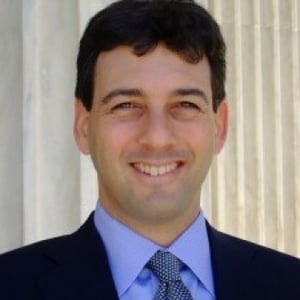
Alan joined the Institute for Free Speech as Vice President for Litigation in February 2021. In this role, Alan directs the Institute’s litigation and legal advocacy, leads our in-house legal team, and manages and works to expand our network of volunteer attorneys.
Prior to joining the Institute, Alan litigated complex federal matters for twenty years, in his own practice and as a partner in various Washington-area firms. He argued and won landmark constitutional cases in the United States Supreme Court and has appeared before numerous appellate and district courts throughout the country. Alan often speaks at law schools and continuing legal education seminars. He also teaches strategic/public interest litigation as an adjunct professor at the Georgetown University Law Center.
Alan began his career clerking for the Hon. Terrence W. Boyle, United States District Judge for the Eastern District of North Carolina. He has also served as a Deputy Attorney General for the State of California, a litigation associate at the Washington office of Sidley Austin, and as counsel to the United States Senate Judiciary Committee.
Alan earned his J.D. at Georgetown (1995) and his B.A. at Cornell University (1992). He is an active member in good standing of the Virginia, District of Columbia, and California bars, the Bar of the United States Supreme Court, and various federal appellate and district court bars.
Executive Director and Vice President of Legal Studies , Washington Legal Foundation
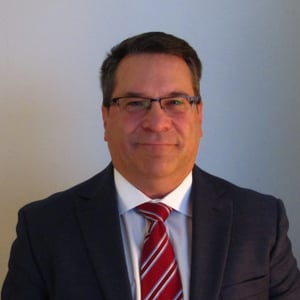
Glenn G. Lammi is Executive Director and Vice President of Legal Studies at Washington Legal Foundation (WLF), a national public-interest law firm and policy center. He was a law clerk to WLF’s Legal Studies Division in 1990 and began in January 1992 as the division’s Chief Counsel. Glenn assumed leadership of the Legal Studies Division in 1995, and WLF’s Board appointed him Executive Director in 2021. In his Executive Director role, Glenn has a direct hand in fundraising, donor relations, communications, and the group’s strategic vision. As leader of its publishing and programs division, Glenn monitors legal-policy developments in federal and state courts, regulatory agencies, and legislatures, manages all aspects of WLF’s educational publications and its WLF Legal Pulse blog, and designs and moderates its programming. He is a member of the International Association of Defense Counsel. Glenn earned his bachelor’s degree from Pennsylvania State University in 1988 and graduated from American University’s Washington College of Law in 1991.
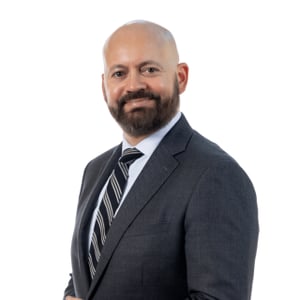
Milton R. Underwood Chair in Free Enterprise, Vanderbilt University Law School
Brian Fitzpatrick is the Milton R. Underwood Chair in Free Enterprise and Professor of Law at Vanderbilt Law School, where his research focuses on class action litigation, federal courts, judicial selection, and constitutional law. He is best known for his empirical studies of class action settlements as well as his book The Conservative Case for Class Actions (University of Chicago Press, 2019). Professor Fitzpatrick joined Vanderbilt's law faculty in 2007 after serving as the John M. Olin Fellow at New York University School of Law. He graduated first in his class from Harvard Law School and went on to clerk for Judge Diarmuid O'Scannlain on the U.S. Court of Appeals for the Ninth Circuit and Justice Antonin Scalia on the U.S. Supreme Court. After his clerkships, Professor Fitzpatrick practiced commercial and appellate litigation for several years at Sidley Austin in Washington, D.C., and served as Special Counsel for Supreme Court Nominations to U.S. Senator John Cornyn. Before earning his law degree, Fitzpatrick graduated summa cum laude with a bachelor's of science in chemical engineering from the University of Notre Dame. He has received the Hall-Hartman Outstanding Professor Award, which recognizes excellence in classroom teaching, for his Civil Procedure and Federal Courts courses.
Milton R. Underwood Chair in Free Enterprise, Vanderbilt University Law School
Brian Fitzpatrick is the Milton R. Underwood Chair in Free Enterprise and Professor of Law at Vanderbilt Law School, where his research focuses on class action litigation, federal courts, judicial selection, and constitutional law. He is best known for his empirical studies of class action settlements as well as his book The Conservative Case for Class Actions (University of Chicago Press, 2019). Professor Fitzpatrick joined Vanderbilt's law faculty in 2007 after serving as the John M. Olin Fellow at New York University School of Law. He graduated first in his class from Harvard Law School and went on to clerk for Judge Diarmuid O'Scannlain on the U.S. Court of Appeals for the Ninth Circuit and Justice Antonin Scalia on the U.S. Supreme Court. After his clerkships, Professor Fitzpatrick practiced commercial and appellate litigation for several years at Sidley Austin in Washington, D.C., and served as Special Counsel for Supreme Court Nominations to U.S. Senator John Cornyn. Before earning his law degree, Fitzpatrick graduated summa cum laude with a bachelor's of science in chemical engineering from the University of Notre Dame. He has received the Hall-Hartman Outstanding Professor Award, which recognizes excellence in classroom teaching, for his Civil Procedure and Federal Courts courses.

The Constitutional Amendment to Change Tennessee’s Method of Judicial Selection
Rise of the Warrior Cop: The Militarization of America's Police Forces
Mobile, AlabamaThe Framers' View of the Role of the Federal Government
Education Reform in Alabama – A look back at the 2013 Legislative Session
Citing Rule Against "Log Rolling," Oklahoma Supreme Court Overturns Comprehensive State Tort Reform
Glenn G. Lammi
The practice of tucking tax breaks or other legislative favors for special interests into “must...
Sunsetting the Tennessee Judicial Nominating Commission: What Now?
Brian T. Fitzpatrick
The text of the Tennessee Constitution states all judges “shall be elected by the qualified...
Sunsetting the Tennessee Judicial Nominating Commission: What Now?
Brian T. Fitzpatrick
The text of the Tennessee Constitution states all judges “shall be elected by the qualified...
The Naked Constitution: What the Founders Said and Why It Still Matters
Memphis, TennesseeCurrent Proposals to Change the Electoral College System
The Right to Bear Arms for Self-Defense Outside the Home
Memphis, Tennessee