

United States Senator, Tennessee
U.S. Senator Marsha Blackburn was sworn in to the Senate in January 2019. Marsha Blackburn was elected to the U.S. Senate in 2018, and is currently serving her first term representing the state of Tennessee. Before her election to the Senate, Marsha represented Tennessee’s 7th Congressional District.
Marsha’s public service is dedicated to promoting opportunities for women and making America a more prosperous place to live. Marsha’s leadership philosophy is based on her experiences in the private sector as a small business woman and author, as well as being a mother and grandmother.
Marsha went to college on a 4-H scholarship and worked her way through school selling books for the Southwestern Company as one of their first female sales associates, and later as one of their first female sales managers.
She then became Director of Retail Fashion and Special Events for the Castner Knott Company, which was a Nashville-based regional department store. Later, Marsha founded her own business, Marketing Strategies, which focused on the retail marketplace, as well as electronic and print media.
Marsha began her career in public service in 1995 when she was named executive director of the Tennessee Film, Entertainment, and Music Commission. In 1998, she was elected to the Tennessee State Senate. In the state legislature, she earned a reputation for fiscal responsibility and government accountability by identifying waste and offering realistic solutions to Tennessee’s budget challenges.
While serving in the Tennessee Senate, Marsha led a statewide grassroots campaign to defeat a proposed state income tax. The tax was defeated, and Marsha’s leadership earned her a reputation as an anti-tax champion. In 2014, the people of Tennessee passed an amendment to the state constitution to expressly prohibit a state income tax – a fitting cap to a 14-year battle.
In 2002, Marsha was elected to represent the people of Tennessee’s 7th Congressional District based on her record in the state legislature. She brought her Tennessee values to Washington, DC, and became a leader in the fight for small, efficient federal government that is accountable to its citizens. As a Congressman, Marsha was often selected by her colleagues to lead the charge for principled conservativism. Her congressional career was also noted for her Chairmanship of the Energy and Commerce Committee’s Subcommittee on Communications and Technology, as well as bipartisan expertise in defending songwriters’ and performers’ rights.
Marsha is a member of numerous charitable organizations and is an active member of her church, Christ Presbyterian.
Marsha and her husband Chuck live in Williamson County, Tennessee. They have two children, Mary Morgan (Paul) Ketchel and Chad (Hillary) Blackburn, and two grandsons. Originally from Laurel, Mississippi, Marsha is a graduate of Mississippi State University.
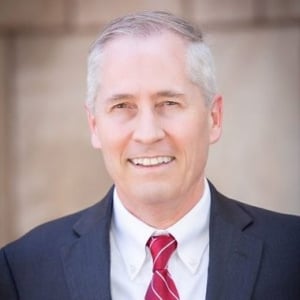
Partner, Holtzman Vogel
Andrew Gould is a partner at Holtzman Vogel and focuses his practice on Appellate, Commercial Litigation and Constitutional Law.
Prior to joining the firm, Andrew was a Justice to the Arizona Supreme Court from 2016 to 2021. After retiring from the bench in 2021, he worked as a Senior Counsel for First Liberty Institute litigating religious liberty cases throughout the United States. He also served as a Judge on Division One of the Arizona Court of Appeals from 2011 to 2016 where he authored over 400 opinions, and served as a Judge of the Superior Court in Yuma County for 11 years.
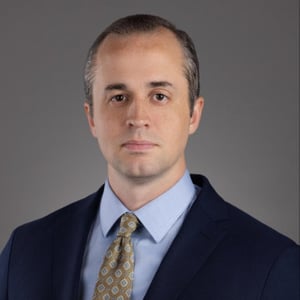
Founder, CEO, State Armor
Michael Lucci is the founder, CEO, and Chairman of State Armor, which he created to develop and enact state solutions to global security threats. Mr. Lucci believes that a whole-of-government American response is needed to counter unprecedented global threats and ensure a free and peaceful 21st century. State Armor advances state policies to protect state critical infrastructure, build the supply chains of freedom, and cease malicious foreign influence operations. At State Armor, Mr. Lucci synthesizes a unique understanding of global affairs with deep experience in state policymaking. He works with both state and federal leaders to achieve State Armor’s mission.
Mr. Lucci has worked in state policy politics for more than a decade. He has been a Senior Policy Advisor to State Policy Network and a Senior Tax Advisor to Platte Institute. Mr. Lucci previously served as a presidential appointee on the Federal Services Impasse Panel and as the Chief of Policy to Illinois Governor Bruce Rauner. He has been the Vice President of State Projects at Tax Foundation and the Vice President of Policy at Illinois Policy Institute. Mr. Lucci is a proud graduate of the University of Notre Dame and lives in Texas with his family.

Senior Fellow, Law and Justice, America First Policy Institute
Chad Mizelle serves as a senior fellow for law and justice at AFPI. Mizelle most recently served as chief of staff and acting associate attorney general at the Department of Justice (DOJ). He previously served as acting general counsel at the Department of Homeland Security (DHS), where he managed more than 2,200 lawyers and directed all legal activities related to the agency's broad mission. Before that, he was chief of staff at DHS. Mizelle also served at the White House as associate counsel to the president and at the DOJ as counsel to the deputy attorney general.
Mizelle clerked for the Honorable David B. Sentelle of the D.C. Circuit. He received his J.D. from Cornell Law School and his B.A. from the University of Florida. He lives in Florida with his wife and children.

Research Director, Civitas Institute
Michael Toth is the research director at the Civitas Institute, where he focuses on the legal and policy developments reshaping global markets, from energy to emerging technology. His work has appeared in The Wall Street Journal, Washington Post, and Bloomberg, among other major outlets. A graduate of Stanford and the University of Virginia, his analysis is informed by his firsthand experience as general counsel to several early-stage companies, where he navigated the complex regulatory environments at the core of today’s policy debates.
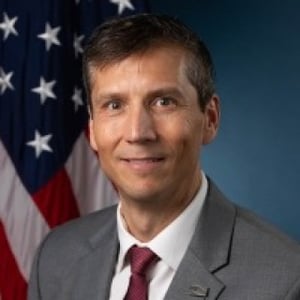
U.S. Attorney, Middle District of Tennessee, U.S. Department of Justice
Braden Boucek was sworn in on December 24, 2025, as the United States Attorney for the Middle District of Tennessee. Prior to becoming United States Attorney, Mr. Boucek served as the senior vice president of litigation at the Southeastern Legal Foundation having previously served as the vice president of legal affairs at the Beacon Center. Mr. Boucek has extensive experience as a prosecutor, starting his career at the Tennessee Attorney General’s Office before serving for two years as an Assistant District Attorney General in Williamson County. He was a federal prosecutor for ten years, first serving as an Assistant United States Attorney in the Western District of Tennessee from 2005 to 2011. From 2011 to 2015, Mr. Boucek was an Assistant United States Attorney in the Middle District of Tennessee, the district he now leads as the United States Attorney.
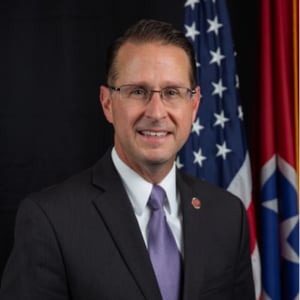
United States Attorney, Western District of Tennessee
D. Michael Dunavant is currently serving for the second time as the Presidentially Appointed, Senate Confirmed United States Attorney for the Western District of Tennessee, and was sworn into office on October 10, 2025. In that role, he is the 50th and 54th person to serve as the chief federal prosecutor and legal representative of the United States for the 22 counties and approximately 1.6 million citizens of West Tennessee. Mr. Dunavant is the first person to serve the district twice as the Presidential appointee, having previously served as U.S. Attorney from 2017–2021 during the first Trump administration. In addition to his service as the U.S. Attorney, Mr. Dunavant has served as the Deputy Executive Director of Legal Services & Policy for the Tennessee District Attorneys General Conference from 2023-2025; the Chief Investigative Counsel for the Tennessee Comptroller of the Treasury Division of Investigations from 2021-2023; and the elected District Attorney General for the 25th Judicial District of Tennessee, where he served as the chief state criminal prosecutor for Lauderdale, Tipton, Fayette, Hardeman, and McNairy counties in West Tennessee from 20062017. Prior to his service as District Attorney, Mr. Dunavant was a partner in the law firm of Carney, Wilder & Dunavant in Ripley, Tennessee. A native of Ripley, Mr. Dunavant holds a Bachelor’s Degree in Political Science from the University of Tennessee at Knoxville, and a Doctor of Jurisprudence Degree with honors from the University of Mississippi at Oxford, and has been practicing law in Tennessee since 1995.
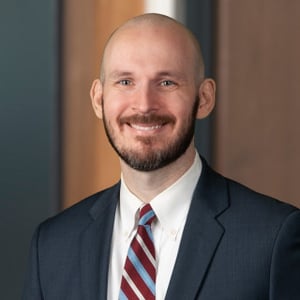
United States District Judge, United States District Court for the Western District of Tennessee
Brian Lea is a district judge on the United States District Court for the Western District of Tennessee. Before taking the bench, Judge Lea served as Deputy Associate Attorney General in President Trump’s second administration. Prior to his public service, Judge Lea was a partner with the Issues and Appeals practice of Jones Day. He also served on the faculty of the University of Georgia School of Law, where his research and publications focused on the operation of the federal courts. Judge Lea began his legal career with two clerkships, one for Justice Clarence Thomas and the other with Judge Ed Carnes of the United States Court of Appeals for the Eleventh Circuit. Judge Lea graduated first in his class from the University of Georgia School of Law, where he served as an editor on the Law Review. He earned his undergraduate degree from Union University in Jackson, Tennessee.
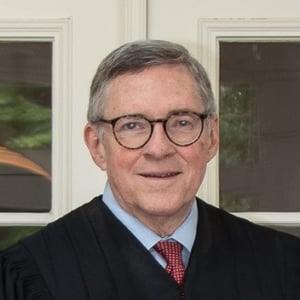
Circuit Court Judge, State of Tennessee, 21st Judicial District
Judge Woodruff has served as the Division I Circuit Judge of Tennessee’s 21st Judicial District since his election in 2014. The 21st is one of Tennessee’s busiest judicial districts and each judge sits as a chancellor, criminal and civil circuit court judge. Prior to redistricting in 2022, the 21st Judicial District had the largest ratio of population per judge of any of Tennessee’s 31 judicial districts. Today, the 21st remains in the top tier of that statistic. He was re-elected in 2022 without opposition.
Before becoming a judge, Woody was a partner in the litigation group at Waller Lansden Dortch & Davis, LLP, where he represented clients in state and federal trial and appellate courtrooms in a nationwide practice focusing on the healthcare and financial services industries. From 2004 through 2007, he was the lead lawyer of the team representing the State of Tennessee in litigation against the Maddox Foundation. This bitter interstate legal battle concluded with a settlement returning $55 million to Tennessee reviving the charitable foundation originally established by Nashville philanthropists Dan and Margaret Maddox.
Woody began his legal career as an officer in the US Army JAG Corps. During his six years of active duty, he tried to verdict more than 100 contested cases involving military justice, administrative law and federal tort claims actions. In 1986, he successfully represented a military intelligence agent charged with financial crimes related to covert activities and stemming from a sweeping criminal investigation into the official actions of high-ranking commissioned officers. His client was the first defendant tried, and only defendant to be acquitted. Following active duty, Woody served as a JAG in the US Army Reserve and retired at the rank of Lieutenant Colonel.
He earned his JD degree in 1981 from the University of Alabama School of Law. In law school, he was the recipient of the Dean M. Leigh Harrison Award, the Hugo Black Award, and was a member of the Order of the Coif, among other honors. He has published scholarly articles in various legal periodicals, as well as newspaper columns and blogs on college football. He has been an adjunct professor at the Belmont University School of Law, and is an active member of the Tenn. John Marshall Chapter, American Inns of Court and the Federalist Society for Law and Public Policy.

Judge, Tennessee 5th Judicial District, Blount County Circuit Court
David R. Duggan, Blount County circuit judge, is the author of the book, Alcoa: A Century in Words and Pictures. He also co-authored Alcoa and Maryville in Arcadia Publishing’s Images of America series. He is Alcoa city historian, a former Blount County Library board chair, and lay representative, a Sunday School teacher, and church historian at Alcoa First Methodist Church. He serves as lay leader of the MidSouth Annual Conference of the Global Methodist Church (GMC), and he is a member of the GMC’s global Ecumenical Relations Commission. He chaired the City of Alcoa’s 75th Anniversary and Centennial Committees. Named to the Daily Times Alumni Wall of Fame in 2010, he received the Blount Historic Trust Champion Award in 2015. He also received, in 2018, a Community History Award, and in 2022 an Award of Distinction, from the East Tennessee Historical Society. He is president and a director of the Faith and Family Coalition, Inc. He serves as a member of the executive committee of the Knoxville chapter of the Federalist Society. Duggan also serves on the Mr. P Foundation board. Alcoa High School’s lyceum is named in his honor.

Circuit Court Judge of the Tenth Judicial District, State of Tennessee
Judge Andrew Mark Freiberg is a Circuit Court Judge for criminal matters in the Tenth Judicial District in Tennessee, covering the counties of Bradley, McMinn, Monroe, and Polk. He was elected to the court in 2014 and was reelected to office in 2022.
Judge Freiberg received his undergraduate degree from the University of Wisconsin-Madison in 2001, majoring in Psychology and minoring in Criminal Justice. He received his Juris Doctorate degree from the University of Tennessee College of Law in 2004. From 2004-2011, he was a Prosecutor in the District Attorney’s Office, 10th Judicial District, Tennessee, and from 2011-2014, prior to his election, he was a litigation attorney in a local law firm. He has also served part-time as an Adjunct Professor at Tennessee Wesleyan University.
As a judge, he has presided over criminal jurisdiction matters throughout Southeast Tennessee having adjudicated over eleven thousand felony jury trials, motion hearings and pleas involving the criminally accused. He has served with distinction as the presiding Judge for the Tenth Judicial Recovery Court, which is a judicially monitored, intensive out-patient treatment program for non-violent offenders seeking to overcome addiction and mental illness. He also founded a successful Mental Health Court rehabilitation program for the Tenth Judicial District serving the mentally ill convicted of non-violent offenses.
While attending law school at UT, Judge Freiberg met his wife, Crystal Freiberg, with whom he shares two amazing children, Archer and Berkley Freiberg. He is a member of First Lutheran Church in Cleveland, Tennessee where he has served as both President and Vice-President. He is also a member of the Federalist Society, Heritage Foundation, NRA, National Association of Drug Court Professionals, and Benevolent and Protective Order of the Elks. He is also an avid sports fan and a fanatic of the Green Bay Packers and the Tennessee Vols.
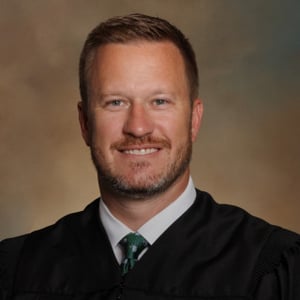
Circuit Court Judge, State of Tennessee
A West Tennessee native, Judge Jimmy Turner graduated from Middle Tennessee State University in 2006 with a Bachelor of Science in Aerospace Administration. He graduated from Nashville School of Law in 2011. As an attorney, his practice focused on criminal defense, domestic relations and personal injury litigation representing both plaintiffs and defendants. He also served as the City Attorney for Eagleville, Tennessee. In 2021, Judge Turner was appointed by Governor Bill Lee as Circuit Court Judge for the 16th Judicial District. He presides over a criminal docket. Judge Turner and his wife Erin reside in Lascassas, Tennessee with their two sons, Hudson and Harrison.
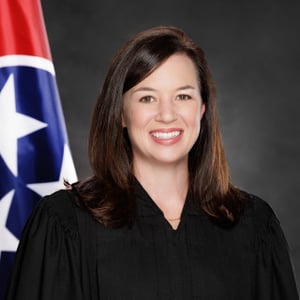
Justice, Tennessee Supreme Court
Tennessee Gov. Bill Haslam appointed Mary L. Wagner of Memphis as Circuit Court Judge, Division VII, for the 30th Judicial District on October 24, 2016. Wagner was elected to this judgeship in August 2018.
“With her extensive background in Shelby County, Mary Wagner is well prepared for a seat on the circuit court in the 30th Judicial District,” Haslam said. “We are fortunate to have someone with her experience, and we are pleased to announce this appointment.”
Prior to her appointment Wagner practiced with the Memphis law firm Rice, Amundsen & Caperton PLLC, where she had a general civil litigation practice. While at the firm, she taught at the Cecil C. Humphreys School of Law at the University of Memphis from 2012-2014 as an adjunct professor, teaching second-year law students advanced skills in legal writing and oral advocacy and first-year students legal writing, research and analysis.
Before joining Rice, Amundsen & Caperton, Wagner practiced with a regional insurance defense firm. She served as a law clerk from 2009-2010 for Judge Steven Stafford of the Tennessee Court of Appeals, law clerk for Judge Robert L. Childers in the Shelby County Circuit Court from 2008-2009 and worked as an extern in 2008 with the U.S. Attorney’s office for the Western District of Tennessee. Wagner was a research assistant in 2007 for Prof. Andrew McClurg during law school.
Wagner received her law degree from the University of Memphis in 2009 graduating magna cum laude, 4th in her class. While in law school, Wagner served as a Notes Editor for the University of Memphis Law Review. She received a bachelor’s degree in 2006 from the University of Colorado, majoring in political science.
Throughout her career, Wagner has been active in the legal community. She is a member of the Tennessee, Mississippi and Memphis Bar Associations. She serves on various committees and board for these associations. In 2018, Wagner was elected as a Fellow of the Memphis Bar Foundation. Also, in 2018, Wagner was selected as one of the Twelve Most Outstanding Women, Honoring Women in the Judicial System by the Memphis Inter-Denominational Fellowship Inc. Wagner is also active in the Tennessee Judicial Conference, where she served as Secretary and currently serves on the Tennessee Pattern Jury Instruction Committee and Legislation Committee. Wagner is also a member of the Tennessee Trial Judges Association. In 2019, Wagner received the Chancellor Charles A. Round Memorial Award for Outstanding Judge of the Year from the Young Lawyers’ Division of the Memphis Bar Association.
Judge Wagner has also been appointed by the Tennessee Supreme Court as special judge for the Tennessee Worker’s Compensation Appeals Panel and as a member of a Three-Judge panel in a constitutional case.
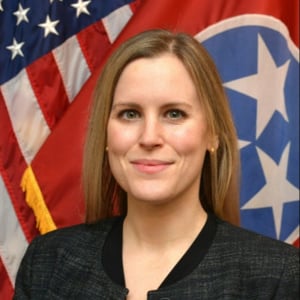
Solicitor General, Tennessee Attorney General's Office
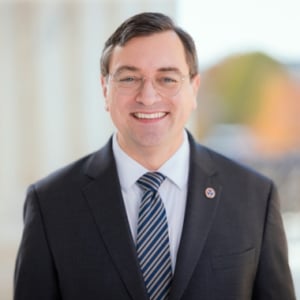
Attorney General of Tennessee
Jonathan Skrmetti was sworn in to an eight-year term as Tennessee’s Attorney General and Reporter on September 1, 2022.
Prior to his current role, General Skrmetti served as Chief Counsel to Governor Bill Lee and as Chief Deputy Attorney General to his predecessor, Tennessee Attorney General Herbert Slatery.
Before working for the State of Tennessee, General Skrmetti was a partner at Butler Snow LLP in Memphis. His legal career began with nearly a decade as a federal prosecutor. He worked at the Civil Rights Division at Main Justice and then at the Memphis U.S. Attorney’s Office and prosecuted sex traffickers, corrupt government officials, and violent white supremacists. In addition, General Skrmetti taught cyberlaw as an adjunct professor at the University of Memphis.
General Skrmetti earned honors degrees from George Washington University, the University of Oxford, and Harvard Law School, where he was editor-in-chief of the Harvard Journal of Law & Public Policy. Following law school, Jonathan clerked for Judge Steven Colloton on the U.S. Court of Appeals for the Eighth Circuit. He lives in Franklin, Tennessee, with his wife and four children.
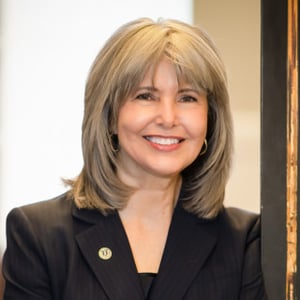
Associate Justice, Tennessee Supreme Court
Sworn in by Governor Bill Haslam in September 2014, Tennessee Supreme Court Justice Holly Kirby is the first graduate of the University of Memphis ever to sit on Tennessee’s highest court. A career jurist, Justice Kirby has authored well over a thousand opinions from appeals all across the state.
Prior to her appointment to the Supreme Court, Justice Kirby served for almost 19 years on the Tennessee Court of Appeals, Tennessee’s intermediate appellate court for civil cases. She represented a gender milestone on the Court of Appeals—when she was appointed in 1995, she became the first woman ever to sit on that Court.
A lifelong Tennessean, Justice Kirby was born in Memphis and graduated from high school in Columbia, Tennessee. As an undergraduate at the University of Memphis, she held a number of student leadership positions and graduated in 1979 with high honors, with a B.S. in mechanical engineering.
In 1982, Justice Kirby graduated from the University of Memphis School of Law with high honors. Upon graduation, she served as a judicial law clerk on the U.S. Court of Appeals for the Sixth Circuit.
After her clerkship, Justice Kirby joined the Memphis law firm of Burch, Porter & Johnson, where she was active in politics and community service. When she was selected as partner in 1990, she became the firm’s first female partner.
From the time of her appointment to the Court of Appeals in 1995 to the present, Justice Kirby has won 5 statewide elections, in 1996, 1998, 2006, 2014, and 2016.
Justice Kirby was chosen as Outstanding Young Alumna for the University of Memphis in 1996, Outstanding Alumna for the University of Memphis College of Engineering in 2002, and Special Distinguished Alumna for the School of Law in 2016. She is married to Memphis businessman Russell Ingram and has two grown children. The family belongs to Idlewild Presbyterian Church.
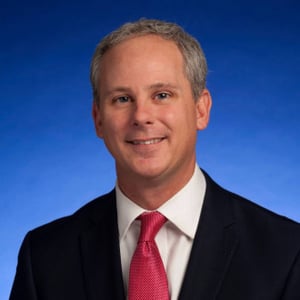
Senator, 24th District, Tennessee State Senate
Senator Stevens was elected to the State Senate in 2012 and represents Obion, Weakley, Henry, Gibson, Carroll and Benton Counties in Northwest Tennessee. Sen. Stevens is the first Republican to ever represent Obion and Weakley counties in the State Senate. Sen. Stevens is 45 years old and lives in Huntingdon, Tennessee, with his wife, Elicia, and his two daughters, Lexie and Mary Kendall. Mr. Stevens and his family are members of the First Baptist Church Huntingdon where John teaches Sunday school and coaches his daughters’ Upward basketball teams, He enjoys running, is an avid sports fan, is a lifetime learner, and occasionally spoiling a good walk by trying to golf.

2026 Texas Chapters Conference
Arlington, TXProtecting America's Courts from Foreign Influence
Panel 3: Making a Federal Case of It: Tennessee's Chief Law and Civil Rights Enforcers Speak
2026 Tennessee Chapters Conference
Nashville, TNPanel 1: Matter of First Impression: The Constitution on the Front Lines
2026 Tennessee Chapters Conference
Nashville, TN2026 Tennessee Chapters Conference
Nashville, TN2026 Supreme Court Roundup - Memphis
Memphis Lawyer Chapter
Memphis, TNA Discussion with Tennessee Attorney General Skrmetti
Mississippi Gulf Coast Lawyer Chapter
Gulfport, MSA Conversation with Justice Kirby
Nashville Lawyer Chapter
Nashville, TNPlenary Session 4: Federalism with the Feds– Unique Partnerships Between State Executives and Federal Agencies
Featuring: Mr. Louis J. Capozzi III, Solicitor General, Missouri Attorney General's Office Ms. Madeline Clark, Principal...
TN Legislative Review
Nashville Lawyer Chapter