

Partner, Lewis Brisbois
Sarah E. Lang is a partner in the New York office of Lewis Brisbois and a member of the Appellate Practice. Ms. Lang has represented clients at all levels of state and federal courts, including the New York State Appellate Division, the Second Circuit Court of Appeals, and the U.S. Supreme Court. The primary focus of her practice is drafting and arguing substantive motions and appeals before the federal courts and New York’s trial and appellate courts in substantive areas including general liability, New York Labor Law, medical malpractice, premises liability, and rideshare and transportation matters, among others. She also has extensive experience representing clients, including religious institutions, in matters arising under Title VII, the First Amendment, RLUIPA, New York’s City and State Human Rights Laws, New York’s Religious Corporations Law, and New York’s Real Property Tax Law. This includes federal jury trial experience and providing preventive advice and counseling. Prior to joining the firm, Ms. Lang clerked on the United States Court of Appeals for the Eighth Circuit, as well as the United States District Court for the Eastern District of North Carolina. She also previously served as an Attorney Advisor for the United States Department of Education.
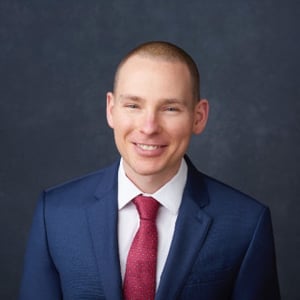
Shareholder & Co-Chair of the Workplace Policy Institute, Littler Mendelson P.C.
Alexander T. MacDonald advises employers on all aspects of the employment and labor landscape, focusing on emerging legislation and regulation. He has extensive experience advising businesses on worker classification, arbitration, the administrative and regulatory process, and the future of work. He frequently writes, publishes, and speaks on these subjects. His work has been cited by scholars and appellate courts. He is a recognized voice for the management perspective.
Alexander is a co-chair of the Workplace Policy Institute (WPI) team. With WPI, he advises employers on legislative, administrative, and regulatory developments at the state and federal level. He advocates for employers in the regulatory and administrative process. He also helps employers protect their businesses by understanding and anticipating cutting-edge legal developments.
Alexander also has extensive experience in traditional labor law. He represents management in all aspects of labor-management relations, including unfair labor practice charges, grievance arbitrations, representation elections, contract negotiations, and related litigation, including litigation in the U.S. courts of appeals.
Before joining Littler, Alexander served as the director, future of work, for a major technology company. He also worked in a national labor and employment law firm and a major public-sector general counsel’s office. He was a law clerk to the senior judges in the District of Columbia Court of Appeals.
He is also a veteran of the U.S. Air Force. He served in Operations Enduring Freedom and Iraqi Freedom. In law school, he graduated first in his class
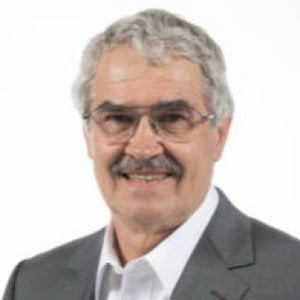
R. B. Price and Isabelle Wade & Paul C. Lyda Professor Emeritus of Law, University of Missouri School of Law
Carl H. Esbeck is R.B. Price Professor and Isabelle Wade & Paul C. Lyda Professor of Law emeritus at the University of Missouri. After attending Cornell University School of Law where he served as an editor on the Cornell Law Review, he held a judicial clerkship with the Honorable Howard C. Bratton, chief judge of the U.S. District Court in New Mexico.
Professor Esbeck publishes widely in the area of religious liberty and church-state relations. He is recognized as the progenitor of "Charitable Choice," an integral part of the 1996 Federal Welfare Reform Act, later made a part of the faith-based initiative and equal-treatment regulations under presidents George W. Bush and Barack Obama. In addition, he has taken the lead in recognizing that the modern Supreme Court has applied the Establishment Clause not as a personal right, but as a structural limit on the government's authority in disputes involving church governance. While on leave from 1999 to 2002, Professor Esbeck directed the Center for Law & Religious Freedom (CLRF) and later served as Senior Counsel to the Deputy Attorney General at the U.S. Department of Justice. While directing the CLRF, Professor Esbeck was a central part of the congressional advocacy behind the Religious Land Use and Institutionalized Persons Act of 2000 (RLUIPA). While at the Department of Justice one of his duties was to direct a task force to remove barriers to the equal-treatment of faith-based organizations applying for social service grants. He is the author of Disestablishment and Religious Dissent: Church-State Relations in the New American States, 1776 - 1833 (U. of MO Press, 2019).
Shareholder & Co-Chair of the Workplace Policy Institute, Littler Mendelson P.C.
Alexander T. MacDonald advises employers on all aspects of the employment and labor landscape, focusing on emerging legislation and regulation. He has extensive experience advising businesses on worker classification, arbitration, the administrative and regulatory process, and the future of work. He frequently writes, publishes, and speaks on these subjects. His work has been cited by scholars and appellate courts. He is a recognized voice for the management perspective.
Alexander is a co-chair of the Workplace Policy Institute (WPI) team. With WPI, he advises employers on legislative, administrative, and regulatory developments at the state and federal level. He advocates for employers in the regulatory and administrative process. He also helps employers protect their businesses by understanding and anticipating cutting-edge legal developments.
Alexander also has extensive experience in traditional labor law. He represents management in all aspects of labor-management relations, including unfair labor practice charges, grievance arbitrations, representation elections, contract negotiations, and related litigation, including litigation in the U.S. courts of appeals.
Before joining Littler, Alexander served as the director, future of work, for a major technology company. He also worked in a national labor and employment law firm and a major public-sector general counsel’s office. He was a law clerk to the senior judges in the District of Columbia Court of Appeals.
He is also a veteran of the U.S. Air Force. He served in Operations Enduring Freedom and Iraqi Freedom. In law school, he graduated first in his class
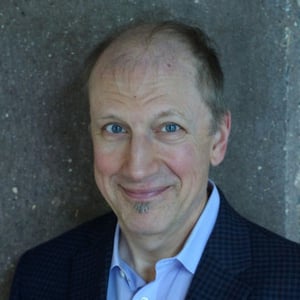
James L. Oberstar Professor of Law and Public Policy, University of St. Thomas School of Law
Erik Money is a third-year law student at the University of St. Thomas School of Law (Minnesota).
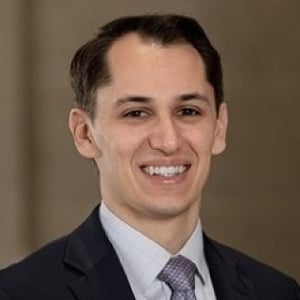
Assistant Professor of Law, Capital University Law School
Nathaniel M. Fouch is an Assistant Professor of Law at Capital University Law School in Columbus, Ohio. He previously clerked at every level of the state judiciary, including for Justice Pat DeWine of the Ohio Supreme Court. Professor Fouch was the founding president of both the Dayton Lawyers Chapter of the Federalist Society and the Dayton Catholic Lawyers Guild. He earned his B.A. from Berea College and his J.D. cum laude from the University of St. Thomas School of Law. His work on the Ohio Constitution and state constitutionalism has been cited by the Ohio Supreme Court. Professor Fouch lives in Dayton, Ohio, with his wife, Theresa, and their three young children.
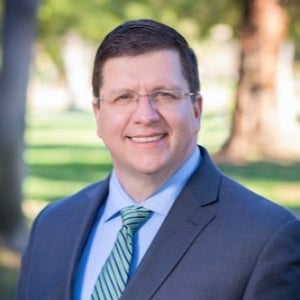
Vice President and Senior Counsel, The Becket Fund for Religious Liberty
Eric Rassbach is Vice President and Senior Counsel at the Becket Fund for Religious Liberty, where he has served since 2003. He has briefed over 90 cases at the United States Supreme Court and has led or been a part of Becket litigation teams in each of Becket’s pathbreaking victories there, including Hosanna-Tabor, Hobby Lobby, Holt v. Hobbs, Zubik v. Burwell, Agudath Israel of America v. Cuomo, and Fulton v. Philadelphia. In 2020, Eric argued Our Lady of Guadalupe School v. Morrissey-Berru to the Supreme Court, garnering a 7-2 win for his Catholic school clients. Eric has also briefed and argued cases in federal appeals courts and state supreme courts across the nation. Eric has also represented clients in appeals to the European Court of Human Rights in Strasbourg, France and in the highest courts of several other countries.
Eric believes passionately in the right of all people to the full measure of religious liberty and has represented members of almost every religious group present in the United States, including Buddhists, Christians, Hindus, Jains, Jews, Muslims, Native Americans, Santeros, and Sikhs, as well as many governmental entities targeted for accommodating religion.
Eric frequently comments on church-state issues in the media, including the New York Times, the Washington Post, the Wall Street Journal, and other major press outlets. He has published legal scholarship in the Harvard Law Review Forum, the Tennessee Law Review, the Illinois Law Review, the Cato Supreme Court Review, and other legal journals, and often speaks to law school audiences.
Before joining Becket, Eric worked at Baker Botts LLP in Houston, where he worked in international project finance. He also served as a law clerk to United States District Court Judge Lee Rosenthal in Houston, Texas.
Eric graduated from Haverford College with a degree in Comparative Literature, is a member of Fitzwilliam College, University of Cambridge, and is a graduate of Harvard Law School. Eric was a 2012-2013 Wasserstein Public Interest Fellow at Harvard Law School. He is Visiting Professor and Executive Director of The Hugh and Hazel Darling Foundation Religious Liberty Clinic at Pepperdine University Caruso School of Law in Malibu, where he leads students in litigating cases in American courts. He is also an Associated Scholar with the Centre for Religious Freedom at Jagiellonian University in Kraków, Poland. Eric is admitted in Texas, DC, California, and Ireland.
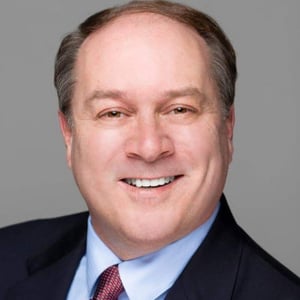
Of Counsel, Fisher & Phillips, LLP
Greg Grisham has over 25 years of successful experience counseling and representing employers in all aspects of workplace law in Tennessee and across the United States.
He has helped employers avoid claims, charges and lawsuits with a focus on preventative practices. Preventative practices include counseling in situations involving discipline, termination, demotion, promotion and other workplace changes in the terms and conditions of employment, harassment investigations, wage and hour compliance, FMLA Compliance, Reasonable Accommodation assessment, supervisor training and the review of employment policies and procedures. In addition, Greg's practice includes the representation of business entities subject to Title III of the Americans with Disabilities Act in Public Accommodation cases.
Greg has successfully litigated hundreds of administrative charges, employment lawsuits, and arbitration demands on behalf of employers, including federal and state law claims alleging discrimination, harassment, retaliation, wrongful termination, defamation, invasion of privacy, breach of contract, wage and hour violations and ERISA violations, among others. He also represents employers before the National Labor Relations Board in unfair labor practice proceedings. He represents employers in the enforcement of post-employment restrictive covenants such as non-compete, non-solicitation and non-disclosure agreements and related trade secret litigation. Greg's practice also includes the defense of property owners and property management companies in federal and state Housing Discrimination charges and litigation. He also advises Tennessee Public Charter Schools on education law and workplace compliance matters.
Greg has extensive experience working with insurance carriers and their insureds in the defense of EPLI claims. He is a regular speaker at public seminars on workplace law issues and has authored numerous articles on a variety of labor and employment law related topics.
Greg holds an AV Preeminent Peer Review rating from Martindale-Hubbell and has been selected for inclusion in Mid-South Super Lawyers and Best Lawyers in America for Employment Litigation-Management side. Greg was elected as a 2016 Fellow to the College of Labor and Employment Lawyers and has been selected to the “Top 20 Lawyers in Traditional Labor & Employment Law” list in conjunction with Human Resource Executive Magazine and LawDragon’s 2017 and 2018 “Most Powerful Employment Attorneys” lists and specialty guides. Greg was also named a Fellow in the American Bar Foundation in 2017.
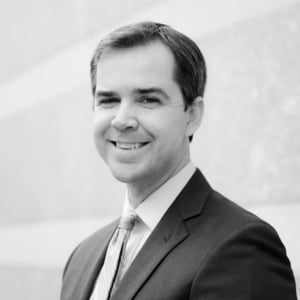
Vice President and Senior Counsel, The Becket Fund for Religious Liberty
Daniel Blomberg is vice president and senior counsel for Becket. Before joining Becket, he clerked for Chief Judge Alice M. Batchelder of the U.S. Court of Appeals for the Sixth Circuit and served as litigation counsel with the Alliance Defending Freedom. Daniel’s clients have included an international order of nuns, the world’s largest religious media organization, synagogues, members of the U.S. military, religious healthcare ministries, peaceful protestors, halfway houses, religious colleges, state legislators, homeless shelters, religious business owners, an art gallery, and churches. Daniel has represented a wide variety of faith groups, including Anglicans, Baptists, Catholics, Hindus, Hutterites, Jews, Lutherans, Mennonites, Muslims, Presbyterians, Russian Orthodox, and Sikhs. Cases on which he has served as counsel to a party include: Our Lady of Guadalupe v. Morrissey-Berru, 140 S. Ct. 2049 (2020); Roman Catholic Diocese of Brooklyn v. Cuomo, 141 S. Ct. 63 (2020); Zubik v. Burwell, 136 S. Ct. 1557 (2016); Little Sisters of the Poor v. Sebelius, 134 S. Ct. 1022 (2014); Wheaton College v. Burwell, 134 S. Ct. 2806 (2014); Fellowship of Christian Athletes v. SJUSD, 82 F.4th 664 (9th Cir. 2023) (en banc); Singh v. Berger, 56 F.4th 88 (D.C. Cir. 2022); Demkovich v. St. Andrew the Apostle Parish, 3 F.4th 968 (7th Cir. 2021) (en banc); Maxon v. Fuller Theological Seminary, 2021 WL 5882035 (9th Cir. 2021); Intervarsity Christian Fellowship/USA v. University of Iowa, 5 F.4th 855, 867 (8th Cir. 2021); Business Leaders in Christ v. University of Iowa, 991 F.3d 969 (8th Cir. 2021); Whole Woman’s Health v. Smith, 896 F.3d 362 (5th Cir. 2018); Lee v. Sixth Mount Zion Baptist Church, 903 F.3d 113 (3d Cir. 2018); Gagliardi v. TJCV, 889 F.3d 728 (11th Cir. 2018); Harvest Family Church v. FEMA, 2018 WL 386192 (5th Cir. 2018); Fratello v. Archdiocese of New York, 863 F.3d 190 (2d Cir. 2017); Eternal Word Television Network v. U.S. Dep’t of HHS, 756 F.3d 1339 (11th Cir. 2014); InterVarsity Christian Fellowship/USA v. Bd. of Governors of Wayne State Univ., 534 F. Supp. 3d 785 (E.D. Mich. 2021); and Singh v. Carter, 168 F. Supp. 3d 216 (D.D.C. 2016).
Daniel has been featured on CNN, Huffington Post Live, Fox News, EWTN Nightly News, and CBS Evening News.
He earned his J.D. from the University of South Carolina School of Law, graduating magna cum laude. While in law school, Daniel clerked for the South Carolina Attorney General’s Office, served on a South Carolina Supreme Court task force, and interned with Judge J. Michelle Childs of the Circuit Court for the Fifth Judicial Circuit as a part of the Judicial Observation and Education program. He is a Blackstone Fellow. Daniel received his undergraduate degree from Columbia International University. He and his wife have five children and too many animals.
Vice President and Senior Counsel, The Becket Fund for Religious Liberty
Eric Rassbach is Vice President and Senior Counsel at the Becket Fund for Religious Liberty, where he has served since 2003. He has briefed over 90 cases at the United States Supreme Court and has led or been a part of Becket litigation teams in each of Becket’s pathbreaking victories there, including Hosanna-Tabor, Hobby Lobby, Holt v. Hobbs, Zubik v. Burwell, Agudath Israel of America v. Cuomo, and Fulton v. Philadelphia. In 2020, Eric argued Our Lady of Guadalupe School v. Morrissey-Berru to the Supreme Court, garnering a 7-2 win for his Catholic school clients. Eric has also briefed and argued cases in federal appeals courts and state supreme courts across the nation. Eric has also represented clients in appeals to the European Court of Human Rights in Strasbourg, France and in the highest courts of several other countries.
Eric believes passionately in the right of all people to the full measure of religious liberty and has represented members of almost every religious group present in the United States, including Buddhists, Christians, Hindus, Jains, Jews, Muslims, Native Americans, Santeros, and Sikhs, as well as many governmental entities targeted for accommodating religion.
Eric frequently comments on church-state issues in the media, including the New York Times, the Washington Post, the Wall Street Journal, and other major press outlets. He has published legal scholarship in the Harvard Law Review Forum, the Tennessee Law Review, the Illinois Law Review, the Cato Supreme Court Review, and other legal journals, and often speaks to law school audiences.
Before joining Becket, Eric worked at Baker Botts LLP in Houston, where he worked in international project finance. He also served as a law clerk to United States District Court Judge Lee Rosenthal in Houston, Texas.
Eric graduated from Haverford College with a degree in Comparative Literature, is a member of Fitzwilliam College, University of Cambridge, and is a graduate of Harvard Law School. Eric was a 2012-2013 Wasserstein Public Interest Fellow at Harvard Law School. He is Visiting Professor and Executive Director of The Hugh and Hazel Darling Foundation Religious Liberty Clinic at Pepperdine University Caruso School of Law in Malibu, where he leads students in litigating cases in American courts. He is also an Associated Scholar with the Centre for Religious Freedom at Jagiellonian University in Kraków, Poland. Eric is admitted in Texas, DC, California, and Ireland.

Groff v. DeJoy: The Death of the “De Minimis” Test Breathes Life Back into Religious Accommodation
Sarah E. Lang
In a unanimous decision last June, the Supreme Court in Groff v. DeJoy heightened the...
Topics
Cy Pres—Is It Legal, and Will the Supreme Court Decide?
The term “cy pres” is derived from the French expression cy pres comme possible (or...
Bargaining Rights Gone Wrong: How State Courts Invented a Constitutional Duty to Bargain and How It Harms Individual Workers
Alexander T. MacDonald
Constitutions often give you the right to do things. They give you the right to...
An Extended Essay on Church Autonomy
Carl H. Esbeck
The doctrine of church autonomy[1] is distinct from the two more familiar lines of cases...
Religious Schools, Collective Bargaining, & the Constitutional Legacy of NLRB v. Catholic Bishop
Alexander T. MacDonald
It would be difficult to find a corner of American labor law more anomalous than...
Topics
Changing attitudes put police-union reform on the table
As we explained recently in the Sacramento Bee, many Americans have been stunned by the...
Credentials Not Required: Why an Employee’s Significant Religious Functions Should Suffice to Trigger the Ministerial Exception
Thomas C. Berg, Erik Money, Nathaniel M. Fouch
Note from the Editor: The Federalist Society takes no positions on particular legal and public...
Litigation Update: Religious Schools Head to the Supreme Court
Eric Rassbach
The Ninth Circuit recently split from seven other Circuits in deciding a First Amendment question...
Litigation Update: Religious Schools Head to the Supreme Court
TeleforumThe Ministerial Exception After Hosanna-Tabor: Firmly Founded, Increasingly Refined
J. Gregory Grisham, Daniel Blomberg
Note from the Editor: The Federalist Society takes no positions on particular legal and public...