

Tamar is an Assistant Professor. She holds a J.D. degree from the University of British Columbia, and a B.A. (Hons), LL.M., and SJD degrees from the University of Toronto.
Tamar practiced international commercial arbitration in a law firm in Vancouver and as Deputy Counsel at the International Court of Arbitration of the International Chamber of Commerce in Paris. She also acted as legal advisor to the Jerusalem Arbitration Center in Israel and Palestine and was a Graduate Fellow with the conflict resolution group of The Carter Center in Atlanta.
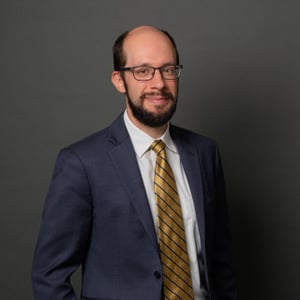
Assistant Professor of Law, Antonin Scalia Law School, George Mason University
Lael Weinberger is an assistant professor of law at George Mason University Antonin Scalia Law School. Previously, Lael clerked for Justice Neil Gorsuch on the United States Supreme Court, Judge Frank Easterbrook on the Seventh Circuit Court of Appeals, and Chief Justice Daniel Eismann on the Idaho Supreme Court. Lael also practiced law at the Washington, D.C., office of Gibson Dunn and held fellowships at Stanford and Harvard law schools. Lael earned a law degree and a Ph.D. in history, both from the University of Chicago. Lael's academic work has appeared in journals such as the University of Chicago Law Review, Notre Dame Law Review, and Constitutional Commentary, among others. He has also written widely for broader public audiences, with his writings and reviews appearing in publications including Newsweek, National Review, Claremont Review, First Things, Christianity Today, LA Review of Books, World, and the New Rambler Review.
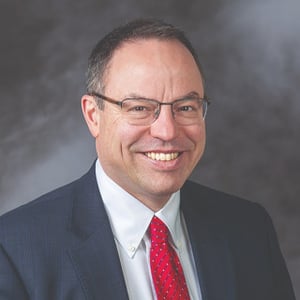
Professor of Law and J. Philip Johnson Faculty Fellow, University of North Dakota School of Law
Michael S. McGinniss is Professor of Law and J. Philip Johnson Faculty Fellow at the University of North Dakota School of Law, where he joined the faculty in 2010 and served as the Dean from 2019 to 2022. He chairs the executive committee for the Federalist Society's Practice Group on Professional Responsibility and Legal Education.
Before entering the legal academy, Professor McGinniss served for twelve years as a Disciplinary Counsel for the Supreme Court of Delaware. He currently teaches courses on Professional Responsibility, Advanced Legal Ethics, Civil Procedure, and Federal Courts. He also serves as Faculty Advisor for the North Dakota Law Review and the UND Law Federalist Society student chapter.
Professor McGinniss’ research and scholarship interests are wide-ranging and include lawyer and judicial ethics, lawyer discipline and regulation of the profession, constitutional law (especially First Amendment, separation of powers, and federalism), and cultural challenges faced by conservatives in the law schools and the legal profession. His most recent law review article, Declaring Independence to Secure Integrity: The Supreme Court Justices' Code of Conduct, was published in the Federalist Society Review. His article Expressing Conscience with Candor: Saint Thomas More and First Freedoms in the Legal Profession, was published in the Harvard Journal of Law & Public Policy.
Professor McGinniss has spoken to Federalist Society lawyer and student chapters across the country about judicial independence and ethics, especially relating to the federal courts and the United States Supreme Court Justices. In addition, he has spoken to several chapters about rising challenges to ideological diversity and targeting of conservative viewpoints in law schools and the legal profession. Although he is very pleased to speak on these and many other topics that may be of interest to lawyer and student chapters, in 2026-2027, he has particular interest in speaking on the topic “Lawyer Discipline as Political ‘Resistance’: Separation of Powers, Federalism, and the Rule of Law,” concerning his work-in-progress on the weaponization of professional disciplinary processes against conservative lawyers for political and ideological purposes.

Coinbase, Inc. v. Suski - Post-Decision SCOTUScast
Tamar Meshel
On May 23, 2024, the Supreme Court issued its ruling in Coinbase, Inc. v. Suski. At...
Topics
Preventing Fraud on P2P Electronic Payment Networks: What Can We Learn From Montesquieu?
As a former staff member for the U.S. House Committee on Financial Services, I spent...
The Current State of Church and State: Opposed, Separate, or Collaborating?
Nashville Lawyers Chapter
Nashville, TNTopics
Warner Chappell Music v. Nealy: Clarity on Damages, Still Hazy on the Discovery Rule
The statute of limitations in copyright law is three years from the time the claim...
Topics
Parental Rights and “Social Transitions” at School: Mead v. Rockford Public School District
When a child struggles with gender dysphoria, many public schools will intentionally and actively conceal...
Topics
Pausing Military Aid to Israel is the President’s Constitutional Call
Emotions on the issue of pausing weapons shipments to Israel are understandably intense, but the...
Topics
SEC Doesn’t Have Legal Authority for Climate Disclosure Rule
This post originally appeared at Law360. In response to multiple lawsuits in multiple federal courts...
Topics
Some Thoughts on NTIA’s New “Artificial Intelligence Accountability Policy Report”
After years of exploring the idea in science fiction, new advances in Artificial Intelligence (AI)...
Topics
PWFA Rule Keeps Abortion Accommodations and Fulfills EEOC Wish List
On April 19, 2024, the Equal Employment Opportunity Commission (EEOC) finalized its regulations implementing the...
A Declaration of Independence: The 2023 Code of Conduct for U.S. Supreme Court Justices feat. Prof. McGinniss
Montgomery Lawyers Chapter
Montgomery, AL