
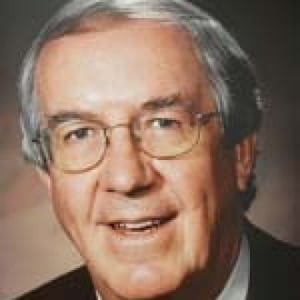
Nicholas Rosenbaum Professor of Law, University of Colorado Law School
Hal Bruff was Dean of the University of Colorado Law School 1996-2003. Professor Bruff, a native of Colorado, received his B.A. in American history and literature from Williams College, where he was elected to Phi Beta Kappa. He received his J.D. magna cum laude from Harvard Law School, and was an editor of the Harvard Law Review. After graduation, he served as a lieutenant in the U.S. Coast Guard Reserve in San Francisco, performing general duties as a legal officer. Hal has served on the law faculties of Arizona State University, the University of Texas (as the John S. Redditt Professor of Law), and the George Washington University Law School (as the Donald Rothschild Research Professor of Law). From 1979 to 1981, he served as senior attorney and advisor for the Office of Legal Counsel in the U.S. Department of Justice. In this position, he advised the DOJ, the White House, and executive agencies on issues of constitutional and administrative law. He also served as consultant to the chairman of the President's Commission on the accident at Three Mile Island. He has testified before Congress on numerous occasions in his areas of expertise. Professor Bruff's research and teaching interests include constitutional and administrative law. He has co-authored a casebook on separation of powers law, and has written two books about separation of powers and numerous law review articles. His recent public service activities include work on the Council of the Administrative Law Section of the American Bar Association and on Colorado's Judicial Advisory Council.

Laurence A. Tisch Professor of Law and Director, Classical Liberal Institute, New York University School of Law; Director, Classical Liberal Institute, Civitas Institute University of Texas at Austin
Richard A. Epstein is the inaugural Laurence A. Tisch Professor of Law at NYU School of Law. Prior to his joining the faculty, he was a visiting law professor at NYU from 2007 through 2009. He served as the Peter and Kirstin Bedford Senior Fellow at the Hoover Institution from 2000 to 2024. Since 2024 to the present he is a senior lecturer at the Civitas Institute at the University of Texas—Austin. Epstein is also the James Parker Hall Distinguished Service Professor of Law Emeritus and a senior lecturer at the University of Chicago. His initial law school appointment was at the University of Southern California from 1968 to 1972. Epstein received an LL.D., h.c. from the University of Ghent, 2003. He has been a member of the American Academy of Arts and Sciences since 1985 and was a Senior Fellow of the Center for Clinical Medical Ethics at the University of Chicago Division of Biological Sciences, also from 1983. to 2022 He served as editor of the Journal of Legal Studies from 1981 to 1991, and of the Journal of Law and Economics from 1991-2001. From 2001 to 2010 he was a director of the John M. Olin Program in Law and Economics at the University of Chicago.
His newest book, The Myth of Birthright Citizenship: What the Fourteenth Amendment Really Says was published in 2026 (Encounter Books). Prior to that he has published many books including, The Dubious Morality of the Modern Administrative State (Roman & Littlefield 2020).Earlier he published th Classical Liberal Constitution: The Uncertain Quest for Limited Government (Harvard 2014) iHis previous books include Design for Liberty: Private Property, Public Administration and the Rule of Law (Harvard 2011); The Case Against the Employee Free Choice Act (Hoover 2009); Supreme Neglect: How to Revive the Constitutional Protection of Property Rights (Oxford 2008); Antitrust Decrees in Theory and Practice: Why Less is More (AEI 2007); Overdose: How Excessive Government Regulation Stifles Pharmaceutical Innovation (Yale University Press. 2006); How Progressives Rewrote the Constitution (Cato 2006); Cases and Materials on Torts (Aspen Law & Business; 8th ed. 2004); Skepticism and Freedom: A Modern Case for Classical Liberalism (University of Chicago, 2003); Torts (Aspen Law & Business 1999); Principles for a Free Society: Reconciling Individual Liberty with the Common Good (Perseus Books, 1998): Mortal Peril: Our Inalienable Rights to Health Care (Addison-Wesley, 1997); Simple Rules for a Complex World (Harvard, 1995); Bargaining With the State (Princeton, 1993); Forbidden Grounds: The Case Against Employment Discrimination Laws (Harvard , 1992); Takings: Private Property and the Power of Eminent Domain (Harvard, 1985); and Modern Products Liability Law (Greenwood Press, 1980). He has also edited(with Catherine M. Sharkey) Cases and Materials on the Law of Torts (10th edition 2012).
Professor Epstein has written numerous articles on a wide range of legal and interdisciplinary subjects. He has taught courses in administrative law, antitrust law, civil procedure, communications, constitutional law, contracts, corporations, criminal law, employment discrimination law, environmental law, food and drug law health law and policy, legal history, labor law, property, real estate development and finance, jurisprudence, labor law; land use planning, patents, individual, estate and corporate taxation, Roman Law; torts, and workers' compensation.
Professor Epstein also writes a regular column for Civitas Institute, which also sponsors his podcast, The Libertarian with Charles C.W. Cooke, and Law Talk, with Cooke and John Yoo. He also does a podcast with John Batchelor. And appears regularly on the Freedom File with Judge Andrew Napolitano.
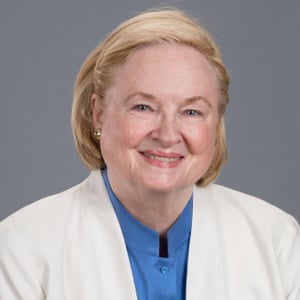
Learned Hand Professor of Law, Emeritus, Harvard Law School
Mary Ann Glendon is the Learned Hand Professor of Law, emerita, at Harvard University, and a former U.S. Ambassador to the Holy See. She writes in the fields of human rights, comparative law, and political theory. Glendon chaired the U.S. State Department Commission on Unalienable Rights (2019-2020) and served as a member of the Commission on International Religious Freedom (2012-2016), and the U.S. President's Council on Bioethics (2001-2004). She received the National Humanities Medal in 2006. In 1991 she was elected to the American Academy of Arts and Sciences. She was President of the Pontifical Academy of Social Sciences from 2003 to 2013, a member of the Board of Supervisors of the Institute of Religious Works (Vatican Bank) from 2013 to 2018, and represented the Holy See at various conferences including the 1995 U.N. Women's conference in Beijing where she headed the Vatican delegation. Glendon has contributed to legal and social thought in several widely translated works, bringing a comparative approach to a variety of subjects. They include The Forum and the Tower (2011), a series of biographical essays exploring the relation between political philosophy and politics-in-action; Traditions in Turmoil (2006), a collection of essays on law, culture and human rights; A World Made New: Eleanor Roosevelt and the Universal Declaration of Human Rights (2001), a history of the framing of the UDHR; A Nation Under Lawyers (1996), a portrait of turbulence in the legal profession, analyzing the implications of changes in legal culture for a democratic polity that entrusts crucial roles to legally trained men and women; Rights Talk (1991), a critique of the impoverishment of political discourse; The Transformation of Family Law (1989), winner of the legal academy’s highest honor, the Order of the Coif Triennial Book Award; Abortion and Divorce in Western Law (1987), winner of the Scribes Book Award for best writing on a legal subject; The New Family and the New Property (1981), and textbooks on comparative legal traditions.
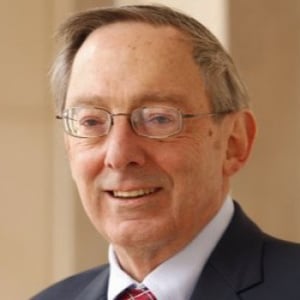
Robert E. Scott Distinguished Professor of Law Emeritus, University of Virginia School of Law; Alice McKean Young Regents Chair in Law Emeritus, University of Texas
Douglas Laycock is perhaps the nation’s leading authority on the law of religious liberty and also on the law of remedies. He has taught and written about these topics for more than four decades at the University of Chicago, the University of Texas, the University of Michigan and the University of Virginia. He retired from teaching at UVA Law School in May 2023.
Laycock has testified frequently before Congress and has argued many cases in the courts, including the U.S. Supreme Court, where he has served as lead counsel in six cases and has also filed influential amicus briefs. He is the author (co-author in the most recent edition) of the leading casebook Modern American Remedies, the award-winning monograph The Death of the Irreparable Injury Rule and many articles in leading law reviews. He co-edited a collection of essays, Same-Sex Marriage and Religious Liberty.
His many writings on religious liberty have been republished in a five-volume collection:
Laycock resigned from the council and as first vice president of the American Law Institute to become co-reporter for the Restatement (Third) of Torts: Remedies. He is a fellow of the American Academy of Arts and Sciences. He earned his B.A. from Michigan State University and his J.D. from the University of Chicago.
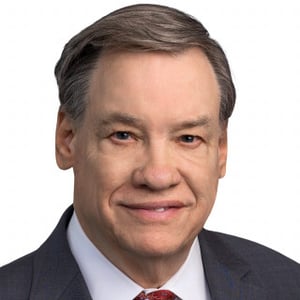
Partner, Baker Botts L.L.P.
Thomas R. Phillips is a partner in the Austin office of Baker Botts L.L.P.,
concentrating in general litigation, including appellate, trial strategy, and alternate
dispute resolution. He was appointed and then elected Chief Justice of the Supreme
Court of Texas in 1988, being one of the first four Republicans (along with Kent Hance,
Eugene Cook, and Bathan Hecht) to win a down-ballot statewide race since
Reconstruction. He was re-elected in 1990, 1996, and 2002 before leaving the Court in
2004.
While in office, Phillips served as president of the Conference of Chief Justices in
1997-98 and as a member of the Federal-State Relations Committee of the
Administrative Conference of the United States and the Institutions of Democracy
Judicial Branch Commission of the Annenberg Public Policy Center. After returning to
private life, he served on the Carter-Baker Commission on Federal Election Reform, the
Texas Historical Commission, the Texas State Historical Society, and the Judicial
Districts Board.
A native of Dallas, Phillips earned a B.A. from Baylor University in 1971 and a
J.D. from Harvard Law School in 1974. He has been awarded honorary doctoral
degrees from St. Edward’s University and Texas Tech University. Prior to becoming
Chief Justice, he practiced law in Houston and served as judge of the 280th District
Court in Harris County. Texas.
He resides with his wife, Dr. Lyn B. Phillips, in a historic home in Bastrop.

Patrick Hotung Professor of Constitutional Law, Georgetown University Law Center; Faculty Director, Georgetown Center for the Constitution
Randy E. Barnett is the Patrick Hotung Professor of Constitutional Law at the Georgetown University Law Center and is the Faculty Director of the Georgetown Center for the Constitution. After graduating from Northwestern University and Harvard Law School, he tried many felony cases as a prosecutor in the Cook County States’ Attorney’s Office in Chicago. A recipient of a Guggenheim Fellowship in Constitutional Studies and the Bradley Prize, Professor Barnett has been a visiting professor at Penn, Northwestern and Harvard Law School.
Professor Barnett’s publications includes thirteen books, more than one hundred articles and reviews, as well as numerous op-eds. His most recent book is Felony Review: Tales of True Crime and Corruption in Chicago (2026). His other books on the Constitution include: A Life for Liberty: The Making of an American Originalist (2024); The Original Meaning of the Fourteenth Amendment: Its Letter and Spirit (2021) (with Evan Bernick); An Introduction to Constitutional Law: 100 Supreme Court Cases Everyone Should Know (2019) (with Josh Blackman); Restoring the Lost Constitution: The Presumption of Liberty (2nd ed. 2013); Our Republican Constitution: Securing the Liberty and Sovereignty of We the People (2016); and Constitutional Law: Cases in Context (5th ed. forthcoming 2027) (with Josh Blackman). His books on contracts are The Oxford Introductions to U.S. Law: Contracts (2010) and Contracts: Cases and Doctrine (7th ed. 2021) (with Nate Oman). And he is the author of The Structure of Liberty: Justice and the Rule of Law (2nd ed. 2014).
In 2004, he argued the medical marijuana case of Gonzalez v. Raich before the U.S. Supreme Court. In 2012, he was one of the lawyers representing the National Federation of Independent Business in its constitutional challenge to the Affordable Care Act in NFIB v. Sebelius. He’s appeared in numerous documentaries and portrayed a prosecutor in the 2010 science-fiction feature film, InAlienable: The Movie. On X he is @RandyEBarnett
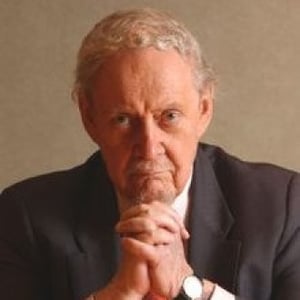
Former Judge, U.S. Court of Appeals, DC Circuit
Robert Heron Bork served as Solicitor General, acting Attorney General, and judge for the United States Court of Appeals for the District of Columbia Circuit. Judge Bork passed away in December 2012.
Tribute to Judge Robert Bork by John McGinnis - Event Audio/Video
Celebration of the Life of Robert Heron Bork 1927-2012
Judge Robert H. Bork: His Life and Legacy - Practice Group Podcast
A Conference Discussing the Contributions of Judge Robert H. Bork - June 26, 2007
Columbia Law School
E. Allan Farnsworth was a legal scholar whose writings on contract disputes have become a standard reference in courtrooms and law schools. A professor at Columbia University School of Law, Farnsworth was considered the country's foremost legal authority on contracts. He spent more than 50 years studying and explaining the legal underpinnings of contracts, whether written or oral, commercial or private, and wrote Farnsworth on Contracts, the most frequently cited reference work on contract law. He represented the US at diplomatic conferences on trade and on the UN Commission on International Trade Law.
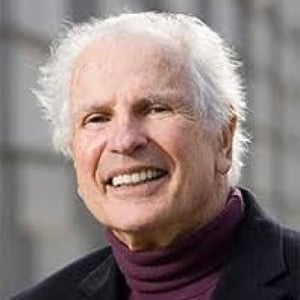
Emeritus Professor of Law, UC Hastings College of Law
Professor Joseph Grodin, a native Californian, received his B.A. with honors from UC Berkeley in 1951 and his J.D. cum laude from Yale Law School in 1954. Upon graduation from law school he traveled to England on a Fulbright grant and earned a Ph.D. in labor law and labor relations from the London School of Economics.
Professor Grodin practiced law in San Francisco from 1955 to 1971, specializing in labor law and serving pro bono in a variety of civil rights and civil liberties matters. During portions of that period he taught as an adjunct professor at UC Hastings and a visiting professor at the University of Oregon Law School. Active in bar affairs, he served as chairman of the labor law section of the San Francisco Bar Association and as a member of the State Bar Committee on Legal Services.
From 1972 to 1979 Professor Grodin was a full-time professor at UC Hastings, teaching courses in labor law, employment discrimination, arbitration, and contracts. During portions of that period he served as a member of the first Agricultural Labor Relations Board, as foreman of the Alameda County Grand Jury, and as a visiting professor at Stanford Law School.
In 1979, Professor Grodin was appointed Associate Justice of the California Court of Appeal; in 1981, he was elevated to presiding justice of that court, and in 1982 was appointed Associate Justice of the California Supreme Court, a position he held until January 1987. Upon leaving the court, Professor Grodin returned to the UC Hastings faculty. He retired from full-time teaching in May 2005. He continues to teach part-time and to do arbitration and mediation work.
Professor Grodin is the author of numerous scholarly books and articles. He is particularly proud, however, of a book on hiking trails in the Silver Lake area of the Sierra, which he coauthored with his daughter, Sharon.
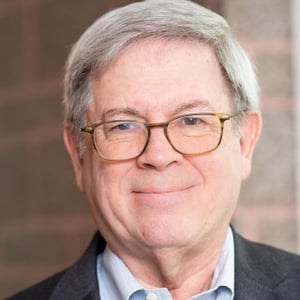
Senior Fellow, Cato Institute
Walter Olson is a senior fellow at the Cato Institute’s Robert A. Levy Center for Constitutional Studies and is known for his writing on the American legal system. His books include The Rule of Lawyers, on mass litigation, The Excuse Factory, on lawsuits in the workplace, and most recently Schools for Misrule, on the state of the law schools. His first book, The Litigation Explosion, was one of the most widely discussed general-audience books on law of its time. It led the Washington Post to dub him “intellectual guru of tort reform.” Active on social media, he is known as the founder and principal writer of what is generally considered the oldest blog on law as well as one of the most popular, Overlawyered.com. He has advised many public officials from the White House to town councils and in 2015 was named by Gov. Larry Hogan to be co-chair of the Maryland Redistricting Reform Commission, which issued its report recommendations later that year to acclaim across the state.
Before joining Cato, Olson was a senior fellow at the Manhattan Institute and an editor at the magazine Regulation, then edited by future Supreme Court Justice Antonin Scalia. Olson’s more than 400 broadcast appearances include all the major networks, NPR, the BBC, The Diane Rehm Show, and Oprah.
President Emeritus, Intercollegiate Studies Institute
T. Kenneth Cribb Jr. is the former president of the Intercollegiate Studies Institute. Mr. Cribb was Assistant to the President for Domestic Affairs in the Reagan administration, serving as President Reagan’s top adviser on domestic matters. Earlier in the administration he held the position of Counselor to the Attorney General. He also served as Vice Chairman of the Fulbright Foreign Scholarship Board from 1989 to 1992.

David McIntosh is a leader for the principles of limited constitutional government and individual freedom. He is president of the Club for Growth, the leading advocate for economic liberty.
Former Congressman David McIntosh represented Indiana's 2nd Congressional District in the United States Congress from 1995-2001. As a Freshman, David chaired the Subcommittee on Regulatory Relief. He passed the Congressional Review Act and held extensive oversight and field hearings to build a record of public support for regulatory relief initiatives in energy, biotechnology, pharmaceutical, healthcare, transportation and technology sectors. Another issue that he championed was the elimination of the marriage penalty in the Federal Tax Code.
David served during the Reagan administration as special assistant to Attorney General Edwin Meese III, and as special assistant to President Reagan for Domestic Affairs. During the first Bush administration, he served as executive director of the President's Council on Competitiveness and assistant to the Vice President. The Competitiveness Council coordinated the cost/benefit review of major regulations and promoted legal reform measures.
David is a co-founder of the Federalist Society for Law and Public Policy and serves on the Board of Directors. He remains active with several free market and conservative think tanks and grassroots organizations. David has also had stints at the Hudson Institute and as a Professor of Economics at Ball State School of Business.
Prior to the Club for Growth, David was a partner at Mayer Brown, LLP in Washington, DC.
David graduated from the University of Chicago Law School in 1983, and Yale University, BA, cum laude, in 1980. He and his wife, Ruthie, are the proud parents of Ellie age 17 and Davey age 13.
Former Judge, U.S. Court of Appeals, DC Circuit
Robert Heron Bork served as Solicitor General, acting Attorney General, and judge for the United States Court of Appeals for the District of Columbia Circuit. Judge Bork passed away in December 2012.
Tribute to Judge Robert Bork by John McGinnis - Event Audio/Video
Celebration of the Life of Robert Heron Bork 1927-2012
Judge Robert H. Bork: His Life and Legacy - Practice Group Podcast
A Conference Discussing the Contributions of Judge Robert H. Bork - June 26, 2007
President Emeritus, Intercollegiate Studies Institute
T. Kenneth Cribb Jr. is the former president of the Intercollegiate Studies Institute. Mr. Cribb was Assistant to the President for Domestic Affairs in the Reagan administration, serving as President Reagan’s top adviser on domestic matters. Earlier in the administration he held the position of Counselor to the Attorney General. He also served as Vice Chairman of the Fulbright Foreign Scholarship Board from 1989 to 1992.
David McIntosh is a leader for the principles of limited constitutional government and individual freedom. He is president of the Club for Growth, the leading advocate for economic liberty.
Former Congressman David McIntosh represented Indiana's 2nd Congressional District in the United States Congress from 1995-2001. As a Freshman, David chaired the Subcommittee on Regulatory Relief. He passed the Congressional Review Act and held extensive oversight and field hearings to build a record of public support for regulatory relief initiatives in energy, biotechnology, pharmaceutical, healthcare, transportation and technology sectors. Another issue that he championed was the elimination of the marriage penalty in the Federal Tax Code.
David served during the Reagan administration as special assistant to Attorney General Edwin Meese III, and as special assistant to President Reagan for Domestic Affairs. During the first Bush administration, he served as executive director of the President's Council on Competitiveness and assistant to the Vice President. The Competitiveness Council coordinated the cost/benefit review of major regulations and promoted legal reform measures.
David is a co-founder of the Federalist Society for Law and Public Policy and serves on the Board of Directors. He remains active with several free market and conservative think tanks and grassroots organizations. David has also had stints at the Hudson Institute and as a Professor of Economics at Ball State School of Business.
Prior to the Club for Growth, David was a partner at Mayer Brown, LLP in Washington, DC.
David graduated from the University of Chicago Law School in 1983, and Yale University, BA, cum laude, in 1980. He and his wife, Ruthie, are the proud parents of Ellie age 17 and Davey age 13.
Scholar and former Deputy Solicitor General of the United States
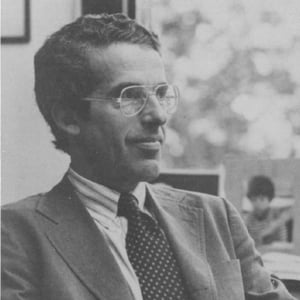
Paul Michael Bator (June 2, 1929 – February 24, 1989) was an American legal academic, Supreme Court advocate and expert on United States federal courts. In addition to teaching for almost 30 years at Harvard Law School and the University of Chicago Law School, Bator served as Deputy Solicitor General of the United States during the Reagan Administration.
Charles R. Walgreen, Jr. Chair in Law and Co-Director, Program in Law and Philosophy, University of Illinois College of Law
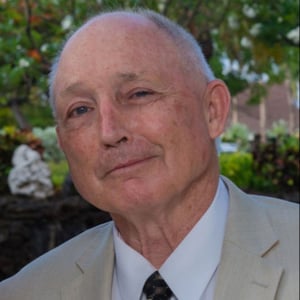
One of the country’s most prominent authorities on the intersection of law and philosophy, and widely regarded as the country’s leading theoretician of the criminal law, Professor Moore joined the faculty in 2002 as the Charles R. Walgreen, Jr. Chair, the first and only university-wide chair for the University of Illinois’ three campuses. He is jointly appointed as professor of law in the College of Law and as a professor with the Center for Advanced Studies, an honor bestowed on faculty on the basis of their outstanding scholarship and among the highest forms of campus recognition. Professor Moore was just the second UI College of Law faculty member to have held such an appointment.
Before coming to Illinois, Professor Moore served as the Warren Distinguished Professor of Law and as co-founder and co-director of the Institute for Law and Philosophy at the University of San Diego. From 1989-2000, he was the Leon Meltzer Professor of Law and Professor of Philosophy at the University of Pennsylvania, where he co-founded and directed the University of Pennsylvania Institute for Law and Philosophy.
Over the course of his career, he also has been a professor of law at the University of California at Berkeley, the University of Southern California (where he held the Robert Kingsley Chair), and the University of Kansas. In addition, he has been the William Minor Lile Distinguished Visiting Professor of Law at the University of Virginia, the Florence Rogatz Visiting Professor at the Yale Law School, The Mason Ladd Distinguished Visiting Professor at the University of Iowa Schools of Law and of Medicine, as well as a visiting professor at Stanford University, Northwestern University, Tel Aviv University in Israel, di Tella University in Buenos Aires, and the Universität Erlangen in Germany.
He has held a number of fellowships and visiting scholar positions, including two in the Law and Humanities Program of Harvard University, five at the Australian National University’s Research School of Social Sciences in Canberra, Australia, and one each at the Humanities Research Institute of the University of California at Irvine, the Rockefeller Center in Bellagio, Italy, the Georgetown University Law Center, the University of Pennsylvania’s Center for Neuroscience and Society, and the Yale Law School.
Over an academic career spanning more than 50 years Moore has published more than 140 books, articles, editorials, and other pieces of scholarship, documented recently in a festschrift published in his honor, K. Ferzan and S. Morse, eds., Legal, Moral, and Metaphysical Truth: The Philosophy of Michael S. Moore (Oxford University Press, 2016). He is the author of Placing Blame: A General Theory of the Criminal Law (Oxford University Press, 1997), widely regarded as the leading modern statement of the retributivist theory of the criminal law. In an earlier book, Act and Crime: The Philosophy of Action and its Implications for Criminal Law (Oxford University Press, 1993), Moore provided a unified theory of action that underlies English and American criminal jurisprudence. In a later book, Causation and Responsibility: An Essay in Law, Morals, and Metaphysics (Oxford University Press, 2009), Moore explored the nature of causation and its relation to both moral and legal responsibility. Earlier in his career, he authored Law and Psychiatry: Rethinking the Relationship (Cambridge University Press, 1984), which explored the tension that often exists between legal and psychiatric theories. His latest book, Mechanical Brains and Responsible Choices, still forthcoming, will return to these same issues, this time as they are raised by contemporary neuroscience rather than by dynamic psychiatry.
Professor Moore has presented hundreds of lectures and papers around the world in law, jurisprudence, political theory, legal philosophy, political science, economics, philosophy, psychology, psychiatry, and neuroscience, including most recently endowed, named lectures at Duke, Dartmouth, Columbia, Tel Aviv, Pennsylvania universities, as well as the annual Public Philosophy Lecture and the annual Center for Advanced Studies Lecture at the University of Illinois. He is on the board of editors of numerous journals in law and in philosophy and for a decade served as editor-in-chief of the journal, Law and Philosophy.
He regularly rotates his law teaching between first-year courses of criminal law, torts, contracts, property, and constitutional law, and upper-year courses in jurisprudence and legal philosophy. During his 13 years on the Philosophy Department faculty at Illinois he taught undergraduate courses in the philosophy of law and political philosophy and graduate seminars in neuroscience, ethics, the theory of action, and the metaphysics of causation.
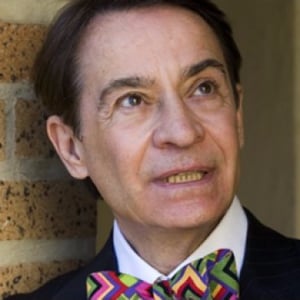
Doy & Dee Henley Chair and Distinguished Professor of Jurisprude, Chapman University Dale E. Fowler School of Law
Ronald D. Rotunda was the Doy & Dee Henley Chair and Distinguished Professor of Jurisprudence, at Chapman University, the Dale E. Fowler School of Law. He joined the faculty in 2008. Before that, he was University Professor and Professor of Law at George Mason University School of Law. From 2002 to 2006, he was the George Mason University Foundation Professor of Law. Before that, he was the Albert E. Jenner, Jr. Professor of Law, at the University of Illinois. He was a magna cum laude graduate of both Harvard College and Harvard Law School, where he was a member of Harvard Law Review. He joined the University of Illinois faculty in 1974 after clerking for Judge Walter R. Mansfield of the United States Court of Appeals for the Second Circuit, practicing law in Washington, D.C., and serving as assistant majority counsel for the Senate Watergate Committee. He has co-authored the most widely used course book on legal ethics, Problems and Materials on Professional Responsibility(Foundation Press, 12th ed. 2014) and was the author of a leading course book on constitutional law, Modern Constitutional Law (West Academic Co., 11th ed. 2015)(Abridged & Unabridged editions). He was the coauthor of, Legal Ethics: The Lawyer's Deskbook on Professional Responsibility (ABA- West/Thompson Reuters Publishing, St. Paul, Minnesota, 2016-2017 ed.) (Jointly published by the ABA and West/Thompson Reuters Publishing) (with John Dzienkowski). Rotunda also co-authored (with John Nowak) the six-volume Treatise on Constitutional Law (West/Thompson Reuters Publishing, 5th ed. 2012)(with annual updates), and a one volume Treatise on Constitutional Law (West Academic, 8th ed. 2010). He was also the author of several other books and more than 500 articles in various law reviews, journals, newspapers, and books in this country and abroad. His works have been translated into French, Portuguese German, Romanian, Czech, Russian, Japanese, and Korean. These books and articles have been cited more than 2000 times by law reviews, by state and federal courts at every level, from trial courts to the U.S. Supreme Court, and by foreign courts in Europe, Africa, Asia, and South America. He has been interviewed on radio and television on legal issues, both in this country and abroad. In 1993 he was the Constitutional Law Adviser to the Supreme National Council of Cambodia and assisted that country in writing its first democratic constitution. He has consulted with various new democracies in Eastern Europe and the former Soviet Union, including Moldova, Romania, and Ukraine, on their proposed constitutions and judicial codes. He chaired the subcommittee that drafted the American Bar Association's Model Rules for Lawyer Disciplinary Enforcement; was a member of the Publications Board of the A.B.A. Center for Professional Responsibility from 1994 to 2016; was a member of the A.B.A. Standing Committee on Professional Discipline (1991-1997); and was Liaison to the A.B.A. Standing Committee on Ethics and Professional Responsibility (1994-1997). He was a Fulbright Professor in Venezuela in 1986 and a Fulbright Research Scholar in Italy in 1981. In 1996 he assisted the Czech Republic in drafting the first Rules of Ethics for lawyers in that country. During the Spring, 1999 semester, he was Visiting Professor at the University of Alabama School of Law, holding the John S. Stone Endowed Chair of Law. During the summer and fall of 2000, he was the Visiting Senior Fellow in Constitutional Studies at the Cato Institute, in Washington, DC. In the fall of 2001, he was visiting professor at George Mason University School of Law. During November-December, 2002, he was Visiting Scholar, Katholieke Universiteit Leuven, Faculty of Law, Leuven, Belgium. In May, 2004, and December, 2005, he was visiting lecturer at the Institute of Law and Economics, Institut für Recht und Ökonomik, at the University of Hamburg. From early June 2004 to May 2005, he was the Special Counsel to the Department of Defense. He was on the Panel of Contributing Editors that produced, Black's Law Dictionary (West/Thompson Reuters Publishing, 8th ed. 2004; Thomson-Reuters, 10th ed. 2014). From 2005-2006, he was a member of the Task Force on Judicial Functions of the Commission on Virginia Courts in the 21st Century: To Benefit All, to Exclude None.
In May, 2000, American Law Media, publisher of The American Lawyer, the National Law Journal, and the Legal Times picked Professor Rotunda as one of the ten most influential Illinois Lawyers. Also in 2000, a lengthy study that the University of Chicago Press published, which sought to determine the influence, productivity, and reputations of law professors over the last several decades, listed Professor Rotunda as the 17th highest in the nation. The 2002-2003 New Educational Quality Ranking of U.S. Law Schools (EQR) [the last year for which such records are available] ranks Professor Rotunda as the eleventh most cited of all law faculty in the United States. Seehttp://www.leiterrankings.com/faculty/2002faculty_impact_cites.shtml.
In July, 2007, he was one of the main speakers at the International Judicial Conference hosted by the United States Embassy, the Supreme Court of Latvia, and the Latvian Ministry of Justice. The other main speakers were Justice Samuel Alito, the President of Latvia, the Prime Minister of Latvia, the Chief Justice of Latvia, and the Minister of Justice of Latvia. On February 27, 2008, President George W. Bush nominated Ronald D. Rotunda to become a member of the Privacy and Civil Liberties Oversight Board (PCLOB) for an initial four-year term and sent his nomination to the Senate Committee on Homeland Security and Governmental Affairs for confirmation hearings on the nominees. He was selected the Best Lawyer in Washington, DC, in 2009 in Ethics and Professional Responsibility Law, as published in November 2008 in the Washington Post in association with the Legal Times. When he moved to California, he was also selected as one of the Best Lawyers in Southern California, in 2009, 2010, 2011, 2012, 2013, 2014, 2015, 2016, 2017, also in Ethics and Professional Responsibility Law as published in the Los Angeles Times, U.S. News, and American Law Media. On June 17, 2009, he became a Commissioner of the Fair Political Practices Commission, a state regulatory agency (analogous to the Federal Election Commission) that is California's independent political watchdog. He served until January 31, 2013, when his term expired. In 2012, he became a Distinguished International Research Fellow at the World Engagement Institute, a non-profit, multidisciplinary and academically-based non-governmental organization with the mission to facilitate professional global engagement for international development and poverty reduction http://www.weinstitute.org/fellows.html. In 2012, Chapman University honored him with The Chapman University Excellence In Scholarly/Creative Work Award, 2011-2012. Since 2014, he has been a member of the Editorial Board of, The International Journal of Sustainable Human Security (IJSHS), a peer-reviewed publication of the World Engagement Institute (WEI). Rotunda was a Member of the Editorial Board of ABA's Journal of Legal Education (2014 to 2016).
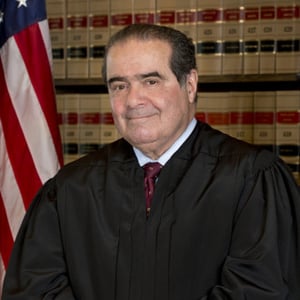
Associate Justice, United States Supreme Court
Antonin Scalia, Associate Justice, was born in Trenton, New Jersey, March 11, 1936. He married Maureen McCarthy and has nine children- Ann Forrest, Eugene, John Francis, Catherine Elisabeth, Mary Clare, Paul David, Matthew, Christopher James, and Margaret Jane. He received his A.B. from Georgetown University and the University of Fribourg, Switzerland, and his LL.B. from Harvard Law School, and was a Sheldon Fellow of Harvard University from 1960-1961. He was in private practice in Cleveland, Ohio from 1961-1967, a Professor of Law at the University of Virginia from 1967-1971, and a Professor of Law at the University of Chicago from 1977-1982, and a Visiting Professor of Law at Georgetown University and Stanford University. He was chairman of the American Bar Association's Section of Administrative Law, 1981-1982, and its Conference of Section Chairmen, 1982-1983. He served the federal government as General Counsel of the Office of Telecommunications Policy from 1971-1972, Chairman of the Administrative Conference of the United States from 1972-1974, and Assistant Attorney General for the Office of Legal Counsel from 1974-1977. He was appointed Judge of the United States Court of Appeals for the District of Columbia Circuit in 1982. President Reagan nominated him as an Associate Justice of the Supreme Court, and he took his seat September 26, 1986.
Felix Frankfurter Professor of Law, Harvard Law School
Professor Alan M. Dershowitz is Brooklyn native who has been called “the nation’s most peripatetic civil liberties lawyer” and one of its “most distinguished defenders of individual rights,” “the best-known criminal lawyer in the world,” “the top lawyer of last resort,” “America’s most public Jewish defender” and “Israel’s single most visible defender – the Jewish state’s lead attorney in the court of public opinion.” He is the Felix Frankfurter Professor of Law at Harvard Law School. Dershowitz, a graduate of Brooklyn College and Yale Law School, joined the Harvard Law School faculty at age 25 after clerking for Judge David Bazelon and Justice Arthur Goldberg.
He has also published more than 1000 articles in magazines, newspapers, journals and blogs such as The New York Times Magazine, The Washington Post, The Wall Street Journal, The Harvard Law Review, the Yale Law Journal, Huffington Post, Newsmax, Jerusalem Post and Ha’aretz. Professor Dershowitz is the author of 30 fiction and non-fiction works with a worldwide audience, including The New York Times #1 bestseller Chutzpah and five other national bestsellers. His autobiography, Taking the Stand: My Life in the Law, was published in October 2013 by Crown, a division of Random House. Earlier titles include “an exceptional, action packed book,” The Trials of Zion, a novel which has been called “a thought-provoking page turner;” Rights From Wrong; The Case For Israel; The Case For Peace; Blasphemy; Preemption; Finding Jefferson; and Shouting Fire.
In addition to his numerous law review articles and books about criminal and constitutional law, he has written, taught and lectured about history, philosophy, psychology, literature, mathematics, theology, music, sports – and even delicatessens.
His writing has been praised by Truman Capote, Saul Bellow, William Styron, David Mamet, Aharon Appelfeld, A.B. Yehoshua, Elie Wiesel, Richard North Patterson, and Henry Louis Gate, Jr. More than a million of his books—translated in many languages—have been sold worldwide.
In 1983, the Anti-Defamation League of the B'nai B'rith presented him with the William O. Douglas First Amendment Award for his "compassionate eloquent leadership and persistent advocacy in the struggle for civil and human rights." In presenting the award, Nobel Laureate Elie Wiesel said: "If there had been a few people like Alan Dershowitz during the 1930s and 1940s, the history of European Jewry might have been different." Professor Dershowitz has been awarded the honorary doctor of laws degree by Yeshiva University, Brooklyn College, Syracuse University, Tel Aviv University, New York City College, Haifa University and several other institutions of learning. He has also been the recipient of numerous academic awards including a Guggenheim Fellowship for his work on human rights, a fellowship at The Center for The Advanced Study of Behavioral Sciences and several Dean’s Awards for his books.
He has been the subject of two New Yorker cartoons, a New York Times crossword puzzle, and a Trivial Pursuit question. A sandwich at Fenway Park has been named after him—pastrami, of course. He is married to Carolyn Cohen, a PhD psychologist. He has three children, one a film producer, one a lawyer for the Women’s National Basketball Association and one a professional actor. He also has two grandchildren, one a college junior and the other a college freshman.
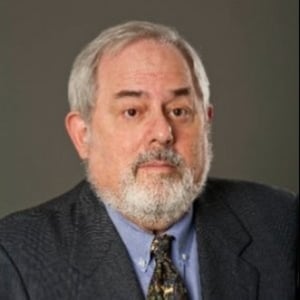
Attorney
Andy focuses on US Supreme Court and federal and state appellate practice. He is especially known for his imaginative and successful punitive damages defense efforts. In the US Supreme Court alone, he has been responsible for hundreds of briefs on the merits, a similar number of certiorari petitions, and several thousand briefs in opposition to certiorari petitions. He has argued 66 cases in the US Supreme Court, and has also argued numerous cases in the federal courts of appeals and in the supreme courts of 12 states. In 2006, Andy was included on the National Law Journal’s list of “Top 100 Most Influential Lawyers in America.” Prior to joining Mayer Brown in 1986, Andy served as a Deputy Solicitor General of the United States (1973–1986) and as Assistant to the Solicitor General (1972–1973). He retired from Mayer Brown in December 2020.
Founder and Co-President Emerita, National Women's Law Center
Described as "guiding the battles of the women's rights movement" by the New York Times, Marcia Greenberger is the founder and Co-President of the National Women's Law Center. The creation of the Center forty years ago established her as the first full-time women's rights legal advocate in Washington, D.C.
A recognized expert on women and the law, particularly in the areas of education and employment, health and reproductive rights, and family economic security, Ms. Greenberger has been a leader in securing the passage of major legislation, counsel in landmark litigation establishing new legal protections for women, and the author of numerous published articles. Examples include the Lilly Ledbetter Fair Pay Act, the Pregnancy Discrimination Act, the Civil Rights Act of 1991 providing critical protections against sexual harassment on the job, and Supreme Court victories strengthening protections for students and teachers against sex discrimination in schools.
Her leadership and contributions are reflected in the professional honors she has received and the numerous boards on which she has served. She has been given the James Wilson Award and the Alumni Award of Merit from the University of Pennsylvania Law School and the Trustees’ Council of Penn Women "Beacon" Leadership Award, the American Bar Association Margaret Brent Award for 2012, the National Association of Women Lawyers' Arabella Babb Mansfield Award, and an honorary Doctor of Laws degree from Lafayette College as well as the Woman Lawyer of the Year Award by the D.C. Women's Bar Association and the William J. Brennan, Jr. Award by the District of Columbia Bar. Additionally, she has been recognized by Working Woman Magazine as one of the 25 heroines whose activities over 25 years have helped women in the workplace, by Washingtonian Magazine as one of Washington, D.C.'s most powerful women, by Legal Times as a "Top Lawyer" and one of its "30 Champions", and by Legal Times and The National Law Journal as one of "Washington's Most Influential Women Lawyers." She has received the Dr. Jane Evans Pursuit of Justice Award from Women of Reform Judaism, A Woman of Genius Award from Trinity College, the "21 Leaders of the 21st Century" Award from Womens eNews, and the Woman of Distinction Award from Soroptimist International of the Americas. She was elected to the Court of Honor of the Philadelphia High School for Girls, received the Hope Award from Calvary Women's Shelter and awards from the National Family Planning and Reproductive Health Association and the Center for Law and Social Policy. She received a Presidential appointment to the National Skill Standards Board, and currently serves as a member of the Executive Committee of the Leadership Conference on Civil Rights.
Ms. Greenberger received her B.A. with honors and J.D. cum laude from the University of Pennsylvania. She practiced law with the Washington, D.C., firm of Caplin and Drysdale before she started and became Director of the Women's Rights Project of the Center for Law and Social Policy, which became the National Women's Law Center in 1981.
Journalist
Morton Kondracke has been a journalist for more than 40 years, 35 of which he spent in Washington. He has covered nearly every phase of American politics and foreign policy in that time in nearly every news media there is: through newspapers, magazines, television and radio. Using humor, insight and his own personal experiences, Kondracke addresses current politics, Washington controversies, upcoming elections and the Congressional agenda.
He is a regular commentator on the Fox News Channel, seen nightly as a panelist on Special Report with Brit Hume and weekly as co-host of The Beltway Boys. He is a former panelist on The McLaughlin Group, as an “original” and 16-year regular of the NBC/PBS public affairs show, airing on 350 stations nationwide. He has been an occasional panelist for This Week with David Brinkley, NBC’s Meet the Press, CBS′ Face the Nation, CNN′s Crossfire, The News Hour with Jim Lehrer and Voice of America. He was a commentator for All Things Considered and Communique, as well as a talk-show host for WRC-AM.

Richard and Frances Mallery Professor of Law and Faculty Director, Constitutional Law Center, Stanford Law School
Michael W. McConnell is the Richard and Frances Mallery Professor and Faculty Director of the Constitutional Law Center at Stanford Law School, and a Senior Fellow at the Hoover Institution. From 2002 to 2009, he served as a Circuit Judge on the United States Court of Appeals for the Tenth Circuit. He was nominated by President George W. Bush, a Republican, and confirmed by a Democratic Senate by unanimous consent. McConnell has previously held chaired professorships at the University of Chicago and the University of Utah, and visiting professorships at Harvard and NYU. He teaches courses on constitutional law, constitutional history, First Amendment, and interpretive theory. He has published widely in the fields of constitutional law and theory, especially church and state, equal protection, and separation of powers. His book, “The President Who Would Not Be King: Executive Power Under the Constitution,” was published by Princeton University Press in 2020, based on the Tanner Lectures in Human Values, which he delivered at Princeton in 2019. His latest book, co-authored with Nathan Chapman, “Agreeing to Disagree: How the Establishment Clause Protects Religious Diversity and Freedom of Conscience,” was published by Oxford University Press in mid-2023. McConnell has argued sixteen cases in the United States Supreme Court, most recently Carney v. Adams (2020). defending a provision of the Delaware Constitution requiring political balance on that state’s courts. More recently, he was co-counsel in Gonzalez v. Google. He earned his B.A. from Michigan State University and his J.D. from the University of Chicago, and has received honorary degrees from Notre Dame University and Michigan State. He served as law clerk to Supreme Court Justice William J. Brennan, Jr. and D.C. Circuit Chief Judge J. Skelly Wright. He has been Assistant General Counsel of the Office of Management & Budget, Assistant to the Solicitor General of the Department of Justice, and a member of the President’s Intelligence Oversight Board. He is Senior of Counsel to the law firm Wilson, Sonsini, Goodrich & Rosati, and is co-chair of Meta’s Oversight Review Board.
Adjunct Professor, George Washington University Law School
Rose and Milton Friedman Senior Fellow on Public Policy, Hoover Institution
Thomas Sowell is the Rose and Milton Friedman Senior Fellow on Public Policy at the Hoover Institution.
He writes on economics, history, social policy, ethnicity, and the history of ideas. His most recent book, Discrimination and Disparities (2018), gathers a wide array of empirical evidence to challenge the idea that different economic outcomes can be explained by any one factor, be it discrimination, exploitation or genetics. His books on economics include Housing Boom and Bust (2009), Intellectuals and Society (2009), Applied Economics (2009), Economic Facts and Fallacies (2008), Basic Economics (2007), and Affirmative Action Around the World (2004). Other books on economics he has written include Classical Economics Reconsidered (1974), Say’s Law (1972), and Economics: Analysis and Issues (1971). On social policy, he has written Knowledge and Decisions (1980), Preferential Policies (1989), Inside American Education (1993), The Vision of the Anointed (1995), Barbarians Inside the Gates (1999), and The Quest for Cosmic Justice (1999). On the history of ideas he has written Marxism (1985) and Conflict of Vision (1987). Sowell also wrote Late-Talking Children (1997). He has also written a monograph on law titled Judicial Activism Reconsidered, published by the Hoover Institution Press in 1989. His writings have also appeared in scholarly journals in economics, law, and other fields.
Sowell’s current research focuses on cultural history in a world perspective, a subject on which he began to write a trilogy in 1982. The trilogy includes Race and Culture (1994), Migrations and Cultures (1996), and Conquests and Cultures (1998).
Sowell's journalistic writings include a nationally syndicated column that appears in more than 150 newspapers from Boston to Honolulu. Some of these essays have been collected in book form, most recently in Ever Wonder Why? and Other Controversial Essays published by the Hoover Institution Press in 2006.
Over the past three decades, Sowell has taught economics at various colleges and universities, including Cornell, Amherst, and the University of California at Los Angeles, as well as the history of ideas at Brandeis University. He has also been associated with three other research centers, in addition to the Hoover Institution. He was project director at the Urban Institute, 1972-1974, a fellow at the Center for Advanced Study in the Behavioral Sciences at Stanford University, 1976–77, and was an adjunct scholar of the American Enterprise Institute, 1975-76.
Sowell was awarded the National Humanities Medal in 2002. In 2003, Sowell received the Bradley Prize for intellectual achievement. Sowell received his bachelor’s degree in economics (magna cum laude) from Harvard in 1958, his master’s degree in economics from Columbia University in 1959, and his PhD in economics from the University of Chicago in 1968.

Department of Education Chafes under Court Restrictions on Racial Preferences
Michael F. Williams
A top official of the Clinton Administration's Department of Education recently sent an open letter...
Panel I: Philosophical Foundations of The Federalist: The Nature of Law and the Nature of Man [Archive Collection]
1992 National Student Symposium
Austin, TXThe Death of Contract and the Rise of Tort [Archive Collection]
1991 Annual Lawyers Convention
Washington, DCProcedural Safeguards and Justice
Second Annual National Lawyers Convention
Washington, DCSecond Annual National Lawyers Convention
The Constitution and Federal Criminal Law
Washington, DCAddress by Hon. Robert H. Bork [Archive Collection]
1988 National Student Symposium
Charlottesville, VABanquet Address by Hon. Robert H. Bork
1988 National Student Symposium [Archive Collection]
Charlottesville, VAPanel I: Do We Have an Unwritten Constitution? [Archive Collection]
1988 National Student Symposium
Charlottesville, VAConstitutional Protections of Economic Activity
A Symposium in Celebration of the Bicentennial of the Constitution
Arlington, VAOn Trial: The Bork Nomination [Archive Collection]
Rochester, NY