
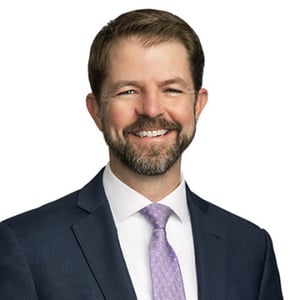
Partner, Baker Botts LLP
Drawing from two decades of experience in senior government, in-house corporate, and private law firm roles, Jeff Wood helps clients with federal enforcement, compliance, litigation, permitting, and policy challenges primarily in the energy and environmental fields.
Prior to joining Baker Botts, Mr. Wood served for almost two years as the Acting Assistant Attorney General (AAG) for the Justice Department's Environment and Natural Resources Division (ENRD). In that capacity, Mr. Wood led ENRD and its more than 600 attorneys and staff representing EPA, Departments of the Interior, Energy, and Defense, and other agencies in civil and criminal enforcement and defensive environmental, energy, and natural resources litigation.
As the top official in ENRD, Mr. Wood managed a complex organization with an annual budget exceeding $200 million and a docket of more than 6,000 cases and matters. E&E News noted that “Wood maintains a strong relationship with ENRD's career staff” (Greenwire, Oct. 31, 2018). He previously served on the staff of the United States Senate Committee on Environment and Public Works.
At the Justice Department, Mr. Wood oversaw the Division's civil and criminal enforcement programs and was responsible for developing legal strategies and approving briefs in key cases including filings before the Supreme Court and Courts of Appeals in coordination with the Office of Solicitor General. In this role, Mr. Wood held the highest level security clearance and worked closely with top leadership at DOJ, EPA, the Interior Department, USDA, the Energy Department, Transportation Department, FERC, NRC and across the Executive Branch, including the White House.
With many years of both private law firm and in-house legal experience, Mr. Wood has handled complex environmental enforcement, regulatory, policy, and litigation matters for electric utilities, energy companies, maritime companies, mining companies, real estate developers, financial institutions, industrial companies and manufacturers, business coalitions, associations, small businesses, and individual property owners. Drawing from his experiences in-house, Mr. Wood brings a common-sense, cost-effective, client-focused approach to his work every day.
With a strong national reputation, Mr. Wood is a frequent speaker on environmental law and policy matters, with recent speeches and presentations at the Environmental Law Institute, Harvard Law School, Vanderbilt Law School, American University Law School, American Bar Association Environmental Law Conferences, the Texas Environmental SuperConference, Air Force Judge Advocate General School's Advanced Environmental Law Course, Baker Institute's Center for Energy Studies (Rice University), and many other venues. He frequently appears in national news to share insights on significant environmental law and policy issues, including recent quotes in the New York Times, Washington Post, Wall Street Journal, Bloomberg, Law360, and E&E News, among others.
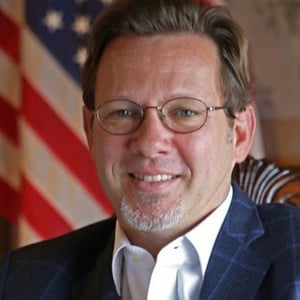
Chairman and Partner, Earth & Water Law Group
Earth & Water Group Founder, Brent Fewell, has over 25 years of experience in public policy, advocacy, and environmental law.
As an environmental lawyer and former corporate executive and senior U.S. EPA official in EPA’s Offices of Water and Congressional and Intergovernmental Relations, Brent brings a wealth of knowledge and unique perspective to his clients in navigating the regulatory and political arenas in Washington DC. As a highly regarded thought leader on environmental policy and governance matters, his counsel and opinions are sought out by corporate and government leaders around the globe. Brent brings unparalleled energy and passion to the issues in a way that few do to help his clients navigate in an increasingly complex and nuanced regulatory environment.
Brent received his B.S. in Wildlife Management from the University of Maine (high distinction), a Masters in Environmental Management from Duke University, and J.D. from Duquesne University School of Law. (Licensed in PA and DC)
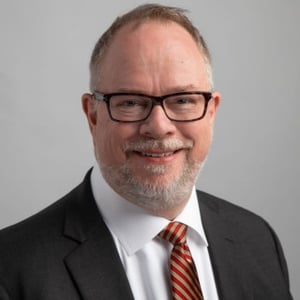
Managing Attorney of the Washington Office, Institute for Justice
William R. Maurer is the Managing Attorney of the Washington state office of the Institute for Justice, which engages in litigation in the areas of economic liberty, private property rights, educational choice, & freedom of speech.
Maurer is an advocate against the criminalization of poverty and the governmental use of the criminal and civil enforcement systems to raise revenue. He was lead counsel in a class action challenging the use of tickets to raise revenue in the city of Pagedale, Missouri. The suit resulted in a federal consent decree that reformed the city’s ticketing and municipal court system. He regularly speaks, teaches, and writes about the abuse of fines and fees in the criminal justice system. He was a participant in summits on taxation by citation put on by the White House and Department of Justice during the Obama Administration. His work on the issue includes serving as an advisory board member of the Fines and Fees Justice Center.
In addition to his work on criminal and civil justice reform, Maurer is a First Amendment litigator. In 2011, he successfully argued before the U.S. Supreme Court that Arizona’s punitive campaign financing regime was unconstitutional. Before the Washington Supreme Court, he successfully argued against efforts to classify radio commentary as a contribution under the state’s campaign finance law.
His cases and advocacy have been covered in the Washington Post, the New York Times, the Economist, the Wall Street Journal, and other major media outlets.
Maurer was named a “Washington Superlawyer” by Washington Law & Politics Magazine for several years. He is a chapter author in numerous legal reference works and has written several articles for law reviews and legal publications across the country.
Prior to joining IJ-WA, Maurer clerked for Washington Supreme Court Justice Richard Sanders and then practiced law at Perkins Coie LLP. Maurer received his law degree in 1994 from the University of Wisconsin – Madison, where he was an editor of the Wisconsin Law Review. He received his BA from Bard College in 1989.
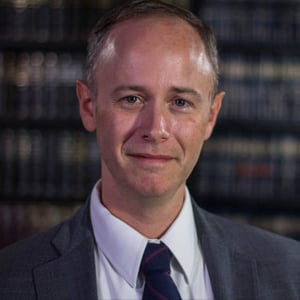
Vice President and Legal Director, National Right to Work Legal Defense and Education Foundation, Inc.
William Messenger is Foundation Vice President and Legal Director. He was a staff attorney for over twenty years and, during that time, represented individuals in numerous cases that sought to expand worker freedom of choice. This includes acting as lead counsel in three cases before the United States Supreme Court. In 2018, Messenger argued Janus v. AFSCME Council 31, where the Supreme Court held it violates the First Amendment for governments and unions to compel individuals to financially support unions and their speech. Originally from Youngstown Ohio, Messenger attended Ohio University as an undergraduate and then the George Washington University School of Law.

Senior Fellow, R Street Institute
Prior to R Street, Adam spent 12 years as a senior fellow at the Mercatus Center at George Mason University. Before the Mercatus Center, he served as the president of the Progress and Freedom Foundation. Adam has also worked for the Adam Smith Institute, the Heritage Foundation and the Cato Institute.
Adam has published 10 books on a wide range of topics, including online child safety, internet governance, intellectual property, telecommunications policy, media regulation and federalism.
In 2008, Adam received the Family Online Safety Institute’s “Award for Outstanding Achievement.”
Chairman and President, The Becket Fund for Religious Liberty
Kevin J. "Seamus" Hasson is Founder and President of The Becket Fund for Religious Liberty, a bipartisan, public-interest law firm that protects the free expression of all religious traditions. Since 1994, Hasson and the Becket Fund have successfully represented clients from nearly every faith tradition including Christians, Jews, Muslims, Buddhists, Sikhs, Hindus, Native Americans, Unitarians and Zoroastrians. Along the way, The Becket Fund has won kudos from thinkers from Pope John Paul II to Elie Wiesel.
Hasson enjoys broad credibility in the national media. He has been widely quoted, appearing for example, in Newsweek, US News and World Report, The New York Times, The Washington Post, The Wall Street Journal, The Christian Science Monitor and USA Today, as well as in regional media from The L.A. Times to The Chicago Tribune to The Philadelphia Enquirer. He has appeared on broadcast news programs including The Today Show, Dateline NBC, McLaughlin One on One, NPR's Talk of the Nation, and CNN Talkback Live. He's also appeared twice on Al-Jazeera, debating Saudi clerics.
Hasson lectures and debates frequently, in venues ranging from Oxford to the Vatican, from Harvard to BYU. He is the author of The Right to be Wrong: Ending the Culture War over Religion in America.
Before founding the Becket Fund in 1994, Hasson was an attorney at Williams & Connolly in Washington D.C., where he focused on religious liberty litigation. From 1986 to 1987, he served in the Office of Legal Counsel at the Justice Department where he advised the White House and cabinet departments on church-state relations. He is a 1985 magna cum laude graduate of Notre Dame Law School and also holds a Master's degree in theology from Notre Dame.

Judge, United States Court of Appeals, Eighth Circuit
David Stras became a judge on the United States Court of Appeals for the Eighth Circuit on January 31, 2018. Before serving on the Eighth Circuit, Judge Stras was an Associate Justice of the Minnesota Supreme Court, a position he occupied from July 1, 2010 until his appointment to the Eighth Circuit.
Prior to becoming a judge, Stras was a member of the faculty of the University of Minnesota Law School from 2004 through 2010. He taught and wrote in the areas of federal courts and jurisdiction, constitutional law, criminal law, and law and politics.
Judge Stras received his Bachelor of Arts degree, with highest distinction, in 1995 and his Master of Business Administration in 1999, both from the University of Kansas. He also received his law degree from the University of Kansas School of Law in 1999, where he served as Editor-in-Chief of the Criminal Procedure Edition of the Kansas Law Review.
Following law school, Stras clerked for The Honorable Melvin Brunetti of the United States Court of Appeals for the Ninth Circuit and then for The Honorable J. Michael Luttig of the United States Court of Appeals for the Fourth Circuit.
From 2001 to 2002, he practiced white-collar criminal and appellate litigation with the Washington, D.C., office of Sidley Austin Brown & Wood. Following his year in practice, he clerked for The Honorable Clarence Thomas of the Supreme Court of the United States.

Barwatch Bulletin -- February 14, 2009
Bioethics and the LawSaturday morning featured a roundtable discussion entitled "Hot Topics in Bioethics and...
Navigating EPA’s Vessel Discharge Program
Jeffrey H. Wood, Brent A. Fewell
Two-thousand-and-eight was, relatively speaking, not a blockbuster year for any major federal environmental initiatives. The...
SpeechNow.org and the Paradox of Buckley v. Valeo
The right to free speech, including the right to speak out about who should be...
Davis v. FEC and the Constitutionality of “Clean Elections” Systems
William R. Maurer
In a “clean elections” system, taxpayer funded candidates must agree to limit their campaign spending....
Boston Harbor’s Unresolved Presumption
William L. Messenger
A project labor agreement (“PLA”) is a union collective bargaining agreement that all contractors must...
Oral Argument in Wyeth v. Levine Marks Change in Drug Litigation Preemption Debate
On November 3, 2008, the Supreme Court heard oral argument in Wyeth v. Levine to...
Broadcast “Fairness” in the Twenty-First Century
The broadcast Fairness Doctrine, which formally existed from 1949 to 1987, required broadcast licensees to...
FCC v. Fox and the Future of the First Amendment in the Information Age
Adam Thierer
On November 4th, 2008, the Supreme Court heard oral arguments in the potentially historic free...
The Supreme Court's Establishment Clause Jurisprudence
Professor David Stras