
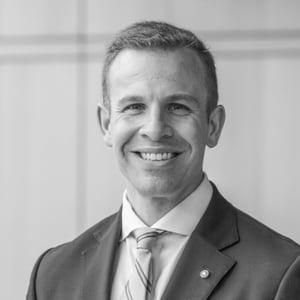
Senior Counsel, Becket Fund for Religious Liberty
William J. Haun is Senior Counsel at the Becket Fund for Religious Liberty and a Nonresident Fellow at the American Enterprise Institute (AEI). At Becket, Will litigates nationwide in defense of religious liberty for all faith traditions, particularly before the U.S. Supreme Court and in other federal and state appellate courts. His litigation includes being a member of the U.S. Supreme Court team that prevailed 9-0 for Catholic Social Services in Fulton v. City of Philadelphia, arguing before multiple federal appellate courts, federal district courts, and the Supreme Court of Texas. At AEI, Will writes and researches on constitutionalism and self-government’s prerequisites, especially the role of religion in securing and preserving freedom.
Before joining Becket and AEI, Will practiced appellate and antitrust law at two international law firms—Shearman & Sterling and Hunton & Williams. He also served as a law clerk to Judge Janice Rogers Brown of the U.S. Court of Appeals for the D.C. Circuit and Judge Claude Hilton of the U.S. District Court for the Eastern District of Virginia. Will often writes on constitutional law issues, including in the Harvard Journal of Law & Public Policy, the Catholic University Law Review, National Affairs, Law & Liberty, National Review Online, the Wall Street Journal, and the Washington Post. He also speaks on these topics, including at the Catholic University of America, Columbus School of Law, Princeton University, the University of Virginia School of Law, and the University of Chicago Law School. He received his J.D. from the Catholic University of America, cum laude, where he was a published member of the Law Review. He received his B.A. from American University in political science, cum laude. He lives in Maryland with his wife and children, where they enjoy sailing, cheering on their favorite baseball teams, and discovering the great traditions of their Catholic faith.
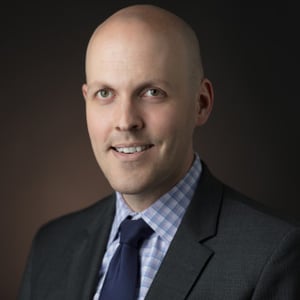
Partner, Barr & Klein PLLC
Steve Klein, a partner at Barr & Klein PLLC, is an experienced free speech attorney who has successfully fought for the First Amendment rights of his clients against local, state and federal regulators. As a lobbyist, Steve’s advocacy has led to the successful amendment of state laws to respect political engagement and prevented the enactment of laws that burden it. Steve has published articles in several legal journals, and his commentary has appeared in The Wall Street Journal, The Washington Times, The Detroit News, and other outlets. Steve earned a bachelors degree in politics at Hillsdale College and a law degree from Ave Maria School of Law, where he served as Managing Editor of the Ave Maria Law Review. He is licensed to practice law in the District of Columbia, Illinois and Michigan.
Partner, Barr & Klein PLLC
Steve Klein, a partner at Barr & Klein PLLC, is an experienced free speech attorney who has successfully fought for the First Amendment rights of his clients against local, state and federal regulators. As a lobbyist, Steve’s advocacy has led to the successful amendment of state laws to respect political engagement and prevented the enactment of laws that burden it. Steve has published articles in several legal journals, and his commentary has appeared in The Wall Street Journal, The Washington Times, The Detroit News, and other outlets. Steve earned a bachelors degree in politics at Hillsdale College and a law degree from Ave Maria School of Law, where he served as Managing Editor of the Ave Maria Law Review. He is licensed to practice law in the District of Columbia, Illinois and Michigan.

Laurence A. Tisch Professor of Law and Director, Classical Liberal Institute, New York University School of Law; Director, Classical Liberal Institute, Civitas Institute University of Texas at Austin
Richard A. Epstein is the Laurence A. Tisch Professor of Law, at New York University, a senior research fellow at the Civitas Institute at the University of Texas Austin, and a senior Lecturer, the University of Chicago. He received an LL.D., h.c . from the University of Ghent, 2003 , and an LLD h.c . from the University of Siegen in 2018 and the Bradley Prize in 2011. He has been a member of the American Academy of Arts and Sciences since 1985. He has edited both the Journal of Legal Studies (1981-1991) and the Journal of Law and Economics (1991-2001). He is also a founder and director of the Classical Liberal Institute at NYU Law School. His most recent book is The Classical Liberal Constitution: The Uncertain Quest for Limited Government (2014). His other books include Takings: Private Property and the Power of Eminent Domain ( 1985); Bargaining with the State (1993); Simple Rules for a Complex World (1995); Principles for a Free Society: Reconciling Individual Liberty and the Common Good (1998); Skepticism and Freedom: A Modern Theory of Classical Liberalism (2003); Design for Liberty: Private Property, Public Administration and the Rule of Law (2011), and most recently, The Myth of Birthright citizenship—and Beyond (2026). He has taught courses in , administrative law, antitrust, constitutional, contracts, environmental law, land use planning; real property, torts and water law. He has written and spoken extensively on a wide range of topics, and is writes a regular column for Defining Ideas.
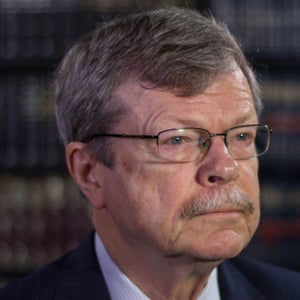
Vice President & Legal Director, National Right To Work Legal Defense Foundation
Raymond J. LaJeunesse, Jr., is Vice President and Legal Director of the National Right to Work Legal Defense Foundation, a non-profit legal aid organization. He was the first Staff Attorney employed by the Foundation and has more than forty-five years of experience helping workers in litigation in federal and state courts and administrative agencies over the abuses of compulsory unionism.
Mr. LaJeunesse has argued four cases in the United States Supreme Court. Those cases include Lehnert v. Ferris Faculty Ass’n, 500 U.S. 507 (1991), which limited the purposes for which compulsory union fees collected from public employees may lawfully be spent; Air Line Pilots Ass’n v. Miller, 523 U.S. 866 (1998), which established that unions cannot compel nonmembers to exhaust union-established remedies before going to court to challenge compulsory union fees; and Marquez v. Screen Actors Guild, 525 U.S. 33 (1998), in which the Court recognized that unions must notify employees that they can satisfy the “membership” requirement of “union shop” agreements by just paying fees for union bargaining activities and need not join and pay full dues to keep their jobs. He also was lead attorney in Hohe v. Casey, 956 F.2d 399 (3d Cir. 1992), in which more than $8.3 million in compulsory agency fees was recovered from the American Federation of State, County and Municipal Employees for a class of 57,000 nonmembers.
Mr. LaJeunesse is the author of several published articles about labor law, has testified before Congressional committees several times, and was an Advisor on the Transition Team for Labor- Related Agencies, Office of the President-Elect, in 1980-81 and a legislative aide to a member of the Virginia state legislature. He is a Vice Chairman of the Federalist Society’s Labor and Employment Law Practice Group and has spoken or debated at the Society’s National Lawyers Convention and at many Lawyers and Student Chapters on such topics as Right to Work laws, compulsory unionism arrangements, the misuse of union dues for politics, union organizing tactics (“card check” vs. secret-ballot elections), and the future of the union movement.
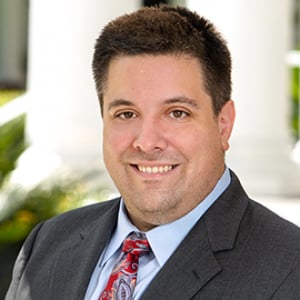
Sheila M. McDevitt Professor of Law and Faculty Director of the Election Law Center, Florida State University College of Law
Professor Morley joined FSU Law in 2018, and teaches and writes in the areas of election law, constitutional law, remedies, and the federal courts. He is best known for his work on election emergencies and post-election litigation, nationwide and other defendant-oriented injunctions, the jurisdiction of the federal courts and their equitable powers more generally. He has testified before congressional committees, made presentations to election officials for the U.S. Election Assistance Commission and participated in bipartisan blue-ribbon groups to develop election reforms. The governor of Florida also appointed Professor Morley to the Criminal Punishment Code Task Force, to propose potential revisions to the legislature.
The U.S. Supreme Court has cited several of his articles, and he was counsel of record for the successful Petitioner in a landmark campaign finance case. Professor Morley has appeared on C-SPAN, Court TV, Fox News and numerous local news programs, and has been quoted in the Washington Post, Los Angeles Times, Roll Call, Politico, U.S. News and World Report, and a wide range of other national publications. His work has been published in many of the nation’s top law reviews, including the Georgetown Law Journal, Northwestern University Law Review, Boston University Law Review and Emory Law Journal.
Before joining FSU Law, Professor Morley was a Climenko Fellow and Lecturer in Law at Harvard Law School. Prior to his experience in academia, he served in government as special assistant to the General Counsel of the Army at the Pentagon, as well as a law clerk for Judge Gerald B. Tjoflat of the U.S. Court of Appeals for the Eleventh Circuit. During his tenure with the Army General Counsel’s office, he was awarded the Meritorious Civilian Service Award and the Army Staff Lapel Pin. He also worked as an associate at Williams & Connolly LLP and the Supreme Court & Appellate group of Winston & Strawn, LLP, both in Washington, D.C.
Professor Morley earned his J.D. from Yale Law School in 2003, where he was a senior editor on the Yale Law Journal; served on the moot court board; and received the Thurman Arnold Prize for Best Oralist in the Morris Tyler Moot Court of Appeals.
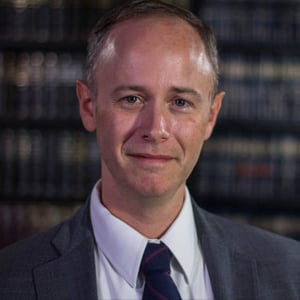
Vice President and Legal Director, National Right to Work Legal Defense and Education Foundation, Inc.
William Messenger is Foundation Vice President and Legal Director. He was a staff attorney for over twenty years and, during that time, represented individuals in numerous cases that sought to expand worker freedom of choice. This includes acting as lead counsel in three cases before the United States Supreme Court. In 2018, Messenger argued Janus v. AFSCME Council 31, where the Supreme Court held it violates the First Amendment for governments and unions to compel individuals to financially support unions and their speech. Originally from Youngstown Ohio, Messenger attended Ohio University as an undergraduate and then the George Washington University School of Law.

Senior Fellow and Director of Constitutional Studies, Manhattan Institute
Ilya Shapiro is a senior fellow and director of constitutional studies at the Manhattan Institute and a contributing editor of City Journal. Previously he was executive director and senior lecturer at the Georgetown Center for the Constitution, and before that a vice president of the Cato Institute.
Shapiro is the author of Lawless: The Miseducation of America’s Elites (2025) and Supreme Disorder: Judicial Nominations and the Politics of America’s Highest Court (2020), coauthor of Religious Liberties for Corporations? (2014), and editor of 11 volumes of the Cato Supreme Court Review (2008-18). He has contributed to a variety of academic, popular, and professional publications, including the Wall Street Journal, Harvard Journal of Law & Public Policy, Washington Post, Los Angeles Times, USA Today, National Review, and Newsweek. He also regularly provides commentary for various media outlets, writes the Shapiro’s Gavel newsletter on Substack, and once appeared on the Colbert Report.
Shapiro has testified many times before Congress and state legislatures and has filed more than 500 amicus curiae “friend of the court” briefs in the Supreme Court. He lectures regularly on behalf of the Federalist Society, is a member of the board of fellows of the Jewish Policy Center, was an inaugural Washington Fellow at the National Review Institute, and has been an adjunct law professor at the George Washington University and University of Mississippi. He is also the chairman of the board of advisers of the Mississippi Justice Institute, a barrister in the Edward Coke Appellate Inn of Court, and a former member of the Virginia Advisory Committee to the U.S. Commission on Civil Rights.
Earlier in his career, Shapiro was a special assistant/adviser to the Multi-National Force in Iraq on rule-of-law issues and practiced at Patton Boggs and Cleary Gottlieb. Before entering private practice, he clerked for Judge E. Grady Jolly of the U.S. Court of Appeals for the Fifth Circuit. He holds an AB from Princeton University, an MSc from the London School of Economics, and a JD from the University of Chicago Law School.

Tammy McCutchen is a leading authority on federal and state wage-hour laws and prevailing wage laws. She counsels businesses on wage-hour compliance, including conducting internal audits on independent contractor status, overtime exemptions, and other pay practices. She also represents employers during investigations by the U.S. Department of Labor and serves as an expert witness in wage-hour class actions. She was a founding officer of ComplianceHR, a law and technology company, where she created AI-based applications to evaluate independent contractor and overtime exempt status.
Ms. McCutchen served as Administrator of the U.S. Department of Labor’s Wage and Hour Division, appointed by President Bush and confirmed by the Senate in 2001. She was the primary architect of the 2004 revisions to the overtime exemption regulations, the first major changes to the regulations in 55 years.
Before joining DOL, she was senior counsel for the Hershey Company in Hershey, Pennsylvania.
Ms. McCutchen has been a volunteer leader of the Federalist Society since 1989. She served in leadership roles for the Northwestern Student Chapter and Chicago Lawyers Chapter. She currently serves in leadership for the Labor & Employment Practice Group, the Regulatory Transparency Project, and the Knoxville, TN Lawyers Chapter. She served on the Editorial Advisory Board of Law360, the Labor Committee of the U.S. Chamber of Commerce, the Small Business Legal Advisory Board of the National Federation of Independent Business, and a Policy Fellow at the ACU Foundation.
Ms. McCutchen is a graduate of Western Illinois University and Northwestern University School of Law. She clerked for the Hon. Daniel Manion on the U.S. Court of Appeals for the Seventh Circuit.

Courthouse Steps Decision: Class v. United States
Criminal Law & Procedure Practice Group Teleforum
TeleforumCourthouse Steps: Minnesota Voters Alliance v. Mansky
Stephen R. Klein
Most states have laws that prohibit electioneering within polling places on election day, and the...
Topics
Hate Crimes and the Thirteenth Amendment
Hate crimes are abhorrent to all decent persons. But does Congress have the power to...
Courthouse Steps: Minnesota Voters Alliance v. Mansky
Free Speech & Election Law Practice Group Teleforum
TeleforumThe Supreme Court Tackles Patent Reform: Further Reflections on the Oil States Case after Oral Argument Before the Supreme Court
Richard A. Epstein
Note from the Editor: This article provides alternative answers to some of the questions posed...
Courthouse Steps: Janus v. AFSCME
Raymond J. LaJeunesse
Janus v. American Federation of State, County, and Municipal Employees (AFSCME) is scheduled for oral...
Husted v. A. Philip Randolph Institute - Post-Argument SCOTUScast
Michael T. Morley
On January 10, 2018, the Supreme Court heard argument in Husted v. A. Philip Randolph...
Topics
Further Reflections on the Oil States Case after Oral Argument Before the Supreme Court
On November 27, 2017, the United States Supreme Court heard oral argument in Oil States...
Preview: Janus v. American Federation of State, County, and Municipal Employees
William L. Messenger, Ilya Shapiro
Janus v. American Federation of State, County, and Municipal Employees is scheduled for oral argument...
Encino Motorcars v. Navarro - Post-Argument SCOTUScast
Tammy Dee McCutchen
On January 17, 2018, the Supreme Court heard oral argument in Encino Motorcars v. Navarro,...