
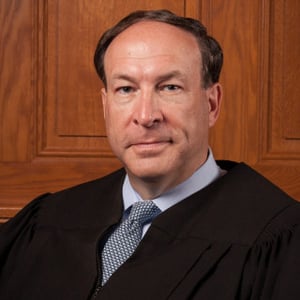
Judge, United States Court of Appeals, Seventh Circuit
Michael B. Brennan was confirmed and sworn in as a Circuit Judge for the U.S. Court of Appeals for the Seventh Circuit in May 2018.
He previously worked as a partner in the Milwaukee law firm of Gass Weber Mullins LLC, where he tried cases and handled appeals in federal and state courts, as a judge on the Milwaukee County Circuit, where he presided over a variety of criminal and civil calendars, and as an assistant district attorney in the Milwaukee County District Attorney’s office.
Brennan’s undergraduate degree is from the University of Notre Dame, and his law degree from Northwestern University School of Law, where he was an editor on the law review and the moot court champion. He served as a law clerk on the U.S. District Court for the Eastern District of Wisconsin and the U.S. Court of Appeals for the Seventh Circuit.
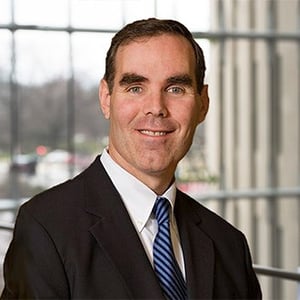
Partner, Jones Day
Eric Dreiband represents clients in investigations, litigation, and counseling in civil rights, employment discrimination, whistleblower, wage and hour, and other matters. Prior to rejoining Jones Day in 2021, Eric served as the 18th Assistant Attorney General for the Civil Rights Division at the U.S. Department of Justice (DOJ), and he also served as the 12th General Counsel of the U.S. Equal Employment Opportunity Commission (EEOC).
Under Eric's leadership, DOJ's Civil Rights Division set enforcement records for prosecutions of law enforcement officers and sexual harassment, religious liberty, and servicemember cases; charged the highest number of hate crimes cases in decades; significantly expanded resources for human trafficking prosecutions; prosecuted race and other forms of illegal discrimination in education, employment, housing, lending, and voting; reached historic disability rights settlements with several states; opposed unlawful COVID-19-related civil liberty restrictions; and successfully litigated to protect the Constitutional and civil rights of all people in the United States.
As EEOC general counsel, Eric led the Commission's litigation of the federal employment antidiscrimination laws, and he issued the Regional Attorneys' Manual, which established the policies of EEOC's litigation program. Eric also served at the Department of Labor (DOL) as deputy wage and hour administrator and directed DOL's enforcement of the Fair Labor Standards Act (FLSA), the Family and Medical Leave Act (FMLA), and other laws.
From 1997 to 2000, Eric served as a prosecutor in the Office of Independent Counsel Kenneth W. Starr.
Eric has spoken and written extensively about civil rights and other employment laws, and he has testified about these subjects before committees of the U.S. House of Representatives and the U.S. Senate.
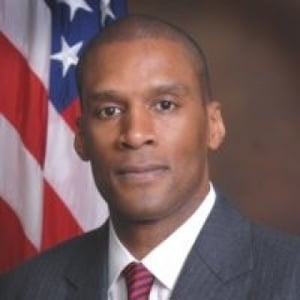
Former Director, Office of Federal Contract Compliance Programs, U.S. Department of Labo
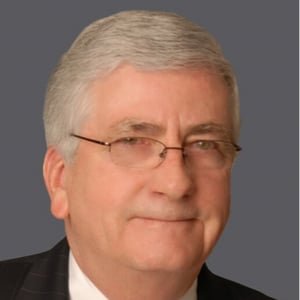
Shareholder, Ogletree Deakins
Brian Hayes is a Shareholder in the Washington, DC office of Ogletree Deakins and serves as Co-Chair of the law firm’s Traditional Labor Practice Group. Immediately prior to his joining the firm he was a Member of the National Labor Relations Board. He was confirmed to that post by the United States Senate in 2010 and his term ended in December of 2012. He is currently a Member of the U.S. Chamber of Commerce Litigation Advisory Committee and was recently named Chairman of the U.S. Chamber’s Subcommittee on the National Labor Relations Act. He also serves as editor in chief for The Practical NLRB Advisor.
Prior to his nomination and confirmation to the NLRB, Brian Hayes served as the Republican Labor Policy Director for the United States Senate Committee on Health, Education, Labor and Pensions. He came to Capitol Hill in 2005 after nearly thirty years in private legal practice devoted exclusively to representing management clients in labor and employment matters. While in private practice he represented clients in scores of cases before NLRB, state and federal courts, and a host of other federal agencies such as the EEOC, OFCCP, OSHA, the Department of Labor and their state counterparts. He also has had extensive private practice experience representing employers in collective-bargaining negotiations, arbitrations and other forms of dispute resolution. In addition to his private practice, he served as Counsel to the Employers’ Association of the Northeast, editor-in-chief and contributor to The Health Care Labor Manual, and also served on the adjunct faculty of Western New England Law School teaching courses in labor law, and collective-bargaining, arbitration and employment litigation. Before entering private practice he began his legal career at the NLRB working as a law clerk to the Chief Administrative Law Judge while in law school and subsequently as counsel to the then-Board Chairman. He is a graduate of Boston College and of Georgetown University Law School.
Chief Counsel, U.S. Chamber Litigation Center
Steven P. Lehotsky has significant experience developing and executing litigation strategies to help businesses and trade associations address their most important regulatory and public-policy challenges.
Before founding Lehotsky Keller LLP, Mr. Lehotsky directed the litigation strategy of the U.S. Chamber of Commerce, the world's leading business federation, where he worked from 2013-2021. While at the U.S. Chamber’s Litigation Center, he served as chief litigation counsel. Mr. Lehotsky led the Chamber's efforts to bring successful challenges to federal, state, and local regulations of business. He also directed the U.S. Chamber's efforts to defend pro-growth regulatory reforms. Mr. Lehotsky also led and implemented the U.S. Chamber’s strategies for filing hundreds of amicus curiae briefs in the U.S. Supreme Court, federal appellate and district courts, and state supreme and appellate courts. He is a frequent speaker at events and conferences on litigation and regulatory trends.
Mr. Lehotsky previously was an attorney at WilmerHale LLP in both the Washington D.C. and Boston offices, where he practiced government and regulatory litigation, appellate litigation, and counseling on constitutional, statutory, and regulatory issues for clients across a wide variety of industry sectors. He also previously practiced as a commercial litigator at Goodwin Procter LLP in Boston.
In addition, Mr. Lehotsky was an Attorney-Adviser in the Office of Legal Counsel of the U.S. Department of Justice from 2006-2009, advising the White House and executive departments and agencies on constitutional and statutory issues relating to national security, immigration, international sanctions under the International Emergency Economic Powers Act and other programs, the response to the 2008 financial crisis, pandemic influenza and infectious-disease mitigation, cybersecurity, and congressional investigations, among many other subjects.
Mr. Lehotsky was a law clerk for Justice Antonin Scalia of the Supreme Court of the United States and Chief Judge Douglas H. Ginsburg of the U.S. Court of Appeals for the District of Columbia Circuit.
Chief Legal and Government Affairs Officer, BrightStar Care
Cheryl M. Stanton is Chief Legal and Government Affairs Officer at BrightStar Care. Prior to joining BrightStar Care, she served as Administrator of the Department of Labor’s Wage and Hour Division. She was sworn in as WHD’s Administrator by U.S. Secretary of Labor Alexander Acosta on April 29, 2019.
Stanton brought a wealth of experience to WHD, most recently having served as the Executive Director of the South Carolina Department of Employment and Workforce. Under her leadership, South Carolina’s jobless rate dropped to its lowest point in at least 50 years. During that time period, South Carolina’s workforce system helped place over 500,000 South Carolinians into jobs. Stanton also partnered with her colleague at the Department of Corrections to create a job re-entry program for ex-offenders, receiving national accolades. She also oversaw two major information technology modernization projects that improved customer service and increased efficiencies for employees.
Stanton served as the White House’s principal legal liaison to the DOL under President George W. Bush. She is a graduate of Williams College, and earned her law degree from the University of Chicago Law School.

Professor of Law, University of Michigan Law School
Christopher J. Walker is a Professor of Law at the University of Michigan. Prior to joining Michigan law faculty in 2022, he spent a decade teaching at The Ohio State University Moritz College of Law. He previously clerked for Justice Anthony Kennedy of the U.S. Supreme Court, worked on the Civil Appellate Staff at the U.S. Department of Justice, and served on the Senate Judiciary Committee staff for the Gorsuch Supreme Court confirmation. Professor Walker’s research focuses on administrative law, regulation, and law and policy at the agency level. Outside the law school, he chaired the American Bar Association’s Section of Administrative Law and Regulatory Practice in 2020-21 and served as one of forty Public Members of the Administrative Conference of the United States from 2016-2022, and he continues to serve in both organizations in various capacities. He also works of counsel at the U.S. Chamber Litigation Center. In 2022, he received the Federalist Society’s Joseph Story Award.
Supreme Court & Appellate Litigation Chair, Lex Politica; Of Counsel, Alliance Defending Freedom
Erin Morrow Hawley serves as Chair of Lex Politica's Supreme Court and Appellate Practice overseeing the firm’s strategic appellate litigation and critical motions practice in the trial courts. Erin is an experienced litigator who represents clients in constitutional, regulatory, and appellate matters in federal and state courts throughout the country.
Erin has represented dozens of clients before the Supreme Court of the United States, served as lead counsel in high-profile cases raising novel constitutional and statutory issues, and authored numerous successful petitions for certiorari and briefs in opposition. She has argued in state and federal appellate and trial courts throughout the country, including the Supreme Court of the United States. Erin represents diverse clients in high-stakes litigation from state governments to faith-based nonprofits to Fortune 100 companies. She possesses expertise on a wide range of subject matters including administrative law, the First Amendment, religious liberty, federal jurisdiction, federal preemption, equitable jurisdiction, tax law, the Affordable Care Act, and Title IX.
Erin represents clients in cases where public communications strategy is paramount. She is a sought-after speaker and writer, has testified multiple times before Congress, and is a frequent presenter on constitutional and administrative law issues, including at the Oxford Union, the National Federalist Society Convention, and university campuses across the country. She is a frequent commentator to media outlets, including Fox News, MSNBC, the Wall Street Journal, WORLD, USA Today, the Federalist, and the Hill.
Erin previously oversaw Alliance Defending Freedom’s--where she still serves as Of Counsel--litigation strategies to empower women and protect the dignity of life, defend pregnancy centers’ First Amendment rights from government overreach, and safeguard Americans’ freedoms from the ever-encroaching administrative state.
Professor of Law, University of Chicago Law School
Jennifer Nou is Professor of Law at the University of Chicago Law School. Nou’s main research interests are in administrative law, executive branch dynamics, regulatory policy, and constitutional separation-of-powers. Prior to joining the faculty, she was a Public Law Fellow at the Law School and also worked as a policy analyst and special assistant at the Office of Information and Regulatory Affairs. Nou is a graduate of Yale College and Yale Law School, and received an MPhil in Politics from Oxford University as a Marshall Scholar. After law school, she was a law clerk to Judge Richard Posner of the US Court of Appeals for the Seventh Circuit and then to Justice Stephen Breyer of the US Supreme Court. She is currently a public member of the Administrative Conference of the United States.

President, Cass & Associates, PC
Ronald A. Cass is Dean Emeritus of Boston University School of Law (where he was Dean from 1990-2004), President of Cass & Associates, PC, former Vice-Chairman and Commissioner of the U.S. International Trade Commission, former faculty member at Boston University School of Law and the University of Virginia Law School, and Distinguished Senior Fellow at the C. Boyden Gray Center for the Study of the Administrative State. Dean Cass also sits as an arbitrator for commercial, international, and intellectual property rights disputes, and is a former United States member of the Panel of Conciliators of the International Centre for Settlement of Investment Disputes. He is a member of the Council of the Administrative Conference of the United States and has received seven presidential appointments, spanning Presidents Ronald Reagan to Donald J. Trump.
As a law professor, lecturer, and scholar, Dean Cass has been teaching and writing about a wide array of legal issues on topics such as administrative law and regulation, antitrust, constitutional law, communications, intellectual property, international trade, separation of powers, and legal process. He has published more than 160 scholarly books, chapters, articles, and papers, including a leading casebook on administrative law. Dean Cass has taught judges as well as students in schools of law, economics, business, and public policy and has held academic appointments in the United States, Europe, and Latin America.
In addition to his academic work, Dean Cass has participated in numerous important legal cases as an amicus, consultant, or expert, and has advised businesses, law firms, investment funds, and government agencies on a range of trade, antitrust, intellectual property, and regulatory issues. He has a broad range of affiliations with professional groups, and has received numerous honors, fellowships and awards.
Dean Cass is a graduate of the University of Virginia and the University of Chicago Law School.

Associate Dean for Research and Intellectual Life, McKnight Presidential Professor in Law, Distinguished McKnight University Professor, Harlan Albert Rogers Professor in Law, Associate Director, Corporate Institute, University of Minnesota Law School
Professor Kristin E. Hickman is the McKnight Presidential Professor in Law, a Distinguished McKnight University Professor, and Harlan Albert Rogers Professor in Law at the University of Minnesota Law School. She also has taught at Harvard Law School and Northwestern University School of Law. Professor Hickman teaches and writes primarily in the areas of administrative law, tax administration, and statutory interpretation. Her articles on these topics have appeared in the Columbia Law Review, Cornell Law Review, Virginia Law Review, Duke Law Journal, and other publications. She also co-authors the Administrative Law Treatise with Richard J. Pierce, Jr., and a casebook on federal administrative law with Pierce and Christopher J. Walker. Her scholarly work has been cited several times in opinions of the United States Supreme Court as well as regularly in lower court judicial opinions and court briefs.
In 2018-19, Professor Hickman served as Special Adviser to the Administrator of the Office of Information and Regulatory Affairs in Washington, D.C. She presently serves as a Senior Fellow, and previously served as a public member and chair of the judicial review committee, for the Administrative Conference of the United States. She also is a Fellow of the American College of Tax Counsel.
Professor Hickman received her B.S. degree in business administration with a concentration in accounting and a secondary major in history from Trinity University in San Antonio, Texas. After practicing for several years as a certified public accountant, Professor Hickman earned her J.D. degree, magna cum laude, from Northwestern University School of Law, where she was awarded the Raoul Berger Prize and the Lowden Wigmore Prize for her scholarly writings. Following law school, Professor Hickman clerked for The Honorable David B. Sentelle of the United States Court of Appeals for the District of Columbia Circuit and practiced law as an associate with the Chicago office of Skadden, Arps, Slate, Meagher & Flom, concentrating on corporate and international tax transactions and matters.

Adjunct Professor, George Washington University Law School
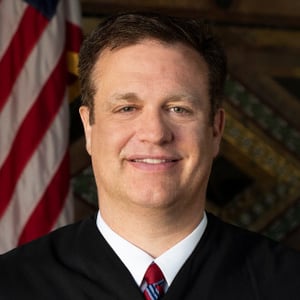
Judge, United States Court of Appeals, Ninth Circuit
Judge Nelson was confirmed to the Ninth Circuit in October 2018, as the youngest Circuit Judge to serve from Idaho and he has chambers in his hometown of Idaho Falls. Prior to his confirmation, Judge Nelson served for nine years as General Counsel of Idaho Falls-based Melaleuca, Inc., a consumer goods company. He previously worked in Washington, DC, where he served in all three branches of the federal government, including as Special Counsel for Supreme Court nominations to the Ranking Member of the Senate Judiciary Committee; Deputy General Counsel to the White House Office of Management and Budget; Deputy Assistant Attorney General in the Environment and Natural Resources Division of the United States Department of Justice; and a law clerk to Judge Henderson of the United States Court of Appeals for the D.C. Circuit. He has argued in most of the federal courts of appeals and worked on dozens of Supreme Court briefs. He started in the Washington, DC office of Sidley Austin as an appellate lawyer, after clerking for Judges Mosk and Brower of the Iran-U.S. Claims Tribunal at The Hague, and for now-Judge Tom Griffith, then-Senate Legal Counsel, during the impeachment trial of President Clinton. Judge Nelson earned his B.A. from Brigham Young University and his J.D., with honors, from BYU Law School. Judge Nelson has been a member of the Federalist Society since 1998.

Founder, Law Office of Eileen J. O'Connor PLLC
After nearly 30 years as a national tax specialist with the IRS and major accounting firms, Eileen J. O’Connor, now an attorney in private practice, was Assistant Attorney General for the Justice Department’s Tax Division for six years during the administration of President George W. Bush and a member of then-President-elect Trump’s Treasury Department Transition Team. She focuses on federal administrative and tax law.

Trustee Professor of Law, New York Law School
From 1972-79, Schoenbrod served as one of the leaders of the Natural Resources Defense Council, where he campaigned to reduce lead in gasoline, resurrect the then-decrepit New York City subway, and protect the environment of Puerto Rico. Previously, he was Director of Program Development at the community development project that Senator Robert Kennedy established in Bedford Stuyvesant. He has also been a senior fellow at the Cato Institute and the American Enterprise Institute.
His books include
D.C. Confidential: Inside the Five Tricks of Washington (Encounter Books, 2017) with forewords by Governor Howard Dean and Senator Mike Lee;
Breaking the Logjam: Environmental Protection That Will Work (Yale University Press, 2010)(with Richard B. Stewart and Katrina M. Wyman);
Saving Our Environment from Washington: How Congress Grabs Power, Shirks Responsibility, and Shortchanges the People (Yale University Press, 2005);
Democracy by Decree: What Happens When Courts Run Government (Yale University Press, 2003) (with Ross Sandler); and
Power Without Responsibility: How Congress Abuses the People Through Delegation (Yale University Press, 1993).
In addition to writing scholarly articles, he has frequently contributed opinion pieces to the Wall Street Journal, The Hill, the New York Times, and other publications.
He has an undergraduate degree from Yale College, a graduate degree in economics from Oxford University, which he attended as a Marshall Scholar, and a law degree from Yale Law School.
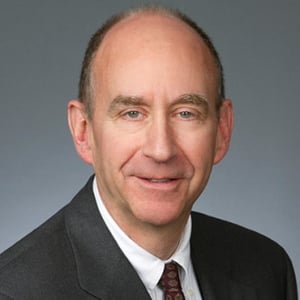
Partner, Kirkland & Ellis LLP
Neil Eggleston is a litigation partner in the Washington, D.C. office of Kirkland & Ellis LLP.
Neil has a distinguished record of public service, and has held a number of senior government roles. He was White House Counsel to President Obama from 2014 to 2017, and advised the president on all legal and constitutional issues across a broad spectrum of domestic and foreign policy matters. Neil’s practice focuses on enforcement defense including at the U.S. Department of Justice (DOJ), U.S. Securities and Exchange Commission (SEC), U.S. Attorney’s Offices, and other enforcement agencies.
Earlier in his career, Neil served as Associate Counsel to President Clinton from 1993 to 1994. Heals o served as Deputy Chief Counsel, U.S. House of Representatives Select Committee Investigating the Iran/Contra Affair (1987-1988); Assistant U.S. Attorney (1981-1987); and Chief Appellate Attorney for the Southern District of New York (1986-1987).
Neil served as a law clerk for the United States Court of Appeals for the Third Circuit (1978-1979) and for Chief Justice Warren E. Burger on the United States Supreme Court (1979-1980).
Neil teaches a seminar in Presidential Power at Harvard Law School in the spring of 2017, 2019, 2020, and 2021 and at Yale Law School in the spring of 2018. He also frequently lectures at American Bar Association and similar seminars.

President, Center for Individual Rights
Todd Gaziano is the President of the Center for Individual Rights. Mr. Gaziano received his J.D. in 1988 from the University of Chicago Law School, where he was a John M. Olin Fellow in Law and Economics. He received his B.A. from West Virginia University, summa cum laude in 1985. He was selected as a Truman Scholar from West Virginia while an undergraduate.
Mr. Gaziano’s previous legal work includes service as a law clerk for U.S. Court of Appeals for the Fifth Circuit Judge Edith Jones, as an attorney in the U.S. Department of Justice Office of Legal Counsel, as a chief subcommittee counsel in the U.S. House of Representatives, as a Houston trial attorney, and as a chief corporate legal officer. He also served a six-year term as commissioner on the U.S. Commission on Civil Rights (2008-2013), where he helped conduct oversight and investigations of civil rights agencies.
For most of the last 25 years, Mr. Gaziano was a legal scholar and public interest law leader, promoting individual liberty in the Supreme Court and Congress. From 1997 to 2013, he was the founding director of the Edwin Meese Center for Legal and Judicial Studies at The Heritage Foundation. From 2014 until he joined CIR, he was the Chief of Legal Policy and Strategic Research, and Director of the Center for the Separation of Powers, at Pacific Legal Foundation.

Maurice and Hilda Friedman Professor of Law, Columbia Law School; CEO, New Civil Liberties Alliance
Philip Hamburger is the Maurice and Hilda Friedman Professor of Law at Columbia Law School, and Chief Executive Officer at the New Civil Liberties Alliance. Before coming to Columbia, he was the John P. Wilson Professor at the University of Chicago Law School.
He writes on constitutional law and its history—with particular emphasis on religious liberty, freedom of speech and the press, judicial office, administrative power, and unconstitutional conditions.
His books are Separation of Church and State (Harvard 2002), Law and Judicial Duty (Harvard 2008), Is Administrative Law Unlawful? (Chicago 2014), The Administrative Threat (Encounter 2017), and Liberal Suppression: Section 501(c)(3) and the Taxation of Speech (Chicago 2018). A forthcoming book is Purchasing Submission: Conditions, Power, and Freedom (Harvard 2021).
He is a member of the American Academy of Arts and Sciences, and he has served on the board of directors of the American Society for Legal History. He has twice received the Sutherland Prize for the most significant contribution to English legal history, and has been awarded the Henry Paolucci - Walter Bagehot Book Award, the Hayek Book Prize, and the Bradley Prize.

Judge, United States Court of Appeals, District of Columbia Circuit
Judge Katsas was appointed to the D.C. Circuit in December 2017. He graduated from Princeton University and Harvard Law School, where he was an executive editor on the Harvard Law Review. Between 1989 and 1992, he served as a law clerk to Judge Edward Becker on the Third Circuit, to then-Judge Clarence Thomas on the D.C. Circuit, and to Justice Thomas on the Supreme Court. Between 1992 and 2001, he was an associate and then partner in the Washington office of Jones Day, where he specialized in appellate and complex civil litigation. Between 2001 and 2009, he served in many senior positions in the Department of Justice, including as Assistant Attorney General for the Civil Division and as Acting Associate Attorney General. In 2009, he returned to Jones Day. From January to December 2017, he served as Deputy Assistant to the President and Deputy Counsel to the President.
Before joining the bench, Judge Katsas argued more than 75 appeals, including three cases in the Supreme Court, 13 cases in the D.C. Circuit, and cases in every other federal court of appeals. By appointment of the Chief Justice, he served on the Advisory Committee on Appellate Rules from 2013 to 2017. In 2016, he was elected to membership in the American Academy of Appellate Lawyers.

J.B. and Maurice C. Shapiro Professor of Public Interest Law, The George Washington University Law School
Jonathan Turley is a nationally recognized legal scholar who has written extensively in areas ranging from constitutional law to legal theory to tort law. After a stint at Tulane Law School, Professor Turley joined the GW Law faculty in 1990, and in 1998, became the youngest chaired professor in the university's history.
He is the founder and executive director of the Project for Older Prisoners (POPS). He has written more than three dozen academic articles that have appeared in a variety of leading law journals including those of Cornell, Duke, Georgetown, Harvard, and Northwestern Universities, among others. He most recently completed a three-part study of the historical and constitutional evolution of the military system.
Professor Turley has served as counsel in some of the most notable cases in the last two decades, including his representation of the Area 51 workers at a secret air base in Nevada; the nuclear couriers at Oak Ridge, Tennessee; the Rocky Flats grand jury in Colorado; Dr. Eric Foretich, the husband in the Elizabeth Morgan custody controversy; and four former U.S. Attorney Generals during the Clinton impeachment litigation. Professor Turley also has served as counsel in a variety of national security and terrorism cases, and has been ranked as one of the top 10 lawyers handling military cases.
He has served as a consultant on statutory and constitutional issues, and he has been a witness in over 100 hearings before the House and Senate, including the impeachments of Presidents Bill Clinton and Donald Trump. He also is a nationally recognized legal commentator; he ranked 38th in the top 100 most cited ‘public intellectuals’ in a recent study by Judge Richard Posner and was found to be the second most cited law professor in the country.
He is a member of the USA Today board of contributors and the recipient of the “2005 Single Issue Advocate of the Year” – the annual opinion award for the Aspen Institute and The Week magazine. Hundreds of his articles on legal and policy issues regularly appear in national newspapers. He also has worked as the legal analyst for four networks, CBS, NBC, BBC, and Fox. After 30 years as a columnist and commentator, the Washington Post called him the "Dean of Legal Analysts."
He is a best-selling author, including his latest New York Times bestseller "Rage and the Republic: The Unfinished Story of the American Revolution." (Simon & Schuster 2026). Turley's blog, Res Ipsa (www.jonathanturley.org), is one of the most read legal sites in the country.

Senior Fellow and Director of Constitutional Studies, Manhattan Institute
Ilya Shapiro is a senior fellow and director of constitutional studies at the Manhattan Institute and a contributing editor of City Journal. Previously he was executive director and senior lecturer at the Georgetown Center for the Constitution, and before that a vice president of the Cato Institute.
Shapiro is the author of Lawless: The Miseducation of America’s Elites (2025) and Supreme Disorder: Judicial Nominations and the Politics of America’s Highest Court (2020), coauthor of Religious Liberties for Corporations? (2014), and editor of 11 volumes of the Cato Supreme Court Review (2008-18). He has contributed to a variety of academic, popular, and professional publications, including the Wall Street Journal, Harvard Journal of Law & Public Policy, Washington Post, Los Angeles Times, USA Today, National Review, and Newsweek. He also regularly provides commentary for various media outlets, writes the Shapiro’s Gavel newsletter on Substack, and once appeared on the Colbert Report.
Shapiro has testified many times before Congress and state legislatures and has filed more than 500 amicus curiae “friend of the court” briefs in the Supreme Court. He lectures regularly on behalf of the Federalist Society, is a member of the board of fellows of the Jewish Policy Center, was an inaugural Washington Fellow at the National Review Institute, and has been an adjunct law professor at the George Washington University and University of Mississippi. He is also the chairman of the board of advisers of the Mississippi Justice Institute, a barrister in the Edward Coke Appellate Inn of Court, and a former member of the Virginia Advisory Committee to the U.S. Commission on Civil Rights.
Earlier in his career, Shapiro was a special assistant/adviser to the Multi-National Force in Iraq on rule-of-law issues and practiced at Patton Boggs and Cleary Gottlieb. Before entering private practice, he clerked for Judge E. Grady Jolly of the U.S. Court of Appeals for the Fifth Circuit. He holds an AB from Princeton University, an MSc from the London School of Economics, and a JD from the University of Chicago Law School.
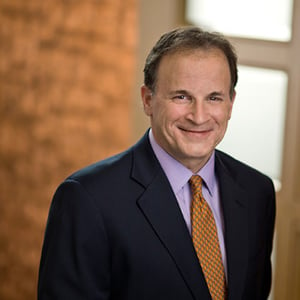
Partner, Boies Schiller Flexner
Jonathan Sherman is a general commercial litigator who combines 25 years of business litigation and First Amendment expertise to specialize in the strategic use of reputation, a unique approach to resolving information age and knowledge economy disputes.
Named since 2012 to its annual list of American’s “500 Leading Lawyers”, Lawdragon calls Jonathan a “nimble advocate with a sharp legal mind” who “can handle any task” and whose “passion for the law bubbles forth with astonishing ferocity.” A recent profile called him “Floyd Abrams meets David Boies with a side order of Hunter S. Thompson.”
Jonathan has tried cases, argued appeals, and resolved multi-party disputes in securities, financial institution, business defamation, intellectual property, unfair competition, antitrust and free speech matters. He has represented an eclectic mix of clients: from mining to media, finance to fashion, reinsurance to online gaming, political figures and cultural critics, among others. He is both a plaintiff’s lawyer and a traditional defense counsel.
At ease under heavy scrutiny since his earliest years of practice representing Court TV in the OJ Simpson criminal proceedings, Jonathan is now among the world’s leading advocates for public access to courts. The New York Times has twice published his op-ed pieces. A former member of the New York State Bar Association’s Media Law Committee, he has taught at Yale, Stanford and Fordham, and lectured in London, Brussels, Budapest and elsewhere.
Jonathan is a Trustee of DC’s acclaimed Shakespeare Theatre Company in Washington, DC, and has been listed in Who’s Who in America since 2000.

Chief Policy Counsel, Council on Criminal Justice and Senior Advisor, Right on Crime
Marc A. Levin is the Chief Policy Counsel for the Council on Criminal Justice (counciloncj.org) and Senior Advisor for Right on Crime.
An attorney and accomplished author on legal and public policy issues, Marc began the Foundation’s criminal justice program in 2005. This work contributed to nationally praised policy changes that have been followed by dramatic declines in crime and incarceration in Texas. Building on this success, in 2010, Levin developed the concept for the Right on Crime initiative, a TPPF project in partnership with Prison Fellowship and the American Conservative Union Foundation. Right on Crime has become the national clearinghouse for conservative criminal justice reforms and has contributed to the adoption of policies in dozens of states that fight crime, support victims, and protect taxpayers.
In 2014, Levin was named one of the “Politico 50” in the magazine’s annual “list of thinkers, doers, and dreamers who really matter in this age of gridlock and dysfunction.”
Marc has testified on criminal justice policy on four occasions before Congress and has testified before legislatures in states including Texas, Nevada, Kansas, Wisconsin, and California. He also has met personally with leaders such as U.S. Presidents, Speakers of the House, and the Justice Commtitee of the United Kingdom Parliament to share his ideas on criminal justice reform. In 2007, he was honored in a resolution unanimously passed by the Texas House of Representatives that stated, “Mr. Levin’s intellect is unparalleled and his research is impeccable.”
Since 2005, Marc has published dozens of policy papers on topics such as sentencing, probation, parole, reentry, and overcriminalization which are available on the TPPF website. Levin’s articles on law and public policy have been featured in publications such as the Wall Street Journal, USA Today, Texas Review of Law & Politics, National Law Journal, New York Daily News, Jerusalem Post, Toronto Star, Atlanta Journal-Constitution, Philadelphia Inquirer, San Francisco Chronicle, Washington Times, Los Angeles Daily Journal, Charlotte Observer, Dallas Morning News, Houston Chronicle, Austin American-Statesman, San Antonio Express-News and Reason Magazine.
In 1999, Marc graduated with honors from the University of Texas with a B.A. in Plan II Honors and Government. In 2002, Marc received his J.D. with honors from the University of Texas School of Law. Marc was a Charles G. Koch Summer Fellow in 1996. He served as a law clerk to Judge Will Garwood on the U.S. Court of Appeals for the Fifth Circuit and Staff Attorney at the Texas Supreme Court.

President, R Street Institute
Eli Lehrer is president and co-founder of the R Street Institute, a free-market think tank. He oversees R Street’s central headquarters in Washington, D.C., as well as its field offices in Sacramento, Calif.; Tallahassee, Fla.; Columbus, Ohio; and Austin, Texas.
Prior to co-founding R Street, Mr. Lehrer was vice president of the Heartland Institute. He also played a major role in founding SmarterSafer.org, a coalition of taxpayer, environmental, insurance and free-market groups dedicated to risk-based insurance rates, mitigation and environmental protection.
He is the author of several academic book chapters on emergency management and insurance topics; and was editor of Heartland’s “Seven Big Ideas for Congress.” His research has been cited in the Wall Street Journal, New York Times, and USA Today.
Mr. Lehrer worked as speechwriter to U.S. Senate Majority Leader Bill Frist, R-Tenn. He previously worked as a manager in Unisys Corp.’s Homeland Security Practice, was senior editor of The American Enterprise magazine, and a fellow of the Heritage Foundation.
Mr. Lehrer earned a bachelor of arts, cum laude, from Cornell University and a master’s with honors from Johns Hopkins University, where his master’s thesis focused on the Federal Emergency Management Agency. His work has appeared in the New York Times, Washington Post, USA Today, Washington Times, Weekly Standard, National Review, Public Interest, Salon and dozens of other publications. He is an associate editor of National Affairs and is a member of the board of the Log Cabin Republicans, an organization representing gay and lesbian conservatives and their allies.
Mr. Lehrer lives in Virginia with his wife, Kari, and son, Andrew.
Stoneleigh Fellow and Director, Center on Youth Registration Ref, Impact Justice
Nicole Pittman has worked exclusively on questioning the wisdom of placing children on sex offender registries since 2005, becoming a leading national expert on policy, litigation, legislation, and research in this area. In 2011, Ms. Pittman published, "A Snapshot of Juvenile Sex Offender Registration and Notification Laws: A Survey of the United States", a comprehensive reference guide on sex offender registration and notification laws applied to children adjudicated delinquent in the U.S. juvenile justice system.
As a 2011 Soros Senior Justice Advocacy Fellow at Human Rights Watch, Ms. Pittman interviewed hundreds of individuals raised on registries across the country to document the abuses that stem from subjecting children to sex offender registration laws. In 2013, Human Rights Watch published the results of her work in Raised on the Registry: The Irreparable Harm of Placing Children on Sex Offender Registries in the US. The report became the first comprehensive examination of the harm of placing children on sex offender registries and features first-person narratives illustrating the harrowing treatment of children, as young as 8, 10, and 12 years old, subjected to lifetime sex offender registration and public notification.
Ms. Pittman has been invited to testify on this issue before 37 state legislatures and the U.S. Congress. She has cultivated and maintained long-term partnerships with several key stakeholders, including juvenile defender organizations; criminal defense policy groups; members of Congress; state officials and legislators; the National Center for Missing and Exploited Children; the U.S. Department of Justice’s Office of Juvenile Justice Delinquency and Prevention (OJJDP) and various state chapters of organizations for individuals on registries.
Through her Stoneleigh Fellowship, Ms. Pittman is serving as the Director of the Center on Youth Registration Reform at Impact Justice. This national Center supports federal and state lawmakers and leaders working to make communities safer and eliminate the placement of youth on registries through technical, legal, and programmatic assistance. To advance this work, Ms. Pittman is actively collaborating with numerous stakeholders and thought leaders in the fields of sexual violence prevention, reentry, alternative sentencing, and restorative justice.
For seven years, Ms. Pittman worked as a specialist attorney with the Defender Association of Philadelphia. She is the recipient of the 2013 Distinguished Service Award, Association for the Treatment of Sexual Abusers (ATSA) and the 2010 National Juvenile Defender Center Robert Shepherd Jr. Leadership Award of Excellence in Juvenile Defense. In 2015, she was named a “Rising Star” by Ozy.com for her work to remove youth from sex offender registries. Ms. Pittman received her JD from Tulane Law School and her undergraduate degree from Duke University.

President, Stop Child Predators
Stacie D. Rumenap is President of Stop Child Predators (SCP). Ms. Rumenap previously served as SCP's Executive Director and brings with her extensive insight and experience into legislative affairs, non-profit management and a dedication to ending the sexual exploitation of children. As president, Ms. Rumenap manages the day-to-day operations of SCP and is responsible for developing partnerships and coalitions with similarly motivated organizations; provides guidance and assistance to state and federal lawmakers to bring about legislative change; and leads Internet safety training programs.
Prior to joining SCP, Ms. Rumenap served as the Deputy Director for the American Conservative Union (ACU), the nation's oldest and largest conservative grassroots issue-advocacy organization, where she directed the ACU's annual Conservative Political Action Conference and served as one of the group's principle lobbyists. Ms. Rumenap has also served as the Executive Director for both U.S. Term Limits and the National Center for Growth, worked on Capitol Hill, and worked on three successful congressional campaigns. Ms. Rumenap currently serves on the Boards of Directors of the America's Future Foundation and the Safe Internet Alliance. She is a former board member of the Initiative and Referendum Institute and the Georgia State Society. Ms. Rumenap received her M.A. in Legislative Affairs from George Washington University and her B.A. in Journalism from Shippensburg University of Pennsylvania.

Regulatory Elephants in Statutory Mouse Holes?
Michael B. Brennan, Eric Dreiband, Ondray T. Harris, Brian E. Hayes, Steven Lehotsky, Cheryl M. Stanton
When an agency claims “a merely plausible textual basis” for asserting “extravagant statutory power over...
FedSoc Study Break: Administrative Law
Christopher J. Walker
The Federalist Society's Student Division & NYU School of Law Chapter present Administrative Law Featuring:...
Kisor and Gundy: The Future of Administrative Law?
Erin M. Hawley, Jennifer Nou, Hallie Saunders
On February 15, 2021, Erin M. Hawley and Jennifer Nou joined the Federalist Society’s Chicago...
Nondelegation after Gundy — Are we Waiting for Godot?
Ronald A. Cass, Kristin E. Hickman, Alan B. Morrison, Ryan D. Nelson, Eileen J. O'Connor, David S. Schoenbrod
On November 14, 2019, the Federalist Society's Administrative Law & Regulation Practice Group hosted a...
The Deregulatory Landscape
W. Neil Eggleston, Todd F. Gaziano, Philip A. Hamburger, Gregory G. Katsas, Jonathan R. Turley
The Sixth Annual Executive Branch Review Conference is scheduled for Tuesday, April 17 at the...
Packingham v. North Carolina - Post-Argument SCOTUScast
Ilya Shapiro
On February 27, 2017, the Supreme Court heard oral argument in Packingham v. North Carolina....
Courthouse Steps: Packingham v. North Carolina - Podcast
Ilya Shapiro
In Packingham v. North Carolina, the Supreme Court will decide whether the First Amendment bars...
Supreme Court Preview: Packingham v. North Carolina - Podcast
Jonathan Sherman, Melissa Sherry
On February 27, the Supreme Court will hear oral argument in Packingham v. North Carolina....
Scarlet Letters and Federal Mandates: Reconsidering Juvenile Sex Offender Registration and the Adam Walsh Act - Podcast
Marc Levin, Eli Lehrer, Nicole Pittman, Stacie Rumenap
Given the understandable public fear of sexual predators, policies concerning sex offenders have often become...
Topics
More sex offender registry background