

Patrick Hotung Professor of Constitutional Law, Georgetown University Law Center; Faculty Director, Georgetown Center for the Constitution
Randy E. Barnett is the Patrick Hotung Professor of Constitutional Law at the Georgetown University Law Center and is the Faculty Director of the Georgetown Center for the Constitution. After graduating from Northwestern University and Harvard Law School, he tried many felony cases as a prosecutor in the Cook County States’ Attorney’s Office in Chicago. A recipient of a Guggenheim Fellowship in Constitutional Studies and the Bradley Prize, Professor Barnett has been a visiting professor at Penn, Northwestern and Harvard Law School.
Professor Barnett’s publications includes thirteen books, more than one hundred articles and reviews, as well as numerous op-eds. His most recent book is Felony Review: Tales of True Crime and Corruption in Chicago (2026). His other books on the Constitution include: A Life for Liberty: The Making of an American Originalist (2024); The Original Meaning of the Fourteenth Amendment: Its Letter and Spirit (2021) (with Evan Bernick); An Introduction to Constitutional Law: 100 Supreme Court Cases Everyone Should Know (2019) (with Josh Blackman); Restoring the Lost Constitution: The Presumption of Liberty (2nd ed. 2013); Our Republican Constitution: Securing the Liberty and Sovereignty of We the People (2016); and Constitutional Law: Cases in Context (5th ed. forthcoming 2027) (with Josh Blackman). His books on contracts are The Oxford Introductions to U.S. Law: Contracts (2010) and Contracts: Cases and Doctrine (7th ed. 2021) (with Nate Oman). And he is the author of The Structure of Liberty: Justice and the Rule of Law (2nd ed. 2014).
In 2004, he argued the medical marijuana case of Gonzalez v. Raich before the U.S. Supreme Court. In 2012, he was one of the lawyers representing the National Federation of Independent Business in its constitutional challenge to the Affordable Care Act in NFIB v. Sebelius. He’s appeared in numerous documentaries and portrayed a prosecutor in the 2010 science-fiction feature film, InAlienable: The Movie. On X he is @RandyEBarnett

Vice President, Edwin Meese III Institute for the Rule of Law, Advancing American Freedom
John G. Malcolm oversees Advancing American Freedom’s work to increase understanding of the Constitution and the rule of law as Vice President of the organization’s Edwin Meese III Institute for the Rule of Law. Malcolm brings to the challenge a wealth of legal expertise and experience in both the public and private sectors.
Prior to joining Advancing American Freedom in 2025, Malcolm was the Vice President of the Institute for Constitutional Government and the Director of the Meese Center for Legal and Judicial Studies at the Heritage Foundation. Prior to joining Heritage in 2012, Malcolm was general counsel at the U.S. Commission on International Religious Freedom, as well as a distinguished practitioner in residence at Pepperdine Law School. From 2004 to 2009, Malcolm was executive vice president and director of worldwide anti-piracy operations for the Motion Picture Association.
Malcolm served as a deputy assistant attorney general in the Department of Justice’s Criminal Division from 2001 to 2004, where he oversaw sections on computer crime and intellectual property, domestic security, child exploitation and obscenity, and special investigations. Immediately prior to that, he was a founding partner in the Atlanta law firm of Malcolm & Schroeder, LLP.
From 1990 to 1997, Malcolm was an assistant U.S. attorney in Atlanta, assigned to the fraud and public corruption section, and also an associate independent counsel, investigating fraud and abuse in the Department of Housing and Urban Development. He was honored with the Director’s Award for Superior Performance for his work in connection with the successful prosecution of Walter Leroy Moody Jr., who assassinated an 11th Circuit judge and the head of the Savannah chapter of the NAACP.
A graduate of Harvard Law School and Columbia College, Malcolm began his career as a law clerk to a federal district court judge and a federal appellate court judge, and as an associate at the Atlanta-based law firm of Sutherland, Asbill & Brennan (new Eversheds Sutherland).
Malcolm, who resides in Washington, D.C., serves on the Board of Trustees of the Washington National Opera and is a Senate-confirmed member of the Board of Directors of the Legal Services Corporation, the largest funder of civil legal aid in the United States.
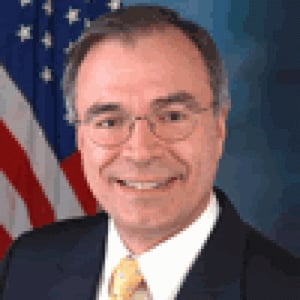
United States House of Representatives, Maryland
The son of immigrants who fled communist Eastern Europe immediately after World War II, Andrew P. Harris, M.D., has spent a lifetime serving his neighbors, country and community. Whether it was as a physician at the prestigious Johns Hopkins Hospital, as a medical officer in the Naval Reserve, as a hard-working state senator, or now as congressman, Andy has made a life by serving others. He is dedicated to making sure every constituent in the 1st Congressional District receives the highest-quality assistance and is well-represented in the halls of Congress.
Serving his neighbors. Andy is a proud father of five children (Joe, Becky, Irene, Jessica and Danny), grandfather of two (Charles, Abigail), and husband to Cookie for over 33 years. Born in working-class Brooklyn in 1957, Andy grew up one of four boys.. He found his calling studying medicine at the Johns Hopkins Hospital in Baltimore, where he continued to practice as an anesthesiologist for over three decades. Obstetric anesthesiology was his subspecialty, and over those years has helped thousands of women through their labor and delivery. For many years, his peers chose him to be named as one of the nation’s “Best Doctors” in his specialty. Recently, Andy still practices at Memorial Hospital in Easton, Maryland.
Serving his country. Answering a recruitment call to fill a critical need for anesthesiologists in the Naval Reserve during the Reagan Administration, Andy volunteered to serve in the military as a medical specialist. He went on to establish and command the Johns Hopkins Medical Naval ReserveUnit. In 1990, his unit was called up to active duty in order to assist with Operation Desert Shield (and later Operation Desert Storm). They took care of active duty military, veterans, and POWs at Bethesda Naval Hospital. Harris reached the rank of Commander (O-5).
Serving his community. Unhappy with the status quo in Annapolis, Harris, a political neophyte, decided to take on the establishment and make a run for the Maryland State Senate in 1998. After winning by an impressive margin, Andy continued to serve as a physician – epitomizing our Founding Fathers' belief in a part-time, citizen legislature. His innovative thinking, devotion to efficient government and dedication to his constituents earned him the “Hero of the Taxpayer” award from the Maryland Taxpayers Association in 2008.
Andy began serving as the Congressman from the beautiful 1st Congressional District of Maryland in 2011. He serves on the Committee on Appropriations and on the following subcommittees: Commerce, Justice, Science, and Related Agencies; Labor, Health and Human Services, Education, and Related Agencies; and Legislative Branch. In his free time, he enjoys spending time on the Chesapeake Bay with his family, and repairing old cars with his sons.
Prof. Jill Levenson is a licensed clinical social worker with more than 20 years experience in the human service field. She began her career as a child protection social worker in Baltimore and has worked in a variety of social service agencies over the years. In addition to teaching at Lynn, she maintains a small psychotherapy practice.
Levenson is also a nationally recognized expert in sexual violence and is frequently quoted in the media. She has testified in front of the Florida, Kansas, Vermont and New Mexico Legislatures and has contributed to an Amicus Brief submitted to the U.S. Supreme Court in the 2002 case of CT v. Doe, which addressed the constitutionality of Megan's Law. Levenson is actively engaged in several research projects funded by the National Institute of Justice, and serves on the editorial board of “Sexual Abuse: Journal of Research and Treatment.”

Professor, Cumberland School of Law, Samford University
Michael DeBow joined the Cumberland faculty in 1988. He regularly teaches courses in Property, Business Organizations, Administrative Law, Legislation, and Local Government.
Professor DeBow is a native of Tupelo, Mississippi. He received his bachelor's and master's degrees in economics from the University of Alabama (1976, 1978). He graduated from the Yale Law School in 1980, and is a member of the District of Columbia Bar.
DeBow's career included a stint in private practice in Washington, D.C., followed by a judicial clerkship with Judge Kenneth W. Starr of the U.S. Court of Appeals for the D.C. Circuit in 1983-84. DeBow then served as an attorney-advisor to Federal Trade Commission chairman James C. Miller III (1984-85), and a special assistant to Assistant Attorney General Douglas Ginsburg, in the Antitrust Division of the U.S. Department of Justice (1985-86). He began his teaching career at the University of Georgia business school, where he taught for two years prior to coming to Samford.
From 2000 to 2004, DeBow also acted in a part-time capacity as special assistant for legal policy to Alabama attorney general Bill Pryor. He was a visiting professor of law at George Mason University in 1999. He was a (nonresident) Salvatori Fellow of The Heritage Foundation during 1993-95, and a member of the executive committee of the Association of Private Enterprise Education during 1995-99. DeBow attended summer institutes in quantitative methods for law professors (George Mason Law & Economics Center, 1990), Austrian economics (NYU Department of Economics, 1997), and the study of freedom (Templeton Foundation Freedom Project, 2000). In 2008 he was named an Adjunct Fellow of the Alabama Policy Institute.
Professor DeBow has taught several undergraduate courses at Samford, including one which received a supporting grant from the John Templeton Foundation. Most recently, he taught an undergraduate course in law and economics for the Samford's Brock School of Business. He has also taught public health law for the UAB School of Public Health on several occasions.
DeBow's articles have appeared in such journals as the Texas Law Review, Harvard Journal of Law & Public Policy, Regulation, Policy Review, The Freeman, and the Journal of Law & Politics. He co-edits the Federalist Society's Pre-Law Reading List and its annotated bibliography of conservative and libertarian legal scholarship.

United States v. Kebodeaux - Post-Argument SCOTUScast
Randy E. Barnett
On April 17, 2013, the Supreme Court heard oral argument in United States v. Kebodeaux. The...
An Exchange Over The Sex Offender Registration and Notification Act (SORNA)
John G. Malcolm, Andrew P. Harris, Jill Levenson
The Sex Offender Registration and Notification Act: A Sensible and Workable Law that Helps Keep...
Reynolds v. United States - Post-Decision SCOTUScast
Michael DeBow
On January 23, 2012, the Supreme Court announced its decision in Reynolds v. United States....
Reynolds v. United States - Post-Argument SCOTUSCast
Michael DeBow
On October 3, the Supreme Court heard oral argument in Reynolds v. United States. The...