
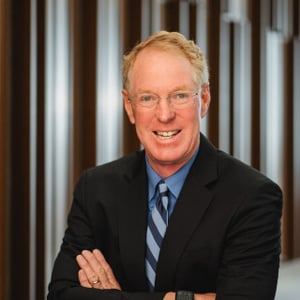
Ronald N. Boyce Presidential Professor of Criminal Law and University Distinguished Professor of Law, The University of Utah College of Law
Paul G. Cassell is an internationally recognized legal scholar on criminal and civil justice, crime victims' rights, constitutional law, evidence, judicial process, and other legal issues. Cassell received a B.A. (1981) and a J.D. (1984) from Stanford University, where he graduated Order of the Coif and was President of the Stanford Law Review. He clerked for then-Judge Antonin Scalia when Scalia was on the U.S. Court of Appeals for the D.C. Circuit (1984-85) and for Chief Justice Warren Burger of the United States Supreme Court (1985-86). Cassell then served as an Associate Deputy Attorney General with the U.S. Justice Department (1986-88) and as an Assistant U.S. Attorney for the Eastern District of Virginia (1988 to 1991). Cassell joined the faculty at the College of Law in 1992, where he taught full-time until he was sworn in as a U.S. District Court Judge for the District of Utah in July 2002. In November 2007, he resigned his judgeship to return full-time to the College of Law to teach, write, and litigate concerning issues relating to crime victims' rights and criminal and civil justice reform. Professor Cassell has also published numerous law review articles in journals such as the Stanford Law Review, the Michigan Law Review, the Harvard Journal of Law and Public Policy, and the Journal of Criminal Law and Criminology. He is a co-author of the nation's only law school textbook on crime victims' rights, Victims in Criminal Procedure (various editions, most recently in its fifth edition published in 2025). Professor Cassell has argued pro bono cases relating to criminal procedure and crime victims' rights before the United States Supreme Court, the 2nd, 4th, 5th, 6th, 7th, 8th, 9th, 10th, 11th, and D.C. Circuits (including the 5th and 11th Circuits en banc), several U.S. District Courts, the Utah Supreme Court, and the Arizona Supreme Court. In 2020, Cassell received the Ronald Wilson Reagan Public Policy Award - National Crime Victims' Service Award from the U.S. Department of Justice. Cassell is a member of the American Law Institute, a fellow of the American Bar Foundation, and an inaugural member of the Council on Criminal Justice. He is also an occasional blogger at The Volokh Conspiracy.
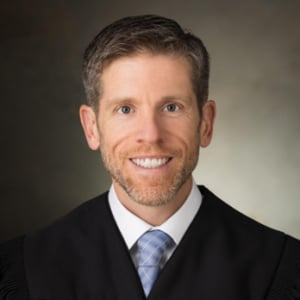
Justice, Utah Supreme Court
Justice John Nielsen was appointed to the Utah Supreme Court in October 2025 by Governor Spencer J. Cox. Prior to his appointment Judge John Nielsen was appointed to the Third District Court in 2024 by Governor Spencer J. Cox. He served Salt Lake, Tooele, and Summit Counties. He served as chair of the Utah Supreme Court's Appellate Representation Committee and previously served on the Evidence Rules Committee. Before his appointment as a Judge, he was a partner at the law firm of Schaerr & Jaffe. He previously was a shareholder in the law firm of Lee Nielsen. Nielsen was also an Assistant Solicitor General in the Utah Attorney General's Office, and a Deputy Utah County Attorney. He graduated magna cum laude from the J. Reuben Clark Law School at Brigham Young University in 2007. 12/25
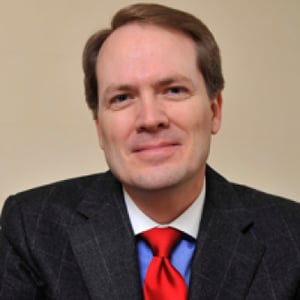
Judge, U.S. District Court, District of Utah
Howard C. Nielson Jr. is a judge on the United States District Court for the District of Utah. On September 28, 2017, President Donald Trump nominated Nielson to a seat on this court.
Prior to his nomination, Judge Nielson practiced at Cooper and Kirk. Judge Nielson iwas a Distinguished Lecturer at the J. Reuben Clark Law School at Brigham Young University, where he taught classes on constitutional, national security, and foreign affairs law. In 2008, Mr. Nielson was appointed to serve as a member of the Utah Supreme Courtís Ethics and Discipline Committee.
Before joining Cooper and Kirk, Mr. Nielson served from 2001 to 2005 at the U.S. Department of Justice. From 2001 to 2003 he was Counsel to the Attorney General, in which capacity he advised the Attorney General on a variety of legal matters and supervised high profile litigation relating to national security and other departmental priorities. In 2003 he was appointed Deputy Assistant Attorney General for the Office of Legal Counsel, which provides legal opinions and informal advice to the White House, the Attorney General, and Executive Branch Departments and Agencies on issues covering the full spectrum of international, constitutional, statutory, and regulatory law. Mr. Nielson served in this capacity for two years, during which time his work involved a broad range of issues relating to national security and other areas of constitutional, statutory, and international law.
Prior to his work at the Justice Department, Mr. Nielson practiced law from 1999 to 2001 as an associate in the Issues and Appeals Practice Group at Jones, Day, Reavis & Pogue (now Jones Day) in Washington, D.C. He worked on a variety of litigation and other matters, especially in the areas of constitutional and employment law. Before that time he served as a law clerk to Judge J. Michael Luttig of the United States Court of Appeals for the Fourth Circuit, and to Justice Anthony M. Kennedy.
Ronald N. Boyce Presidential Professor of Criminal Law and University Distinguished Professor of Law, The University of Utah College of Law
Paul G. Cassell is an internationally recognized legal scholar on criminal and civil justice, crime victims' rights, constitutional law, evidence, judicial process, and other legal issues. Cassell received a B.A. (1981) and a J.D. (1984) from Stanford University, where he graduated Order of the Coif and was President of the Stanford Law Review. He clerked for then-Judge Antonin Scalia when Scalia was on the U.S. Court of Appeals for the D.C. Circuit (1984-85) and for Chief Justice Warren Burger of the United States Supreme Court (1985-86). Cassell then served as an Associate Deputy Attorney General with the U.S. Justice Department (1986-88) and as an Assistant U.S. Attorney for the Eastern District of Virginia (1988 to 1991). Cassell joined the faculty at the College of Law in 1992, where he taught full-time until he was sworn in as a U.S. District Court Judge for the District of Utah in July 2002. In November 2007, he resigned his judgeship to return full-time to the College of Law to teach, write, and litigate concerning issues relating to crime victims' rights and criminal and civil justice reform. Professor Cassell has also published numerous law review articles in journals such as the Stanford Law Review, the Michigan Law Review, the Harvard Journal of Law and Public Policy, and the Journal of Criminal Law and Criminology. He is a co-author of the nation's only law school textbook on crime victims' rights, Victims in Criminal Procedure (various editions, most recently in its fifth edition published in 2025). Professor Cassell has argued pro bono cases relating to criminal procedure and crime victims' rights before the United States Supreme Court, the 2nd, 4th, 5th, 6th, 7th, 8th, 9th, 10th, 11th, and D.C. Circuits (including the 5th and 11th Circuits en banc), several U.S. District Courts, the Utah Supreme Court, and the Arizona Supreme Court. In 2020, Cassell received the Ronald Wilson Reagan Public Policy Award - National Crime Victims' Service Award from the U.S. Department of Justice. Cassell is a member of the American Law Institute, a fellow of the American Bar Foundation, and an inaugural member of the Council on Criminal Justice. He is also an occasional blogger at The Volokh Conspiracy.
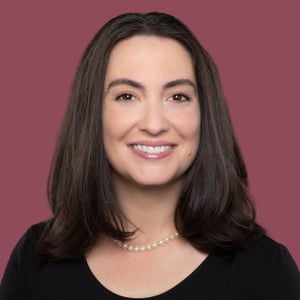
Director of Federal Affairs, Electronic Frontier Foundation
India McKinney currently serves as the director of federal affairs at the Electronic Frontier Foundation, where she works to fight for encryption, for consumer privacy, and civil liberties in the digital realm.. She is a former Capitol Hill staffer with over 10 years experience as a legislative staffer.

Fellow, Ethics and Public Policy Center
Clare Morell is a fellow at the Ethics and Public Policy Center, where she directs EPPC’s Technology and Human Flourishing Project. Prior to joining EPPC, Ms. Morell worked in both the White House Counsel’s Office and the Department of Justice, as well as in the private and non-profit sectors. She is also the author of the forthcoming book, The Tech Exit: A Practical Guide to Freeing Kids and Teens from Smartphones, which will be published by Penguin Random House.
At the Department of Justice, Ms. Morell worked as an Advisor to Attorney General Bill Barr. As part of her work for the Attorney General, she helped oversee the President’s Commission on Law Enforcement and the Administration of Justice and served as Editor of the Commission’s final report. A major focus of the Commission’s report was the challenges that Big Tech’s end-to-end encryption presents to law enforcement for gaining lawful access to crucial intelligence in criminal investigations, like domestic terrorism, as well as human and drug trafficking crimes. Ms. Morell also supported the Attorney General’s work on Section 230 reform as one of his main priorities.
Prior to her role with the Office of the Attorney General, Ms. Morell worked on judicial nominations for the White House Counsel’s office and monitored all nominations data to create high-level presentations for briefing White House leadership. From her experience, Ms. Morell brings an intimate knowledge and understanding of how policy is advanced within the Executive Branch of the federal government, particularly in the Department of Justice and the White House.
Ms. Morell has had opinion pieces published in the Wall Street Journal, Fox News, Newsweek, the Washington Examiner, National Review, American Affairs Journal, Deseret News, The Federalist, Public Discourse, WORLD Magazine, the Washington Times, and the Daily Signal.
Ms. Morell received a B.S.F.S. from Georgetown University’s Walsh School of Foreign Service, where she majored in Science, Technology, and International Affairs. She graduated summa cum laude and received the Edmund A. Walsh Award for academic achievement in international law. She also is proficient in Spanish.
Ms. Morell lives with her husband and three children in Washington, D.C.
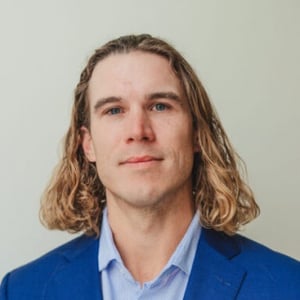
Resident Senior Fellow, Technology and Innovation, R Street Institute
Spence works for the R Street Institute on the impact of misinformation on society and public policy, including creating a new framework for information governance.
Previously, Spence served as the director of technology policy at the Reason Foundation, where he was responsible for managing fundraising efforts and policy implementation. He also served as a graduate fellow in the Executive Office of the Governor in Florida.
Before pursuing his graduate studies, Spence was the business development manager for a technology startup, Dealers United, in Sarasota, Florida.
In recognition of his work, Spence won the Policy Paper of the Year award in the Florida Legislature in 2015 for his policy brief on data sharing and software procurement.
Spence earned his master’s degree in public administration from Florida State University and his bachelor’s degree in political science from Stetson University.
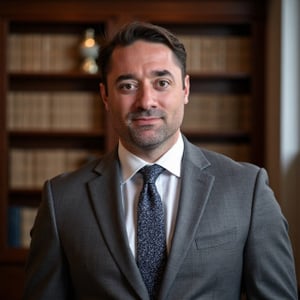
Partner, Holtzman Vogel Baran Torchinsky & Josefiak PLLC
Brandon Smith is a partner at Holtzman Vogel, based in Tennessee, where he focuses on government investigations, white collar matters, and specialty litigation. A seasoned government leader and legal strategist, Brandon has played a central role in shaping conservative policy and litigation at the highest levels of state government.
Before joining the firm, Brandon served as Chief of Staff and Assistant Solicitor General in the Tennessee Attorney General’s Office. In that role, he led multi-state litigation, high-profile constitutional challenges, and efforts to counter federal overreach and ESG-related corporate activism. He worked closely with nearly every Republican Attorney General’s Office in the country, coordinating litigation, strategy, and multi-state policy efforts.
Earlier in his career, Brandon served as Executive Director of Legislative and Regulatory Affairs for Kentucky Governor Matt Bevin and as Policy Director to Kansas Governor Sam Brownback, where he helped drive key legislative and budget initiatives. He also held roles as Deputy Director of the Federalist Society and as an adjunct professor at American University.
Brandon’s career has been defined by a commitment to defending federalism, advancing conservative governance, and shaping legal and policy fights that matter.
Ronald N. Boyce Presidential Professor of Criminal Law and University Distinguished Professor of Law, The University of Utah College of Law
Paul G. Cassell is an internationally recognized legal scholar on criminal and civil justice, crime victims' rights, constitutional law, evidence, judicial process, and other legal issues. Cassell received a B.A. (1981) and a J.D. (1984) from Stanford University, where he graduated Order of the Coif and was President of the Stanford Law Review. He clerked for then-Judge Antonin Scalia when Scalia was on the U.S. Court of Appeals for the D.C. Circuit (1984-85) and for Chief Justice Warren Burger of the United States Supreme Court (1985-86). Cassell then served as an Associate Deputy Attorney General with the U.S. Justice Department (1986-88) and as an Assistant U.S. Attorney for the Eastern District of Virginia (1988 to 1991). Cassell joined the faculty at the College of Law in 1992, where he taught full-time until he was sworn in as a U.S. District Court Judge for the District of Utah in July 2002. In November 2007, he resigned his judgeship to return full-time to the College of Law to teach, write, and litigate concerning issues relating to crime victims' rights and criminal and civil justice reform. Professor Cassell has also published numerous law review articles in journals such as the Stanford Law Review, the Michigan Law Review, the Harvard Journal of Law and Public Policy, and the Journal of Criminal Law and Criminology. He is a co-author of the nation's only law school textbook on crime victims' rights, Victims in Criminal Procedure (various editions, most recently in its fifth edition published in 2025). Professor Cassell has argued pro bono cases relating to criminal procedure and crime victims' rights before the United States Supreme Court, the 2nd, 4th, 5th, 6th, 7th, 8th, 9th, 10th, 11th, and D.C. Circuits (including the 5th and 11th Circuits en banc), several U.S. District Courts, the Utah Supreme Court, and the Arizona Supreme Court. In 2020, Cassell received the Ronald Wilson Reagan Public Policy Award - National Crime Victims' Service Award from the U.S. Department of Justice. Cassell is a member of the American Law Institute, a fellow of the American Bar Foundation, and an inaugural member of the Council on Criminal Justice. He is also an occasional blogger at The Volokh Conspiracy.

Senior Fellow, National Review
Bestselling author Andrew C. McCarthy is a contributing editor at National Review, a senior fellow at National Review Institute, and a Fox News contributor. He is a former Chief Assistant United States Attorney in the Southern District of New York and led the terrorism prosecution against the “Blind Sheikh” (Omar Abdel Rahman) and eleven other jihadists for conducting a war of urban terrorism against the United States that included the 1993 World Trade Center bombing and a plot to bomb New York City landmarks. During is 20-year career as a prosecutor, he received numerous honors, including the Justice Department’s highest awards. Andy speaks and writes widely on law and national security, radical Islam, politics, and culture. He has testified before Congress as an expert on issues of constitutional law, counterterrorism, and law-enforcement. He is a columnist for The Hill, and his essays and book reviews appear frequently at The New Criterion. His most recent New York Times bestselling book is Ball of Collusion (Encounter Books, 2019), about the Russiagate controversy (an updated version was published in 2020). His other books include Willful Blindness (2008), The Grand Jihad (2010), Spring Fever: The Illusion of Islamic Democracy (2012), and Faithless Execution (2014). He has also written several pamphlets in the Broadside series published by Encounter Books, most recently Islam and Free Speech (2015).
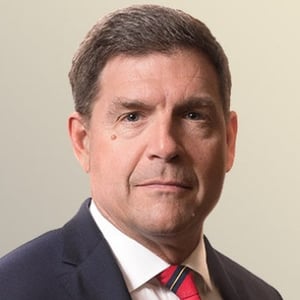
Partner, King & Spalding
John Richter is a trial and investigations partner in the Special Matters and Investigations Practice Group, and represents and defends companies, Boards of Directors, Board committees, and individuals facing a variety of white-collar criminal and regulatory enforcement matters, parallel civil litigation, and internal corporate investigations. John previously served as the Acting Assistant Attorney General in charge of the Criminal Division at the U.S. Department of Justice and as the U.S. Attorney for the Western District of Oklahoma, having been nominated by President George W. Bush and confirmed by unanimous consent of the U.S. Senate.
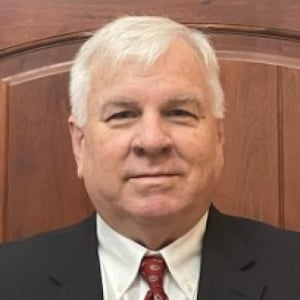
Founder, Law Offices of William L. Shipley & Associates
Bill’s legal career spanning more than 32 years has been built in the courtroom, not in the office.
After starting out his career with four years in private practice, In 1992 Bill joined the United States Attorney’s Office for the Eastern District of California where he initially represented the United States in civil litigation – including cases involving millions of dollars in dispute.
The desire to handle trials in front of juries led him to move to the Criminal Division of the US Attorney’s Office, where he served as a criminal prosecutor from 1995 to 2002 in California, and from 2003 until 2013 in the United States Attorney’s Office for the District of Hawaii.
Bill was the lead federal prosecutor in every federal criminal trial he was involved in except for his very first one. He was responsible for overseeing and prosecuting cases involving organized crime, white-collar crime, drug crimes, violent crimes, environmental crimes, contract and commercial fraud, tax fraud, and health care fraud. Over the course of his career, he handled more than 1000 cases, took more than 60 jury trials to verdict as lead counsel, handled dozens of appeals, and appeared nearly 20 times before the Ninth Circuit Court of Appeals as counsel for the United States.
He received national recognition and awards from the Department of Justice and his peers in law enforcement for his successful prosecutions of individuals and companies trafficking in chemicals used to manufacture methamphetamine.
In private practice, he has taken all his experience and training as a prosecutor and used it on behalf of his clients to ensure no one is wrongfully accused or convicted. He understands the power and resources the government can employ against his clients, and that his skills and tenacity are the weapons that he can employ on behalf of his clients to defend themselves.
Since starting his private law practice in 2013, Bill has represented defendants in federal criminal cases, as well as plaintiffs in civil fraud cases, employment matters, trade secrets cases, civil rights claims, probate disputes, and medical malpractice matters. He has tried cases in state and federal court, as well as appearing again before the U.S. Ninth Circuit Court of Appeals, and has argued twice before the D.C. Circuit.
Beginning in the fall of 2021, Bill began representing individuals charged in connection with the riot on Capitol Hill on January 6, 2021. Over the course of three years he represented approximately 90 defendants, with 12 of those chosing to take their cases to trial. He represented two different Oath Keeper members in separate trials, one of whom was the only January 6 defendant to be acquitted by a jury on all the felony counts against him. He was also the first defense attorney to obtain an acquittal in a bench trial on the controversial 18 U.S.C. Sec. 1512(c)(2) charge that was later ruled inapplicable to the January 6 riot by the Supreme Court in Fischer v. United States.
Bill is a graduate of UCLA, where he obtained undergraduate degrees in both Political Science and Sociology. He received his law degree from the Antonin Scalia School of Law at George Mason University in Virginia.
Ronald N. Boyce Presidential Professor of Criminal Law and University Distinguished Professor of Law, The University of Utah College of Law
Paul G. Cassell is an internationally recognized legal scholar on criminal and civil justice, crime victims' rights, constitutional law, evidence, judicial process, and other legal issues. Cassell received a B.A. (1981) and a J.D. (1984) from Stanford University, where he graduated Order of the Coif and was President of the Stanford Law Review. He clerked for then-Judge Antonin Scalia when Scalia was on the U.S. Court of Appeals for the D.C. Circuit (1984-85) and for Chief Justice Warren Burger of the United States Supreme Court (1985-86). Cassell then served as an Associate Deputy Attorney General with the U.S. Justice Department (1986-88) and as an Assistant U.S. Attorney for the Eastern District of Virginia (1988 to 1991). Cassell joined the faculty at the College of Law in 1992, where he taught full-time until he was sworn in as a U.S. District Court Judge for the District of Utah in July 2002. In November 2007, he resigned his judgeship to return full-time to the College of Law to teach, write, and litigate concerning issues relating to crime victims' rights and criminal and civil justice reform. Professor Cassell has also published numerous law review articles in journals such as the Stanford Law Review, the Michigan Law Review, the Harvard Journal of Law and Public Policy, and the Journal of Criminal Law and Criminology. He is a co-author of the nation's only law school textbook on crime victims' rights, Victims in Criminal Procedure (various editions, most recently in its fifth edition published in 2025). Professor Cassell has argued pro bono cases relating to criminal procedure and crime victims' rights before the United States Supreme Court, the 2nd, 4th, 5th, 6th, 7th, 8th, 9th, 10th, 11th, and D.C. Circuits (including the 5th and 11th Circuits en banc), several U.S. District Courts, the Utah Supreme Court, and the Arizona Supreme Court. In 2020, Cassell received the Ronald Wilson Reagan Public Policy Award - National Crime Victims' Service Award from the U.S. Department of Justice. Cassell is a member of the American Law Institute, a fellow of the American Bar Foundation, and an inaugural member of the Council on Criminal Justice. He is also an occasional blogger at The Volokh Conspiracy.
Director of Federal Affairs, Electronic Frontier Foundation
India McKinney currently serves as the director of federal affairs at the Electronic Frontier Foundation, where she works to fight for encryption, for consumer privacy, and civil liberties in the digital realm.. She is a former Capitol Hill staffer with over 10 years experience as a legislative staffer.
Fellow, Ethics and Public Policy Center
Clare Morell is a fellow at the Ethics and Public Policy Center, where she directs EPPC’s Technology and Human Flourishing Project. Prior to joining EPPC, Ms. Morell worked in both the White House Counsel’s Office and the Department of Justice, as well as in the private and non-profit sectors. She is also the author of the forthcoming book, The Tech Exit: A Practical Guide to Freeing Kids and Teens from Smartphones, which will be published by Penguin Random House.
At the Department of Justice, Ms. Morell worked as an Advisor to Attorney General Bill Barr. As part of her work for the Attorney General, she helped oversee the President’s Commission on Law Enforcement and the Administration of Justice and served as Editor of the Commission’s final report. A major focus of the Commission’s report was the challenges that Big Tech’s end-to-end encryption presents to law enforcement for gaining lawful access to crucial intelligence in criminal investigations, like domestic terrorism, as well as human and drug trafficking crimes. Ms. Morell also supported the Attorney General’s work on Section 230 reform as one of his main priorities.
Prior to her role with the Office of the Attorney General, Ms. Morell worked on judicial nominations for the White House Counsel’s office and monitored all nominations data to create high-level presentations for briefing White House leadership. From her experience, Ms. Morell brings an intimate knowledge and understanding of how policy is advanced within the Executive Branch of the federal government, particularly in the Department of Justice and the White House.
Ms. Morell has had opinion pieces published in the Wall Street Journal, Fox News, Newsweek, the Washington Examiner, National Review, American Affairs Journal, Deseret News, The Federalist, Public Discourse, WORLD Magazine, the Washington Times, and the Daily Signal.
Ms. Morell received a B.S.F.S. from Georgetown University’s Walsh School of Foreign Service, where she majored in Science, Technology, and International Affairs. She graduated summa cum laude and received the Edmund A. Walsh Award for academic achievement in international law. She also is proficient in Spanish.
Ms. Morell lives with her husband and three children in Washington, D.C.
Resident Senior Fellow, Technology and Innovation, R Street Institute
Spence works for the R Street Institute on the impact of misinformation on society and public policy, including creating a new framework for information governance.
Previously, Spence served as the director of technology policy at the Reason Foundation, where he was responsible for managing fundraising efforts and policy implementation. He also served as a graduate fellow in the Executive Office of the Governor in Florida.
Before pursuing his graduate studies, Spence was the business development manager for a technology startup, Dealers United, in Sarasota, Florida.
In recognition of his work, Spence won the Policy Paper of the Year award in the Florida Legislature in 2015 for his policy brief on data sharing and software procurement.
Spence earned his master’s degree in public administration from Florida State University and his bachelor’s degree in political science from Stetson University.
Partner, Holtzman Vogel Baran Torchinsky & Josefiak PLLC
Brandon Smith is a partner at Holtzman Vogel, based in Tennessee, where he focuses on government investigations, white collar matters, and specialty litigation. A seasoned government leader and legal strategist, Brandon has played a central role in shaping conservative policy and litigation at the highest levels of state government.
Before joining the firm, Brandon served as Chief of Staff and Assistant Solicitor General in the Tennessee Attorney General’s Office. In that role, he led multi-state litigation, high-profile constitutional challenges, and efforts to counter federal overreach and ESG-related corporate activism. He worked closely with nearly every Republican Attorney General’s Office in the country, coordinating litigation, strategy, and multi-state policy efforts.
Earlier in his career, Brandon served as Executive Director of Legislative and Regulatory Affairs for Kentucky Governor Matt Bevin and as Policy Director to Kansas Governor Sam Brownback, where he helped drive key legislative and budget initiatives. He also held roles as Deputy Director of the Federalist Society and as an adjunct professor at American University.
Brandon’s career has been defined by a commitment to defending federalism, advancing conservative governance, and shaping legal and policy fights that matter.
Ronald N. Boyce Presidential Professor of Criminal Law and University Distinguished Professor of Law, The University of Utah College of Law
Paul G. Cassell is an internationally recognized legal scholar on criminal and civil justice, crime victims' rights, constitutional law, evidence, judicial process, and other legal issues. Cassell received a B.A. (1981) and a J.D. (1984) from Stanford University, where he graduated Order of the Coif and was President of the Stanford Law Review. He clerked for then-Judge Antonin Scalia when Scalia was on the U.S. Court of Appeals for the D.C. Circuit (1984-85) and for Chief Justice Warren Burger of the United States Supreme Court (1985-86). Cassell then served as an Associate Deputy Attorney General with the U.S. Justice Department (1986-88) and as an Assistant U.S. Attorney for the Eastern District of Virginia (1988 to 1991). Cassell joined the faculty at the College of Law in 1992, where he taught full-time until he was sworn in as a U.S. District Court Judge for the District of Utah in July 2002. In November 2007, he resigned his judgeship to return full-time to the College of Law to teach, write, and litigate concerning issues relating to crime victims' rights and criminal and civil justice reform. Professor Cassell has also published numerous law review articles in journals such as the Stanford Law Review, the Michigan Law Review, the Harvard Journal of Law and Public Policy, and the Journal of Criminal Law and Criminology. He is a co-author of the nation's only law school textbook on crime victims' rights, Victims in Criminal Procedure (various editions, most recently in its fifth edition published in 2025). Professor Cassell has argued pro bono cases relating to criminal procedure and crime victims' rights before the United States Supreme Court, the 2nd, 4th, 5th, 6th, 7th, 8th, 9th, 10th, 11th, and D.C. Circuits (including the 5th and 11th Circuits en banc), several U.S. District Courts, the Utah Supreme Court, and the Arizona Supreme Court. In 2020, Cassell received the Ronald Wilson Reagan Public Policy Award - National Crime Victims' Service Award from the U.S. Department of Justice. Cassell is a member of the American Law Institute, a fellow of the American Bar Foundation, and an inaugural member of the Council on Criminal Justice. He is also an occasional blogger at The Volokh Conspiracy.
Senior Fellow, National Review
Bestselling author Andrew C. McCarthy is a contributing editor at National Review, a senior fellow at National Review Institute, and a Fox News contributor. He is a former Chief Assistant United States Attorney in the Southern District of New York and led the terrorism prosecution against the “Blind Sheikh” (Omar Abdel Rahman) and eleven other jihadists for conducting a war of urban terrorism against the United States that included the 1993 World Trade Center bombing and a plot to bomb New York City landmarks. During is 20-year career as a prosecutor, he received numerous honors, including the Justice Department’s highest awards. Andy speaks and writes widely on law and national security, radical Islam, politics, and culture. He has testified before Congress as an expert on issues of constitutional law, counterterrorism, and law-enforcement. He is a columnist for The Hill, and his essays and book reviews appear frequently at The New Criterion. His most recent New York Times bestselling book is Ball of Collusion (Encounter Books, 2019), about the Russiagate controversy (an updated version was published in 2020). His other books include Willful Blindness (2008), The Grand Jihad (2010), Spring Fever: The Illusion of Islamic Democracy (2012), and Faithless Execution (2014). He has also written several pamphlets in the Broadside series published by Encounter Books, most recently Islam and Free Speech (2015).
Partner, King & Spalding
John Richter is a trial and investigations partner in the Special Matters and Investigations Practice Group, and represents and defends companies, Boards of Directors, Board committees, and individuals facing a variety of white-collar criminal and regulatory enforcement matters, parallel civil litigation, and internal corporate investigations. John previously served as the Acting Assistant Attorney General in charge of the Criminal Division at the U.S. Department of Justice and as the U.S. Attorney for the Western District of Oklahoma, having been nominated by President George W. Bush and confirmed by unanimous consent of the U.S. Senate.
Founder, Law Offices of William L. Shipley & Associates
Bill’s legal career spanning more than 32 years has been built in the courtroom, not in the office.
After starting out his career with four years in private practice, In 1992 Bill joined the United States Attorney’s Office for the Eastern District of California where he initially represented the United States in civil litigation – including cases involving millions of dollars in dispute.
The desire to handle trials in front of juries led him to move to the Criminal Division of the US Attorney’s Office, where he served as a criminal prosecutor from 1995 to 2002 in California, and from 2003 until 2013 in the United States Attorney’s Office for the District of Hawaii.
Bill was the lead federal prosecutor in every federal criminal trial he was involved in except for his very first one. He was responsible for overseeing and prosecuting cases involving organized crime, white-collar crime, drug crimes, violent crimes, environmental crimes, contract and commercial fraud, tax fraud, and health care fraud. Over the course of his career, he handled more than 1000 cases, took more than 60 jury trials to verdict as lead counsel, handled dozens of appeals, and appeared nearly 20 times before the Ninth Circuit Court of Appeals as counsel for the United States.
He received national recognition and awards from the Department of Justice and his peers in law enforcement for his successful prosecutions of individuals and companies trafficking in chemicals used to manufacture methamphetamine.
In private practice, he has taken all his experience and training as a prosecutor and used it on behalf of his clients to ensure no one is wrongfully accused or convicted. He understands the power and resources the government can employ against his clients, and that his skills and tenacity are the weapons that he can employ on behalf of his clients to defend themselves.
Since starting his private law practice in 2013, Bill has represented defendants in federal criminal cases, as well as plaintiffs in civil fraud cases, employment matters, trade secrets cases, civil rights claims, probate disputes, and medical malpractice matters. He has tried cases in state and federal court, as well as appearing again before the U.S. Ninth Circuit Court of Appeals, and has argued twice before the D.C. Circuit.
Beginning in the fall of 2021, Bill began representing individuals charged in connection with the riot on Capitol Hill on January 6, 2021. Over the course of three years he represented approximately 90 defendants, with 12 of those chosing to take their cases to trial. He represented two different Oath Keeper members in separate trials, one of whom was the only January 6 defendant to be acquitted by a jury on all the felony counts against him. He was also the first defense attorney to obtain an acquittal in a bench trial on the controversial 18 U.S.C. Sec. 1512(c)(2) charge that was later ruled inapplicable to the January 6 riot by the Supreme Court in Fischer v. United States.
Bill is a graduate of UCLA, where he obtained undergraduate degrees in both Political Science and Sociology. He received his law degree from the Antonin Scalia School of Law at George Mason University in Virginia.
Ronald N. Boyce Presidential Professor of Criminal Law and University Distinguished Professor of Law, The University of Utah College of Law
Paul G. Cassell is an internationally recognized legal scholar on criminal and civil justice, crime victims' rights, constitutional law, evidence, judicial process, and other legal issues. Cassell received a B.A. (1981) and a J.D. (1984) from Stanford University, where he graduated Order of the Coif and was President of the Stanford Law Review. He clerked for then-Judge Antonin Scalia when Scalia was on the U.S. Court of Appeals for the D.C. Circuit (1984-85) and for Chief Justice Warren Burger of the United States Supreme Court (1985-86). Cassell then served as an Associate Deputy Attorney General with the U.S. Justice Department (1986-88) and as an Assistant U.S. Attorney for the Eastern District of Virginia (1988 to 1991). Cassell joined the faculty at the College of Law in 1992, where he taught full-time until he was sworn in as a U.S. District Court Judge for the District of Utah in July 2002. In November 2007, he resigned his judgeship to return full-time to the College of Law to teach, write, and litigate concerning issues relating to crime victims' rights and criminal and civil justice reform. Professor Cassell has also published numerous law review articles in journals such as the Stanford Law Review, the Michigan Law Review, the Harvard Journal of Law and Public Policy, and the Journal of Criminal Law and Criminology. He is a co-author of the nation's only law school textbook on crime victims' rights, Victims in Criminal Procedure (various editions, most recently in its fifth edition published in 2025). Professor Cassell has argued pro bono cases relating to criminal procedure and crime victims' rights before the United States Supreme Court, the 2nd, 4th, 5th, 6th, 7th, 8th, 9th, 10th, 11th, and D.C. Circuits (including the 5th and 11th Circuits en banc), several U.S. District Courts, the Utah Supreme Court, and the Arizona Supreme Court. In 2020, Cassell received the Ronald Wilson Reagan Public Policy Award - National Crime Victims' Service Award from the U.S. Department of Justice. Cassell is a member of the American Law Institute, a fellow of the American Bar Foundation, and an inaugural member of the Council on Criminal Justice. He is also an occasional blogger at The Volokh Conspiracy.
Senior Fellow, National Review
Bestselling author Andrew C. McCarthy is a contributing editor at National Review, a senior fellow at National Review Institute, and a Fox News contributor. He is a former Chief Assistant United States Attorney in the Southern District of New York and led the terrorism prosecution against the “Blind Sheikh” (Omar Abdel Rahman) and eleven other jihadists for conducting a war of urban terrorism against the United States that included the 1993 World Trade Center bombing and a plot to bomb New York City landmarks. During is 20-year career as a prosecutor, he received numerous honors, including the Justice Department’s highest awards. Andy speaks and writes widely on law and national security, radical Islam, politics, and culture. He has testified before Congress as an expert on issues of constitutional law, counterterrorism, and law-enforcement. He is a columnist for The Hill, and his essays and book reviews appear frequently at The New Criterion. His most recent New York Times bestselling book is Ball of Collusion (Encounter Books, 2019), about the Russiagate controversy (an updated version was published in 2020). His other books include Willful Blindness (2008), The Grand Jihad (2010), Spring Fever: The Illusion of Islamic Democracy (2012), and Faithless Execution (2014). He has also written several pamphlets in the Broadside series published by Encounter Books, most recently Islam and Free Speech (2015).
Partner, King & Spalding
John Richter is a trial and investigations partner in the Special Matters and Investigations Practice Group, and represents and defends companies, Boards of Directors, Board committees, and individuals facing a variety of white-collar criminal and regulatory enforcement matters, parallel civil litigation, and internal corporate investigations. John previously served as the Acting Assistant Attorney General in charge of the Criminal Division at the U.S. Department of Justice and as the U.S. Attorney for the Western District of Oklahoma, having been nominated by President George W. Bush and confirmed by unanimous consent of the U.S. Senate.
Founder, Law Offices of William L. Shipley & Associates
Bill’s legal career spanning more than 32 years has been built in the courtroom, not in the office.
After starting out his career with four years in private practice, In 1992 Bill joined the United States Attorney’s Office for the Eastern District of California where he initially represented the United States in civil litigation – including cases involving millions of dollars in dispute.
The desire to handle trials in front of juries led him to move to the Criminal Division of the US Attorney’s Office, where he served as a criminal prosecutor from 1995 to 2002 in California, and from 2003 until 2013 in the United States Attorney’s Office for the District of Hawaii.
Bill was the lead federal prosecutor in every federal criminal trial he was involved in except for his very first one. He was responsible for overseeing and prosecuting cases involving organized crime, white-collar crime, drug crimes, violent crimes, environmental crimes, contract and commercial fraud, tax fraud, and health care fraud. Over the course of his career, he handled more than 1000 cases, took more than 60 jury trials to verdict as lead counsel, handled dozens of appeals, and appeared nearly 20 times before the Ninth Circuit Court of Appeals as counsel for the United States.
He received national recognition and awards from the Department of Justice and his peers in law enforcement for his successful prosecutions of individuals and companies trafficking in chemicals used to manufacture methamphetamine.
In private practice, he has taken all his experience and training as a prosecutor and used it on behalf of his clients to ensure no one is wrongfully accused or convicted. He understands the power and resources the government can employ against his clients, and that his skills and tenacity are the weapons that he can employ on behalf of his clients to defend themselves.
Since starting his private law practice in 2013, Bill has represented defendants in federal criminal cases, as well as plaintiffs in civil fraud cases, employment matters, trade secrets cases, civil rights claims, probate disputes, and medical malpractice matters. He has tried cases in state and federal court, as well as appearing again before the U.S. Ninth Circuit Court of Appeals, and has argued twice before the D.C. Circuit.
Beginning in the fall of 2021, Bill began representing individuals charged in connection with the riot on Capitol Hill on January 6, 2021. Over the course of three years he represented approximately 90 defendants, with 12 of those chosing to take their cases to trial. He represented two different Oath Keeper members in separate trials, one of whom was the only January 6 defendant to be acquitted by a jury on all the felony counts against him. He was also the first defense attorney to obtain an acquittal in a bench trial on the controversial 18 U.S.C. Sec. 1512(c)(2) charge that was later ruled inapplicable to the January 6 riot by the Supreme Court in Fischer v. United States.
Bill is a graduate of UCLA, where he obtained undergraduate degrees in both Political Science and Sociology. He received his law degree from the Antonin Scalia School of Law at George Mason University in Virginia.
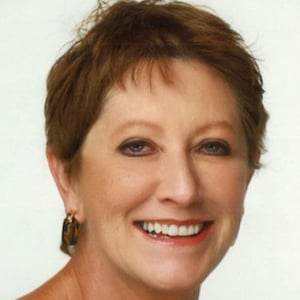
Former Chief Judge, U.S. Court of Federal Claims
Judge Braden was appointed to the United States Court of Federal Claims on July 14, 2003, by President George W. Bush, after being confirmed by unanimous consent of the United States Senate. She was sworn into office by Senator Jeff Sessions. Her investiture was conducted on October 24, 2003 by Justice Sandra Day O’Connor and Justice Ruth Bader Ginsburg.
On January 28, 2015, Judge Braden was appointed by the American Law Institute as one of seven Judicial Advisors to the Restatement of the Law on Copyright. In 2013, Judge Braden was appointed to the Judges Special Committee of the American Intellectual Property Law Association and was named as Chair of the Intellectual Property Committee of the Advisory Council of the United States Court of Federal Claims. On March 23, 2012, Judge Braden received the Linn Inn Alliance Distinguished Service Medal at the New York Intellectual Property Lawyers Association Annual Dinner for her work with the American Inns of Court, dedicated to intellectual property law. On February 7, 2012, Judge Braden was appointed as Chair of the American Bar Association’s Section of Intellectual Property Law Task Force to consider how to more efficiently adjudicate "small" patent infringement cases. During 2010-2011, Judge Braden served as President of the Giles S. Rich American Inn of Court, which is affiliated with the United States Court of Appeals for the Federal Circuit. She was recognized at a ceremony in the United States Supreme Court in November 2011, when she received the American Inns of Court’s Platinum Distinction Award. Judge Braden also served as a Member of the Editorial Board of the American Intellectual Property Law Association.
In July 2009, Judge Braden was appointed as a Member of the Standing Committee on Ethics and Professional Responsibility-Judges Advisory Committee to the American Bar Association, on which she served until 2012. On February 14, 2007, Judge Braden was elected as a Member of the American Law Institute and was active in drafting Restatement of Law Third, Restitution and Unjust Enrichment. On October 22, 2004, she was inducted as a Senior Fellow of the ABA’s Administrative Law and Regulatory Section by Justice O’Connor at a ceremony held at the United States Supreme Court.
Prior to joining the bench, Judge Braden litigated complex federal and administrative law cases in private practice in trial and appellate courts. In particular, her work in the intellectual property area received favorable notice in the Wall Street Journal, New York Times, National Law Journal, and the Journal of the American Bar Association, and was featured in Interfaces on Trial: Intellectual Property and Interoperability In The Global Software Industry. In 1996, Judge Braden was honored by the Computer Law Association for winning multiple decisions in the Eastern District of New York, the Eastern District of Texas, the Second Circuit, and a certified question to the Supreme Court of Texas in Computer Assocs. Int’l, Inc. v. Altai Inc., a landmark case that changed the application of copyright law to computer software. In 1998, she also won a companion case brought in France before the Cour de Appel de Paris.
In private practice, Judge Braden represented a wide variety of client interests before almost every major department and federal agency, testified before the United States Congress on a variety of matters, and was a principal lobbyist for the Emergency Oil and Steel Loan Guarantee Act of 1999, that established a $1 billion federal loan guarantee program to assist bankrupt and troubled steel mills and small oil companies.
Judge Braden received a B.A. degree (1970) and J. D. degree (1973) from Case Western Reserve University in Cleveland, Ohio. She also attended post graduate courses at the Harvard Law School in the summer of 1978.
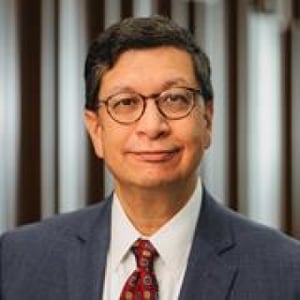
James T. Jensen Endowed Professor for Transactional Law & Director of the Program on Intellectual Property and Technology Law, University of Utah S.J. Quinney College of Law
Jorge L. Contreras is a Distinguished University Professor, the James T. Jensen Endowed Professor for Transactional Law and Director of the Program on Intellectual Property and Technology Law. He teaches and researches in the areas of intellectual property, property law, technical standardization, antitrust and science policy. In 2020 he received the University of Utah's Distinguished Research Award and is an elected member of the American Law Institute. He has testified before the U.S. Senate and House Subcommittees on Intellectual Property, and was awarded the Rossman Memorial Award by the Patent & Trademark Office Society in 2022.
Professor Contreras has written or edited fourteen books and published more than 150 scholarly articles and chapters. His book, The Genome Defense: Inside the Epic Legal Battle to Determine Who Owns Your DNA (NY: Hachette/Algonquin, 2021), has been praised by the NY Times, Wall St. Journal, Nature and numerous other outlets, and was named "Best Patent Law Book of the Year" by the international IPKat blog. His scholarly articles have appeared in leading scientific, legal and policy journals including Science, Nature, NYU Law Review, Georgetown Law Journal, Iowa Law Review and Antitrust Law Journal. He has been quoted by media outlets around the world including the New York Times, Wall Street Journal, Economist, Bloomberg, Washington Post, Korea Times and has been featured on C-SPAN, NPR, PRI and BBC shows and a range of podcasts and online news programs.
Professor Contreras currently serves Co-Chair of the Interdisciplinary Division of the ABA's Section of Science & Technology Law and a member of the Advisory Board of the American Antitrust Institute. He has previously served as Co-Chair of the National Conference of Lawyers and Scientists, a member of the National Academy of Sciences (NAS) Committee on Intellectual Property Management in Standard-Setting Processes, the National Institutes of Health (NIH) Council of Councils, the Advisory Council of NIH's National Center for the Advancement of Translational Sciences (NCATS), the National Advisory Council for Human Genome Research, and the Intellectual Property Rights Policy Committee of the American National Standards Institute (ANSI). In 2021 he served as Chair of the Art Law Section of the Association of American Law Schools (AALS) and currently serves as Chair of the AALS Remedies Section.
Professor Contreras has previously taught at American University Washington College of Law and Washington University in St. Louis. Prior to entering academia he was a partner at the international law firm Wilmer Cutler Pickering Hale and Dorr LLP, where he practiced transactional and intellectual property law in Boston, London and Washington DC. He is a cum laude graduate of Harvard Law School (JD) and Rice University (BA, BSEE) and clerked for Chief Justice Thomas R. Philips of the Texas Supreme Court.
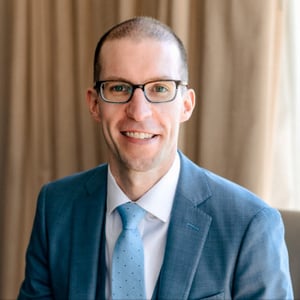
Vice President of Domestic Policy, National Association of Manufacturers
Charles Crain is the Vice President of Domestic Policy at the National Association of Manufacturers. In this role, he leads the association’s policy development and advocacy work on economic policy issues critical to the success of manufacturing in the United States, including tax, corporate governance, technology, health care, regulatory reform, and immigration. Prior to taking on the VP role, Charles led the NAM’s corporate finance policy portfolio, focused primarily on engagement with the Securities and Exchange Commission. He previously worked on Capitol Hill for members of the Senate Finance and House Financial Services Committees and was the Director of Tax and Financial Services Policy at the Biotechnology Innovation Organization.
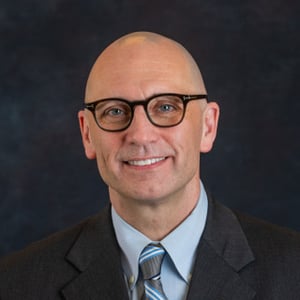
Senior Counsel for Law and Policy, Committee for Justice
Jeff is a registered patent attorney and an intellectual property and innovation policy professional with a unique combination of training and real-world experience. Jeff is also currently a PhD candidate at the University of Pittsburgh Graduate School of Public and International Affairs (GSPIA). His dissertation is entitled “An Inquiry into the Nature and Causes of American Innovation: An Austrian Economics Perspective.”
Jeff maintains an active intellectual property law practice in the life sciences space. While counseling clients and working on his dissertation and other scholarship, Jeff remains active in the policy analysis and advocacy space. He currently serves as the President of the Association for American Innovation and a member and former Chair of the Public Policy Legal Task Force (PPLTF) for the Association of University of Technology Managers (AUTM).
Jeff has a bachelor’s degree chemical and biomedical engineering with concentrations in molecular biology and fermentation technology and from Carnegie Mellon. He also has a master’s degree in industrial administration (business) from Carnegie Mellon where he concentrated on international management, marketing and finance. He earned his law degree from the Duquesne University School of Law with a focus on intellectual property law.
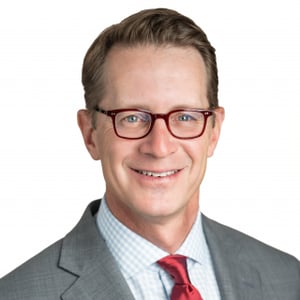
Senior Partner, ACG Advocacy
Chris Israel is a Senior Partner at ACG Advocacy and is also the co-lead of the firm’s technology and intellectual property group.
He joined ACG in 2010, after serving in the George W. Bush Administration as Deputy Chief of
Staff to the Secretary of Commerce and later becoming the first U.S. International Intellectual
Property Enforcement Coordinator.
At ACG Advocacy, Chris works with a diverse range of clients including some of the largest and
most innovative companies in the world to support their efforts to build a policy environment in the U.S. that promotes and protects their investments in intellectual property. He has also
developed a unique focus leading a coalition of top venture capitalists and innovative startups to pursue a policy agenda that has led to improvements in tax policy, investments in R&D, and
strengthening patent protection.
Chris maintains a leadership profile working on IP and innovation issues and has been a frequent public speaker and has testified before Congress multiple times both as an Administration official and since he left public service. He was previously named one of the 50 “Most Influential People on IP” by Managing Intellectual Property magazine.
His international experience in government, particularly in working with China, has enabled him to successfully engage clients on global trade and technology matters ranging from the
negotiations of trade agreements, tariff policy, and engaging international organizations. His
client relationships have included automakers, global manufacturing companies, shipping
companies, and Chinese e-commerce and social media platforms seeking to better understand the U.S. market.
Chris’ experience leading coalitions has also included serving as Executive Director of the
musicFIRST Coalition during the lead-up to the passage of the landmark Music Modernization
Act. During this time he was named to Medium’s inaugural “Power 10” list of music policy
leaders.
Within ACG Advocacy, he provides guidance on the firm’s day-to-day interaction with all its
clients and helps lead ACG’s extensive policy research team. He has also launched the firm’s
podcast focused on policy trends and developments in Washington.
Earlier in his career, Chris worked on international policy issues at Time Warner where he was
part of a team that supported then-CEO, Gerald Levin, to develop the Global Business Dialogue on E-Commerce a ground-breaking global organization of CEOs from the U.S., EU, and Asia that developed industry best practices on matters such as online privacy, cross border data flows, and online taxation.
Prior to Time Warner, he served on Capitol Hill as a legislative aide to U.S. Representatives Jan
Meyers (R-KS) and Todd Tiahrt (R-KS).
Chris received his B.A. from the University of Kansas and an M.B.A. from The George
Washington University.
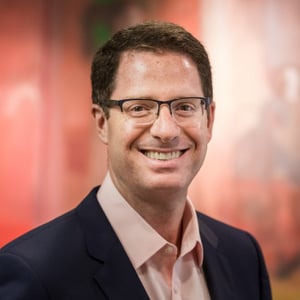
Partner, O’Melveny & Myers
Brian P. Brooks is the Managing Partner of Valor Capital Group. He has served as CEO of the Bitfury Group and CEO of digital asset exchange and marketplace Binance.US.
Mr. Brooks became Acting Comptroller of the Currency upon the resignation of the 31st Comptroller of the Currency Joseph M. Otting as a result of his designation as First Deputy Comptroller by Treasury Secretary Steven T. Mnuchin pursuant to his authority under 12 USC § 4.
As Acting Comptroller of the Currency, Mr. Brooks was the administrator of the federal banking system and chief officer of the Office of the Comptroller of the Currency (OCC). The OCC supervises nearly 1,200 national banks, federal savings associations, and federal branches and agencies of foreign banks that conduct approximately 70% of all banking business in the United States. The mission of the OCC is to ensure that national banks and federal savings associations operate in a safe and sound manner, provide fair access to financial services, treat customers fairly, and comply with applicable laws and regulations.
The Comptroller also serves as a director of the Federal Deposit Insurance Corporation and a member of the Financial Stability Oversight Council and the Federal Financial Institutions Examination Council.
Prior to becoming Acting Comptroller, Mr. Brooks served as Senior Deputy Comptroller and Chief Operating Officer. In this role, he oversaw OCC bank supervision, bank supervision policy, economics, supervisory system and analytical support, systemic risk identification support and specialty supervision, and innovation. He also served as a member of the OCC's Executive Committee and was the Chair of the Technology and Systems Subcommittee, since joining the agency in April 2020.
Prior to joining the OCC, Mr. Brooks served as Chief Legal Officer of Coinbase Global, Inc., where he headed the legal, compliance, audit, investigations, and government relations functions for the company, which served 20 million customers. He held this position since September 2018.
From 2014-2018, Mr. Brooks served as Executive Vice President, General Counsel, and Corporate Secretary of the $3.2 trillion Fannie Mae. Prior to joining Fannie Mae, he served as a Vice Chairman of OneWest Bank, N.A., from 2011 to 2014. Prior to joining OneWest, he served managing partner of the Washington, D.C. office of the global law firm O'Melveny & Myers LLP, where he also served as chair of the firm's financial services practice group. Prior to joining the OCC, Mr. Brooks also served on the Boards of Directors of Avant, Inc. and Fannie Mae, and also served as an advisor to a number of technology startups.
Mr. Brooks holds a bachelor’s degree from Harvard University in government and a law degree from the University of Chicago.
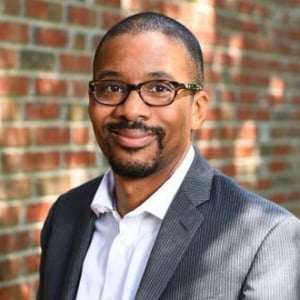
Agnes Williams Sesquicentennial Professor of Financial Technology, Georgetown Law
Chris Brummer is the Agnes Williams Sesquicentennial Professor of Financial Technology at Georgetown University Law Center and the Faculty Director of Georgetown’s Institute of International Economic Law. As a professor, advisor, board member and advocate, Chris has lent his expertise to policymakers, founders, startups, and nonprofits around the world grappling with some of the most challenging puzzles facing innovation, regulation, and inclusion. His work has been featured in The New York Times, CNN, Marketwatch, Fast Company, The Wall Street Journal, Bloomberg, Yahoo Money, Roll Call, Cointelegraph, and Coin Desk, among others.
Chris’s public service and volunteer work extend across government. In addition to serving as a member of the Commodity Futures Trading Commission’s Subcommittee on Virtual Currencies and the Consultative Working Group for the European Securities and Markets Authority’s Financial Innovation Standing Committee, Chris has served as a member of the National Adjudicatory Council of FINRA. Most recently, he served as a member of the Biden-Harris Transition team, assisting in leading work streams relating to financial technology, racial equity and systemic risk for the Treasury ART. He is currently the Co-Chair of CNAS Task Force on FinTech, Crypto, and National Security.
A frequent speaker and lecturer, Chris was asked to deliver the keynote speech for the SEC’s Black History celebration in 2021, FinCEN’s Black History celebration in 2022, and the Office of the Comptroller of the Currency’s celebration in 2023.
Chris graduated summa cum laude from Washington University in St. Louis, holds a J.D. with honors from Columbia Law School and a Ph.D. from the University of Chicago. He is the author or editor of several books, including Cryptoassets: Legal, Regulatory and Monetary Perspectives and Fintech Law in a Nutshell.
Chris is the host of CQ Roll Call’s Fintech Beat podcast, and founder of Washington DC’s Fintech Week, an annual free event for the public.

Judge, United States Court of Appeals, Ninth Circuit
Patrick J. Bumatay was confirmed as a U.S. Circuit Judge for the U.S. Court of Appeals for the Ninth Circuit in December 2019. He is based in San Diego, California.
Prior to his appointment, Judge Bumatay served as an Assistant United States Attorney in the U.S. Attorney’s Office for the Southern District of California, where he was a member of the Appellate and Narcotics Sections. He also served as a Counselor to the Attorney General on criminal law issues, including on national opioid strategy and combating transnational organized crime.
Judge Bumatay has also worked in the Office of the Deputy Attorney General, the Office of the Associate Attorney General, and the Office of Legal Policy at the U.S. Department of Justice. Judge Bumatay has twice received the Attorney General’s Distinguished Service Award.
Judge Bumatay previously worked as an associate at Morvillo, Abramowitz, Grand, Iason, and Bohrer in New York, New York. Judge Bumatay clerked for the Honorable Timothy M. Tymkovich of the U.S. Court of Appeals for the Tenth Circuit and the Honorable Sandra L. Townes of the U.S. District Court for the Eastern District of New York. Judge Bumatay earned his B.A., cum laude, from Yale University and his J.D. from Harvard Law School.
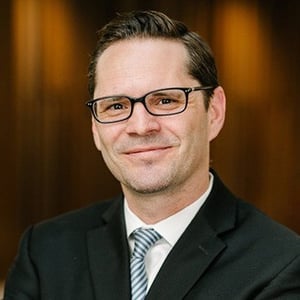
John J. Flynn Endowed Professor of Law, University of Utah S.J. Quinney College of Law
Christopher Peterson is the John J. Flynn Endowed Professor of Law at the University of Utah's S.J. Quinney College of Law. He previously served as a Special Advisor in the Office of the Director at the United States Consumer Financial Protection Bureau, as a Special Advisor in the Office of Legal Policy for Personnel and Readiness in the United States Department of Defense, and as Senior Counsel for Enforcement Policy and Strategy in the Consumer Financial Protection Bureau's Office of Enforcement. Professor Peterson has written dozens of scholarly articles and published three books on consumer finance. He has frequently testified in Congressional hearings and has presented his research to the Federal Deposit Insurance Corporation, the Federal Reserve Board of Governors, and at the White House in both Democratic and Republican administrations. He is a fellow of the American College of Consumer Financial Services Lawyers, the American Bar Association's Consumer Financial Services Committee, and serves on the community advisory board of the American Fintech Council. Professor Peterson is a recipient of the National Association of Consumer Agency Administrators’ Consumer Advocate of the Year award and the Pentagon’s Office of the Secretary of Defense Award for Excellence.
James T. Jensen Endowed Professor for Transactional Law & Director of the Program on Intellectual Property and Technology Law, University of Utah S.J. Quinney College of Law
Jorge L. Contreras is a Distinguished University Professor, the James T. Jensen Endowed Professor for Transactional Law and Director of the Program on Intellectual Property and Technology Law. He teaches and researches in the areas of intellectual property, property law, technical standardization, antitrust and science policy. In 2020 he received the University of Utah's Distinguished Research Award and is an elected member of the American Law Institute. He has testified before the U.S. Senate and House Subcommittees on Intellectual Property, and was awarded the Rossman Memorial Award by the Patent & Trademark Office Society in 2022.
Professor Contreras has written or edited fourteen books and published more than 150 scholarly articles and chapters. His book, The Genome Defense: Inside the Epic Legal Battle to Determine Who Owns Your DNA (NY: Hachette/Algonquin, 2021), has been praised by the NY Times, Wall St. Journal, Nature and numerous other outlets, and was named "Best Patent Law Book of the Year" by the international IPKat blog. His scholarly articles have appeared in leading scientific, legal and policy journals including Science, Nature, NYU Law Review, Georgetown Law Journal, Iowa Law Review and Antitrust Law Journal. He has been quoted by media outlets around the world including the New York Times, Wall Street Journal, Economist, Bloomberg, Washington Post, Korea Times and has been featured on C-SPAN, NPR, PRI and BBC shows and a range of podcasts and online news programs.
Professor Contreras currently serves Co-Chair of the Interdisciplinary Division of the ABA's Section of Science & Technology Law and a member of the Advisory Board of the American Antitrust Institute. He has previously served as Co-Chair of the National Conference of Lawyers and Scientists, a member of the National Academy of Sciences (NAS) Committee on Intellectual Property Management in Standard-Setting Processes, the National Institutes of Health (NIH) Council of Councils, the Advisory Council of NIH's National Center for the Advancement of Translational Sciences (NCATS), the National Advisory Council for Human Genome Research, and the Intellectual Property Rights Policy Committee of the American National Standards Institute (ANSI). In 2021 he served as Chair of the Art Law Section of the Association of American Law Schools (AALS) and currently serves as Chair of the AALS Remedies Section.
Professor Contreras has previously taught at American University Washington College of Law and Washington University in St. Louis. Prior to entering academia he was a partner at the international law firm Wilmer Cutler Pickering Hale and Dorr LLP, where he practiced transactional and intellectual property law in Boston, London and Washington DC. He is a cum laude graduate of Harvard Law School (JD) and Rice University (BA, BSEE) and clerked for Chief Justice Thomas R. Philips of the Texas Supreme Court.

Professor of Law, Antonin Scalia Law School, George Mason University
Adam Mossoff is Professor of Law at Antonin Scalia Law School, George Mason University. He has published extensively on why patents, copyrights, and other intellectual property rights have been—and should be—legally secured to innovators and creators as property rights. His scholarship has been relied on by the United States Supreme Court, by lower federal courts, and by U.S. federal agencies. He has been invited to testify numerous times before the U.S. Senate and the House of Representatives on intellectual property legislation. His writings on intellectual property policy have also appeared in the Wall Street Journal, New York Times, Forbes, Investors Business Daily, and in other media outlets. His journal articles can be downloaded here.
Professor Mossoff is a longstanding member of the Executive Committee of the Intellectual Property Practice Group of the Federalist Society, on which he served as Chairperson from 2016-2018, and he is Chair of the Intellectual Property Working Group of the Regulatory Transparency Project of the Federalist Society. He is a Senior Fellow and Chair of the Forum for Intellectual Property at the Hudson Institute, a Visiting Intellectual Property Fellow at the Heritage Foundation, and a member of the Board of Directors of the Center for Intellectual Property Understanding. He is a member of the Intellectual Property Rights Policy Committee of ANSI and he has served as Chair and Vice-Chair of the Intellectual Property Committee of the IEEE-USA, on which he remains a member in good standing.
Founder and Principal Solicitor, Opie International Technology Lawyers
Elisabeth Opie BA LLB(Hons) LLM GAICD has almost 20 years’ international experience in the global innovation system. Holding senior legal and executive positions, Elisabeth has worked with industry, spin-offs, research organisations and government. She has extensive experience in international business transactions, policy advice, negotiation and alternative dispute resolution. Her legal and executive experience has been developed across sectors such as IT, automotive, aerospace, health and energy. Elisabeth has experience in both non-contentious and contentious matters.
Elisabeth has received a number of awards in the field of international science and technology, including Business and Strategy Excellence Awards, and was the inaugural Global Research Alliance Fellow. She has appeared in the IAM Strategy 300 Global Leaders since 2020 and the IAM Patent 1000 since 2019.
Senior Fellow, Hudson Institute
Urška Petrovčič is a senior fellow at Hudson Institute and director of economic strategy at Qualcomm. Her work focuses on antitrust and intellectual property.
Since 2017, Dr. Petrovčič has acted as the European Commission’s non-governmental adviser for the Unilateral Conduct Working Group of the International Competition Network. She has been a visiting scholar at the University of California, Berkeley and the University of Oslo. She was chosen as the inaugural scholar of the American Bar Association’s International Scholar-in-Residence Program, which enabled her to conduct research in cooperation with the Office of Policy Planning of the US Federal Trade Commission on antitrust enforcement concerning SEPs.
Dr. Petrovčič previously worked in the Brussels office of the law firm Skadden, Arps, Slate, Meagher & Flom LLP and was a stagiaire at the Directorate-General for Competition of the European Commission.
Her publications on the enforcement of standard-essential patents (SEPs) include a book, Competition Law and Standard Essential Patents: A Transatlantic Perspective (Wolters Kluwer 2014), and articles in the Common Market Law Review and other journals.
She holds a BA in law from the University of Ljubljana, a master of law and economics from Erasmus University Rotterdam, and an LLM and a PhD in law from the European University Institute.

Nielsen, Nielson, and Nelson: Judging on Three Different Courts
Utah Lawyer Chapter
Salt Lake City, UTSafeguarding Vulnerable Populations Online
Paul G. Cassell, India McKinney, Clare Morell, Spence Purnell, Brandon J. Smith
Modern life is increasingly dependent on the internet, but with dependence comes vulnerability. Popular websites...
Safeguarding Vulnerable Populations Online
Paul G. Cassell, India McKinney, Clare Morell, Spence Purnell, Brandon J. Smith
Modern life is increasingly dependent on the internet, but with dependence comes vulnerability. Popular websites...
Safeguarding Vulnerable Populations Online
Who is the Prosecutor Here?: Rule 48(a) and the Michael Flynn, January 6, and Eric Adams Cases
Paul G. Cassell, Andrew McCarthy, John C. Richter, William L. Shipley
The Federal Rule of Criminal Procedure 48(a) reads, “The government may, with leave of court,...
Who is the Prosecutor Here?: Rule 48(a) and the Michael Flynn, January 6, and Eric Adams Cases
Paul G. Cassell, Andrew McCarthy, John C. Richter, William L. Shipley
The Federal Rule of Criminal Procedure 48(a) reads, “The government may, with leave of court,...
Who is the Prosecutor Here?: Rule 48(a) and the Michael Flynn, January 6, and Eric Adams Cases
NIST’s Proposed Framework for a New Approach to Bayh-Dole March-in: What You Need to Know
Susan G. Braden, Jorge L. Contreras, Charles Crain, Jeffrey E. Depp, Chris Israel
The National Institute of Standards and Technology (NIST) seeks comments on the Draft Interagency Guidance...
Hyperextension? Federal Financial Agencies & Cryptocurrency Regulation
Brian P. Brooks, Chris Brummer, Patrick J. Bumatay, Caitlin Long, Christopher L. Peterson
In recent years federal executive branch agencies have enacted a “whole of government” approach to...
The EU’s Proposed Regulations of SEP Licensing and Litigation: A Solution or Setback for the Global Innovation Economy?
Jorge L. Contreras, Adam Mossoff, Elisabeth Opie, Ur?ka Petrov?i?
The European Union is considering adopting a wide-ranging regulatory regime for the licensing and litigation...