
Senior Fellow, Center for American Progress
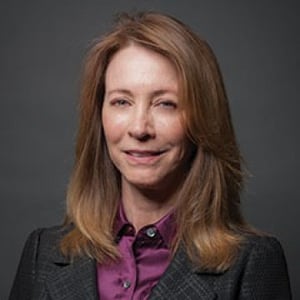
Kate Martin is a Senior Fellow at American Progress where she works on issues at the intersection of national security, civil liberties, and human rights. The New York Times’ Taking Note blog described her as “an expert on surveillance and detention, and a leading advocate for the rule of law in the so-called ‘war on terror.’” Before coming to American Progress, Ms. Martin served as director of the Center for National Security Studies for more than 20 years. She frequently testifies before Congress on national security and civil liberties issues. She is also a frequent commentator in the national media and has written extensively on these issues for the past 25 years. At the Center for National Security Studies, Martin brought lawsuits that challenged government deprivations of civil liberties. She has taught national security law and served as general counsel to the National Security Archive.
Ms. Martin is a graduate of the University of Virginia School of Law and Pomona College. Before joining the public interest world, she served as a partner at the law firm of Nussbaum, Owen & Webster.
Founder, Libertas-West Project
Karen Lugo is a constitutional law consultant and national security analyst. She was Director of the Center for Tenth Amendment at Texas Public Policy Foundation from 2013 to 2015. When living in California, she was Co-Director of the Center for Constitutional Jurisprudence Center. From 2005 – 2012, she was a clinical visiting and adjunct professor at Chapman University School of Law where she co-taught the advanced Constitutional Law Clinic. Karen has co-authored and written circuit-level and Supreme Court amicus briefs on such issues as FISA Surveillance, Healthcare Reform, Arizona’s Border Security, Gay Marriage, The Ten Commandments, Eminent Domain, Christian Clubs on University Campuses, and Material Support for Terrorists.
Karen is the founder of the Libertas-West Project, a center for study Islamic integration and radicalization issues. In this capacity, she consulted with the Center for Security Policy to write a book on local over-watch of mosque construction and community engagement called: Mosques in America: A Guide to Accountable Permit Hearings and Continuing Citizen Oversight.
Karen writes and speaks for European and American groups on the importance of basing assimilation efforts on principles of Western exceptionalism. She presented a policy brief to the French Conseil d’Etat analyzing the legal implications of banning the burqa. Ms. Lugo has written one of the most comprehensive overviews of sharia law in American courts, American Family Law and Sharia-Compliant Marriages, for the Federalist Society law journal, Engage. She has written several white papers on the American Law for American Courts legislation and sharia tribunals in America.
Ms. Lugo was an appointee to the California Advisory Committee to the U.S. Commission on Civil Rights. She also taught a Human Rights law course on the contrast between French and English Enlightenment theories in Strasbourg, France.
Until moving from California, Ms. Lugo was a member of the David Horowitz Freedom Center Board of Directors. She was also a regular guest on the Orange County PBS local issues debate program, Inside OC, and she is a contributor to Pajamas Media, National Review Online, City Journal, American Spectator, American Greatness, Townhall.com, American Thinker, Daily Caller, and Family Security Matters. She has been interviewed by dozens of radio hosts and has spoken for civic groups on constitutional and cultural concerns.
Senior Lecturer; Director, The Robert S. Strauss Center for International Security and Law, The University of Texas at Austin School of Law
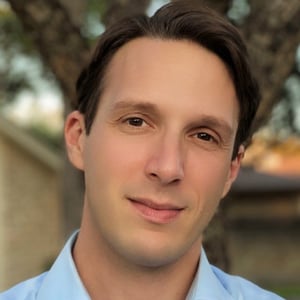
Adam Klein is Director of the Strauss Center and Director of Strauss’ Program on Technology, Security, and Global Affairs. Adam also serves as a Senior Lecturer at the School of Law. Before joining the Strauss Center, Adam served as Chairman of the United States Privacy and Civil Liberties Oversight Board, the independent, bipartisan federal agency responsible for overseeing counterterrorism programs at the NSA, FBI, CIA, Department of Homeland Security, and other federal agencies. As the Board’s Senate-confirmed Chairman, he oversaw its oversight and advice engagements with other federal agencies, while also serving as the Board’s chief executive officer.
Before entering government, Adam was the Robert M. Gates Senior Fellow at the Center for a New American Security, a bipartisan national-security research institution in Washington, DC. There, his research focused on government surveillance, intelligence powers, and national security law. Previously, Adam practiced law at Wilmer Cutler Pickering Hale & Dorr, LLP and served as a law clerk to Justice Antonin Scalia of the U.S. Supreme Court and Judge Brett Kavanaugh of the U.S. Court of Appeals for the D.C. Circuit. He has also worked on national-security policy at the RAND Corporation, the 9/11 Public Discourse Project (the non-profit successor to the 9/11 Commission), and in the U.S. Congress. He received his BA from Northwestern University and his JD from Columbia Law School.
Adam is a former Council on Foreign Relations International Affairs Fellow and Robert Bosch Foundation Fellow in Berlin. He speaks German and French.
Former Congressman; Vice President and Program Director, Rodel Fellowships in Public Leadership, The Aspen Institute
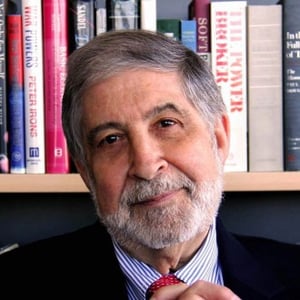
Mickey Edwards was a member of Congress for 16 years, serving on the House Budget and Appropriations Committees and as a chairman of the House Republican Policy Committee.
After leaving Congress he taught for 11 years at Harvard’s Kennedy School of Government before moving on first to Princeton’s Woodrow Wilson School of Public and International Affairs and then back to Washington, DC, as vice president of the Aspen Institute, where he directs a bipartisan fellowship for elected public officials.
Mr. Edwards, who grew up in Oklahoma City, has degrees in both law and journalism. He began his career as a newspaper editor and reporter and later won awards in advertising and public relations before being elected to Congress. While teaching at Harvard he returned to journalism as a weekly political columnist for the Chicago Tribune and Los Angeles Times and broadcast a weekly commentary on National Public Radio’s “All Things Considered”.
Mr. Edwards is a board member of both the Constitution Project, where he has chaired task forces on judicial independence and the war power, and the Project on Government Oversight. He was a member of the American Bar Association’s select task force on the use of presidential signing statements and the American Society of International Law’s task force on the International Criminal Court and has chaired policy task forces for both the Brookings Institution and the Council on Foreign Relations.
Among his books are “Reclaiming Conservatism”, published in 2008 by Oxford University Press, and “The Parties Versus the People: How to Turn Republicans and Democrats Into Americans”, published in 2013 by Yale University Press. His articles have appeared frequently in publications ranging from the New York Times and the Washington Post to Daedalus, The Public Interest, and the Atlantic. He is a frequent public speaker and has been a guest on many of the nation’s leading radio and television news and opinion broadcasts.
Maurice A. Deane Distinguished Professor of Constitutional Law and Faculty Director of International Programs, Hofstra University School of Law
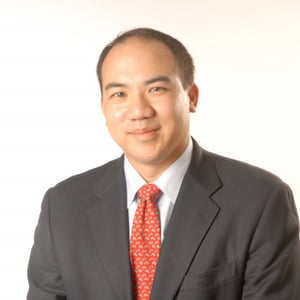
Professor Ku’s primary research interest is the relationship of international law to constitutional law. He has also conducted academic research on a wide range of topics including international dispute resolution, international criminal law, and China’s relationship with international law. He teaches courses such as U.S. constitutional law, U.S. foreign affairs law, transnational law, and international trade and business law. Since 2014, he has served as the faculty director of international programs, overseeing Hofstra Law’s study abroad, exchange and LL.M. programs. Professor Ku also teaches Constitutional Law in our online degree programs: Master of Laws in American Law and Master of Arts in American Legal Studies. He has also been selected as the John DeWitt Gregory Research Scholar and as a Hofstra Law Research Fellow. He is a member of the American Law Institute.
He is the co-author, with John Yoo, of Taming Globalization: International Law, the U.S. Constitution, and the New World Order (Oxford University Press 2012). He also has published more than 40 law review articles, book chapters and symposia essays. He has given dozens of academic lectures and workshops at major universities and conferences in the United States, Europe and Asia.
He co-founded the leading international law weblog Opinio Juris, which is read daily by thousands worldwide. His essays and op-eds have been published in major news publications such as the Wall Street Journal, the Los Angeles Times, and the NYTimes.com. He has been frequently interviewed for television news programs and quoted in print and electronic media. He has also signed or submitted amicus briefs to national and international courts and served as an expert witness in both domestic and international proceedings.
Before joining the Hofstra Law faculty, Professor Ku served as a law clerk to the Honorable Jerry E. Smith of the U.S. Court of Appeals for the Fifth Circuit and as an Olin Fellow and Lecturer in Law at the University of Virginia Law School. Professor Ku also practiced as an associate at the New York City law firm of Debevoise & Plimpton, specializing in litigation and arbitration arising out of international disputes. He has been a visiting professor at the College of William & Mary Marshall- Wythe School of Law in Williamsburg, Virginia; a Fulbright Distinguished Lecturer in Law at East China University of Political Science and Law in Shanghai, China; and a Taiwan Fellow at National Taiwan University in Taipei, Taiwan. He is a member of the New York Bar and a graduate of Yale College and Yale Law School.
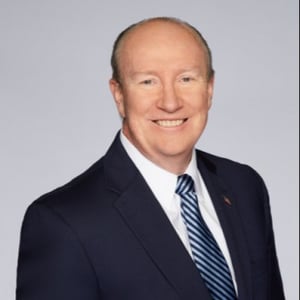
Senior Fellow, National Review
Bestselling author Andrew C. McCarthy is a contributing editor at National Review, a senior fellow at National Review Institute, and a Fox News contributor. He is a former Chief Assistant United States Attorney in the Southern District of New York and led the terrorism prosecution against the “Blind Sheikh” (Omar Abdel Rahman) and eleven other jihadists for conducting a war of urban terrorism against the United States that included the 1993 World Trade Center bombing and a plot to bomb New York City landmarks. During is 20-year career as a prosecutor, he received numerous honors, including the Justice Department’s highest awards. Andy speaks and writes widely on law and national security, radical Islam, politics, and culture. He has testified before Congress as an expert on issues of constitutional law, counterterrorism, and law-enforcement. He is a columnist for The Hill, and his essays and book reviews appear frequently at The New Criterion. His most recent New York Times bestselling book is Ball of Collusion (Encounter Books, 2019), about the Russiagate controversy (an updated version was published in 2020). His other books include Willful Blindness (2008), The Grand Jihad (2010), Spring Fever: The Illusion of Islamic Democracy (2012), and Faithless Execution (2014). He has also written several pamphlets in the Broadside series published by Encounter Books, most recently Islam and Free Speech (2015).
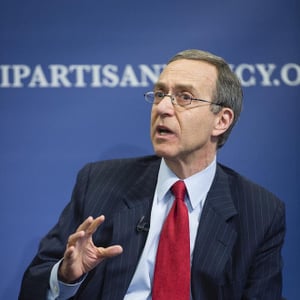
Senior Fellow, Center for American Progress Action Fund
Alan Makovsky is a Senior Fellow on the National Security and International Policy team at American Progress. From 2001 to 2013, he served as a senior professional staff member on the Committee on Foreign Affairs in the U.S. House of Representatives, where he covered the Middle East, Turkey, and other related issues.
At the Washington Institute for Near East Policy—a private think tank where he worked from 1994 to 2001—Mr. Makovsky wrote widely on various Middle Eastern and Turkish topics. He also founded and directed the Washington Institute’s Turkey Research Program.
At the State Department where he worked from 1983 to 1994—Mr. Makovsky variously covered southern European affairs and Middle Eastern affairs for the Bureau of Intelligence and Research. He also served as the political advisor to Operation Provide Comfort in 1992 and as the special advisor to the special Middle East coordinator from 1993 to 1994.
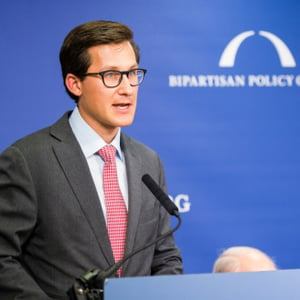
Director of National Security, Bipartisan Policy Center
Blaise Misztal is the director of BPC’s national security program. He previously served as the project’s associate director and senior policy analyst. At BPC, Misztal has researched a variety national security issues, including Iran and its nuclear program, Turkey, cybersecurity, stabilizing fragile states, and public diplomacy in the 21st century. He has testified before Congress and published op-eds in The Washington Post, The Wall Street Journal, The Weekly Standard, The New Republic, and Roll Call. In addition, Mr. Misztal wrote and directed the 2009 “Cyber ShockWave” simulation that aired on CNN.
Prior to joining BPC, Mr. Misztal spent a year as a Nuffield Fellow at Nuffield College, Oxford University. He was selected as a future leader by the Foreign Policy Initiative in 2010 and named as a national security fellow by the Foundation for Defense of Democracies in 2011.
Mr. Misztal is currently completing his Ph.D. in political science at Yale University, where his research focuses on the relationship between democracy, liberalism, and social stability. He holds an M.Phil. in political science from Yale and an A.B. with honors from the University of Chicago.

President, Cass & Associates, PC
Ronald A. Cass is Dean Emeritus of Boston University School of Law (where he was Dean from 1990-2004), President of Cass & Associates, PC, former Vice-Chairman and Commissioner of the U.S. International Trade Commission, former faculty member at Boston University School of Law and the University of Virginia Law School, and Distinguished Senior Fellow at the C. Boyden Gray Center for the Study of the Administrative State. Dean Cass also sits as an arbitrator for commercial, international, and intellectual property rights disputes, and is a former United States member of the Panel of Conciliators of the International Centre for Settlement of Investment Disputes. He is a member of the Council of the Administrative Conference of the United States and has received seven presidential appointments, spanning Presidents Ronald Reagan to Donald J. Trump.
As a law professor, lecturer, and scholar, Dean Cass has been teaching and writing about a wide array of legal issues on topics such as administrative law and regulation, antitrust, constitutional law, communications, intellectual property, international trade, separation of powers, and legal process. He has published more than 160 scholarly books, chapters, articles, and papers, including a leading casebook on administrative law. Dean Cass has taught judges as well as students in schools of law, economics, business, and public policy and has held academic appointments in the United States, Europe, and Latin America.
In addition to his academic work, Dean Cass has participated in numerous important legal cases as an amicus, consultant, or expert, and has advised businesses, law firms, investment funds, and government agencies on a range of trade, antitrust, intellectual property, and regulatory issues. He has a broad range of affiliations with professional groups, and has received numerous honors, fellowships and awards.
Dean Cass is a graduate of the University of Virginia and the University of Chicago Law School.
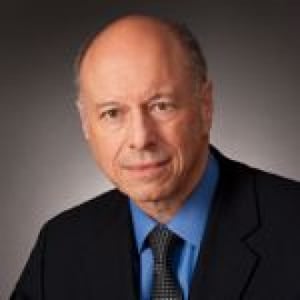
Founder and Senior Fellow, American Antitrust Institute
Albert A. (“Bert”) Foer is the founder and former president of the American Antitrust Institute. Before founding the AAI in 1998, his career has included private law practice in Washington, DC (Hogan & Hartson, Jackson & Campbell); the Federal Senior Executive Service (as Assistant Director and Acting Deputy Director of the Federal Trade Commission's Bureau of Competition); CEO of a mid-sized chain of retail jewelry stores for 12 years; trade association and non-profit leadership; and teaching antitrust to undergraduate and graduate business school students. Foer has published numerous articles, book chapters, and reviews relating to competition policy. He is editor of The Next Antitrust Agenda and co-editor of The International Handbook on Private Enforcement of Competition Law and of Private Enforcement of Antitrust Law in the United States.
Foer was presented the Consumer Federation of America’s Esther Peterson Award for Consumer Service in June 2016.
Foer is a graduate of the University of Chicago Law School, where he was an associate law review editor. He also earned an A.B. (magna cum laude) from Brandeis University and an M.A. in political science from Washington University.
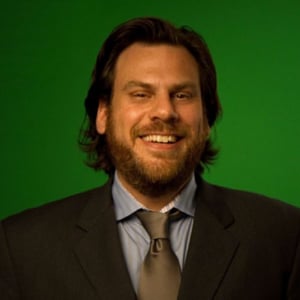
President and Founder, International Center for Law & Economics
Geoffrey A. Manne is the president and founder of the International Center for Law and Economics (ICLE), a nonprofit, nonpartisan research center based in Portland, Oregon. He is also a distinguished fellow at Northwestern Law School’s Searle Center on Law, Regulation, & Economic Growth. In April 2017 he was appointed by FCC Chairman Ajit Pai to the FCC’s Broadband Deployment Advisory Committee, and he recently served for two years on the FCC’s Consumer Advisory Committee.
Mr. Manne earned his JD and AB degrees from the University of Chicago and is an expert in the economic analysis of law, specializing in competition, telecommunications, consumer protection, intellectual property, and technology policy.
Prior to founding ICLE, Manne was a law professor at Lewis & Clark Law School. From 2006-2009, he took a leave from teaching to develop Microsoft’s law and economics academic outreach program. Manne has also served as a lecturer in law at the University of Chicago Law School and the University of Virginia School of Law. He practiced antitrust law and appellate litigation at Latham & Watkins, clerked for Hon. Morris S. Arnold on the 8th Circuit Court of Appeals, and worked as a research assistant for Judge Richard Posner. He was also once (very briefly) employed by the FTC.
Mr. Manne’s publications have appeared in numerous journals including the Journal of Competition Law and Economics, the Harvard Journal of Law and Technology, the Supreme Court Economic Review, and the Arizona Law Review, among others. With former FTC Commissioner, Joshua Wright, Manne is the editor of a volume from Cambridge University Press entitled, Competition Policy and Intellectual Property Law Under Uncertainty: Regulating Innovation. Manne has also testified on several occasions before Congress and at the FCC and FTC, and he regularly files written comments and amicus briefs on key antitrust, IP, and telecommunications issues. His analysis is frequently published in popular print and broadcasting outlets such as the Wall Street Journal, Wired, Foreign Affairs, NPR, and Bloomberg, among others.
Manne is a member of the American Law and Economics Association, the Canadian Law and Economics Association, and the Society for Institutional & Organizational Economics. He blogs at Truth on the Market (www.truthonthemarket.com) (of which he is also the co-founder), is a contributor at WIRED, and tweets at @geoffmanne. His scholarly publications are available at http://ssrn.com/author=175541.
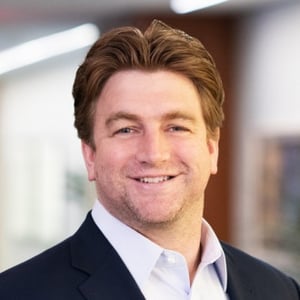
Founding Partner, Lodestar Law and Economics PLLC
Josh is the founder of Lodestar Law and Economics, PLLC. On January 1, 2013, the U.S. Senate unanimously confirmed Wright as a Commissioner of the Federal Trade Commission (FTC). He is a leading scholar in antitrust law, economics, intellectual property, regulation, and consumer protection, and has published more than 100 articles and book chapters, co-authored a leading antitrust casebook, and edited several book volumes focusing on these issues. Commentators have recognized Wright as “widely considered his generation’s greatest mind on antitrust law,” and his academic work ranks him as one of the most cited antitrust academics in the world. Wright was also awarded the Paul M. Bator Award by the Federalist Society in 2014 to “an academic who demonstrated excellence in legal scholarship, a commitment to teaching, a concern for students, and who has made a significant public impact.” Wright also served as the Executive Director of the Global Antitrust Institute, the world’s premiere academic institute focused upon antitrust education for judges and regulators and has taught hundreds of judges and thousands of regulators from dozens of countries.
Wright’s practice focuses upon helping clients solve complex competition, consumer protection, and regulatory problems by providing legal and economic analysis, strategic advice and counseling, and economic expert testimony.
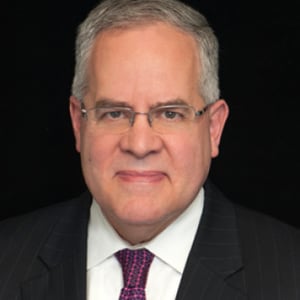
Advisory Board Member, Beacon Global Strategies LLC
Mr. Shedd was named Acting Director of the Defense Intelligence Agency in August 2014 following four years service as Deputy Director. Until January 2015 he led the Defense Intelligence Enterprise workforce comprised of more than 16,500 military and civilian employees worldwide. This workforce spans the Defense Intelligence Enterprise within the Department of Defense with an intelligence mission and/or function, plus all their stakeholders involved in creating, sustaining and enhancing mission capacity.
Mr. Shedd served from May 2007 to August 2010 as the Director of National Intelligence (DNI) Deputy Director for Policy, Plans, and Requirements, where he was responsible for overseeing the formulation and implementation of major Intelligence Community (IC) policies across the full spectrum of issues, from information sharing and IC authorities to analytic standards, among others. In particular, he led the review of Executive Order 12333, the foundational U.S. intelligence policy, which was revised by President George W. Bush in July 2008. Additionally, Mr. Shedd developed and implemented a National Intelligence Strategy, published in August 2009 for the IC and led all strategic planning efforts to determine future intelligence priorities for the Community and the Nation.
From May 2005 to April 2007, Mr. Shedd served as Chief of Staff and, later, Acting Director of the Intelligence Staff to the Director of National Intelligence. Prior to the creation of the Office of the Director of National Intelligence, Mr. Shedd held intelligence policy positions at the National Security Council (NSC) from February 2001 to May 2005. He served as the NSC’s Special Assistant to the President and Senior Director for Intelligence Programs and Reform. Mr. Shedd has been directly involved in the implementation of intelligence reform stemming from the 9/11 Commission report in July 2004, the Intelligence Reform and Terrorism Prevention Act of 2004, and the Weapons of Mass Destruction (WMD) Commission’s report to the President in March 2005.
Between 1984 and 1993, Mr. Shedd served overseas in the U.S. Embassies in Costa Rica and Mexico. Mr. Shedd has also held a variety of senior management assignments at the Central Intelligence Agency, including Chief of Congressional Liaison.
Mr. Shedd is also on the Government Advisory Board of Dataminr, a social media “big data” company that broadly services the Federal Government.
Mr. Shedd holds a B.A. from Geneva College in Beaver Falls, Pennsylvania and a M.A. from Georgetown University’s School of Foreign Service in Latin American Studies. Mr. Shedd was born in Bolivia and grew up in Latin America.

Executive Vice President, Chief Legal Officer, Gates Corporation
Matthew R. A. Heiman joined the Company in May 2026 and has served as the Company’s Chief Legal Officer and Corporate Secretary since June 2026. As Chief Legal Officer, Mr. Heiman is responsible for all legal functions for Gates, including securities and corporate governance, M&A, litigation, commercial, regulatory, compliance, patents and trademarks, real estate, employment and labor, sustainability and environmental matters. Prior to joining Gates, Mr. Heiman held senior legal leadership roles at Waystar, where he served as Chief Legal & Administrative Officer from 2023 to 2025 and as General Counsel and Corporate Secretary from 2020 to 2023. Prior to that, he was with Johnson Controls, where he served as Vice President, Corporate Secretary, and Associate General Counsel. Mr. Heiman has been a Senior Fellow for the National Security Institute at George Mason University’s Antonin Scalia School of Law since 2018.
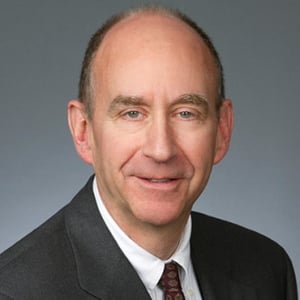
Partner, Kirkland & Ellis LLP
Neil Eggleston is a litigation partner in the Washington, D.C. office of Kirkland & Ellis LLP.
Neil has a distinguished record of public service, and has held a number of senior government roles. He was White House Counsel to President Obama from 2014 to 2017, and advised the president on all legal and constitutional issues across a broad spectrum of domestic and foreign policy matters. Neil’s practice focuses on enforcement defense including at the U.S. Department of Justice (DOJ), U.S. Securities and Exchange Commission (SEC), U.S. Attorney’s Offices, and other enforcement agencies.
Earlier in his career, Neil served as Associate Counsel to President Clinton from 1993 to 1994. Heals o served as Deputy Chief Counsel, U.S. House of Representatives Select Committee Investigating the Iran/Contra Affair (1987-1988); Assistant U.S. Attorney (1981-1987); and Chief Appellate Attorney for the Southern District of New York (1986-1987).
Neil served as a law clerk for the United States Court of Appeals for the Third Circuit (1978-1979) and for Chief Justice Warren E. Burger on the United States Supreme Court (1979-1980).
Neil teaches a seminar in Presidential Power at Harvard Law School in the spring of 2017, 2019, 2020, and 2021 and at Yale Law School in the spring of 2018. He also frequently lectures at American Bar Association and similar seminars.

Former United States Attorney General
Michael B. Mukasey is the former Attorney General of the United States, the nation’s chief law enforcement officer. As Attorney General from November 2007 to January 2009, he oversaw the U.S. Department of Justice and advised on critical issues of domestic and international law.
From 1988 to 2006, Judge Mukasey served as a district judge in the United States District Court for the Southern District of New York, becoming Chief Judge in 2000.
From 1972 to 1976, Judge Mukasey served as an Assistant United States Attorney for the Southern District of New York, and as Chief of the Official Corruption Unit from 1975 to 1976. His practice consisted of criminal litigation on behalf of the government, including investigation and prosecution of narcotics, bank robbery, interstate theft, securities fraud, fraud on the government and bribery. From 1976 to 1987 and from 2006 to 2007 he was in private practice.
Judge Mukasey has received numerous honors, including the Federal Bar Council’s Learned Hand Medal for Excellence in Federal Jurisprudence. He served as Chairman of the Committee on Public Access to Information and Proceedings of the New York Bar Association from 1984 to 1987. He served on the Federal Courts Committee of the Association of the Bar of the City of New York from 1979 to 1982 and its Communications Law Committee from 1983 to 1986. Judge Mukasey was also a part-time lecturer at Columbia School of Law from January 1993 to May 2007, teaching trial advocacy.
He received his LL.B. from Yale Law School in 1967 and his B.A. from Columbia College in 1963.
Senior Fellow, Governance Studies, The Brookings Institution
Benjamin Wittes is a senior fellow in Governance Studies at The Brookings Institution. He co-founded and is the editor-in-chief of the Lawfare blog, which is devoted to sober and serious discussion of "Hard National Security Choices," and is a member of the Hoover Institution's Task Force on National Security and Law. He is the author of Detention and Denial: The Case for Candor After Guantanamo, published in November 2011, co-editor of Constitution 3.0: Freedom and Technological Change, published in December 2011, and editor of Campaign 2012: Twelve Independent Ideas for Improving American Public Policy (Brookings Institution Press, May 2012). He is also writing a book on data and technology proliferation and their implications for security. He is the author of Law and the Long War: The Future of Justice in the Age of Terror, published in June 2008 by The Penguin Press, and the editor of the 2009 Brookings book, Legislating the War on Terror: An Agenda for Reform.
His previous books include Starr: A Reassessment, published in 2002 by Yale University Press, and Confirmation Wars: Preserving Independent Courts in Angry Times, published in 2006 by Rowman & Littlefield and the Hoover Institution.
Between 1997 and 2006, he served as an editorial writer for The Washington Post specializing in legal affairs. Before joining the editorial page staff of The Washington Post, Wittes covered the Justice Department and federal regulatory agencies as a reporter and news editor at Legal Times. His writing has also appeared in a wide range of journals and magazines including The Atlantic, Slate, The New Republic, The Wilson Quarterly, The Weekly Standard, Policy Review, and First Things.
Benjamin Wittes was born in Boston, Massachusetts. He graduated from Oberlin College in 1990, and he has a black belt in taekwondo.

United States Court of Appeals, Fourth Circuit
James Harvie Wilkinson III is an Article III federal judge on the United States Court of Appeals for the Fourth Circuit. He joined the Court in 1984 after being nominated by President Ronald Reagan.
Born in New York City, New York, Wilkinson graduated from Yale University with his Bachelor's degree in 1967. Wilkinson served in the United States Army from 1968 to 1969 and received his Juris Doctor degree from the University of Virginia School of Law in 1972.
On the recommendation of Virginia U.S. Senator John Warner, Wilkinson was nominated to the United States Court of Appeals for the Fourth Circuit by President Ronald Reagan on January 30, 1984 to a seat vacated by John Butzner, Jr.,. Wilkinson was confirmed by the Senate on August 9, 1984 on a Senate vote and received commission on August 13, 1984. Wilkinson served as the Chief Judge of the Court from 1996 to 2003.
Partner, Clement & Murphy
A seasoned trial and appellate advocate, Danielle Sassoon represents individuals and corporations in high-stakes white-collar, appellate, and commercial matters. Danielle joined the firm after serving as interim United States Attorney for the Southern District of New York, following over eight years as an Assistant United States Attorney. During her time at the SDNY, Danielle handled some of the Office’s most sensitive and consequential cases. As Chief of Appeals for the Criminal Division, Danielle supervised and argued dozens of appeals before the U.S. Court of Appeals for the Second Circuit. As a leader in the SDNY, Danielle oversaw hundreds of cases, advised on complex legal and strategic issues, and managed over 200 lawyers across the SDNY’s civil and criminal divisions.
As a prosecutor, Danielle handled high-profile investigations and criminal trials, including against Samuel Bankman-Fried, for perpetrating a multi-billion-dollar cryptocurrency fraud, and against Lawrence Ray, for racketeering conspiracy, sex trafficking, and other offenses related to his abuse and exploitation of his daughter’s college roommates. As a prosecutor, Danielle was awarded the FBI Director’s Award for Outstanding Criminal Investigation and the Women in Federal Law Enforcement Top Prosecutor Award.
Following law school, Danielle clerked for Judge J. Harvie Wilkinson III of the U.S. Court of Appeals for the Fourth Circuit and for Associate Justice Antonin Scalia of the U.S. Supreme Court.
Danielle serves as a Senior Fellow at the Manhattan Institute.
Dean & Henry R. Luce Professor of Journalism, Columbia Journalis, The New Yorker
Dean Steve Coll is a staff writer at The New Yorker, the author of seven books of nonfiction, and a two-time winner of the Pulitzer Prize. Between 1985 and 2005, he was a reporter, foreign correspondent and senior editor at the Washington Post. There he covered Wall Street, served as the paper’s South Asia correspondent in New Delhi, and was the Post’s first international investigative correspondent, based in London. He served as managing editor of the Post between 1998 and 2004. The following year, he joined The New Yorker, where he has written on international politics, American politics and national security, intelligence controversies and the media.
Coll is the author of “Ghost Wars: The Secret History of the CIA, Afghanistan, and Bin Laden, From the Soviet Invasion to September 10, 2001(link is external),” published in 2004, for which he received an Overseas Press Club Award and a Pulitzer Prize. His 2008 book, “The Bin Ladens: An Arabian Family in the American Century(link is external),” won the PEN/John Kenneth Galbraith Award for Nonfiction in 2009 and was a finalist for the Pulitzer Prize for Biography. His most recent book is “Private Empire: ExxonMobil and American Power(link is external),” which won the Financial Times/Goldman Sachs Award as the best business book of 2012.
He has four children and is married to Eliza Griswold, the journalist and poet. He has a B.A. in English and history from Occidental College.

Laurence A. Tisch Professor of Law and Director, Classical Liberal Institute, New York University School of Law; Senior Fellow, The Civitas Institute, University of Texas at Austin
Richard A. Epstein is the inaugural Laurence A. Tisch Professor of Law at NYU School of Law. Prior to his joining the faculty, he was a visiting law professor at NYU from 2007 through 2009. He served as the Peter and Kirstin Bedford Senior Fellow at the Hoover Institution from 2000 to 2024. Since 2024 to the present he is a senior lecturer at the Civitas Institute at the University of Texas—Austin. Epstein is also the James Parker Hall Distinguished Service Professor of Law Emeritus and a senior lecturer at the University of Chicago. His initial law school appointment was at the University of Southern California from 1968 to 1972. Epstein received an LL.D., h.c. from the University of Ghent, 2003. He has been a member of the American Academy of Arts and Sciences since 1985 and was a Senior Fellow of the Center for Clinical Medical Ethics at the University of Chicago Division of Biological Sciences, also from 1983. to 2022 He served as editor of the Journal of Legal Studies from 1981 to 1991, and of the Journal of Law and Economics from 1991-2001. From 2001 to 2010 he was a director of the John M. Olin Program in Law and Economics at the University of Chicago.
His newest book, The Myth of Birthright Citizenship: What the Fourteenth Amendment Really Says was published in 2026 (Encounter Books). Prior to that he has published many books including, The Dubious Morality of the Modern Administrative State (Roman & Littlefield 2020).Earlier he published th Classical Liberal Constitution: The Uncertain Quest for Limited Government (Harvard 2014) iHis previous books include Design for Liberty: Private Property, Public Administration and the Rule of Law (Harvard 2011); The Case Against the Employee Free Choice Act (Hoover 2009); Supreme Neglect: How to Revive the Constitutional Protection of Property Rights (Oxford 2008); Antitrust Decrees in Theory and Practice: Why Less is More (AEI 2007); Overdose: How Excessive Government Regulation Stifles Pharmaceutical Innovation (Yale University Press. 2006); How Progressives Rewrote the Constitution (Cato 2006); Cases and Materials on Torts (Aspen Law & Business; 8th ed. 2004); Skepticism and Freedom: A Modern Case for Classical Liberalism (University of Chicago, 2003); Torts (Aspen Law & Business 1999); Principles for a Free Society: Reconciling Individual Liberty with the Common Good (Perseus Books, 1998): Mortal Peril: Our Inalienable Rights to Health Care (Addison-Wesley, 1997); Simple Rules for a Complex World (Harvard, 1995); Bargaining With the State (Princeton, 1993); Forbidden Grounds: The Case Against Employment Discrimination Laws (Harvard , 1992); Takings: Private Property and the Power of Eminent Domain (Harvard, 1985); and Modern Products Liability Law (Greenwood Press, 1980). He has also edited(with Catherine M. Sharkey) Cases and Materials on the Law of Torts (10th edition 2012).
Professor Epstein has written numerous articles on a wide range of legal and interdisciplinary subjects. He has taught courses in administrative law, antitrust law, civil procedure, communications, constitutional law, contracts, corporations, criminal law, employment discrimination law, environmental law, food and drug law health law and policy, legal history, labor law, property, real estate development and finance, jurisprudence, labor law; land use planning, patents, individual, estate and corporate taxation, Roman Law; torts, and workers' compensation.
Professor Epstein also writes a regular column for Civitas Institute, which also sponsors his podcast, The Libertarian with Charles C.W. Cooke, and Law Talk, with Cooke and John Yoo. He also does a podcast with John Batchelor. And appears regularly on the Freedom File with Judge Andrew Napolitano.
Founding Director, Knight First Amendment Institute at Columbia University
Jameel Jaffer is the founding director of the Knight First Amendment Institute at Columbia University, which works to protect and expand the freedoms of speech and the press through strategic litigation, research, and public education. Until recently, Jaffer was deputy legal director at the American Civil Liberties Union and director of the ACLU’s Center for Democracy, in which role he oversaw the ACLU’s work relating to free speech, privacy, technology, national security, and international human rights.
Jaffer has litigated some of the most significant post-9/11 cases relating to national security and civil liberties, including cases concerning detention, interrogation, surveillance, targeted killing, and government secrecy. He co-led the litigation that resulted in the publication of the Bush administration’s “torture memos”—a lawsuit the New York Times described as “among the most successful in the history of public disclosure.” More recently, he led the ACLU’s litigation that resulted in the publication of the Obama administration’s “drone memos.”
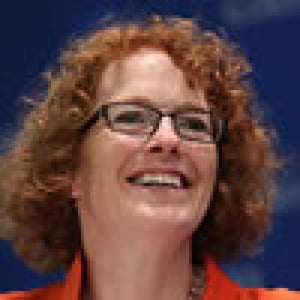
Dean and Lucy G. Moses Professor of Law, Columbia Law School
Gillian Lester is Dean and the Lucy G. Moses Professor of Law at Columbia Law School.
She is a nationally recognized authority on employment law and policy whose research has explored workplace intellectual property law, public finance policy, and the design of social insurance laws and regulations. Dean Lester is the author of numerous books and articles and is co-author of one of the leading casebooks on employment law, Employment Law Cases and Materials. She is also a member of the American Law Institute and was an adviser to the ALI Restatement of Employment Law.
Dean Lester began her teaching career in 1994 at UCLA School of Law, becoming a full professor in 1999, and joined the Berkeley Law faculty in 2006. At Berkeley, she was the Alexander F. and May T. Morrison Professor of Law and Mimi Wolfen Research Professor, and also served as co-director of the Berkeley Center for Health, Economic and Family Security; Associate Dean for the J.D. Program and Curricular Planning; and, most recently, Acting Dean (2012-2014).
She has held external appointments as the Sidley Austin Visiting Professor at Harvard Law School and Sloan Fellow and Visiting Professor at Georgetown University Law Center. Dean Lester also held short-term visiting appointments at USC Gould School of Law, University of Chicago Law School, and Radzyner School of Law Interdisciplinary Center in Herzliya, Israel.
Dean Lester, Columbia Law School’s 15th dean, holds degrees from Stanford Law School and the University of Toronto Faculty of Law, where she served as Editor-in-Chief of the law review. She earned her undergraduate degree from the University of British Columbia.
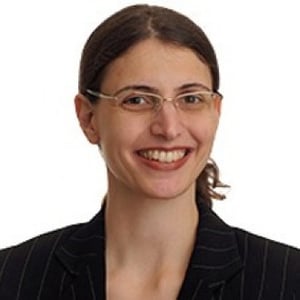
Professor of Law and Director of the Center for Intellectual Property Law, Maurice A. Deane School of Law at Hofstra University
Professor Manta teaches intellectual property law subjects. Her research examines the intersection between intellectual property law and social science, with a focus on psychology. She has most recently written about the hedonic value of trademarks and its legal implications, the problem of cognitive bias in copyright infringement litigation, price discrimination through software licensing in the age of the Internet of Things, and the role of criminal sanctions in intellectual property. Professor Manta has published or has forthcoming work in the Emory Law Journal, William & Mary Law Review, Iowa Law Review, Alabama Law Review, Boston College Law Review, Ohio State Law Journal, Washington and Lee Law Review, Harvard Journal of Law & Technology, Stanford Technology Law Review, Florida Law Review, Arizona Law Review, and Cornell Law Review Online, among others. She is also a co-author for a forthcoming textbook on criminal law issues in intellectual property. Professor Manta has further been a guest blogger for PrawfsBlawg and for Concurring Opinions. In 2014, she received the Lawrence A. Stessin Prize for Outstanding Scholarly Publications, which is awarded to two junior faculty members across all disciplines at Hofstra University.
Before joining the law school faculty in 2012, Professor Manta was an Assistant Professor of Law at the Case Western Reserve University School of Law. She was a Bigelow Teaching Fellow and Lecturer in Law at the University of Chicago Law School from 2007 to 2009. Professor Manta has also served on the faculties of Brooklyn Law School, The George Washington University School of Law, and the University of Arkansas at Little Rock William H. Bowen School of Law. She clerked for Judge Morris S. Arnold on the U.S. Court of Appeals for the Eighth Circuit for the 2006-2007 term.
While earning her J.D. at Yale Law School, Professor Manta was the grand prize winner of the Foley & Lardner LLP Intellectual Property Writing Competition. She also served as tributes editor of the Yale Law Journal, articles editor of the Yale Law & Policy Review, and editor of the Yale Journal on Regulation. She graduated magna cum laude from Yale University with a B.A. in psychology.
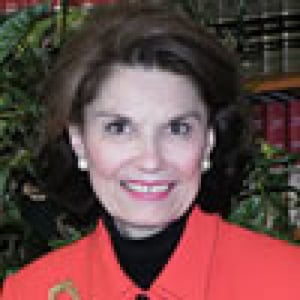
U.S. Court of Appeals, Second Circuit
Reena Raggi is a United States Circuit Judge of the U.S. Court of Appeals for the Second Circuit. At the time of her appointment in 2002, she was a United States District Judge for the Eastern District of New York.
Judge Raggi earned her B.A. degree in 1973 from Wellesley College and her J.D. degree cum laude from Harvard Law School in 1976.
She was law clerk to Judge Thomas E. Fairchild of the U.S. Court of Appeals for the Seventh Circuit from 1976 to 1977. From 1977 to 1979 she was in private law practice as an associate with the New York law firm of Cahill, Gordon & Reindel. She served as an Assistant United States Attorney for the Eastern District of New York from 1979 to 1986, including assignments as Chief of the Narcotics Division (1982 to 1984), and Chief of the Special Prosecutions Division (1984 to 1986). Also in 1986, she served as United States Attorney for the Eastern District of New York under an interim court appointment. Later that year, she resumed the private practice of law as a partner in the New York firm of Windels, Marx, Davies & Ives. She remained there until her appointment in 1987 as a United States District Judge for the Eastern District of New York.
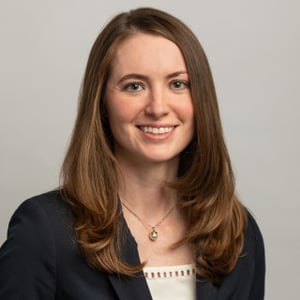
Renée Flaherty is an attorney with the Institute for Justice. She joined the Institute in 2013 and litigates cases to secure property rights, economic liberty and school choice in federal and state courts.
Renée successfully represented families in defense of North Carolina’s Opportunity Scholarship Program, which was upheld by the North Carolina Supreme Court in July 2015.
Renée’s views have been published in USA Today and The Wall Street Journal.
Prior to joining the Institute for Justice, Renée worked in private practice as a tax controversy associate at the Washington, D.C., office of Bingham McCutchen, LLP. She received her law degree from Harvard Law School in 2011, where she was an editor of the Harvard Negotiation Law Review and served on the Executive Board of the Federalist Society. Renée graduated from the University of Texas at Austin with a Bachelor of Arts in Philosophy and a Bachelor of Business Administration. Renée is originally from Odessa, Texas.
Renée Flaherty is a member of the D.C. bar.
Partner, Graves Garrett LLC
Todd Graves is a lawyer in private practice with the law firm of Graves Garrett. Todd represents individuals and businesses nationwide before federal and state courts and administrative agencies. His areas of expertise include white collar criminal defense, political speech and election law, internal investigations, regulatory compliance, and complex commercial litigation. Todd is admitted to the United States Supreme Court, the Missouri Bar, the Kansas Bar, the Texas Bar, the Iowa Bar, the Federal Courts of Appeals for the Tenth Circuit, the Eighth Circuit and the Sixth Circuit, and the Federal District Courts for the Western District of Missouri, Eastern District of Missouri, the District of Kansas, and the Western District of Michigan.
Todd currently serves as Executive Vice-President of the Pony Express Council of the Boy Scouts of America. He is a member of the Board of Directors of the American Royal Association and a founding board member of the Kansas City Missouri Police Foundation.
Before forming Graves Garrett, Todd served as the United States Attorney for the Western District of Missouri. As United States Attorney, Todd was responsible for prosecuting federal crimes including mail and wire fraud, money laundering, public corruption, health care fraud, child pornography, firearms violations, narcotics trafficking, pharmaceutical diversion, corporate fraud, and terrorism financing. During Graves’ tenure, felony filings doubled.
In addition, Todd was responsible for defending civil lawsuits brought against the United States, handling federal forfeiture actions, and collecting debts and restitution. Todd managed a staff of 120 with headquarters in Kansas City and two branch offices.
Todd also served as a member of the Attorney General’s Advisory Committee, advising the Attorney General on Department of Justice national priorities and policies. Todd participated in drafting Department of Justice policies in corporate investigations including charging, pre-trial diversion, and sentencing. Todd was also a member of the national Executive Working Group, which includes six Department of Justice officials, six state attorneys general, and six district attorneys.
Todd was appointed United States Attorney from his position as Platte County Prosecuting Attorney, an office to which he was elected in 1994 and 1998. At the time of his election in 1994, he was the youngest full-time prosecuting attorney in Missouri. In that position, he oversaw a yearly caseload of approximately 400 felonies, 2500 misdemeanors and 14,000 traffic offenses.
As Prosecuting Attorney and as United States Attorney, Todd actively managed cases and trials under his authority and personally tried numerous jury trials to verdict, including cases of child molestation, drug distribution, murder and capital murder.
Prior to his service as Platte County Prosecuting Attorney, Todd was in private practice with the Bryan Cave law firm. Before joining Bryan Cave, he was an Assistant Attorney General for the State of Missouri.
In 1991, Todd received his law degree and a master’s degree in public administration from the University of Virginia. He received a bachelor’s degree, Summa Cum Laude, from the University of Missouri in 1988.
Raised on a family farm near Tarkio, Missouri, Todd has been married 24 years to his wife, Tracy. The couple has four children, and they reside on a 270 acre farm north of Kansas City that has been in the family since 1867.
Owner, The Knight Law Firm
A lawyer since 1981, Mr. Knight is rated AV by Martindale-Hubbell. Mr. Knight has vast experience in complex litigation, corporate law, and international transactions. He practices in the fields of Aviation, Bankruptcy, Corporate, Commercial, and International Law. He also handles luxury car and RV Lemon Law claims.
Prior to founding his own firm in 1992, he was with the venerable Miami firms Walton Lantaff and Blackwell Walker. He has represented financial institutions, manufacturers, air carriers, repair stations, and wealthy investors from the US, Europe, Latin America, the Middle East, and the Far East.
He is admitted to practice before the United States Supreme Court, the Eleventh Circuit Court of Appeals, and in all three Federal District and Bankruptcy Courts in Florida.
Mr. Knight graduated in 1981 from the University of Miami School of Law, where he served as the Executive Editor of the International Law Journal. During law school he clerked with the Equal Employment Opportunity Commission.
He earned a B.A. degree from Vanderbilt University in 1978, with majors in Philosophy, Political Science, and Spanish, as well as minors in French and History. Also during his undergraduate years, he attended the Universidad Complutense of Madrid, Spain, Georgetown University, and Vanderbilt's institute at Aix-en-Provence, France.
Mr. Knight is licensed to pilot both helicopters and airplanes. In addition to flying, his interests include karate, skiing, hunting, fishing and military history. He is a member of the Miami Rotary Club.
Mr. Knight has lectured on "Aircraft and Engine Liens in and out of Bankruptcy Court" (Miami Aircraft Maintenance Council, May 2001) "Election Law Ethics" (RNLA, Orlando, June 2004), "Fundamentals of Election Law" (RNLA, Orlando, January 2006), "The Help America Vote Act" (RNLA, Miami, September 2008), Moderator RNLA Florida Election Law School, Orlando, September 2010.
Mr. Knight served as Chair of the RNLA's Florida Chapter from the April 2004 through April 2006, and as Co-Chair from April 2006 until April 2009. In June 2004 he was the Director of and organized RNLA's first Florida Election Law School. During the 2002 election cycle he was a member of the Miami-Dade County Legal Team's Executive Committee. In 2000 he served as a member of the Bush-Cheney "Recount" Team.
Florida Second District Court of Appeal
A Sarasota native, Judge Susan H. Rothstein-Youakim graduated from Pine View School in 1987. She graduated in 1990 from Duke University with a B.A. in Russian, cum laude, and in 1993 from the University of Florida College of Law, where she was an Executive Articles Editor on the Florida Journal of International Law.
After law school, Judge Rothstein-Youakim moved to Tampa and began her career as a law clerk to the Honorable Charles R. Wilson, United States Court of Appeals for the Eleventh Circuit, who was then a federal magistrate judge. In January 1995, Judge Rothstein-Youakim joined the Appellate Division of the United States Attorney's Office for the Middle District of Florida. There, she represented the United States and its client agencies in criminal, civil, and post-conviction appeals in the United States Court of Appeals for the Eleventh Circuit, personally drafting more than 600 briefs and presenting approximately 60 oral arguments. She also served as an instructor at the Department of Justice's National Advocacy Center in Columbia, South Carolina.
In May 2016, Governor Rick Scott appointed Judge Rothstein-Youakim to the Second District Court of Appeal, and she began her service on the court on July 5, 2016. She is active in the Bruce R. Jacob-Chris W. Altenbernd Criminal Appellate American Inn of Court and received its Altenbernd Award for Excellence in 2015. She also serves as a mentor to students in elementary school, college, and law school.
Henry L. Shattuck Professor of Law, Harvard Law School
Matthew Stephenson is Professor of Law at Harvard Law School, where he teaches administrative law, legislation and regulation, anti-corruption law, and political economy of public law. His research focuses on the application of positive political theory to public law, particularly in the areas of administrative procedure, anti-corruption, judicial institutions, and separation of powers. Prior to joining the Harvard Law School faculty, Professor Stephenson clerked for Senior Judge Stephen Williams on the D.C. Circuit and for Justice Anthony Kennedy on the Supreme Court. He received his J.D. and Ph.D. (political science) from Harvard in 2003, and his B.A. from Harvard College in 1997.
Senior Fellow, Center for American Progress Action Fund
Alan Makovsky is a Senior Fellow on the National Security and International Policy team at American Progress. From 2001 to 2013, he served as a senior professional staff member on the Committee on Foreign Affairs in the U.S. House of Representatives, where he covered the Middle East, Turkey, and other related issues.
At the Washington Institute for Near East Policy—a private think tank where he worked from 1994 to 2001—Mr. Makovsky wrote widely on various Middle Eastern and Turkish topics. He also founded and directed the Washington Institute’s Turkey Research Program.
At the State Department where he worked from 1983 to 1994—Mr. Makovsky variously covered southern European affairs and Middle Eastern affairs for the Bureau of Intelligence and Research. He also served as the political advisor to Operation Provide Comfort in 1992 and as the special advisor to the special Middle East coordinator from 1993 to 1994.
Director of National Security, Bipartisan Policy Center
Blaise Misztal is the director of BPC’s national security program. He previously served as the project’s associate director and senior policy analyst. At BPC, Misztal has researched a variety national security issues, including Iran and its nuclear program, Turkey, cybersecurity, stabilizing fragile states, and public diplomacy in the 21st century. He has testified before Congress and published op-eds in The Washington Post, The Wall Street Journal, The Weekly Standard, The New Republic, and Roll Call. In addition, Mr. Misztal wrote and directed the 2009 “Cyber ShockWave” simulation that aired on CNN.
Prior to joining BPC, Mr. Misztal spent a year as a Nuffield Fellow at Nuffield College, Oxford University. He was selected as a future leader by the Foreign Policy Initiative in 2010 and named as a national security fellow by the Foundation for Defense of Democracies in 2011.
Mr. Misztal is currently completing his Ph.D. in political science at Yale University, where his research focuses on the relationship between democracy, liberalism, and social stability. He holds an M.Phil. in political science from Yale and an A.B. with honors from the University of Chicago.

Reauthorization of Section 702 - Podcast
Kate Martin, Karen J. Lugo, Adam I. Klein
Section 702 of the Foreign Intelligence Surveillance Act (FISA) is up for reauthorization in 2017....
The Constitutional War Powers of the Executive and Legislative Branches
Mickey Edwards, Julian Ku, Andrew McCarthy
What kind of war power does the Constitution grant the President and Congress? What limitations...
Turkey in NATO - Podcast
Alan Makovsky, Blaise Misztal
Turkey’s President Erdogan has secured authoritarian rule through constitutional restructuring. He does not tolerate dissent...
Turkey in NATO
TeleforumThe State of Antitrust Enforcement
Ronald A. Cass, Albert A. Foer, Geoffrey A. Manne, Joshua D. Wright
Antitrust policy during much of the Obama Administration was a continuation of the Bush Administration’s...
National Intelligence Reform - Podcast
David Shedd, Matthew R. A. Heiman
During the presidential campaign, there were calls for changes to the Office of the Director of National...
The Unitary Executive through Presidents Bush, Obama, and Trump
W. Neil Eggleston, Michael B. Mukasey, Benjamin Wittes
The Fifth Annual Executive Branch Review Conference will examine the changing and often convoluted relationship...
All Falling Faiths: Reflections on the Promise and Failure of the 1960s - Podcast
J. Harvie Wilkinson, Danielle Sassoon
In this warm and intimate memoir, Judge Wilkinson of the United States Court of Appeals...
Panel 1: Privacy and Freedom of the Press
Steve Coll, Richard A. Epstein, Jameel Jaffer, Gillian Lester, Irina D. Manta, Reena Raggi
The Internet has made information not only much more accessible, it has allowed almost anyone...
Government Ethics and Corruption
Nick Cox, Renée Flaherty, Todd P. Graves, Jefferson P. Knight, Susan Rothstein-Youakim, Matthew C. Stephenson
This panel, Government Ethics & Corruption, was held on February 4, 2017, at the 2017...