
Robert M. Kimmitt is Senior International Counsel at the law firm of WilmerHale.
Both in government and the private sector, Ambassador Kimmitt has held a wide variety of senior positions at the intersection of international business, finance, law, and policy. From 2005-2009, he served as Deputy Secretary of the U.S. Treasury, where he had significant responsibility for the Department’s international agenda, including his leadership role on the Committee on Foreign Investment in the United States (CFIUS) and as lead U.S. negotiator for the International Compact with Iraq.
Earlier, he was American Ambassador to Germany from 1991-1993; Under Secretary of State for Political Affairs from 1989-1991; and General Counsel to the U.S. Treasury from 1985-1987. He also served in the Reagan White House as National Security Council Executive Secretary and General Counsel from 1983-1985, with the rank of Deputy Assistant to the President for National Security Affairs.
In addition to his government service, Ambassador Kimmitt served as Executive Vice President, Global Public Policy, at Time Warner from 2001-2005. Prior to that, he was Vice Chairman and President of Commerce One, a Silicon Valley software company. He was a partner at Wilmer, Cutler & Pickering from 1997-2000, a managing director of Lehman Brothers from 1993-1997, and a partner in the law firm of Sidley & Austin from 1987-1989.
Ambassador Kimmitt graduated with distinction from the United States Military Academy at West Point in 1969. He served in combat with the 173rd Airborne Brigade in Vietnam from 1970-1971, earning three Bronze Star Medals, the Purple Heart, the Air Medal, and the Vietnamese Cross of Gallantry. He retired as a Major General in the Army Reserve. During 1997 Mr. Kimmitt was a member of the National Defense Panel, and from 1998-2005 he was a member of the Director of Central Intelligence’s National Security Advisory Panel. He also served as a member of the Panel of Arbitrators of the World Bank’s International Centre for the Settlement of Investment Disputes.
Ambassador Kimmitt received his law degree from Georgetown University in 1977, where he was Editor in Chief of Law & Policy in International Business. From 1977-1978, he served as law clerk to Judge Edward A. Tamm of the U.S. Court of Appeals for the D.C. Circuit. He was awarded an honorary Doctor of Humane Letters degree by Marymount University in 2009; the Distinguished Graduate Award from West Point in 2010; and the Outstanding Alumnus Award of the U.S. Army War College in 2015.
Ambassador Kimmitt is Chairman of the American Council on Germany; a member of the Supervisory Board of Lufthansa AG; a member of the International Advisory Boards of Allianz SE and The Maureen and Mike Mansfield Foundation; a member of the Global Advisory Board of Tokai Tokyo Financial Holdings; a board member of USA Rugby, the Atlantic Council, and the Arthur F. Burns Fellowship; and a member of the Council on Foreign Relations, the Trilateral Commission, and the American Academy of Diplomacy. His foreign language is German.
Director of Asian Studies and Resident Fellow, American Enterprise Institute
Dan Blumenthal is the director of Asian Studies at the American Enterprise Institute, where he focuses on East Asian security issues and Sino-American relations. Mr. Blumenthal has both served in and advised the U.S. government on China issues for over a decade. From 2001 to 2004, he served as senior director for China, Taiwan, and Mongolia at the Department of Defense. Additionally, he served as a commissioner on the congressionally-mandated U.S.-China Economic and Security Review Commission since 2006-2012, and held the position of vice chairman in 2007. He has also served on the Academic Advisory Board of the congressional U.S.-China Working Group. Mr. Blumenthal is the co-author of “An Awkward Embrace: The United States and China in the 21st Century” (AEI Press, November 2012).
Lawrence and Sallye Krause Professor of Korea-Pacific Studies; Director, Korea-Pacific Program, School of Global Policy & Strategy, UC San Diego
Stephan Haggard is the Lawrence and Sallye Krause Professor of Korea-Pacific Studies, director of the Korea-Pacific Program, and distinguished professor of political science at GPS. He is a go-to expert on current developments in the Asia-Pacific region, particularly the Korean peninsula, and on the politics of economic reform and globalization.
Prof. Haggard has written extensively on the political economy of North Korea with Marcus Noland, including “Famine in North Korea: Markets, Aid, and Reform” (2007) and “Witness to Transformation: Refugee Insights into North Korea” (2011) and co-authors the "North Korea: Witness to Transformation" blog at the Peterson Institute for International Economics. Prof. Haggard is the current editor of the Journal of East Asian Studies and a member of the Council on Foreign Relations.
Senior Research Fellow, Northeast Asia, The Heritage Foundation
Bruce Klingner specializes in Korean and Japanese affairs as the senior research fellow for Northeast Asia at The Heritage Foundation's Asian Studies Center.
Mr. Klingner’s analysis and writing about North Korea, South Korea and Japan, as well as related issues, are informed by his 20 years of service at the Central Intelligence Agency and the Defense Intelligence Agency.
Mr. Klingner, who joined Heritage in 2007, has testified before the House Foreign Affairs Committee, the Senate Select Committee on Intelligence and the House Permanent Select Committee on Intelligence.
He is a frequent commentator in U.S. and foreign media. His articles and commentary have appeared in major American and foreign publications and he is a regular guest on broadcast and cable news outlets. He is a regular contributor to the international and security sections of The Daily Signal.
From 1996 to 2001, Mr. Klingner was CIA’s deputy division chief for Korea, responsible for the analysis of political, military, economic and leadership issues for the president of the United States and other senior U.S. policymakers. In 1993-1994, he was the chief of CIA's Korea branch, which analyzed military developments during a nuclear crisis with North Korea.
Mr. Klingner is a distinguished graduate of the National War College, where he received a master's degree in national security strategy in 2002. He also holds a master's degree in strategic intelligence from the Defense Intelligence College and a bachelor's degree in political science from Middlebury College in Vermont.
He is active in Korean martial arts, attaining third-degree black belt in taekwondo and first-degree black belt in hapkido and teuk kong moo sool.

Maurice A. Deane Distinguished Professor of Constitutional Law and Faculty Director of International Programs, Hofstra University School of Law
Professor Ku’s primary research interest is the relationship of international law to constitutional law. He has also conducted academic research on a wide range of topics including international dispute resolution, international criminal law, and China’s relationship with international law. He teaches courses such as U.S. constitutional law, U.S. foreign affairs law, transnational law, and international trade and business law. Since 2014, he has served as the faculty director of international programs, overseeing Hofstra Law’s study abroad, exchange and LL.M. programs. Professor Ku also teaches Constitutional Law in our online degree programs: Master of Laws in American Law and Master of Arts in American Legal Studies. He has also been selected as the John DeWitt Gregory Research Scholar and as a Hofstra Law Research Fellow. He is a member of the American Law Institute.
He is the co-author, with John Yoo, of Taming Globalization: International Law, the U.S. Constitution, and the New World Order (Oxford University Press 2012). He also has published more than 40 law review articles, book chapters and symposia essays. He has given dozens of academic lectures and workshops at major universities and conferences in the United States, Europe and Asia.
He co-founded the leading international law weblog Opinio Juris, which is read daily by thousands worldwide. His essays and op-eds have been published in major news publications such as the Wall Street Journal, the Los Angeles Times, and the NYTimes.com. He has been frequently interviewed for television news programs and quoted in print and electronic media. He has also signed or submitted amicus briefs to national and international courts and served as an expert witness in both domestic and international proceedings.
Before joining the Hofstra Law faculty, Professor Ku served as a law clerk to the Honorable Jerry E. Smith of the U.S. Court of Appeals for the Fifth Circuit and as an Olin Fellow and Lecturer in Law at the University of Virginia Law School. Professor Ku also practiced as an associate at the New York City law firm of Debevoise & Plimpton, specializing in litigation and arbitration arising out of international disputes. He has been a visiting professor at the College of William & Mary Marshall- Wythe School of Law in Williamsburg, Virginia; a Fulbright Distinguished Lecturer in Law at East China University of Political Science and Law in Shanghai, China; and a Taiwan Fellow at National Taiwan University in Taipei, Taiwan. He is a member of the New York Bar and a graduate of Yale College and Yale Law School.

Chief Judge, United States Court of Appeals, Fifth Circuit
Jennifer Walker Elrod is the Chief Judge of the United States Court of Appeals for the Fifth Circuit. She was nominated to the Fifth Circuit in 2007, and she served as a Circuit Judge on the court until assuming the role of Chief Judge in October 2024. Prior to serving as a Circuit Judge, Chief Judge Elrod was appointed and then twice elected Judge of the 190th District Court of Harris County, Texas, where she spent over five years presiding over more than 200 jury and non-jury trials.
Chief Judge Elrod graduated cum laude from Harvard Law School, where she was an active member of the Harvard Federalist Society, an Ames Moot Court finalist, and a Senior Editor of the Harvard Journal of Law & Public Policy. She clerked for the Honorable Sim Lake in the Southern District of Texas. Before serving as a judge, Chief Judge Elrod worked in private practice, focusing on civil litigation, antitrust, and employment matters.
She has been repeatedly recognized for her work as a jurist, as well as for her pro bono work and contributions to the community. She has been named the 2022 Texas Review of Law & Politics’ Jurist of the Year, the 2018 Harvard Federalist Society’s Alumni of the Year, the 2016–17 Texas Association of Civil Trial and Appellate Specialists’ Appellate Judge of the Year, and the 2008 Mexican-American Bar Association of Texas’s Judge of the Year.
Chief Judge Elrod is actively engaged in the academic and legal communities. Chief Judge Elrod currently serves on the Board of Directors and as the Jurist-in-Residence at the South Texas College of Law, where she teaches civil procedure and First Amendment law. She is also a member of the American Law Institute and of the Board of Advisors for the Harvard Journal of Law & Public Policy, and she is a former member of the Board of Regents of her alma mater, Baylor University, and the Board of Visitors at Brigham Young University Law School. She previously served as the Chair of the Codes of Conduct Committee for the Judicial Conference of the United States. She has also served as the M.D. Anderson Visiting Public Service Professor at the Texas Tech University School of Law and as Jurist-in-Residence at Brigham Young University Law School, and she has taught legal writing at the University of Houston Law Center. She presented the Lewis F. Powell, Jr. Distinguished Lecture at the Washington and Lee University School of Law and is a frequent speaker on the topics of trial and appellate procedure, ethics, employment law, and constitutional law. Chief Judge Elrod also serves on the board of the Garland R. Walker Inn of Court, and co-produces an annual musical CLE, for which her pupilage group has won multiple national awards.
Chief Judge Elrod’s publications include: Trial by Siri: AI Comes to the Courtroom; Don’t Mess with Texas Judges: In Praise of the State Judiciary; For Good: Enriching Your Practice and Your Life Through Pro Bono and Community Service; Is the Jury Still Out?: A Case for the Continued Viability of the American Jury; and W(h)ither the Jury? The Diminishing Role of the Jury Trial in our Legal System.

Laurence H. Silberman Chair in Constitutional Governance, American Enterprise Institute; Executive Director, Antonin Scalia Law School’s C. Boyden Gray Center for the Study of the Administrative State
Adam J. White is the Laurence H. Silberman Chair in Constitutional Governance and senior fellow at the American Enterprise Institute, where he focuses on the Supreme Court and the administrative state. He also directs the Antonin Scalia Law School’s C. Boyden Gray Center for the Study of the Administrative State.
He writes on regulation and constitutional government for a variety of publications. He practiced law in Washington, D.C., after clerking for the D.C. Circuit's Judge David Sentelle. He also has been chairman of the ABA's Administrative Law Section.
In 2021, he served on the Presidential Commission on the Supreme Court of the United States, where he criticized “Court packing” and other efforts to restructure the Supreme Court.

Partner, Steptoe & Johnson LLP
Stewart Baker is a partner in the law firm of Steptoe & Johnson in Washington, D.C. From 2005 to 2009, he was the first Assistant Secretary for Policy at the Department of Homeland Security. His law practice covers cybersecurity, data protection, homeland security, and travel and foreign investment regulation; he has been awarded one patent.
Mr. Baker has been General Counsel of the National Security Agency and General Counsel of the commission that investigated WMD intelligence failures prior to the Iraq war. He is the author of Skating on Stilts, a book on terrorism, cybersecurity, and other technology issues; he also hosts the weekly Cyberlaw Podcast.
Counsel, Steptoe & Johnson LLP
Alan Cohn advises clients from a range of industries on cybersecurity, blockchain, and distributed ledger technology issues, and other national security and emerging technology issues. Mr. Cohn is co-chair of the firm’s Blockchain and Digital Currency practice. He serves as counsel to the Blockchain Alliance, a public-private forum established by a broad coalition of companies and organizations to help combat criminal activity on the blockchain, and advises companies and investors concerning a range of issues associated with the adoption and use of blockchain and distributed ledger technology. Mr. Cohn also coordinates the Coalition for Responsible Cybersecurity, which was formed by leading cybersecurity companies to prevent dual-use export control rules from harming defensive cybersecurity products, services, and technologies.
Prior to joining the firm, Mr. Cohn served in senior policy positions at the US Department of Homeland Security (DHS) for almost a decade, most recently as the assistant secretary for strategy, planning, analysis & risk and second-in-charge overall of the DHS Office of Policy. While at DHS, Mr. Cohn established the cyber policy office within the DHS Office of Policy, and helped shape department policy on issues such as cybersecurity information sharing, cybercrime and cyber-related sanctions, and cyber incident management. He also represented DHS on the Committee on Foreign Investments in the United States (CFIUS) and related national security review processes for foreign investments, acquisitions, and US license applications. Mr. Cohn also designed and led the first two Quadrennial Homeland Security Reviews—comprehensive year-long reviews of homeland security—and helped implement DHS Secretary Jeh Johnson’s Unity of Effort Initiative, a major corporate-level DHS governance, integration, and management reform effort.
Prior to government service, Mr. Cohn represented major corporations in federal and state court litigation, labor negotiations, and compliance matters involving federal agencies, including the US Department of Labor.

Executive Vice President, Chief Legal Officer, Gates Corporation
Matthew R. A. Heiman joined the Company in May 2026 and has served as the Company’s Chief Legal Officer and Corporate Secretary since June 2026. As Chief Legal Officer, Mr. Heiman is responsible for all legal functions for Gates, including securities and corporate governance, M&A, litigation, commercial, regulatory, compliance, patents and trademarks, real estate, employment and labor, sustainability and environmental matters. Prior to joining Gates, Mr. Heiman held senior legal leadership roles at Waystar, where he served as Chief Legal & Administrative Officer from 2023 to 2025 and as General Counsel and Corporate Secretary from 2020 to 2023. Prior to that, he was with Johnson Controls, where he served as Vice President, Corporate Secretary, and Associate General Counsel. Mr. Heiman has been a Senior Fellow for the National Security Institute at George Mason University’s Antonin Scalia School of Law since 2018.
Robert M. Kimmitt is Senior International Counsel at the law firm of WilmerHale.
Both in government and the private sector, Ambassador Kimmitt has held a wide variety of senior positions at the intersection of international business, finance, law, and policy. From 2005-2009, he served as Deputy Secretary of the U.S. Treasury, where he had significant responsibility for the Department’s international agenda, including his leadership role on the Committee on Foreign Investment in the United States (CFIUS) and as lead U.S. negotiator for the International Compact with Iraq.
Earlier, he was American Ambassador to Germany from 1991-1993; Under Secretary of State for Political Affairs from 1989-1991; and General Counsel to the U.S. Treasury from 1985-1987. He also served in the Reagan White House as National Security Council Executive Secretary and General Counsel from 1983-1985, with the rank of Deputy Assistant to the President for National Security Affairs.
In addition to his government service, Ambassador Kimmitt served as Executive Vice President, Global Public Policy, at Time Warner from 2001-2005. Prior to that, he was Vice Chairman and President of Commerce One, a Silicon Valley software company. He was a partner at Wilmer, Cutler & Pickering from 1997-2000, a managing director of Lehman Brothers from 1993-1997, and a partner in the law firm of Sidley & Austin from 1987-1989.
Ambassador Kimmitt graduated with distinction from the United States Military Academy at West Point in 1969. He served in combat with the 173rd Airborne Brigade in Vietnam from 1970-1971, earning three Bronze Star Medals, the Purple Heart, the Air Medal, and the Vietnamese Cross of Gallantry. He retired as a Major General in the Army Reserve. During 1997 Mr. Kimmitt was a member of the National Defense Panel, and from 1998-2005 he was a member of the Director of Central Intelligence’s National Security Advisory Panel. He also served as a member of the Panel of Arbitrators of the World Bank’s International Centre for the Settlement of Investment Disputes.
Ambassador Kimmitt received his law degree from Georgetown University in 1977, where he was Editor in Chief of Law & Policy in International Business. From 1977-1978, he served as law clerk to Judge Edward A. Tamm of the U.S. Court of Appeals for the D.C. Circuit. He was awarded an honorary Doctor of Humane Letters degree by Marymount University in 2009; the Distinguished Graduate Award from West Point in 2010; and the Outstanding Alumnus Award of the U.S. Army War College in 2015.
Ambassador Kimmitt is Chairman of the American Council on Germany; a member of the Supervisory Board of Lufthansa AG; a member of the International Advisory Boards of Allianz SE and The Maureen and Mike Mansfield Foundation; a member of the Global Advisory Board of Tokai Tokyo Financial Holdings; a board member of USA Rugby, the Atlantic Council, and the Arthur F. Burns Fellowship; and a member of the Council on Foreign Relations, the Trilateral Commission, and the American Academy of Diplomacy. His foreign language is German.
Chief Justice, Florida Supreme Court
Justice Charles Canady was born in Lakeland, Florida, in 1954. He is married to Jennifer Houghton, and they have two children. He received his B.A. from Haverford College in 1976 and his J.D. from the Yale Law School in 1979.
Justice Canady practiced law with the firm of Holland and Knight in Lakeland from 1979 through 1982. He practiced with the firm of Lane, Trohn, et al., from 1983 through 1992.
From November 1984 to November 1990, Justice Canady served three terms in the Florida House of Representatives, and from January 1993 to January 2001, he served four terms in the United States House of Representatives. Throughout his service in Congress, Justice Canady was a member of the House Judiciary Committee. For three terms, from January 1995 to January 2001, Justice Canady was the Chairman of the House Judiciary Subcommittee on the Constitution.
Upon leaving Congress, Justice Canady became General Counsel to Governor Jeb Bush. He was appointed by Governor Bush to the Second District Court of Appeal for a term beginning November 20, 2002.
On August 28, 2008, Justice Canady was appointed to the Florida Supreme Court by Governor Charlie Crist and took office on September 8, 2008. He served as Chief Justice from July 2010 through June 2012. In March 2018, he was elected by his colleagues to serve as Chief Justice for a second time, with his two-year term starting July 1, 2018, and a third time starting July 1, 2020.
Partner, McDermott Will & Emery
Robert (Bob) J. Cordy’s practice includes business litigation, white collar criminal defense, internal investigations, appellate work and major public/private projects.
Bob previously served for 16 years as an associate justice of the Massachusetts Supreme Judicial Court. He has worked with judges from Mexico, Russia, China, Kosovo, Turkey, Uzbekistan, Ukraine, Afghanistan and other countries on issues relating to judicial ethics, rule of law principles and the American judicial system. Bob also served as chair of the Supreme Judicial Court Rules Committee, co-chair of the Supreme Judicial Court Judiciary-Media Committee and member of the Committee for Capital Planning for the Judicial System.
Bob began his career working for the Massachusetts Public Defenders Office, and subsequently held positions with the Massachusetts Department of Revenue, the Massachusetts State Ethics Commission and the United States Attorney’s Office where he became the chief of the Public Corruption prosecution unit. Bob also served as chief legal counsel to Massachusetts Governor William F. Weld, working on a wide range of policy issues including regulatory and criminal justice reform, ethics in government and the appointment of judges. Before his appointment to the Supreme Judicial Court in 2001, Bob was a partner and head of McDermott’s Boston office.
Bob is also a member of our legal cannabis industry group. Our Cannabis Industry group is a multidisciplinary team of lawyers providing clients with regulatory, litigation, intellectual property, trade and tax services with respect to their investments and participation in the cannabis industry, all subject to the Firm’s obligations under federal and state laws and bar licensure rules.
U.S. District Court Judge, District of Massachusetts
Nathaniel M. Gorton is a federal judge for the United States District Court for the District of Massachusetts. He joined the court in 1992 after being nominated by President George H.W. Bush. At the time of appointment, he was a private practice in Massachusetts.
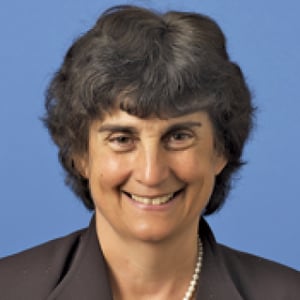
United States District Judge for the District of Massachusetts
Patti B. Saris is the Chief United States District Judge of the United States District Court for the District of Massachusetts. She is also the former Chair of the United States Sentencing Commission.

Chief Judge, United States Court of Appeals, Sixth Circuit
JEFFREY S. SUTTON is the Chief Judge of the United States Court of Appeals for the Sixth Circuit. He has served as Chair of the Federal Judicial Conference Committee on Rules of Practice and Procedure, Chair of the Advisory Committee on Appellate Rules, and Chair of the Supreme Court Fellows Commission. He currently serves as Chair of the Executive Committee of the Judicial Conference of the United States. Since 1993, Chief Judge Sutton has been an adjunct professor at The Ohio State University College of Law, where he teaches seminars on State Constitutional Law, the United States Supreme Court, and Appellate Advocacy. He also teaches a class on State Constitutional Law at Harvard Law School. Among other publications, he is the author of Who Decides? States as Laboratories of Constitutional Experimentation and 51 Imperfect Solutions: States and the Making of American Constitutional Law. He is the co-author of a casebook, State Constitutional Law: The Modern Experience, as well as The Law of Judicial Precedent. He is also the co-editor of The Essential Scalia: On the Constitution, the Courts, and the Rule of Law. In 2006, Chief Judge Sutton was elected to the American Law Institute, and in 2017 he was elected to its Council.
U.S. District Court Judge, District of Massachusetts
Douglas Preston Woodlock is a federal judge for the U.S. District Court for the District of Massachusetts. He joined the court in 1986 after being nominated by President Ronald Reagan. At the time of appointment, Woodlock served as Chairman of the Massachusetts Committee for Public Counsel Services.
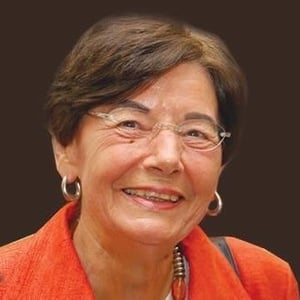
U.S. District Court Judge, District of Massachusetts
Rya Weickert Zobel is a federal judge of the United States District Court for the District of Massachusetts. She joined the court in 1979 after being nominated by President Jimmy Carter. At the time of her appointment, Zobel was a private practice attorney inMassachusetts.
Director, Center for Religious Freedom, Hudson Institute
An international human-rights lawyer for over thirty years, Nina Shea joined Hudson Institute as a Senior Fellow in November 2006, where she directs the Center for Religious Freedom. Shea works extensively for the advancement of individual religious freedom and other human rights in U.S. foreign policy as it confronts an ascendant Islamic extremism, as well as nationalist and remnant communist regimes. She undertakes scholarship and advocacy in defense of those persecuted for their religious beliefs and identities and on behalf of diplomatic measures to end religious repression and violence abroad, whether from state actors or extremist groups.
Ms. Shea was appointed by the U.S. House of Representatives to serve seven terms as a Commissioner on the U.S. Commission on International Religious Freedom (June 1999 - March 2012). During the Soviet era, Shea’s first client before the United Nations was Soviet Nobel Peace Laureate Andrei Sakharov. Since then, she has been appointed as a U.S. delegate to the United Nation's main human rights body by both Republican and Democratic administrations. She also served as a member of the Clinton administration's Advisory Committee on Religious Freedom Abroad. In 2009, she was appointed to serve as a member of the U.S. National Commission to UNESCO.
Ms. Shea played a leading role in building grassroot support for the adoption of the International Religious Freedom Act (1998). For seven years ending in 2005, she helped organize and lead a coalition of churches and religious groups that worked to end a religious war against non-Muslims and dissident Muslims in southern Sudan. In 2014, she initiated and helped lead a coalition of hundreds of prominent American religious leaders to issue The Pledge of Solidarity for Persecuted Iraqi, Syrian and Egyptian Christians and Other Minorities, which was released by a bi-partisan Congressional panel on May 7. In summer 2014, she met with Pope Francis to discuss the persecution of Christians in the Middle East.
At Hudson, she has organized conferences for Nigerian schoolgirls and others who survived Boko Haram attacks, Christian converts formerly imprisoned in Iran, Coptic bishops from Egypt, Catholic bishops from China and the Gulf, Muslim scholars, and many others. Ms. Shea advocates in the nation's capital on behalf of a broad range of persecuted religious minorities around the world; and, for such work, was honored by the Ahmadiyya Muslim Community USA with the Community's inaugural "Ahmadiyya Muslim Humanitarian Award."
She has authored and/or edited four widely-acclaimed reports on Saudi state educational materials that promote extremist views and in 2011 had an opportunity to travel to Saudi Arabia and speak directly about her findings with the Ministers of Education, Justice and Islamic Affairs. Her reports include: Ten Years On: Saudi Arabia's Textbooks Still Promote Religious Violence (2011), Update: Saudi Arabia's Curriculum of Intolerance (2008), Saudi Arabia's Curriculum of Intolerance (2006), and Saudi Publications on Hate Ideology Invade American Mosques (2005), all of which translated and analyzed Saudi governmental publications that teach hatred and violence against the religious "other."
She is the co-author of Silenced: How Apostasy & Blasphemy Codes are Choking Freedom Worldwide, with a Foreword by Kyai Haji Abdurrahman Wahid, the former President of Indonesia and head of Nahdlatul Ulama, the world's largest Muslim organization (Oxford University Press, 2011). Her most recent book, which she also co-authored, is Persecuted: The Global Assault on Christians (Thomas Nelson Publishers, 2013). She regularly presents testimony before Congress, delivers public lectures, organizes briefings and conferences, and writes frequently on religious freedom issues. Her writings have appeared in the Wall Street Journal, Washington Post, CQ Researcher, Weekly Standard, National Review Online, CNN, Fox, The Daily Beast, HuffingtonPost, and RealClearWorld, among others.
For the ten years prior to joining Hudson, Ms. Shea worked at Freedom House, where she directed the Center for Religious Freedom, an entity which she had helped found in 1986 as the Puebla Institute.
She is a member of the bar of the District of Columbia. She is a graduate of Smith College, and American University's Washington College of Law.
Distinguished Professor of Law, Jamie L. Whitten Chair of Law and Government, University of Mississippi School of Law
Professor Ronald J. Rychlak is the Jamie L. Whitten Chair of Law and Government and Distinguished Professor of Law at the University of Mississippi. He is a legal advisor to the Holy See’s delegation to the United Nations and chair of the Mississippi Advisory Committee to the U.S. Civil Rights Commission. He serves as the university’s Faculty Athletic Representative and is on the executive committee of the Southeastern Conference (SEC). In 2019 he received the university’s highest research and publication recognition, the “Distinguished Research and Creative Achievement Award” based upon his reputation for scholarly activity and leadership roles in professional societies. In 2023, he received the Algernon Sydney Sullivan Award, the University’s highest award in honor of service, for “placing service to others and the community before oneself, while embodying the qualities of honesty, morality, ethics, integrity, responsibility, determination, courage, and compassion.” In 2024, he was voted “Outstanding Law Professor” by the law school student body.
Ron is the author, co-author, or editor of twelve books and over 100 articles. The Congregation for the Causes of Saints at the Vatican called his book, Hitler, the War, and the Pope “definitive” in its response to charges made against the leader of the Catholic Church during World War II. He has been published in Notre Dame Law Review, UCLA Law Review, The Washington Post, The Wall Street Journal, and numerous other periodicals and journals. Media appearances include CNN, ABC, Fox News, The National Geographic TV Network, The Military Channel, C-SPAN, and more.
Ron and his wife Claire are proud of their six children, two sons-in-law, one daughter-in-law, and three granddaughters. They live in Oxford, Mississippi.
Adjunct Professor, George Washington University
Howard W. Cox is a former federal prosecutor, criminal investigator and Senior Intelligence Service officer. After almost 40 years of federal service, he retired as the Assistant Inspector General for Investigations of the Central Intelligence Agency. In this capacity, Mr. Cox supervised criminal, civil and administrative investigations conducted by the Office of Inspector General (OIG). Prior to his employment with the CIA, Mr. Cox was the Assistant Deputy Chief of the Computer Crime and Intellectual Property Section of the Department of Justice, where he was responsible for supervising criminal prosecutions of federal hacking and identity theft cases. While at the Department of Justice, Mr. Cox received the Attorney General’s Distinguished Service Award.
Prior to his service with the Department of Justice, Mr. Cox served as a manager, attorney and criminal investigator at OIG offices at the US Postal Service, the Department of Defense, and the General Services Administration. He also served as Staff Counsel for the US Senate Permanent Subcommittee on Investigations. Prior to his federal civilian service, Mr. Cox was also a Captain and trial attorney in the US Army’s Judge Advocate General’s Corps. Mr. Cox also served as Law Secretary to the Hon. Sherwin D. Lester, NJ Superior Court.
Mr. Cox is an adjunct professor at George Washington University, where he teaches graduate level courses in computer forensics. He is also an instructor with the Graduate School USA, and the Federal Law Enforcement Training Center, where he teaches courses related to procurement fraud and electronic search and seizure. Mr. Cox received his AB degree from Seton Hall University, South Orange, NJ. He received his law degree from Georgetown University Law Center, Washington, DC.
Global Data, Privacy, and Cybersecurity Practice Chair, White & Case LLP
Steven Chabinsky is Chair of the global Data, Privacy, and Cybersecurity practice at White & Case LLP, an international law firm, and the cyber tactics columnist for Security magazine. He previously served as a member of the White House Commission on Enhancing National Cybersecurity, the General Counsel and Chief Risk Officer of CrowdStrike, and Deputy Assistant Director of the FBI Cyber Division. He can be reached atchabinsky@whitecase.com. You can follow him on Twitter @StevenChabinsky.
Senior Advisor for International Policy, Google
Will Hudson is Senior Advisor for International Policy at Google, where his work focuses on Internet governance, Google’s relationship with international organizations like the United Nations, and other international policy issues. Before joining Google, Mr. Hudson was Director for International Cyber Policy at the National Security Council. There, he was responsible for coordinating the government’s implementation of a range of technology policies, including those relating to Internet governance, Internet freedom, human rights issues associated with data privacy and online surveillance, and cyber capacity building.
Prior to his time in the White House, Mr. Hudson served in a variety of positions in the federal government, advising clients on the legal and policy issues associated with cybersecurity, norms of state and non-state behavior online, and emerging technologies. He is a board member of the U.S. Telecommunications Training Institute and the Journal of Law & Cyber Warfare, and is a Corporate Leader at the Council on Foreign Relations.
Mr. Hudson is a graduate of Stanford University and Georgetown University Law Center.

Partner, HWG LLP
Patricia Paoletta is a partner with the law firm of HWG LLP, where she specializes in telecommunications, trade and technology policy. Ms. Paoletta provides advice on regulatory, trade and legislative policy to clients before the FCC, Congress and the Administration. Her clients include providers of content, cloud, mobile broadband, VoIP, international telecommunications, small cells, cognitive radio, public safety and homeland security solutions. She serves on Advisory Boards for several entities engaged in information services, communications and technology.
Ms. Paoletta has accrued considerable experience with telecommunications trade and policy in the public sector. From 1990 to 1995, she was senior advisor to the International Bureau Chief and Office Director at the Federal Communications Commission. In the mid 1990s, Ms. Paoletta served as Director of Telecommunications Trade Policy in the Office of the U.S. Trade Representative, Executive Office of the President, where she worked on the WTO Information Technology Agreement (ITA) and the Basic Telecommunications Agreement. After USTR, Ms. Paoletta served as Majority Counsel to the House Energy and Commerce Committee. She then moved to Level 3 Communications, as Vice President, Government Relations.
Ms. Paoletta is on the Steering Committee of the Transatlantic Roundtable on Telecommunications and Information Technology of the European Institute. She is a member of the USTR Alumni Association, Washington International Trade Association, the Federal Communications Bar Association (FCBA), and Women in Technology. Ms. Paoletta has served on the Board of Advisors for the Inter-American Dialogue's Latin America Telecom Advisor, Co-Chairman of the American Bar Association International Communications Committee, and as a member of the U.S. Chamber of Commerce's Technology Policy Committee.
Ms. Paoletta served as a delegate in 2012 to the ITU-R's Study Group 6 Working Party 6A Meeting and in 2009 and 2010 to the ITU-R's Study Group I Working Party IB Meetings; the 2009 meetings of CITEL (the Committee on International Telecommunications at the Organization of American States) PCC-II; the International Telecommunication Union (ITU) World Telecommunications Standards Assembly (2000); the ITU Internet Protocol Telephony Experts Group and the ITU World Telecommunications Policy Forum in 2001; as Chairman of the National Reliability and Interoperability Council (NRIC) Steering Committee (2000-2001); as Board Member for the Voice on the Net Coalition (2001); as Co-Chairman of the FCBA's Annual Seminar Committee (2009-2011); as a member of the FCBA's Ad Hoc Speakers Committee (2006-2007); as Co-Chairman for the FCBA International Practice Committee (2001-2002 and 2005-2006); and as a Co-Chairman of the FCBA Legislative Practice Committee (1999-2000).
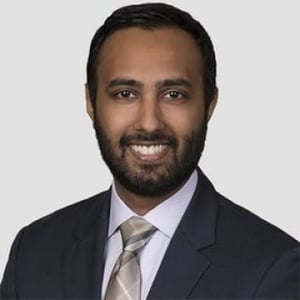
Senior Vice President & General Counsel, CTIA
Umair Javed serves as Senior Vice President and General Counsel. He joined CTIA in 2023 as Senior Vice President, Spectrum, where he was responsible for advancing the wireless industry’s spectrum priorities both domestically and internationally.
Prior to joining CTIA, Umair influenced global and domestic law and policy as Chief Counsel to FCC Chairwoman Jessica Rosenworcel. He served as the FCC designee on President Biden’s Competition Council, led the FCC’s National Security Policy Council, and represented the agency at international treaty-writing conferences. During his time at the FCC, Umair also crafted the FCC’s Spectrum Coordination Initiative, oversaw the third-highest grossing spectrum auction in FCC history, coordinated the deployment of 5G services in the C-band, and partnered with Congress on passage and FCC implementation of the Infrastructure Investment and Jobs Act, Secure and Trusted Communications Networks Act, and Secure Equipment Act.
From October 2017 to January 2019, Umair served as Legal Advisor, Wireless and International in the Office of FCC Commissioner Rosenworcel. He joined the FCC from Wiley Rein LLP, where he was an attorney in the firm’s Telecom, Media, and Technology Group.
Umair was named to the inaugural Lawyers of Color Hot List. He is also a 2021 HTTP “Tech Innovadores” recipient and the 2023 Public Safety Communications Leadership in Regulatory Service award recipient for his service at the FCC.
Umair has a Juris Doctor from the University of Virginia School of Law and a bachelor of arts in Political Philosophy, Policy, and Law from the University of Virginia. He is a member of the bar in the District of Columbia and Virginia. Umair also is a volunteer firefighter in Loudoun County, Virginia.

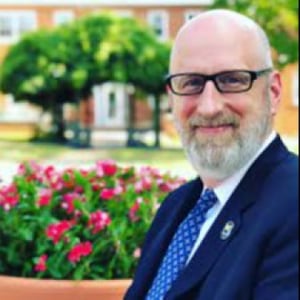
From Russia with Obstruction: The Special Investigation
North Korea Conundrum: Sanctions, Leverage, Balancing Power and Rumors of War
Daniel Blumenthal, Stephen Haggard, Bruce Klingner, Julian Ku
President Trump is pivoting off of the prior administration's "strategic patience" approach to North Korea...
Panel Two: Ethics in the Executive Branch
Jennifer Walker Elrod, Adam White
The greater the power of the Executive, the greater the imperative to adhere to the...
Discussion on the Wassenaar Arrangement
Stewart A. Baker, Alan Cohn, Matthew R. A. Heiman
Should software be regulated like a military weapon? That’s the direction in which most Western...
The Role of Treasury in National Security Policy
Robert M. Kimmitt
The concept of national security has broadened considerably since the early decades of the National...
The Role of Treasury in National Security Policy
International & National Security Law Practice Group Teleforum
TeleforumShakespeare and the Law: Measure for Measure
Charles T. Canady, Robert J. Cordy, Nathaniel M. Gorton, William Meade, Patti B. Saris, F Saylor, Jeffrey S. Sutton, Douglas P. Woodlock, Rya W. Zobel
The Federalist Society and Commonwealth Shakespeare Company presentShakespeare’s Measure by Measure and the Art of...
The Persecution and Genocide of Christians in the Middle East: Prevention, Prohibition, & Prosecution - Podcast
Nina Shea, Ronald J. Rychlak
Since the summer of 2014, ISIS has been waging a blitz through Iraq's Nineveh province,...
Ransomware, Cybercrime Victims and Law Enforcement - Podcast
Howard W. Cox, Steven Chabinsky
Recent headlines make clear the threat posed by cyber criminals, especially those that deploy so-called...
Global Politics of Internet Regulation: Actors and Trajectory - Podcast
Will Hudson, Patricia J. Paoletta, Sally Wentworth, Umair Javed
In recent years, the United Nations’ International Telecommunication Union has become an arena where governments...