
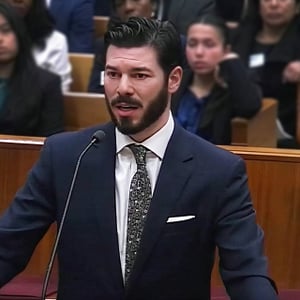
Office of the Florida Attorney General
JEFFREY DESOUSA served as the Acting Solicitor General in the Florida Attorney General’s Office, where he focused on criminal appeals and constitutional litigation, primarily in the United States and Florida Supreme Courts, the Eleventh Circuit Court of Appeal, and the Florida district courts. He is a member of the Florida Bar’s Appellate Court Rules Committee and the First District Appellate American Inn of Court. After graduating with honors from Georgetown Law, Jeffrey served as an appellate attorney for the Miami-Dade Public Defender’s Office. He has worked on hundreds of appellate cases and presented oral argument in approximately 70, including 18 in the Florida Supreme Court.
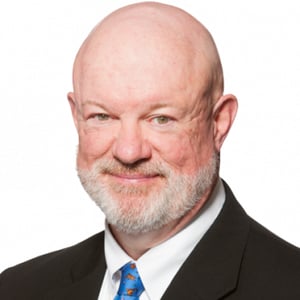
Senior Legal Fellow, the Meese Institute for the Rule of Law, Advancing American Freedom
Paul J. Larkin is a Senior Legal Fellow in the Meese Institute for the Rule of Law at Advancing American Freedom. Paul has held various positions in the federal and state governments throughout his career, such as being an attorney in the Organized Crime and Racketeering Section of the Criminal Division at the U.S. Department of Justice, an Assistant to the Solicitor General in the Office of the Solicitor General at the U.S. Department of Justice, Special Agent-in-Charge and Acting Director of the Criminal Investigation Division at the Environmental Protection Agency, and a member of the Parole Abolition and Sentencing Reform Commission and of the Juvenile Justice Reform Commission in the Office of Virginia Governor George Allen.
He has also worked at Verizon Communications and two law firms in Washington, D.C. His current research is principally in the fields of drug policy, criminal justice policy, and administrative law and policy. He has published numerous articles in law and public policy journals, both in print and online.
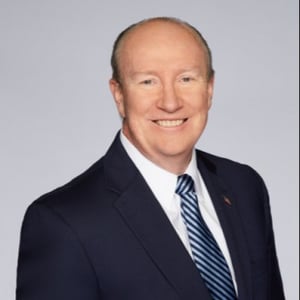
Senior Fellow, National Review
Bestselling author Andrew C. McCarthy is a contributing editor at National Review, a senior fellow at National Review Institute, and a Fox News contributor. He is a former Chief Assistant United States Attorney in the Southern District of New York and led the terrorism prosecution against the “Blind Sheikh” (Omar Abdel Rahman) and eleven other jihadists for conducting a war of urban terrorism against the United States that included the 1993 World Trade Center bombing and a plot to bomb New York City landmarks. During is 20-year career as a prosecutor, he received numerous honors, including the Justice Department’s highest awards. Andy speaks and writes widely on law and national security, radical Islam, politics, and culture. He has testified before Congress as an expert on issues of constitutional law, counterterrorism, and law-enforcement. He is a columnist for The Hill, and his essays and book reviews appear frequently at The New Criterion. His most recent New York Times bestselling book is Ball of Collusion (Encounter Books, 2019), about the Russiagate controversy (an updated version was published in 2020). His other books include Willful Blindness (2008), The Grand Jihad (2010), Spring Fever: The Illusion of Islamic Democracy (2012), and Faithless Execution (2014). He has also written several pamphlets in the Broadside series published by Encounter Books, most recently Islam and Free Speech (2015).
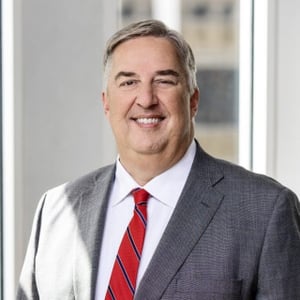
Member, Ifrah Law
After 27 years as a prosecutor, James (“Jim”) Trusty brings to Ifrah Law extensive experience in complex, multi-district white collar litigation, especially in matters involving RICO, The Computer Fraud and Abuse Act, and The Money Laundering Control Act of 1986.
Jim has represented a wide variety of individuals and corporations in the white-collar space. He regularly represents professional athletes, both criminally and civilly, and during 2022 and 2023 he represented President Trump during pre-indictment litigation relating to the Mar-a-Lago and January 6 cases.
Prior to joining Ifrah Law, Jim had a long career in public service, most recently as Chief of the Organized Crime Section at the United States Department of Justice. For seven years, Jim was ultimately responsible for investigating and prosecuting regional, national, and international cases, supervising significant pleadings, and providing strategic and tactical guidance in investigations and multi-defendant trials. In addition to running the RICO Review Unit, which reviewed and approved all criminal RICO cases brought by federal prosecutors, he also was in charge of establishing and promoting policies focused on immigration reform, firearms trafficking, proposed Congressional testimony for DOJ officials, and internet gambling. Significant and sensitive matters on which he worked include the post-conviction review of the Alaska corruption case related to U.S. v. Theodore Stevens and the investigation into allegations of misconduct by a sitting U.S. Attorney and one of her subordinates.
Prior to his work at DOJ, Jim acted as Assistant U.S. Attorney in Greenbelt, Maryland, where he investigated and prosecuted a wide variety of white-collar and other criminal cases, including The Washington area Sniper investigation. He also prosecuted three death penalty cases and was a member of the Attorney General’s Capital Review Committee, responsible for assessing capital-eligible cases such as the Boston Marathon Bomber and the Charleston Church massacre.
In 2018, Jim was appointed by the Governor of Maryland to serve on The Task Force to Study Maryland’s Criminal Gang Statutes. The Task Force assessed the efficacy of existing state laws as they apply to gang-related criminal activity in the state and presented its findings and recommendations to the Governor.
Executive Director, Texas Indigent Defense Commission
James D. Bethke serves as the Executive Director of the Texas Indigent Defense Commission formerly called the Task Force on Indigent Defense. The Commission is charged with implementing a statewide system of standards, financing and other resources for criminal defendants unable to hire attorneys. He is also an ex-officio member Governor Perry’s Criminal Justice Advisory Council and a member of the Texas Criminal Justice Integrity Unit. Nationally, he serves on the Indigent Defense Advisory Group for the ABA Standing Committee for Legal Aid and Indigent Defendants and is a member of the National Research & Data Analysis Committee for the National Legal Aid & Defenders Association. He is a past-chair of the Juvenile Law Exam Commission for the Texas Board of Legal Specialization and is a Texas Bar Foundation Life Fellow. He is a U.S. Army veteran from the 101st Airborne Division, is a graduate of the University of Texas at Tyler and the Texas Tech University law school.
Robert B. McKay Professor of Law, New York University School of Law
Stephen Schulhofer is one of the nation’s most distinguished scholars of criminal justice. He has written more than 50 scholarly articles and seven books, including the leading casebook in the field, and highly regarded, widely cited work on a range of criminal justice and national security topics. His most recent book More Essential Than Ever: The Fourth Amendment in the Twenty-First Century (Oxford University Press, 2012) is a comprehensive review and analysis of Fourth Amendment history, the Supreme Court’s constitutional methodology, current Fourth Amendment doctrine, and a wide range of contemporary problems concerning searches and seizures, electronic surveillance, and the intersection between national security needs and the right to privacy. Schulhofer’s scholarship has been distinguished by his simultaneous engagement with doctrinal analysis, criminal justice policy, and his own original empirical work. He has written on counterterrorism, police interrogation, rape law, administrative searches, drug enforcement, indigent defense, sentencing reform, plea bargaining, battered spouse syndrome, and many other criminal justice matters. His current projects include analyses of national security secrecy, the right to privacy in electronic communications, and an empirical study of the impact of counterterrorism policing on immigrant communities in New York and London. In addition, he currently serves as the reporter for the American Law Institute’s project to revise the sexual offense provisions of the Model Penal Code. Previously, Schulhofer was the Julius Kreeger Professor of Law and director of the Center for Studies in Criminal Justice at the University of Chicago Law School, and was the Ferdinand Wakeman Hubbell Professor of Law at the University of Pennsylvania Law School. He completed his BA at Princeton University and his JD at Harvard Law School, both summa cum laude. He then clerked for two years for US Supreme Court Justice Hugo Black and practiced law for three years before beginning his academic career
Adjunct Scholar and Former Director, Project On Criminal Justice, Cato Institute
Tim Lynch is an attorney specializing in criminal law, constitutional law, and civil liberties. He is an adjunct scholar at the Cato Institute and the former director of Cato’s Project on Criminal Justice. His research interests include all aspects of constitutional criminal procedure, overcriminalization, the drug war, and police and prosecutorial misconduct. In 2000, he served on the National Committee to Prevent Wrongful Executions. Lynch also prepares amicus briefs before appellate courts and the U.S. Supreme Court in cases involving constitutional rights. He is the editor of In the Name of Justice: Leading Experts Reexamine the Classic Article “The Aims of the Criminal Law” and After Prohibition: An Adult Approach to Drug Policies in the 21st Century.
Lynch has published a variety of articles in both the law journals and in opinion pieces for the New York Times, the Washington Post, the Wall Street Journal, the Los Angeles Times, and other newspapers. He has appeared on The PBS NewsHour, NBC Nightly News, ABC World News Tonight, and C-SPAN’s Washington Journal. Lynch is a member of the Virginia, District of Columbia, and Supreme Court bars. He earned both a BS and a JD from Marquette University.
Mr. Lynch can be reached via his personal website.
Executive Director, Texas Indigent Defense Commission
James D. Bethke serves as the Executive Director of the Texas Indigent Defense Commission formerly called the Task Force on Indigent Defense. The Commission is charged with implementing a statewide system of standards, financing and other resources for criminal defendants unable to hire attorneys. He is also an ex-officio member Governor Perry’s Criminal Justice Advisory Council and a member of the Texas Criminal Justice Integrity Unit. Nationally, he serves on the Indigent Defense Advisory Group for the ABA Standing Committee for Legal Aid and Indigent Defendants and is a member of the National Research & Data Analysis Committee for the National Legal Aid & Defenders Association. He is a past-chair of the Juvenile Law Exam Commission for the Texas Board of Legal Specialization and is a Texas Bar Foundation Life Fellow. He is a U.S. Army veteran from the 101st Airborne Division, is a graduate of the University of Texas at Tyler and the Texas Tech University law school.
Adjunct Scholar and Former Director, Project On Criminal Justice, Cato Institute
Tim Lynch is an attorney specializing in criminal law, constitutional law, and civil liberties. He is an adjunct scholar at the Cato Institute and the former director of Cato’s Project on Criminal Justice. His research interests include all aspects of constitutional criminal procedure, overcriminalization, the drug war, and police and prosecutorial misconduct. In 2000, he served on the National Committee to Prevent Wrongful Executions. Lynch also prepares amicus briefs before appellate courts and the U.S. Supreme Court in cases involving constitutional rights. He is the editor of In the Name of Justice: Leading Experts Reexamine the Classic Article “The Aims of the Criminal Law” and After Prohibition: An Adult Approach to Drug Policies in the 21st Century.
Lynch has published a variety of articles in both the law journals and in opinion pieces for the New York Times, the Washington Post, the Wall Street Journal, the Los Angeles Times, and other newspapers. He has appeared on The PBS NewsHour, NBC Nightly News, ABC World News Tonight, and C-SPAN’s Washington Journal. Lynch is a member of the Virginia, District of Columbia, and Supreme Court bars. He earned both a BS and a JD from Marquette University.
Mr. Lynch can be reached via his personal website.
Robert B. McKay Professor of Law, New York University School of Law
Stephen Schulhofer is one of the nation’s most distinguished scholars of criminal justice. He has written more than 50 scholarly articles and seven books, including the leading casebook in the field, and highly regarded, widely cited work on a range of criminal justice and national security topics. His most recent book More Essential Than Ever: The Fourth Amendment in the Twenty-First Century (Oxford University Press, 2012) is a comprehensive review and analysis of Fourth Amendment history, the Supreme Court’s constitutional methodology, current Fourth Amendment doctrine, and a wide range of contemporary problems concerning searches and seizures, electronic surveillance, and the intersection between national security needs and the right to privacy. Schulhofer’s scholarship has been distinguished by his simultaneous engagement with doctrinal analysis, criminal justice policy, and his own original empirical work. He has written on counterterrorism, police interrogation, rape law, administrative searches, drug enforcement, indigent defense, sentencing reform, plea bargaining, battered spouse syndrome, and many other criminal justice matters. His current projects include analyses of national security secrecy, the right to privacy in electronic communications, and an empirical study of the impact of counterterrorism policing on immigrant communities in New York and London. In addition, he currently serves as the reporter for the American Law Institute’s project to revise the sexual offense provisions of the Model Penal Code. Previously, Schulhofer was the Julius Kreeger Professor of Law and director of the Center for Studies in Criminal Justice at the University of Chicago Law School, and was the Ferdinand Wakeman Hubbell Professor of Law at the University of Pennsylvania Law School. He completed his BA at Princeton University and his JD at Harvard Law School, both summa cum laude. He then clerked for two years for US Supreme Court Justice Hugo Black and practiced law for three years before beginning his academic career
University of Denver Sturm College of Law
Rothgerber Professor of Constitutional Law, Colorado Law
Robert Nagel joined the faculty of CU Law School in 1975, leaving a position as a deputy attorney general in Pennsylvania. Since that time, he has focused on constitutional law and theory. For an audience of legal scholars, Professor Nagel has written prolifically, including four books and over 50 law review articles. However, he has also contributed to the popular debate on constitutional issues, including free speech, hate codes, and federalism, by addressing his ideas to the general citizenry in articles and opinion pieces in publications such as The New Republic, the Wall Street Journal, First Things, and Washington Monthly. Much of his work has focused on the relationship between the judiciary (and its interpretation of the Constitution) and the wider context of American political culture. His two earlier books on this topic, Constitutional Cultures: The Mentality and Consequences of Judicial Review and Judicial Power and American Character: Censoring Ourselves in an Anxious Age, were widely read and reviewed. He has recently completed The Implosion of American Federalism, a book on the cultural and constitutional ramifications of political centralization. Professor Nagel has testified before several congressional committees. He was formerly the director of the Law School's Byron R. White Center for the Study of American Constitutional Law. In 2003, he was elected a Fellow of the American Academy of Arts and Sciences.
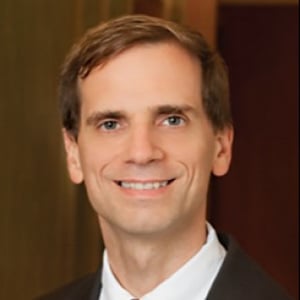
Judge, United States Court of Appeals, District of Columbia Circuit
Judge Katsas was appointed to the D.C. Circuit in December 2017. He graduated from Princeton University and Harvard Law School, where he was an executive editor on the Harvard Law Review. Between 1989 and 1992, he served as a law clerk to Judge Edward Becker on the Third Circuit, to then-Judge Clarence Thomas on the D.C. Circuit, and to Justice Thomas on the Supreme Court. Between 1992 and 2001, he was an associate and then partner in the Washington office of Jones Day, where he specialized in appellate and complex civil litigation. Between 2001 and 2009, he served in many senior positions in the Department of Justice, including as Assistant Attorney General for the Civil Division and as Acting Associate Attorney General. In 2009, he returned to Jones Day. From January to December 2017, he served as Deputy Assistant to the President and Deputy Counsel to the President.
Before joining the bench, Judge Katsas argued more than 75 appeals, including three cases in the Supreme Court, 13 cases in the D.C. Circuit, and cases in every other federal court of appeals. By appointment of the Chief Justice, he served on the Advisory Committee on Appellate Rules from 2013 to 2017. In 2016, he was elected to membership in the American Academy of Appellate Lawyers.
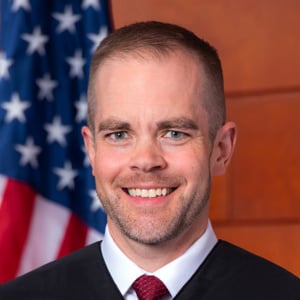
Judge, Iowa Court of Appeals
Judge Samuel P. Langholz was appointed to the Iowa Court of Appeals by Governor Kim Reynolds in 2023. Before his appointment, he practiced law in the Iowa Executive Branch for nearly thirteen years, serving as Chief Deputy Attorney General, Assistant Solicitor General, Senior Legal Counsel to the Governor, Chief Administrative Law Judge, and State Public Defender. He also previously worked in private practice at a law firm in Des Moines. He began his legal career as a judicial law clerk to Judge Steven M. Colloton on the U.S. Court of Appeals for the Eighth Circuit.
Judge Langholz earned his law degree from the University of Iowa College of Law with highest distinction and Order of the Coif in 2008 and his undergraduate degree from Washington and Lee University magna cum laude in 2002. He was raised and graduated from high school in Clear Lake. Judge Langholz is married and has two sons.
Judge, Iowa Court of Appeals
Judge Samuel P. Langholz was appointed to the Iowa Court of Appeals by Governor Kim Reynolds in 2023. Before his appointment, he practiced law in the Iowa Executive Branch for nearly thirteen years, serving as Chief Deputy Attorney General, Assistant Solicitor General, Senior Legal Counsel to the Governor, Chief Administrative Law Judge, and State Public Defender. He also previously worked in private practice at a law firm in Des Moines. He began his legal career as a judicial law clerk to Judge Steven M. Colloton on the U.S. Court of Appeals for the Eighth Circuit.
Judge Langholz earned his law degree from the University of Iowa College of Law with highest distinction and Order of the Coif in 2008 and his undergraduate degree from Washington and Lee University magna cum laude in 2002. He was raised and graduated from high school in Clear Lake. Judge Langholz is married and has two sons.
Justice, Iowa Supreme Court
Justice Mansfield, Des Moines, was appointed to the Supreme Court in 2011.
Justice Mansfield was born and raised in Massachusetts. He received his undergraduate degree from Harvard in 1978, and his law degree from Yale in 1982. After law school he clerked for the U.S. Court of Appeals, Fifth Circuit.
Justice Mansfield worked as an attorney in private practice until his appointment to the Iowa Court of Appeals in 2009. Justice Mansfield also has been an adjunct professor of law at Drake University since 1997.
Justice Mansfield is a member of the Iowa State Bar Association, having served as Chair of the Trade Regulation Section from 2004-2006. He is a member of the Polk County Bar Association and the Iowa Judges Association. Justice Mansfield also serves on the board of directors of Goodwill Industries of Central Iowa, and is a past Chairperson of this organization.
Executive Director, American Civil Liberties Union of Iowa
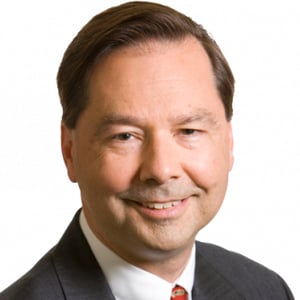
Senior Legal Fellow, Edwin Meese III Institute for the Rule of Law, Advancing American Freedom

What Did the Founders Think of the President’s Pardon Power?
Jeffrey DeSousa, Paul James Larkin, Andrew McCarthy, James Trusty
In this Federalist Society America250 series, experts analyze modern legal and policy debates through the...
Life, Liberty, and the Pursuit of Happiness: The Citizen’s Responsibility in Attaining the American Dream
Jacksonville, FloridaPublic Defenders and Client Choice - Podcast
James D. Bethke, Stephen Schulhofer, Tim Lynch
In 1963, the Supreme Court ruled that indigent persons accused of crimes must be provided...
Public Defenders and Client Choice
Criminal Law & Procedure Practice Group Teleforum
Teleforum2014 Iowa Supreme Court Term Review
Des Moines, IowaFlorida Supreme Court Finds That the Sixth Amendment Right to Counsel Allows Withdrawal of Public Defenders from Criminal Cases
Caroline Levine
A significant decision by the Florida Supreme Court ruled that requiring criminal defense attorneys, employed...
Supreme Court Review: October Term 2012
Denver, ColoradoHealthcare Reform in the Supreme Court: An Insider Perspective on the Historic Constitutional Challenge to President Obama's Healthcare Legislation
Iowa Lawyers Chapter
Des Moines, IAVoter Identification and the Right to Vote
Iowa Lawyers Chapter
Des Moines, IABarwatch Bulletin for February 9, 2008
ABA President Bill Neukom Press Conference ABA President Bill Neukom hosted a press conference on...